

For years, PDF software lived in a very predictable world. You opened a document, highlighted text, added comments, merged pages, converted formats, signed files, or maybe edited a few paragraphs before exporting the final version. The entire category revolved around document manipulation. Even when PDF platforms became more advanced, the core idea stayed the same: humans did the work, and the software helped manage the file.
That model is now starting to break apart.
The next generation of AI systems is no longer focused on editing documents. It is focused on completing workflows. And that shift is much bigger than most people realize. The future of document software is not simply smarter editing tools or better OCR. It is the emergence of AI workflow agents that can actually execute multi-step business operations around documents automatically. Instead of helping people manually process PDFs, these systems increasingly aim to finish the work itself.
A PDF used to be the endpoint of a workflow. Now it is becoming the starting trigger for autonomous operational systems.
This is why the rise of AI workflow agents matters so much right now. Enterprises are beginning to move beyond isolated AI assistants toward orchestrated systems capable of planning tasks, coordinating tools, maintaining context, and executing actions across applications. Documents are one of the first places where this transformation becomes visible because documents already sit at the center of finance, legal operations, HR workflows, procurement, compliance, and enterprise coordination.
The Old World of PDF Software
For nearly two decades, PDF software competed on relatively familiar features. Could the tool edit text properly? Could it convert Word documents accurately? Did it support signatures, annotations, password protection, compression, or OCR? Most vendors fought incremental battles around editing quality, interface design, compatibility, and pricing.
The workflow itself barely changed. A human still downloaded the file. A human still read it. A human still extracted information. A human still copied data between systems. A human still made decisions manually. The software improved productivity, but the human remained the operational engine behind everything.
Even OCR-driven automation mostly followed this same pattern. OCR tools could extract text from scanned files, but they rarely understood business intent. They did not know whether a document represented an invoice, a procurement request, a legal agreement, a compliance issue, or an onboarding workflow requiring escalation. They simply converted pixels into machine-readable text.
That was useful, but also deeply limited.
Most document software still treated PDFs as static files rather than active operational objects. And honestly, that made sense for a long time because AI systems simply were not capable enough to manage complicated workflows reliably. They lacked memory, orchestration, contextual reasoning, planning ability, and tool coordination. A system could summarize a document, but it could not reliably execute the operational chain around that document.
That limitation is disappearing surprisingly fast.
The Shift From Editing Documents to Executing Workflows
The most important thing happening in document software right now is not better PDF editing. It is the transition from document tools into workflow systems. This is the core idea behind AI workflow agents.
A traditional PDF platform helps you manipulate files. An AI workflow agent helps complete business operations.
That sounds subtle, but operationally it changes everything.
Imagine an old invoice workflow. A finance employee receives a PDF invoice by email, downloads it, extracts totals manually, checks vendor details, compares purchase orders, routes approvals, updates spreadsheets, synchronizes accounting systems, and eventually generates reports. The PDF itself is only one small piece of a much larger operational process, but historically humans had to connect all the pieces together manually.
Now imagine an AI workflow agent handling most of those steps automatically. The system receives the document, classifies it, extracts structured information, validates inconsistencies, communicates with accounting software, routes approvals dynamically, updates databases, and generates summaries without requiring constant human coordination. The PDF becomes only one component inside a larger orchestration pipeline.
The document is no longer the work.
The workflow is the work.
This is exactly why the term “agentic AI” has become so important in enterprise software discussions. Businesses are increasingly moving from passive AI assistants toward systems capable of taking action across workflows rather than simply responding to prompts.
The difference between “answering questions” and “getting work done” is becoming one of the defining separations in modern AI products.
Why PDFs Became the Perfect Starting Point
Documents create operational friction almost everywhere inside organizations. Invoices, contracts, onboarding forms, procurement requests, insurance claims, compliance reports, audit documents, HR paperwork, and vendor agreements all share the same problem: humans spend enormous amounts of time manually moving information between systems.
PDFs became the perfect AI workflow target because they sit directly at the intersection of information and operations.
Every company already has document-heavy workflows. Every company already wastes time processing files manually. Every company already struggles with repetitive coordination tasks. That makes documents one of the clearest areas where AI agents can generate immediate business value.
Unlike highly subjective creative work, many document workflows are repetitive, measurable, and process-oriented. This makes them easier to automate reliably. A workflow agent can read documents, classify intent, extract structured data, validate information, trigger downstream actions, update databases, coordinate approvals, generate summaries, notify teams, and escalate anomalies automatically.
But unlike older automation systems, these agents increasingly maintain continuity across tasks.
That continuity matters enormously because real workflows are not isolated actions. They are chains of operational dependencies connected across systems, people, approvals, and business logic.
Why Workflow Agents Feel Different From Traditional Automation
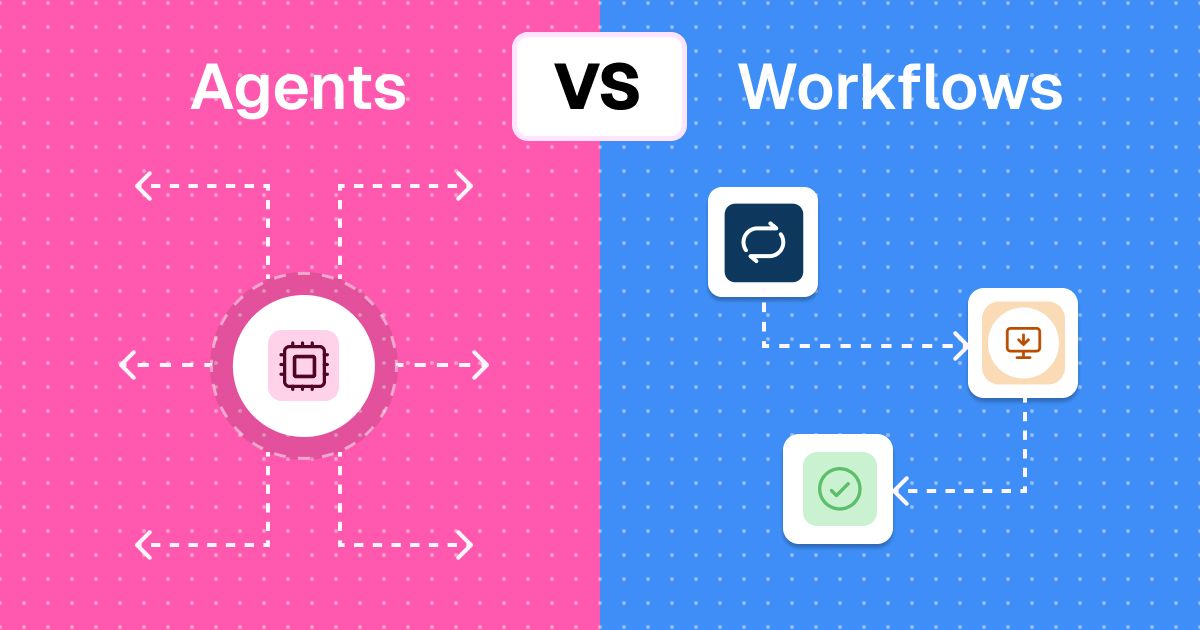
A lot of people still compare AI workflow agents to RPA systems or old automation scripts. That comparison misses the real shift happening underneath.
Traditional automation follows predefined instructions.
Workflow agents adapt dynamically to context.
An old automation script might fail entirely if a form layout changes slightly or if one required field moves position. An AI workflow agent can often still infer meaning because it reasons semantically instead of relying entirely on rigid coordinates and templates.
This is where reasoning becomes operationally important.
The strongest workflow agents do not simply follow fixed paths. They evaluate state, interpret context, recover from exceptions, coordinate tools dynamically, and maintain continuity across tasks. Research around enterprise agentic workflows increasingly focuses on orchestration systems that deliberately manage uncertainty, memory, feedback loops, and multi-agent coordination instead of relying on simple prompt chains.
That architectural difference is becoming one of the defining characteristics of next-generation enterprise software.
The software is no longer just a feature layer.
It becomes an operational layer.
The Real Future of PDF Software
Most PDF companies are now facing a difficult strategic reality.
Editing alone is becoming commoditized.
AI models can already summarize documents, rewrite paragraphs, extract structured information, answer questions about files, classify contracts, translate content, and explain complex reports conversationally. Eventually, many basic editing interactions will become AI-native by default.
That means PDF platforms increasingly need to move higher up the operational stack.
The future competitive advantage will not come from who has the cleanest annotation toolbar or the fastest merge feature. It will come from who owns the workflow.
This is why the market is gradually shifting from “document tools” toward “document orchestration.” The winning platforms will likely combine traditional document capabilities with workflow intelligence, integrations, memory systems, reasoning layers, and autonomous execution.
The PDF itself becomes infrastructure.
The real value moves into workflow coordination.
Why Context Is More Important Than Editing
One of the biggest limitations of traditional document software is that documents existed in isolation. A PDF editor understood the file itself, but it did not understand the business process around the file.
AI workflow agents change that because they preserve context across systems and over time.
For example, a workflow agent processing vendor contracts may understand the vendor relationship history, previous contract revisions, legal approval requirements, procurement dependencies, pricing inconsistencies, expiration timelines, compliance obligations, and department ownership simultaneously. The intelligence is not just inside the document anymore. It exists across the operational environment surrounding the document.
This broader contextual layer is what makes workflow agents fundamentally different from simple AI assistants.
This is also why orchestration platforms are becoming increasingly important inside enterprise AI deployments. AI systems are moving away from isolated prompt-response interactions toward coordinated multi-system execution models capable of handling longer operational chains.
And once software starts coordinating workflows instead of merely displaying documents, the category itself changes.
The Rise of Multi-Agent Workflows
Another major shift happening right now is the emergence of multi-agent orchestration systems. Instead of relying on one massive AI model to handle everything, enterprises increasingly deploy specialized agents responsible for different operational tasks.
One agent may focus on document extraction. Another handles validation. Another manages approvals. Another synchronizes ERP systems. Another generates summaries. Another monitors anomalies. Together, they operate more like coordinated digital teams than standalone software tools.
Research into orchestrated multi-agent systems increasingly shows that structured coordination layers improve reliability, observability, governance, and workflow execution quality inside enterprise environments.
This matters because real enterprise workflows are messy. A single operational task may involve cloud storage systems, spreadsheets, CRMs, calendars, email threads, approval chains, ERP platforms, compliance systems, and internal messaging tools simultaneously.
Static software struggles with that complexity.
Workflow agents are specifically designed for it.
Why Businesses Actually Want This
A lot of AI hype still focuses on futuristic ideas about autonomous companies or fully AI-operated enterprises. Most businesses are not actually asking for that.
What they really want is much simpler:
they want operational friction removed.
Nobody enjoys manually renaming files. Nobody enjoys copying invoice totals into spreadsheets. Nobody enjoys checking whether approvals were routed correctly. Nobody enjoys searching through endless email threads for missing attachments.
Workflow agents are attractive because they target operational inefficiency directly.
The business value is usually not magical intelligence.
It is reduced coordination cost.
That is why the strongest enterprise AI systems are increasingly focused on orchestration rather than pure conversation. The future of enterprise AI probably looks less like chatting with a bot and more like supervising operational systems that quietly complete repetitive work in the background.
Why Human Oversight Still Matters
Despite all the excitement surrounding workflow agents, fully autonomous execution remains risky in many business environments. Documents often involve legal obligations, financial liabilities, compliance requirements, and operational consequences. A workflow agent making incorrect decisions at scale can create serious problems very quickly.
That is why the most successful systems today rely heavily on human-in-the-loop architectures. Enterprises increasingly prioritize auditability, governance, approval visibility, and bounded autonomy inside workflow systems.
In practice, the strongest workflow agents usually operate like supervised digital workers rather than unrestricted autonomous actors. The AI handles repetitive coordination while humans handle judgment, oversight, and exceptions.
And honestly, that is probably where enterprise AI adoption will stabilize for the foreseeable future.
Businesses do not necessarily want uncontrolled AI autonomy.
They want reliable operational acceleration.
PDF Agile and the Separation of Responsibilities
One interesting trend emerging in this space is the separation between document capability platforms and workflow orchestration platforms. Not every company wants one giant monolithic AI suite controlling everything. In many cases, businesses prefer modular systems that specialize in different responsibilities.
A platform like PDF Agile may focus primarily on the document layer itself: editing, annotation, conversion, OCR, signatures, organization, and file management. Meanwhile, workflow-oriented platforms like EasyClaw increasingly focus on orchestration: triggering actions, automating repetitive operations, coordinating workflows across tools, and connecting operational systems together.
That division actually makes a lot of sense.
One platform specializes in document capability.
The other specializes in operational execution.
And realistically, this modular approach is probably how many businesses will adopt AI workflow infrastructure going forward. Companies rarely replace their entire operational stack overnight. Instead, they gradually layer orchestration on top of existing systems over time.
The Bigger Shift: Software Is Becoming Action-Oriented
The broader trend here extends far beyond PDFs.
Enterprise software as a whole is shifting from passive interfaces toward action-oriented systems.
Old software waited for user input.
New software increasingly participates in execution.
This is happening across finance, HR, procurement, operations, legal systems, customer support, compliance, and enterprise productivity tools. Enterprise AI reporting increasingly describes the transition from copilots toward “digital coworkers” capable of completing multi-step operational tasks autonomously.
That is a fundamentally different software paradigm.
The interface matters less.
The execution layer matters more.
The future winner in enterprise software may not be the platform with the most features. It may be the platform that removes the most operational coordination.
Why the Next Five Years Will Look Very Different
Right now, most AI workflow agents still feel early. Many systems remain fragile. Hallucinations still occur. Integrations break. Context windows remain imperfect. Governance is still evolving.
But the direction is becoming increasingly obvious.
The enterprise software industry is moving toward orchestration-first architecture. Gartner predicts that task-specific AI agents will rapidly spread across enterprise applications over the next several years as businesses increasingly integrate workflow-oriented AI directly into operational systems.
Over time, businesses will likely stop evaluating software primarily based on whether it stores information. Instead, they will evaluate whether it can execute workflows reliably.
That is a huge transition.
And documents happen to be one of the clearest places where this shift becomes visible first because document workflows already contain massive amounts of repetitive operational coordination.
The companies that understand this early are starting to redesign their systems around workflows rather than interfaces.
Beyond PDF Editing
The most important insight here is that AI workflow agents are not really competing with old PDF editors directly.
They are redefining what “document software” even means.
For decades, PDFs were static artifacts that humans manipulated manually. Now they are becoming triggers for autonomous operational systems. The future of document technology is probably not about who can edit text fastest. It is about who can transform documents into workflows.
Invoices trigger accounting operations.
Contracts trigger approval chains.
Onboarding documents trigger HR workflows.
Procurement files trigger vendor coordination.
Reports trigger analytics pipelines.
Compliance records trigger monitoring systems.
The PDF becomes the beginning of operational execution rather than the end of information storage.
And honestly, that may become one of the biggest shifts in enterprise software over the next decade because businesses do not actually want better file editing.
They want work to disappear.