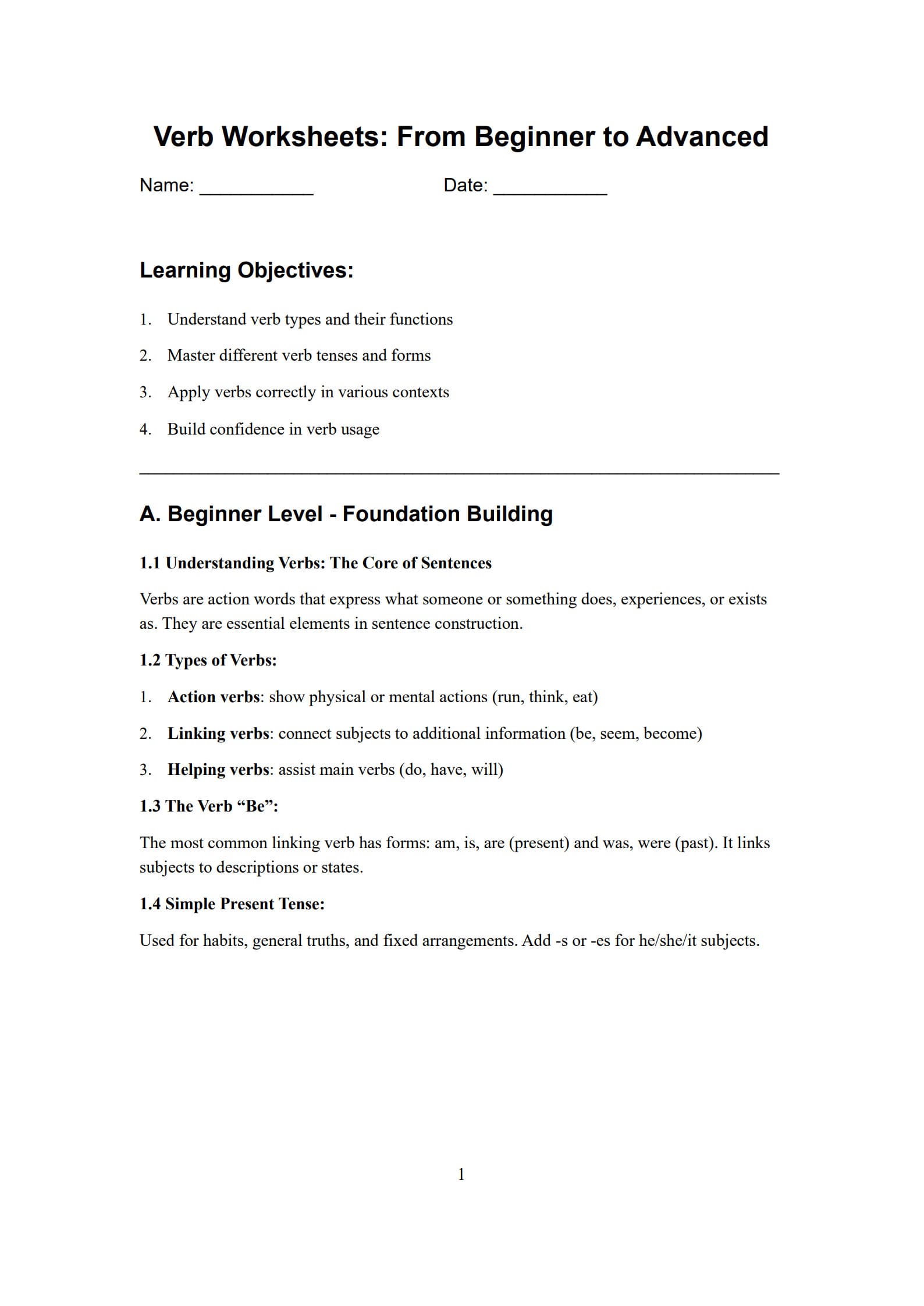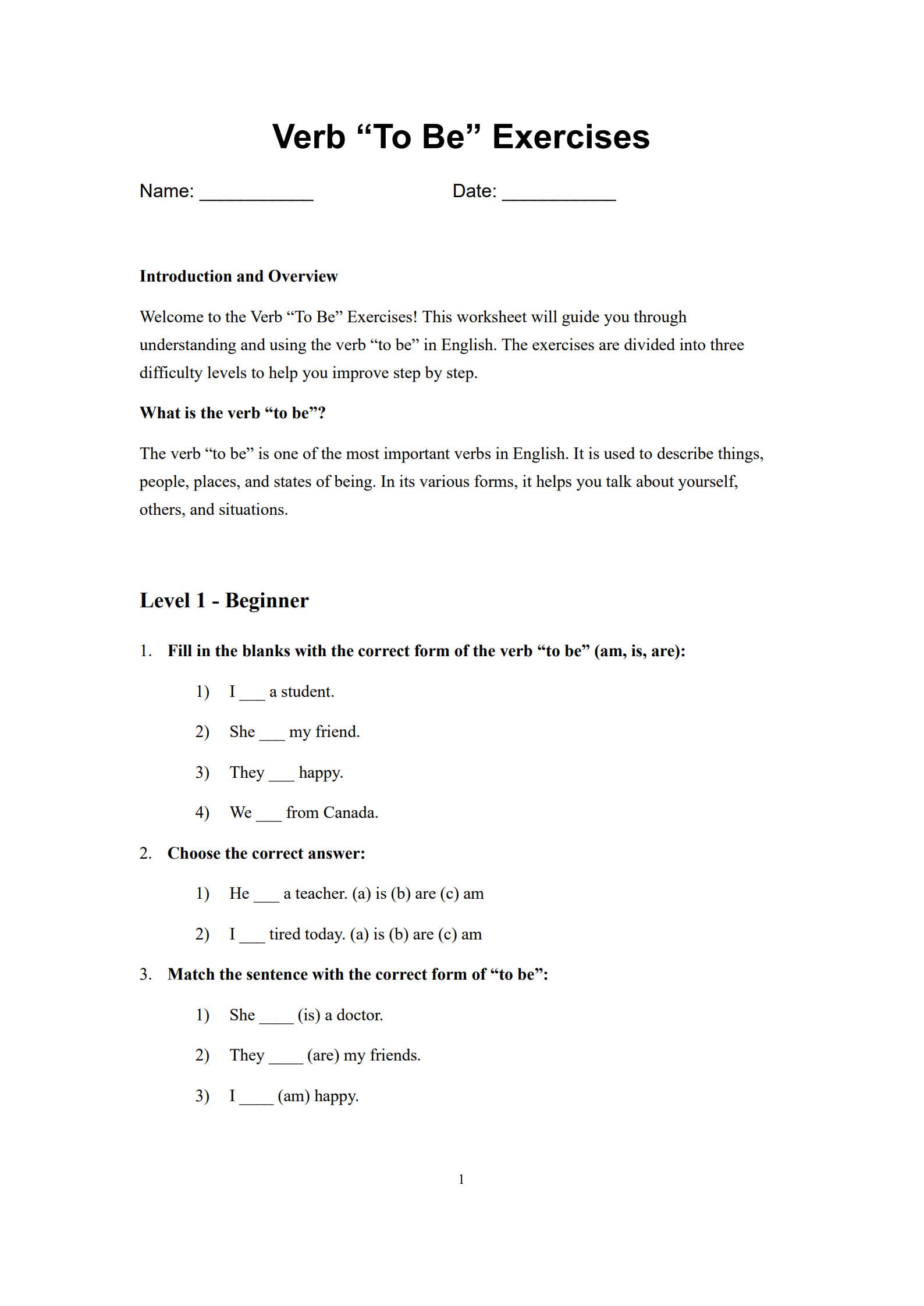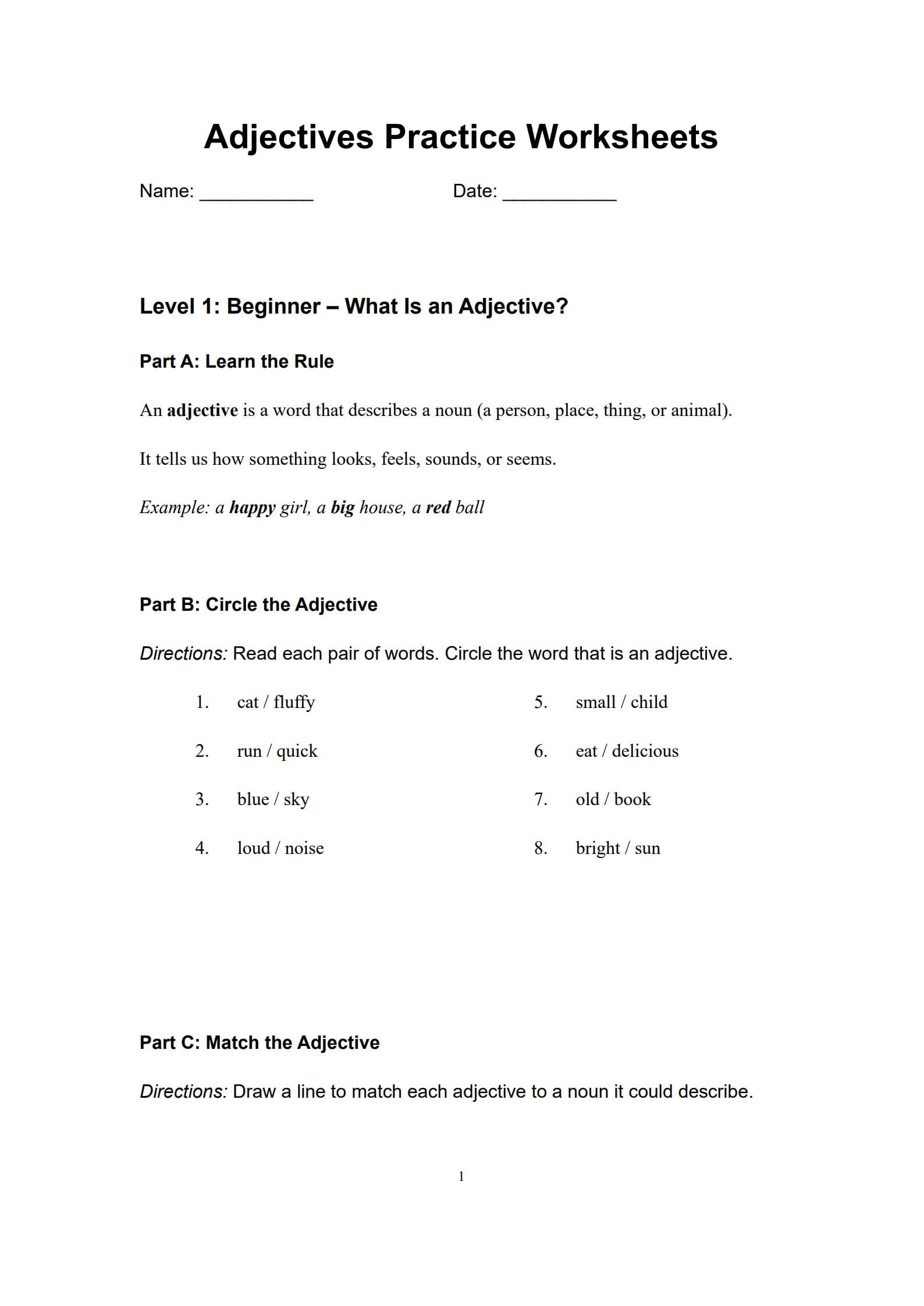


Learning English irregular verbs can be a challenging yet rewarding journey for language learners. Unlike regular verbs that simply add “-ed” for past tense, irregular verbs follow unique patterns that require dedicated practice. Our Irregular Verbs Worksheet template, available on PDF Agile, transforms this learning process into an interactive experience. This carefully structured template guides beginners through advanced learners with progressively challenging exercises that build confidence and mastery.
Why Are Irregular Verbs Exercises Essential for Building Strong English Foundations?
Have you ever wondered why even advanced English learners sometimes stumble on irregular verbs? The answer lies in the need for consistent, structured practice that addresses these unique verb forms systematically. Our irregular verbs exercises provide exactly this foundation through carefully sequenced activities that build from recognition to production.
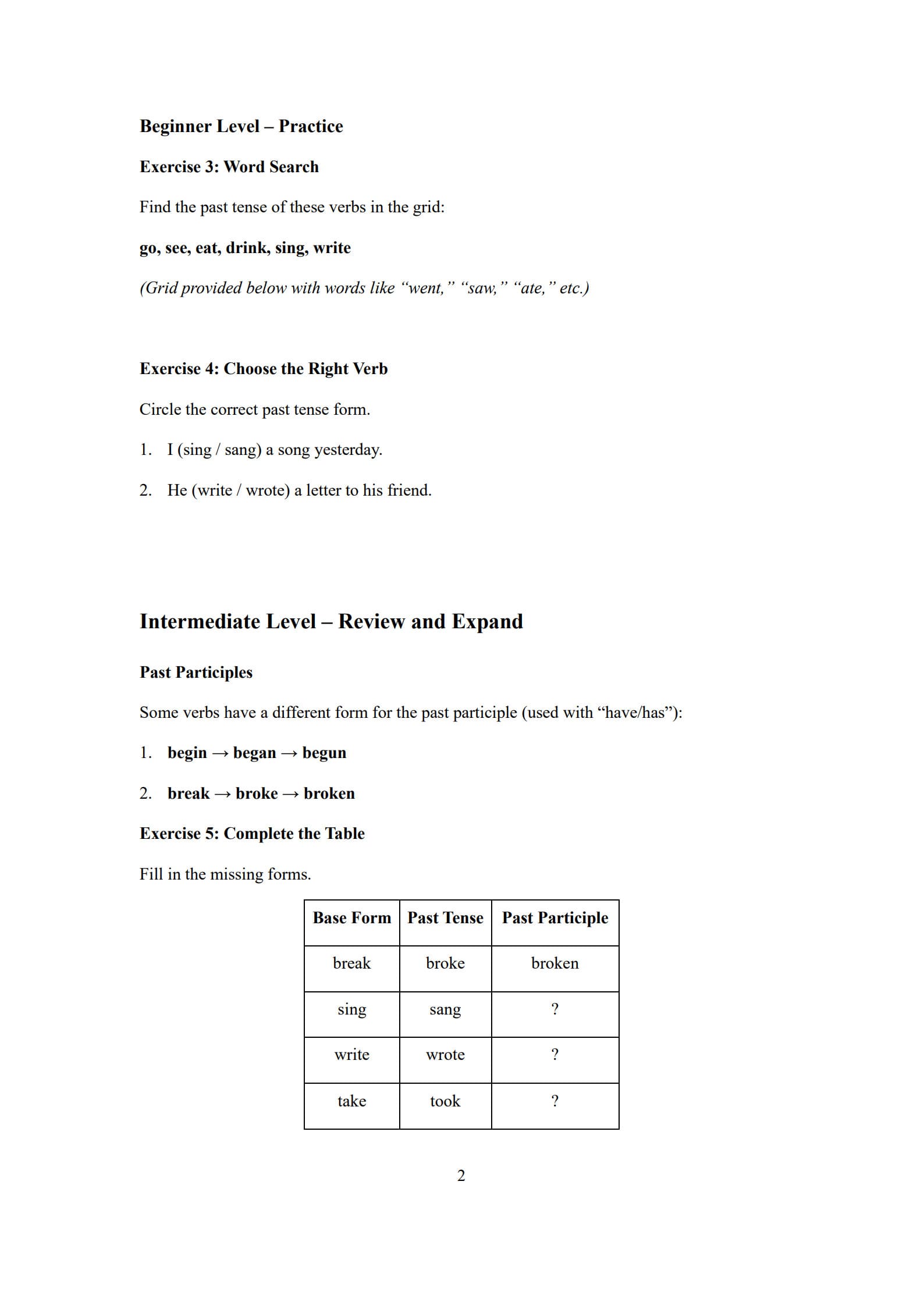
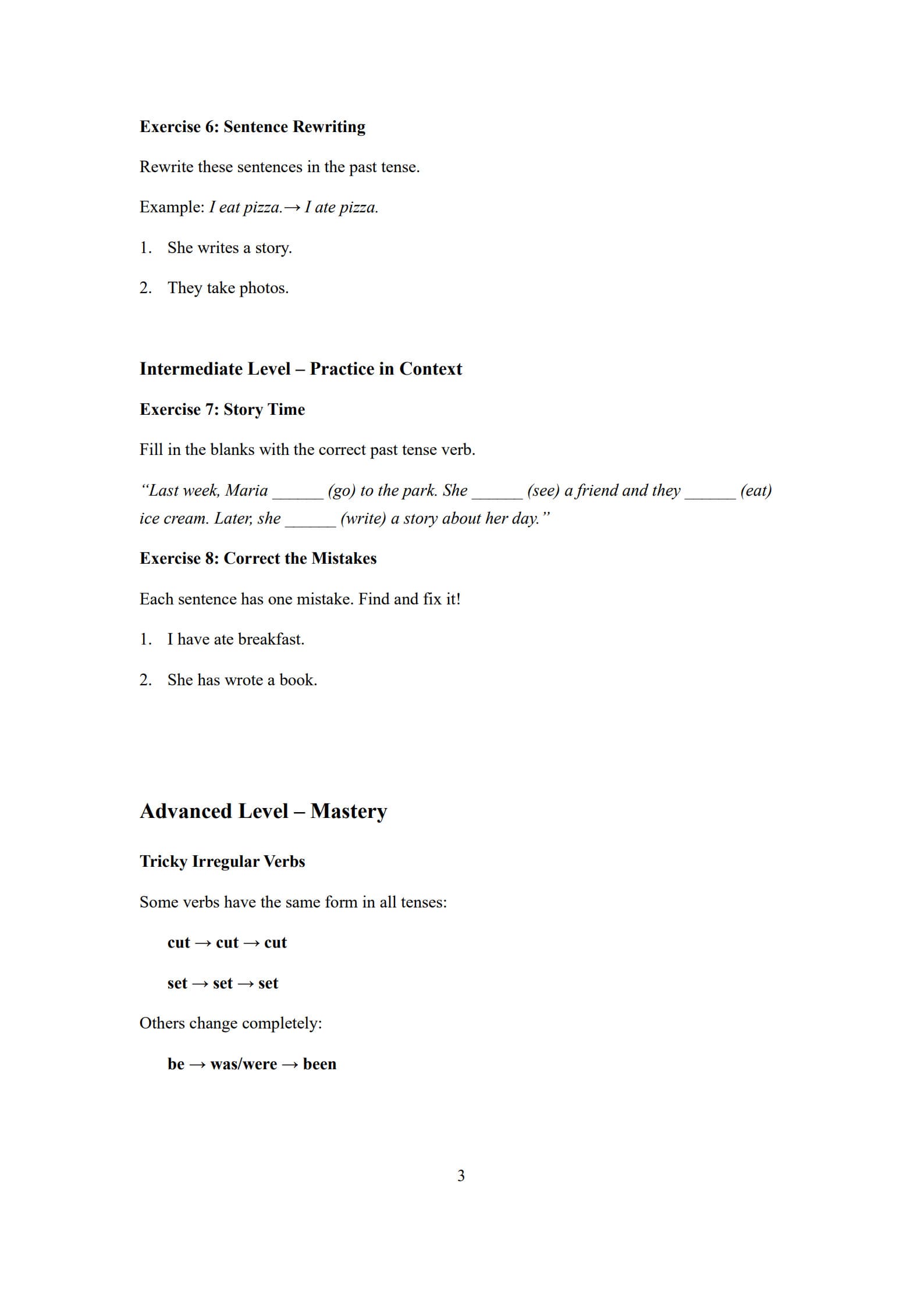
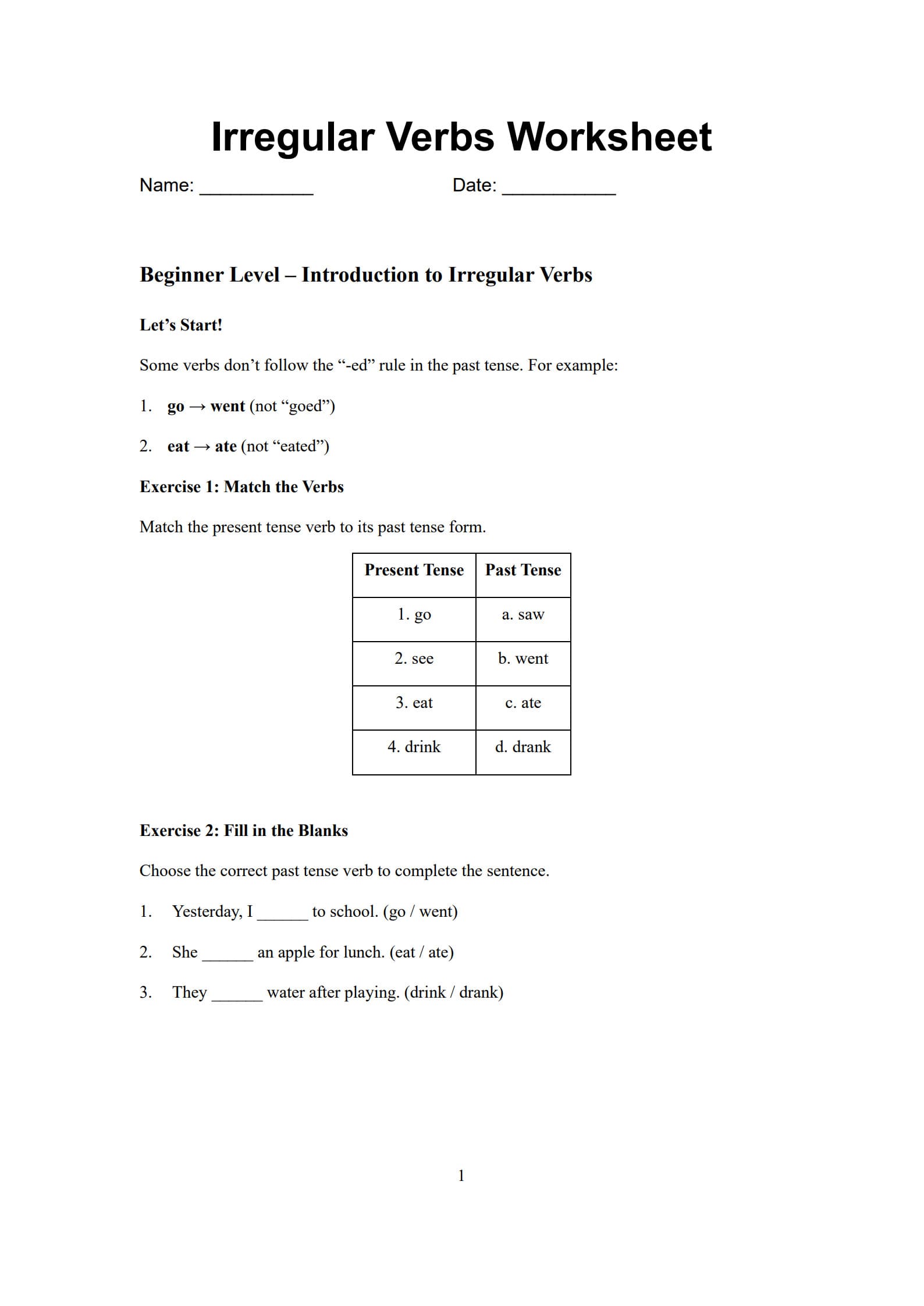
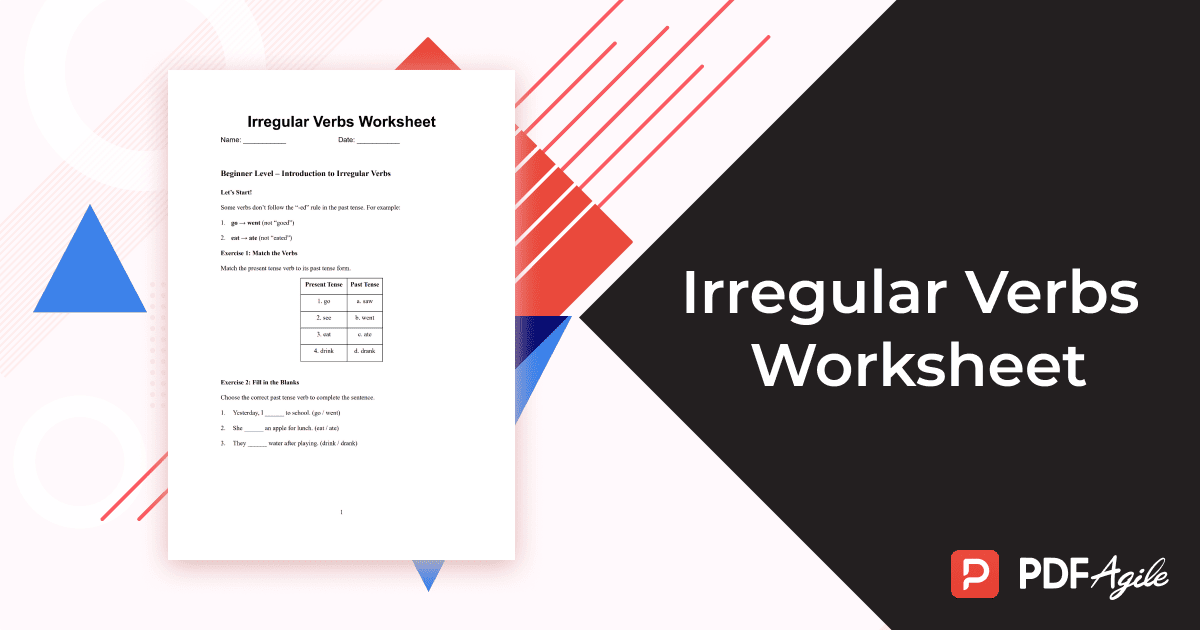
The beginner level exercises start with fundamental matching activities where learners connect present tense verbs like “go” and “eat” to their past forms “went” and “ate.” This establishes the basic recognition skills needed before progressing to more challenging tasks. The fill-in-the-blank exercises then test immediate recall in context, such as completing “Yesterday, I ______ to school” with the correct past form. This progression from identification to application mirrors natural language acquisition processes.
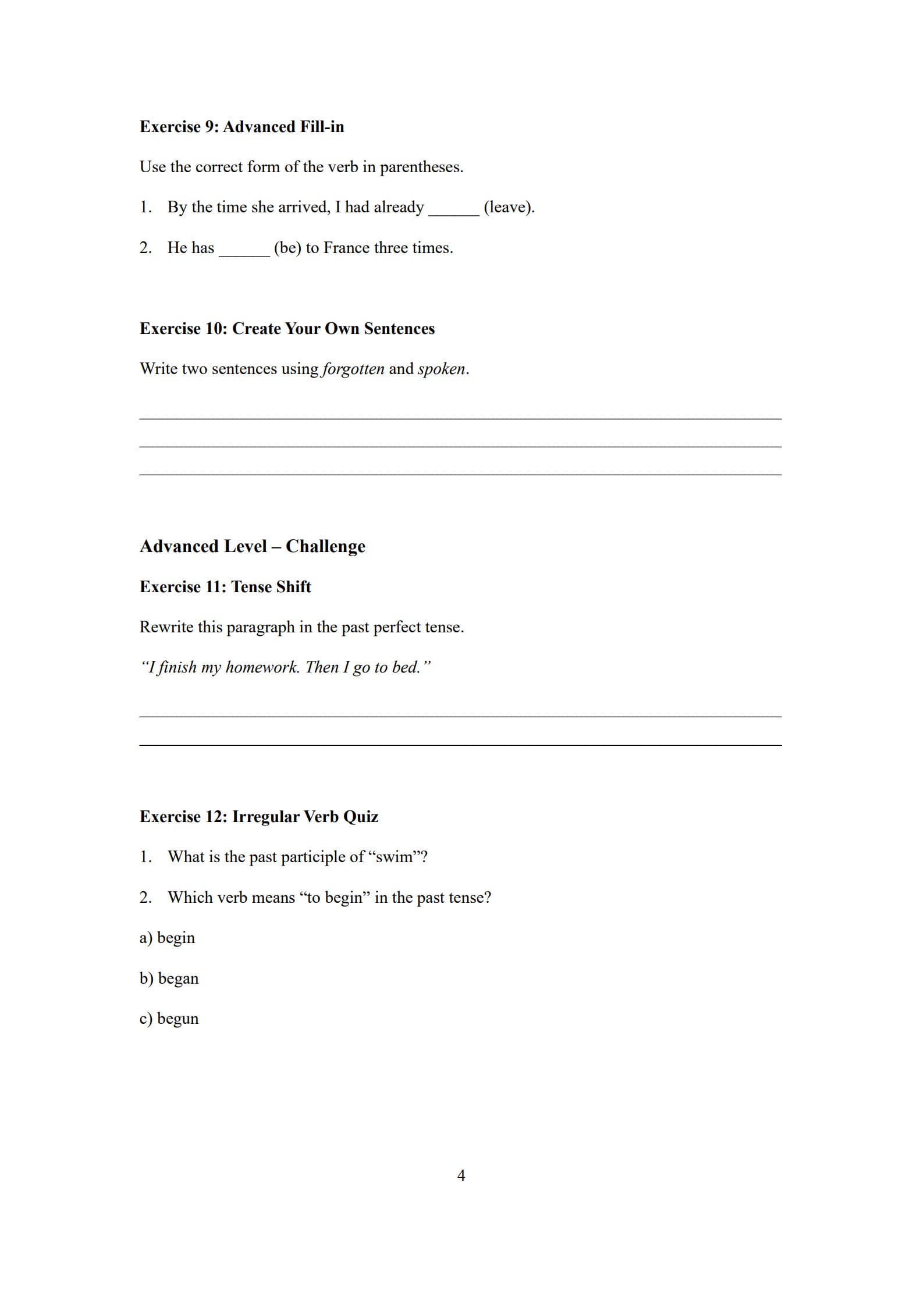
What makes these irregular verbs exercises particularly effective is their contextual learning approach. Rather than presenting verbs in isolation, the worksheet incorporates them into meaningful sentences and short narratives. For example, Exercise 7’s story about Maria’s day at the park uses multiple irregular verbs in a coherent context, helping learners understand how these verbs function in real communication. The word search activity adds an element of fun while reinforcing spelling and recognition of past tense forms.
How Can an Irregular Past Tense Verbs Worksheet Transform Your Language Skills?
What if you could systematically conquer the most challenging aspect of English verb conjugation? Our irregular past tense verbs worksheet provides exactly this systematic approach through its carefully scaffolded exercises that take learners from basic recognition to advanced application.
The intermediate level introduces the crucial concept of past participles, which many learners find particularly challenging. The template clearly demonstrates the three principal parts of irregular verbs through tables that show base form, past tense, and past participle simultaneously. For example, the breakdown of “break-broke-broken” helps learners visualize the patterns and exceptions in verb forms. This structural understanding is essential for mastering perfect tenses and passive voice constructions, which rely heavily on past participles.
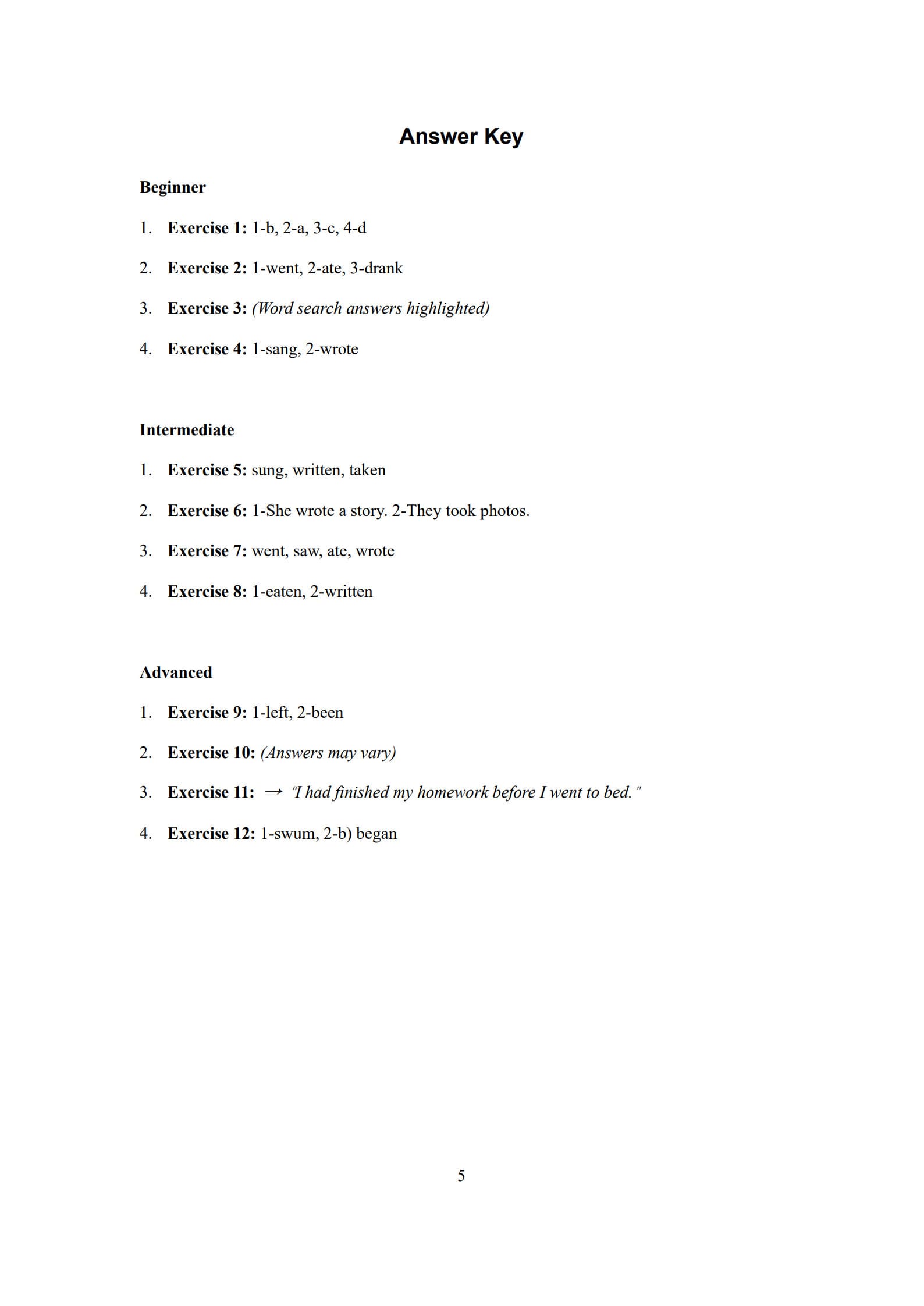
Perhaps most importantly, the worksheet builds learner autonomy through its self-contained answer key and clear progression. Students can work independently, checking their answers and understanding their mistakes without constant teacher intervention. This independence fosters confidence and encourages more practice, creating a positive feedback loop where success motivates further learning. The template’s organization into beginner, intermediate, and advanced sections allows learners to easily identify their current level and track their progress as they move through the material, providing tangible evidence of improvement that fuels continued effort.
Understand Irregular Verbs Through Contextual Practice
The advanced level exercises in our worksheet template push learners toward genuine mastery by incorporating irregular verbs into complex grammatical structures and real-world contexts. This section transforms passive knowledge into active language ability through challenging applications that mirror authentic English usage.
The past perfect tense exercises require learners to understand temporal relationships between actions, such as “By the time she arrived, I had already left.” This demonstrates how irregular verbs function within sophisticated grammatical frameworks beyond simple past tense narratives. Similarly, the present perfect tense practice in sentences like “He has been to France three times” shows how irregular past participles combine with auxiliary verbs to express experiences and connections between past and present.
The creative writing component represents the highest level of mastery, where learners generate original sentences using challenging irregular verbs like “forgotten” and “spoken.” This production-level activity ensures that students can use these verbs spontaneously rather than merely recognizing them in context. The tense shift exercise further develops this flexibility by requiring learners to reconceptualize time frames while maintaining proper verb forms, as demonstrated in transforming “I finish my homework. Then I go to bed” into the past perfect “I had finished my homework before I went to bed.”
How to Use This Irregular Verbs Worksheet Template on PDF Agile
Step 1: Accessing the Irregular Verbs Worksheet Template
Navigate to PDF Agile’s template library and search for “Irregular Verbs Worksheet.” Alternatively, click the “Use Template” button directly from this article to open the worksheet in PDF Agile’s editor. The template comes pre-formatted with clear instructions and organized sections for beginner, intermediate, and advanced practice.
Step 2: Customizing for Your Learning Needs
The template is fully customizable to target specific learning objectives. For classroom use, teachers can add instructions or modify exercises to match curriculum requirements. Individual learners might adjust the difficulty level by adding more examples or creating additional practice sentences using the same patterns. PDF Agile’s editing tools make it simple to modify text, add notes, or include personalized examples without disrupting the original layout.
Step 3: Interactive Practice and Completion
Use PDF Agile’s fillable form fields to complete exercises directly within the application. The clean interface allows for easy typing, circling answers, or highlighting correct responses. For the word search activity, utilize the drawing tools to circle or connect letters. The digital format enables repeated practice—simply reset the fields to try exercises again for reinforcement.
Step 4: Review and Progress Tracking
After completing exercises, use the answer key section to check your work. PDF Agile’s comment feature allows you to make notes on challenging areas or record recurring errors for future focus. Save different versions to track improvement over time, creating a portfolio of progress that motivates continued learning.
Step 5: Sharing and Collaboration
Educators can share completed worksheets with students via email or learning management systems.
Conclusion
Irregular verbs represents a significant milestone in English language acquisition, and our thoughtfully designed worksheet template makes this challenging journey accessible and engaging. The scaffolded approach—beginning with basic matching exercises and progressing to advanced contextual applications—ensures that learners build confidence gradually while developing genuine proficiency. The template’s versatility makes it suitable for diverse learning environments, from formal classrooms to self-study sessions.
PDF Agile’s platform enhances the template’s effectiveness through user-friendly customization features and seamless digital workflow. The ability to easily modify, complete, and share the worksheet makes it adaptable to individual learning needs while facilitating teacher feedback and peer collaboration. Whether you’re beginning your English journey or refining advanced skills, this template provides the structured practice needed to conquer one of English’s most challenging aspects, turning potential frustration into achievable success.