

Are you struggling to talk about past events in English? Do you find yourself mixing up verb forms or hesitating when forming questions? You’re not alone!
The Past Simple Tense is a fundamental building block of English grammar, essential for sharing stories, describing experiences, and connecting with others. But mastering it doesn’t have to be a chore.
In this article, we’ll explore the rules of the Past Simple Tense, provide practical examples, and show you how to use the template in the PDF Agile app to accelerate your learning.
1. What Is the Rule and Usage of Past Simple Tense?
Ever wanted to share a story about your weekend or talk about a childhood memory?
The Past Simple Tense is your key! Think of it as your personal English time machine.
It’s the grammar you use for actions that are completely finished—think of words like yesterday, last week, or five years ago.
Let’s see it in these sentences!
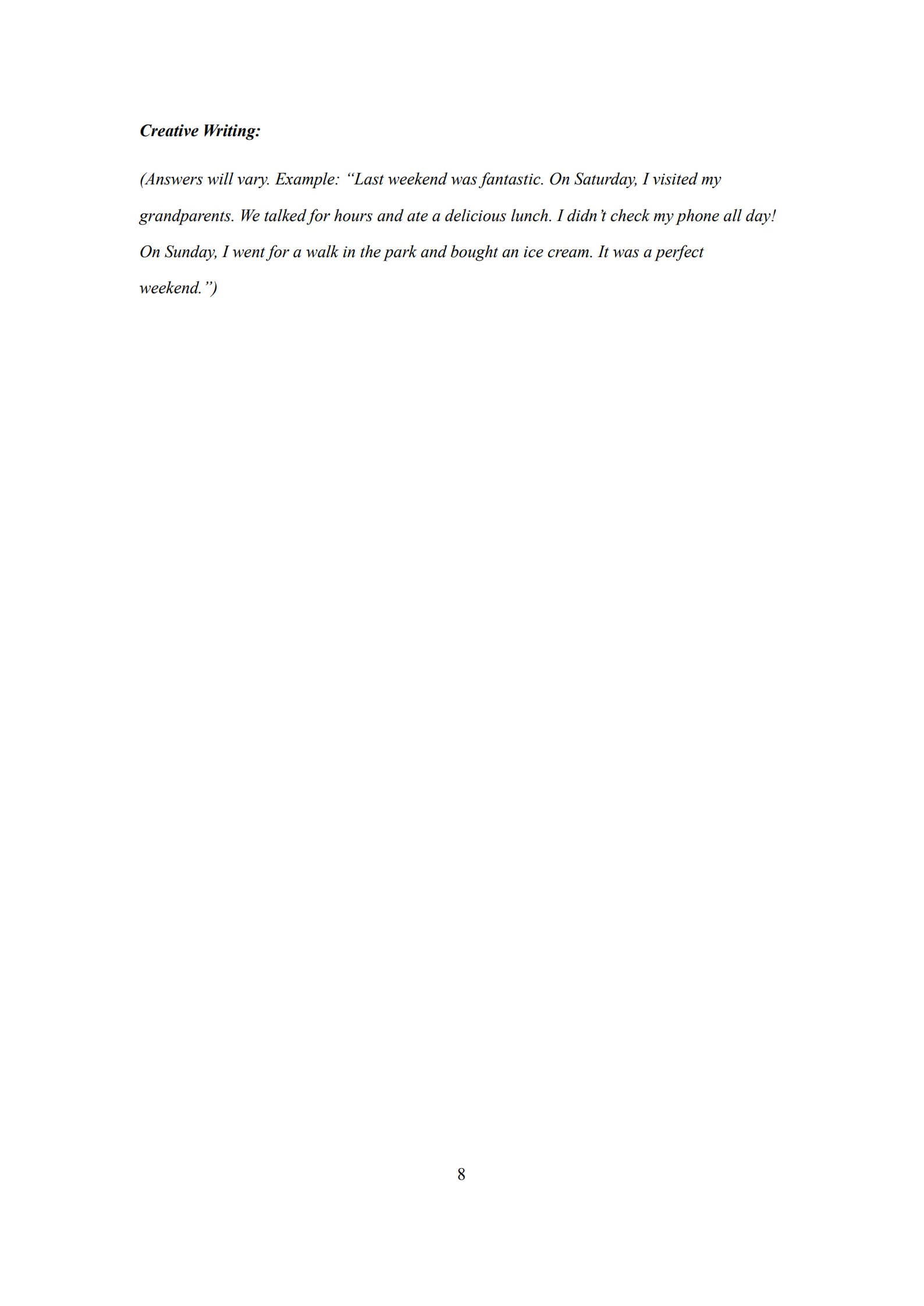
- Present: “I work in an office today.” (Now)
- Past: “I worked in a shop last year.” (Past!)
The difference is simple: the Past Simple tells us the action is done. It’s a completed chapter in your story.
Why You’ll Love Using the Past Simple
Using this tense makes your English sound natural and confident. Imagine telling a friend, “I watched a great movie yesterday.” Without the Past Simple, your conversation can feel unclear or robotic.
Our PDF Agile template makes this super easy to learn. It shows you clear, side-by-side examples (just like the “work/worked” example above) so you can see the pattern instantly. You’ll quickly learn to spot the common time words like “yesterday” or “last summer” that signal it’s time to use your Past Simple time machine!
2. What Are Regular and Irregular Verbs in Past Simple Tense?
Verbs in the Past Simple Tense fall into two categories: regular and irregular. Understanding the difference is crucial for accuracy.
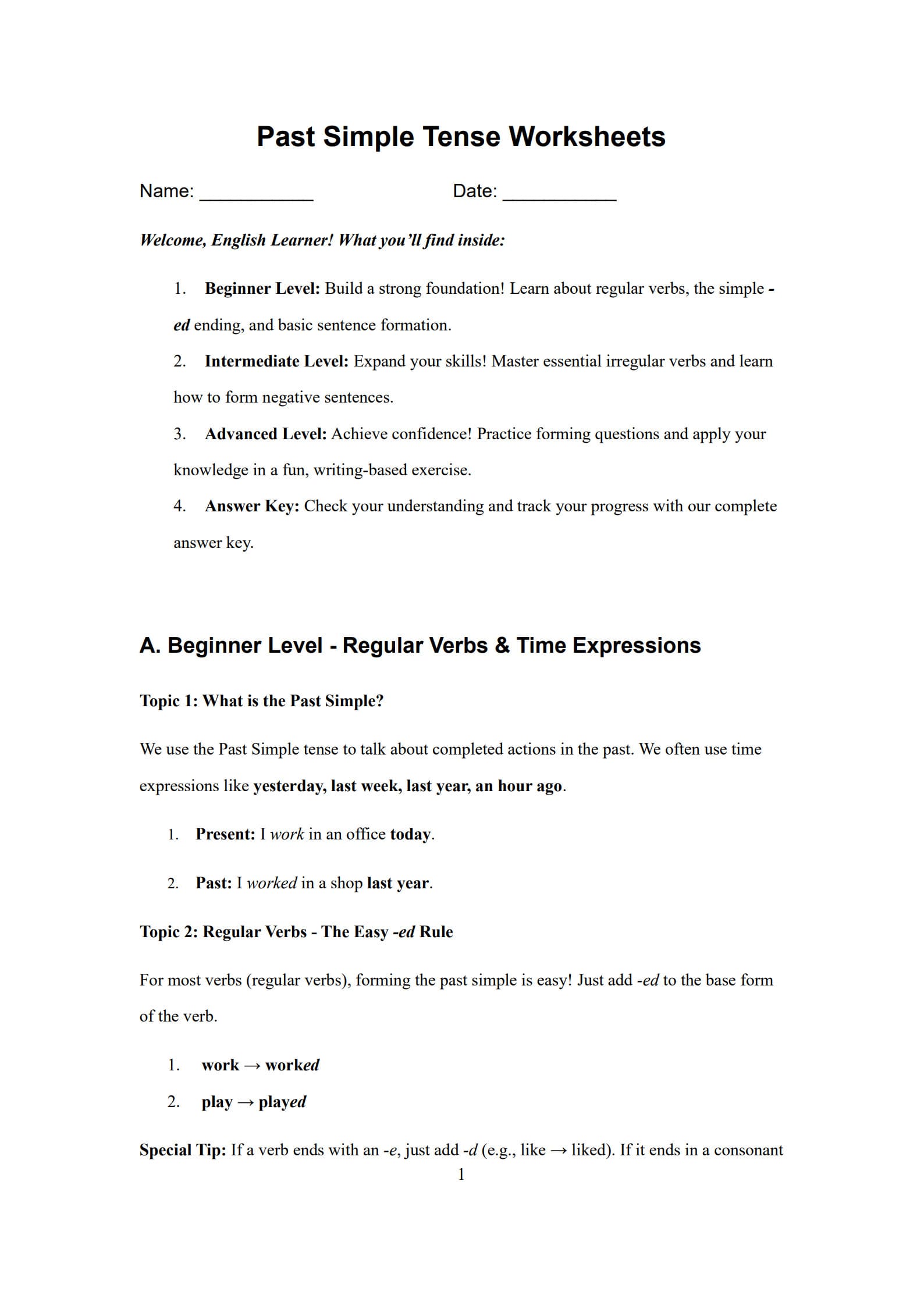
- Regular verbs follow a simple pattern: just add “-ed” to the base form.
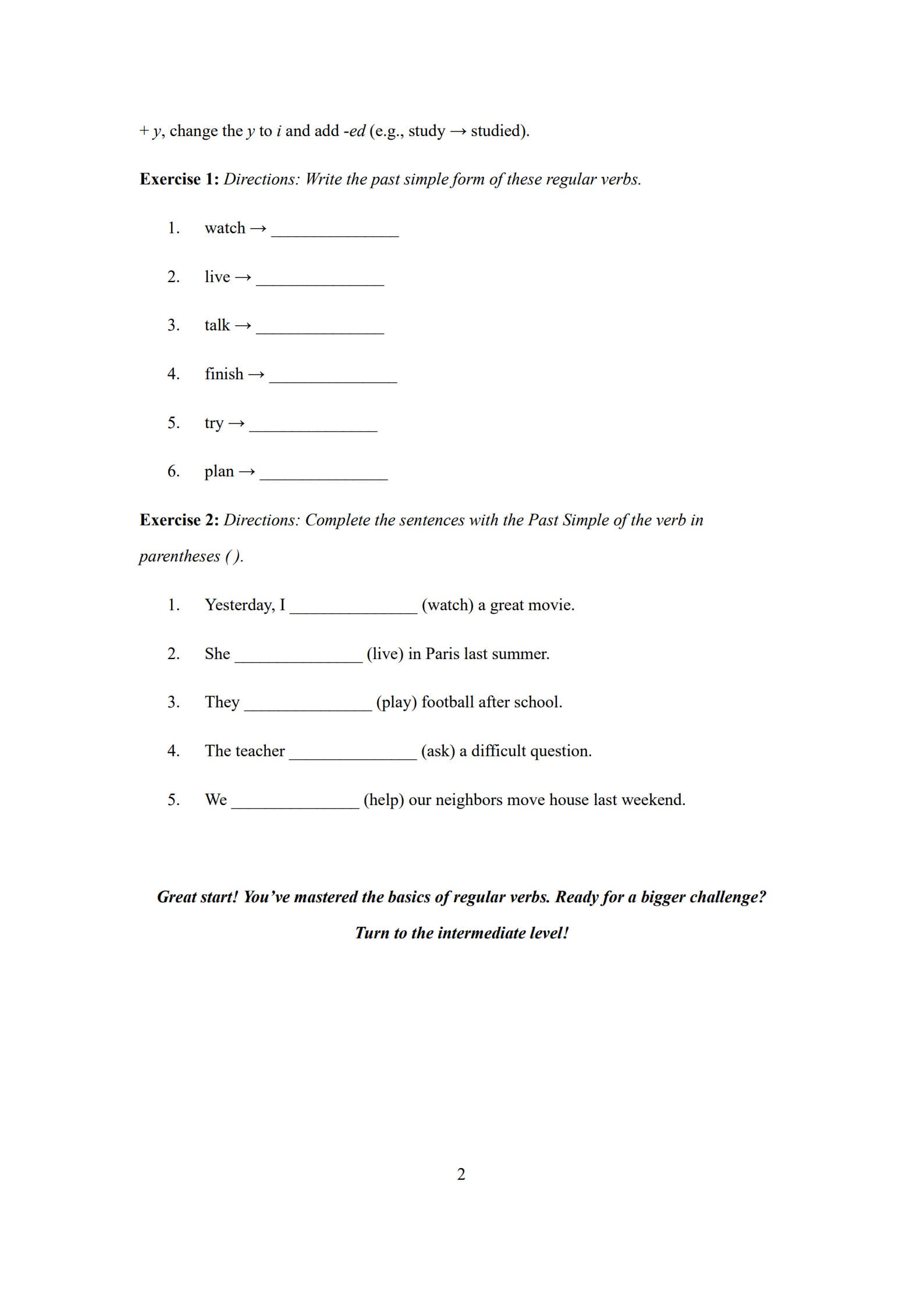
For instance, “watch” becomes “watched,” and “play” becomes “played.” The PDF Agile template includes handy tips for exceptions, like adding only “-d” if the verb ends in “e” (e.g., “like” → “liked”) or changing “y” to “i” before adding “-ed” (e.g., “study” → “studied”).
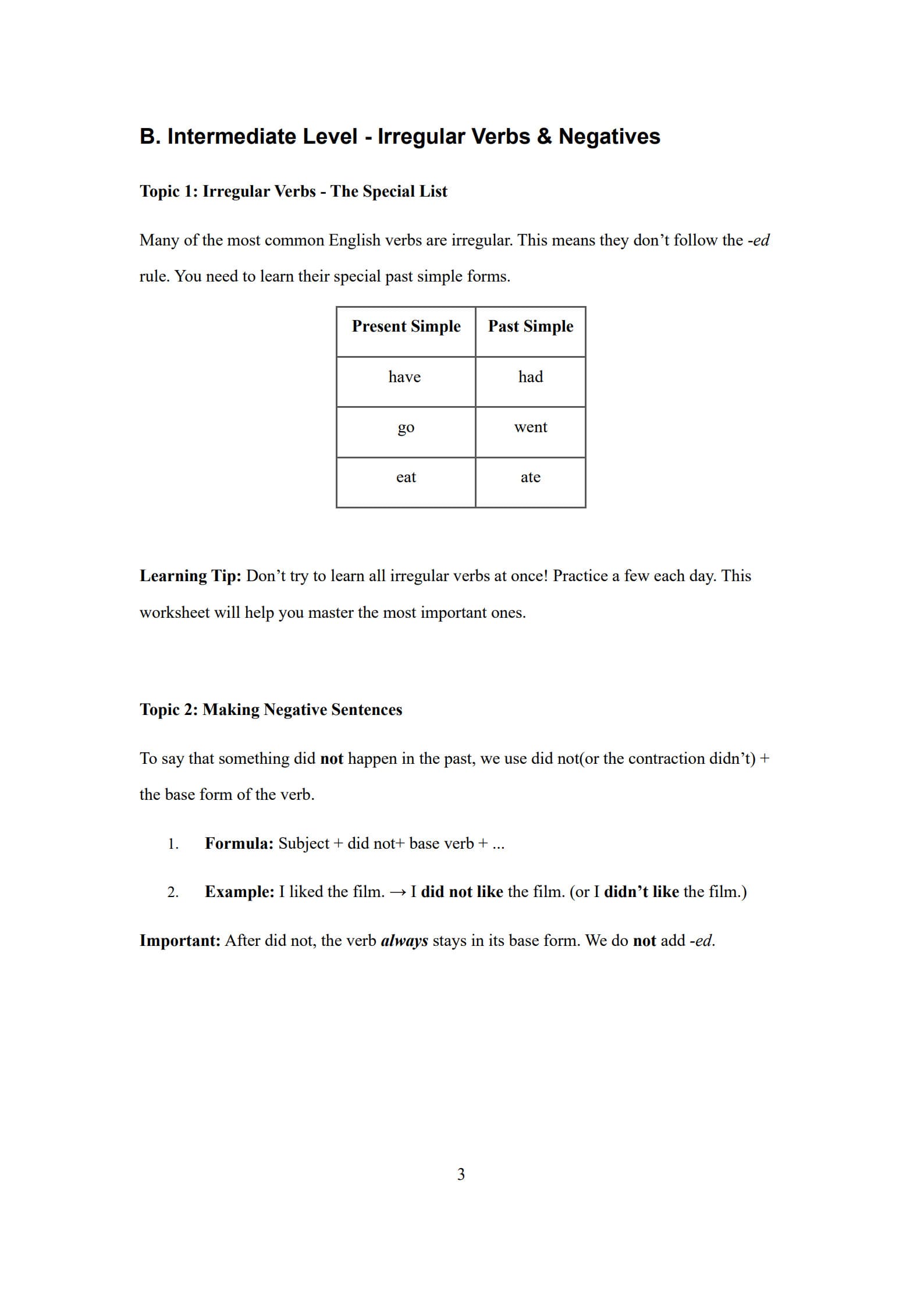
- Irregular verbs have unique past forms that you need to memorize.
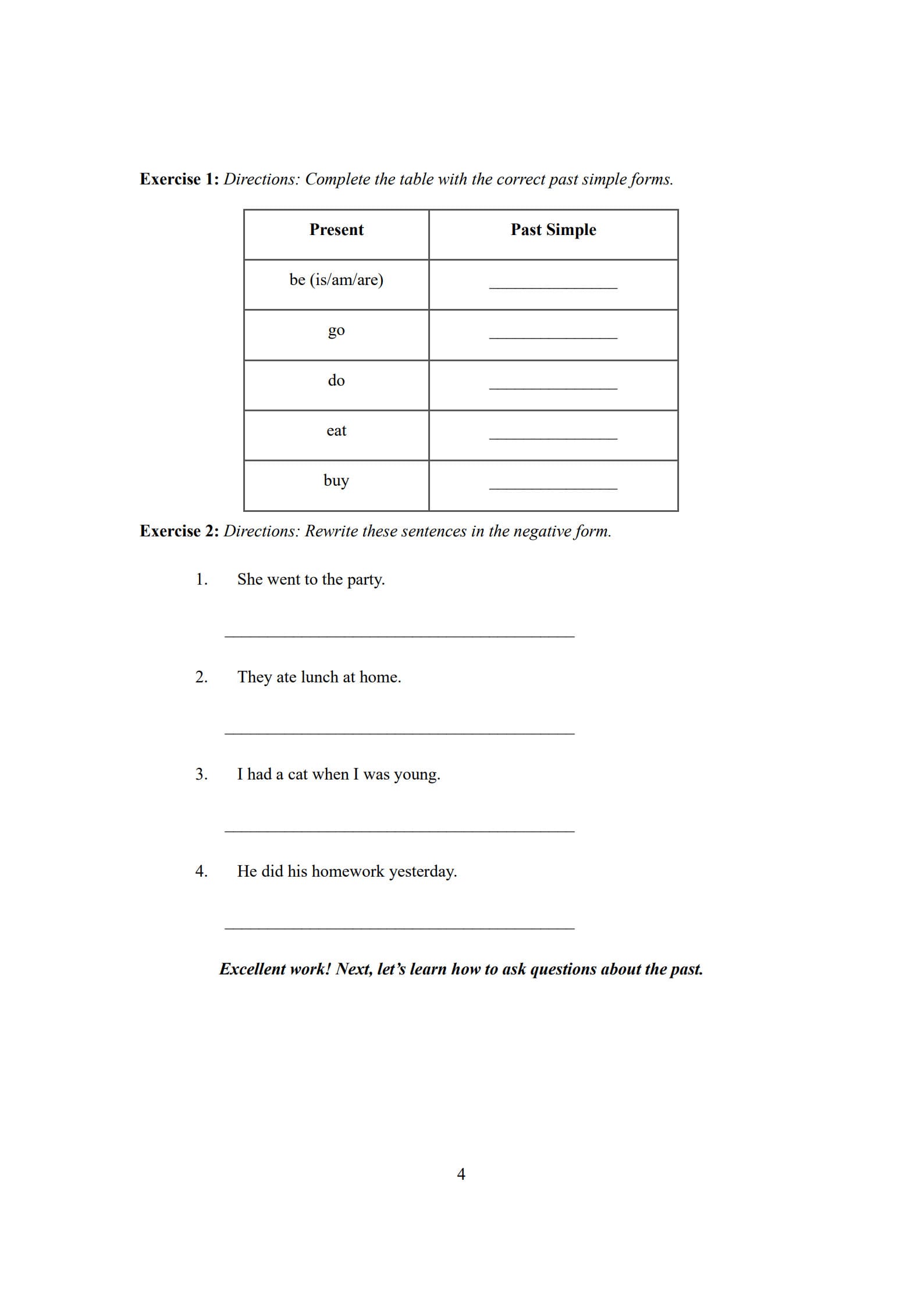
For example, “go” becomes “went,” and “eat” becomes “ate.” The template provides a focused list of high-frequency irregular verbs, such as “have → had” and “do → did,” to prevent overwhelm. As the worksheet advises, “Don’t try to learn all irregular verbs at once! Practice a few each day.” This staggered approach, combined with exercises like filling in a table (e.g., “be (is/am/are) → was/were”), makes learning manageable.
3. Nine Questions to Quickly Learn Past Simple Tense
Directions: Testing yourself with questions is a fast way to solidify your knowledge. Here are 9 questions and try answering them to check your understanding:
- What is the past simple form of “watch”?
- How do you say “She lived in Paris last summer” in a negative form?
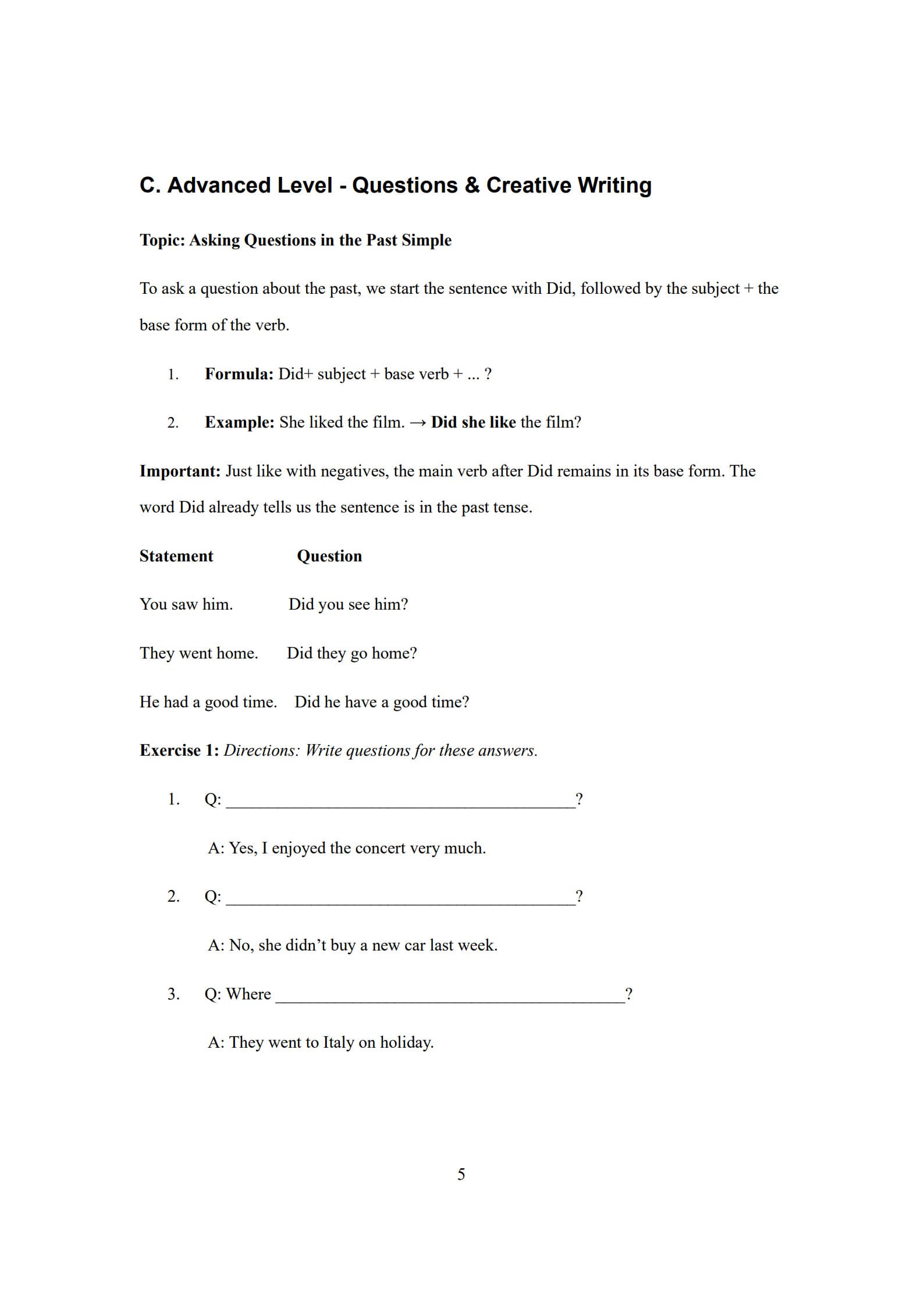
- Change “They played football” into a question.
- What is the past of “go”?
- Rewrite “I had a cat” as a negative sentence.
- Where did they go on holiday?
- How do you form a question from “He did his homework”?
- What time expression is often used with Past Simple?
- Why is the verb in base form after “did” in questions?
4. How to Memorize Irregular Verbs with Examples
Does the list of irregular verbs seem long and scary? Don’t worry! Memorizing them is like learning the rules to a new game. With a few smart tricks, you can master them faster than you think. Our PDF Agile template is designed to make this process easy and even fun!
Secret 1: Learn in Groups, Not Alone!
Instead of trying to memorize every verb at once (which is boring and hard!), group verbs that change in similar ways. This turns a big list into small, manageable puzzles.
- The “A” Pattern Group: Some verbs change their middle vowel to an “a”.
sing→ sang
ring→ rang
drink→ drank
- The “O” Pattern Group: Others change to an “o”.
break→ broke
speak→ spoke
steal→ stole
Secret 2: Use Stories, Not Just Lists
Reading a list is one thing, but using the verbs is how you truly remember them. The best way to make them stick is to put them into short, meaningful sentences.
Let’s practice with examples from your worksheet:
- “I went to the party.”
- “They ate lunch at home.”
- “I had a cat when I was young.”
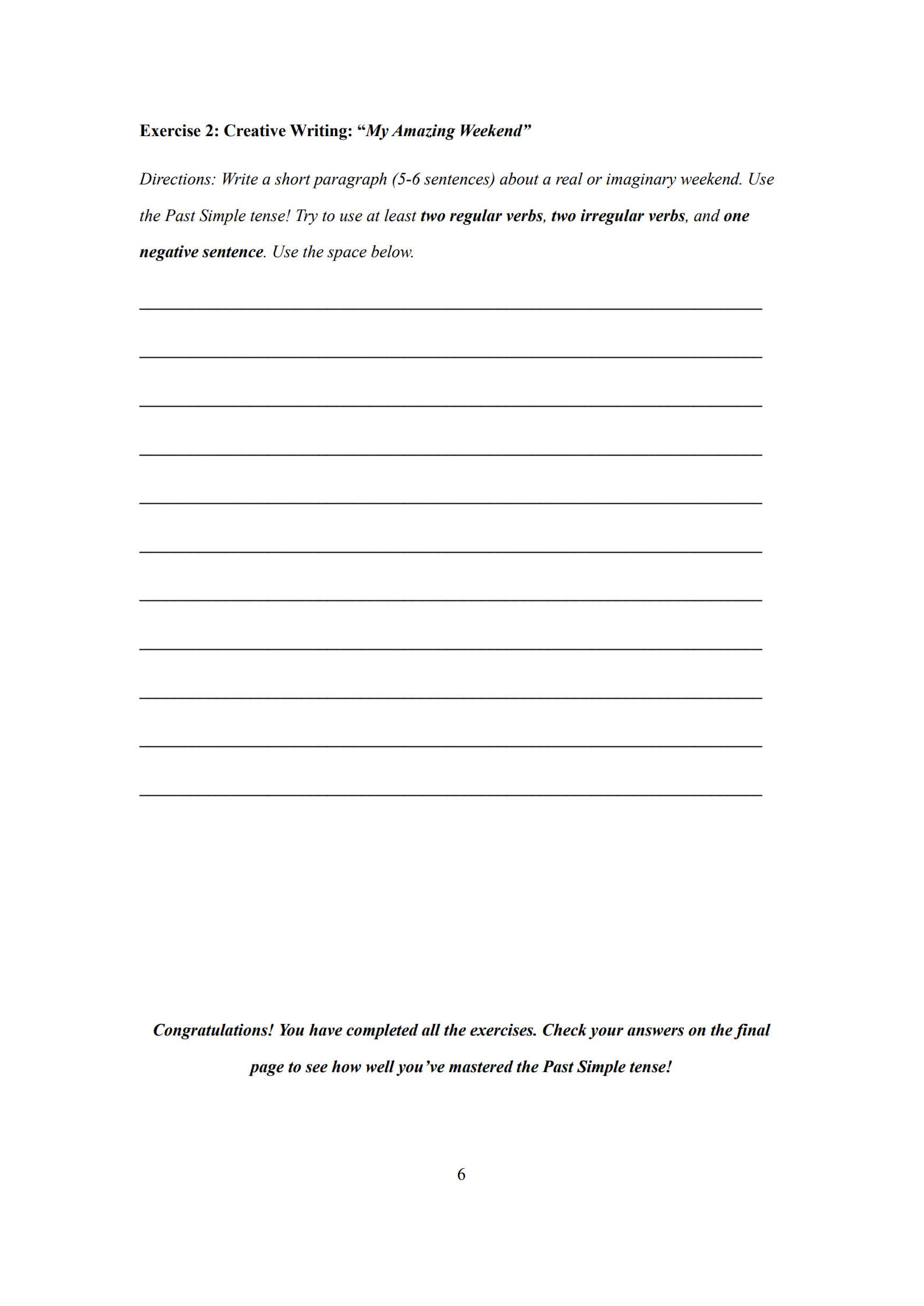
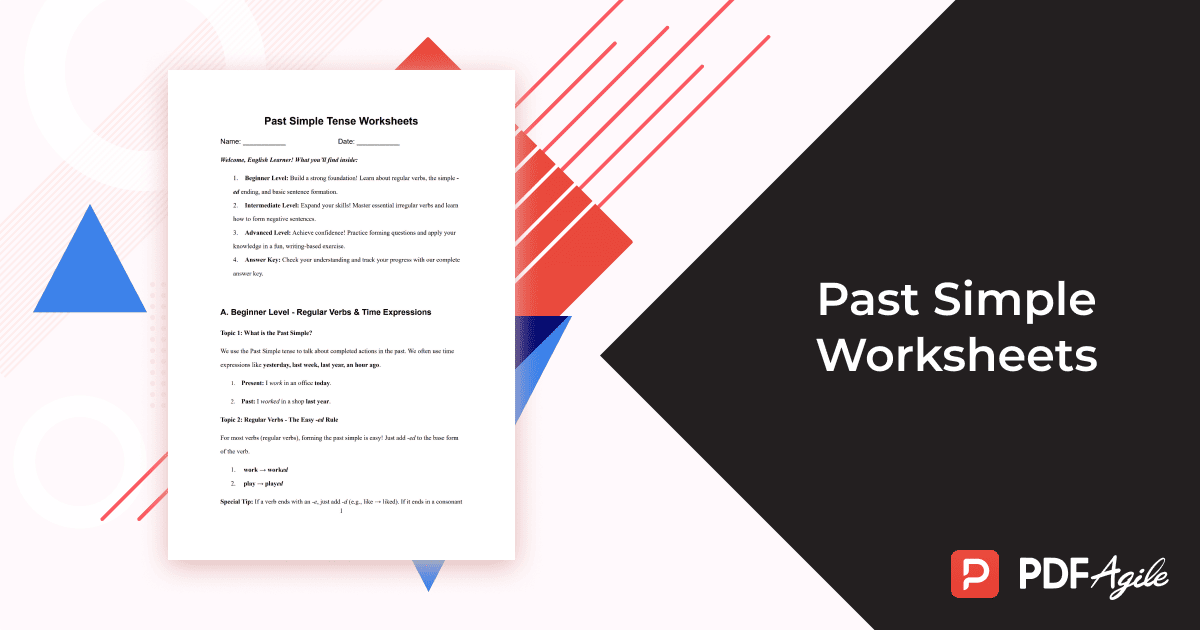
This is the most effective part of the PDF Agile template. The Advanced Level Creative Writing exercise asks you to write a short story like “My Amazing Weekend.” This is your chance to use the verbs actively.
Example:
“Last weekend, I visited my grandparents. We talked for hours and ate a delicious lunch. I didn’t check my phone all day! On Sunday, I went for a walk and bought an ice cream.”
By writing your own story, you move from boring memorization to creative use. This is how you build real confidence!
5. Mistakes with Examples to Avoid
Even advanced learners make mistakes with the Past Simple Tense. Here are common errors to watch for, illustrated with examples from the PDF Agile template:
- Adding “-ed” to irregular verbs: Incorrect: “I go-ed to school.” Correct: “I went to school.” The template’s irregular verb table reminds you that verbs like “go” don’t follow the regular pattern.
- Using the wrong verb form in negatives and questions: Incorrect: “Did she liked the film?” Correct: “Did she like the film?” As the template explains, after “did,” the verb stays in base form. Similarly, in negatives, avoid “She didn’t went”—instead, say “She didn’t go.”
- Confusing time expressions: Using present-time words like “now” with Past Simple can cause confusion. Stick to past indicators like “yesterday,” as shown in the template’s sentence: “Yesterday, I watched a great movie.”
- Overusing irregular verbs: While common, not all verbs are irregular. The template balances practice with regular verbs (e.g., “talked”) to prevent this habit.
6. How to Use This Template on PDF Agile
Using the Past Simple Tense Worksheets template in PDF Agile is simple and efficient. Follow these steps to get started:
Step 1: Download the Past Simple Tense Worksheet Template
Open the PDF Agile app and navigate to the Template Library. Search for “Past Simple Tense Worksheets” and click “Download” or “Use Template” to access it instantly.
Step 2: Complete the Exercises Digitally or in Print
You can fill out the template directly on your device using PDF Agile’s editing tools. If you prefer handwriting, print the template and work offline. The structured layout guides you through each topic, from regular verbs to creative writing.
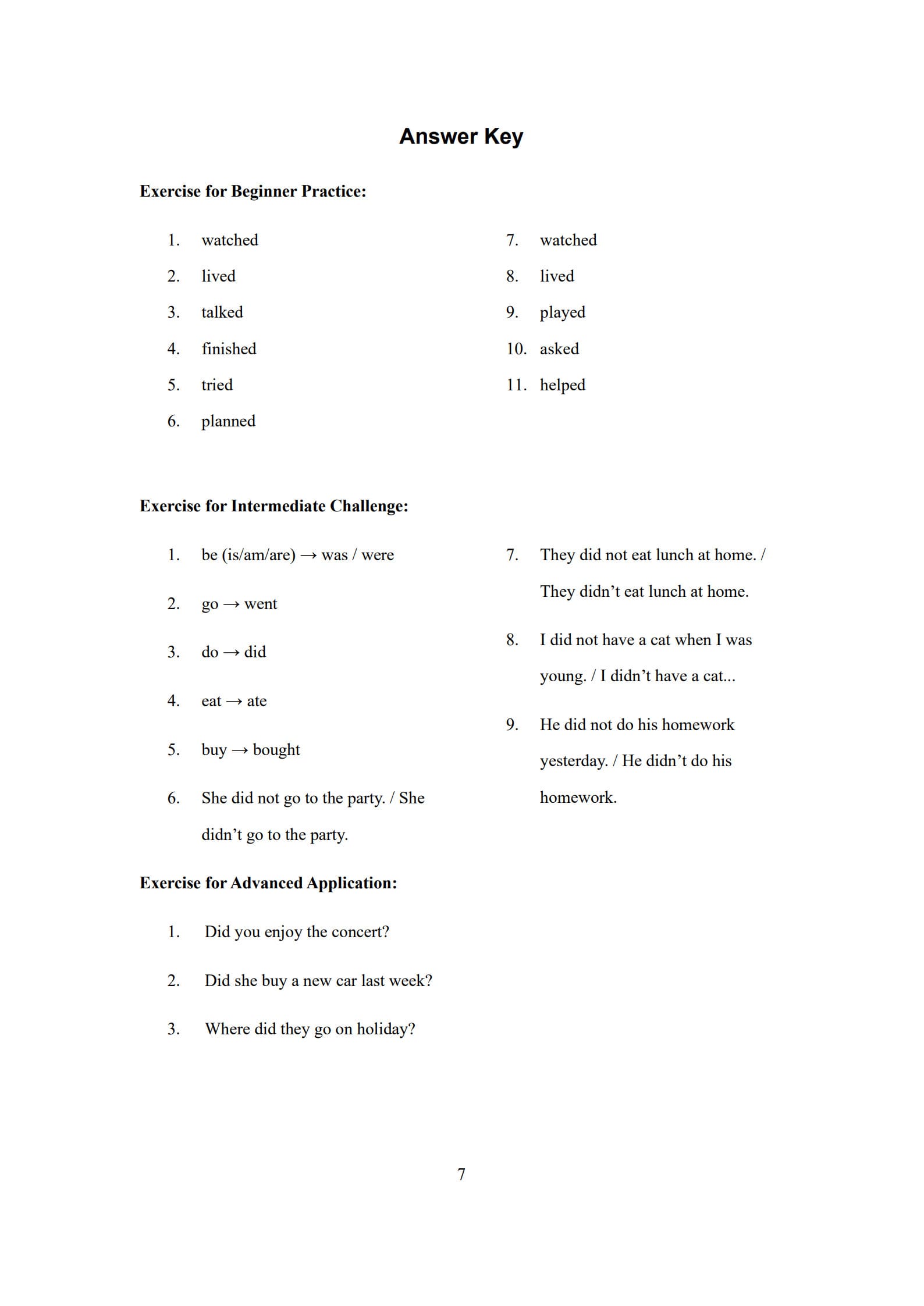
Step 3: Check Your Answers with the Key
After completing the exercises, refer to the answer key included in the template. This immediate feedback helps you learn from mistakes and track progress.
Step 4: Save, Share, and Review
Save your completed worksheet as a PDF for future reference. You can share it with a teacher or study group via email directly from the app. Revisit the template periodically to reinforce your skills—the creative writing section.
7. Tips for Maximizing the Template:
- Start with the beginner level to build confidence.
- Use the irregular verb table as a quick reference during conversations.
- Time yourself with the exercises to improve speed.
- Combine the template with spoken practice for best results.
Conclusion
Mastering the Past Simple Tense opens doors to fluent English communication, allowing you to share stories and experiences with clarity. With PDF Agile’s interactive worksheet template, you have a structured, engaging tool that makes learning efficient and fun. Download it today from the PDF Agile app, and start your journey to confidence in the past tense.