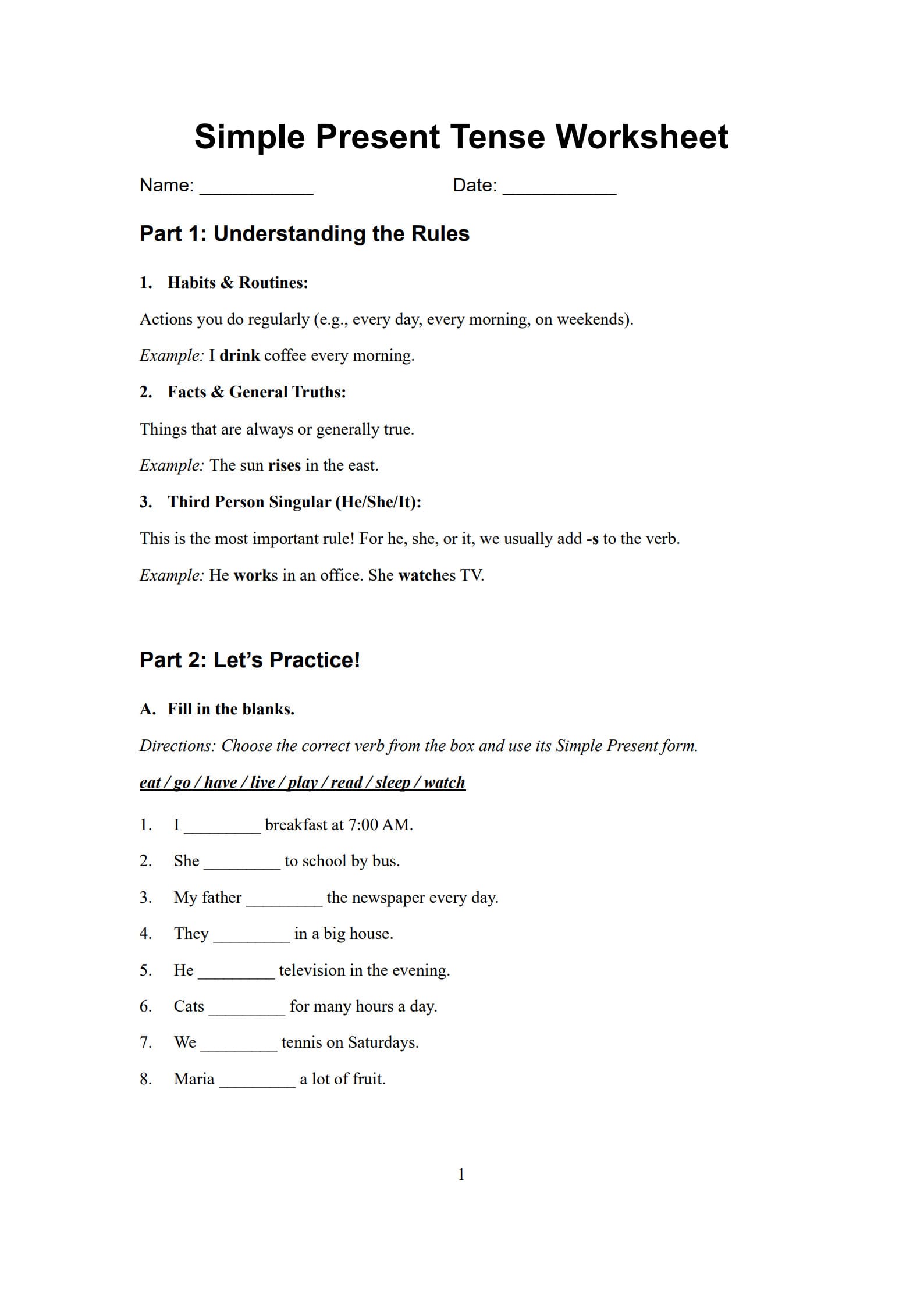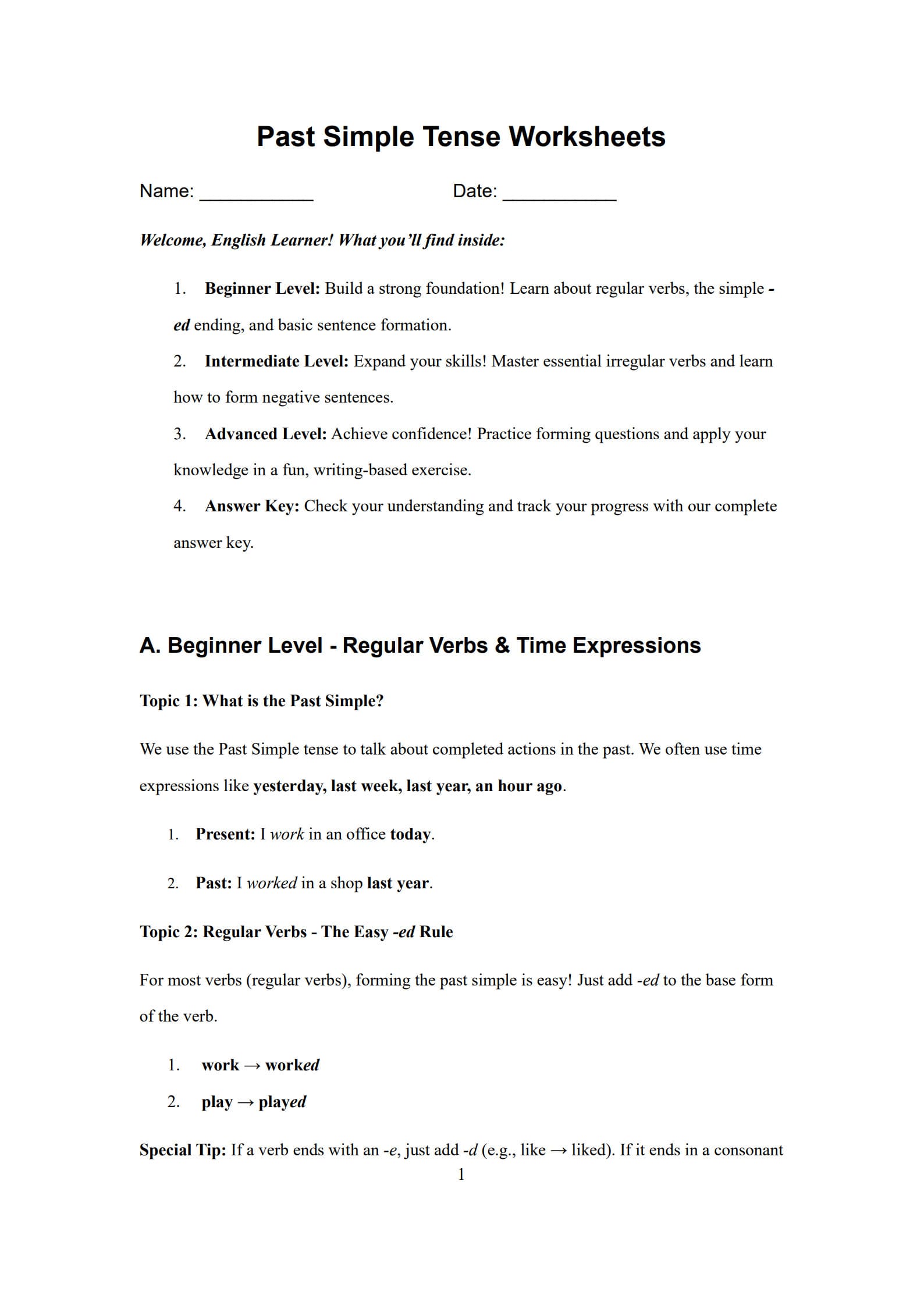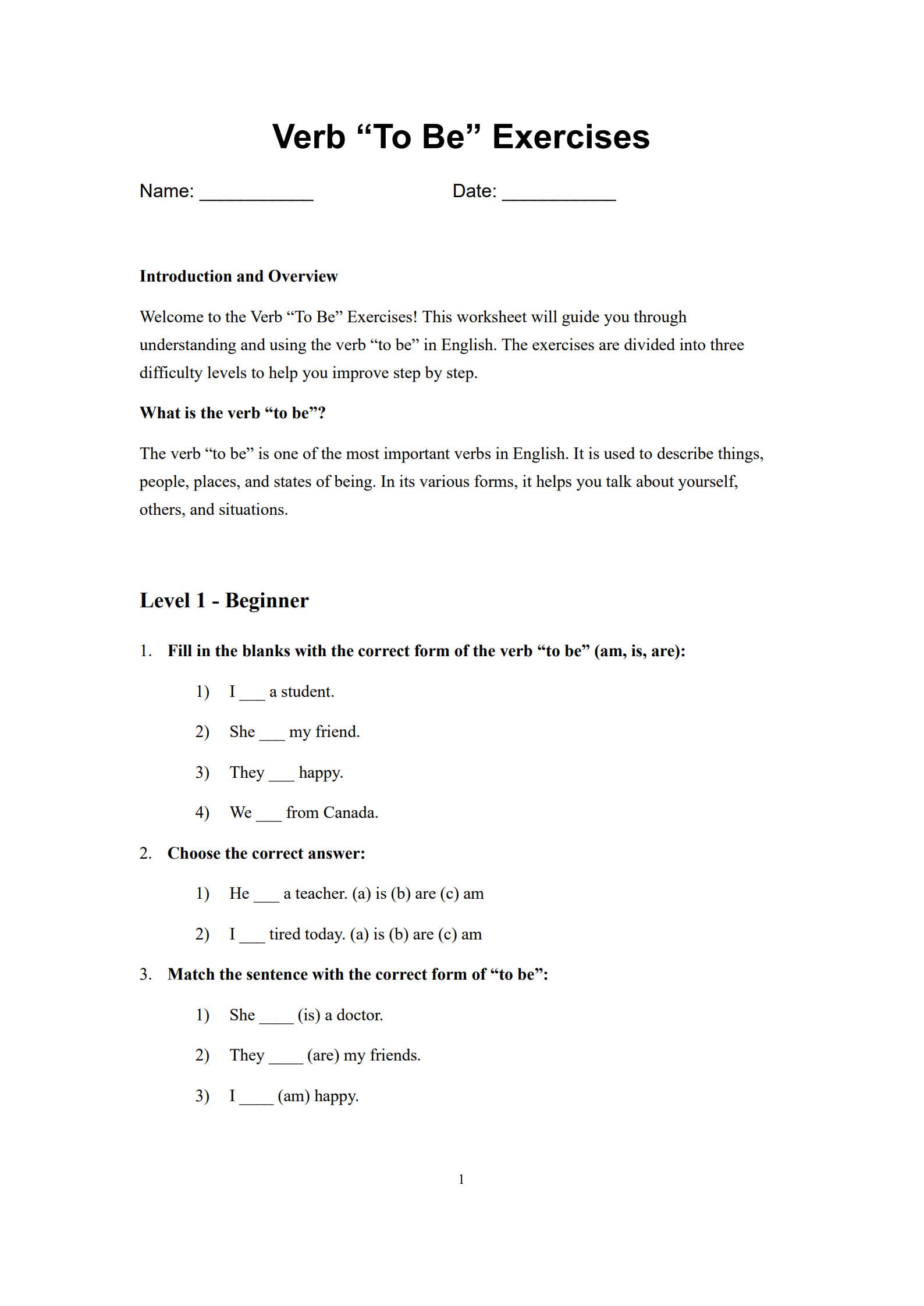


Are you looking for a structured, engaging, and effective way to master the present perfect tense? Look no further! At PDF Agile, we’ve designed a ready-to-use Present Perfect Tense Worksheet template that simplifies learning through hands-on exercises, clear examples, and instant feedback. Whether you’re a beginner navigating “has” versus “have” or an advanced learner tackling mixed tenses, this template is your go-to resource. In this instructional essay, we’ll explore how the tense exercises worksheet builds skills step by step, why it’s a must-have for English learners, and how to customize it effortlessly using PDF Agile’s app. Let’s dive in and transform your grammar practice into an interactive, rewarding experience!
Why Is a Present Perfect Worksheet Essential for Building Grammar Confidence?
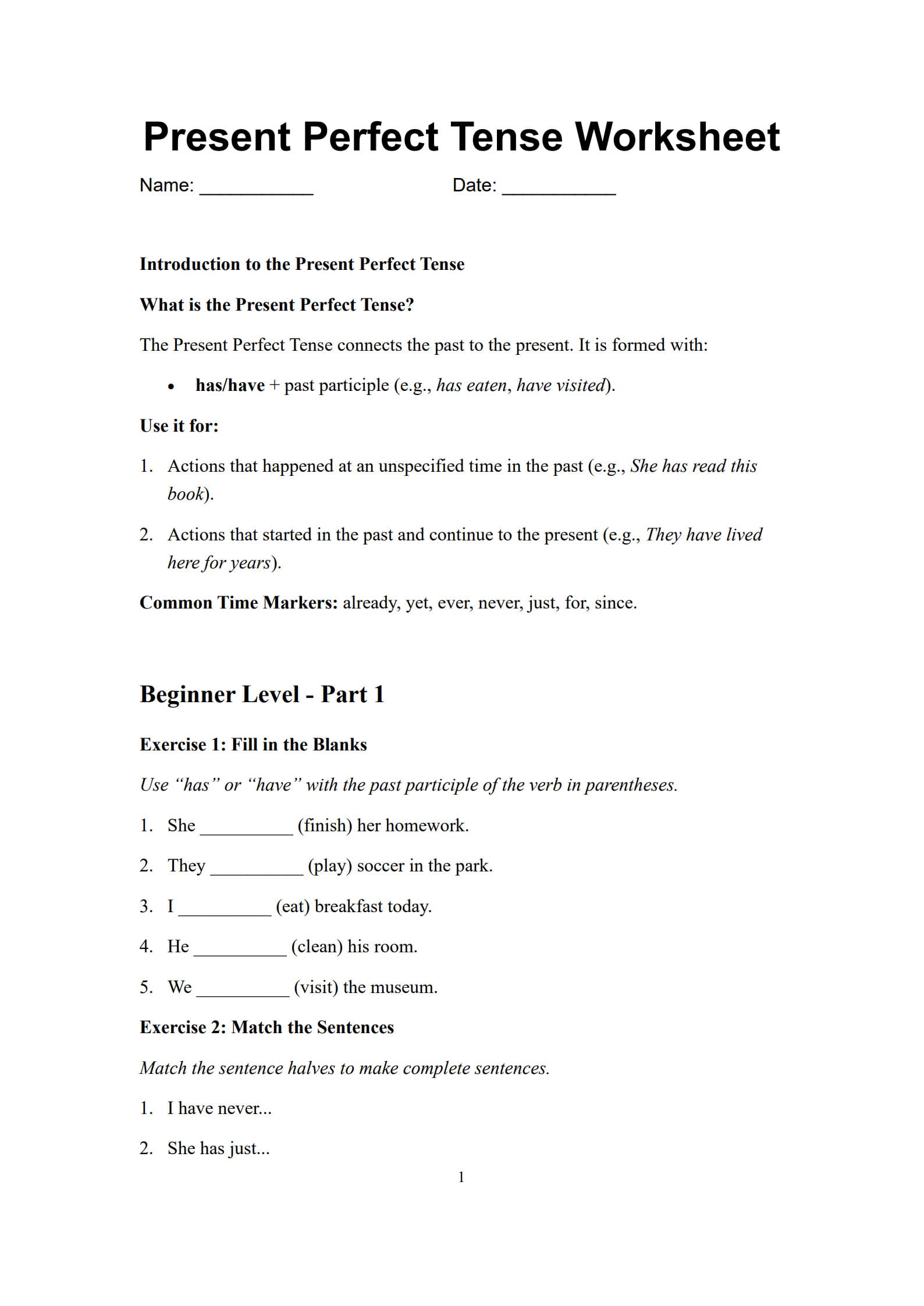
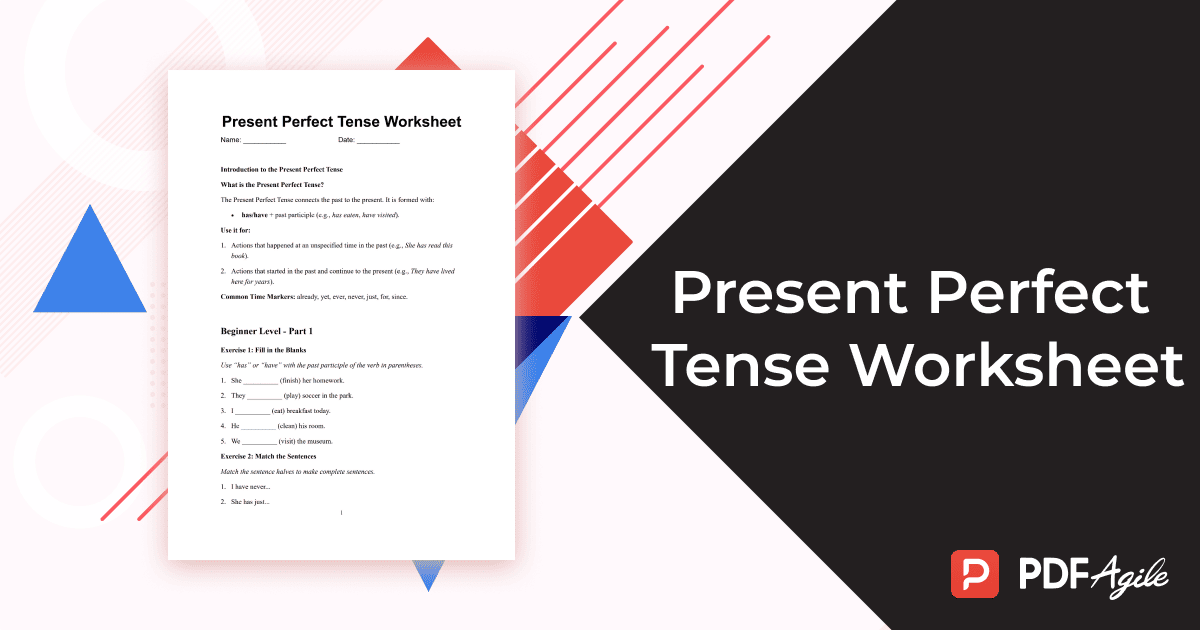
What if you could turn grammar practice from a chore into an exciting challenge? Our present perfect worksheet does exactly that! Designed with pedagogy in mind, it breaks down the tense into digestible sections, starting from the basics and advancing to complex applications. For instance, the worksheet begins by explaining the core concept: the present perfect connects past actions to the present using “has/have” + past participle. This foundation is crucial because many learners struggle with when to use this tense versus the simple past. By providing relatable examples—like “She has read this book” for unspecified past actions—the template makes abstract rules tangible.
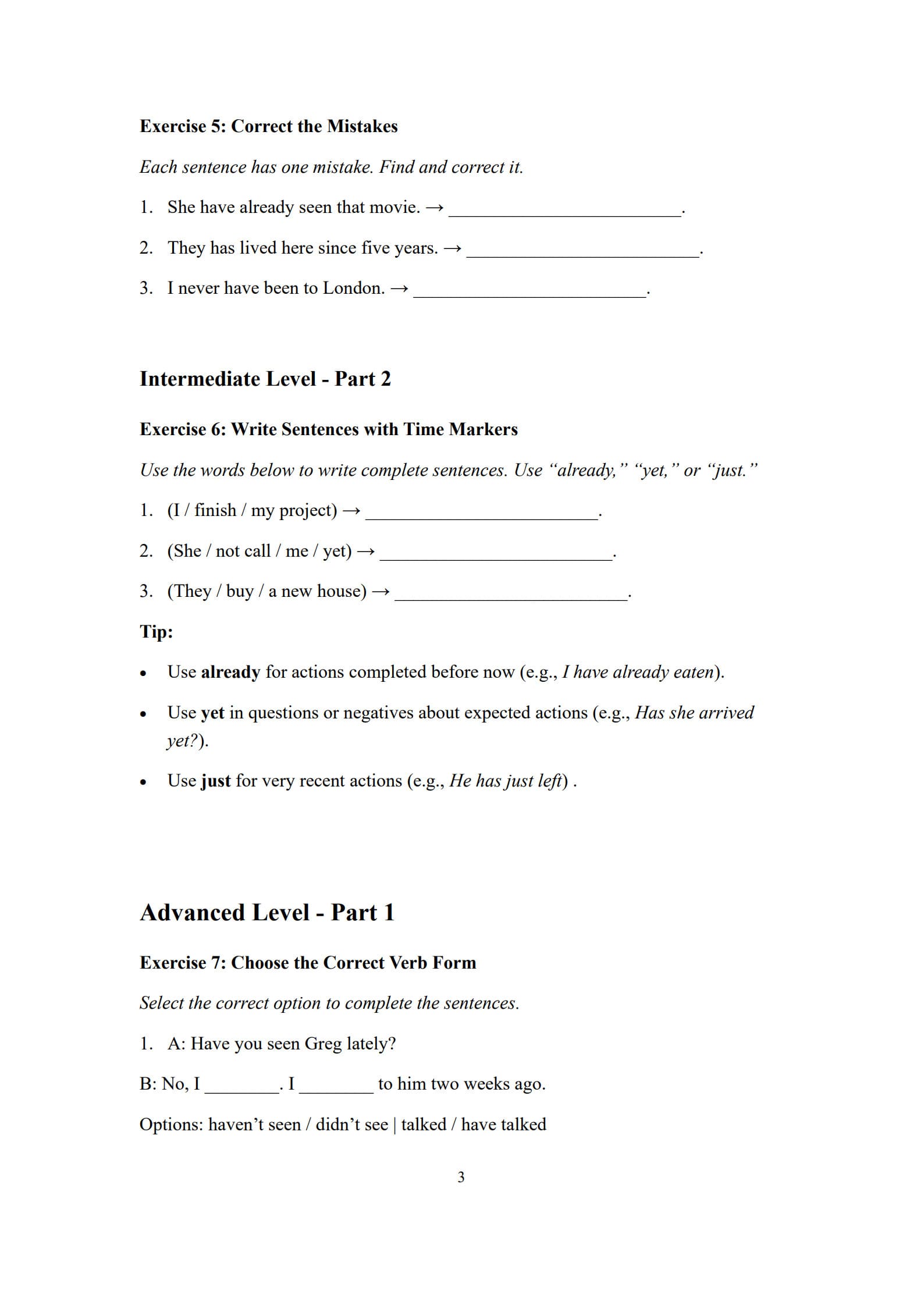
Moreover, the worksheet incorporates present perfect simple exercises that cater to different proficiency levels. Beginners, for example, start with filling in blanks (e.g., “She ________ [finish] her homework”), which reinforces verb conjugation without overwhelming them. As learners progress, intermediate exercises like correcting mistakes (“She have already seen that movie” → “She has already seen”) build critical thinking. This layered approach ensures that users don’t just memorize answers but internalize patterns. The inclusion of time markers—such as “already,” “yet,” and “since”—further contextualizes usage, helping learners avoid common pitfalls.
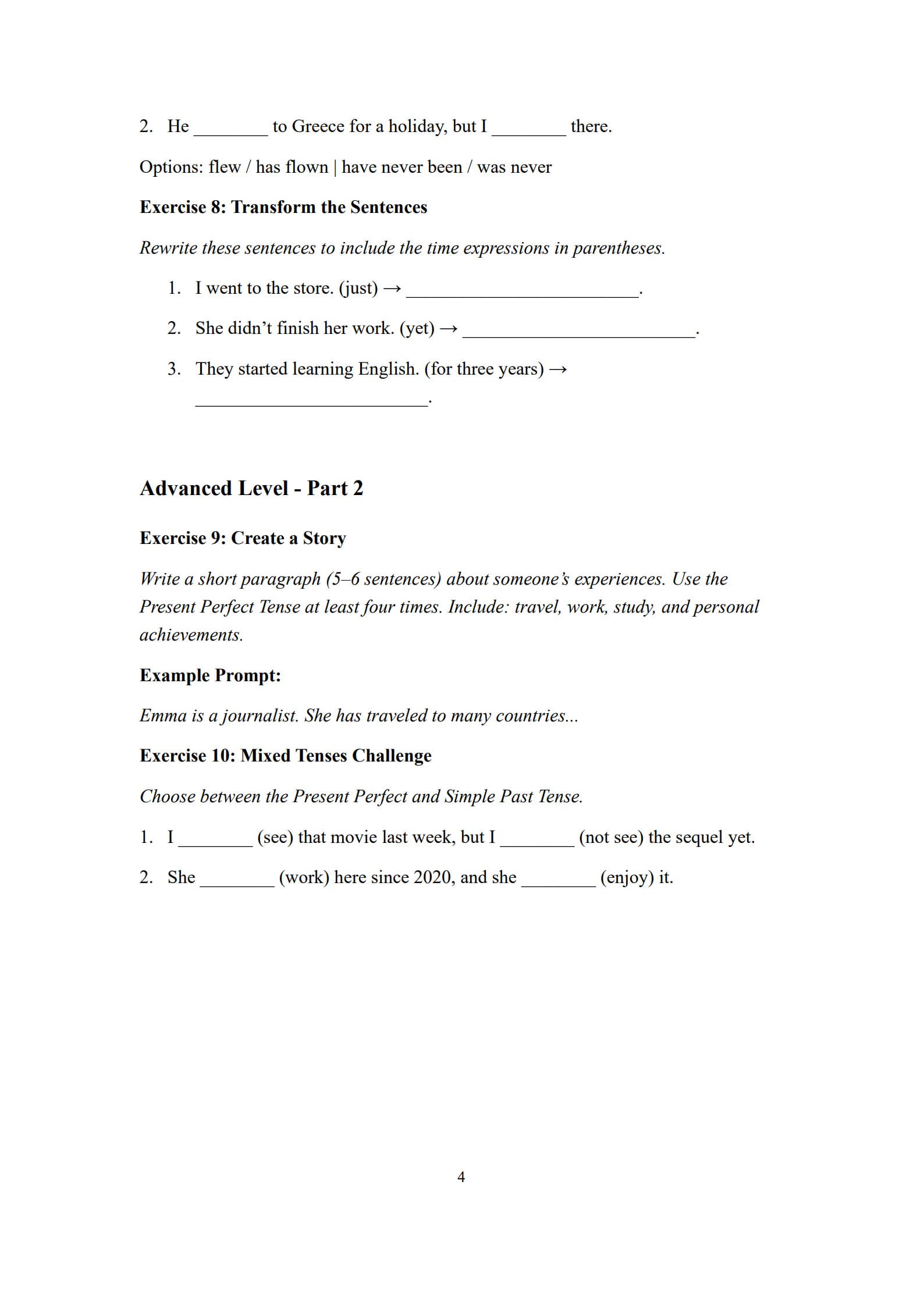
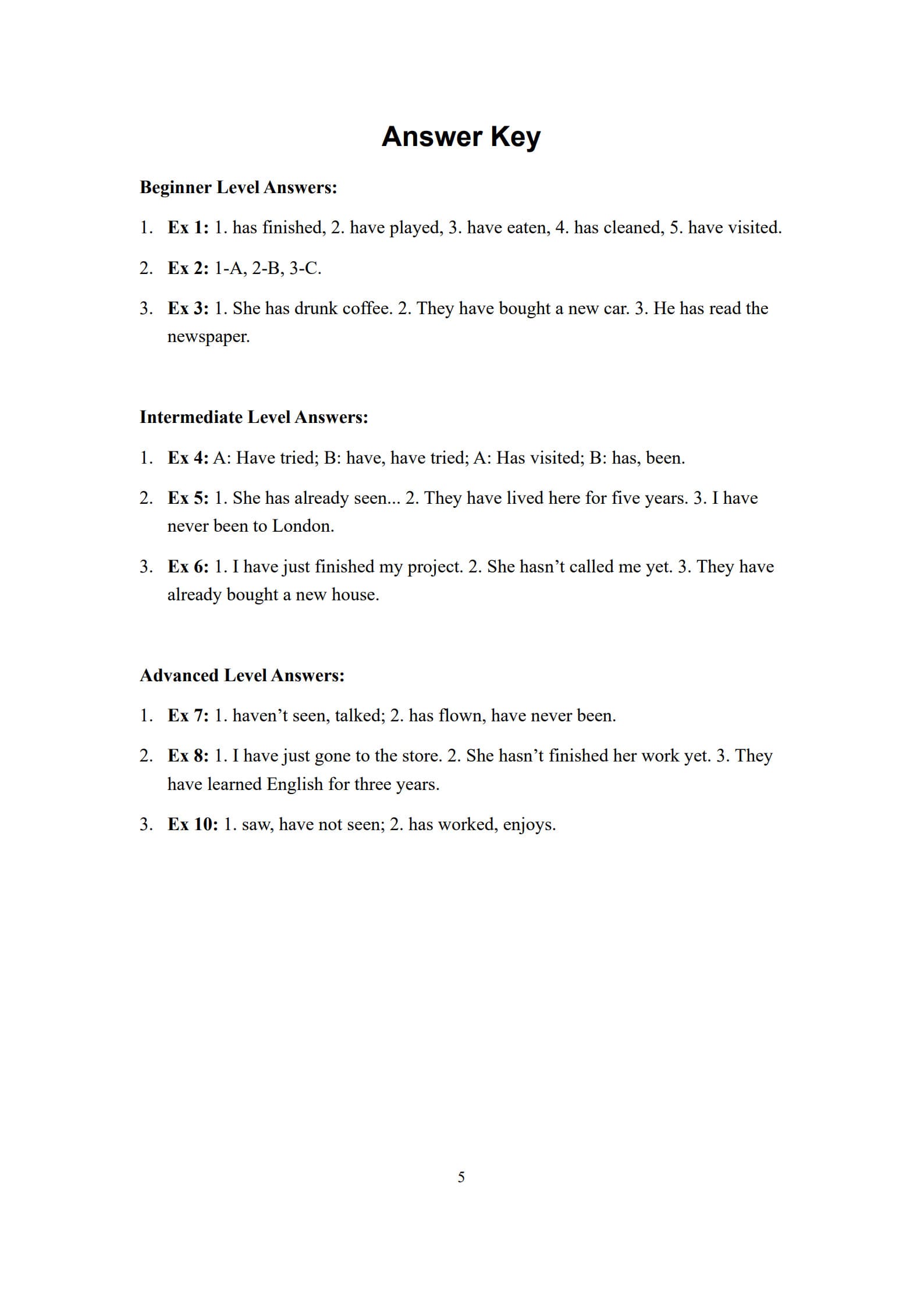
But why does this structure work so well? It mirrors natural language acquisition: starting with recognition, moving to application, and finally achieving creativity. For example, the advanced section challenges users to write a short story using the tense, promoting real-world language production. By integrating answers directly into the template (e.g., “Ex 1: has finished, have played”), PDF Agile empowers self-paced learning, making it ideal for classrooms, self-study, or tutoring sessions. In short, this worksheet isn’t just a set of exercises; it’s a roadmap to fluency.
How Do Present Perfect Tense Exercises with Answers Accelerate Learning?
Imagine practicing grammar for hours, only to remain unsure if you’re correct—frustrating, right? That’s where present perfect tense exercises with answers become a game-changer. Our template includes a comprehensive answer key for every level, enabling immediate feedback that boosts retention and motivation. For instance, in Exercise 1, learners confirm their answers against keys like “has finished” or “have visited,” reinforcing correct usage through repetition. This instant validation helps identify gaps early, preventing the reinforcement of errors.
Beyond correctness, these exercises cultivate deeper understanding through variety. Take Exercise 5, where users correct mistakes like “They has lived here since five years” to “They have lived here for five years.” This activity highlights subtle nuances (e.g., “for” vs. “since”) that even advanced learners might miss. Similarly, the mixed-tense challenge (Exercise 10) contrasts present perfect with simple past (“I saw that movie last week, but I have not seen the sequel”), sharpening contextual awareness. Such exercises are carefully crafted to address real-life scenarios, making the practice relevant and memorable.
But the true brilliance lies in the template’s adaptability. Teachers can use the answer key to facilitate discussions—e.g., “Why is ‘has’ used instead of ‘have’ here?”—while self-learners can track their progress over time. By providing solutions, PDF Agile reduces the dependency on instructors, fostering independence. Ultimately, exercises with answers transform passive learning into an active, engaging process where every mistake becomes a stepping stone to mastery.
From Beginner to Advanced: How This Template Adapts to Your Journey
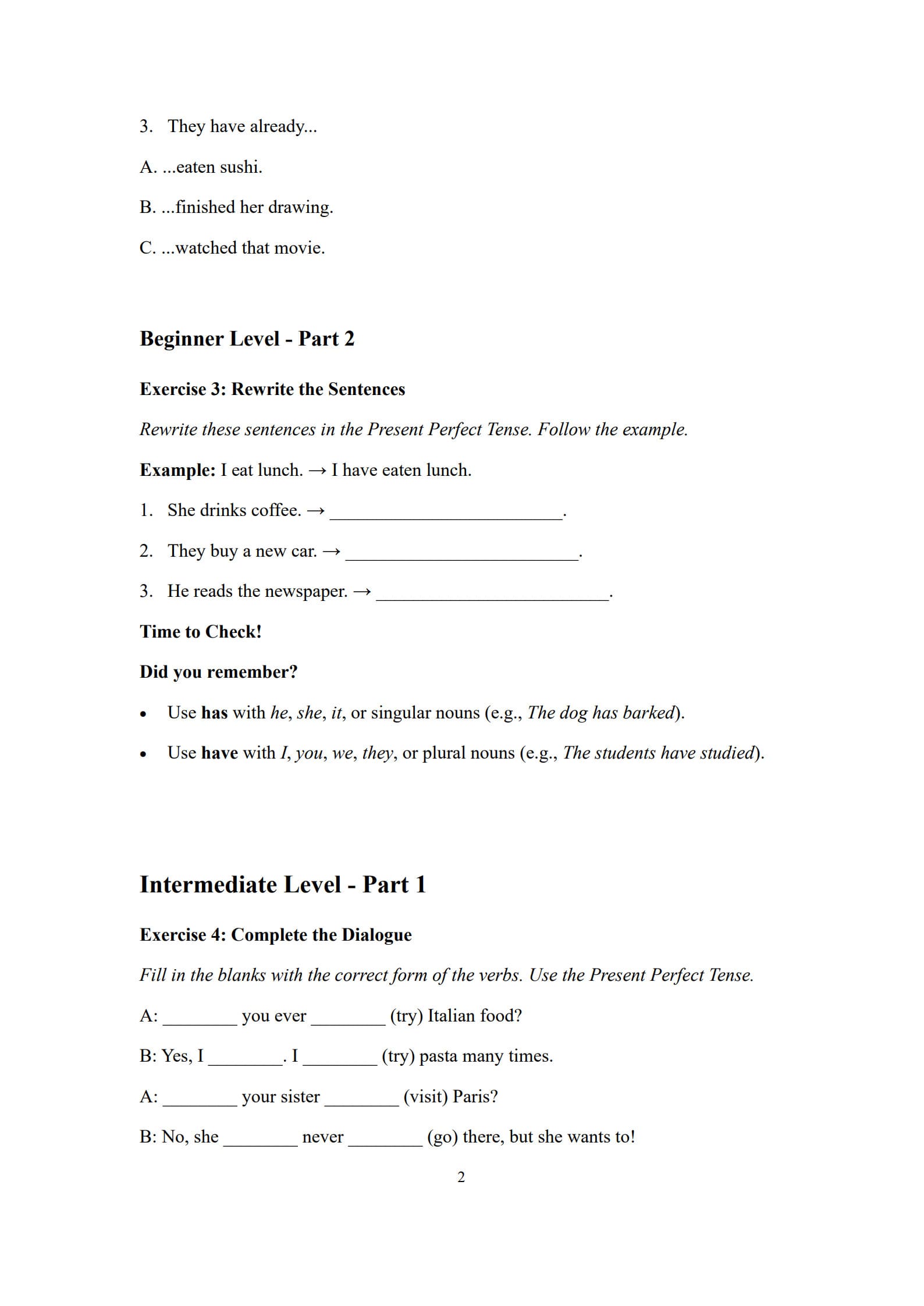
Learning grammar is a journey, and our worksheet is designed to grow with you. It opens with beginner-friendly tasks like matching sentence halves (e.g., “I have never…” paired with “…eaten sushi”) to build confidence through simple associations. As users advance, the exercises evolve in complexity—for example, rewriting sentences (“She drinks coffee” → “She has drunk coffee”) reinforces verb transformation skills. This scaffolding ensures that no one feels left behind, whether they’re revisiting basics or pushing their limits.
At the intermediate level, the template introduces practical applications, such as completing dialogues (“Have you ever tried Italian food?”). This mirrors everyday conversations, bridging the gap between theory and usage. Meanwhile, advanced sections like creating a story (Exercise 9) encourage creativity while enforcing grammar rules. For instance, a user might write: “Emma has traveled to many countries, has worked as a journalist, and has published several articles.” These tasks not only test knowledge but also foster ownership of learning.
How to Use the Present Perfect Tense Worksheet Template on PDF Agile
Ready to put this template into action? With PDF Agile’s user-friendly app, customizing and using the Present Perfect Tense Worksheet is seamless. Follow these steps to get started:
Step 1: Access the Present Perfect Tense Worksheet Template in PDF Agile
Open the PDF Agile app and navigate to the “Template Library.” Search for “Present Perfect Tense Worksheet” and select it. Alternatively, click “Use Template” on this page to launch it directly. The template comes pre-formatted with clear instructions, exercises, and an answer key, so you can begin immediately.
Step 2: Personalize the Content
Make the worksheet your own! Use PDF Agile’s editing tools to add a student’s name, date, or custom instructions. For example, you might insert additional examples like “We have just started” to emphasize recent actions. The app allows you to edit text fields, highlight key points, or even add images for visual learners.
Step 3: Complete Exercises Digitally or Print
Choose your preferred mode of practice. Type answers directly into the PDF using the app’s fillable fields—ideal for digital homework or online classes. Alternatively, print a crisp copy for handwritten practice. The template’s layout remains intact across devices, ensuring consistency.
Step 4: Review with the Answer Key
After completing exercises, check your work against the built-in answer key. Use PDF Agile’s comment feature to jot down notes—e.g., “Remember ‘has’ for third-person subjects!” This promotes reflective learning and helps track improvement over time.
Step 5: Save and Share
Save your customized worksheet to the cloud or device for future reference. Share it via email or link with classmates, teachers, or study groups. PDF Agile’s security features ensure your work stays private.
Conclusion:
In summary, the Present Perfect Tense Worksheet on PDF Agile is more than a static PDF—it’s a dynamic tool that adapts to your learning style. By integrating structured present perfect simple exercises, immediate feedback via answers, and real-world tasks, it transforms grammar practice into an engaging, effective routine. Whether you’re tackling beginner fill-in-the-blanks or crafting advanced stories, every section builds confidence and competence.
As you continue your English journey, remember that consistency is key. Revisit this template regularly to solidify your understanding, and explore other PDF Agile resources for comprehensive learning. With our app’s flexibility, you’re not just downloading a worksheet; you’re unlocking a pathway to fluency. So, why wait? Open PDF Agile today, and let’s perfect the present perfect together—one exercise at a time!