

In the journey of mastering English, vocabulary building and descriptive writing are foundational skills that empower learners to express themselves vividly and accurately. For English learners—whether children in school or adults enhancing their language skills—practicing with structured, engaging materials can make all the difference.
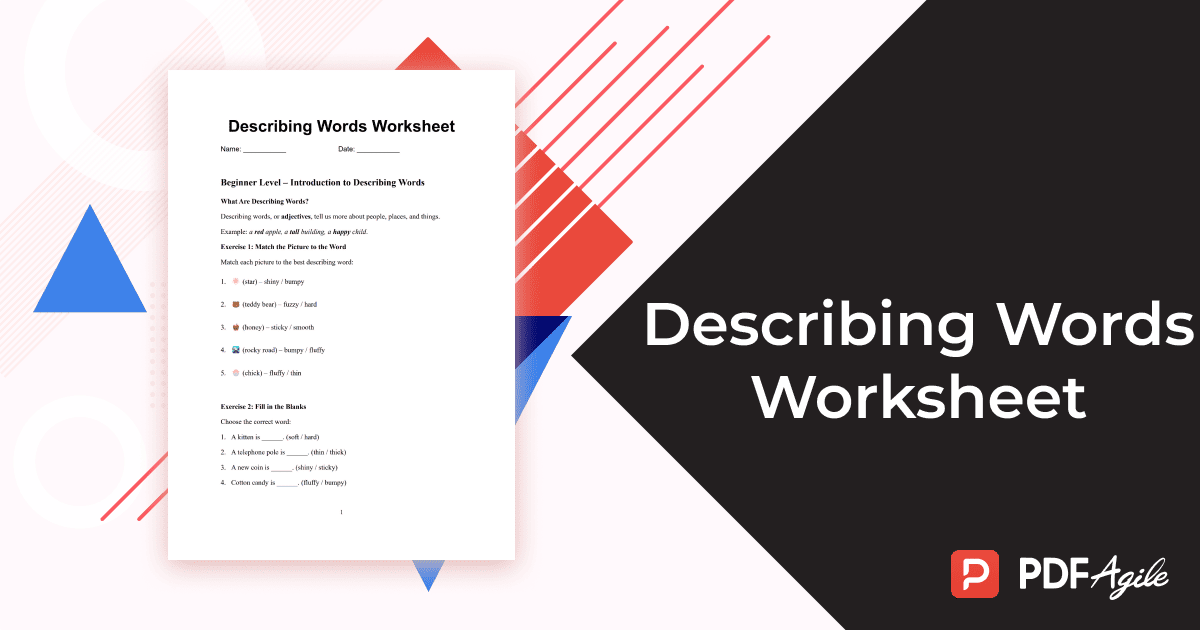
That’s why PDF Agile is excited to introduce our Describing Words Worksheet template, designed to guide users from beginner to advanced levels in using adjectives and sensory details effectively. This template, which is pre-filled with exercises and examples, offers a ready-to-use resource that saves time and enhances learning.
What Makes Describing Words Essential for English Learners?
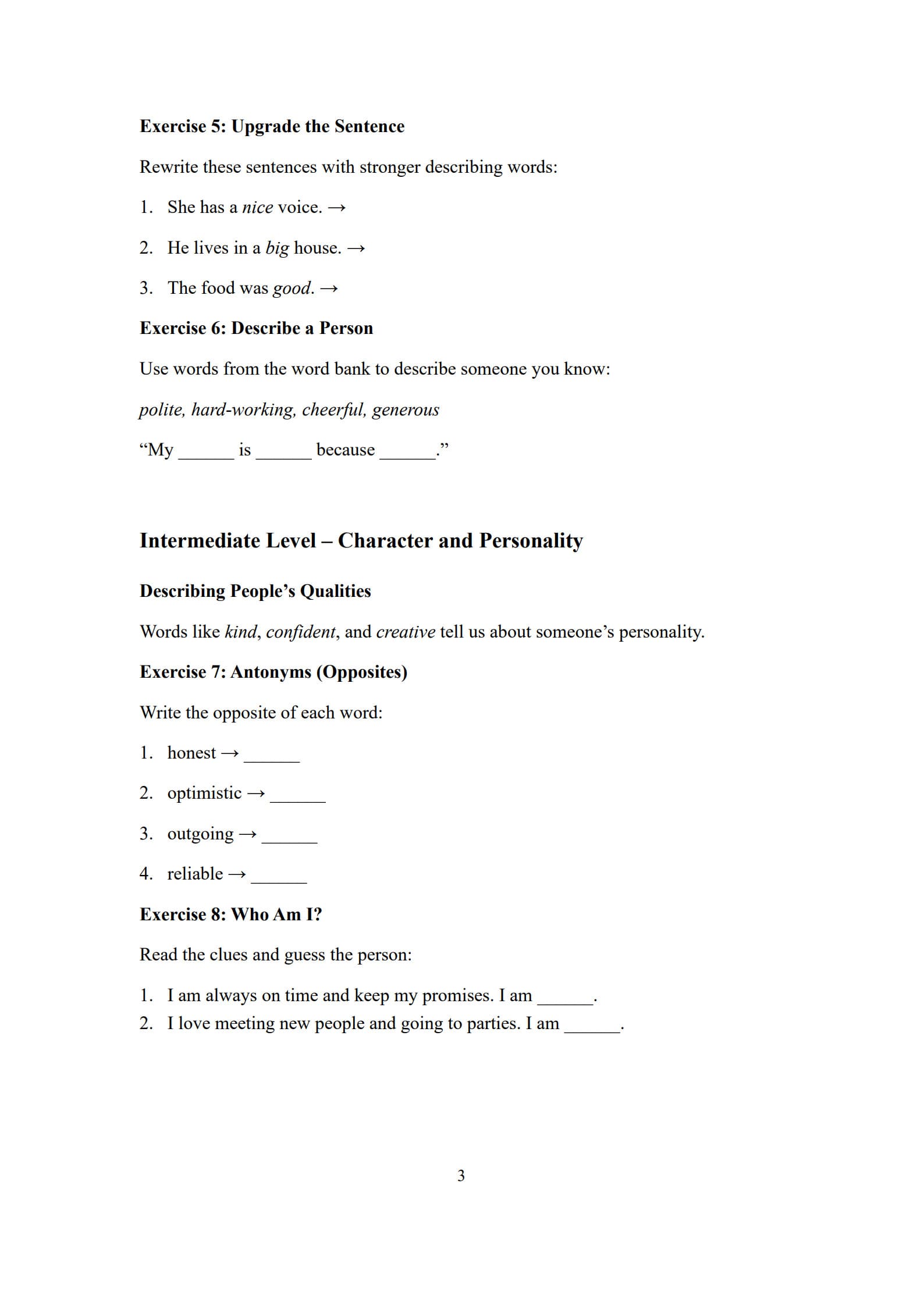
Describing words, or adjectives, are the building blocks of vivid communication. They add color, emotion, and precision to language, turning simple statements into engaging descriptions. For instance, instead of saying “an apple,” saying “a shiny red apple” paints a clearer picture. Our Describing Words Worksheet template introduces this concept through beginner-friendly exercises, such as matching pictures to words (e.g., a star is “shiny,” not “bumpy”) or filling in blanks with words like “soft” for a kitten. These activities help learners grasp how adjectives work in context, making vocabulary retention easier and more fun.
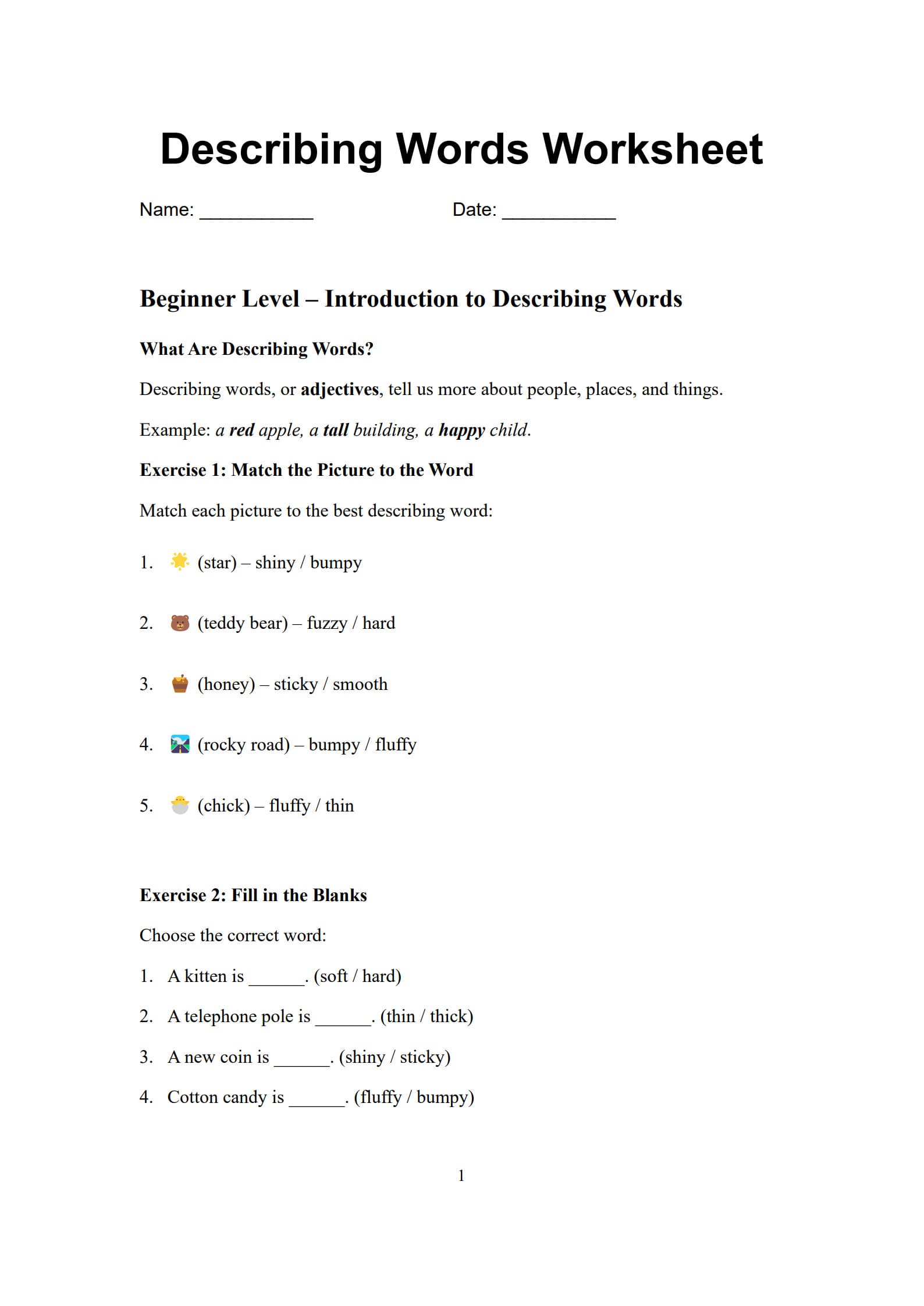
Why is this approach so effective? By starting with concrete examples—like a “fuzzy teddy bear” or “sticky honey”—the template grounds abstract concepts in real-world objects. This aligns with proven language-learning methods that emphasize visual and tactile associations. For English learners, this means faster adoption of new words and greater confidence in using them. The template’s structured progression ensures that even absolute beginners can follow along, building skills step by step without feeling overwhelmed. Whether you’re a teacher looking for classroom resources or a self-learner aiming to improve, this section of the template lays a strong foundation for expressive communication.
How Can Sensory Details Enrich Your Descriptive Writing?
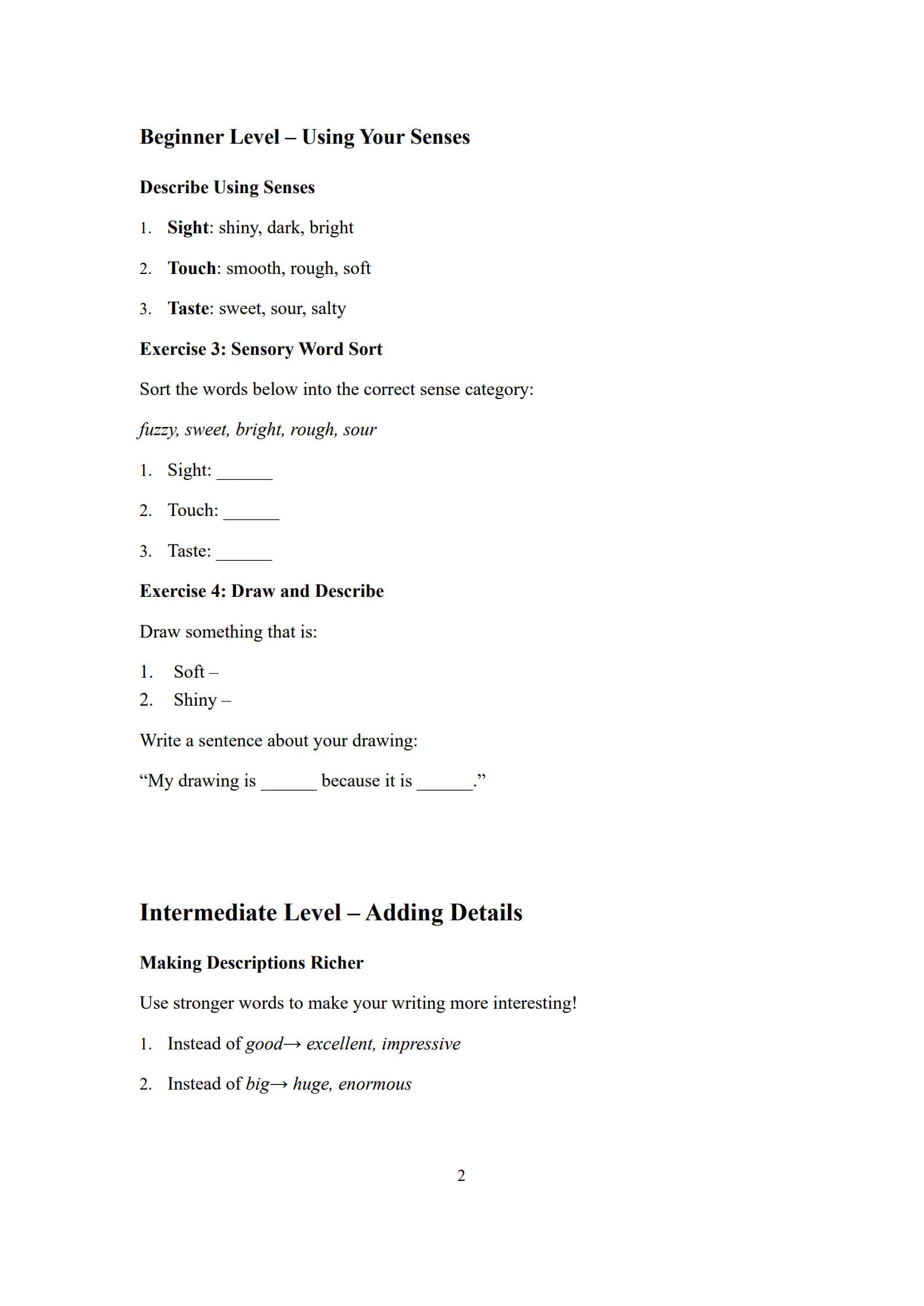
Once learners understand basic adjectives, the template advances to using senses—sight, touch, and taste—to create more dynamic descriptions. For example, Exercise 3 asks users to sort words like “fuzzy” (touch), “sweet” (taste), and “bright” (sight) into categories. This encourages learners to think beyond simple labels and consider how something feels, looks, or even tastes. Such multi-sensory practice is key to developing fluency, as it mirrors how we experience the world around us.
Incorporating sensory details also makes writing more engaging and memorable. Imagine describing a busy city: instead of saying “The city was busy,” the template guides learners to add sensory elements, like “The city was a whirl of bright lights, echoing horns, and rough pavement underfoot.” This not only expands vocabulary but also fosters creativity. The template includes drawing activities (e.g., “Draw something shiny”) to reinforce this, blending visual art with language practice. For English learners, this holistic approach breaks down the fear of writing and replaces it with playful exploration. By the end of this section, users will have a toolkit of sensory words ready to elevate their everyday communication.
Why Should Learners Progress to Stronger Adjectives and Personality Traits?
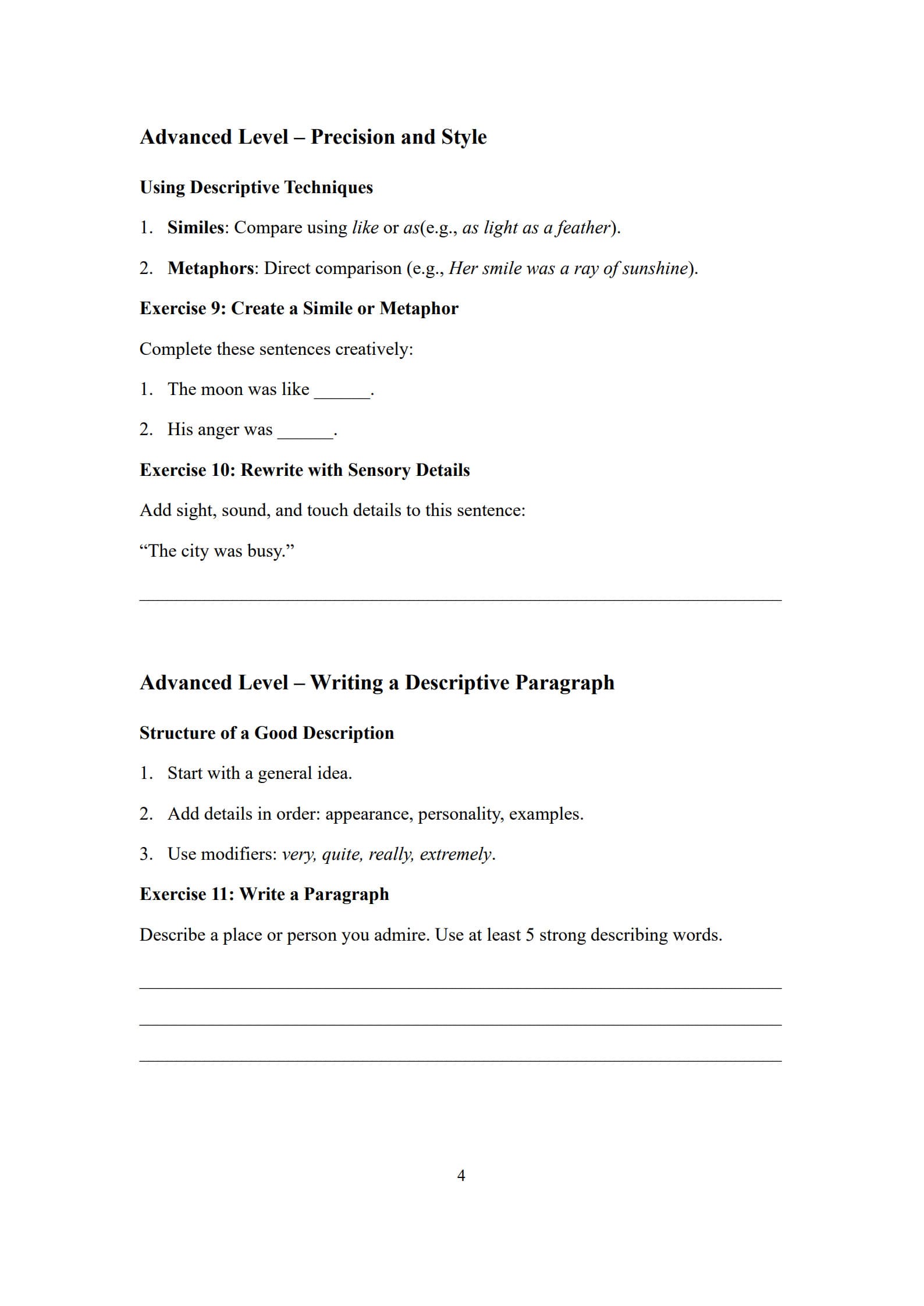
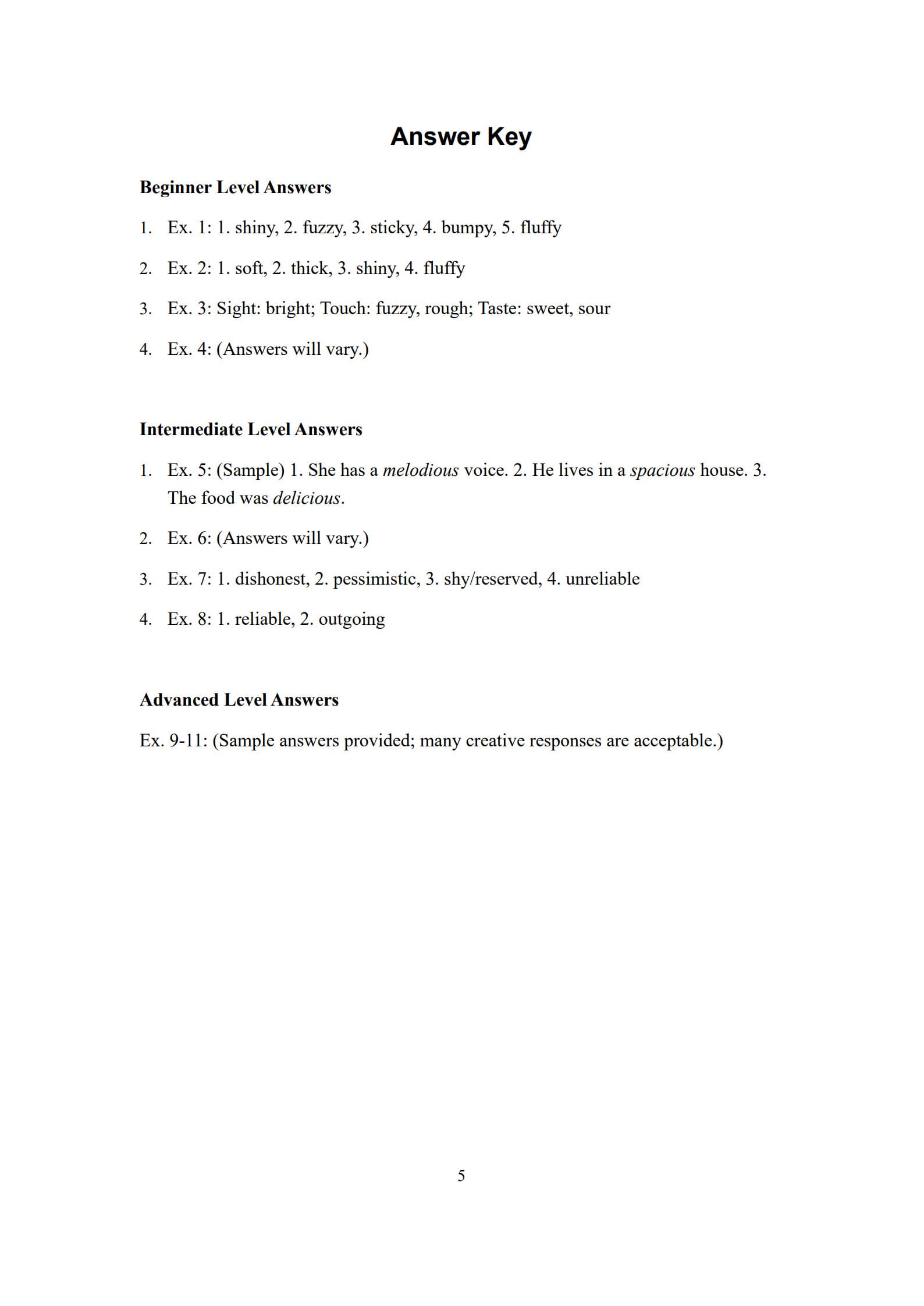
As users gain confidence, the template introduces intermediate concepts like replacing common words with stronger alternatives. For instance, instead of “good,” the worksheet suggests “excellent” or “impressive.” Exercise 5 challenges learners to upgrade sentences—e.g., transforming “She has a nice voice” into “She has a melodious voice.” This step is crucial for moving beyond basic fluency to more nuanced expression, which is essential for academic or professional settings.
Similarly, the template delves into describing people’s personalities with words like “hard-working” or “cheerful.” Exercises on antonyms (e.g., “honest” vs. “dishonest”) help learners understand word relationships, expanding their vocabulary further. This section not only teaches language skills but also encourages empathy and observation, as users describe real people in their lives. By practicing with relatable examples, English learners develop a deeper appreciation for the power of words—how they can capture someone’s character or set the tone of a story. The template’s gradual complexity ensures that learners build story writing skills organically, without gaps.
What Advanced Techniques Can Take Your Writing to the Next Level?
For advanced learners, the template introduces creative techniques like similes and metaphors. Exercise 9, for example, invites users to complete sentences such as “The moon was like a silver coin” or “His anger was a thunderstorm.” These exercises teach learners to make imaginative comparisons, adding style and impact to their writing. Similes and metaphors are not just literary devices; they’re practical tools for making descriptions more relatable and vivid.
The template also guides users in writing full descriptive paragraphs, emphasizing structure: start general, add details, and use modifiers like “very” or “extremely.” This mirrors real-world tasks, from school essays to professional reports. By practicing with Exercise 11—describing a admired person or place—learners apply all they’ve learned in a cohesive way. This progression from words to sentences to paragraphs ensures that users develop comprehensive writing skills, ready for any context. The advanced section transforms learners from passive vocabulary users to active, creative communicators.
How to Use This Template on PDF Agile in 4 Simple Steps
Using the Describing Words Worksheet template in PDF Agile is straightforward and efficient. Follow these steps to get started:
- Download the Template: Log in to your PDF Agile app and navigate to the Template Library. Search for “Describing Words Worksheet” and click “Use Template” to open it directly. The template comes pre-formatted with all exercises and answer keys, so you can begin immediately.
- Customize for Your Needs: While the template is complete, you can personalize it using PDF Agile’s editing tools. Highlight key sections, add notes, or adjust fonts to suit your learning style. For teachers, this might mean inserting additional examples; for self-learners, it could involve repeating exercises for practice.
- Complete Exercises Interactively: Use the app’s fillable fields to type answers directly into exercises like “Match the Picture” or “Fill in the Blanks.” The interactive design makes it easy to revise and learn on the go. For drawing activities, utilize the sketch tool or upload images.
- Save and Share Your Work: Once done, save your completed worksheet as a PDF. You can share it via email for feedback or print it for offline review.
Conclusion
The Describing Words Worksheet template on PDF Agile is more than just a PDF—it’s a comprehensive guide designed to make learning adjectives and descriptive writing accessible, enjoyable, and effective. By blending beginner basics with advanced techniques, it supports learners at every stage, building confidence and creativity. The template’s ready-to-use format saves you time, while its interactive features in the PDF Agile app enhance engagement.
We encourage all English learners to explore this template and discover how descriptive words can transform your communication. Whether you’re describing a person, place, or everyday object, the skills you gain here will serve you in countless real-life situations. Visit PDF Agile today to try the template and take your English to the next level—because great writing starts with the right words.