

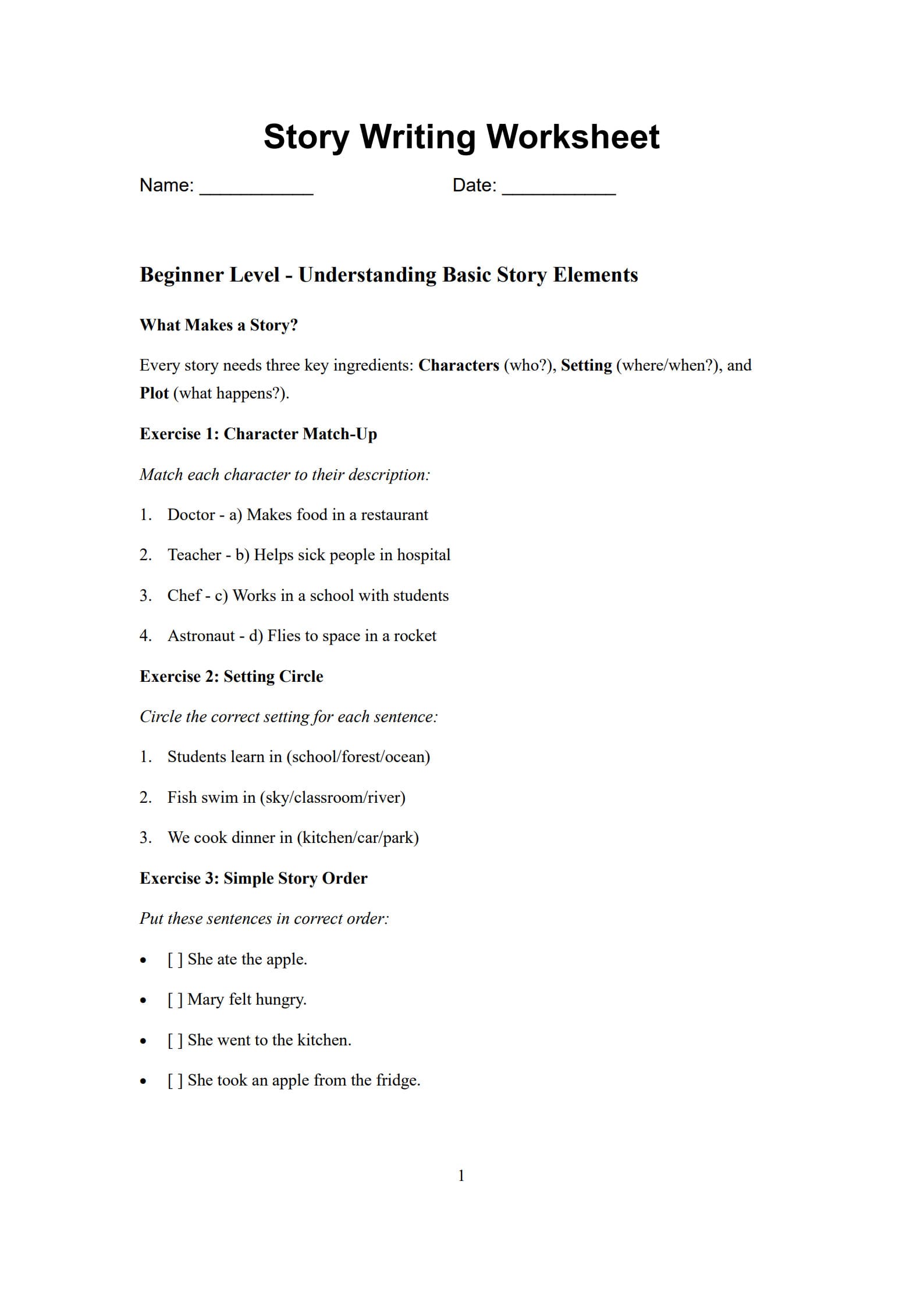
Welcome to PDF Agile’s innovative template library, where creativity meets structure! Our Story Writing Worksheet template is designed to help English learners and writers of all levels master the art of storytelling. Whether you’re a beginner exploring basic story elements or an advanced writer refining your voice, this template provides a guided framework to develop compelling narratives. By integrating interactive exercises like character match-ups, setting identification, and plot sequencing, the worksheet transforms abstract concepts into actionable skills. In this essay, we’ll explore how to maximize this resource within the PDF Agile app, with examples drawn directly from the template. Let’s unlock your storytelling potential!
Why Start with a Narrative Writing Worksheet?
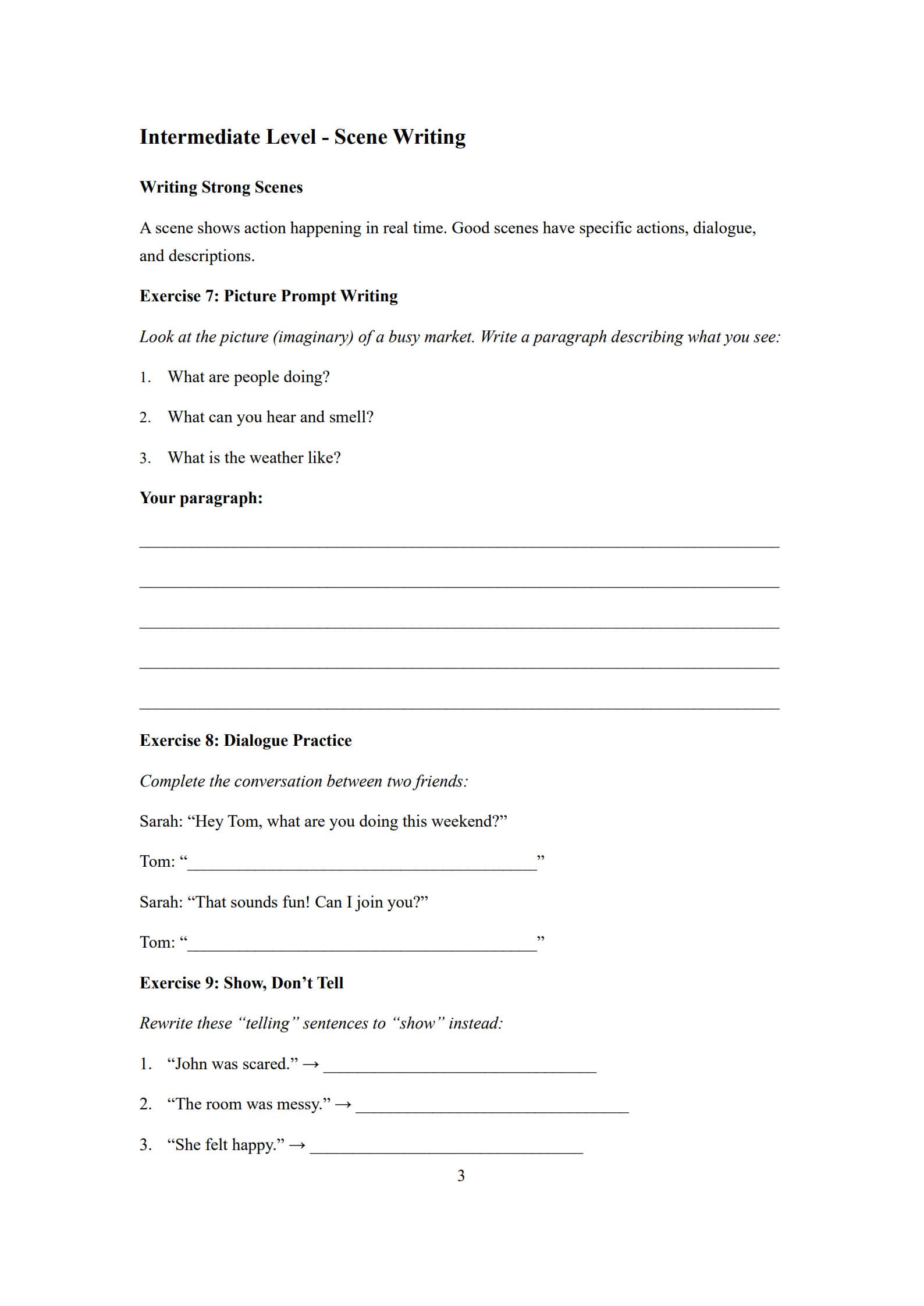
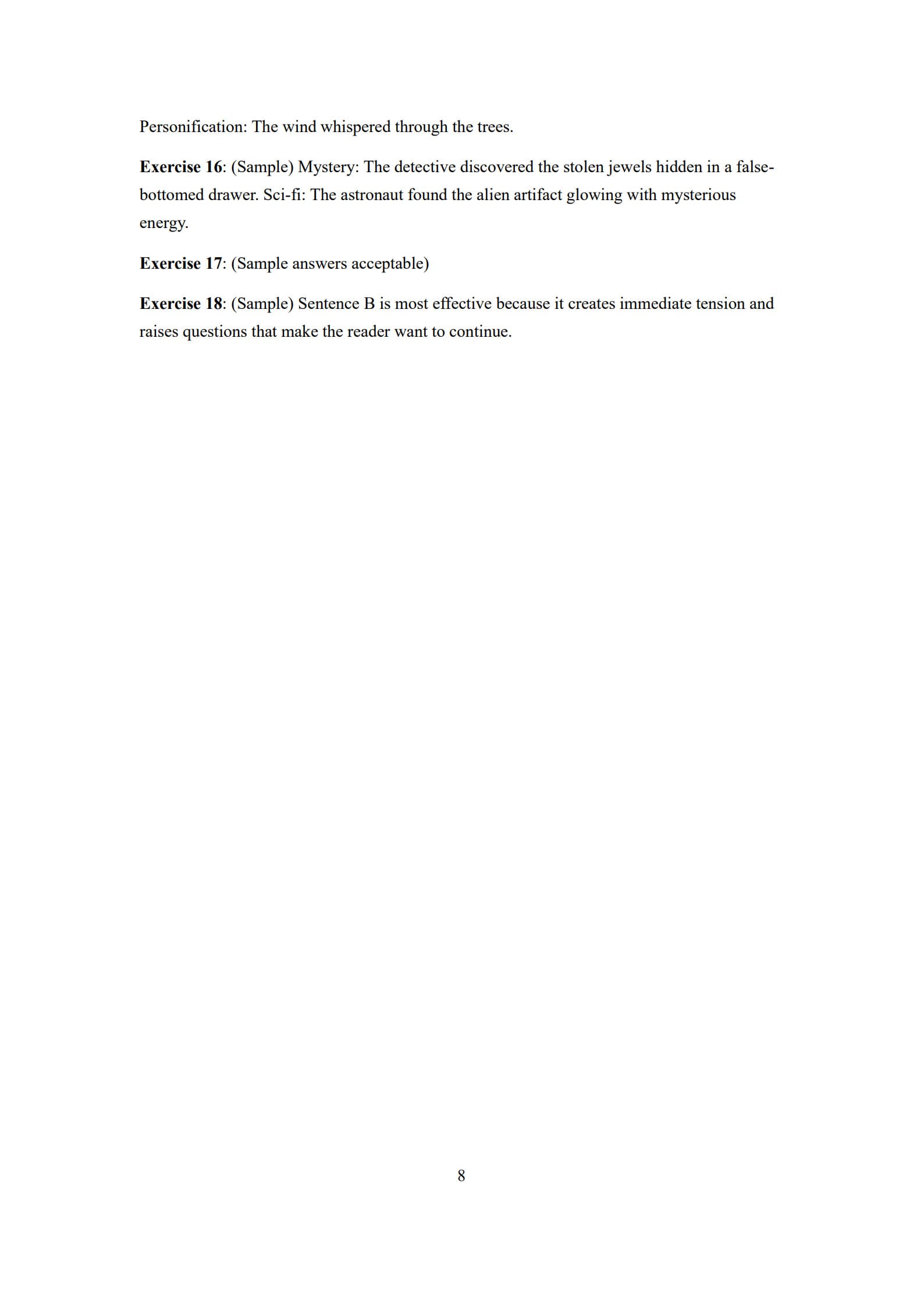
How can a structured worksheet simplify the complex process of storytelling? The answer lies in breaking down narratives into manageable components. PDF Agile’s narrative writing worksheet introduces learners to the three pillars of storytelling: characters, setting, and plot. For instance, Exercise 1 (Character Match-Up) reinforces understanding of roles by pairing professions like “astronaut” with “flies to space in a rocket.” Similarly, Exercise 2 (Setting Circle) grounds learners in contextual details by asking them to identify where actions occur (e.g., “Fish swim in the river”). These exercises demystify story structure while building confidence.
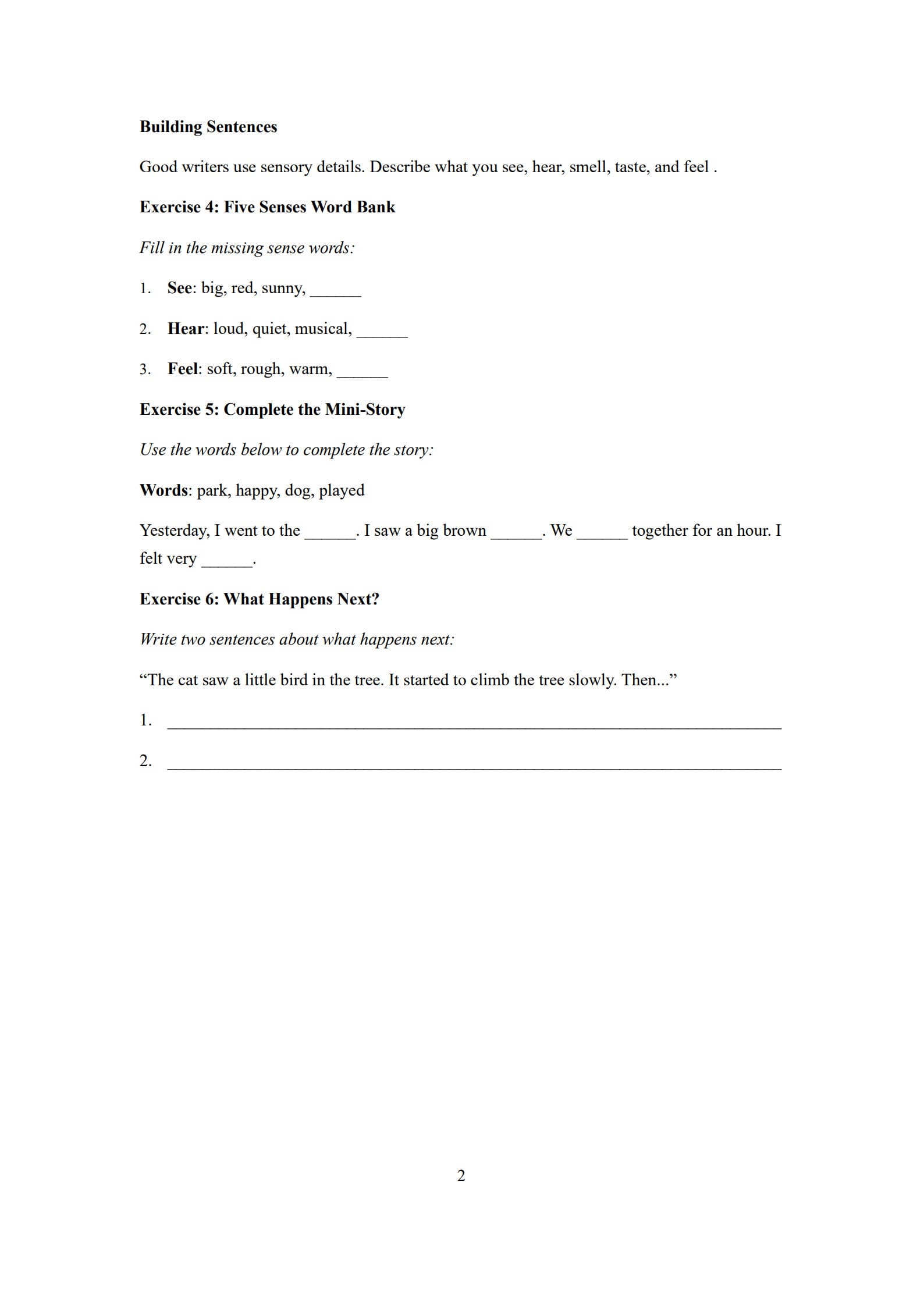
Beyond basics, the template cultivates critical thinking. Exercise 3 (Simple Story Order) challenges users to sequence events logically—a foundational skill for coherent plot development. By practicing with simple scenarios (e.g., Mary eating an apple), learners internalize cause-and-effect relationships. The worksheet’s incremental approach ensures that even beginners can progress from identifying elements to constructing mini-stories (Exercise 5), where words like “park” and “dog” weave into a cohesive narrative. Embrace these exercises to transform ideas into engaging tales!
How Does a Short Story Worksheet Foster Creativity and Precision?
Can a single worksheet balance creativity with technical skill? Absolutely! PDF Agile’s short story worksheet bridges imagination and discipline through scaffolded activities. For example, Exercise 4 (Five Senses Word Bank) encourages vivid descriptions by prompting learners to brainstorm sensory words (e.g., “loud” for hearing, “rough” for touch). This exercise shifts writing from generic statements to immersive experiences—a key step in developing a unique voice.
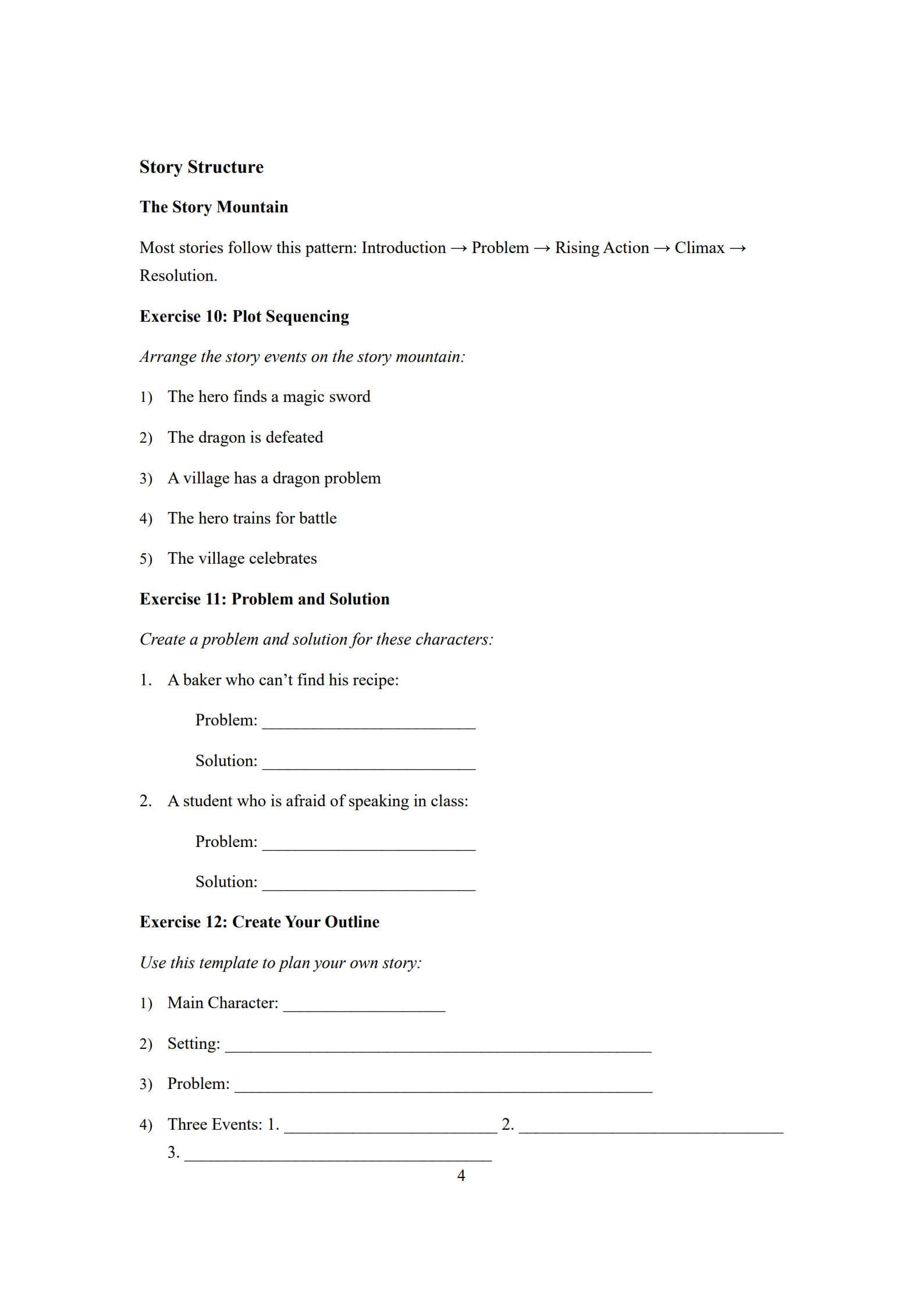
The template also emphasizes “show, don’t tell,” a technique brought to life in Exercise 9. Instead of stating “John was scared,” learners practice showing fear through actions like “John’s hands trembled.” Such tasks refine clarity and emotional impact. Additionally, the Story Mountain(Exercise 10) provides a visual framework for plotting arcs, from introduction to resolution. By guiding users to arrange events like “the dragon is defeated” after “the hero trains for battle,” the worksheet reinforces narrative logic. These exercises prove that constraints—far from stifling creativity—can amplify it.
From Concepts to Craft: Using a Character Development Worksheet
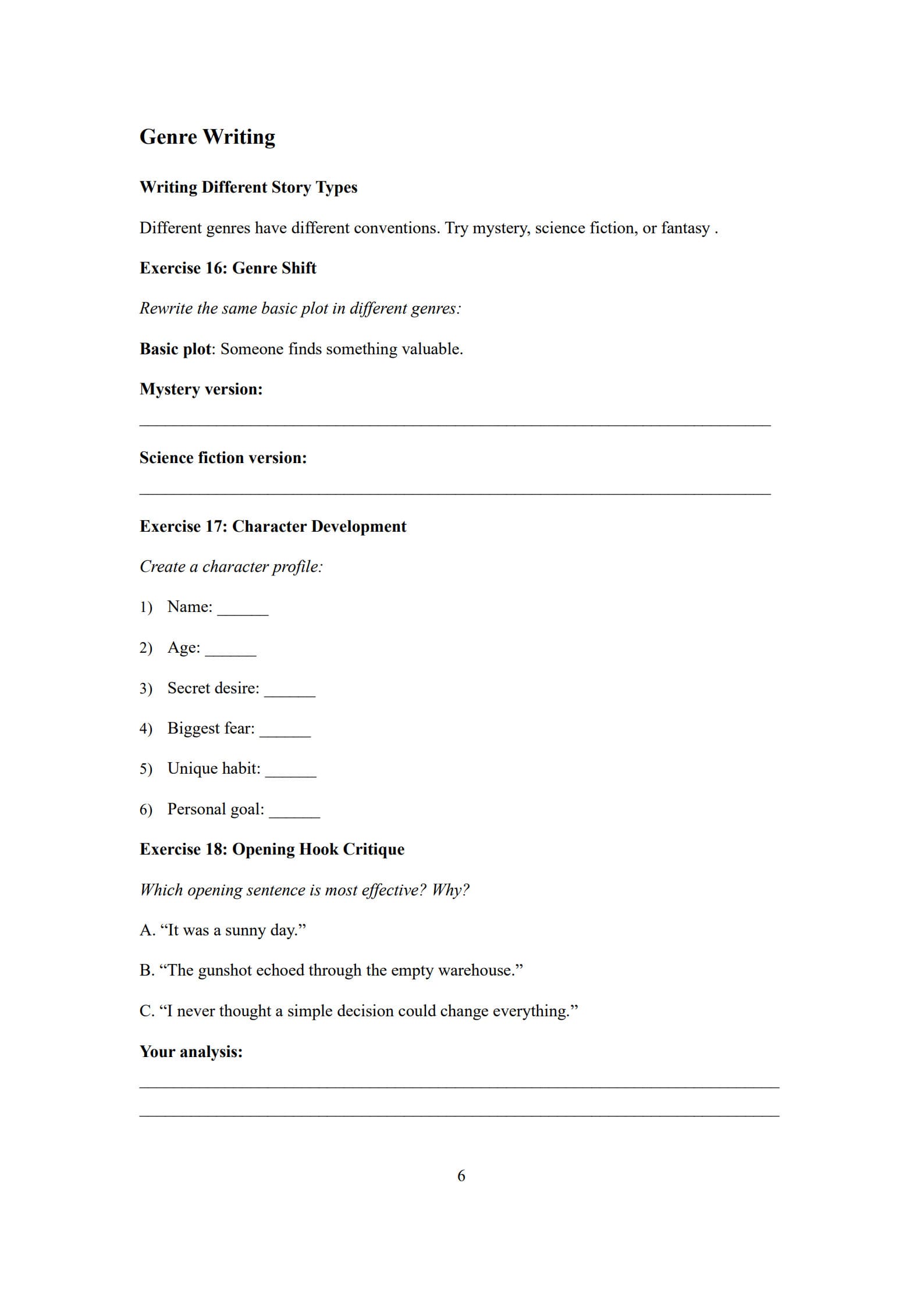
What makes fictional characters feel real? Depth! PDF Agile’s character development worksheet tackles this through profiling and genre adaptation. Exercise 17, for instance, prompts users to define a character’s age, secret desire, and biggest fear—details that add layers to personalities. Similarly, Exercise 16 (Genre Shift) challenges writers to reimagine a simple plot (“someone finds something valuable”) in mystery or sci-fi contexts, flexing creative muscles while maintaining character consistency.
To illustrate the template’s versatility, consider how it caters to different skill levels:
| Skill Level | Focus Area | Example Exercise |
|---|---|---|
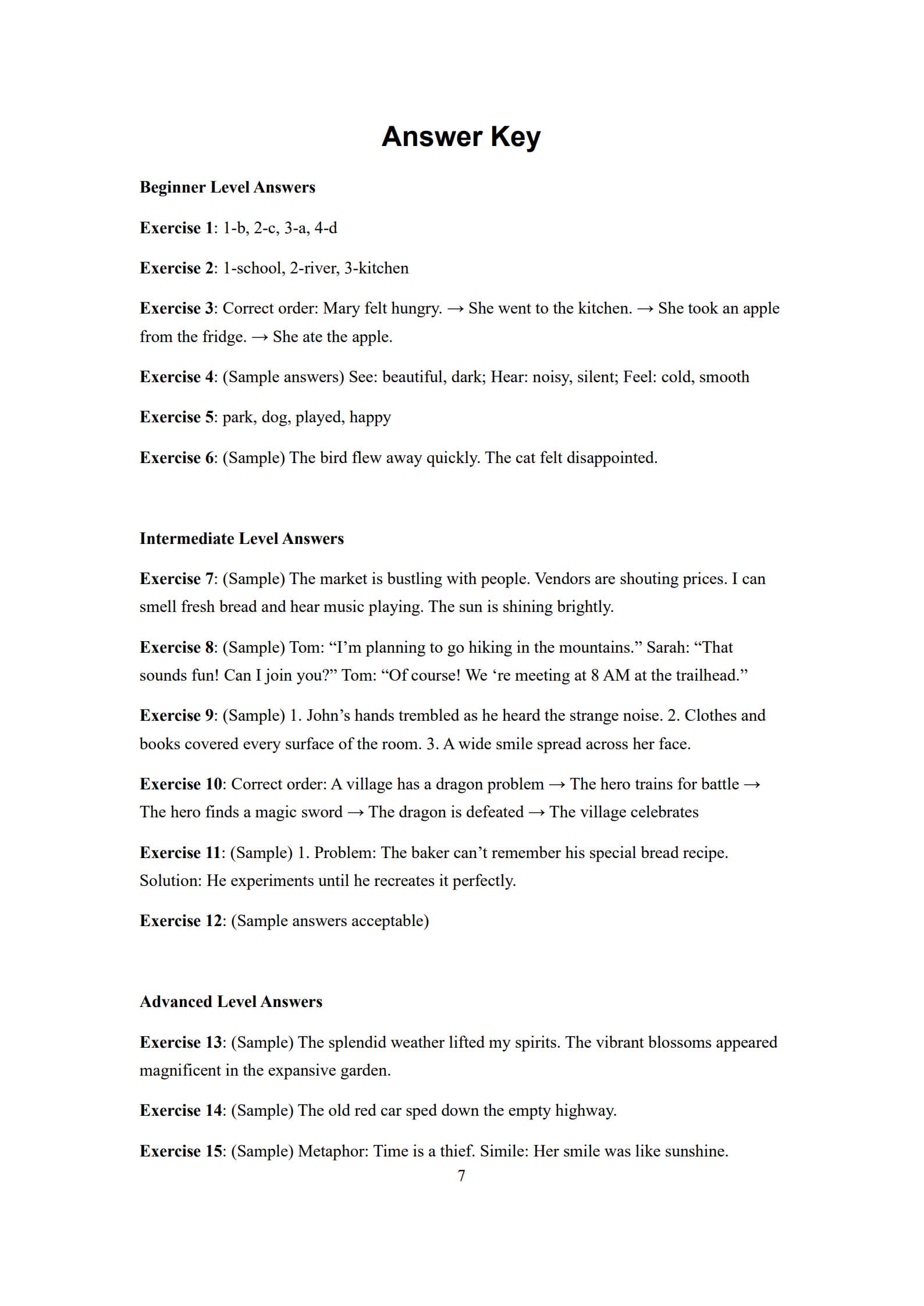
| Beginner | Identifying Traits | Character Match-Up (e.g., Chef → Makes food) |
| Intermediate | Emotional Depth | Show, Don’t Tell (e.g., “She felt happy” → “A wide smile spread across her face”) |
| Advanced | Complex Motives | Character Profile (e.g., defining a character’s unique habit or goal) |
This progression ensures learners evolve from recognizing roles to crafting multidimensional personas.
Advanced Techniques: Elevating Stories with Literary Devices and Voice
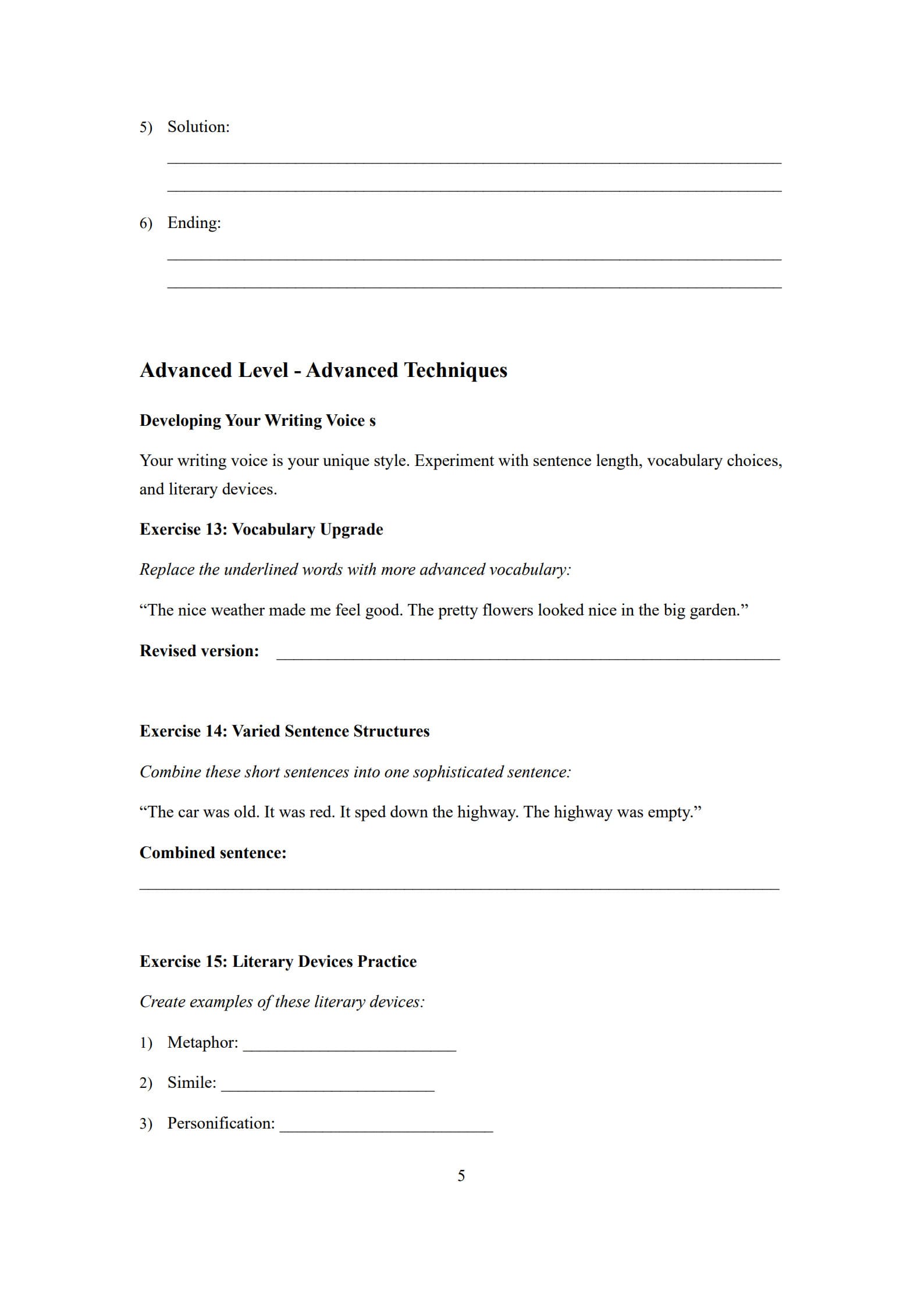
How can writers transition from competent to captivating? PDF Agile’s advanced section introduces stylistic tools. Exercise 13 (Vocabulary Upgrade) replaces basic words like “nice” with “splendid,” encouraging linguistic precision. Meanwhile, Exercise 14 (Varied Sentence Structures) teaches rhythm by combining short sentences into sophisticated ones (e.g., “The old red car sped down the empty highway”).
Literary devices take center stage in Exercise 15, where metaphors (“Time is a thief”) and personification (“The wind whispered”) add lyrical quality. These techniques, paired with genre-writing prompts (Exercise 16), empower users to experiment with tone and perspective. The template also includes a critical thinking component—Exercise 18’s Opening Hook Critique—which analyzes why “The gunshot echoed through the empty warehouse” outperforms bland alternatives. By deconstructing effective writing, learners gain insights to apply to their own work.
How to Use the Story Writing Worksheet Template in PDF Agile
Ready to begin? Follow these steps to customize the template in PDF Agile:
Step 1: Access the Story Writing Worksheet Template
Open the PDF Agile app and navigate to the Template Library. Search for “Story Writing Worksheet” and click “Use Template.” The pre-formatted layout includes sections for exercises, answer keys, and skill-level benchmarks.
Step 2: Personalize the Content
Replace sample text with your own ideas. For example, in Exercise 5 (Complete the Mini-Story), insert original words like “forest” or “friend” to create unique scenarios. Use the app’s editing tools to highlight key terms or add notes.
Step 3: Collaborate and Share
Invite peers or instructors to review your work via PDF Agile’s real-time collaboration feature. They can comment directly on exercises like Dialogue Practice (Exercise 8) to suggest improvements.
Step 4: Export and Archive
Save your completed worksheet as a PDF for easy sharing or printing.
Pro Tips:
- Use the answer key as a self-assessment tool after attempting exercises.
- Experiment with genre-specific variations (e.g., rewriting a plot as sci-fi) to explore versatility.
- Combine this template with PDF Agile’s other creative writing resources for holistic practice.
Conclusion
PDF Agile’s Story Writing Worksheet is more than a template—it’s a journey from foundational skills to artistic expression. By integrating character development, sensory details, and plot structuring, it equips learners with tools to craft stories that resonate. The app’s intuitive design ensures that every exercise, from beginner-level matching to advanced genre shifts, is accessible and engaging.
As you explore this template, remember that great storytelling blends practice with creativity. Whether you’re designing a whimsical short story or refining a novel’s climax, let PDF Agile be your guide. Download the template today and watch your narratives come to life!