

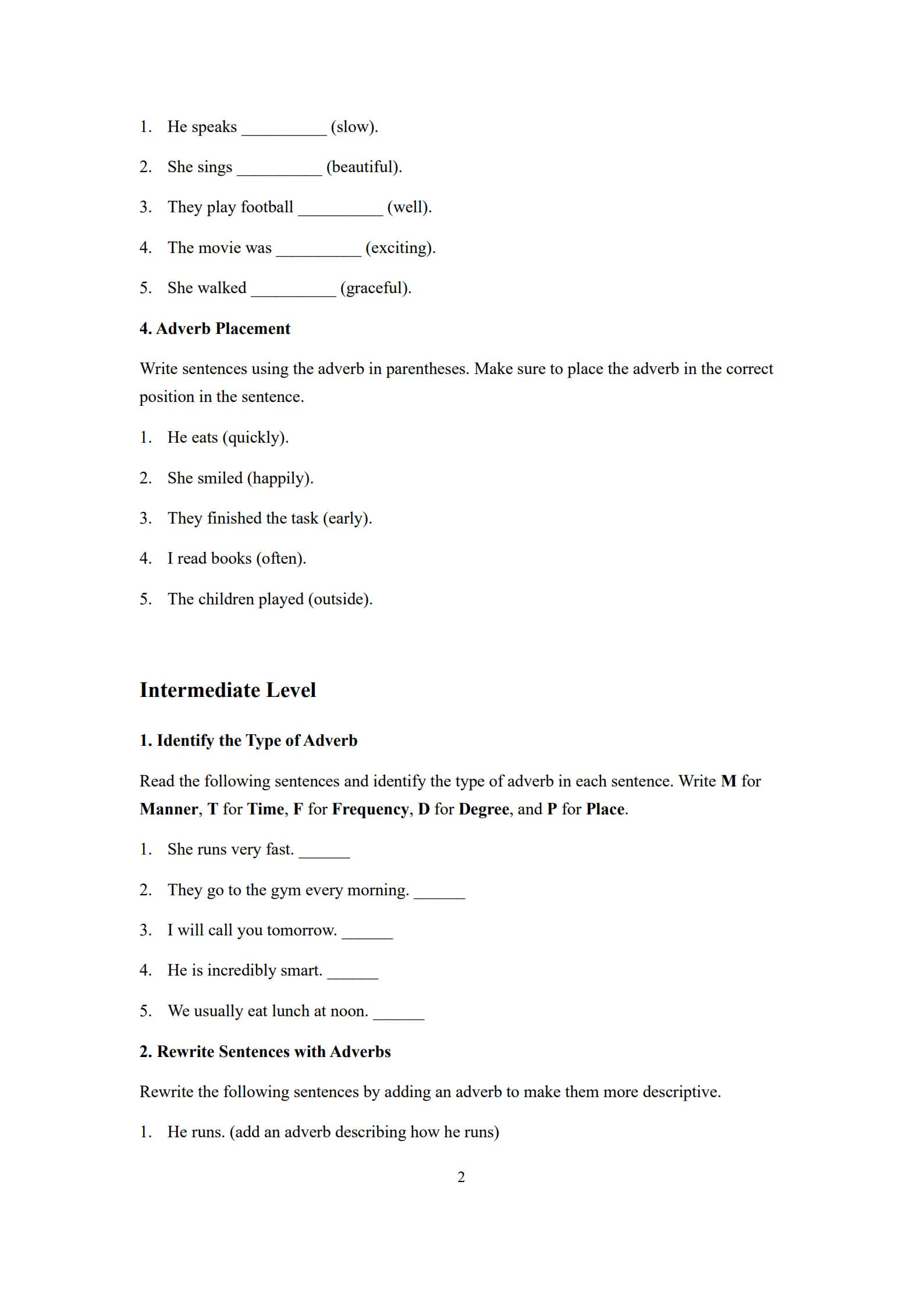
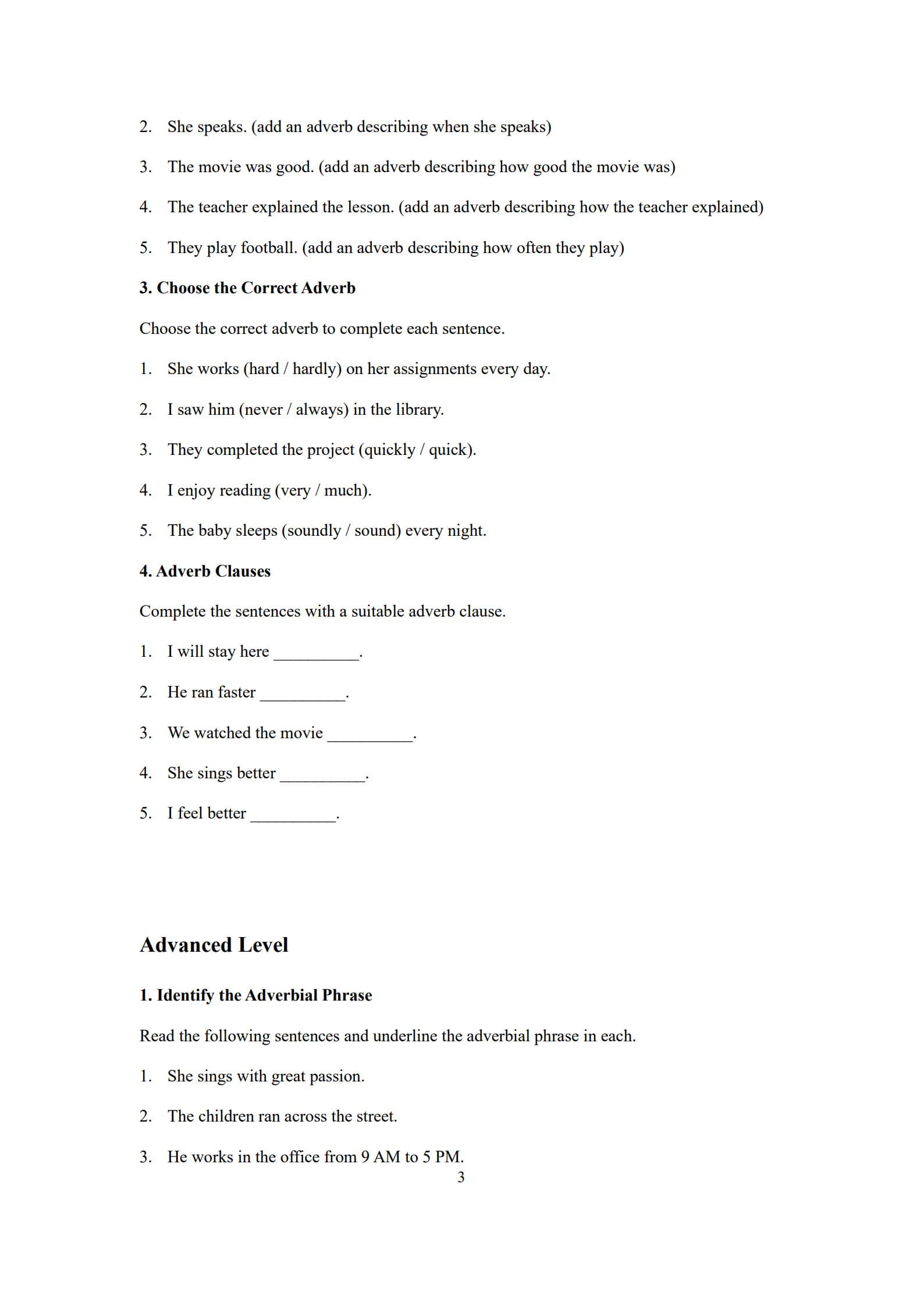
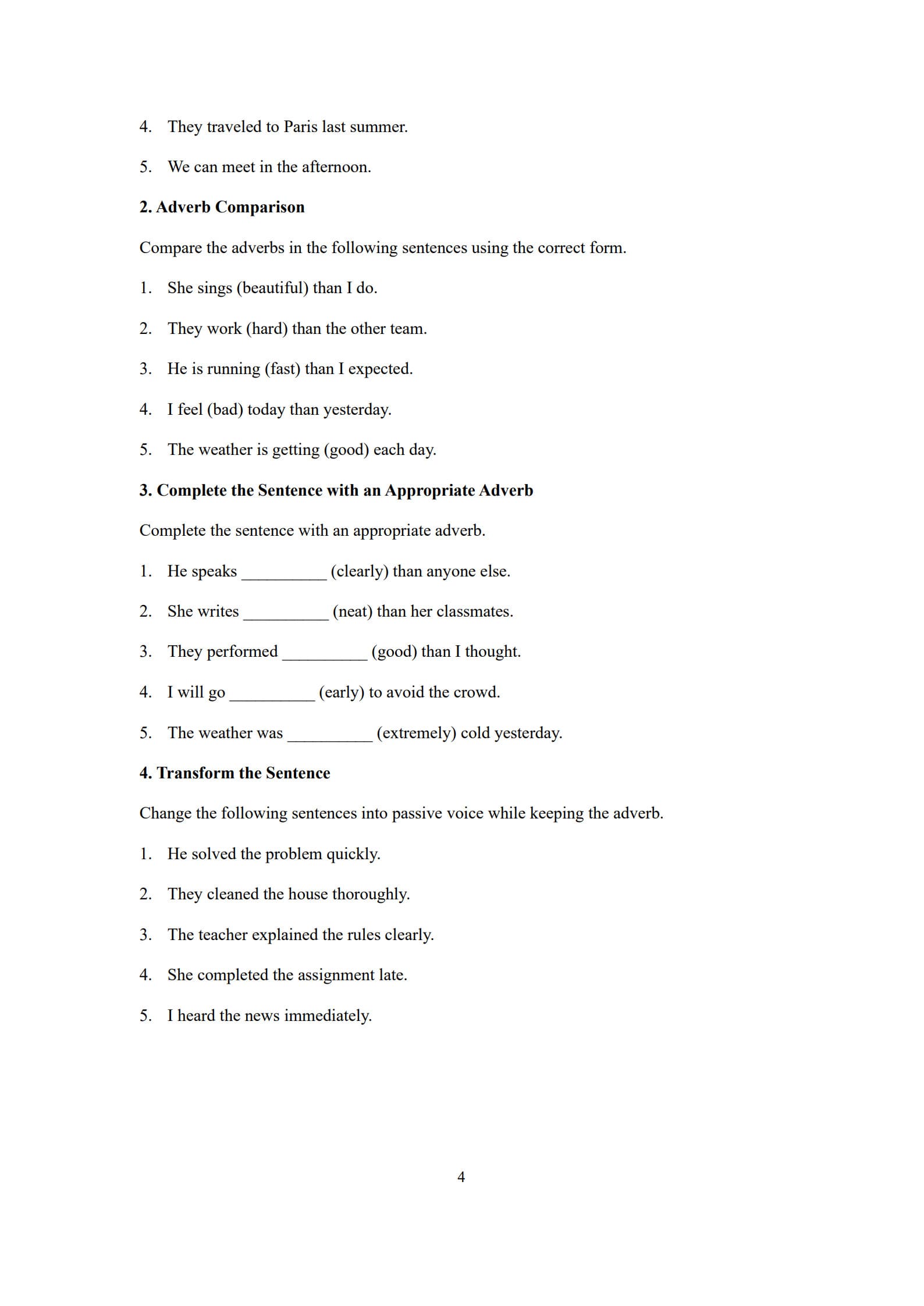
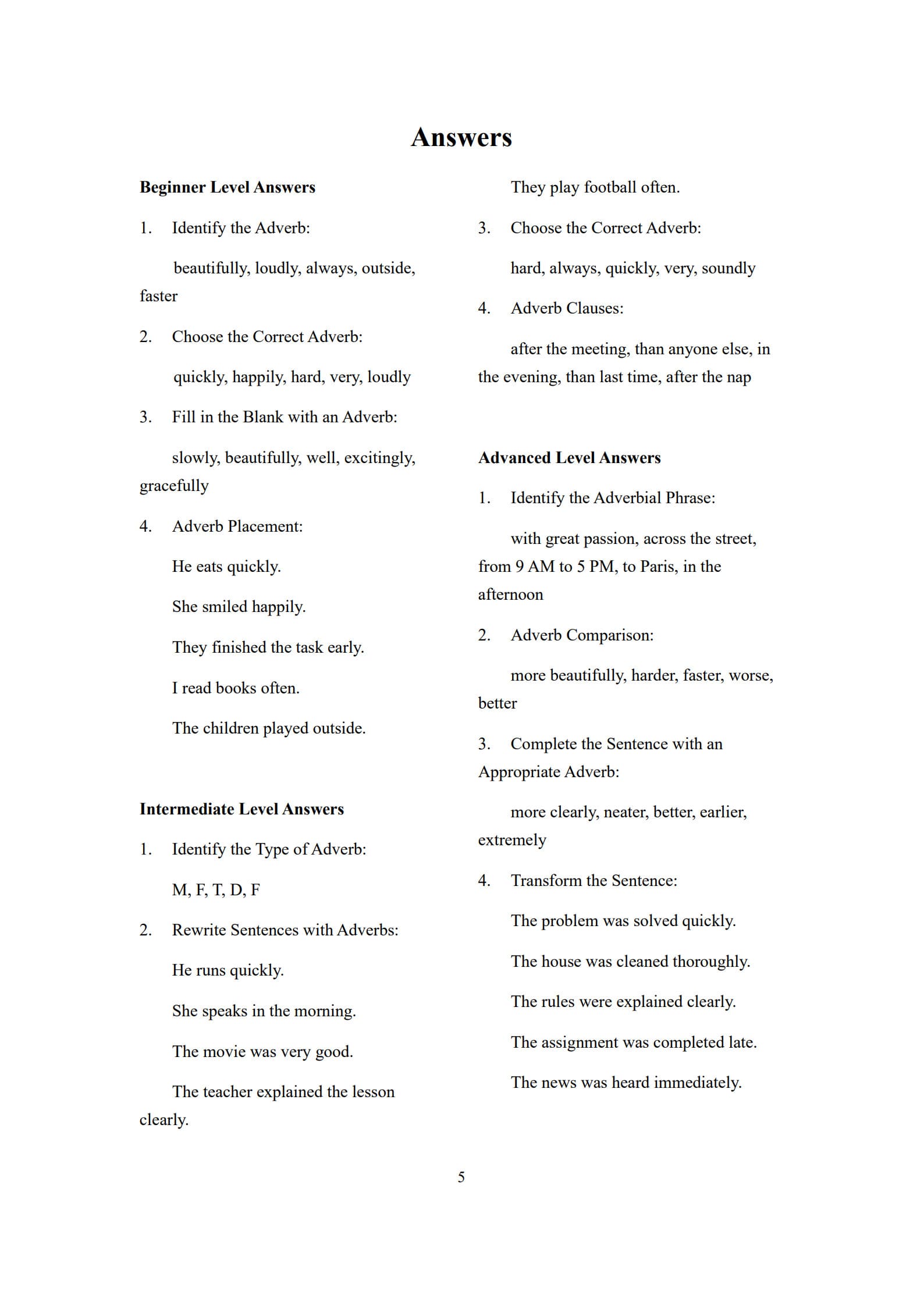
Welcome to PDF Agile’s educational resource center! As part of our commitment to supporting English learners worldwide, we’re excited to introduce our specially designed Adverb Worksheet template – a comprehensive tool that makes mastering adverbs engaging and effective. This ready-to-use template is perfect for students, teachers, and self-learners looking to strengthen their understanding of how adverbs work in English. The worksheet follows a progressive learning path from basic identification to advanced application, ensuring that learners build confidence as they advance through each section. Best of all, this template comes pre-completed with exercises and answers, saving you valuable preparation time while delivering maximum learning value.
What Makes Our Adverb of Manner Worksheet So Effective for Learning?
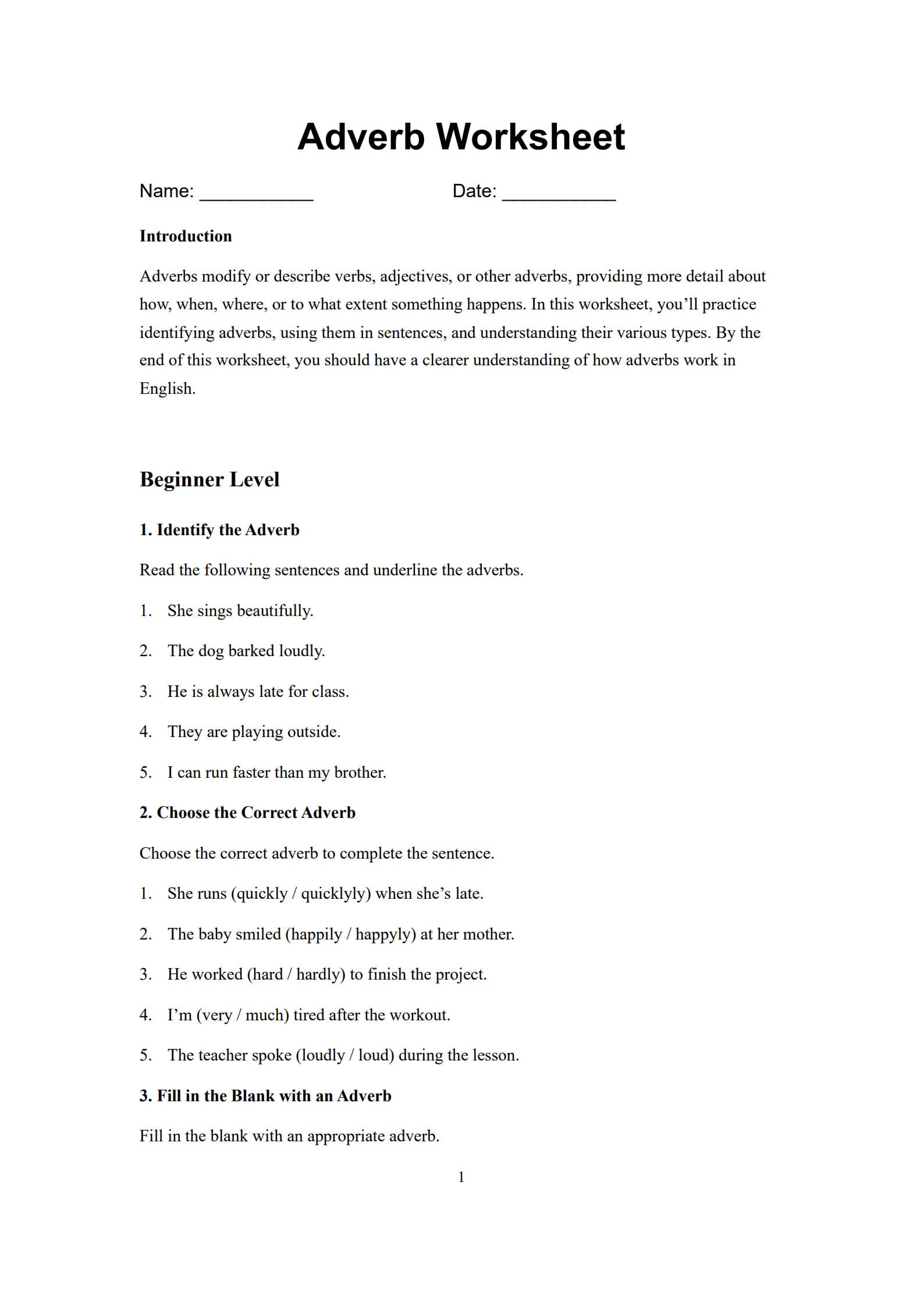
Have you ever wondered why adverbs of manner seem challenging to master? Our worksheet addresses this common learning hurdle through carefully structured exercises that build understanding progressively. The adverb of manner worksheet section begins with fundamental identification tasks – like recognizing “beautifully” in “She sings beautifully” and “loudly” in “The dog barked loudly” – then progresses to more complex applications. This gradual complexity increase ensures learners don’t feel overwhelmed while developing solid foundational knowledge.
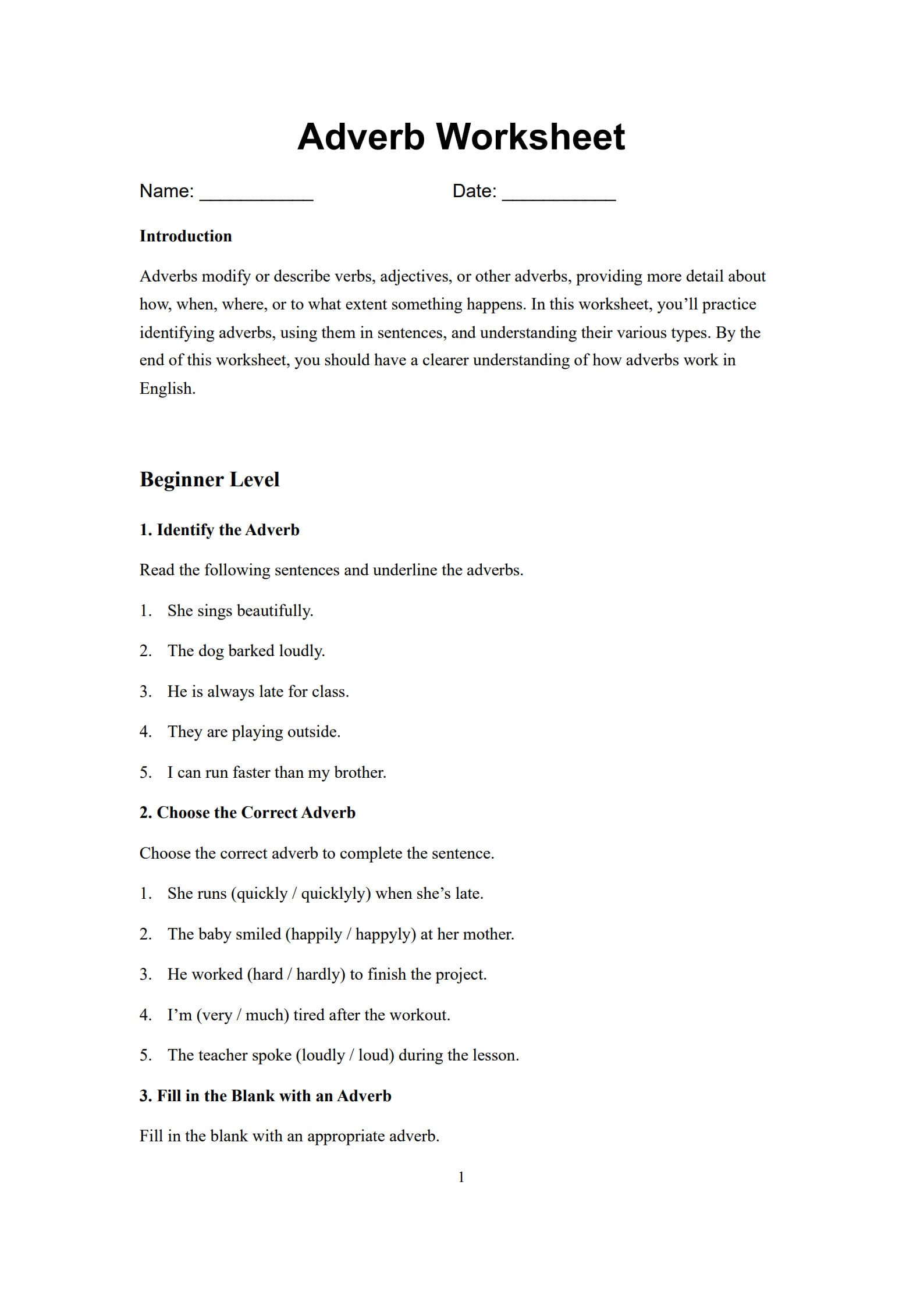
The template’s strength lies in its practical approach. Instead of just presenting rules, it engages learners through multiple exercise formats. For example, the “Choose the Correct Adverb” section presents common mistakes like choosing between “quickly/quicklyly” and “happily/happyly,” helping learners internalize correct adverb formations through active decision-making. This interactive method proves far more effective than passive learning, as it requires mental processing that enhances retention.
Another key feature is the immediate application component. After learning adverb rules, students immediately practice using them in context through fill-in-the-blank exercises and sentence construction tasks. This “learn-then-apply” methodology bridges the gap between theoretical knowledge and practical usage, which is especially crucial for adverbs of manner that describe how actions are performed.
How Does Having an Adverb Worksheet with Answers Accelerate Learning?
The inclusion of a complete adverb worksheet with answers transforms this resource from a simple practice tool into a comprehensive learning system. Imagine practicing adverb identification and immediately being able to check your understanding – that’s the power this template delivers. The answer key allows for self-paced learning and instant feedback, which research shows significantly improves knowledge acquisition. Learners can identify their specific weak areas and focus on improving them without waiting for teacher feedback.
The answer section is strategically organized to mirror the worksheet structure, making cross-referencing effortless. For instance, when working on adverb placement exercises, learners can immediately check if their sentences like “He eats quickly” and “The children played outside” match the correct answers. This instant validation helps reinforce correct patterns while correcting misunderstandings before they become habitual.
Table: Learning Progress Tracking with Answer Key
| Worksheet Section | Self-Check Capability | Common Learning Outcomes |
|---|---|---|
| Beginner Level Exercises | Immediate answer verification | Builds confidence in basic adverb identification |
| Intermediate Level Tasks | Progressive difficulty with answers | Develops analytical thinking for adverb types |
| Advanced Applications | Complex concept validation | Enhances creative adverb usage skills |
The Progressive Learning Design: From Beginner to Advanced
The worksheet’s three-tier structure represents its most innovative feature. The beginner level focuses on fundamental recognition and basic usage, featuring straightforward exercises like underlining adverbs in simple sentences. This foundation-building phase ensures all learners start from a position of understanding before advancing to more complex concepts.
At the intermediate level, the template introduces categorization and contextual application. Learners don’t just identify adverbs but classify them by type (Manner, Time, Frequency, Degree, Place) and practice using them to enhance sentence descriptiveness. The exercise asking students to rewrite “He runs” by adding an adverb demonstrates how this section develops both technical knowledge and creative language skills simultaneously.
The advanced section challenges learners with adverbial phrases, comparisons, and sentence transformations – skills that signify true adverb mastery. The passive voice transformation exercise while maintaining adverb placement, for example, develops sophisticated language manipulation abilities that prepare learners for real-world English usage.
Engaging Exercise Formats That Make Learning Enjoyable
What sets this template apart is its variety of interactive exercise formats that cater to different learning styles. The worksheet incorporates multiple choice questions, fill-in-the-blanks, sentence rewriting, and categorization tasks – each designed to reinforce adverb understanding through different cognitive approaches. This diversity prevents learning fatigue and keeps students engaged throughout their practice sessions.
The template’s practical orientation means every exercise connects to real language usage. Instead of abstract grammar rules, learners work with contextual examples like “The teacher spoke loudly during the lesson” and “They play football well” – sentences they might encounter in daily communication. This relevance increases motivation and helps students see the immediate value of what they’re learning.
Another engaging element is the built-in progression system. As learners move from identifying basic adverbs to creating complex adverbial phrases, they experience tangible progress that boosts confidence. The carefully sequenced exercises ensure each new concept builds upon previous knowledge, creating a seamless learning journey that feels challenging yet achievable at every stage.
How to Use This Template on PDF Agile?
Using our Adverb Worksheet template in PDF Agile is straightforward and efficient. Follow these simple steps to start enhancing your English skills immediately:
Step 1: Access the Worksheets Template Library
Open PDF Agile and navigate to the Education Templates section. Search for “Adverb Worksheet” and click “Use Template”. The template comes pre-formatted with all exercises and answer keys, ready for immediate use.
Step 2: Customize for Your Learning Needs
While the template is complete, you can personalize it using PDF Agile’s editing tools. Highlight key sections, add notes in the margins, or emphasize specific exercises you want to focus on. The flexible format allows you to adapt the worksheet to your specific learning objectives without altering the core content.
Step 3: Practice and Check Your Answers
Work through the exercises at your own pace. The clean layout ensures easy reading and writing space for your answers. Use the integrated answer key section to verify your responses immediately after completing each section. This instant feedback loop accelerates learning and helps identify areas needing further practice.
Step 4: Save and Track Your Progress
Save your completed worksheet with your answers intact. PDF Agile’s organization features allow you to date your work and create a portfolio of your progress. Revisit previous attempts to see how your adverb skills have improved over time, providing valuable motivation through visible progress tracking.
Step 5: Share for Feedback
If learning with others, use PDF Agile’s sharing features to send your completed worksheet to teachers or study partners for additional feedback. The platform maintains your formatting and annotations during sharing, ensuring your work is presented exactly as intended.
Conclusion
Our Adverb Worksheet template represents a significant advancement in English learning resources. By combining comprehensive content with user-friendly design, it eliminates the usual hurdles associated with grammar practice.
We invite you to experience how this carefully crafted resource can transform your approach to learning adverbs. With PDF Agile’s intuitive platform and this professionally designed template, you have everything needed to master adverb usage effectively and enjoyably. Download it today and discover how the right tools can make grammar learning not just productive, but genuinely engaging!