

Punctuation is the backbone of clear communication—a set of symbols that gives rhythm, clarity, and emotion to writing. For English learners, mastering punctuation can be challenging, but with structured practice, it becomes second nature. PDF Agile’s ready-to-use Punctuation Exercises is designed to make learning engaging and effective. Whether you’re a student, teacher, or lifelong learner, this template offers a structured path from basic rules to advanced applications. In this essay, we’ll explore how the template’s content aligns with key learning goals and how you can use it seamlessly within the PDF Agile app to enhance your skills.
Why Are Punctuation Exercises Essential for Clear Communication?
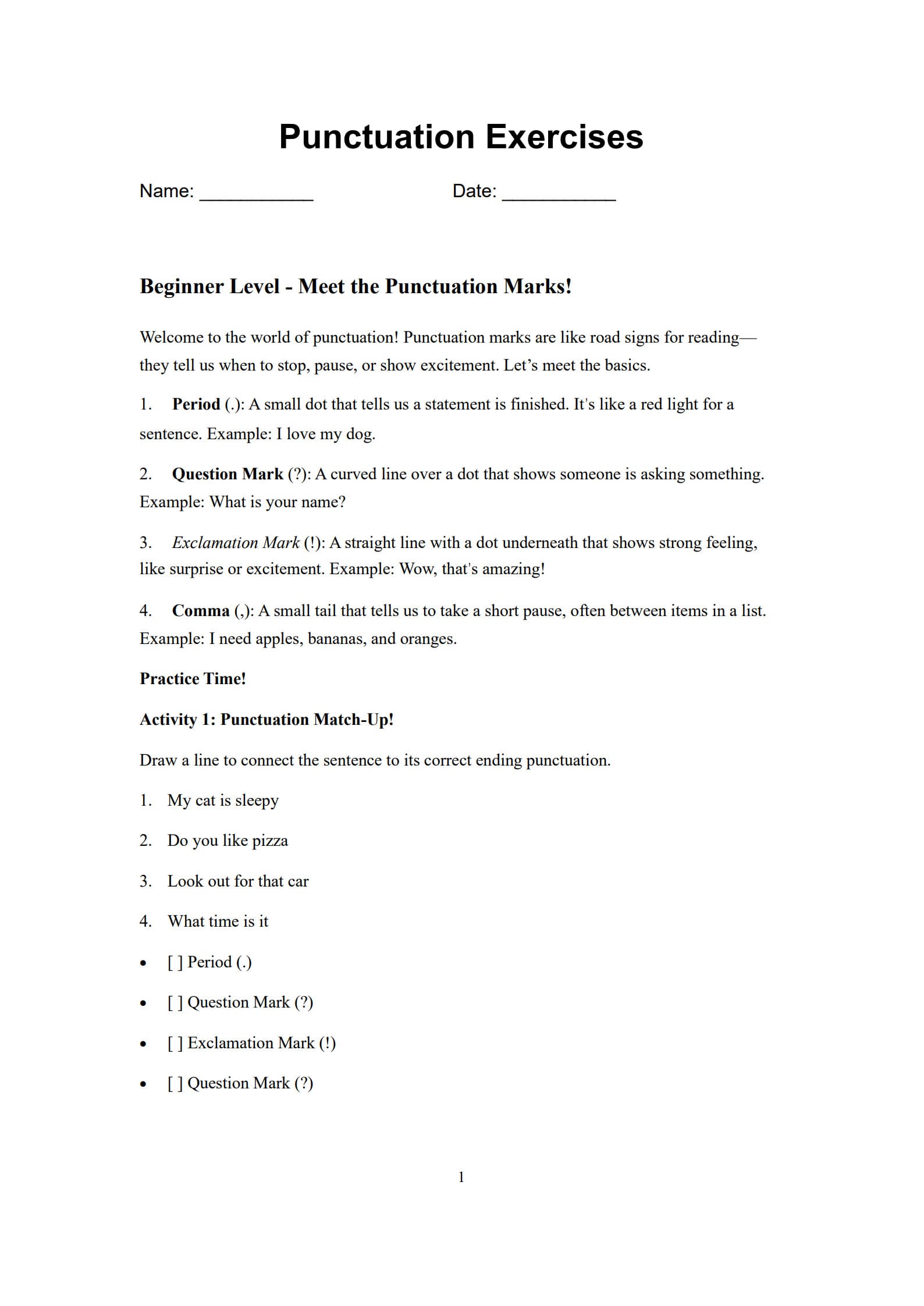
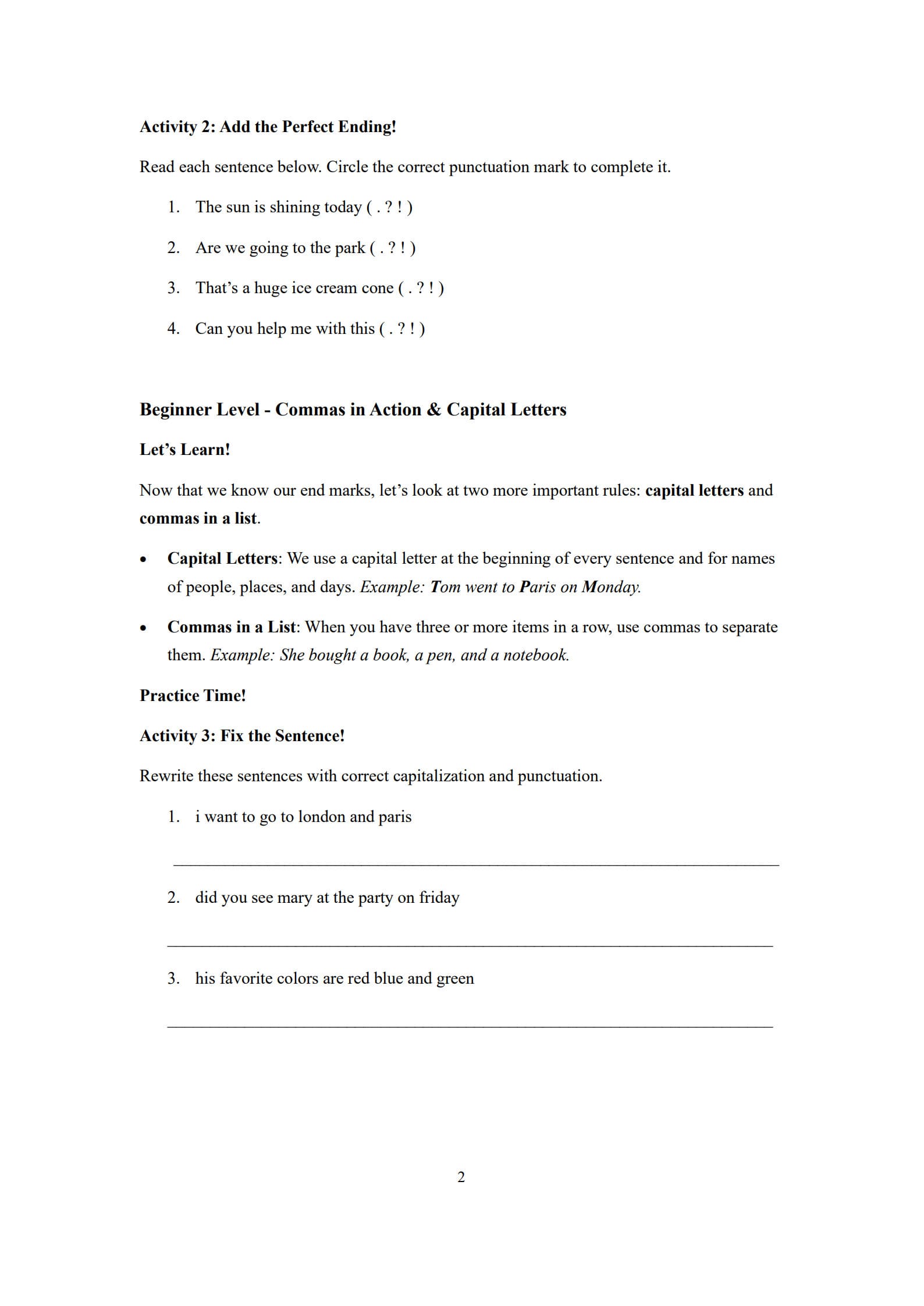
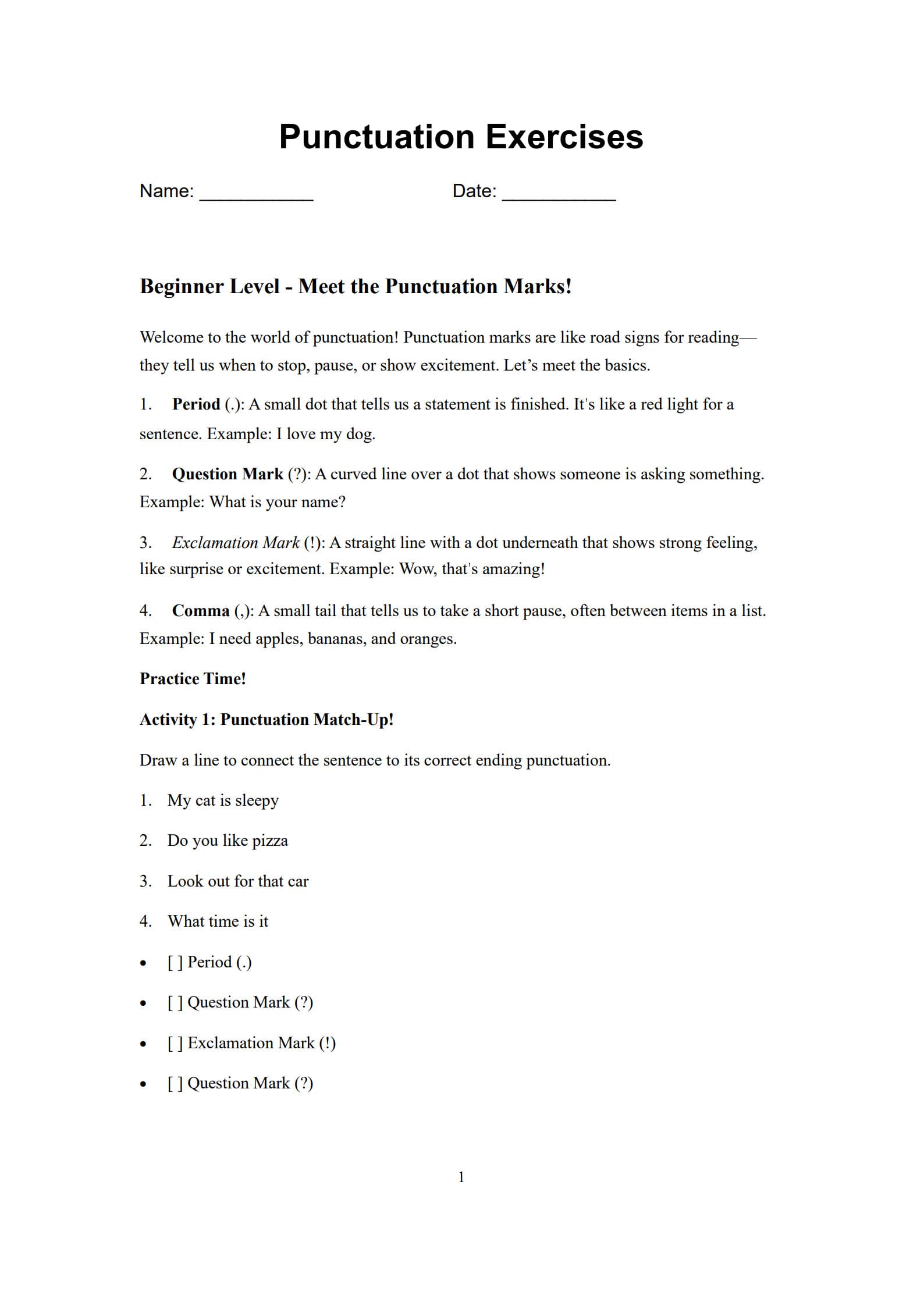
Punctuation exercises form the foundation of effective writing. They help learners understand how tiny symbols—like periods, commas, and exclamation marks—transform vague sentences into precise messages. Our template begins with beginner-friendly activities, such as punctuation practice worksheets that focus on matching sentences to their correct end marks. For example:
- My cat is sleepy→ Period (.)
- Do you like pizza?→ Question Mark (?)
These exercises reinforce the idea that punctuation acts as “road signs” for readers, guiding them through pauses, stops, and emotional tones. By practicing with real-life examples, learners build confidence and avoid common errors.
The template also includes capitalization and punctuation worksheets that target sentence-level rules. For instance, learners rewrite sentences like “i want to go to london and paris”into “I want to go to London and Paris.”This dual focus ensures that learners grasp both capitalization and punctuation in context.
How Do Punctuation Practice Worksheets Bridge Basic and Intermediate Skills?
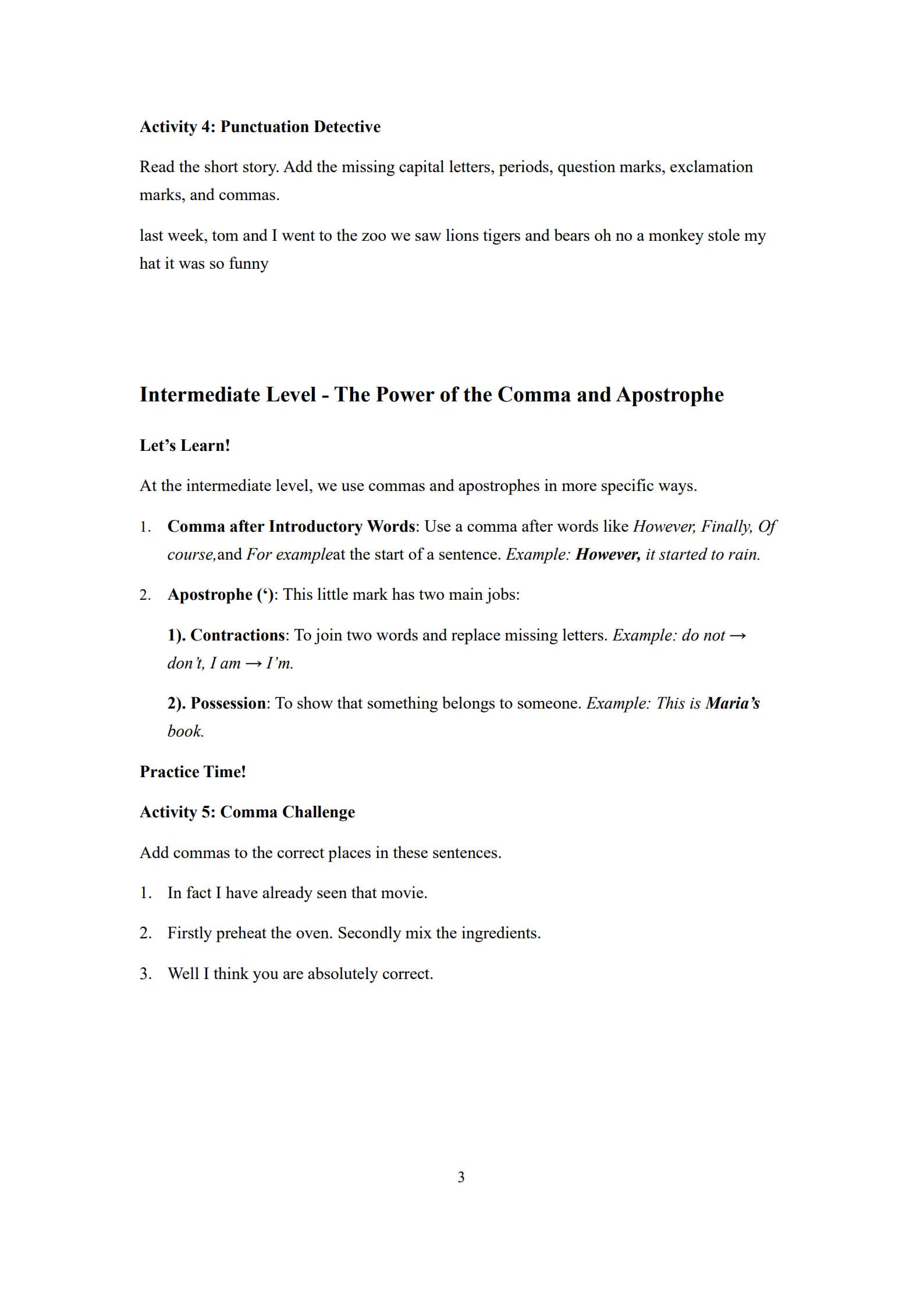
As learners progress, the template introduces intermediate concepts like commas for introductory words and apostrophes for contractions or possession. The punctuation practice worksheets include challenges like:
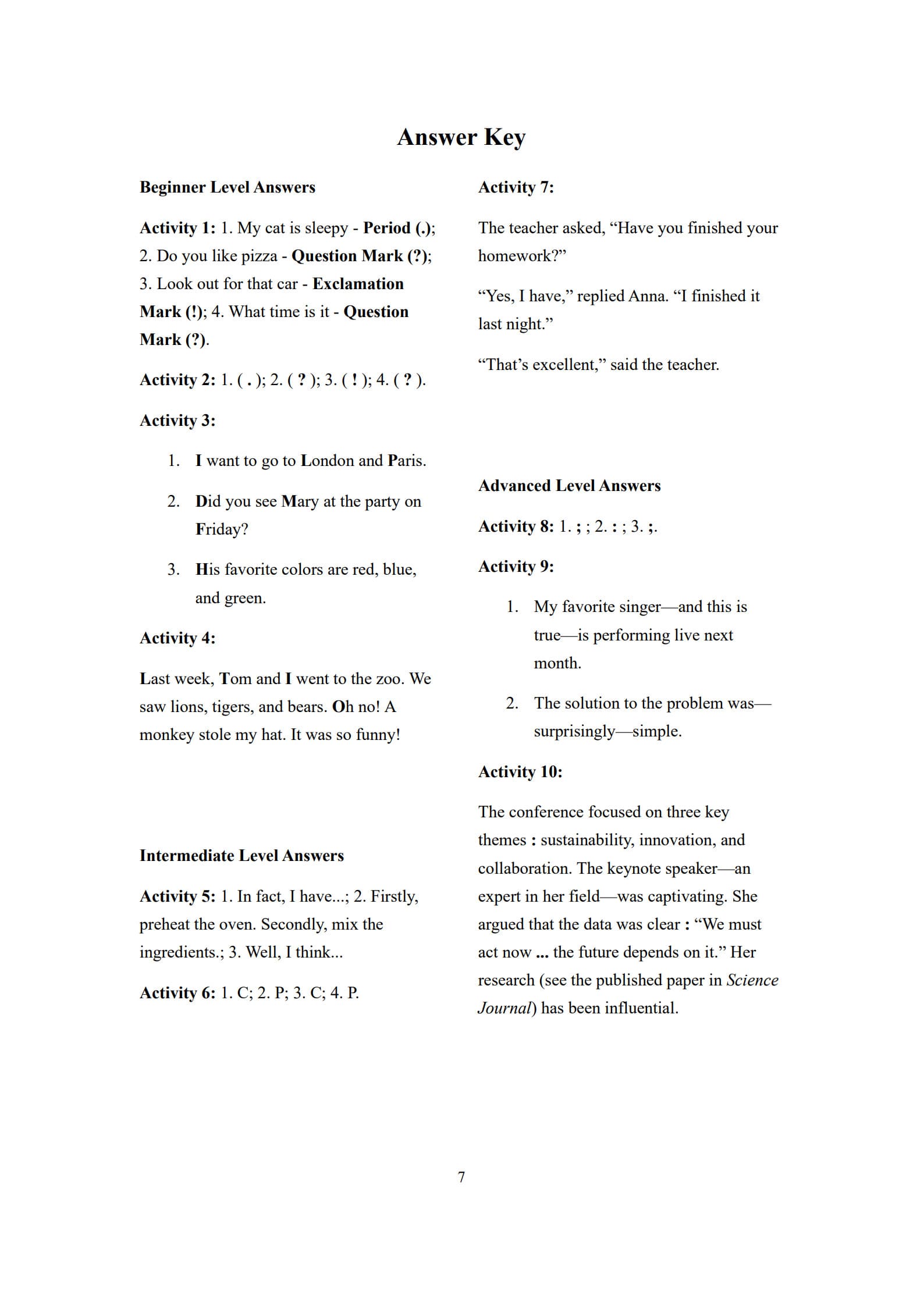
- Adding commas: “In fact, I have already seen that movie.”
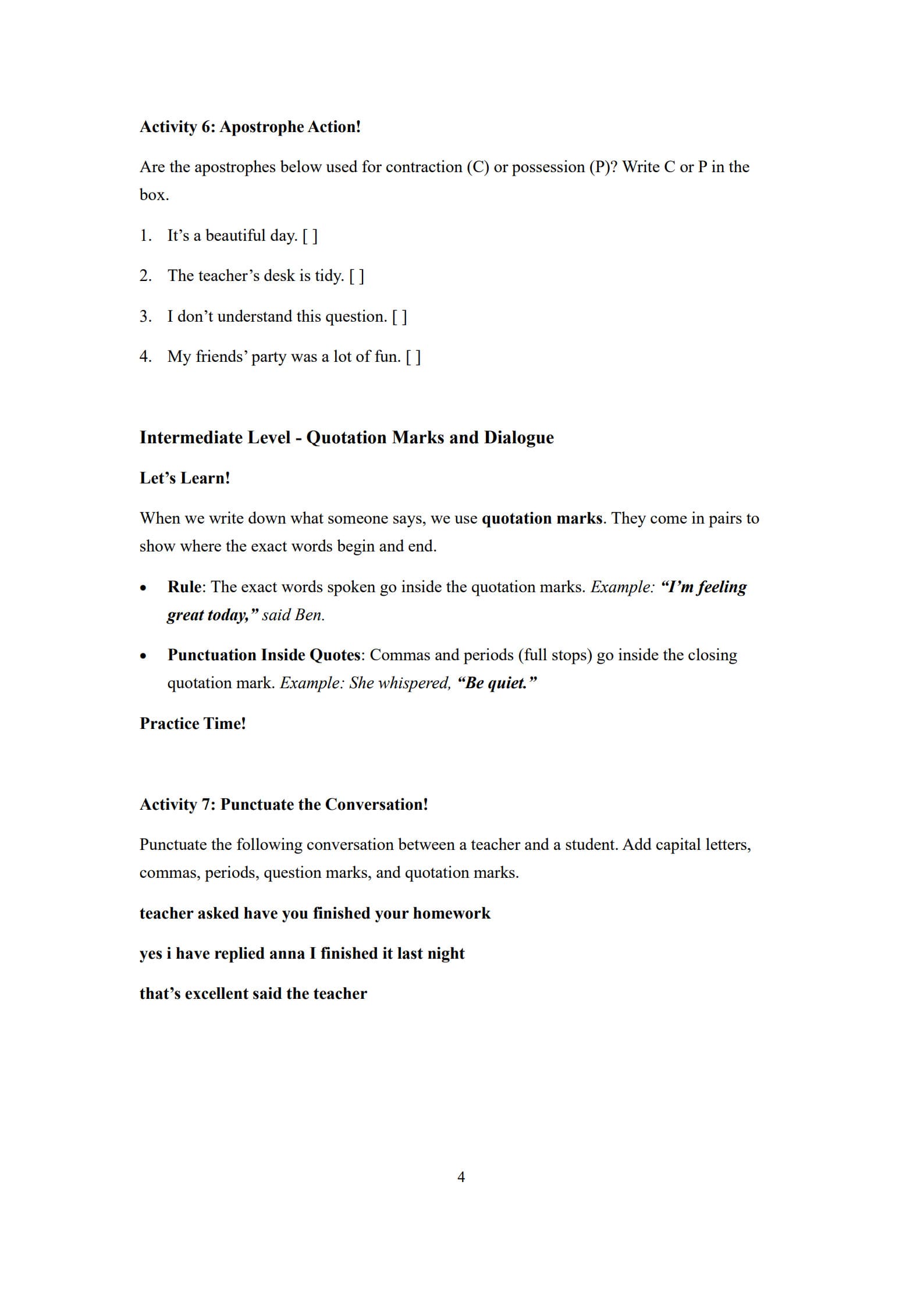
- Identifying apostrophe usage: “It’s (C) a beautiful day”vs. “The teacher’s (P) desk.”
These activities are designed to deepen understanding through application. A key feature of the template is its scaffolding approach—each activity builds on previous knowledge. For example, after mastering end marks, learners advance to using quotation marks in dialogues:
The teacher asked, “Have you finished your homework?”
“Yes, I have,” replied Anna.
This gradual complexity ensures learners never feel overwhelmed while steadily improving their skills.
Visualizing Progress: A Diagram of Punctuation Mastery
To help learners track their growth, the template incorporates visual guides. Below is a simplified diagram illustrating the learning pathway:
Beginner → Intermediate → Advanced
↓ ↓ ↓
End Marks Commas & Semicolons,
Apostrophes Colons & Dashes
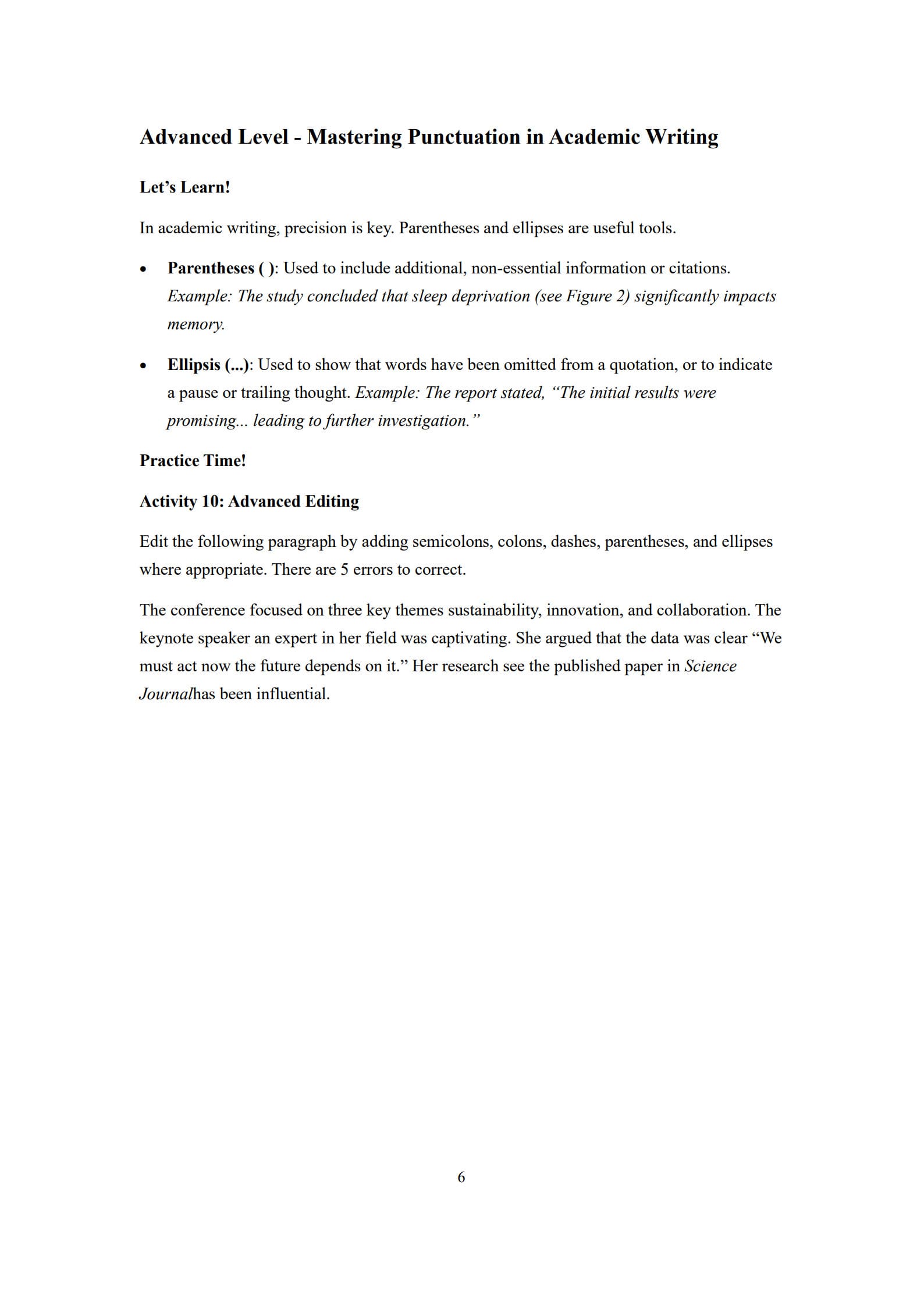
Beginner Level: Focuses on periods, question marks, exclamation marks, and commas in lists.
Intermediate Level: Introduces commas after introductory words, apostrophes, and quotation marks.
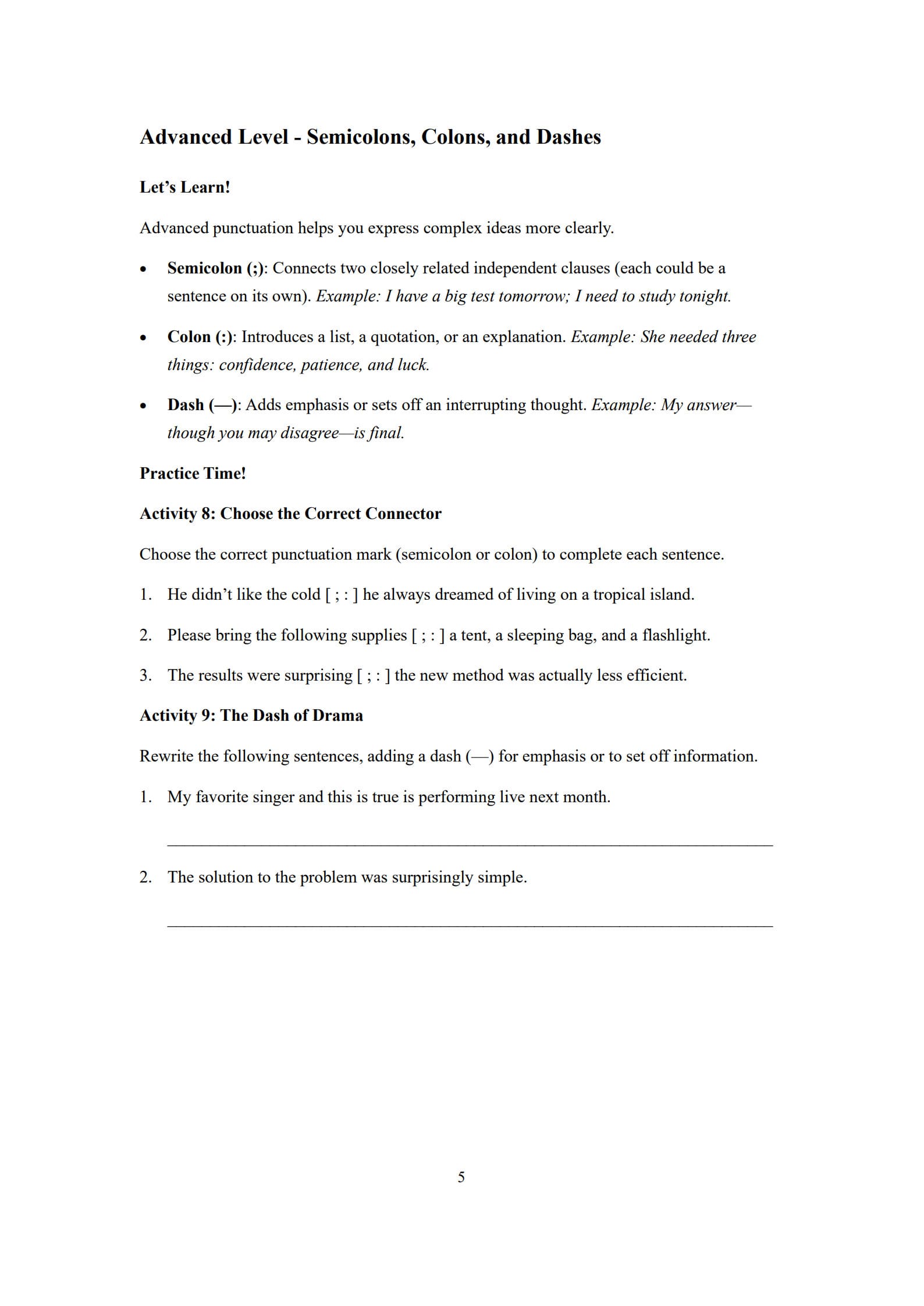
Advanced Level: Covers semicolons, colons, dashes, parentheses, and ellipses.
This structure allows learners to identify their current stage and set goals for the next level. The diagram also reinforces the template’s organization, making it easy to navigate.
Maximizing Engagement with Interactive Activities
The template’s exercises are designed to be interactive and thought-provoking. For example, the “Punctuation Detective” activity tasks learners with correcting a short story:
Original: last week, tom and I went to the zoo we saw lions tigers and bears oh no a monkey stole my hat it was so funny
Corrected: Last week, Tom and I went to the zoo. We saw lions, tigers, and bears. Oh no! A monkey stole my hat. It was so funny!
Such tasks simulate real-world editing scenarios, encouraging learners to apply multiple rules simultaneously. Additionally, the template includes tables for self-assessment, like this summary of apostrophe usage:
| Sentence | Apostrophe Type |
|---|---|
| It’s a beautiful day. | Contraction (C) |
| The teacher’s desk is tidy. | Possession (P) |
| I don’t understand. | Contraction (C) |
These formats cater to diverse learning styles, whether visual, analytical, or practical.
How to Use the Punctuation Exercises Template in PDF Agile
PDF Agile makes it easy to customize and practice with the Punctuation Exercises Template. Follow these steps:
Step 1: Access the Punctuation Exercises Template
Open the PDF Agile app and navigate to the Template Library. Search for “Punctuation Exercises” and click “Use Template.” The template is pre-formatted with exercises for all levels.
Step 2: Complete Exercises Digitally
Use PDF Agile’s text-editing tools to fill in answers directly. For example, in the “Add the Perfect Ending” activity, circle the correct punctuation mark using the highlight or drawing tools.
Step 3: Save and Start New Exercises
Save your completed worksheets for future review. PDF Agile offers hundreds of worksheets for students and teachers to download for free. Check Reading Comprehension Worksheets and Cursive Writing Practice Sheets here.
Step 4: Share for Feedback
Export your completed exercises as a PDF and share them with teachers or peers for feedback.
Conclusion
Punctuation mastery is not just about rules—it’s about empowering learners to express ideas with clarity and confidence. PDF Agile’s Punctuation Exercises Template provides a structured, engaging, and flexible resource for learners at every stage. From beginner-level capitalization drills to advanced semicolon challenges, the template turns practice into progress. By integrating these exercises into your routine, you’ll not only improve your writing but also develop a deeper appreciation for the power of punctuation.
Explore the template today in PDF Agile and take the first step toward becoming a punctuation pro!