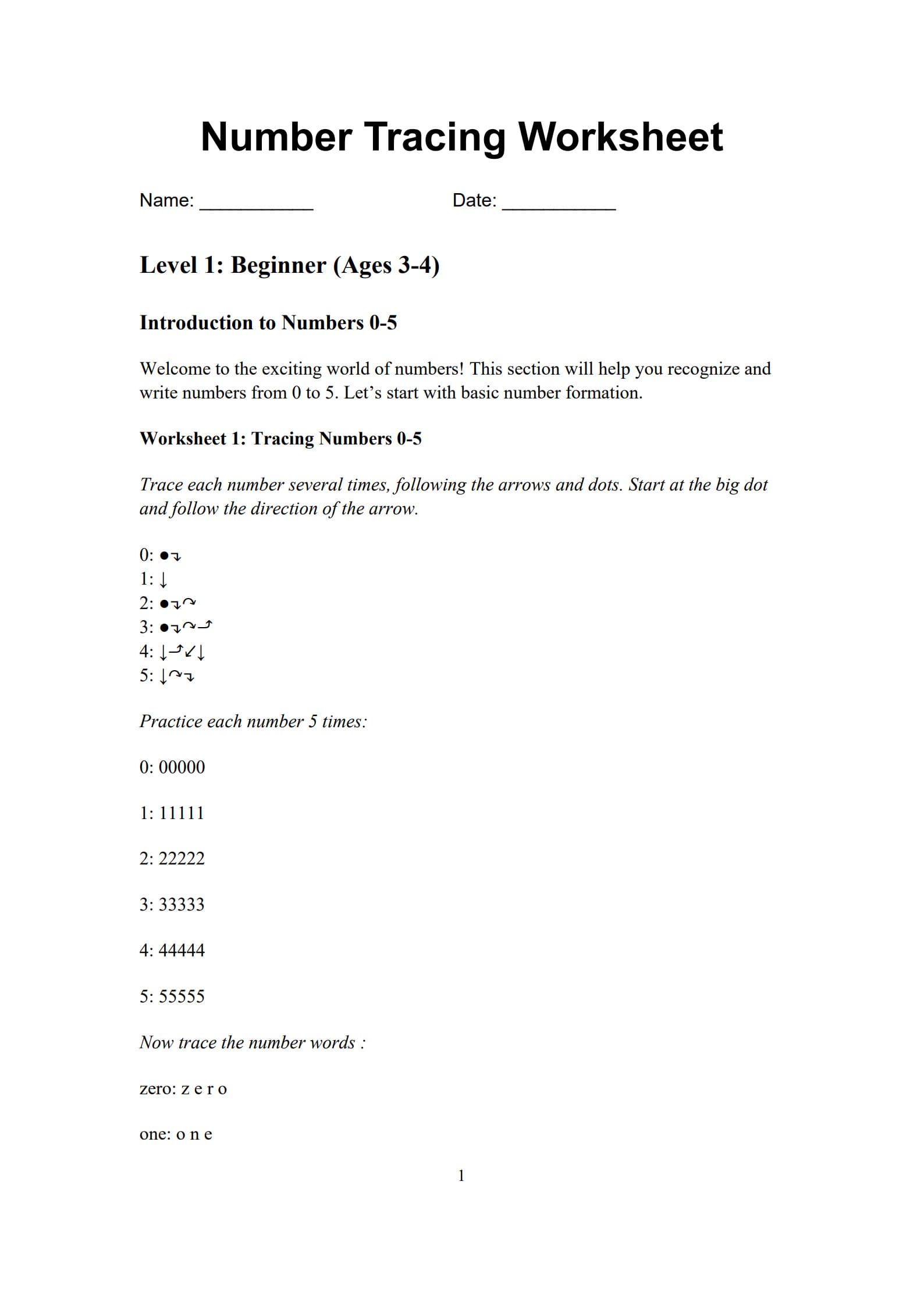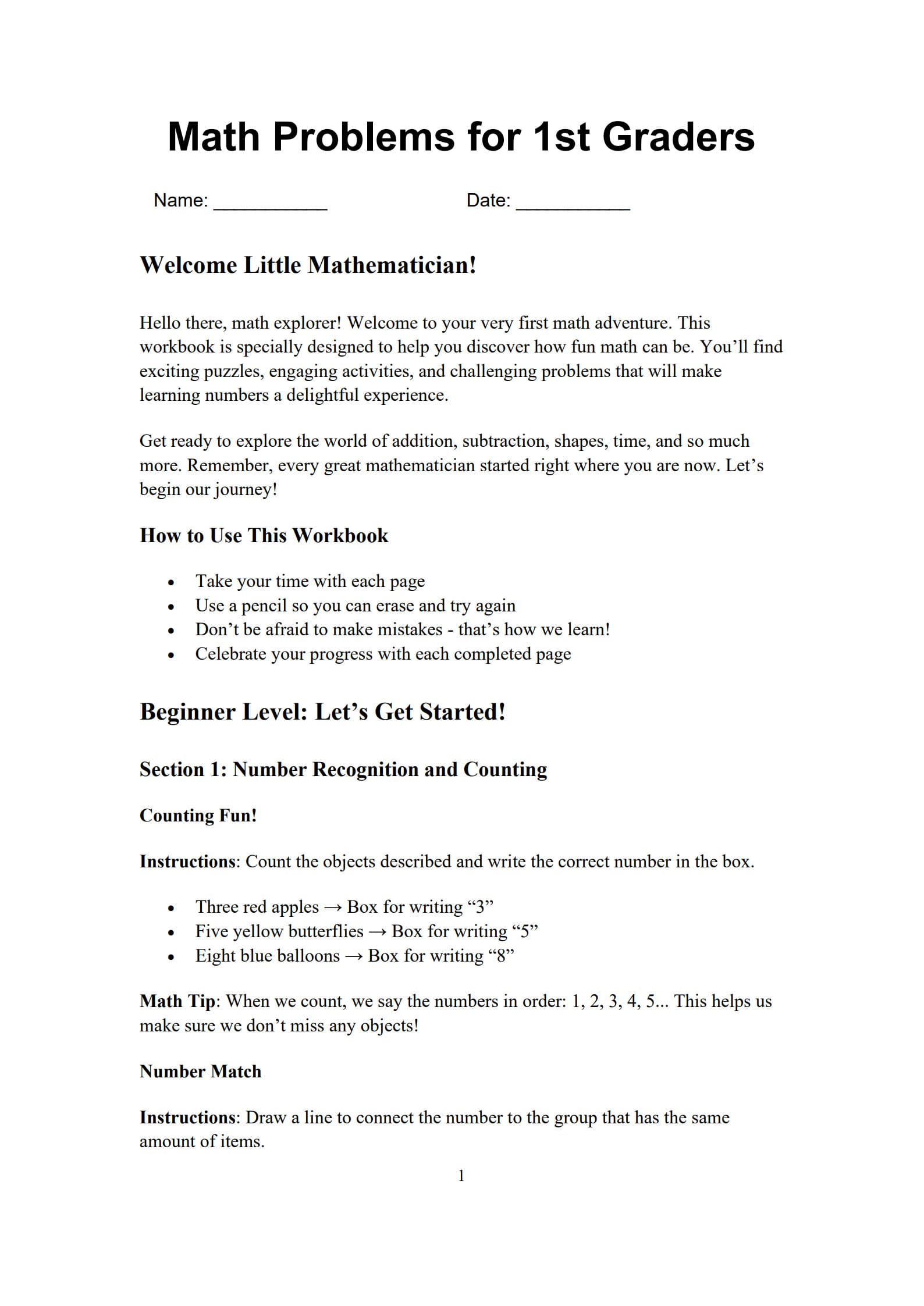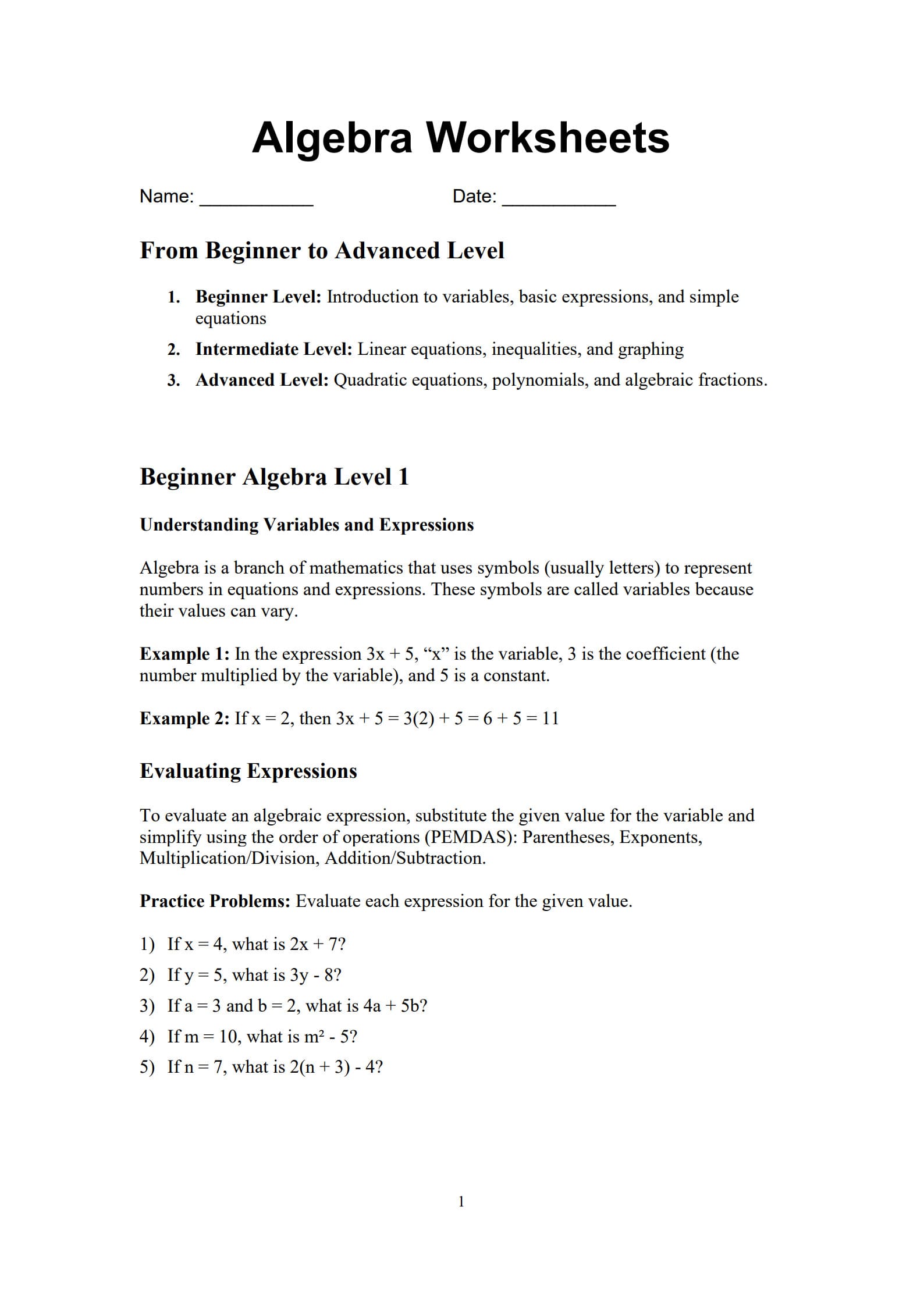


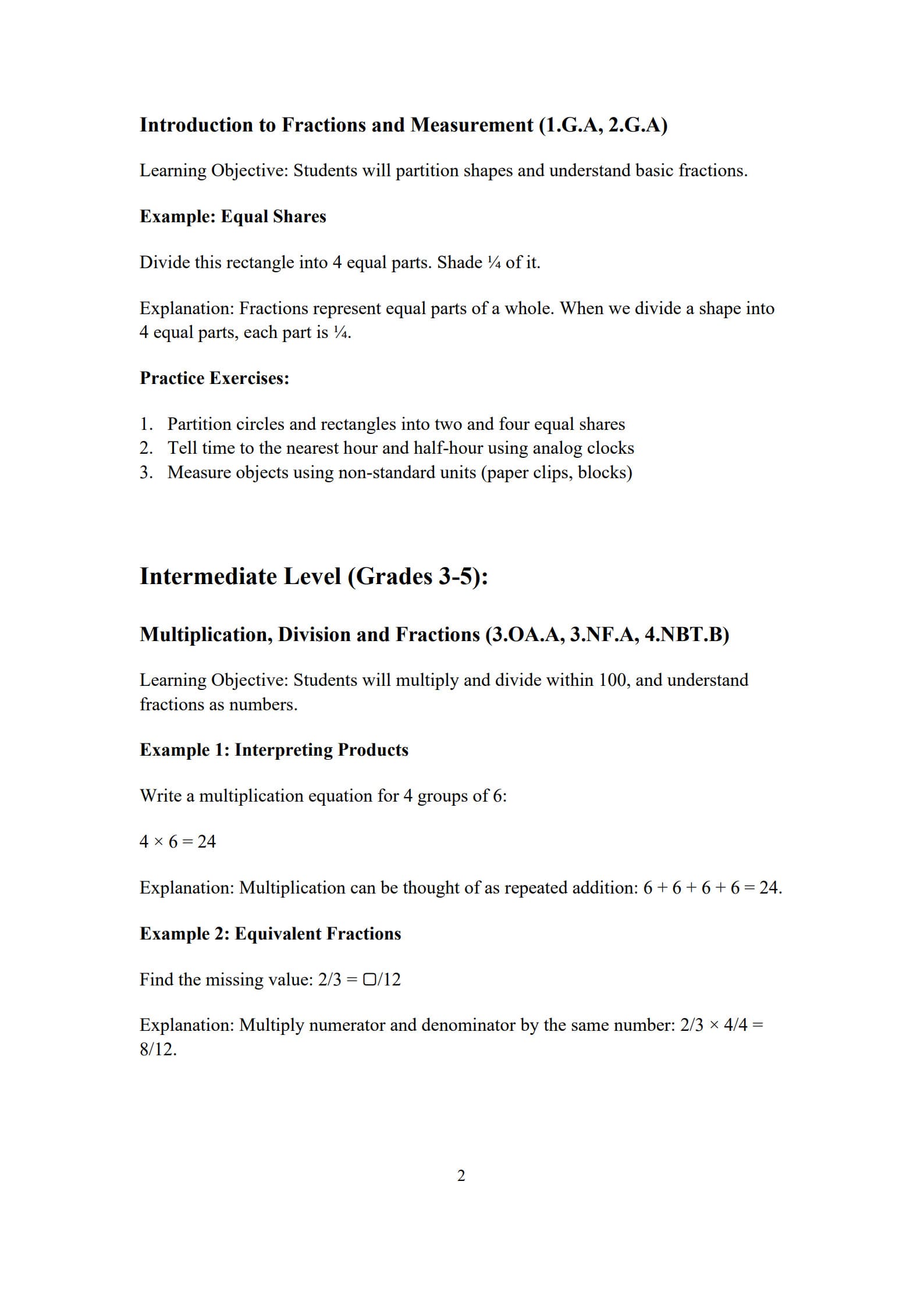
Imagine a world where math practice is engaging, structured, and aligned with educational standards—this is exactly what our Common Core Math Worksheets template offers. Designed for educators, parents, and students, this math drills worksheet transforms abstract concepts into tangible learning experiences. Whether you’re reinforcing number recognition for kindergarteners or guiding middle schoolers through algebraic expressions, these common core sheets provide a scaffolded approach to mathematical proficiency. PDF Agile brings this resource to life with intuitive customization tools, allowing you to adapt materials for diverse learning needs.
Why Are Common Core Sheets Essential for Building Foundational Math Skills?
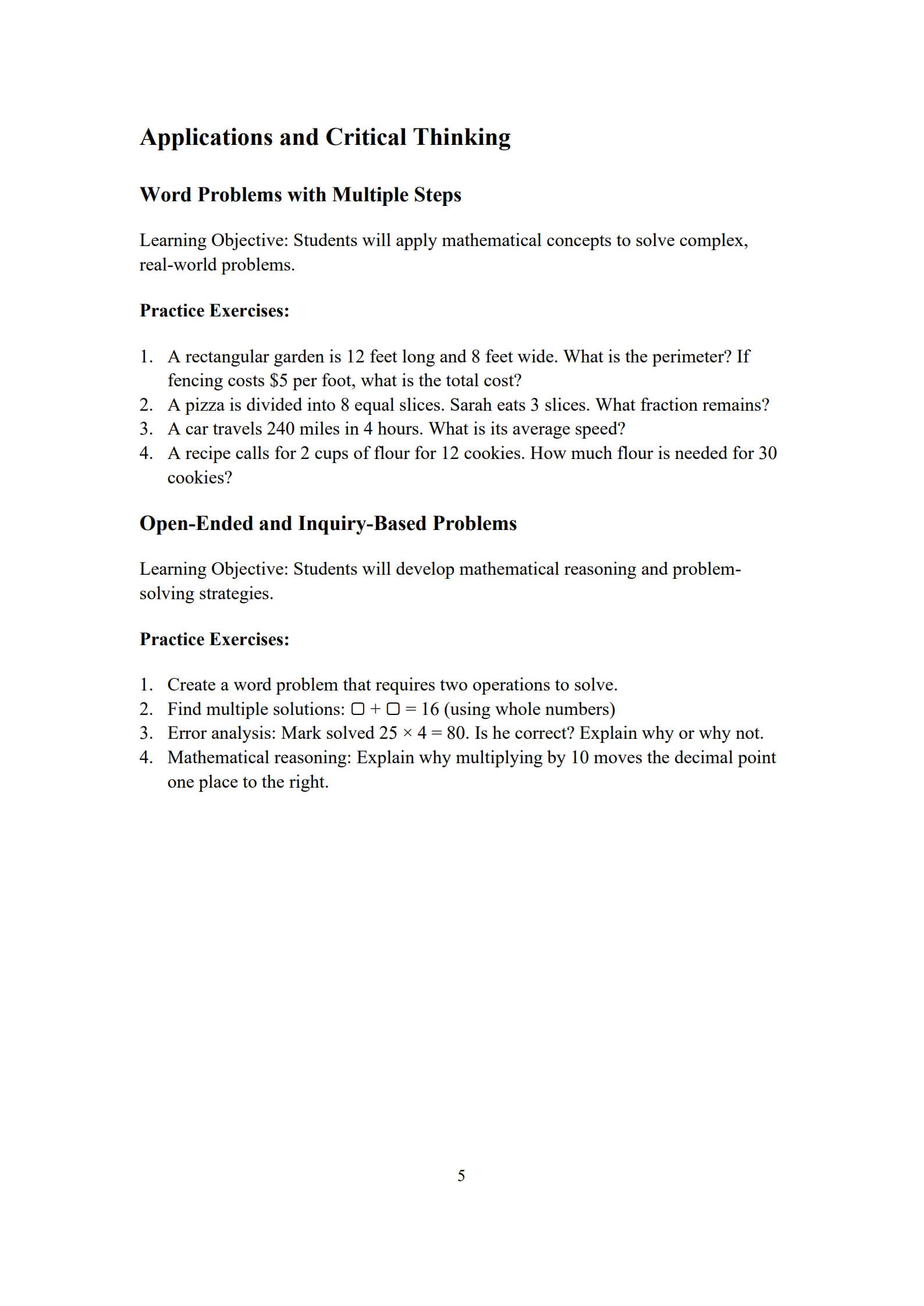
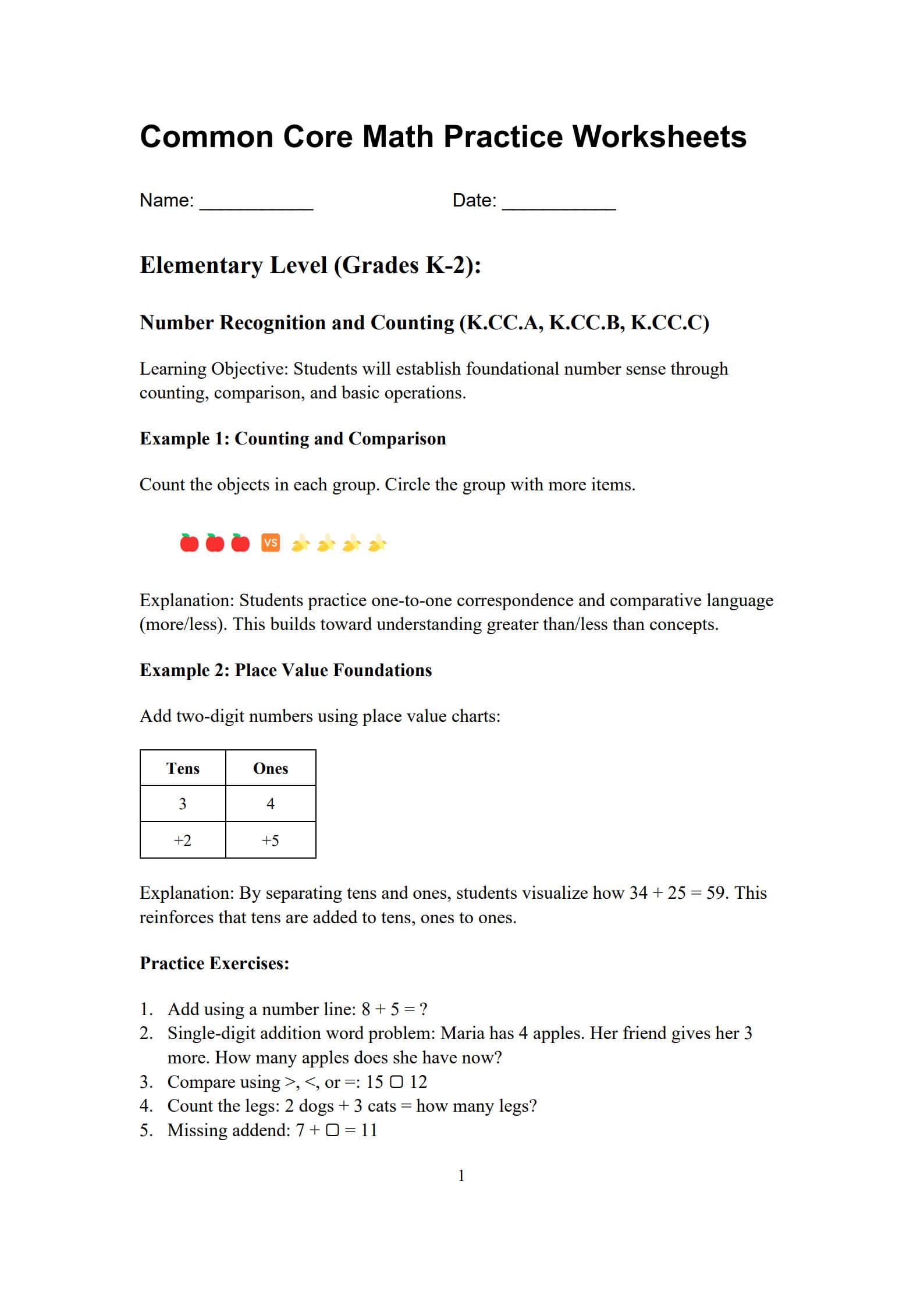
How do you transform counting exercises into critical thinking opportunities? Our Common Core Math Worksheets template begins with elementary-level exercises that lay the groundwork for lifelong numerical fluency. For example, the “Number Recognition and Counting” section uses visual comparisons—like asking students to circle the group with more items—to introduce comparative language and one-to-one correspondence. These common core sheets math activities are strategically designed to progress from concrete to abstract thinking. The place value exercise, which demonstrates adding two-digit numbers using charts, helps students visualize mathematical operations rather than memorizing steps. By incorporating diverse formats like number lines and word problems (e.g., “Maria has 4 apples...”), the template ensures that learners engage with numbers in multiple contexts, reinforcing their understanding through repetition and variation. These common core sheets are not just practice tools; they are building blocks for logical reasoning and problem-solving.
The template’s structured approach aligns with educational standards like K.CC.A and K.CC.B, ensuring that each activity serves a specific developmental purpose. For instance, the missing addend problem (7 + ___ = 11) encourages students to think inversely, fostering flexibility in arithmetic. Similarly, exercises involving non-standard measurement units—such as using paper clips to measure objects—make abstract concepts tangible for young minds. By integrating these elements, the common core math sheets create a seamless learning journey where each skill naturally leads to the next. This coherence is vital for preventing knowledge gaps and building confidence. Educators can leverage these materials to differentiate instruction, providing extra support or challenges based on individual student needs. Ultimately, these common core sheets transform routine practice into an exploration of patterns, relationships, and real-world connections.
How Do Common Core Sheets Math Materials Support Progressive Learning?
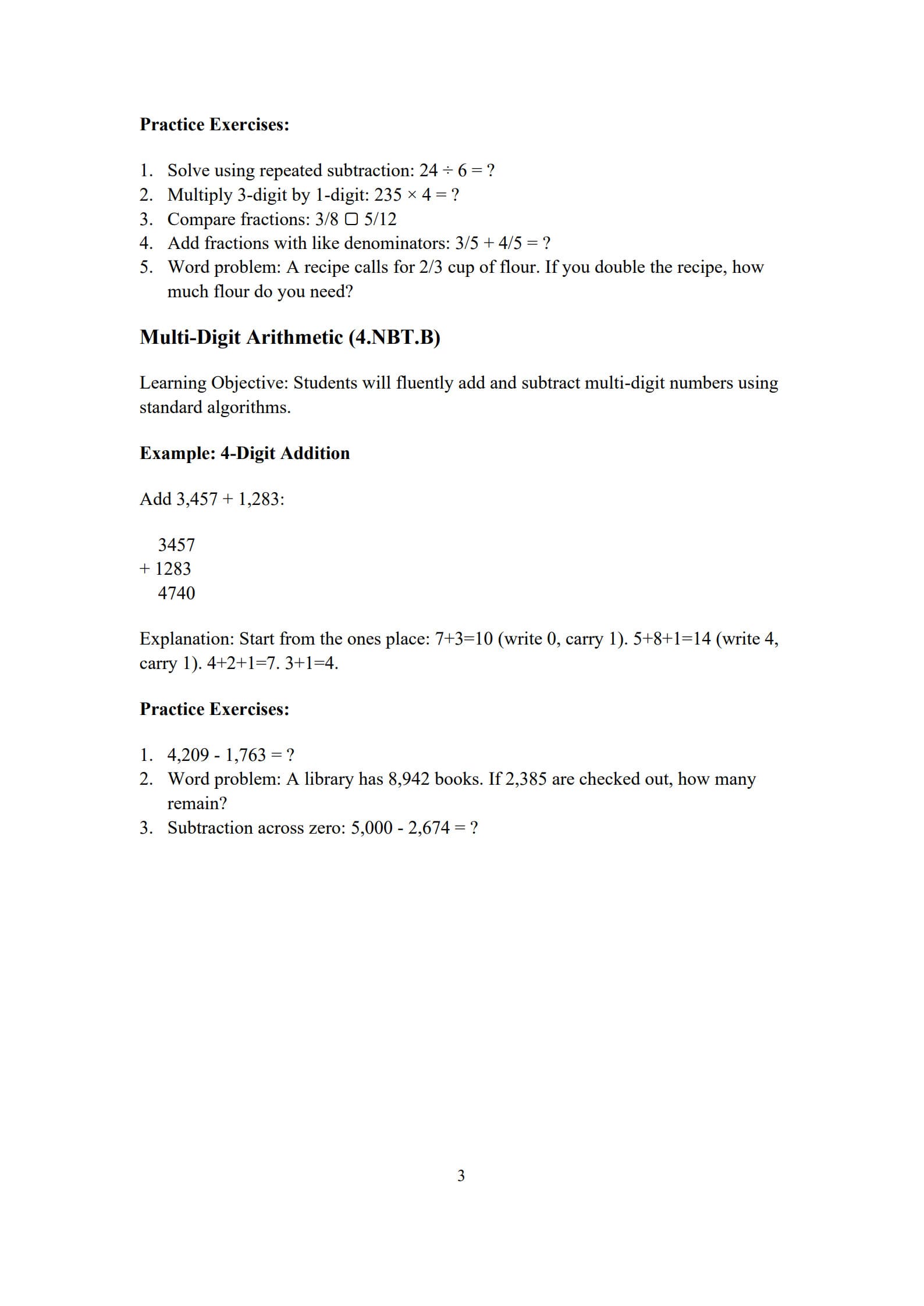
What makes a math worksheet effective for learners at different stages? The intermediate-level section of our Common Core Math Worksheets template addresses this by bridging basic arithmetic with complex operations. For example, the multiplication and division exercises (aligned with standards like 3.OA.A) use repeated addition and subtraction to demystify abstract concepts. A problem like “24 ÷ 6 = ?” is framed as repeated subtraction, helping students see division as a process of equal grouping. Similarly, the fractions module introduces equivalence through visual models, such as finding the missing value in 2/3 = □/12. These common core sheets are carefully sequenced to build on prior knowledge—students who have mastered place value in elementary grades can now apply it to multi-digit arithmetic, like adding 3,457 and 1,283 using carry-over techniques. This progression ensures that learning is cumulative and cohesive.
The template also emphasizes real-world applications, such as word problems involving recipes or library book counts, which make math relevant and engaging. For instance, the question “A recipe calls for 2/3 cup of flour. If you double the recipe, how much flour do you need?” requires students to apply fraction multiplication in a practical context. These common core math sheets are designed to develop not just computational skills but also critical thinking. By comparing fractions (e.g., 3/8 □ 5/12) or solving multi-step problems, learners practice analyzing relationships and justifying their answers. The inclusion of standardized algorithms for operations like subtraction across zeros (e.g., 5,000 - 2,674) ensures that students build fluency with efficient methods. Through these layered activities, the common core sheets math materials foster a deep, conceptual understanding that prepares students for advanced topics.
Bridging Concepts and Practice: A Look at Template Organization
The Common Core Math Worksheets template is organized into three distinct levels—elementary, intermediate, and advanced—each targeting specific skills and standards. This structure allows educators to easily locate age-appropriate activities while maintaining a coherent learning trajectory. For example, the elementary section focuses on foundational topics like counting and measurement, while the advanced level delves into ratios and geometry. The template’s layout includes clear learning objectives, step-by-step examples, and practice exercises with varying difficulty levels. This organization ensures that users can quickly identify relevant materials and adapt them to their teaching or learning goals.
Table: Template Section Overview
| Level | Key Standards | Sample Exercise | Learning Focus |
|---|---|---|---|
| Elementary (K-2) | K.CC.A, 1.G.A | “Count the legs: 2 dogs + 3 cats = ?” | Number sense, basic operations |
| Intermediate (3-5) | 3.NF.A, 4.NBT.B | “Multiply 3-digit by 1-digit: 235 × 4 = ?” | Fractions, multi-digit arithmetic |
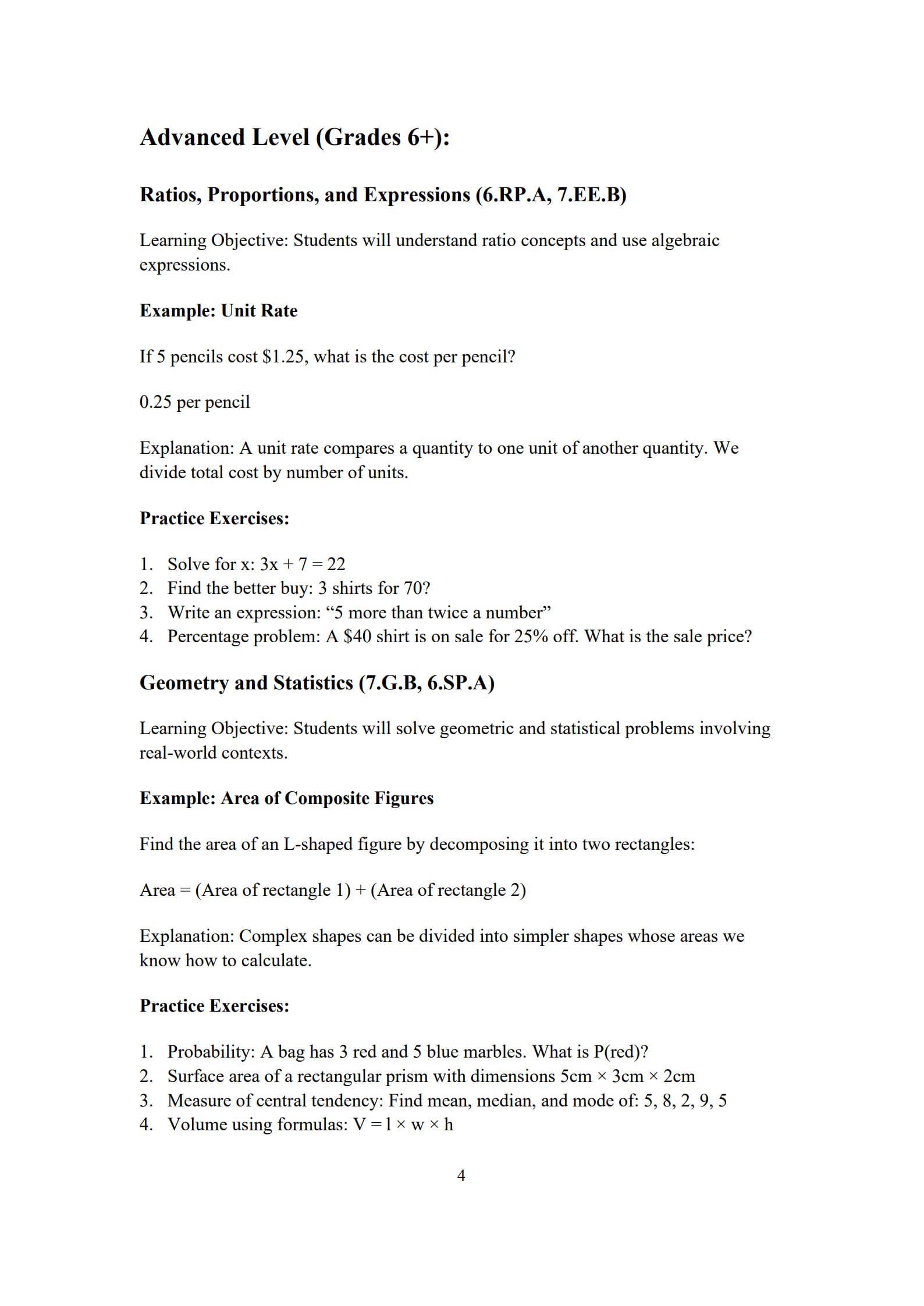
| Advanced (6+) | 6.RP.A, 7.G.B | “Solve for x: 3x + 7 = 22” | Algebra, geometry, statistics |
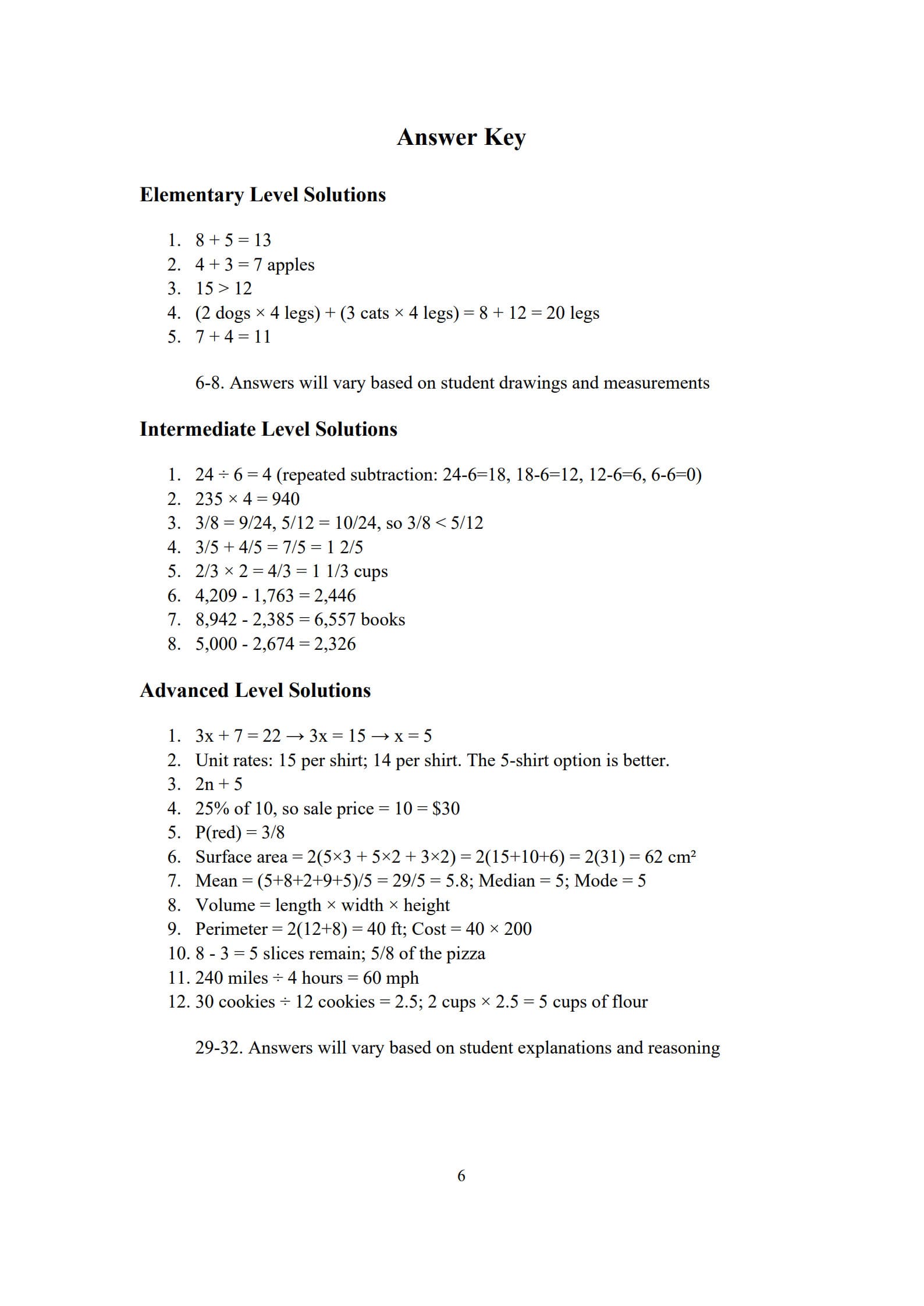
The template also includes answer keys and explanatory notes, which provide immediate feedback and support self-paced learning. For instance, the solution for the probability problem “P(red) = 3/8” is accompanied by a clear rationale, helping students understand the underlying principles. This thoughtful organization reduces preparation time for educators and empowers learners to work independently. By categorizing activities by grade level and standard, the common core sheets ensure alignment with curriculum requirements while offering flexibility for customization. Whether used in classrooms or at home, this structure promotes a systematic approach to skill development.
How to Use This Template on PDF Agile: A Step-by-Step Guide
Using the Common Core Math Worksheets template in PDF Agile is straightforward and efficient. Follow these steps to customize and implement the materials:
Step 1: Access the Common Core Math Practice Worksheets Library
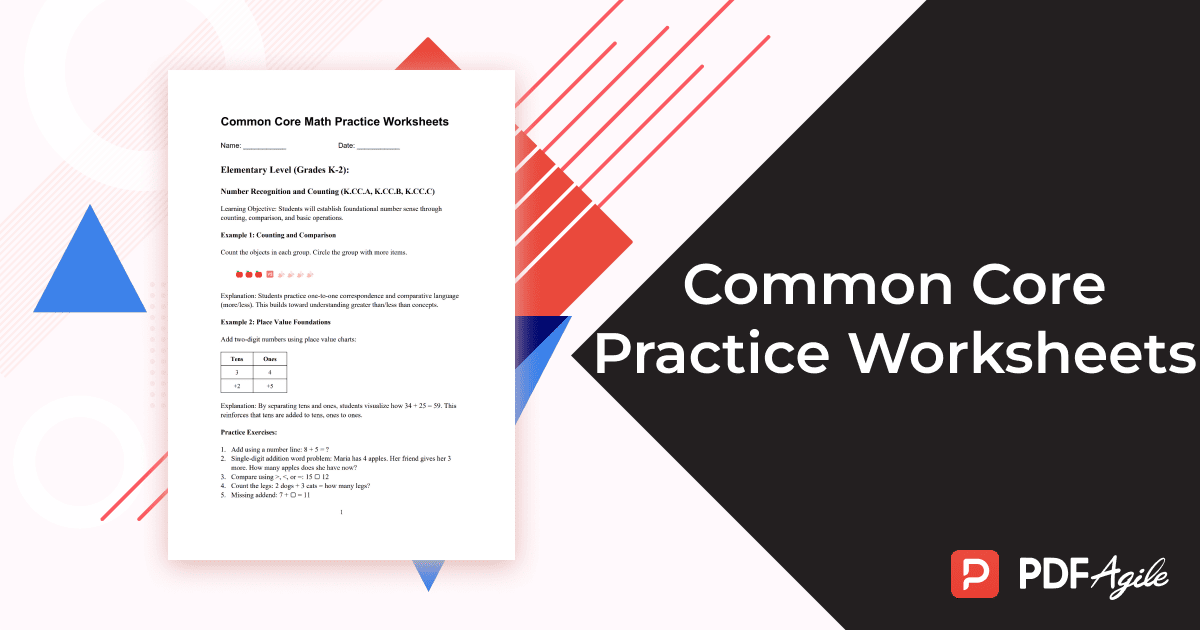
Log in to PDF Agile and navigate to the Template Library. Search for “Common Core Math Worksheets” and select the template. You can preview the content to ensure it aligns with your needs, then click “Use Template” to open it in the editor.
Step 2: Customize Content for Your Learners
The template is fully editable, allowing you to modify exercises, add student names, or adjust difficulty levels. For example, you might replace the sample problem “8 + 5 = ?” with a similar equation tailored to your students’ progress. Use PDF Agile’s text and shape tools to incorporate visual aids, such as highlighting key steps in the place value chart example.
Step 3: Integrate Interactive Elements
Enhance engagement by adding digital annotations or hyperlinks to supplemental resources. For instance, you could link the fraction shading exercise to an online video explaining equal parts.
Step 4: Save, Export, and Distribute
Once customized, save the worksheet as a PDF for easy printing or digital distribution. You can also export it in formats compatible with learning management systems like Google Classroom. The answer key section can be kept separate for assessment purposes.
Step 5: Iterate Based on Feedback
Use PDF Agile’s version history to track changes and refine the template over time. For example, if students struggle with multi-digit subtraction, you might add more practice problems from the template’s arithmetic section.
Conclusion
The Common Core Math Worksheets template is more than a collection of exercises—it is a comprehensive tool for fostering mathematical proficiency. By aligning with standardized learning objectives and incorporating diverse problem types, these common core sheets cater to the evolving needs of students from kindergarten through middle school. The template’s emphasis on visual models, real-world applications, and critical thinking ensures that learners develop a deep, lasting understanding of mathematical concepts. Whether used in classrooms, tutoring sessions, or home school settings, these materials provide a structured yet flexible approach to skill development.
PDF Agile enhances this resource by offering seamless customization and distribution options. Educators can easily adapt the template to support differentiated instruction, while students benefit from clear, engaging practice opportunities. The inclusion of answer keys and explanatory notes further promotes independent learning and immediate feedback. As educational demands continue to evolve, tools like these common core math sheets play a vital role in making quality math education accessible to all. By integrating technology with pedagogy, we can create learning experiences that are not only effective but also inspiring. Explore the template today and discover how it can transform your approach to teaching and learning mathematics.