

Mathematics is not just about numbers—it’s a gateway to critical thinking, creativity, and everyday problem-solving. For first graders, mastering foundational math skills can shape their academic confidence and curiosity for years to come. At PDF Agile, we believe in making learning both accessible and enjoyable. That’s why we’ve designed a ready-to-use template, Math Problems for 1st Graders, tailored to introduce young learners to essential math concepts through structured, playful activities. The math drills are perfect for parents, teachers, and tutors looking to provide a comprehensive yet flexible learning tool. In this instructional essay, we’ll explore how the template’s rich content—from counting and basic operations to shapes and measurements—can be seamlessly used within the PDF Agile app to create dynamic, personalized worksheets. Let’s dive in and discover how to turn math practice into an adventure!
Why Are Math Word Problems Worksheets Essential for Early Learners?
Math word problems worksheets are more than just exercises—they are bridges connecting abstract numbers to real-life situations. For first graders, these activities build logical reasoning and language skills alongside mathematical fluency. Our Math Problems for 1st Graders template incorporates word problems strategically, such as:
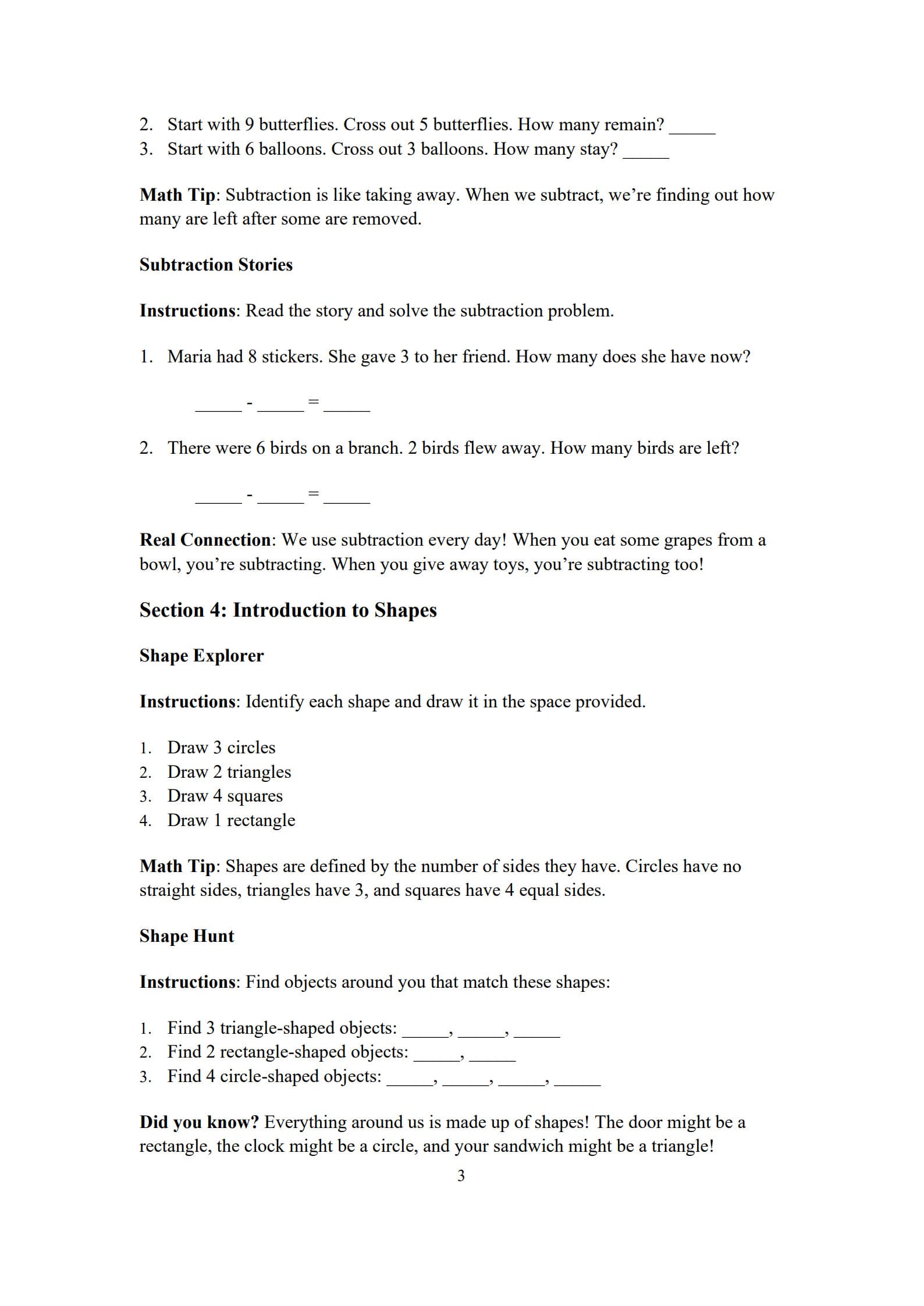
“Maria had 8 stickers. She gave 3 to her friend. How many does she have now?”
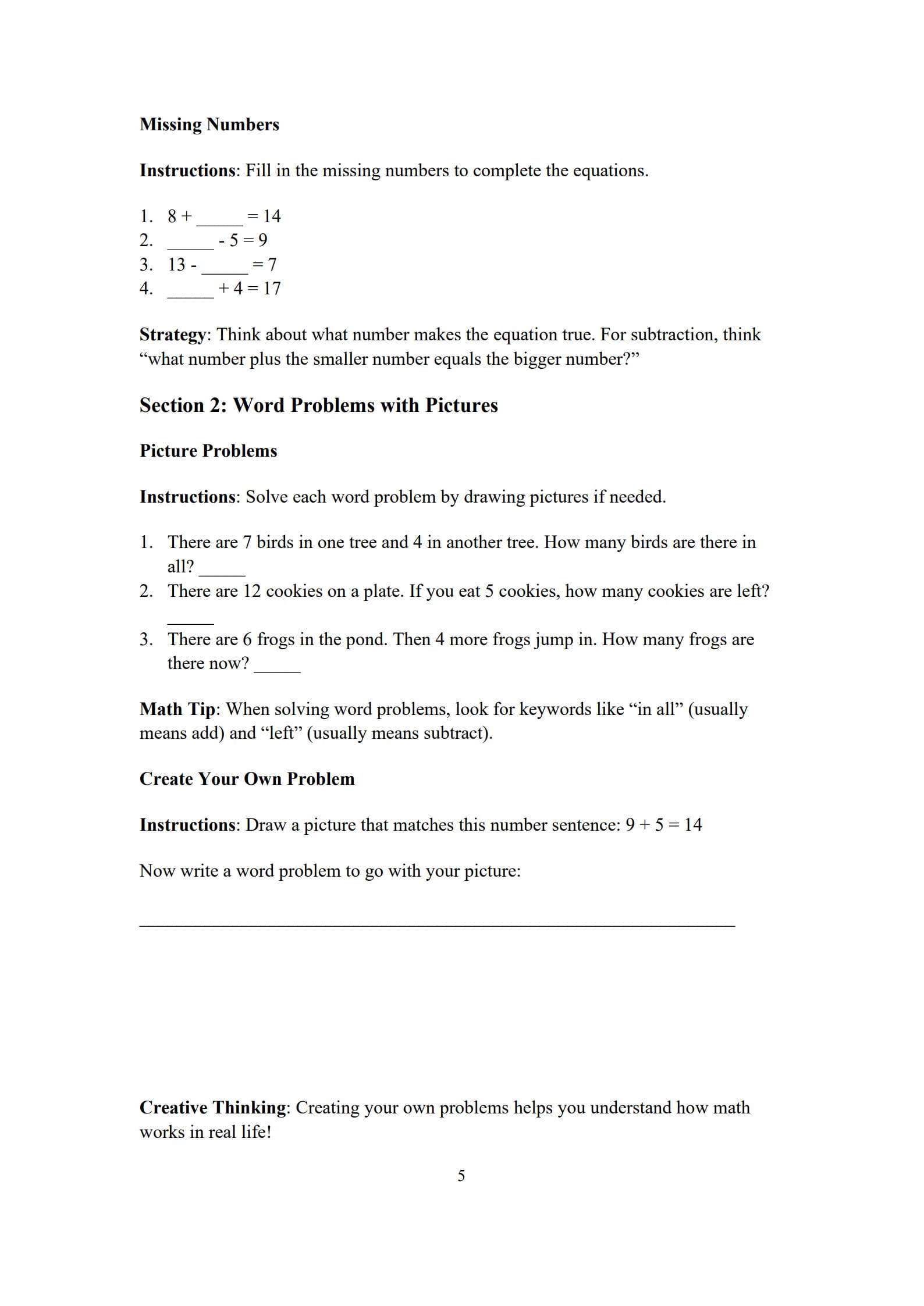
This simple scenario teaches subtraction while encouraging readers to visualize and solve problems step by step. Similarly, the section on Picture Problems asks learners to draw illustrations to represent math stories, like combining 7 birds and 4 birds to find the total. By integrating text with visuals, these worksheets make math relatable and reduce anxiety. Moreover, the template’s Create Your Own Problem activity empowers children to design their own word problems based on number sentences, fostering ownership and creativity. With PDF Agile, you can easily customize these problems to include a child’s name or favorite objects, making each worksheet uniquely engaging.
How Can Number Recognition and Basic Operations Build a Strong Foundation?
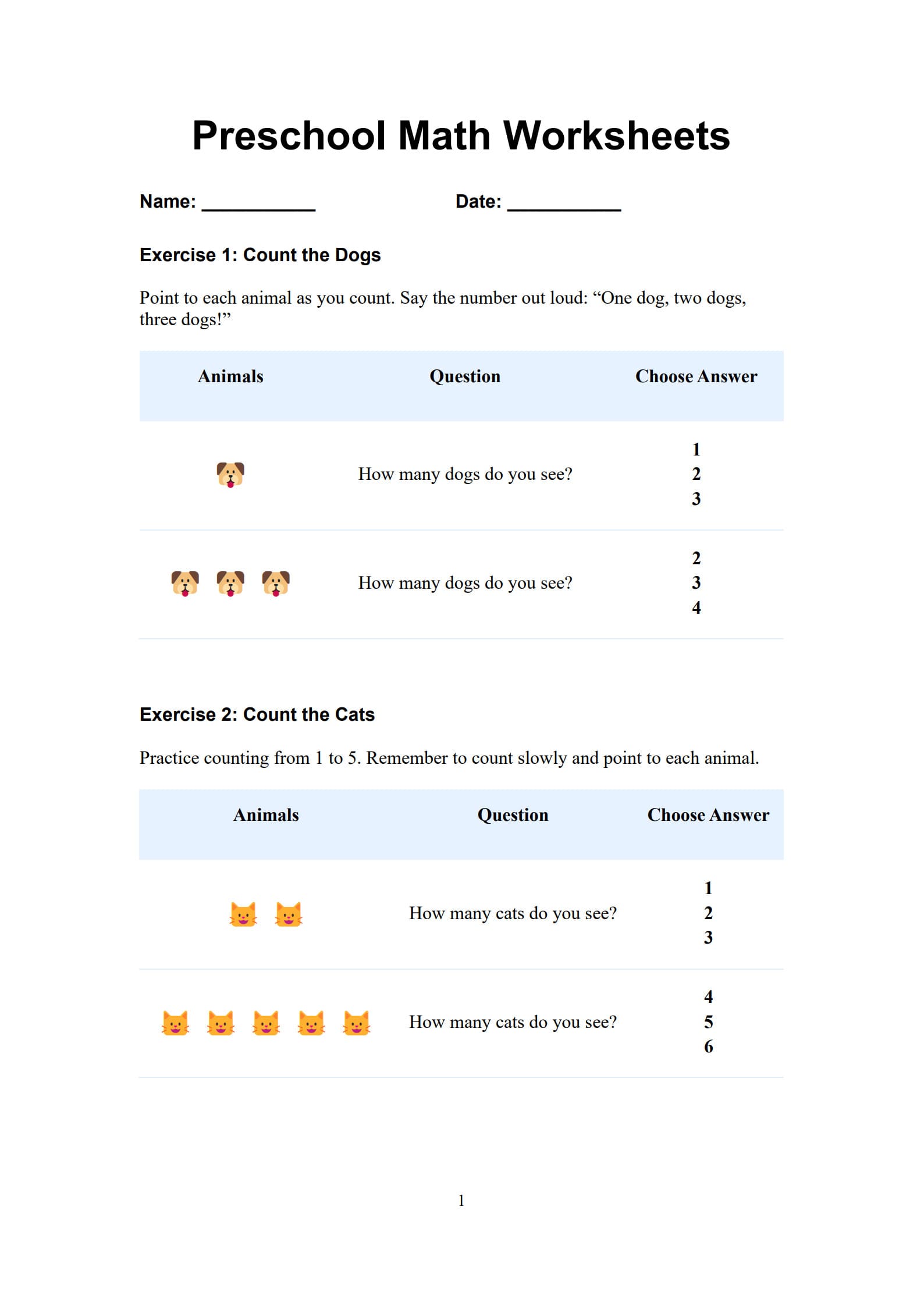
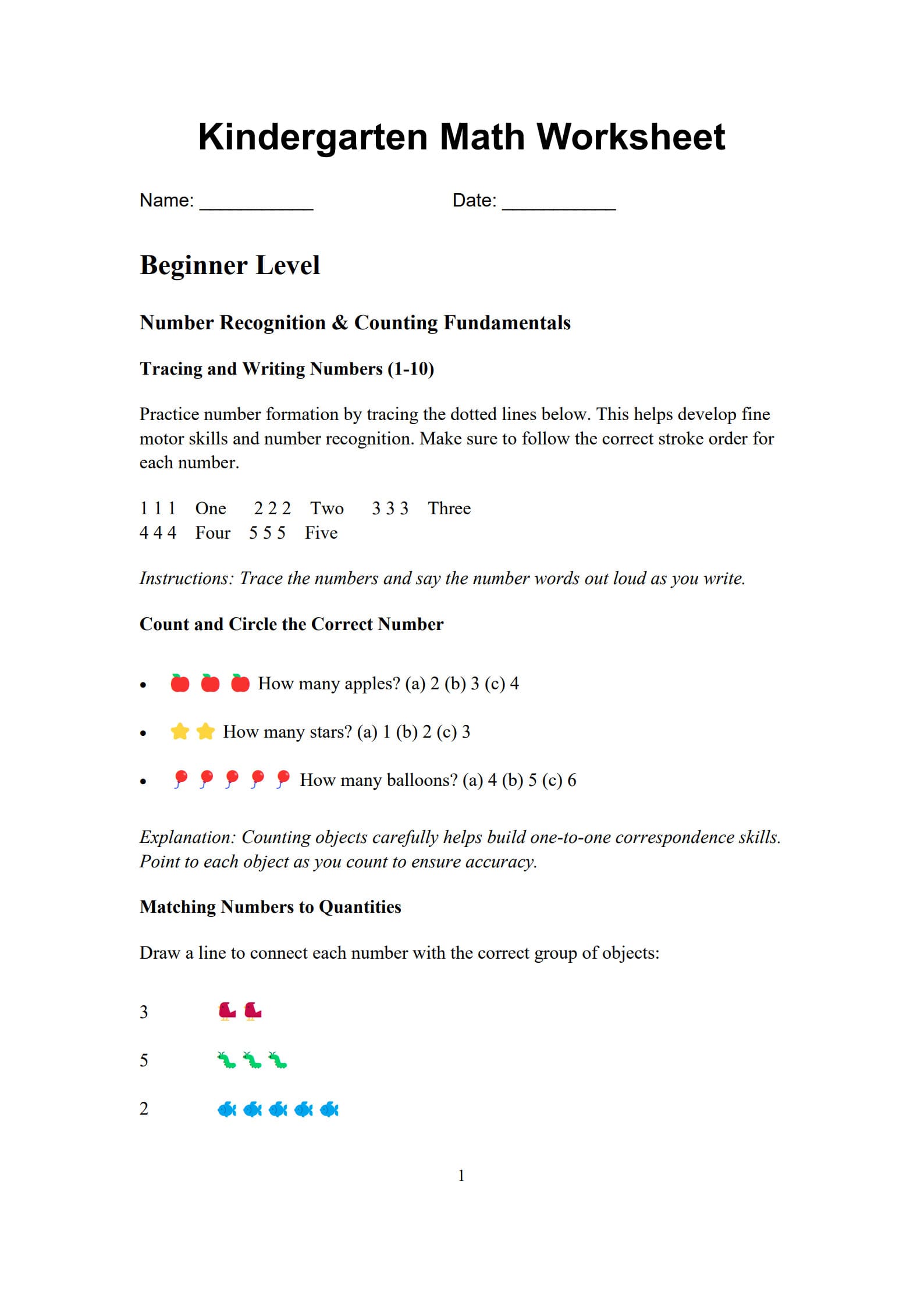
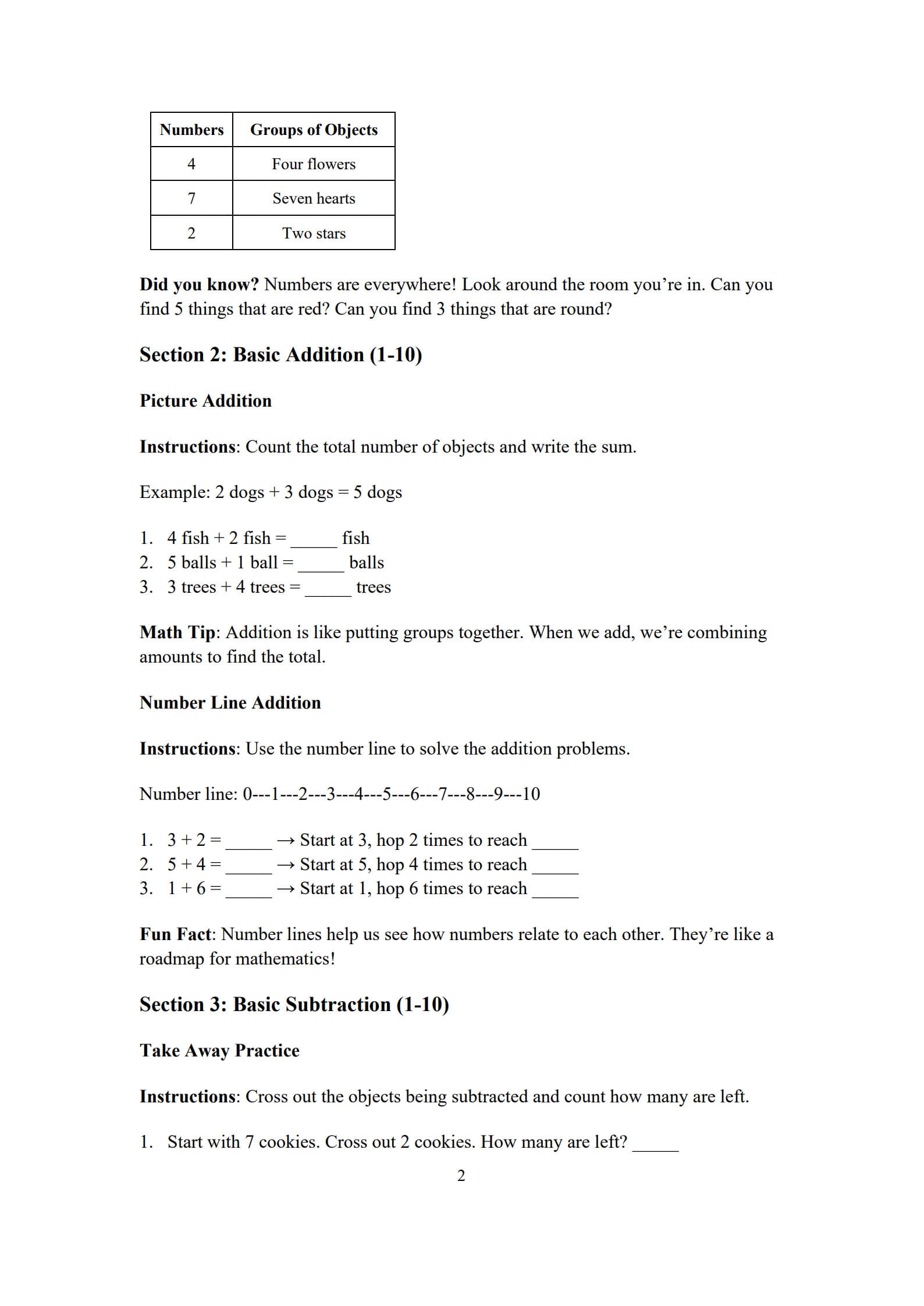
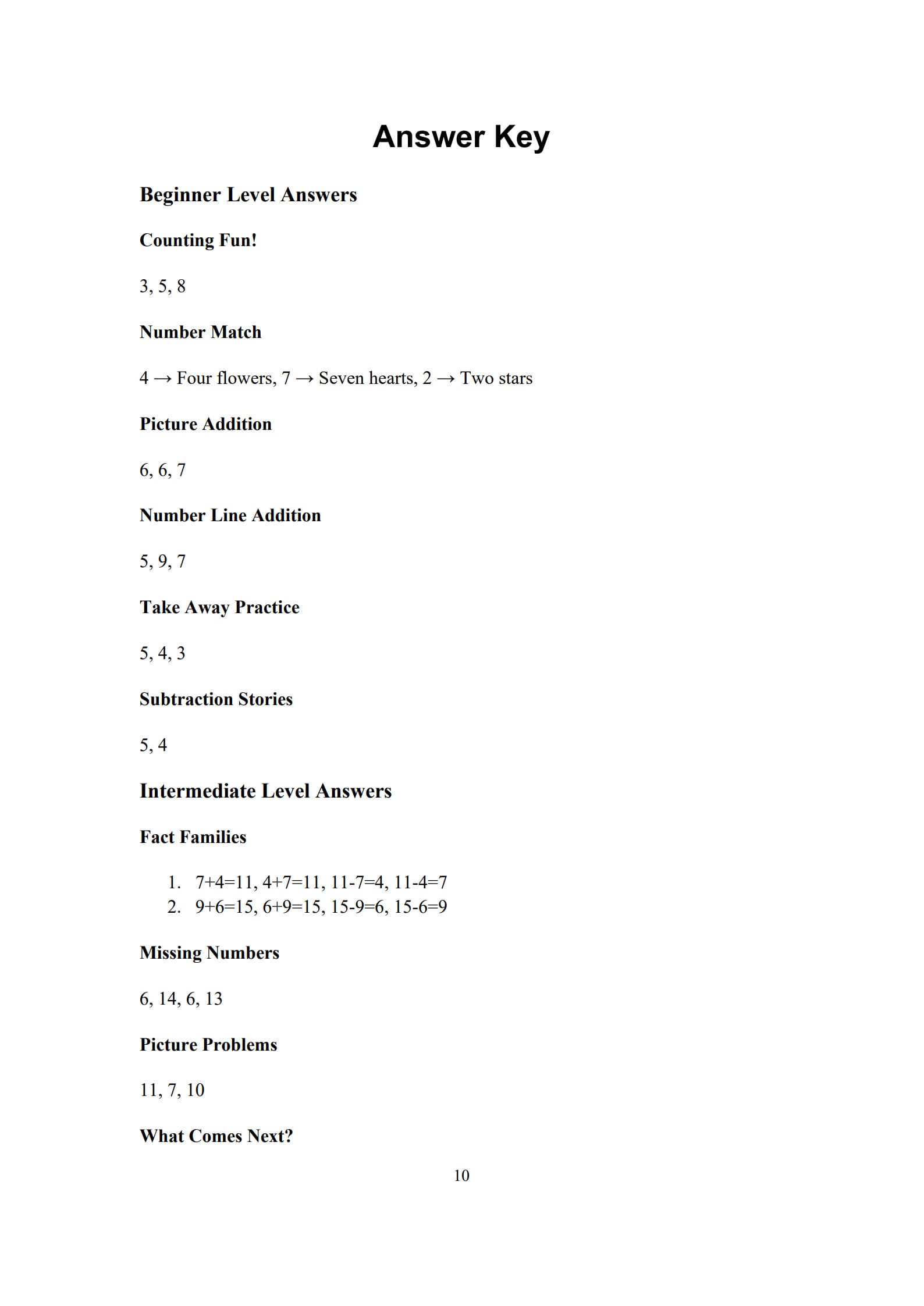
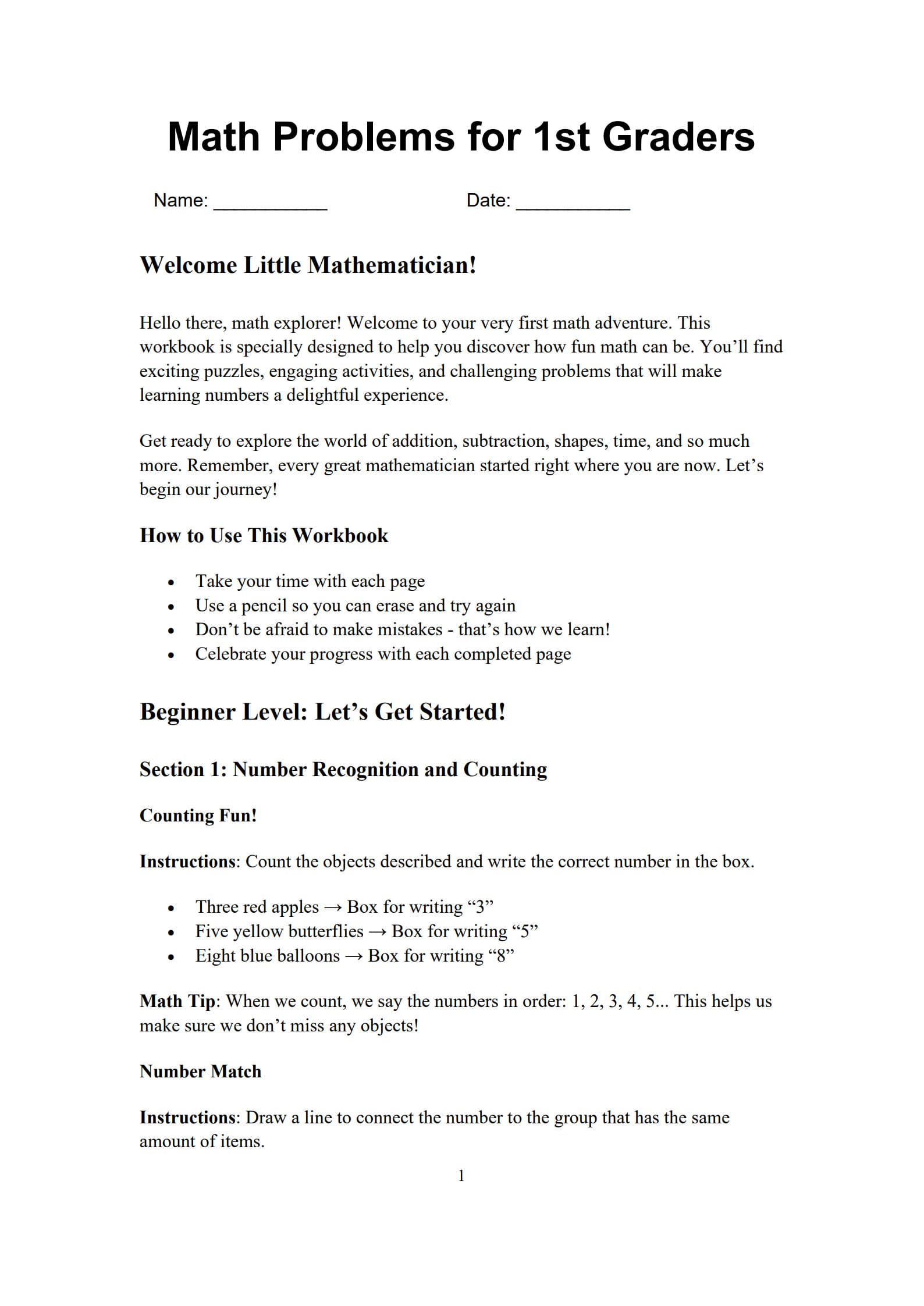
Before tackling word problems, young learners need confidence in recognizing numbers and performing basic operations. Our template’s Beginner Level focuses on this through interactive exercises like Counting Fun, where children count objects like apples or butterflies and write the corresponding number. The Number Match activity reinforces this by having students connect numerals to groups of items—for example, linking the number “4” to “four flowers.” These tasks develop one-to-one correspondence and visual discrimination. As students progress, the Number Line Addition section uses a visual map (e.g., starting at 3 and hopping 2 times to reach 5) to demystify addition. Likewise, Take Away Practice teaches subtraction by having kids cross out objects, such as cookies or balloons, to find what remains. These hands-on approaches, supported by PDF Agile’s editing tools, allow adults to adjust difficulty levels or add familiar themes—like using a child’s favorite animal in counting exercises—to maintain interest and reinforce learning.
Making Math Tangible: Shapes, Patterns, and Real-World Connections
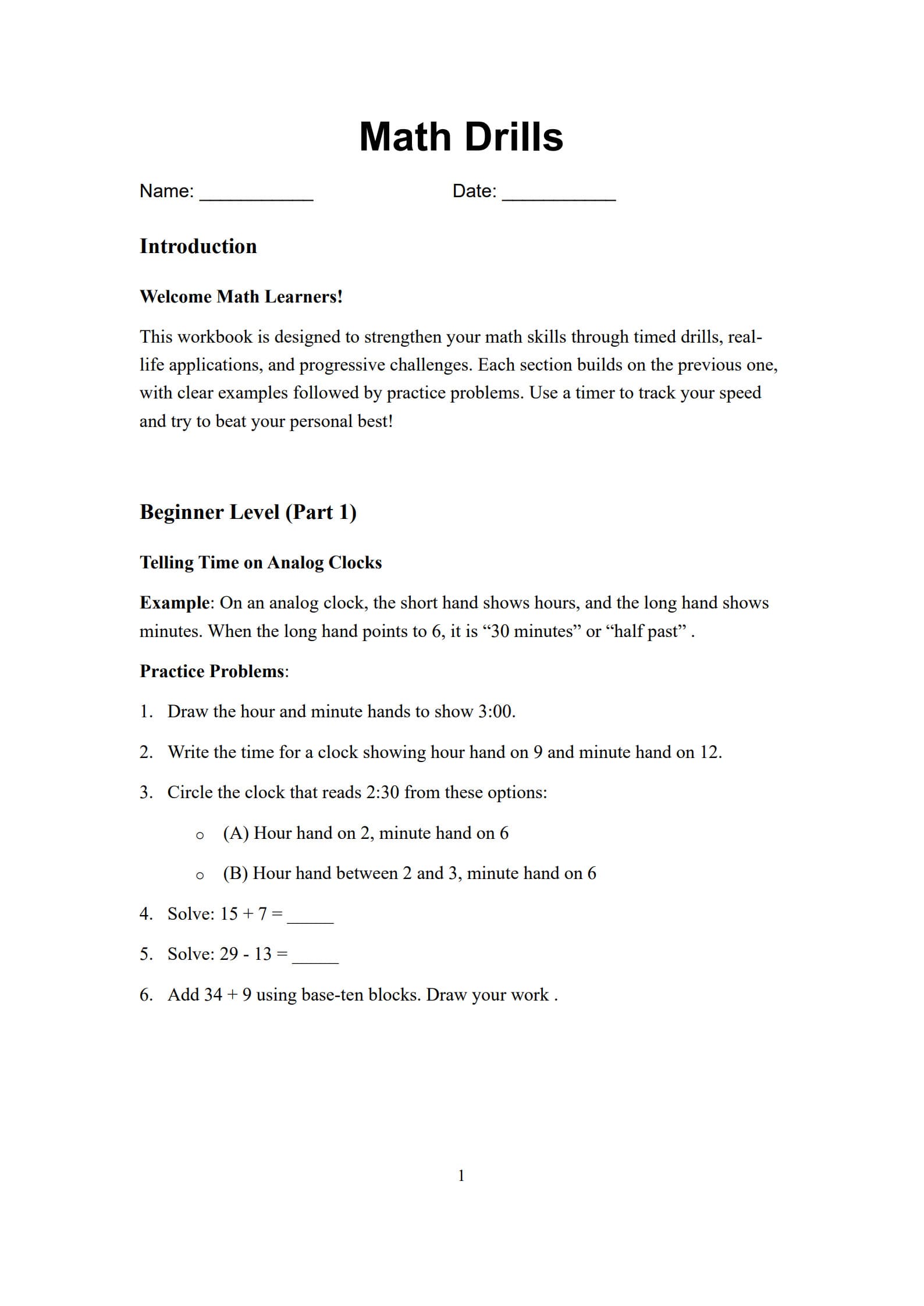
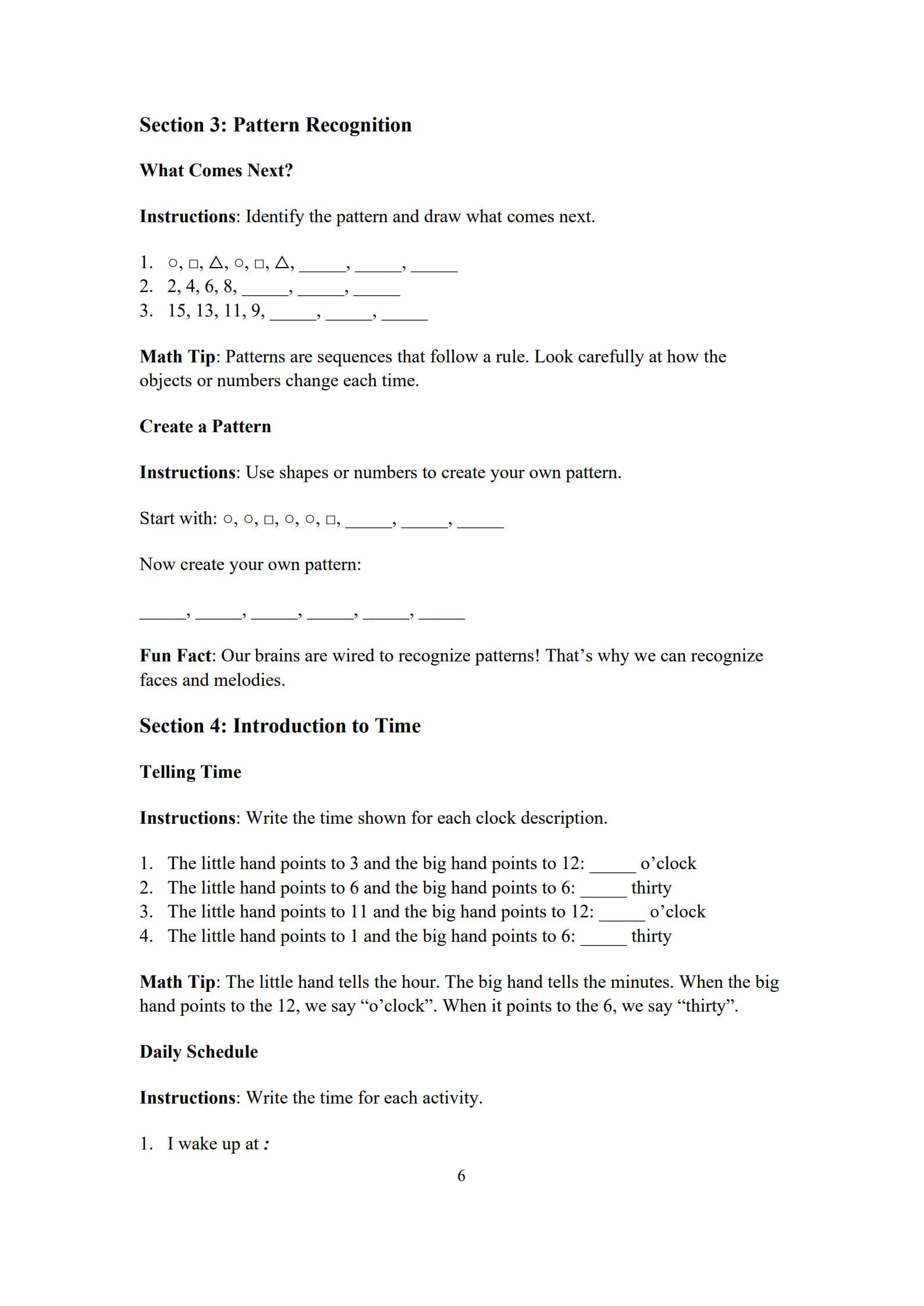
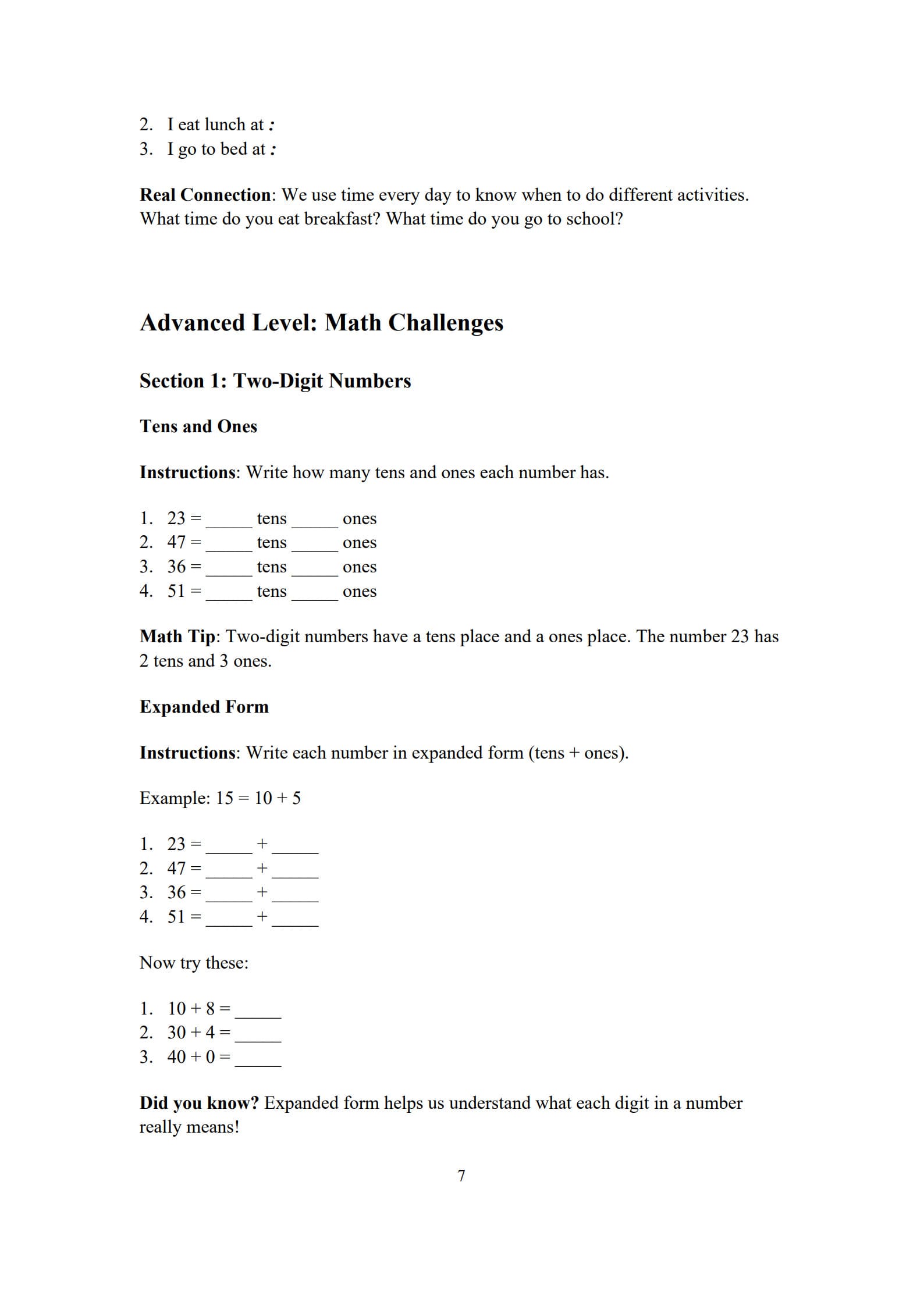
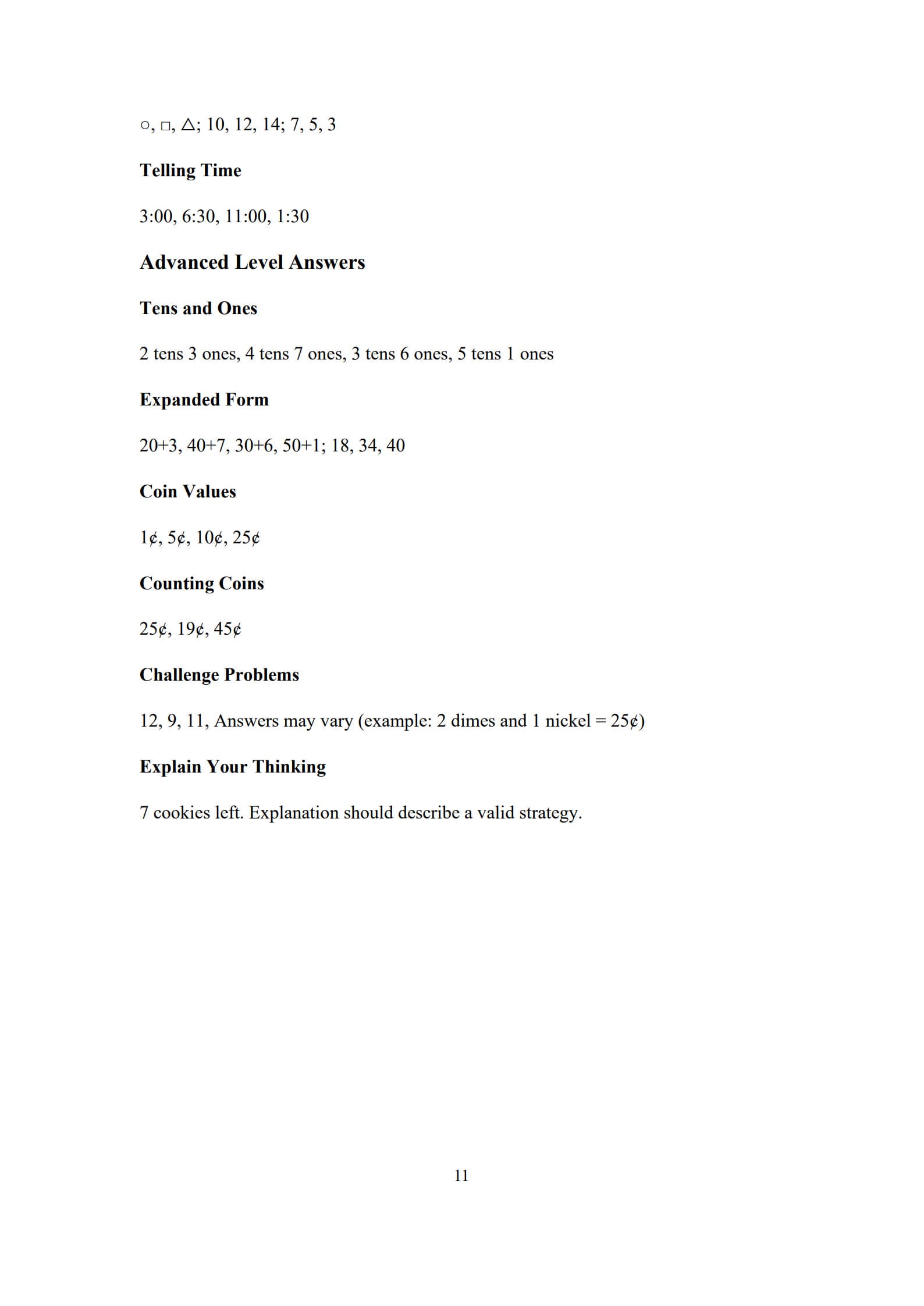
Mathematics extends far beyond numbers—it’s embedded in the shapes we see, the patterns we follow, and the time we track daily. Our template’s Shape Explorer activity invites first graders to draw circles, triangles, and squares, while Shape Hunt encourages them to find these forms in their environment (e.g., a clock for circles or a door for rectangles). This strengthens spatial awareness and observational skills. Meanwhile, the Pattern Recognition section challenges learners to identify sequences like shapes (○, □, △) or number patterns (2, 4, 6, 8), then create their own. These exercises nurture logical thinking and prediction abilities. Additionally, the Introduction to Time segment helps children read clocks and relate time to daily routines, such as waking up or eating lunch. By using PDF Agile, caregivers can insert photos of household items for shape hunts or adjust clock times to match a child’s schedule, making math a living, interactive experience.
Enhancing Skills with Measurement, Money, and Challenge Problems
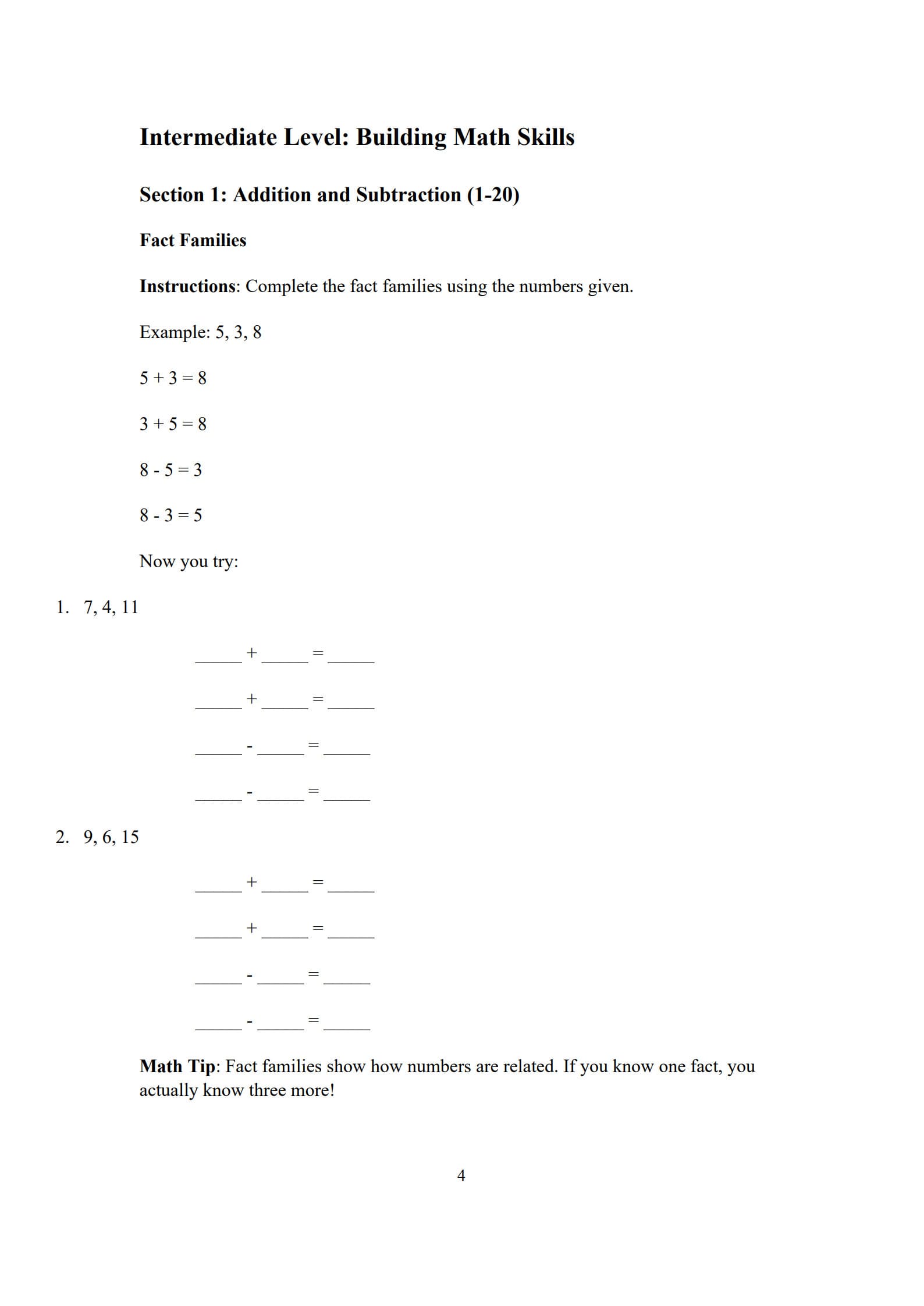
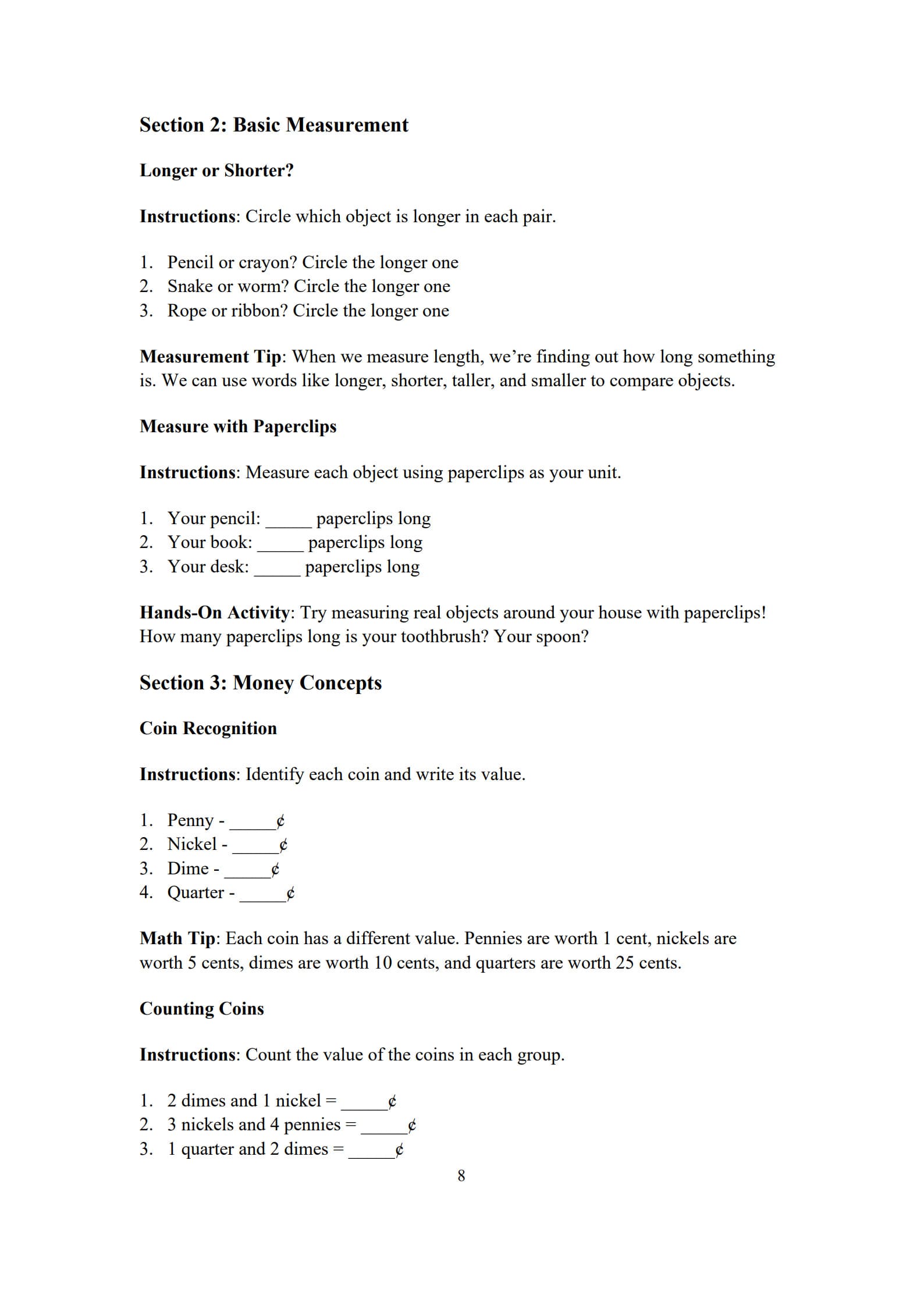
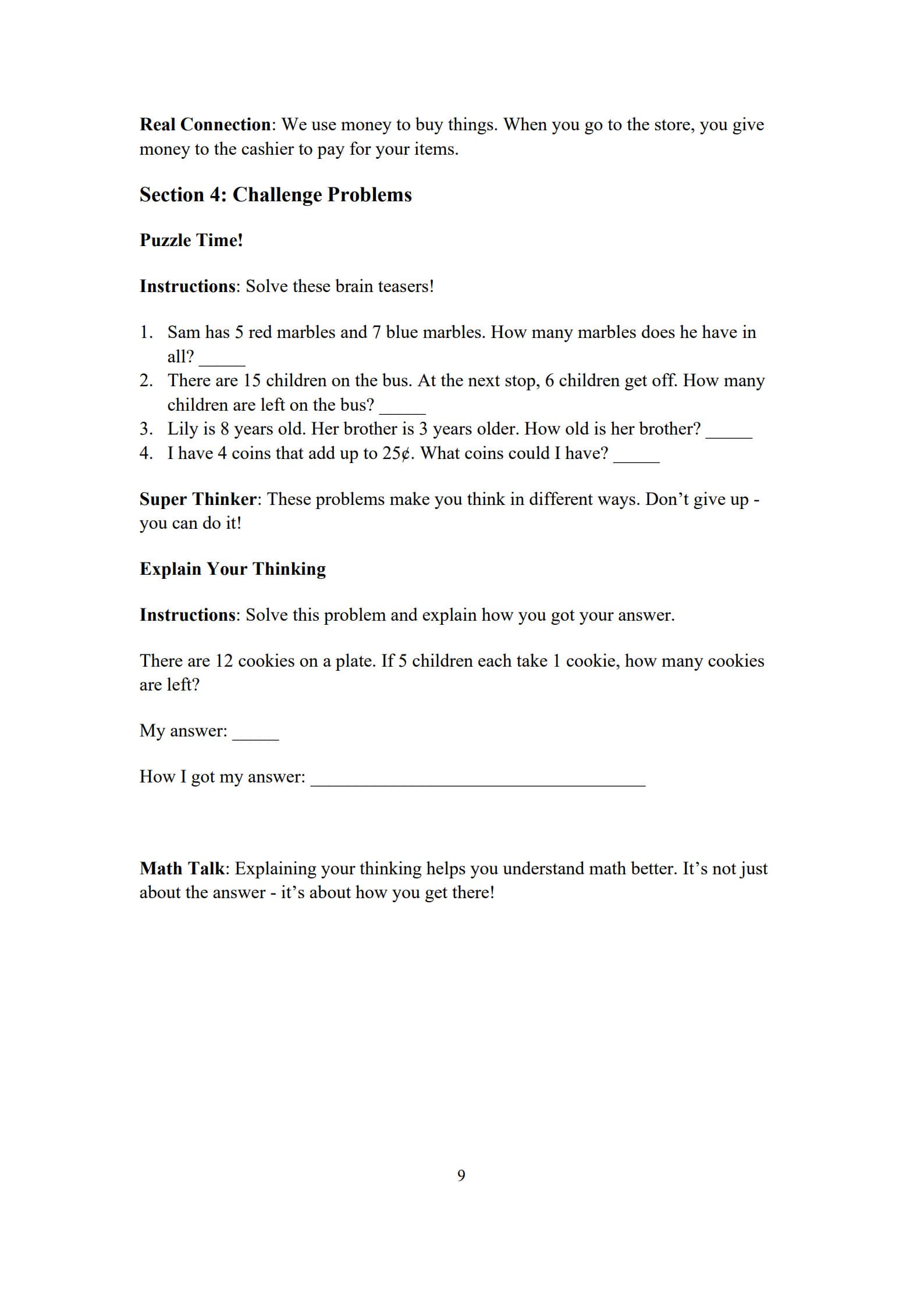
As first graders advance, they encounter concepts like measurement and money, which apply math to practical scenarios. The template’s Basic Measurement section compares lengths (e.g., pencil vs. crayon) and uses paperclips as units to measure objects, introducing foundational geometry vocabulary. Similarly, Money Concepts covers coin recognition and values, with problems like counting dimes and nickels to make 25¢. These activities teach both math and life skills, such as budgeting and comparison. For learners ready to stretch their abilities, the Challenge Problems section offers brain teasers:
“Sam has 5 red marbles and 7 blue marbles. How many marbles does he have in all?”
These puzzles promote critical thinking, while the Explain Your Thinking task encourages kids to articulate their reasoning—a key step in deep learning. With PDF Agile, you can modify these problems to include local currency or measure items relevant to the child, ensuring relevance and engagement.
How to Use This Template on PDF Agile: A Step-by-Step Guide
Using the Math Problems for 1st Graders template in PDF Agile is simple and efficient. Follow these steps to create customized worksheets in minutes:
Step 1: Access the Math Problems for 1st Graders Template
Log in to PDF Agile and navigate to the Template Library. Search for “Math Problems for 1st Graders” and click “Use Template.” The pre-designed layout includes sections like Number Recognition, Addition, and Shapes, complete with instructions and examples from the original worksheet.
Step 2: Customize Content
Personalize the template by editing text or images. For instance, in the Subtraction Stories section, you can change “Maria” to the child’s name or replace “stickers” with a favorite toy. Use the app’s drawing tools to add shapes or illustrations, making problems visually appealing.
Step 3: Add Interactive Elements
PDF Agile allows you to insert fillable fields for answers, such as boxes for number writing or lines for pattern drawing.
Step 4: Save and Share
Once customized, save your worksheet as a PDF or print it directly. Share it via email or cloud storage for easy access during lessons or homework sessions.
Tip: For repeated use, duplicate the template and create variations—like swapping coins in money problems or adjusting number ranges—to keep practice fresh and challenging.
Conclusion: Empowering Young Learners Through Personalized Math Practice
The Math Problems for 1st Graders template is more than a collection of exercises—it’s a versatile tool that adapts to each child’s learning journey. By incorporating real-world contexts, from sharing stickers to telling time, it transforms abstract concepts into relatable adventures. PDF Agile amplifies this experience by enabling customization that respects individual paces and interests. Whether used at home or in the classroom, these worksheets build not only math skills but also confidence and creativity. We invite you to explore this template in PDF Agile and discover how small, joyful moments of learning can lead to big achievements. Let’s work together to make math a favorite part of every child’s day!