

Welcome to PDF Agile’s innovative learning resource center! As a leading provider of customizable educational tools, we are thrilled to introduce our Number Tracing Worksheet template—a dynamic resource designed to transform how young learners engage with mathematics. This expertly structured template guides children through three developmental levels, from foundational number writing practice to advanced pattern recognition, mirroring natural learning progression. Whether you’re a parent supporting early childhood development or an educator seeking structured materials, this template transforms routine practice into an exciting journey of discovery.
How Can Number Writing Practice Build Foundational Math Skills?
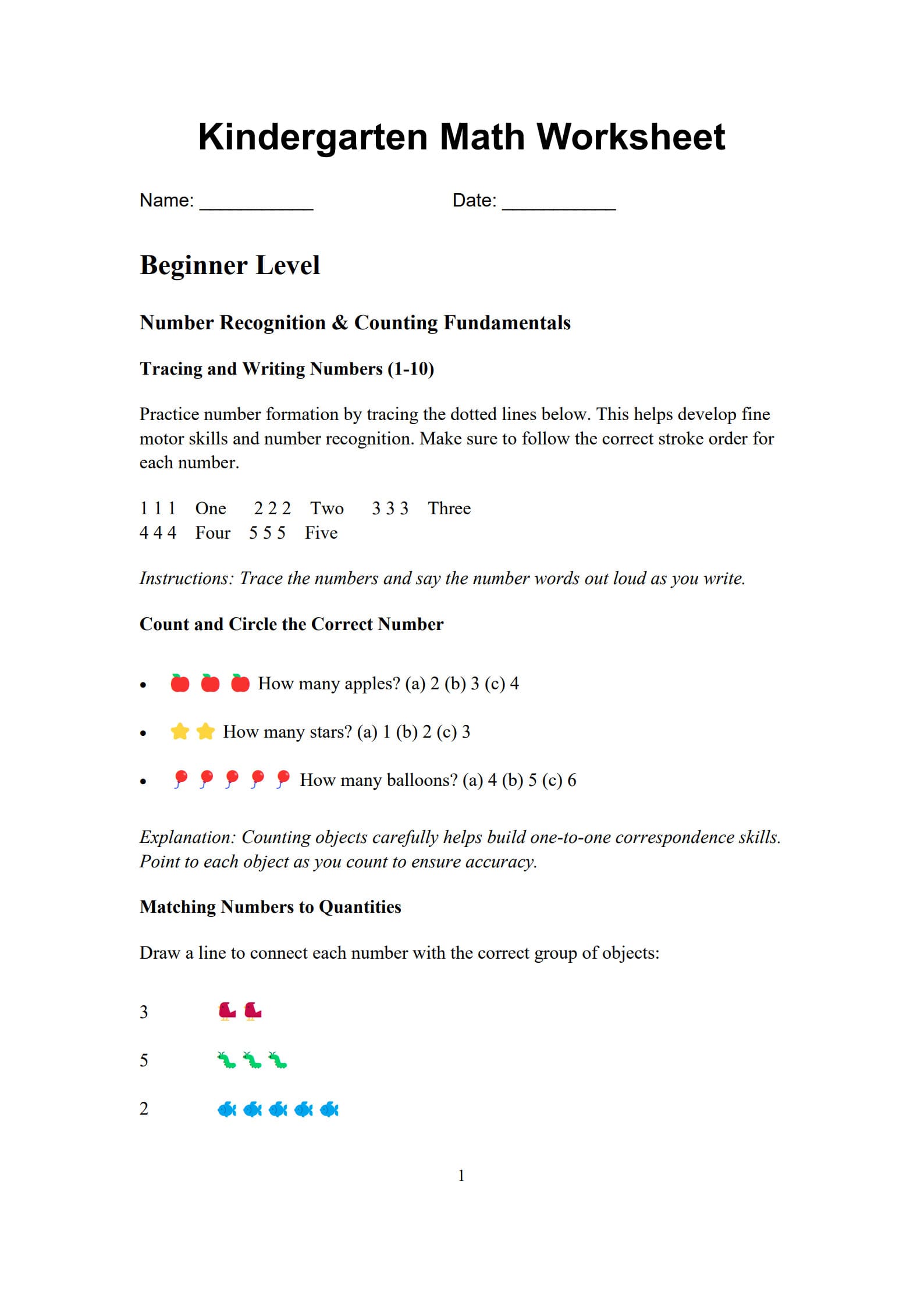
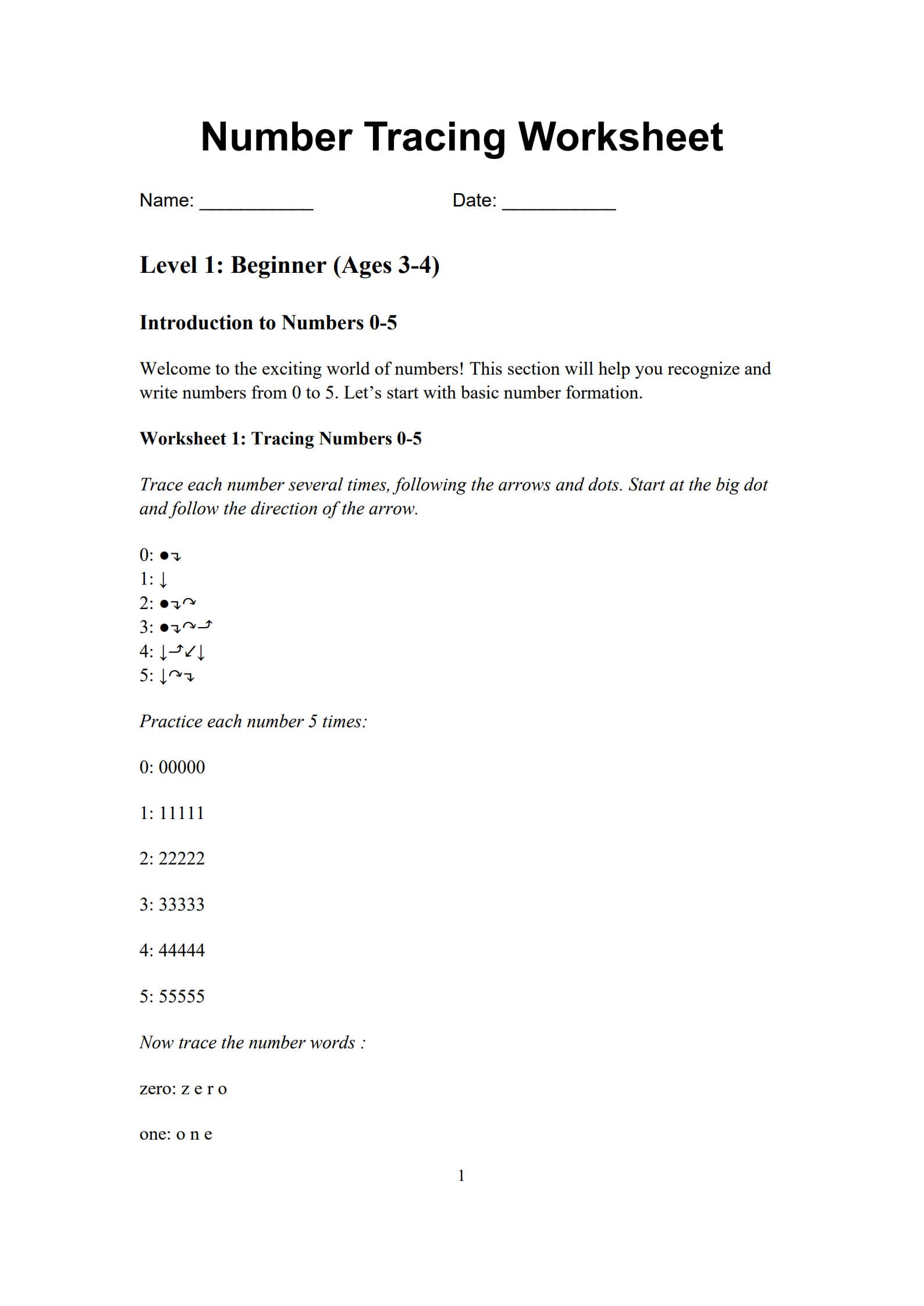
What makes number writing practice so critical for early learners? Just like preschool math worksheet, Our template begins with Level 1 (Ages 3-4) by introducing numbers 0-5 through structured tracing exercises—the essential first step in numerical literacy. The worksheet design recognizes that motor skill development and number recognition are intertwined; children trace each number following arrow-guided paths, starting at clearly marked dots. For example, the template provides specific formation guidelines: zero follows a circular motion from a top-starting dot, while one requires a straight downward stroke. This meticulous attention to writing mechanics ensures children develop muscle memory for proper number formation.
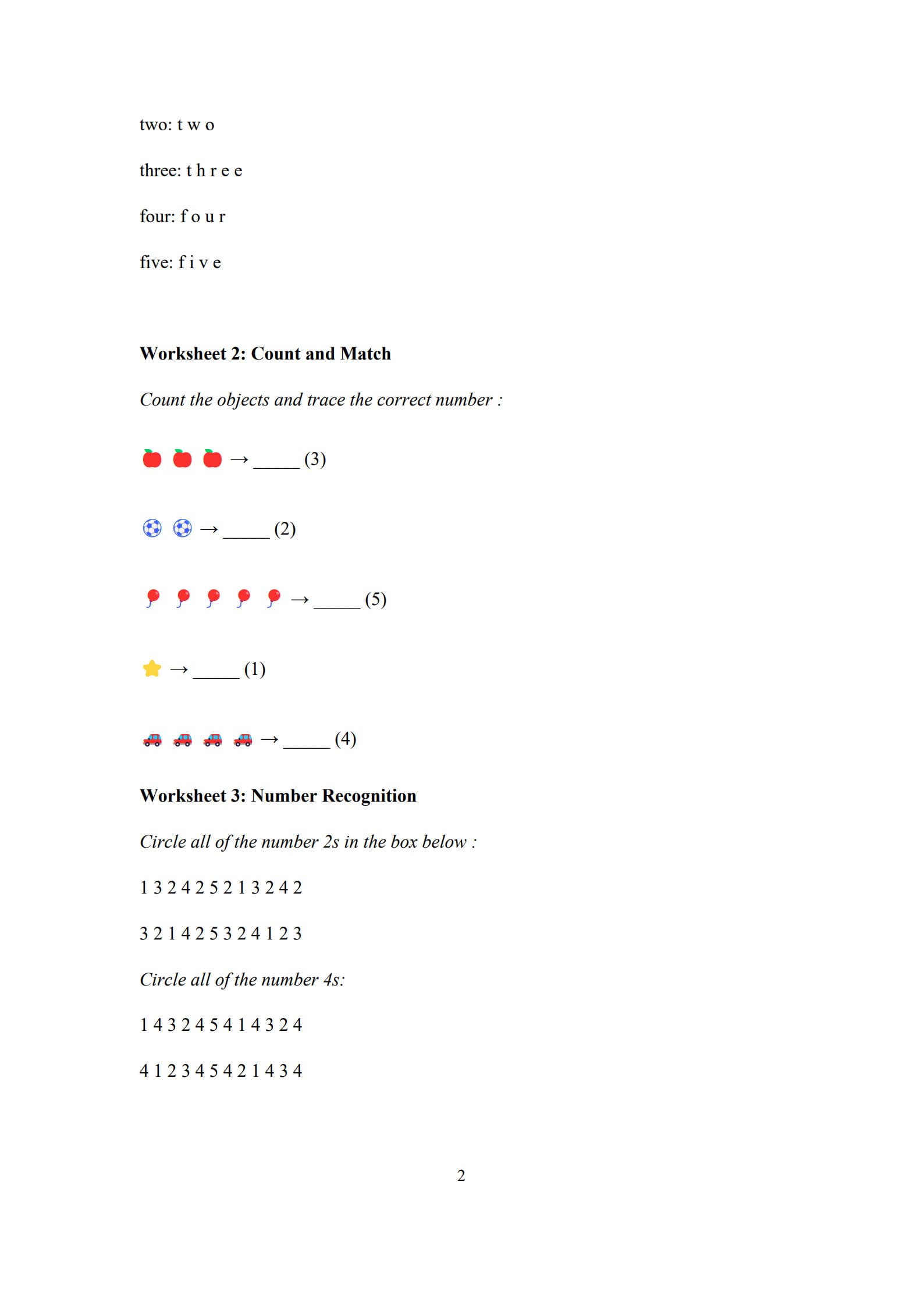
The template reinforces learning through multisensory engagement—each number includes five practice repetitions (0: 00000) and corresponding word tracing (zero, one, two). This dual approach connects symbolic representation with linguistic understanding, creating stronger cognitive pathways. Educators will appreciate the progressive difficulty: after mastering individual numbers, Worksheet 2 introduces count-and-match activities where children tally objects and trace the correct numeral. This sequential design ensures skills build incrementally, preventing frustration while promoting mastery. Research shows that such structured number writing practice significantly improves later mathematical performance by establishing automaticity in number recall and formation.
What Makes Number Recognition Worksheets Effective for Different Learning Stages?
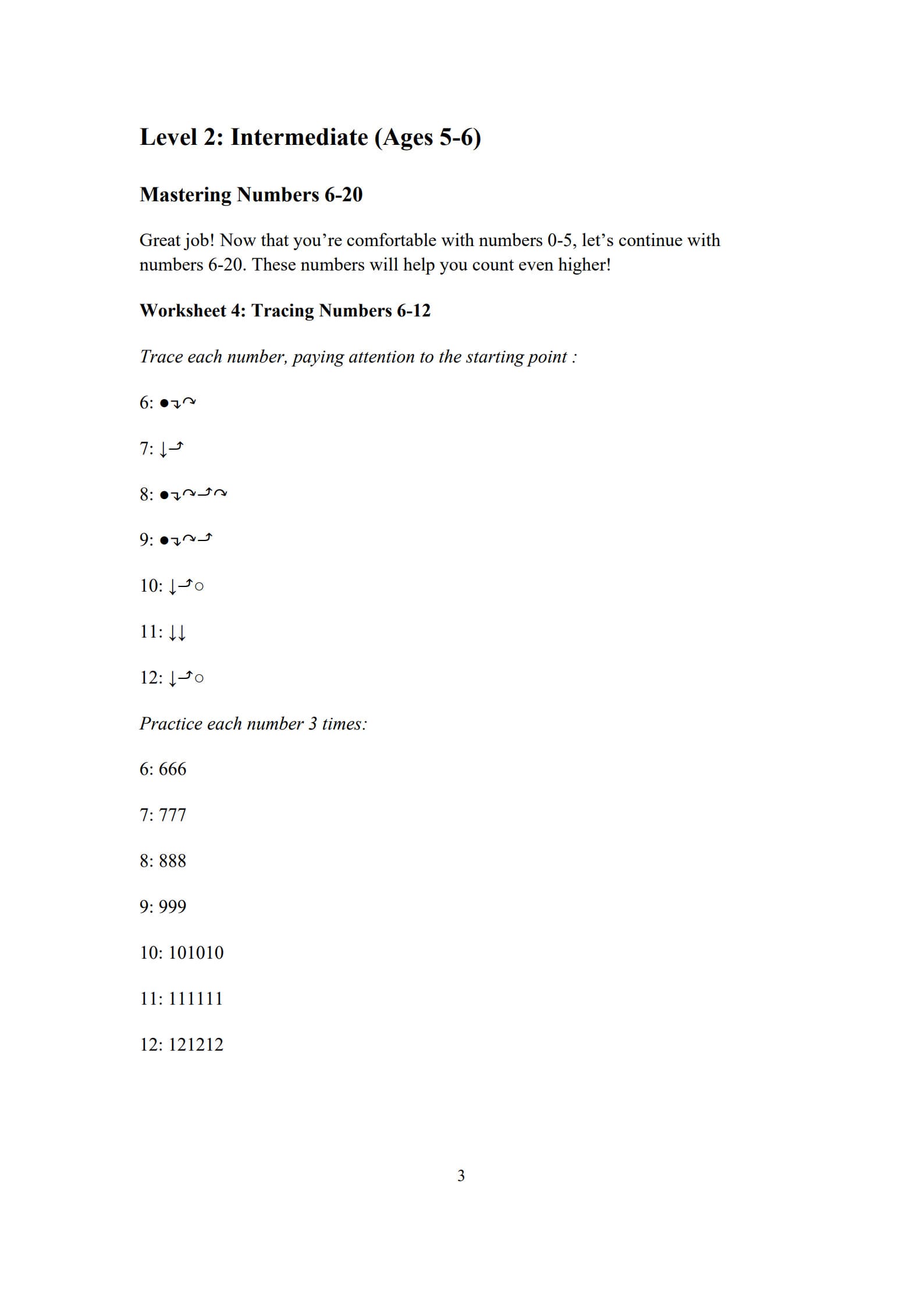
Our template’s second level (Ages 5-6) demonstrates how strategic scaffolding in Kindergarten math number recognition worksheets supports skill advancement. As learners progress to numbers 6-20, the activities evolve to maintain engagement while introducing new challenges. Worksheet 4, for instance, maintains tracing practice but introduces more complex number formations like the curved stroke for 6 or the dual-component structure of 8. The template cleverly uses spatial markers and directional cues to guide proper technique, acknowledging that older children require less explicit instruction but still benefit from visual supports.
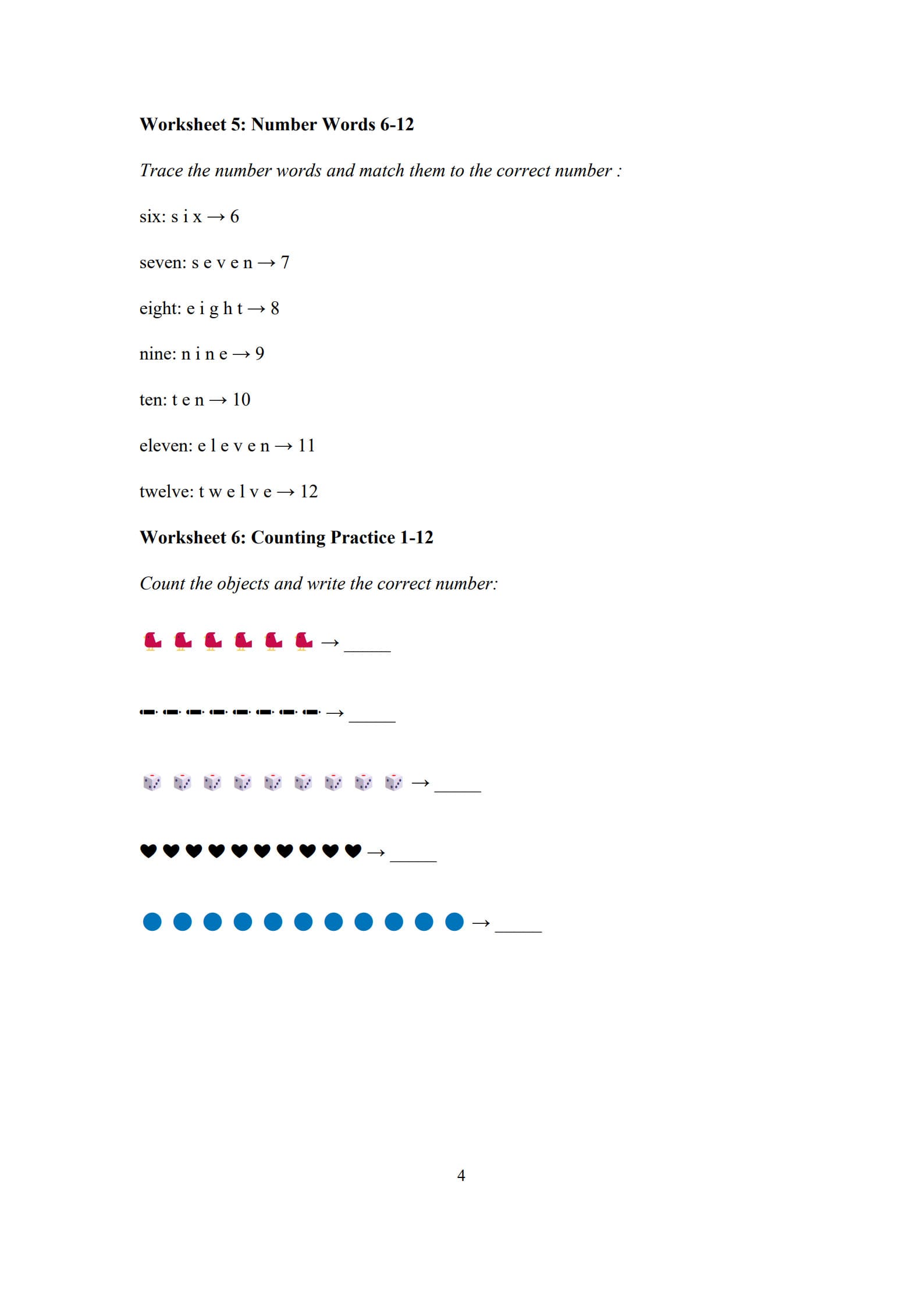
The true brilliance of these number recognition worksheets lies in their interleaved learning approach. Instead of isolated skill practice, Worksheet 5 combines number word tracing with matching exercises (six → 6), reinforcing the relationship between different numerical representations. This method enhances cognitive flexibility—the ability to switch between number formats—which is crucial for higher-level math. Similarly, Worksheet 3’s number recognition challenge, where children circle all 2s or 4s within number grids, develops perceptual skills needed for quick numerical identification. These activities transform passive recognition into active discrimination, sharpening attention to detail.
How Do Progressive Activities Create Confident Math Learners?
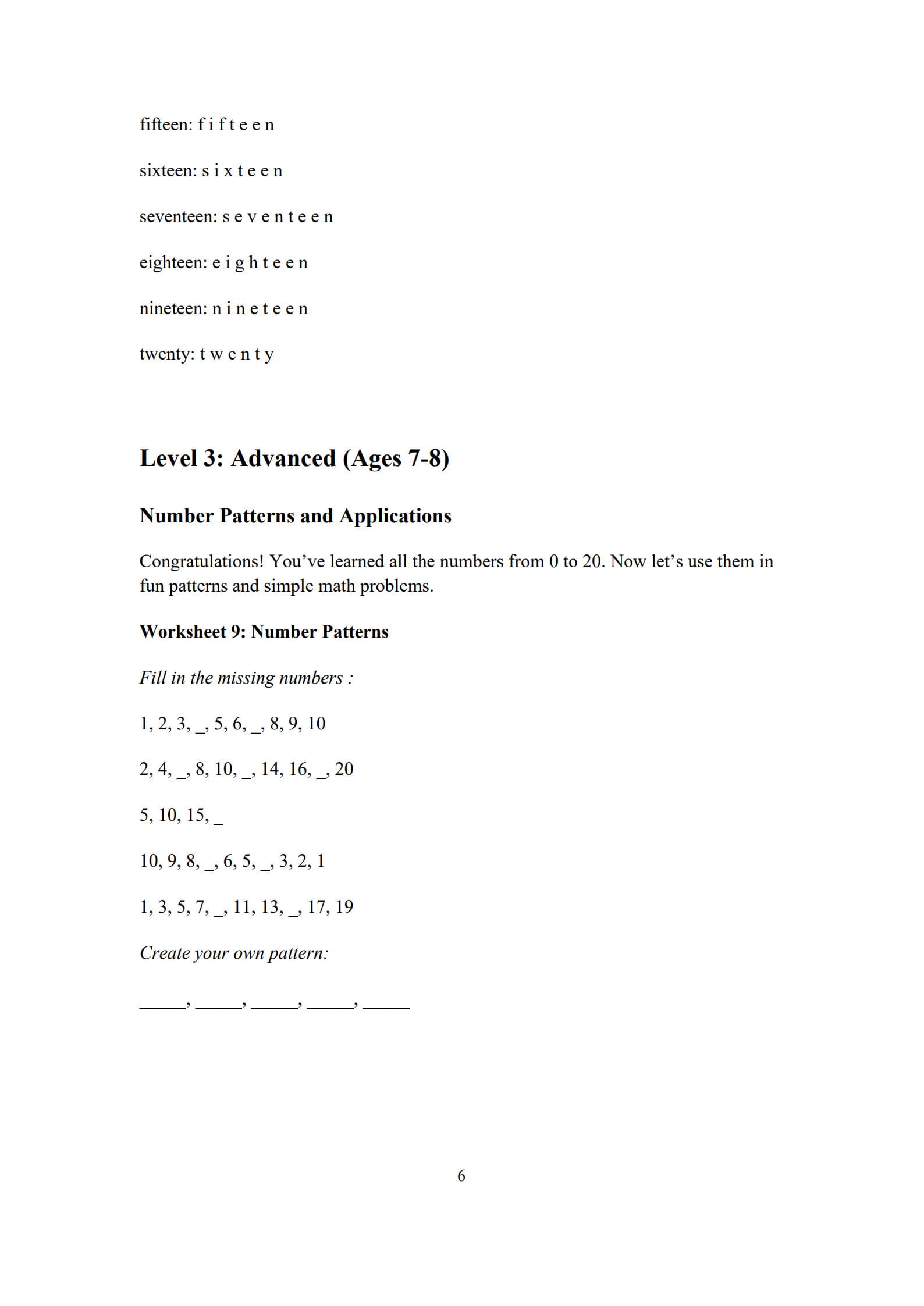
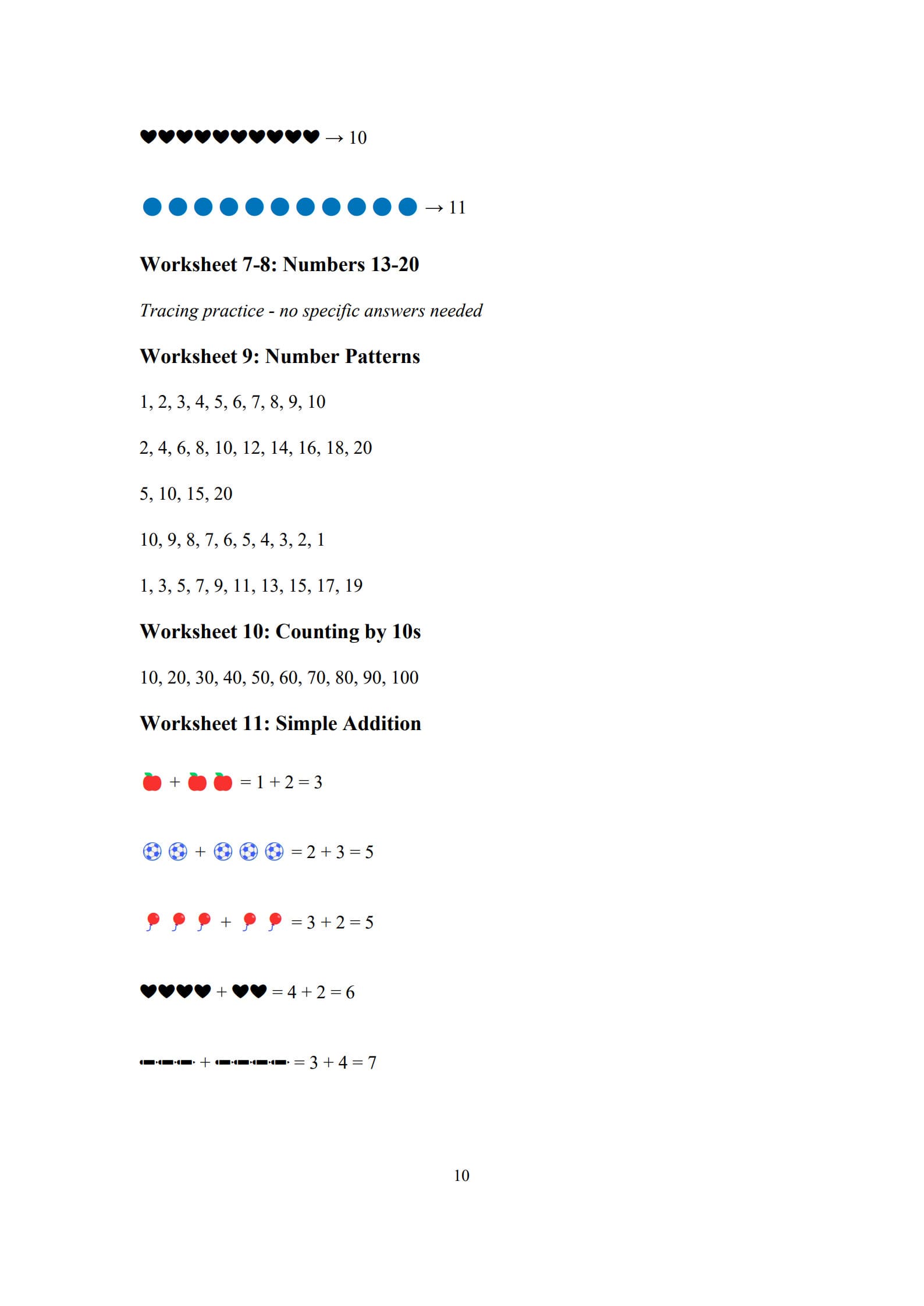
The template’s advanced level (Ages 7-8) showcases how thoughtful progression builds mathematical fluency through pattern recognition and application. Worksheet 9 transitions from basic number writing to numerical relationships with pattern completion exercises: 1,2,3,,5,6,,8,9,10and 2,4,,8,10,,14,16,_,20. These sequences develop critical thinking as children identify rules and predict elements, laying groundwork for algebraic reasoning. The inclusion of descending patterns (10,9,8,,6,5,,3,2,1) further challenges learners to think flexibly about number order.
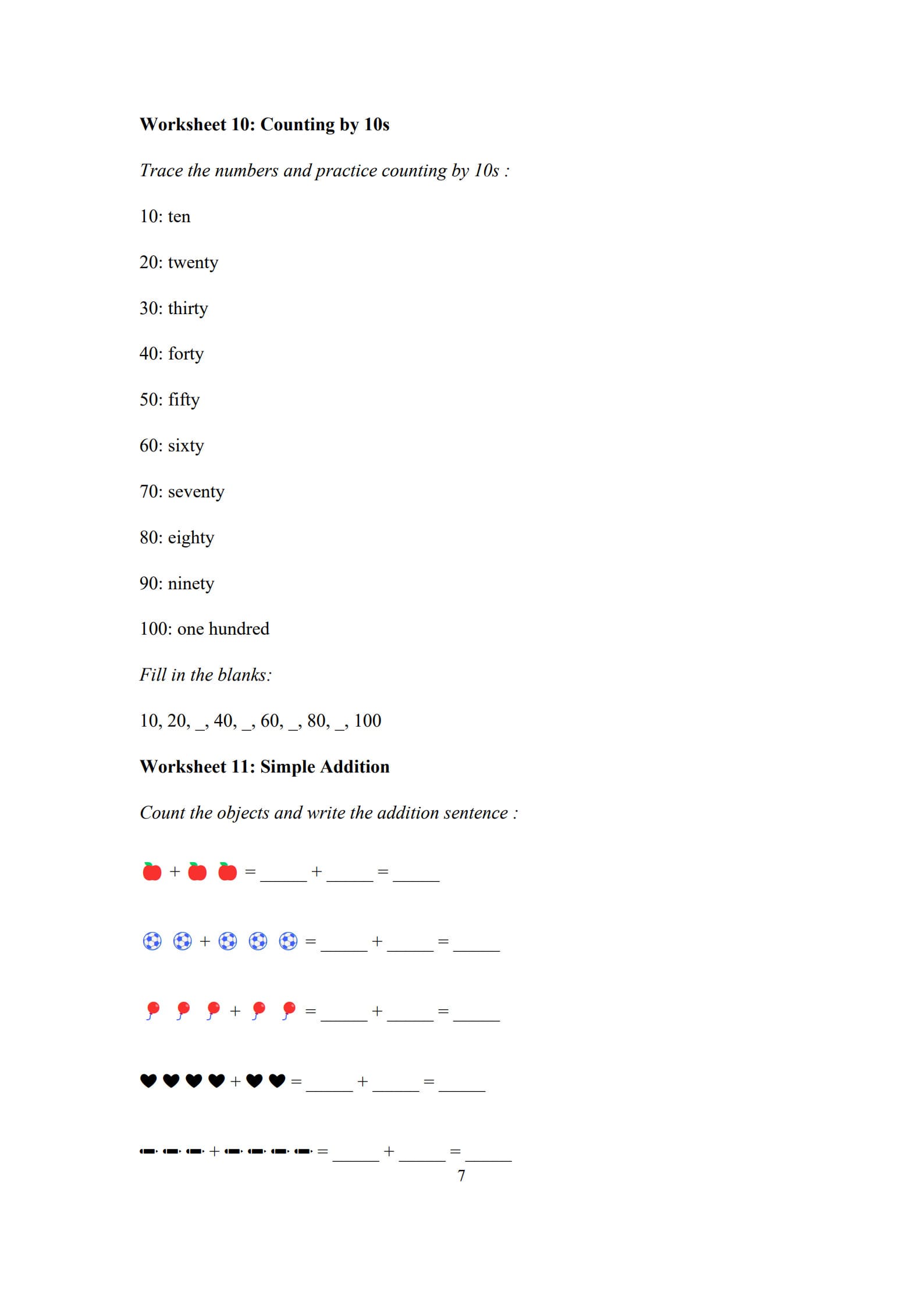
Counting by 10s (Worksheet 10) expands numerical understanding beyond single-digit increments, introducing place value concepts through tactile tracing. The template’s design ensures conceptual understanding precedes procedural practice—children trace number words (ten, twenty, thirty) before completing number sequences (10,20,,40,,60,,80,,100). This systematic approach prevents rote memorization by emphasizing pattern understanding. The following table illustrates the template’s skill progression across levels:
| Level | Focus Numbers | Key Activities | Developmental Skills |
|---|---|---|---|
| Beginner (3-4) | 0-5 | Basic tracing, object counting | Number formation, one-to-one correspondence |
| Intermediate (5-6) | 6-20 | Number words, teen number practice | Number recognition, pattern awareness |
| Advanced (7-8) | Patterns to 100 | Sequences, simple addition, mazes | Operational thinking, problem-solving |
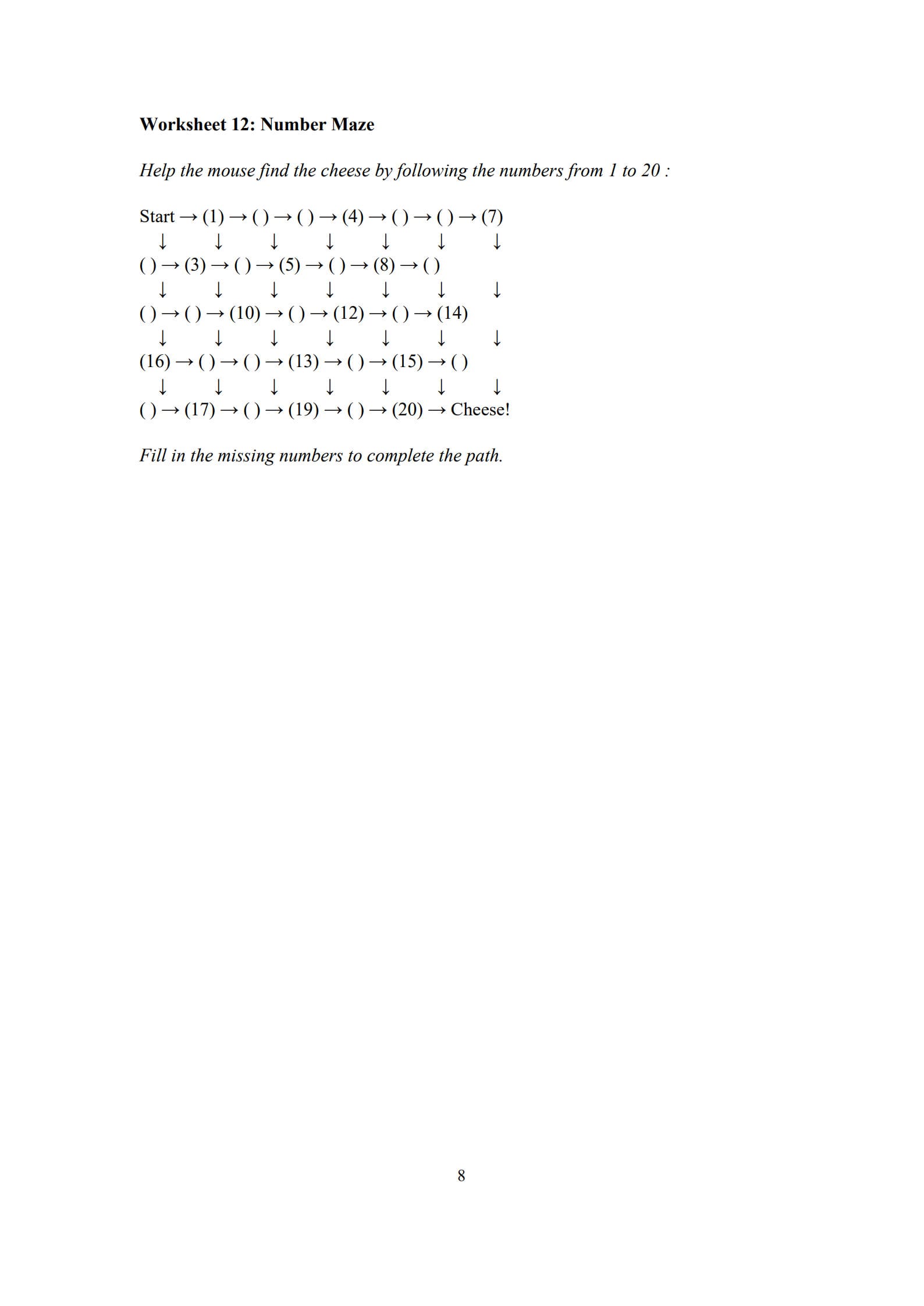
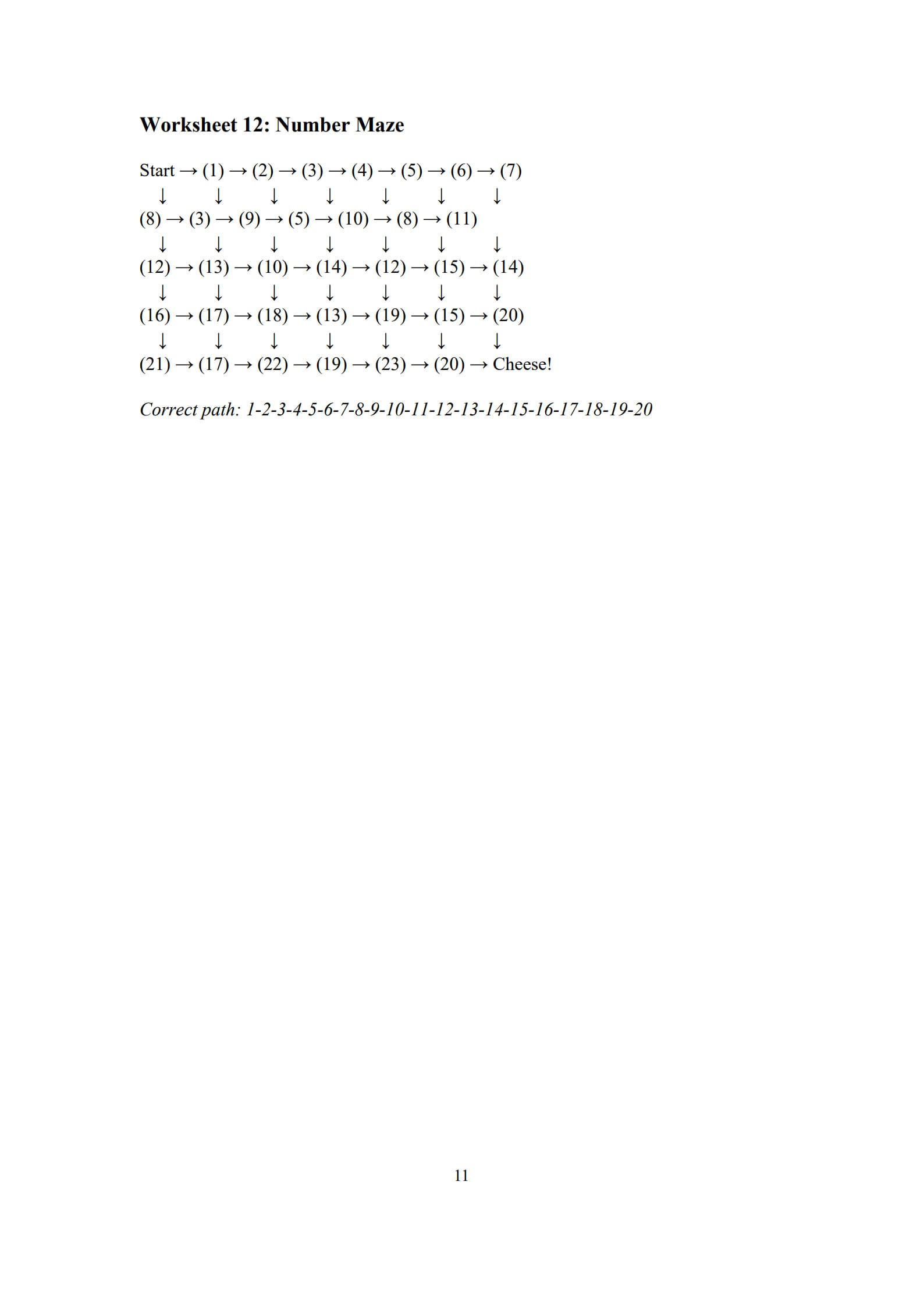
Worksheet 12’s number maze activity represents the template’s innovative approach to application. Children navigate from 1 to 20 through a grid requiring sequential number identification, transforming drill practice into an engaging puzzle. This activity develops executive functions like planning and self-monitoring while reinforcing number order. The template’s gradual release of responsibility—from guided tracing to independent problem-solving—builds mathematical agency, encouraging children to view themselves as capable mathematicians.
Why Does This Template Stand Out Among Number Practice Worksheets?
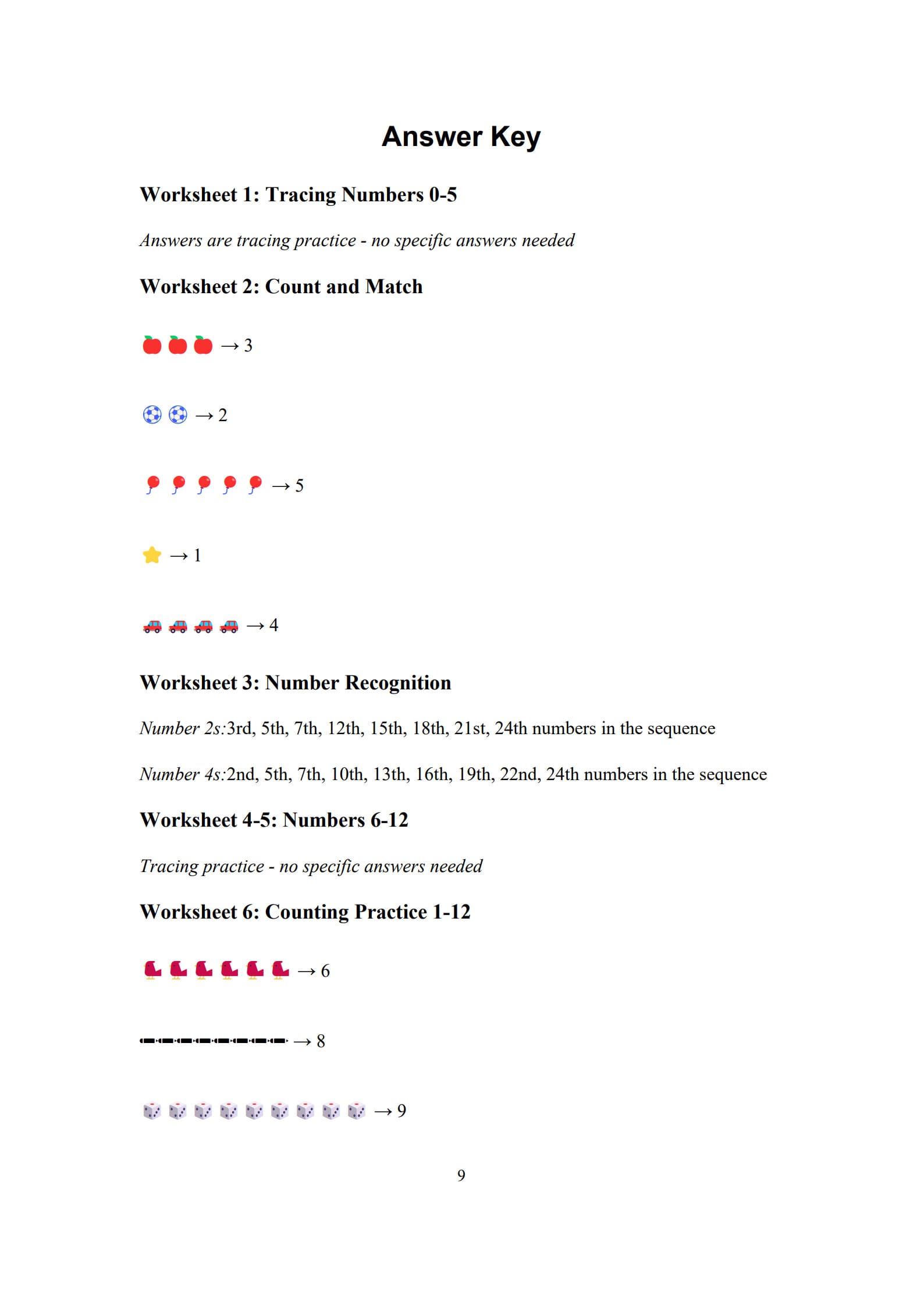
This comprehensive template transcends conventional number practice worksheets through its research-informed structure and multifaceted activities. Unlike single-focus resources, it integrates writing, recognition, counting, patterning, and problem-solving in a coherent sequence that mirrors cognitive development. The inclusion of answer keys provides immediate feedback opportunities, allowing for self-correction and independent learning. Each worksheet builds on previous skills while introducing new challenges at appropriate intervals, maintaining the optimal balance between success and challenge that promotes growth.
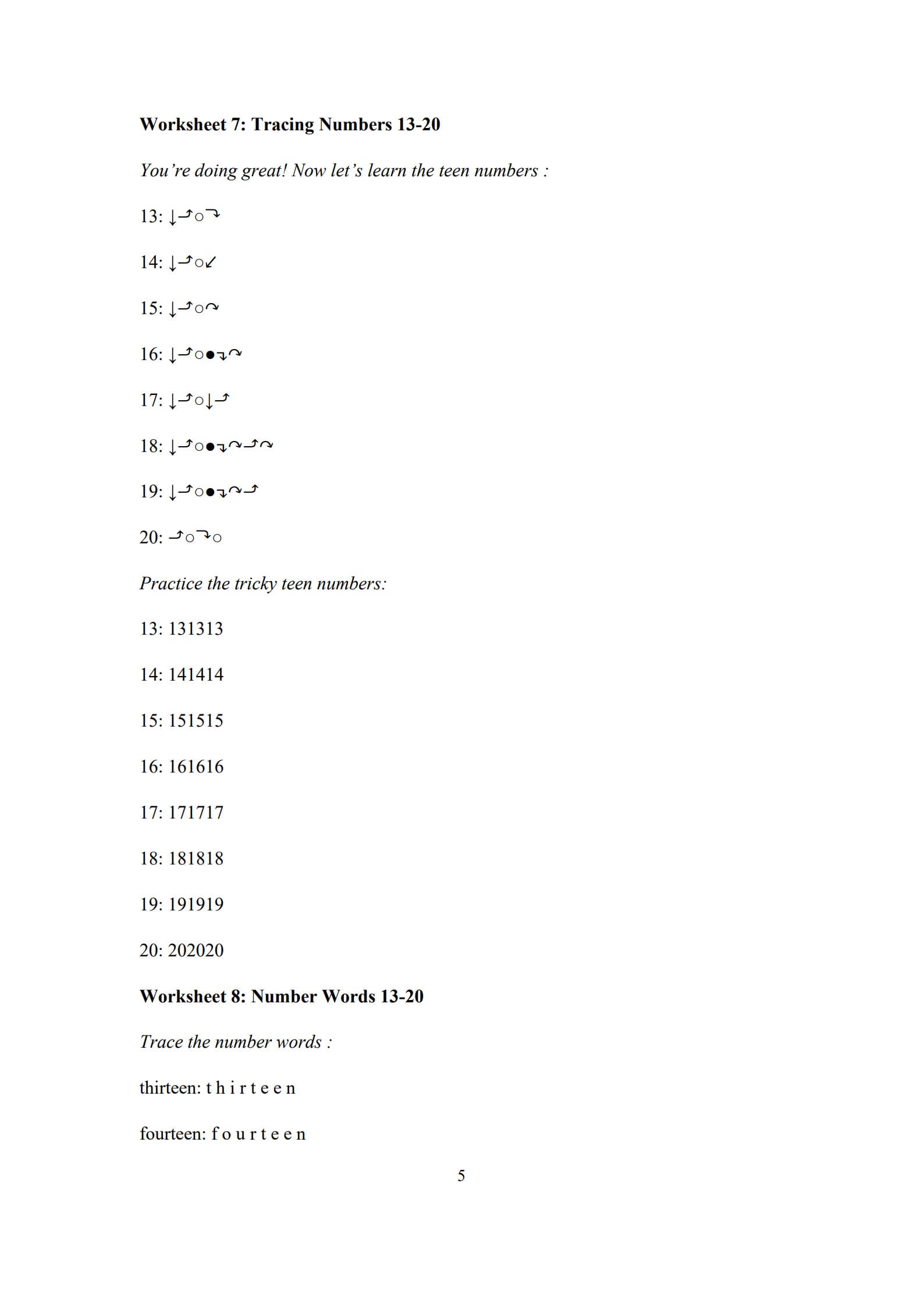
The template’s design acknowledges common learning obstacles and addresses them proactively. For instance, the dedicated teen number practice counters the typical difficulty children experience with numbers 13-19 through repeated tracing and word association. Similarly, the number maze activity transforms the abstract concept of numerical order into a concrete, visual task that makes learning memorable. These thoughtful elements demonstrate how the template combines pedagogical expertise with practical classroom experience to create truly effective number practice worksheets.
How to Use This Template on PDF Agile
Step 1: Access the Number Tracing Worksheet Template
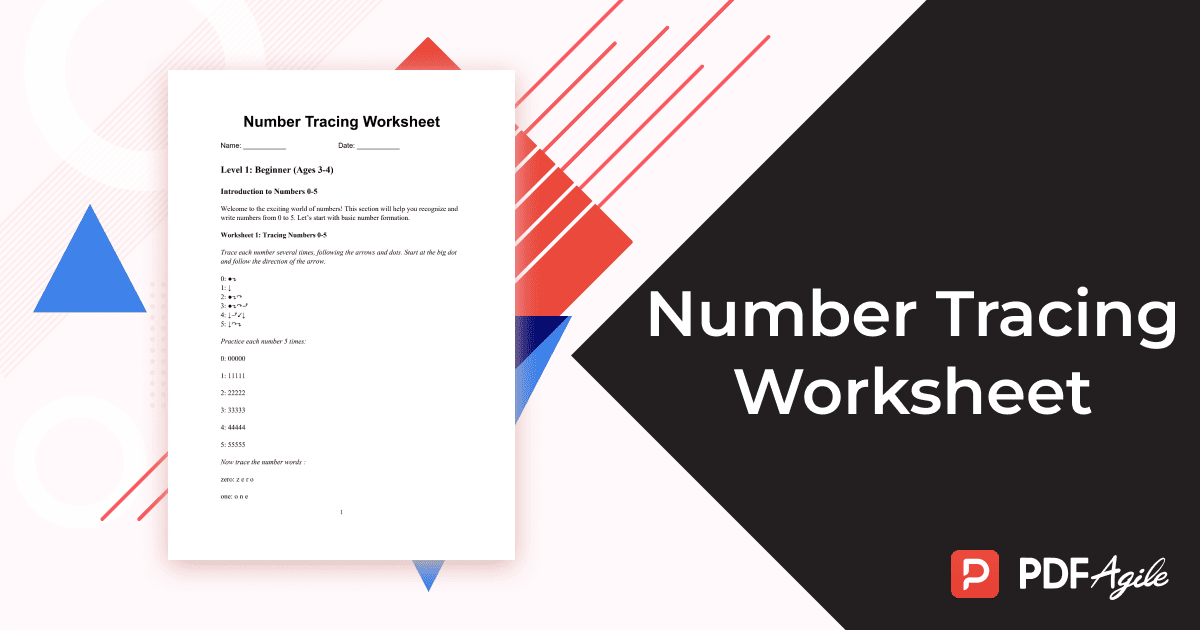
Navigate to PDF Agile’s Template Library and select the “Number Tracing Worksheet” from the Education category. You can preview the entire template—including all three levels and answer keys—before downloading. Click “Use Template” to open it directly in PDF Agile’s editor, where you’ll find the complete structured resource ready for customization.
Step 2: Customize for Your Learner’s Needs
Personalize the template using PDF Agile’s editing tools. Adjust difficulty levels by deleting or rearranging sections—for example, focus only on numbers 0-5 for beginners. Add the child’s name and date to create ownership. Utilize the text tool to modify instructions or add encouraging messages. The flexible format allows you to emphasize areas needing extra practice while skipping mastered content.
Step 3: Enhance with Interactive Elements
Leverage PDF Agile’s advanced features to increase engagement. Use the drawing tool to add colorful tracing paths or the shape tool to create additional counting objects. Insert audio instructions for emerging readers using the multimedia function. For collaborative learning, add comment bubbles with tips or encouragement that appear when hovering over specific sections.
Step 4: Save, Share, and Print
Save your customized worksheet in PDF format for easy distribution. Print high-quality copies for hands-on writing practice, or share digitally for tablet-based tracing using stylus tools. Create multiple versions for repeated practice by saving variations with different number arrangements or pattern sequences. The template maintains perfect formatting across all devices.
Step 5: Track Progress
Use PDF Agile’s annotation features to mark completed worksheets and note observations. Save different versions to document improvement over time. The answer key section can be duplicated and used for self-checking activities, promoting independent learning habits.
Conclusion
Our Number Tracing Worksheet template represents PDF Agile’s commitment to creating research-backed, developmentally appropriate resources that make mathematics accessible and enjoyable. By guiding children through sequential learning stages—from basic number writing practice to sophisticated pattern recognition—this comprehensive tool builds both skills and confidence.
We invite you to explore how this template can transform your approach to early math education. By providing structured yet flexible number practice worksheets, PDF Agile empowers you to create engaging learning journeys that establish strong mathematical foundations. Remember that consistent, varied practice with appropriate scaffolding is key to numerical fluency. Download the template today and discover how the right tools can unlock every child’s mathematical potential, turning initial number writing practice into lifelong numerical confidence.