

Welcome to PDF Agile’s innovative approach to English language learning! As a leading provider of customisable PDF solutions, we understand the challenges learners face when tackling English articles—those small but mighty words that shape meaning and clarity. Whether you’re an educator seeking engaging materials or a student aiming to master grammar, our Article Worksheet template transforms traditional learning into an interactive digital experience. By blending classic worksheet exercises with modern technology, we’ve created a dynamic tool that makes article practice accessible, enjoyable, and effective for learners worldwide. This guide will show you how to maximize this resource while exploring its alignment with educational standards for different grade levels.
What Makes Our Article Worksheet for Class 2 and Class 3 Ideal for Early Learners?
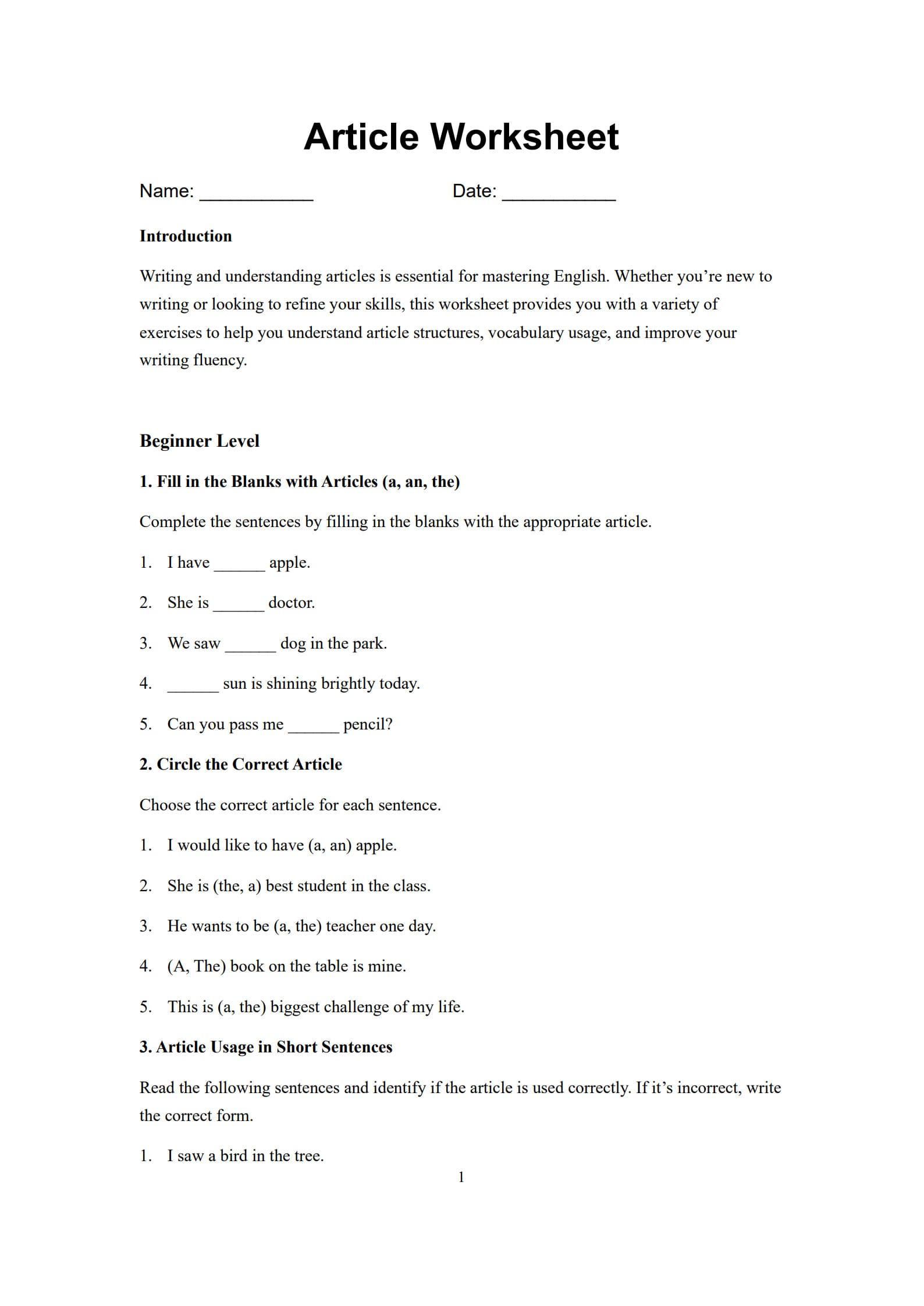
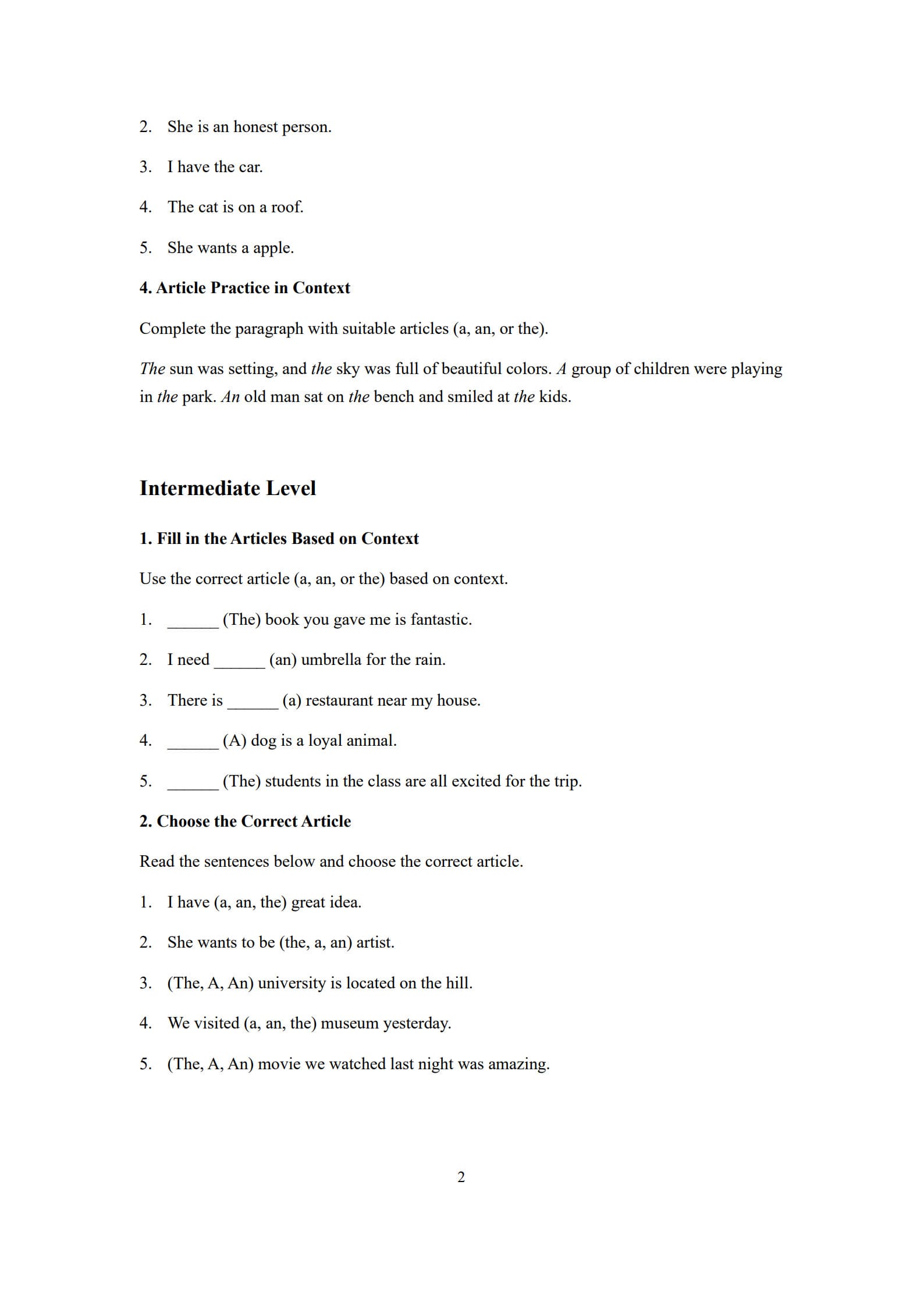
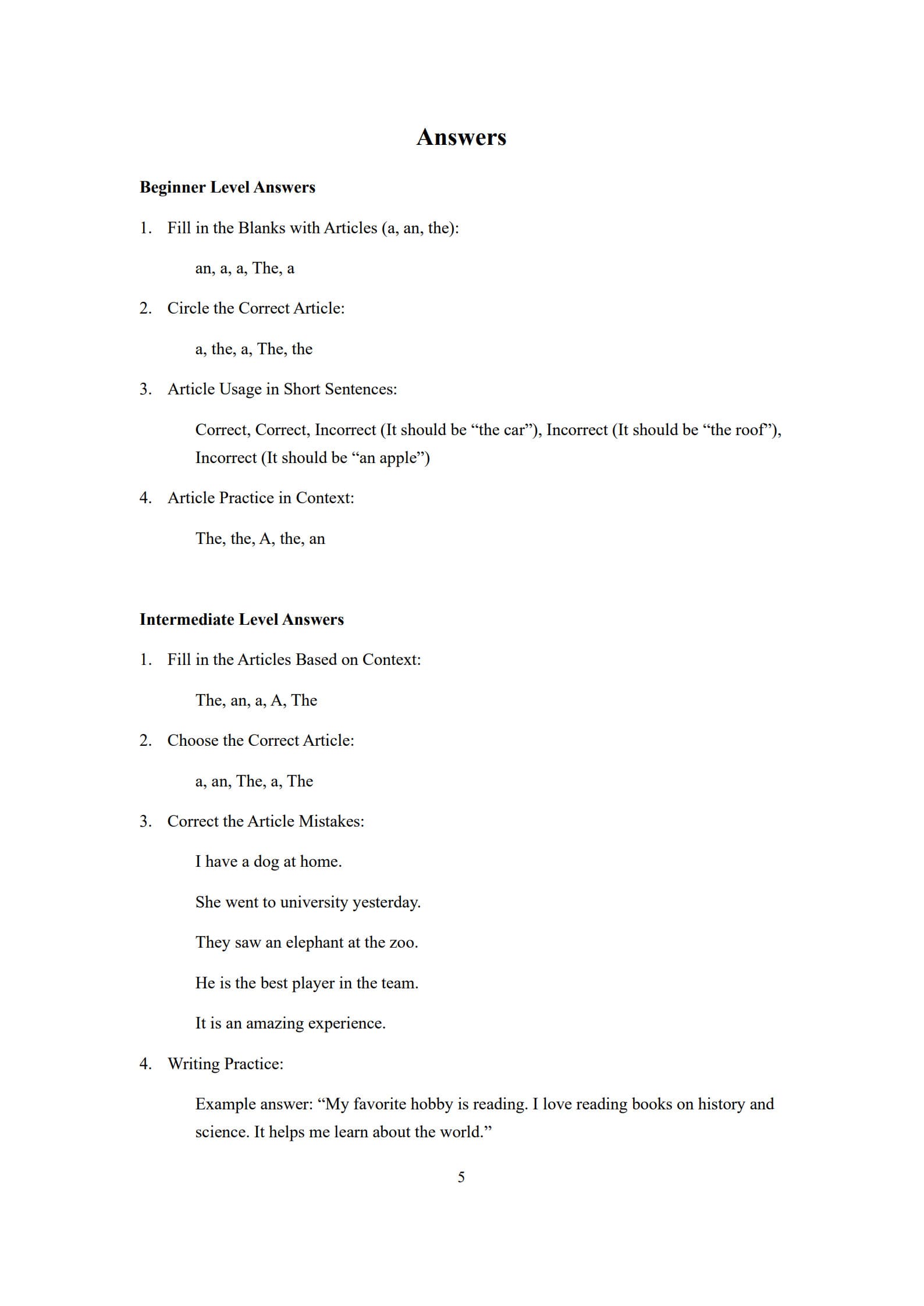
Young learners in class 2 and class 3 require carefully scaffolded materials that build confidence while establishing fundamental grammar concepts. Our template begins with basic article identification exercises exactly like the “Fill in the Blanks with Articles (a, an, the)” section from the sample worksheet, where students complete simple sentences such as “I have ___ apple” and “___ sun is shining brightly today.” This gradual approach prevents cognitive overload while ensuring mastery of basic patterns before advancing to more complex applications.
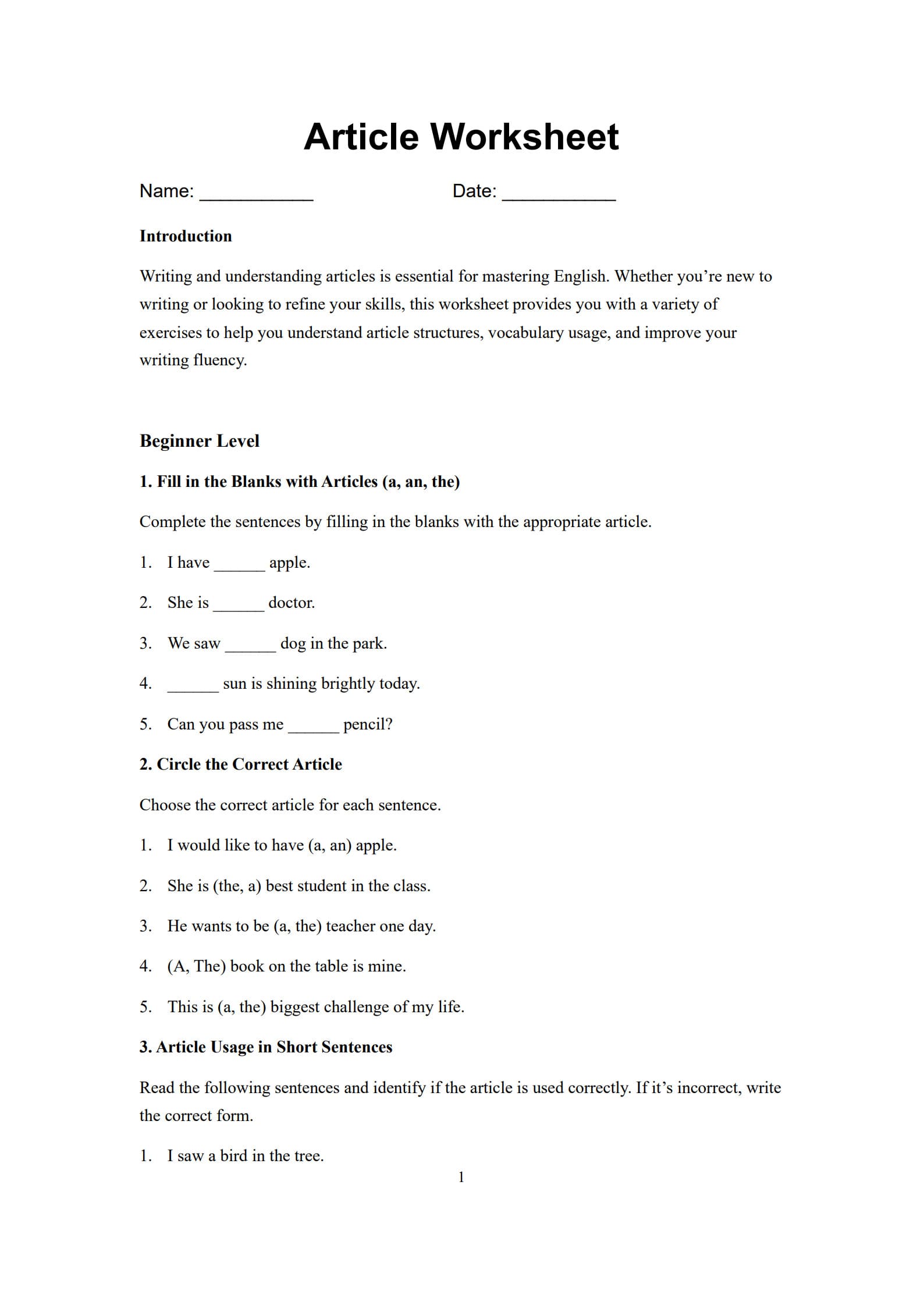
The template’s design incorporates visual cues and spacing optimized for younger learners, with larger text areas and clear directional prompts that guide students through each exercise. For class 3 learners ready for slightly more challenge, the “Circle the Correct Article” section provides multiple-choice practice that develops decision-making skills without the pressure of recall-based testing. Research shows that this graduated difficulty curve—from filling single blanks to selecting between options—significantly improves retention for early elementary students.
Table: Article Worksheet Progression for Early Elementary Grades
| Exercise Type | Class 2 Focus | Class 3 Development | Sample Question |
|---|---|---|---|
| Fill-in-the-Blank | Single article with visual cues | Articles in full sentence context | “I have ___ apple.” |
| Multiple Choice | Two options (a/an) | Three options (a/an/the) | “I would like to have (a, an) apple.” |
| Error Correction | Identifying obvious mistakes | Correcting contextual errors | “She wants a apple.” → “an apple” |
How Does the Article Worksheet for Class 4 and Class 5 Address Intermediate Challenges?
As students progress to class 4 and class 5, our template introduces contextual thinking exercises that move beyond rote memorization. The intermediate section challenges learners to apply articles in longer passages and connected text, such as the “Article Practice in Context” exercise where students complete a paragraph about children playing in a park. This holistic approach develops reading comprehension alongside grammar skills, reflecting the integrated language arts approach recommended for upper elementary education.
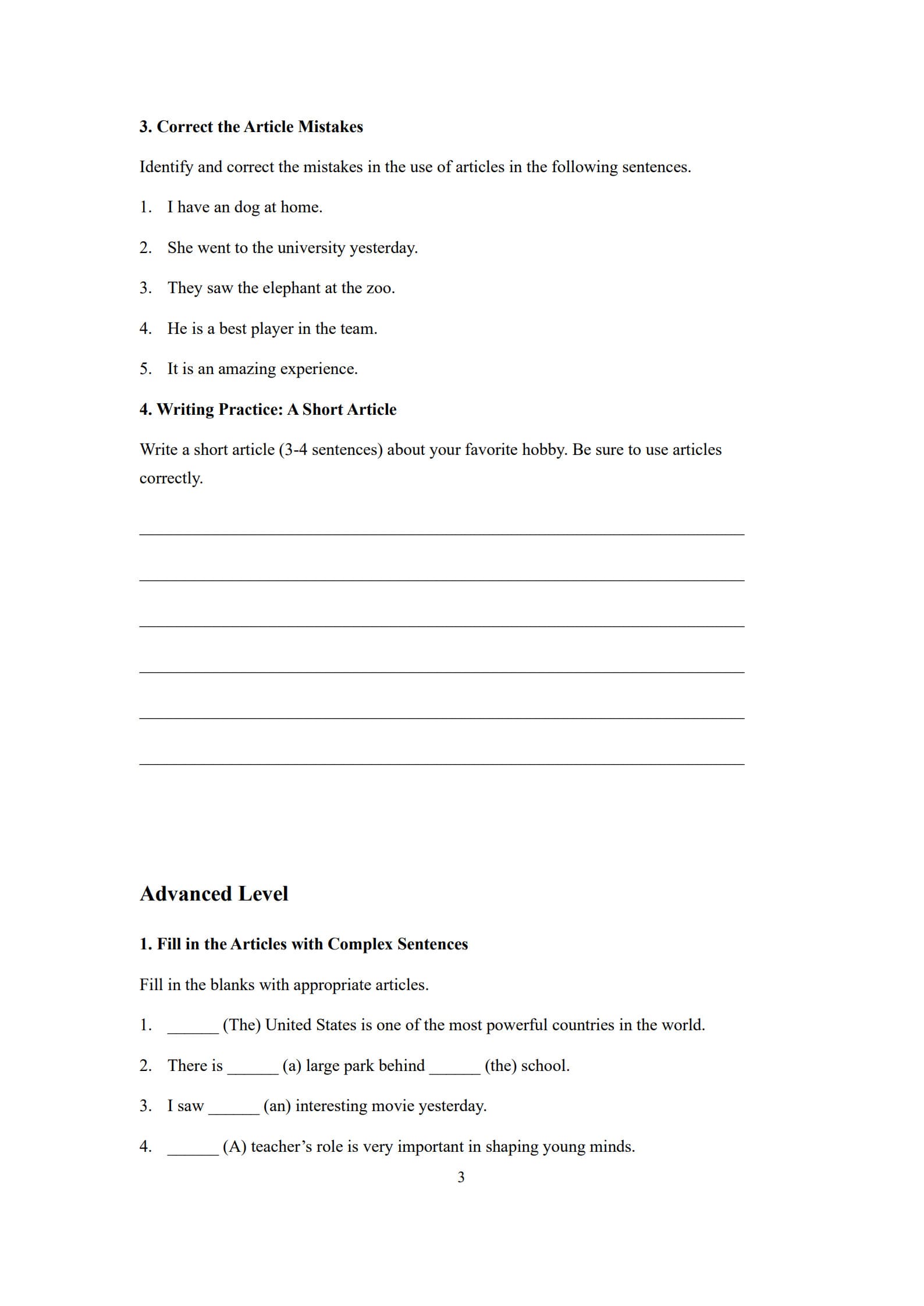
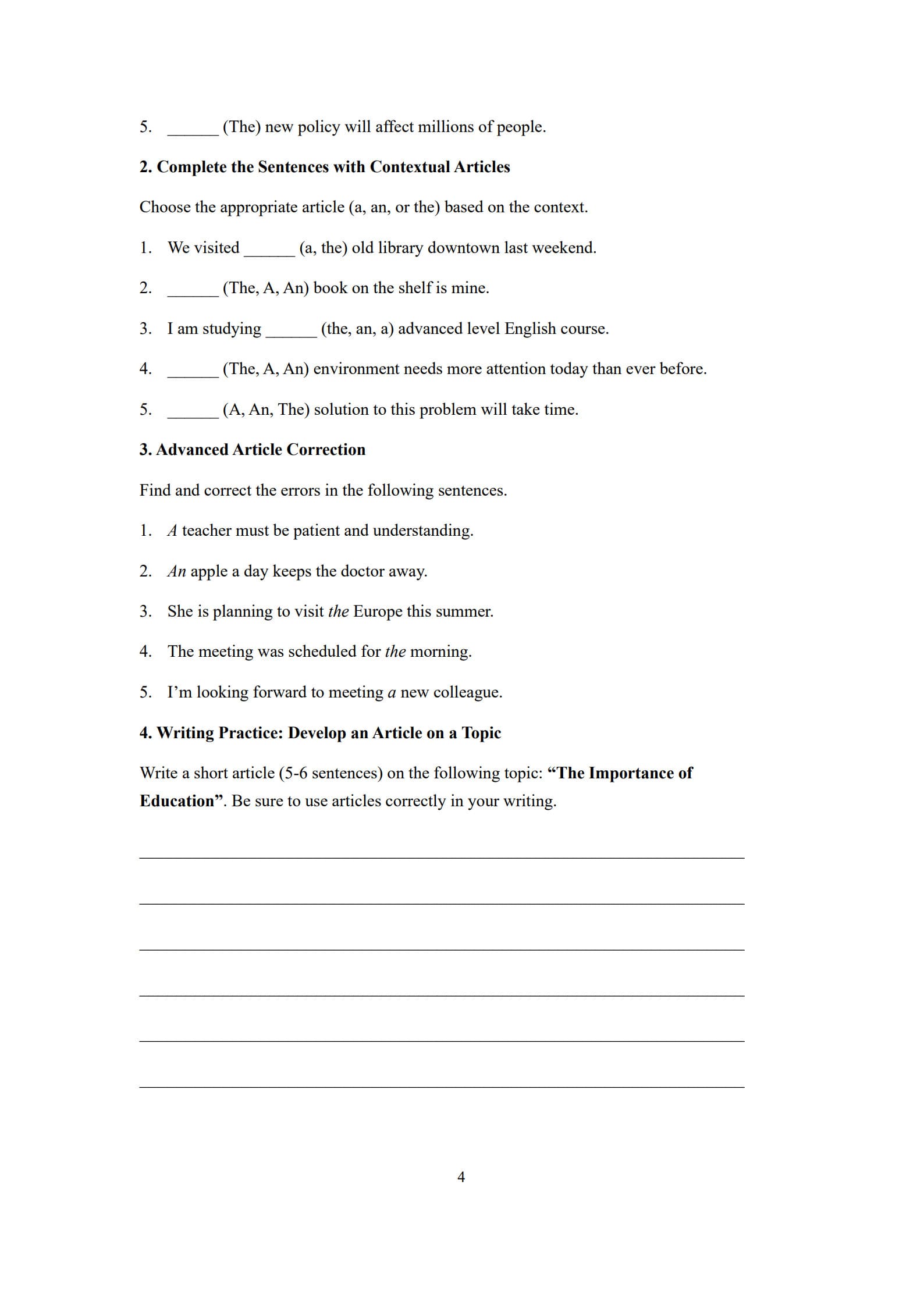
The template’s intermediate section specifically targets common challenges faced by class 4 and class 5 students, including article selection with abstract nouns and geographical terms. Exercises like “Choose the Correct Article” present sentences such as “She wants to be ___ artist” and “___ university is located on the hill,” introducing exceptions to standard article rules (e.g., “a university” despite the vowel spelling). These nuanced distinctions prepare students for the complex reading materials they’ll encounter in middle school curricula.
The strategic sequencing between beginner and intermediate sections creates a seamless transition for class 4 and class 5 learners. Students who have mastered basic article usage through the earlier exercises are prepared for the template’s “Correct the Article Mistakes” section, which develops editing skills through sentences like “I have an dog at home” and “He is a best player in the team.” This error analysis approach fosters metalinguistic awareness—the ability to think about language as a system—which is crucial for academic success in later grades.
The writing practice component included in the intermediate level transforms passive knowledge into active skill application. When students compose short paragraphs about their hobbies using correct articles, they integrate grammar learning with authentic communication. PDF Agile’s digital platform enhances this process through editing tools that allow for easy revisions, encouraging students to refine their work without the frustration of rewriting entire sections by hand.
Maximizing Engagement Through Multi-Sensory Learning Approaches
PDF Agile’s digital platform transforms traditional worksheet activities into engaging multi-sensory experiences. When students digitally circle the correct article in sentences like “(___A, The) book on the table is mine,” they engage motor skills alongside cognitive processes, creating stronger neural connections than paper-based exercises alone. The template’s design incorporates responsive fields that provide visual confirmation when answers are completed, delivering immediate feedback that reinforces learning.
This flexibility makes the template suitable for various learning environments—from classroom instruction to homeschool settings and independent study. The clear organization into beginner, intermediate, and advanced sections allows educators to quickly identify appropriate materials for different learner needs without spending hours adapting resources. Meanwhile, the consistent format across levels provides familiarity that reduces cognitive load, allowing students to focus on content rather than navigating new interfaces with each exercise.
How to Use This Template on PDF Agile: A Step-by-Step Guide
Accessing and Customizing the Article Worksheet Template
Using our Article Worksheet template in PDF Agile is straightforward and requires no technical expertise. Follow these simple steps to create engaging grammar practice materials in minutes:
Step 1: Download the Article Worksheet Template
Navigate to the PDF Agile Template Library and search for “Article Worksheet.” Alternatively, click “Use Template” on this page to instantly access the pre-formatted worksheet. The template downloads with all sections—beginner, intermediate, and advanced—already organized for immediate use.
Step 2: Customize for Specific Grade Levels
Adapt the template for your target audience using PDF Agile’s editing tools. For a class 2 worksheet, you might emphasize the beginner section by enlarging text or adding visual cues. For class 5 students, you could expand the intermediate and advanced sections. The template’s modular structure allows you to rearrange, delete, or duplicate sections without affecting formatting.
Step 3: Incorporate Personalized Examples
Replace generic examples with context-specific sentences that reflect your students’ interests and experiences. While maintaining the grammatical structure of exercises like “Fill in the Articles Based on Context,” you can substitute vocabulary to increase relevance. PDF Agile’s text editing tools make these modifications quick and seamless.
Step 4: Add Interactive Elements
Enhance engagement by inserting form fields, checkboxes, or drawing areas using PDF Agile’s annotation features. For the “Circle the Correct Article” exercises, add clickable circles that students can select digitally. These interactive elements transform static practice into active learning experiences.
Step 5: Save, Share, and Collect Responses
Save your customized worksheet and share it electronically with students.
Conclusion
Our Article Worksheet template represents more than just a digital reproduction of traditional exercises—it embodies PDF Agile’s commitment to enhancing learning through technology. By transforming static grammar practice into an interactive, adaptable experience, we’ve created a resource that grows with students from class 2 through class 5 and beyond. The template’s careful alignment with developmental stages ensures that each learner encounters appropriately challenging material that builds confidence alongside competence.