

Phonics forms the cornerstone of early literacy development, bridging letter recognition with meaningful reading. For educators and parents seeking structured, progressive learning materials, our free phonics worksheets provide a comprehensive solution that grows with your learner. Designed specifically for young minds, these kindergarten-friendly resources transform abstract letter sounds into tangible learning victories through carefully scaffolded activities.
Why Are Phonics Foundation Skills Critical? Discover Through Free Phonics Worksheets
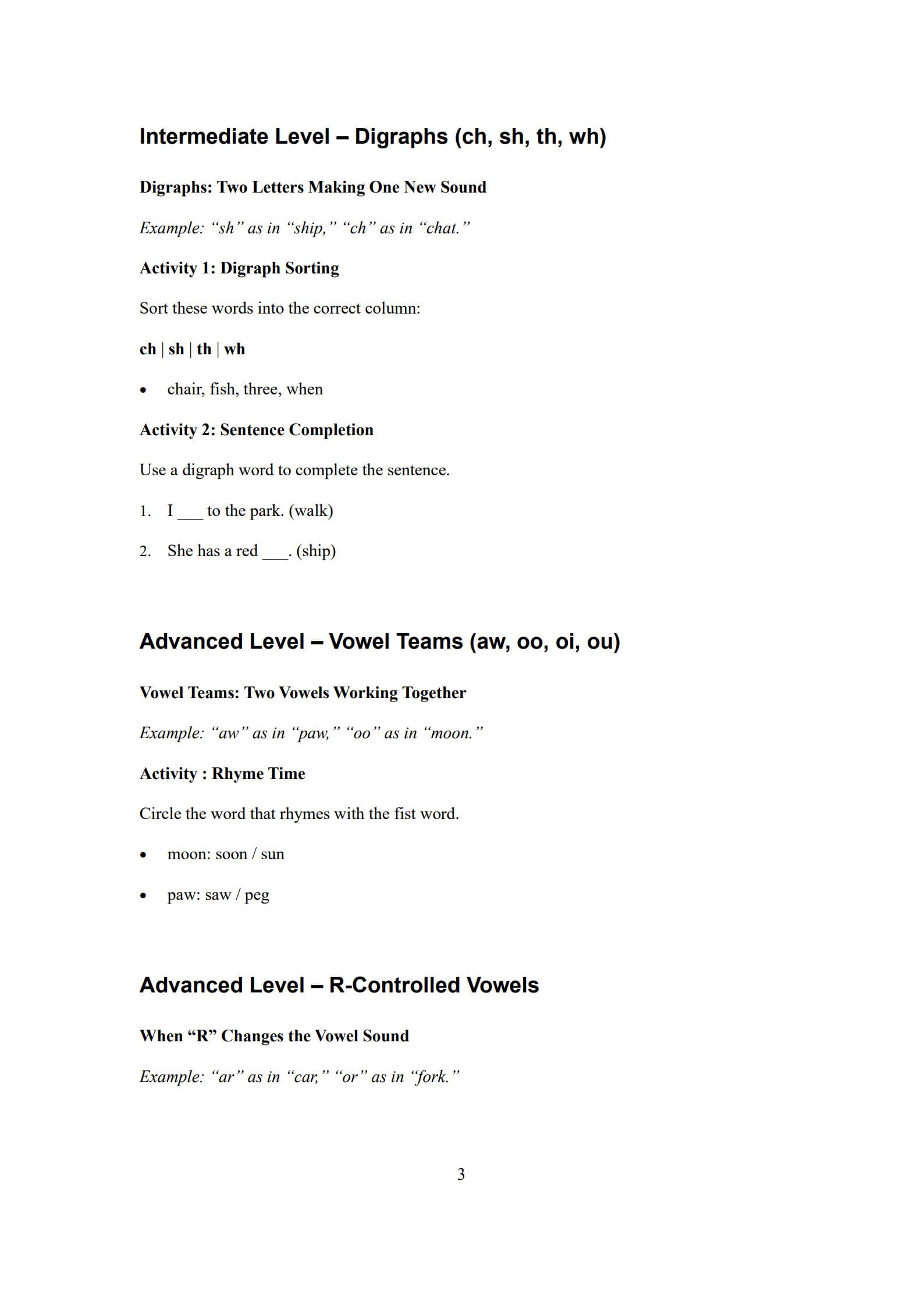
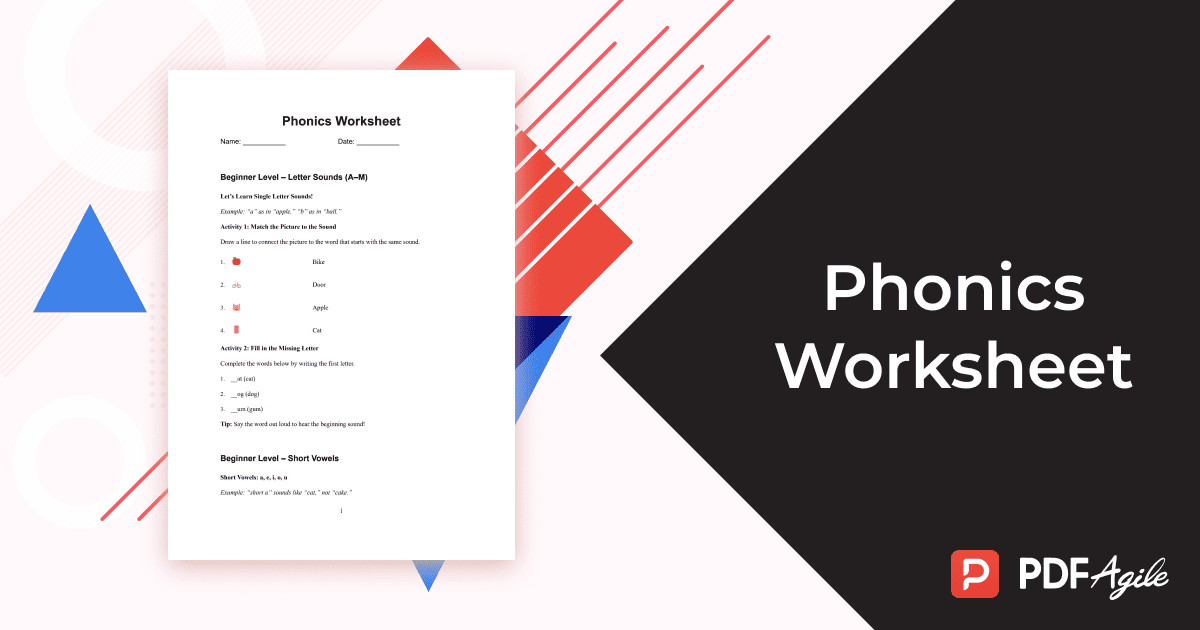
What if you could watch a child’s eyes light up as they decode their first word? Our phonics worksheets make this possible by breaking down reading into manageable, systematic components. The beginner level introduces single letter sounds (A-M) through concrete examples—“a” as in “apple,” “b” as in “ball”—establishing the fundamental connection between symbols and sounds.
Activity 1: Match the Picture to the Sound demonstrates this principle perfectly. When a child draws a line connecting the apple image to the letter “A,” they’re not just completing an exercise—they’re building neural pathways for literacy. Similarly, the Fill in the Missing Letter activity (“_at” for “cat”) reinforces beginning sounds through active participation. These beginning sounds worksheets serve as building blocks, turning uncertainty into confidence one letter at a time.
Research confirms that early phonics mastery predicts later reading success. Our worksheets transform this scientific insight into practical classroom or home learning tools. The included tips—like “Say the word out loud to hear the beginning sound!”—encourage multi-sensory engagement, cementing learning through auditory reinforcement. For kindergarten learners, this approach makes abstract concepts tangible, creating a solid foundation for all future literacy development.
How Do CVC Words Worksheets Build Reading Confidence?
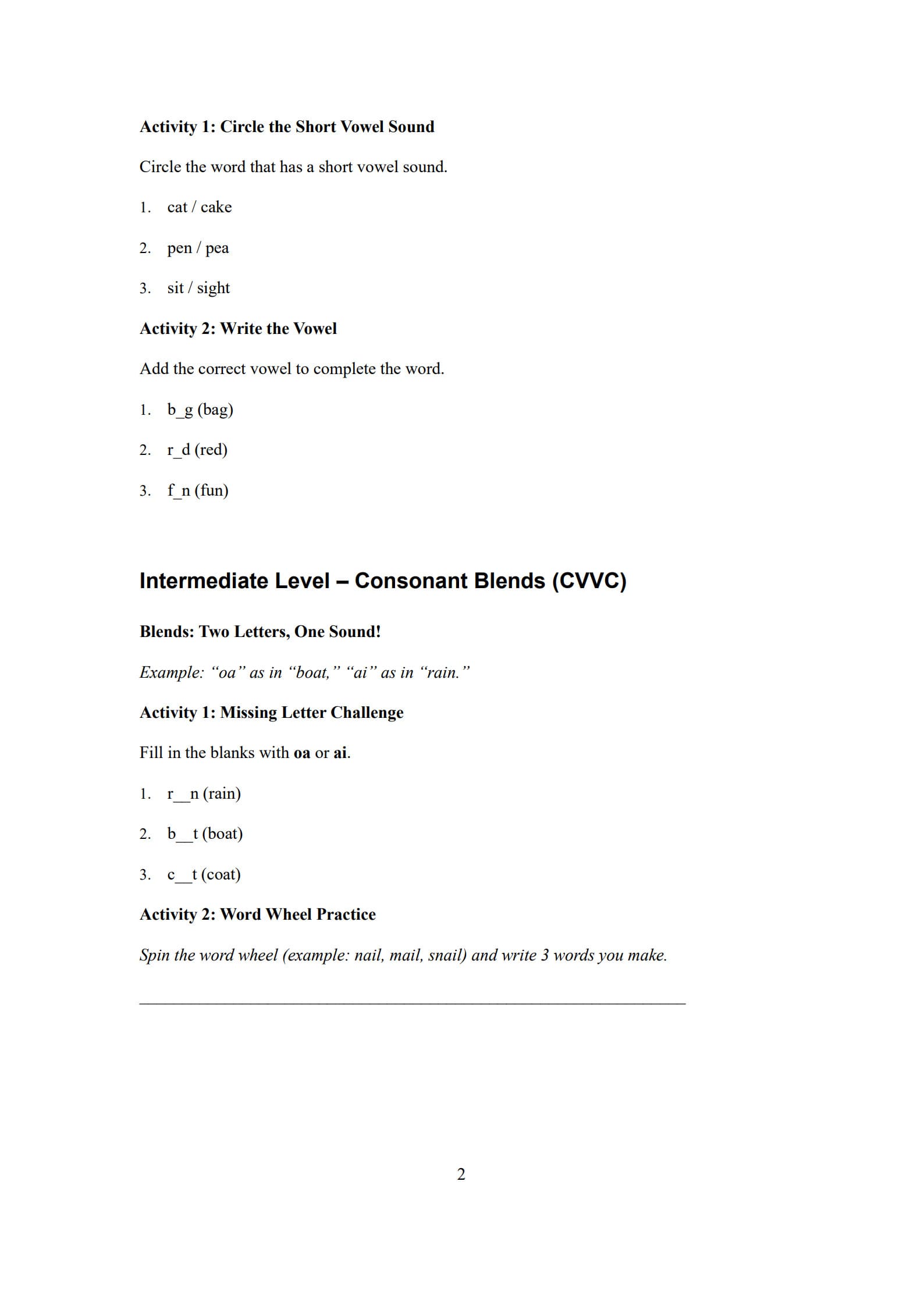
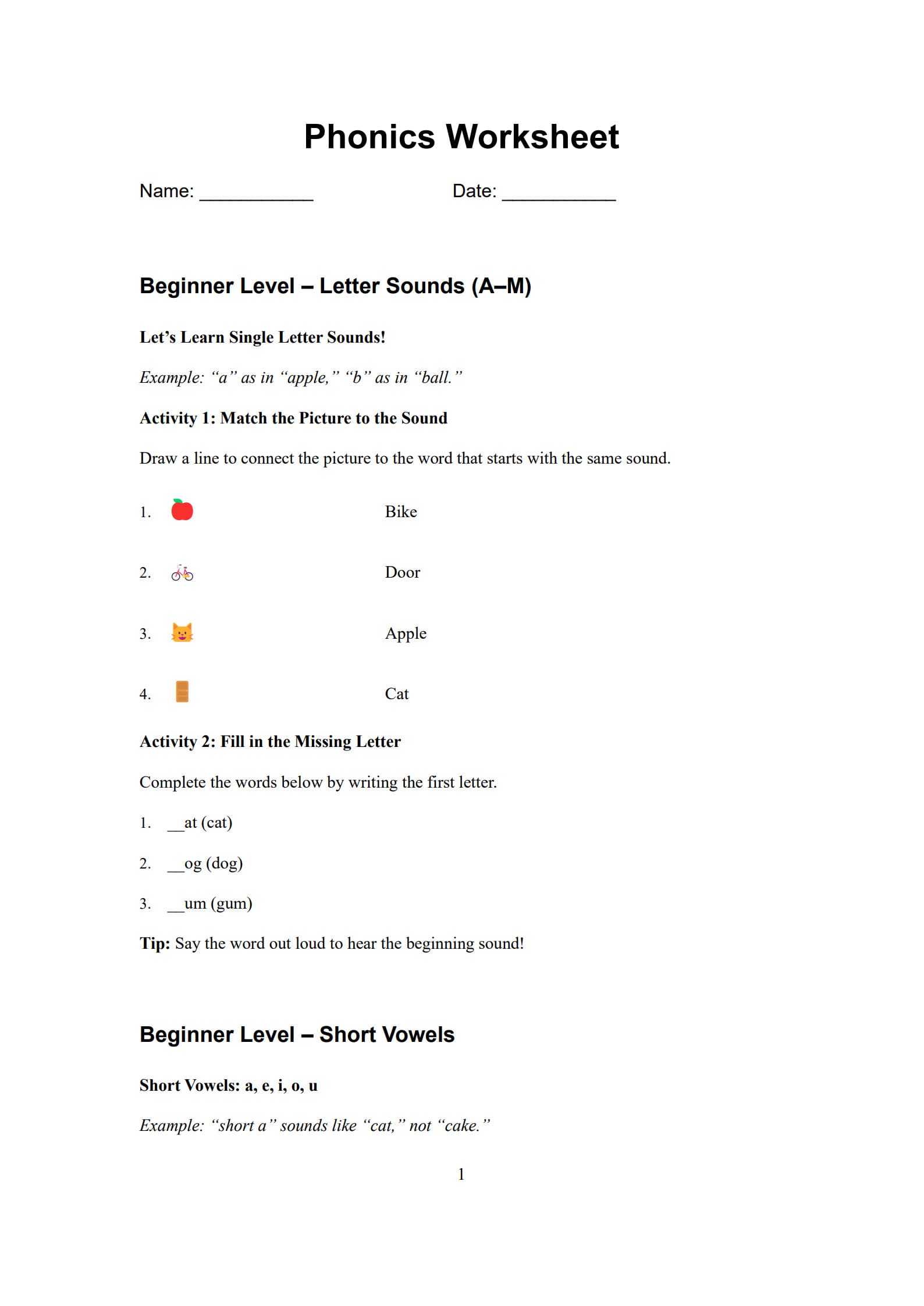
Once students grasp individual letter sounds, the next logical step involves blending them into simple words. This is where CVC words worksheets prove invaluable. Consonant-Vowel-Consonant words like “cat,” “dog,” and “fun” form the first words most children learn to read independently. Our Short Vowels section specifically targets this crucial developmental milestone.
The Circle the Short Vowel Sound activity presents minimal pairs (cat/cake, pen/pea, sit/sight), training learners to distinguish between short and long vowel sounds—a critical skill for accurate decoding. Meanwhile, the Write the Vowel exercise (“b_g” for “bag”) requires active recall, moving beyond recognition to production. These deliberate progressions within our free phonics worksheets ensure that each success builds toward independent reading.
For young learners, CVC words represent an achievable challenge. Unlike longer words that might overwhelm, three-letter words provide just enough complexity to feel rewarding without causing frustration. The worksheet’s clear formatting and visual cues (like the ball image for “b” and door for “d”) support different learning styles, making these phonics worksheets for kindergarten equally effective for visual, auditory, and kinesthetic learners.
Bridging Sounds to Sentences: The Intermediate Leap with Consonant Blends and Digraphs
Table: Phonics Skill Progression in Our Worksheets
| Level | Focus | Sample Activities |
|---|---|---|
| Beginner | Single letter sounds, CVC words | Matching pictures to sounds, filling missing letters |
| Intermediate | Consonant blends, digraphs | Missing letter challenges, word sorting |
| Advanced | Vowel teams, R-controlled vowels | Rhyming activities, sentence creation |
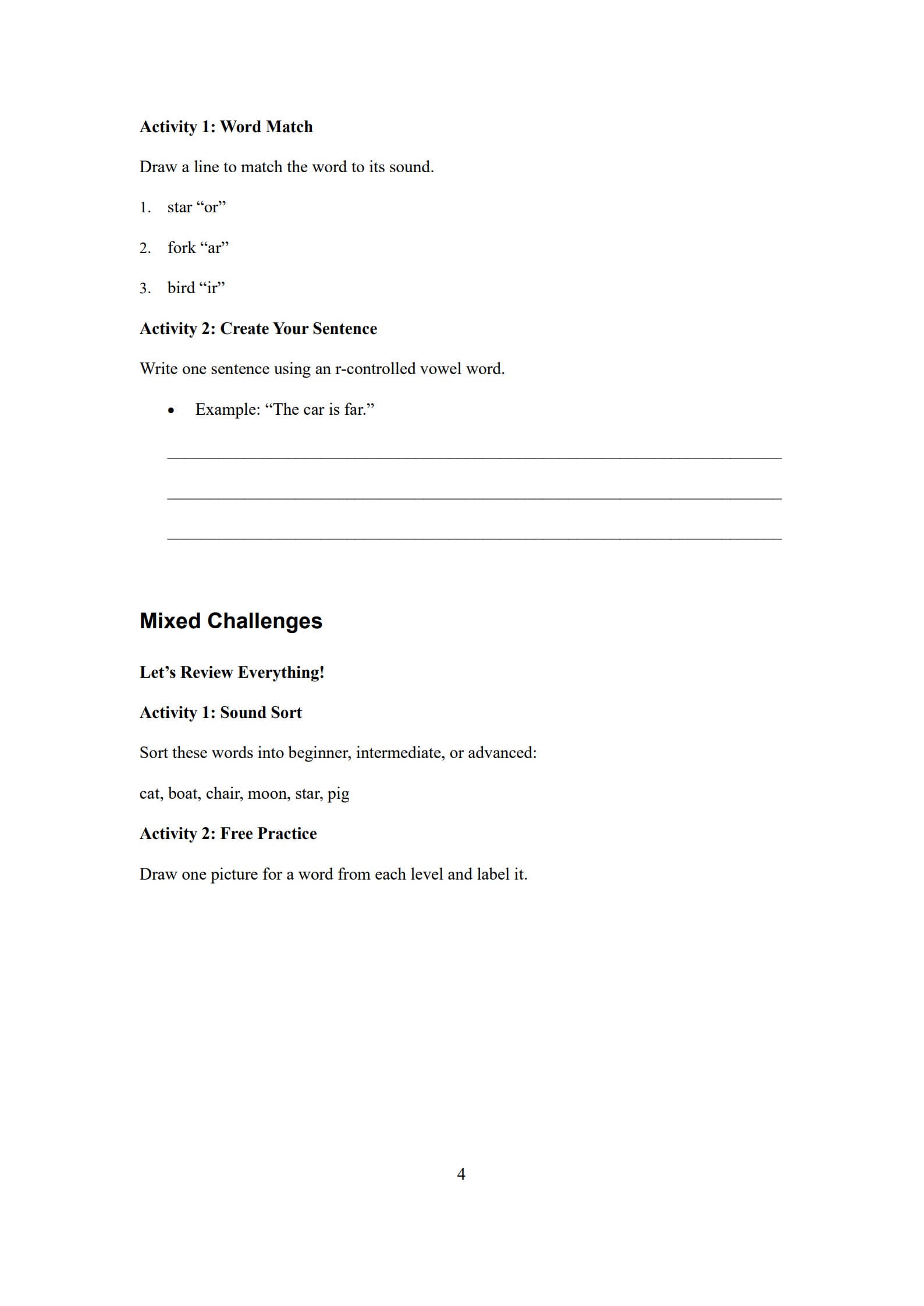
The intermediate section introduces consonant blends (CVVC patterns like “oa” in “boat”) and digraphs (ch, sh, th, wh), where two letters create a single sound. This represents a significant cognitive leap—students must now recognize letter teams rather than individual letters. The Missing Letter Challenge (“r_n” for “rain”) develops pattern recognition, while the Digraph Sorting activity (chair under “ch,” fish under “sh”) builds categorization skills essential for vocabulary development.
What makes these activities particularly effective is their gradual release of responsibility. The worksheets provide explicit examples (“sh” as in “ship”), then guided practice (sorting words), and finally application (sentence completion: “She has a red __”). This scaffolding ensures learners never feel abandoned yet constantly stretch their abilities. The Word Wheel Practice—generating related words like nail, mail, snail—fosters phonological awareness that transfers directly to reading fluency.
Advanced Phonics: Vowel Teams and R-Controlled Vowels Demystified
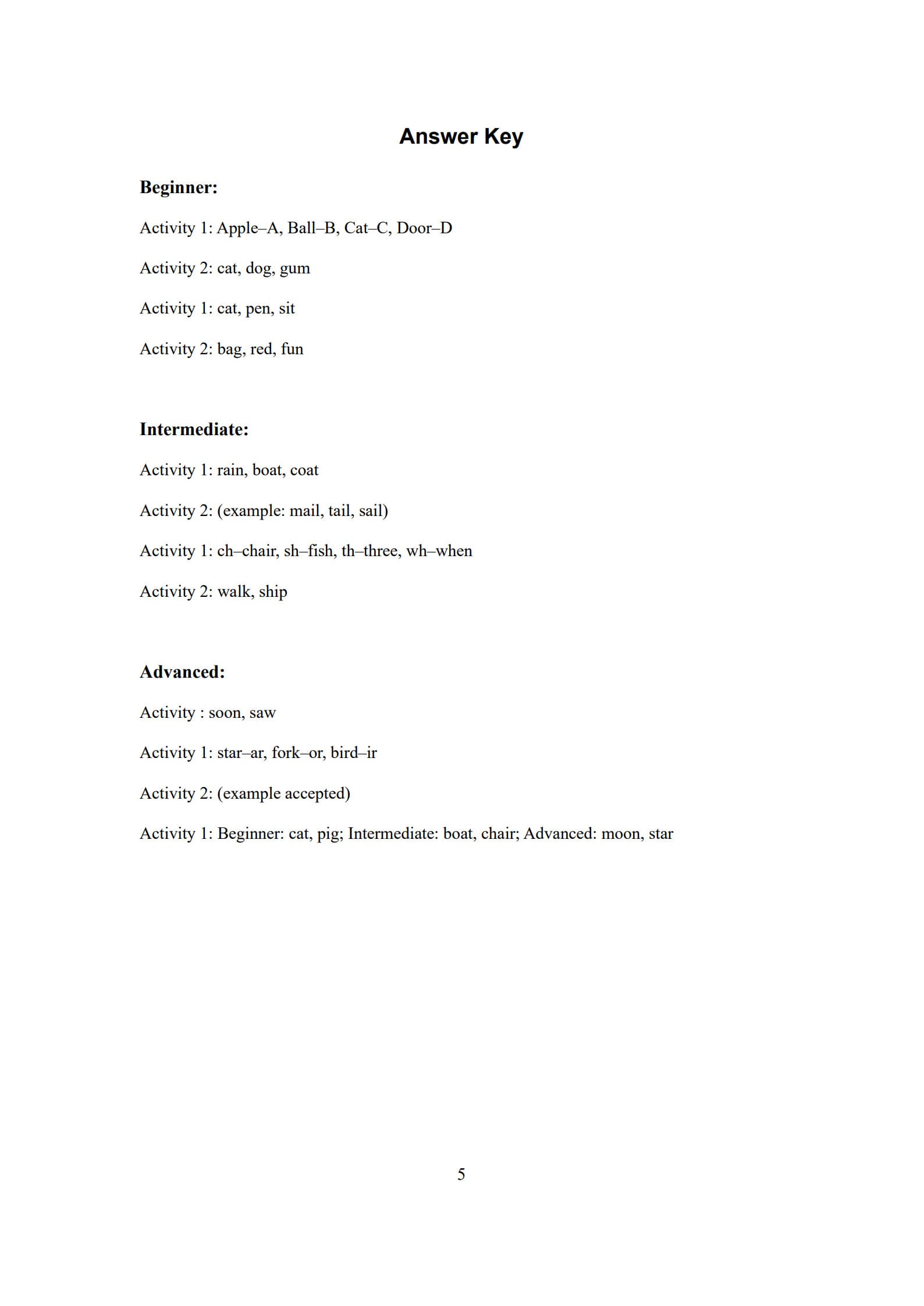
At the advanced level, students encounter vowel teams (aw, oo, oi, ou) and R-controlled vowels—the final pieces for decoding most English words. The Rhyme Time activity (moon/soon, paw/saw) develops phonemic awareness through comparison, while the Word Match exercise (star→”ar,” fork→”or”) reinforces pattern recognition across different contexts.
Most importantly, the Create Your Sentence activity bridges phonics with authentic writing. When a student writes “The car is far” using an R-controlled vowel word, they’re no longer just practicing sounds—they’re communicating ideas. This transition from decoding to expression represents the ultimate goal of phonics instruction. Our worksheets facilitate this journey through carefully sequenced challenges that maintain learner engagement while building essential skills.
How to Use This Phonics Worksheet Template on PDF Agile
Creating professional, effective phonics materials has never been easier. With PDF Agile’s intuitive platform, you can customize these research-based worksheets in minutes. Follow these simple steps:
Step 1: Access the Phonics Worksheet Template
Navigate to the PDF Agile Template Library and locate the “Phonics Worksheets” template. You can preview the complete structure—from beginner letter sounds to advanced vowel teams—before customizing. Click “Use Template” to open the editable version in your dashboard.
Step 2: Customize for Your Learner’s Needs
The template is fully customizable. Adjust the words in the “Match the Picture” activity to reflect your student’s vocabulary. Modify the “Fill in the Missing Letter” exercises to target specific sound patterns. PDF Agile’s editing tools make it simple to drag, drop, and modify elements while maintaining professional formatting.
Step 3: Add Interactive Elements
Enhance engagement by inserting audio cues using PDF Agile’s multimedia features. Record yourself pronouncing “apple” for the beginning sounds section, or add a video demonstration of mouth formation for challenging sounds like “th.” These multimodal supports increase accessibility and effectiveness.
Step 4: Save and Share
Once customized, save your worksheet as a standard PDF for printing or use PDF Agile’s secure sharing features to send directly to students’ devices. The platform preserves all formatting across devices, ensuring worksheets appear exactly as designed whether viewed on tablets, computers, or printed.
Pro Tip: Create a series of progressive worksheets by duplicating and modifying the template for different phonics patterns. Build an entire phonics curriculum by saving your variations as separate files within the same PDF Agile project folder. Besides, you can also learn
Conclusion:
Phonics instruction shouldn’t be a guessing game—for teachers or students. Our carefully designed worksheets provide the structure necessary for systematic, explicit phonics instruction while allowing the flexibility to meet individual needs. From the first moment a kindergartener matches “apple” to “A” to the advanced student writing sentences with R-controlled vowels, these materials support every step of the literacy journey.
The true power of these resources lies in their adaptability. Whether you’re a classroom teacher differentiating instruction, a homeschool parent building a curriculum from scratch, or a tutor targeting specific skill gaps, these free phonics worksheets provide the foundation for reading success. By combining pedagogical expertise with PDF Agile’s versatile technology, we’ve created resources that grow with your learner while making preparation time minimal and learning outcomes maximal.