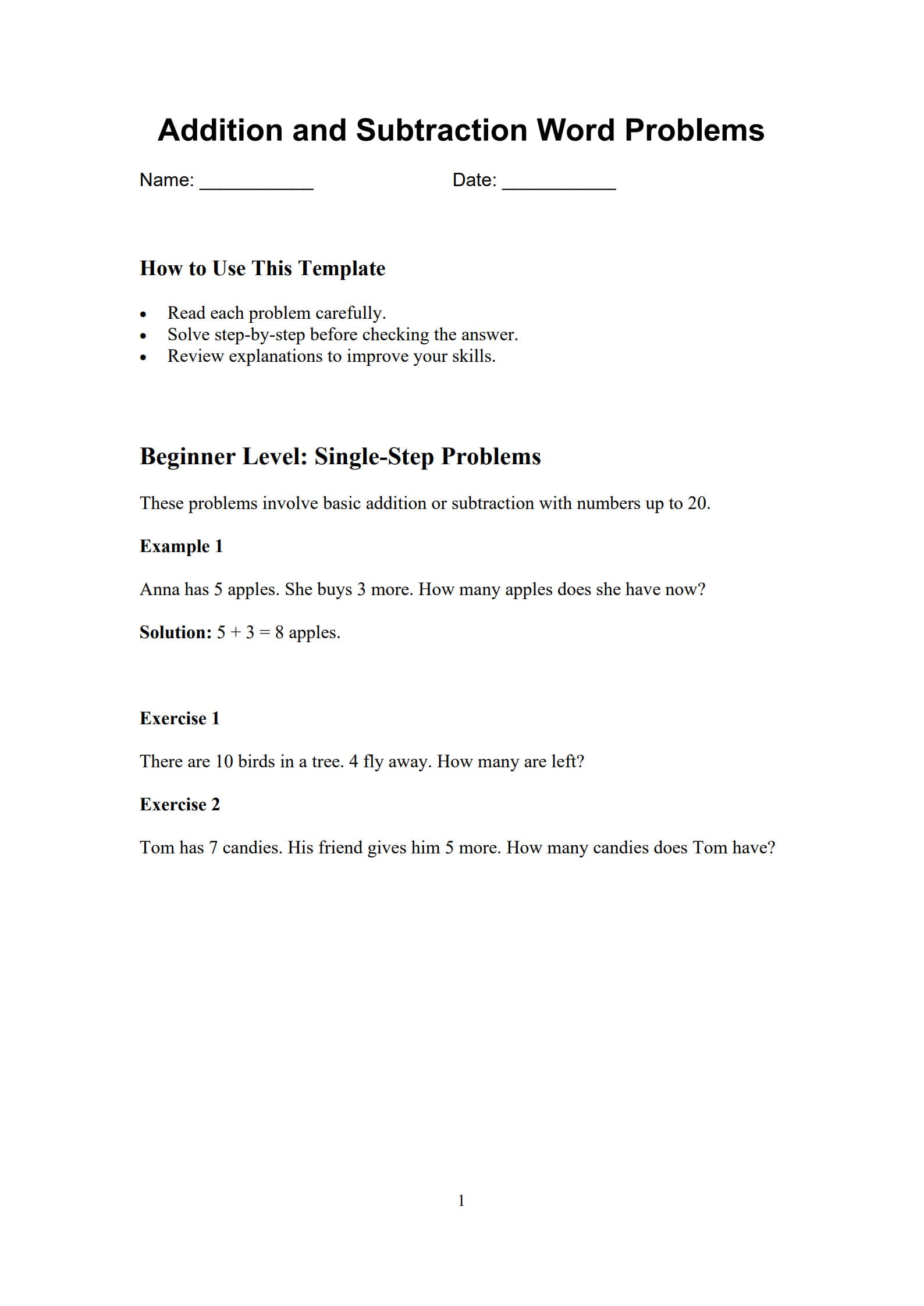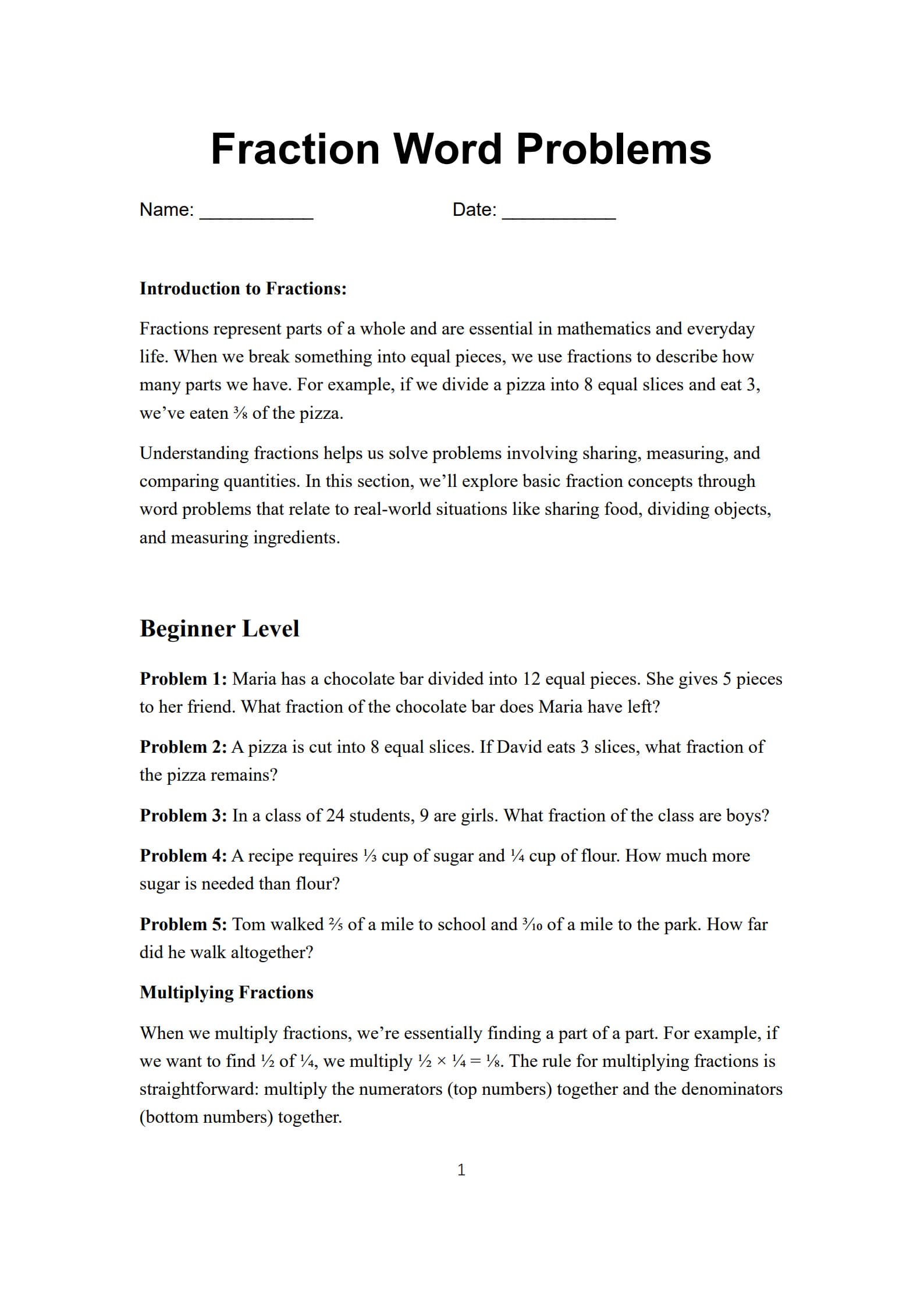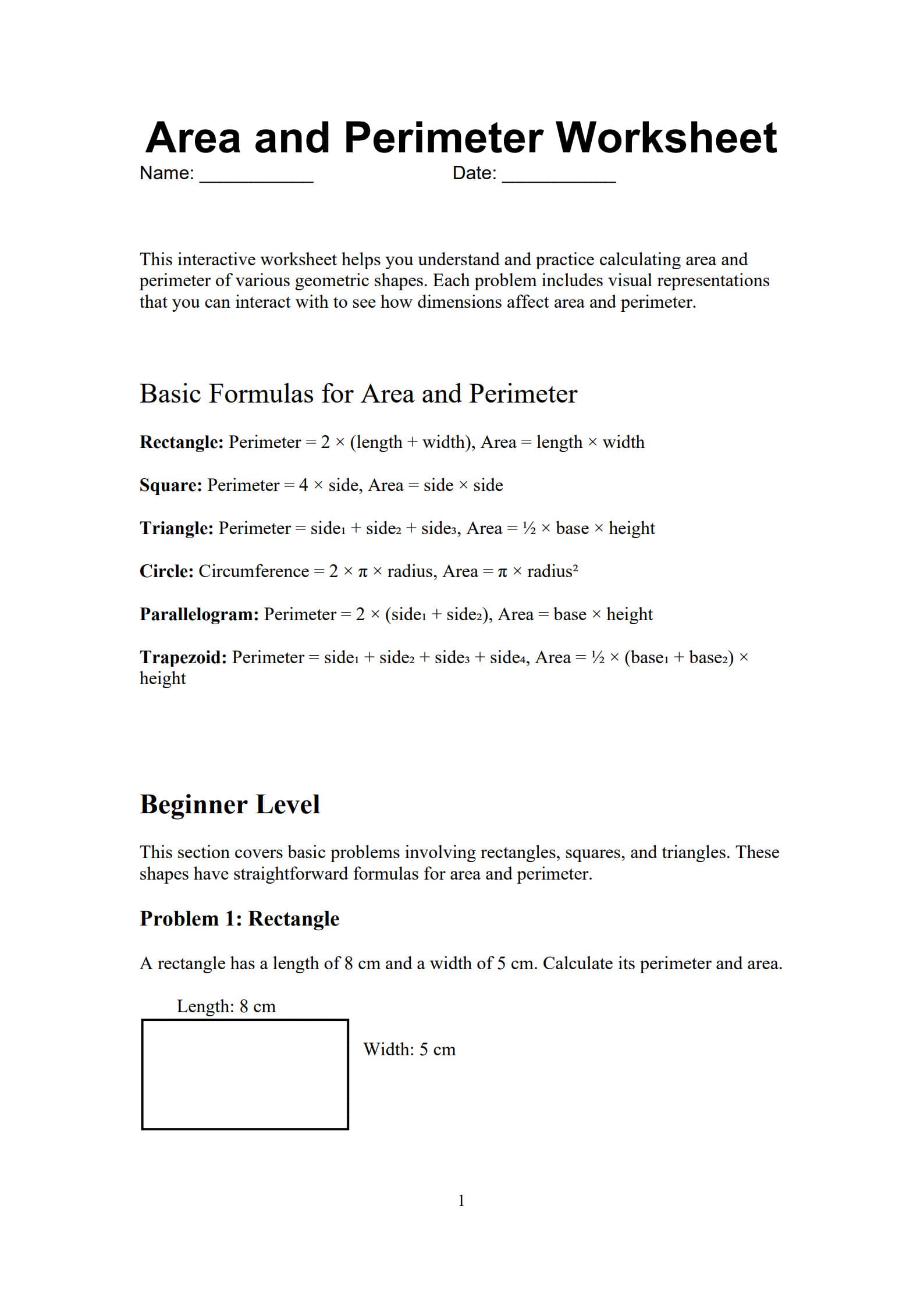


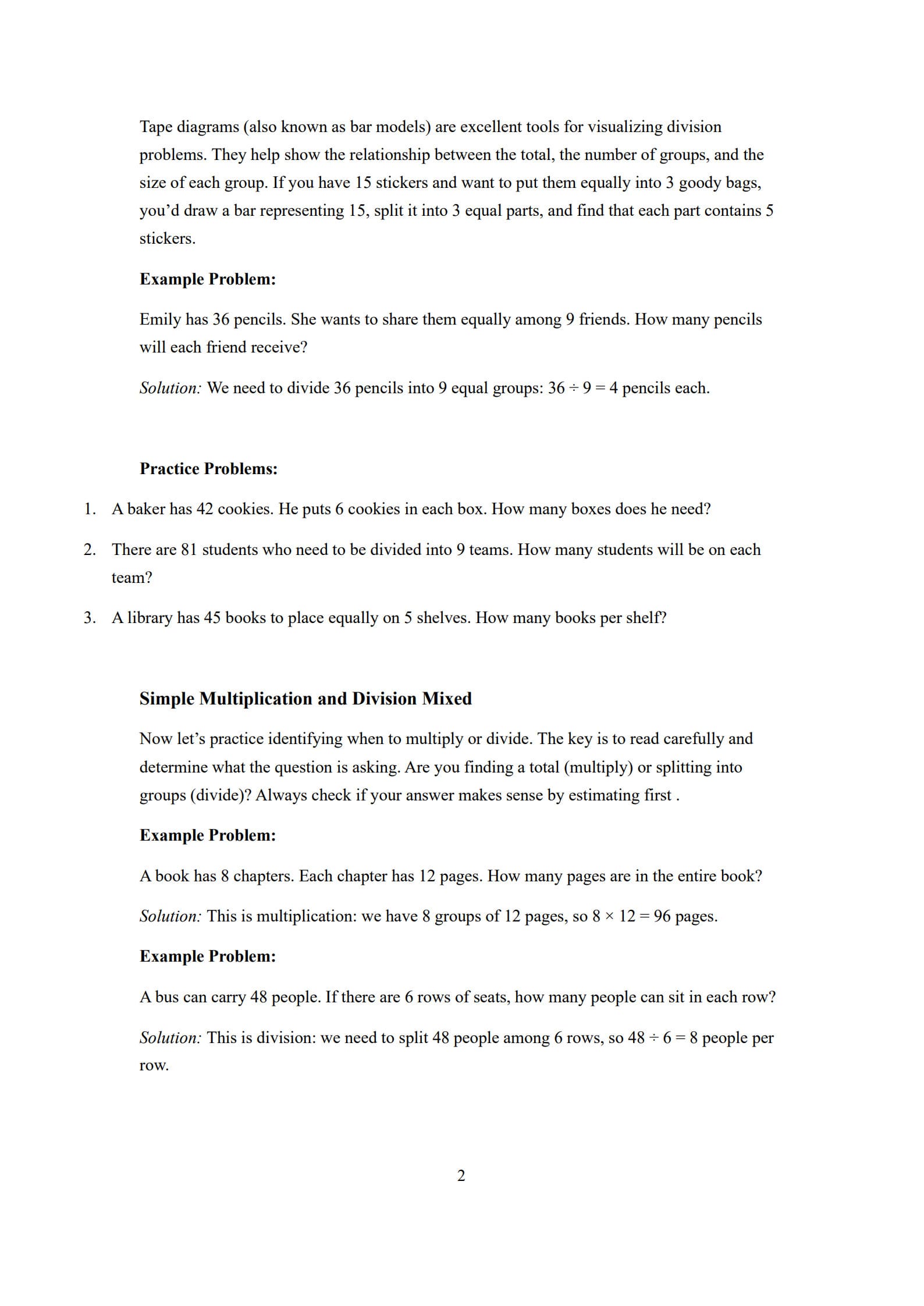
Word problems are the bridge between abstract math concepts and real-world applications. For students, educators, and lifelong learners, mastering multiplication and division word problems builds critical problem-solving skills. PDF Agile’s ready-to-use template, “Multiplication and Division Word Problems,” is designed to transform learning into an engaging, structured, and effective experience. Whether you’re a beginner tackling basic groups and arrays or an advanced learner solving multi-step and ratio challenges, this template provides a clear road map. In this essay, we’ll explore how the template breaks down each problem type, offers practical examples, and guides users toward mathematical confidence—all within the intuitive PDF Agile app.
Why Do Multiplication Word Problems Matter in Everyday Life?
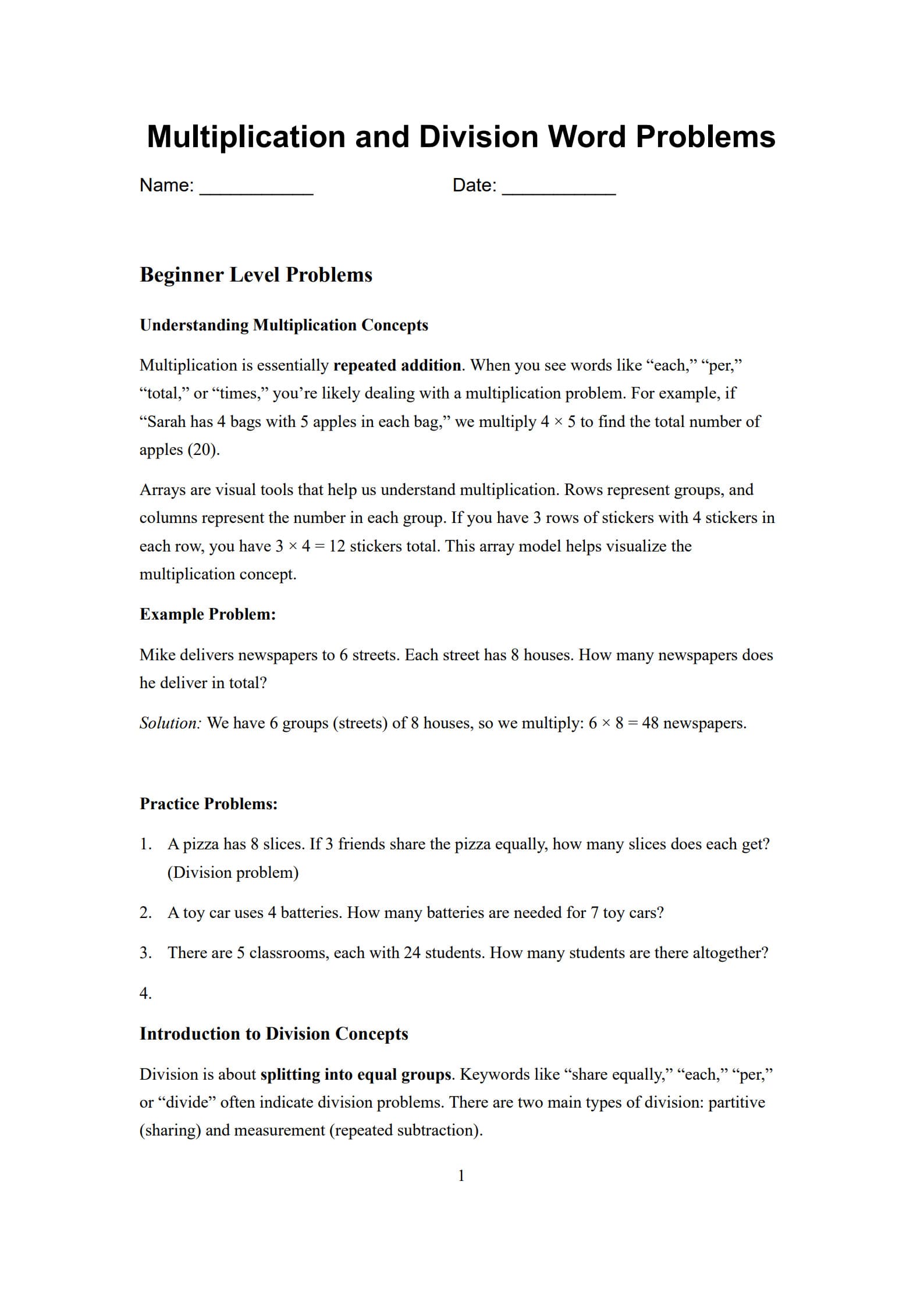
Multiplication problems are everywhere—from calculating the total number of items in multiple groups to determining time and distance. Understanding keywords like “each,” “total,” and “times” helps identify when to multiply. For example, the template’s pizza problem asks: “A pizza has 8 slices. If 3 friends share the pizza equally, how many slices does each get?” While this is technically a division problem, it introduces the idea of equal groups, a foundational concept for multiplication.
Arrays and tape diagrams further simplify visualization. The multiplication worksheet illustrates multiplication with arrays: 3 rows of 4 stickers become 3×4=12. Similarly, if Mike delivers newspapers to 6 streets with 8 houses each, the multiplication 6×8=48 gives the total newspapers. These examples show how multiplication word problems help learners grasp repeated addition and scalable relationships.
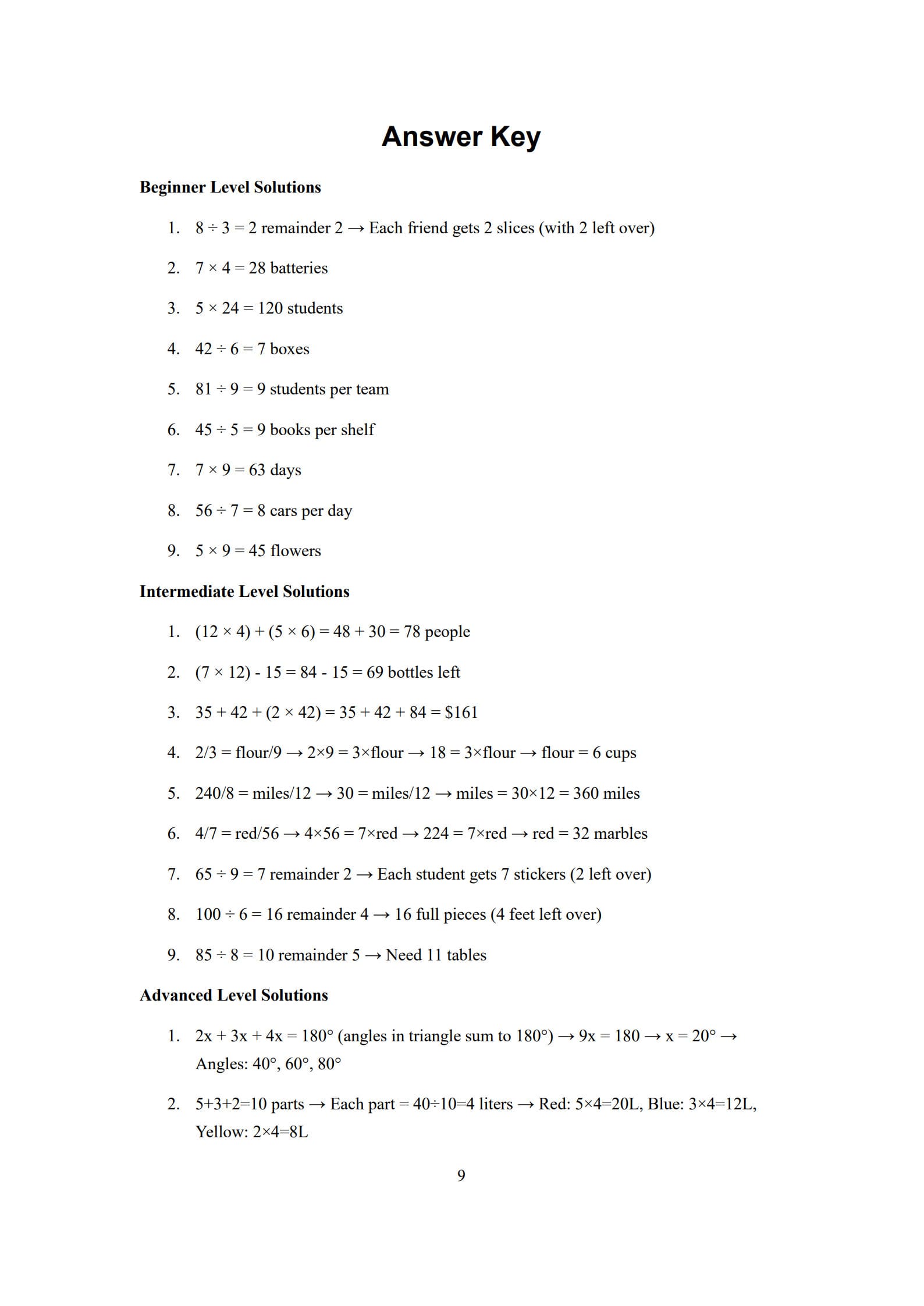
For beginners, the template emphasizes estimation and logical reasoning. By practicing problems like calculating batteries for 7 toy cars (7×4=28) or total students in 5 classrooms (5×24=120), students build fluency and confidence. The template’s structured approach ensures that learners don’t just memorize steps but internalize the why behind multiplication.
How Can Division Word Problems Teach Fair Sharing and Grouping?
Unlike simple division worksheets, division word problems revolve around splitting quantities into equal parts. Keywords like “share equally,” “per,” and “divide” signal that division is needed. The template introduces two division types: partitive (sharing) and measurement (repeated subtraction). For instance, Emily’s problem—“36 pencils shared among 9 friends”—uses partitive division (36÷9=4), while a baker packing 42 cookies into boxes of 6 uses measurement division (42÷6=7 boxes).
Tape diagrams make division tangible. A bar representing the total (e.g., 15 stickers) is split into equal sections (3 bags), showing each group’s size. This visual model clarifies problems like dividing 81 students into 9 teams (81÷9=9) or placing 45 books on 5 shelves (45÷5=9). By practicing these problems, learners discover that division is not just about “splitting” but about understanding inverse relationships—a key step toward algebra.
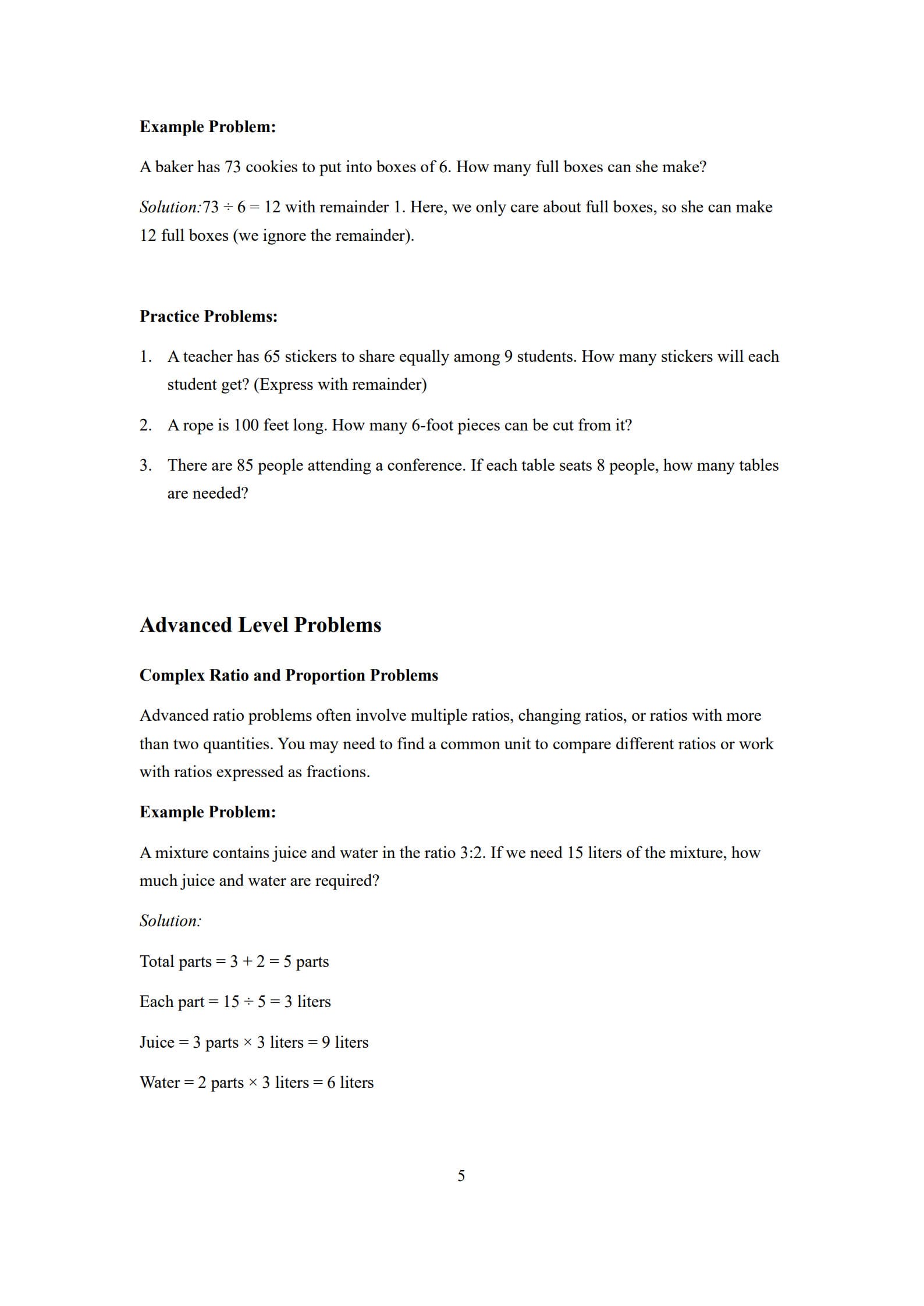
The template also includes remainder problems, such as sharing 65 stickers among 9 students (65÷9=7 R2). Here, students learn that remainders have real-world implications—like needing an extra van for 47 students when each van holds 8. This reinforces the importance of context in division word problems.
When Should You Use Two-Step Word Problems?
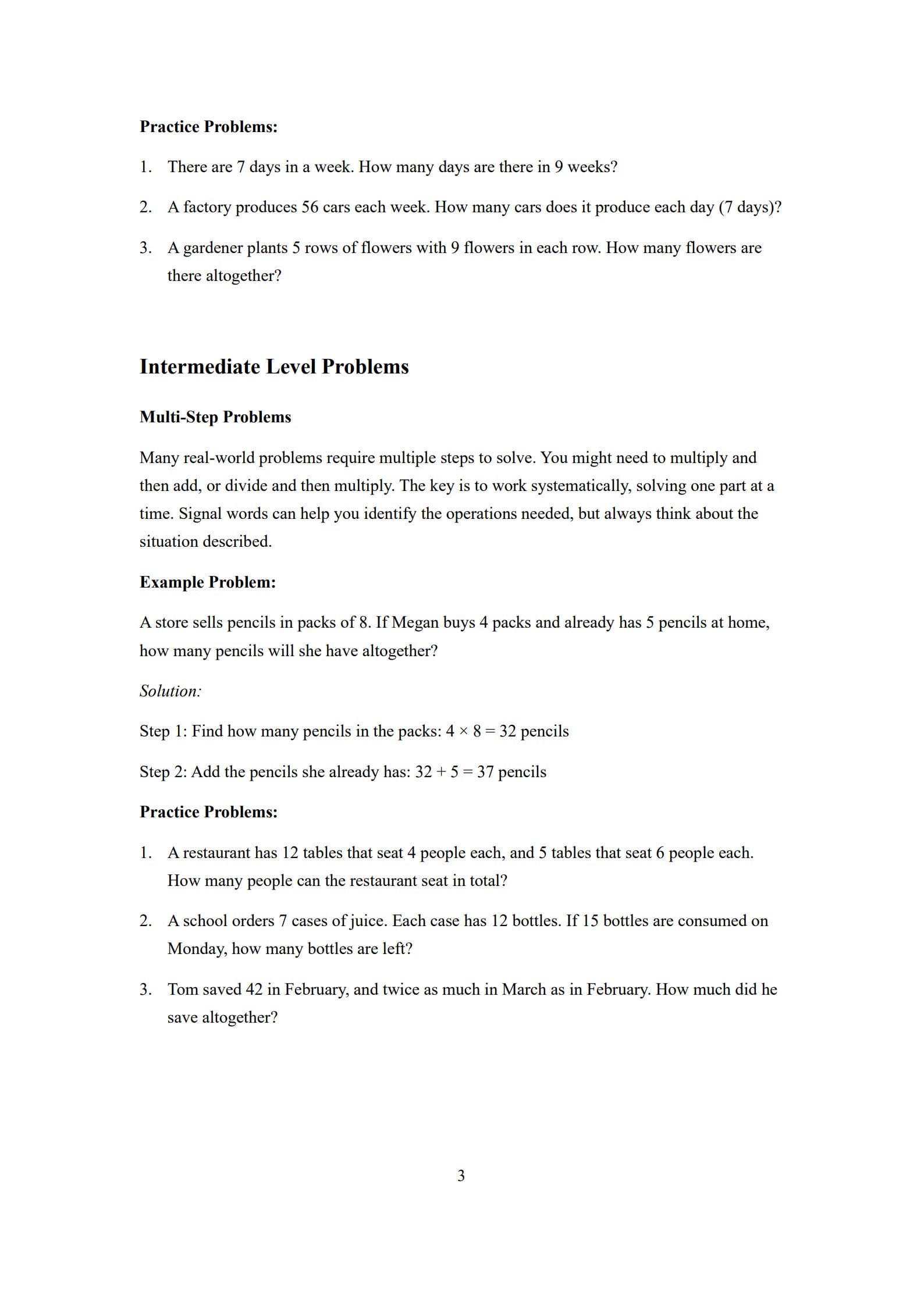
Two-step word problems combine operations, requiring learners to sequence their solutions logically. The template’s intermediate section highlights problems like: “A restaurant has 12 tables that seat 4 people each and 5 tables that seat 6 people each. How many people can it seat total?” This requires multiplying (12×4 and 5×6) before adding the results (48+30=78).
Another example: “A school orders 7 cases of juice, each with 12 bottles. If 15 bottles are consumed on Monday, how many are left?” Here, multiplication (7×12=84) precedes subtraction (84−15=69). These problems teach prioritization—identifying the first step (finding the total) before the second (applying change).
To help learners navigate complexity, the template encourages underlining keywords, writing intermediate answers, and checking reasonableness. The table below summarizes common two-step problem structures:
| Problem Type | First Step | Second Step | Example from Template |
|---|---|---|---|
| Multiply then Add | Find partial totals | Combine results | Restaurant seating problem |
| Multiply then Subtract | Calculate total | Apply reduction | Juice bottles problem |
| Multiply then Divide | Determine overall quantity | Split into groups | (Advanced) Rate problems |
Tackling Ratios, Remainders, and Real-World Applications
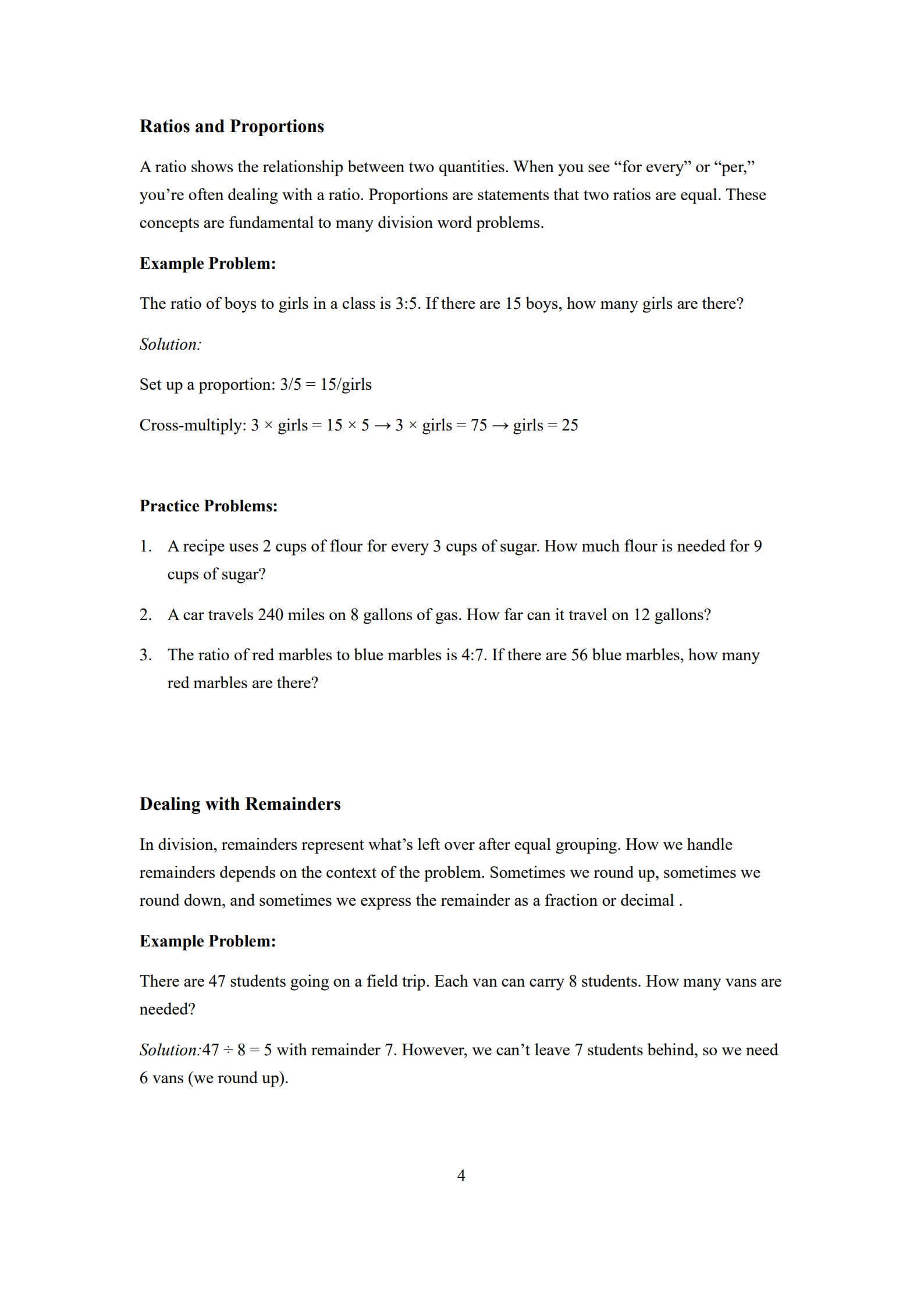
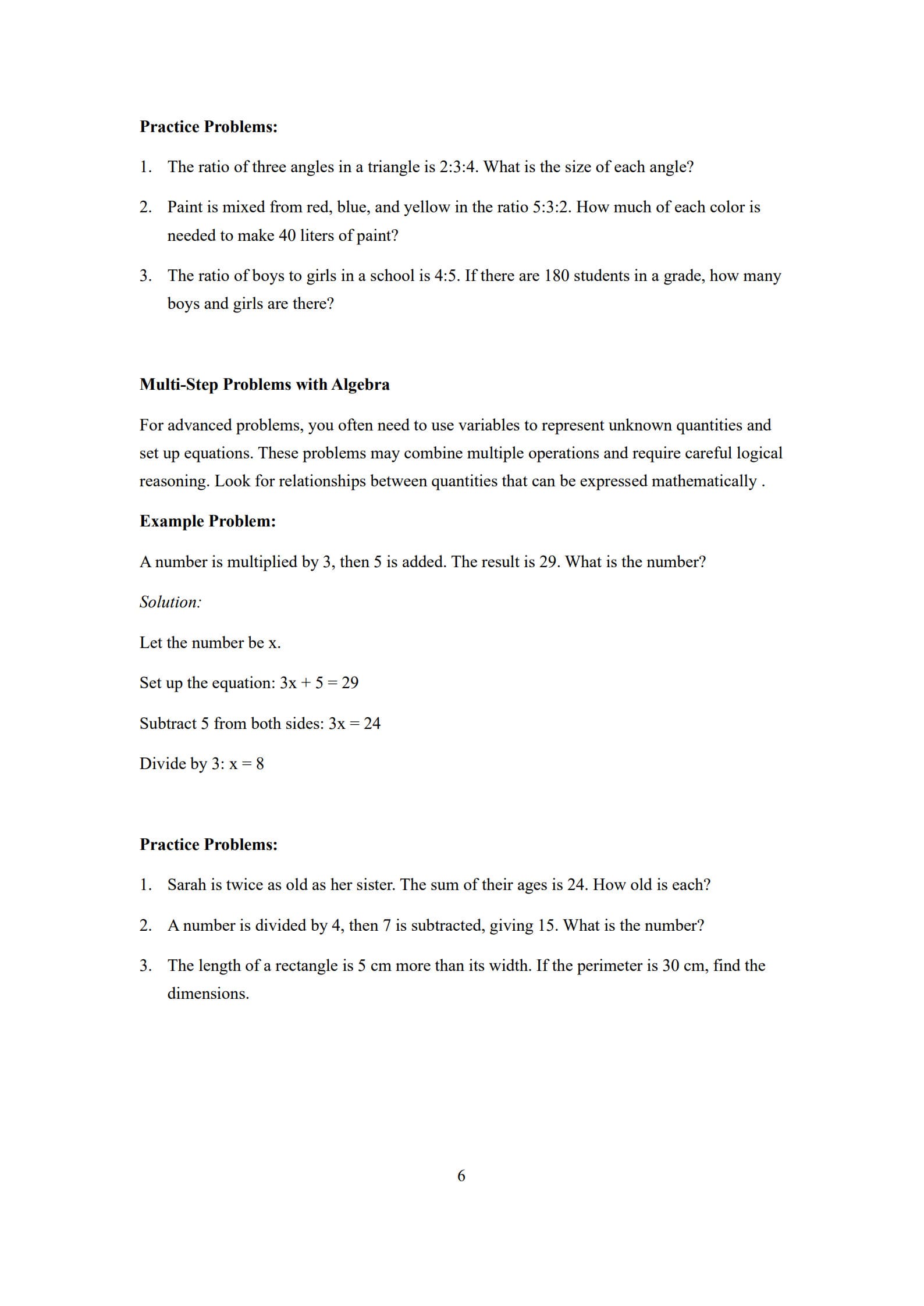
Advanced problems in the template dive into ratios, proportions, and remainder handling. For example, the ratio problem “The ratio of boys to girls is 3:5. If there are 15 boys, how many girls are there?” is solved by setting up a proportion (3/5 = 15/girls) and cross-multiplying (3×girls=75 → girls=25). This shows how ratios express relationships between quantities.
Remainders require critical thinking. Should you round up, down, or ignore the remainder? The template contrasts two cases:
- 47 students needing vans that hold 8→ 47÷8=5 R7, but 7 students can’t be left behind, so 6 vans are needed (round up).
- 73 cookies packed in boxes of 6→ 73÷6=12 R1, but only full boxes count, so 12 boxes (ignore remainder).
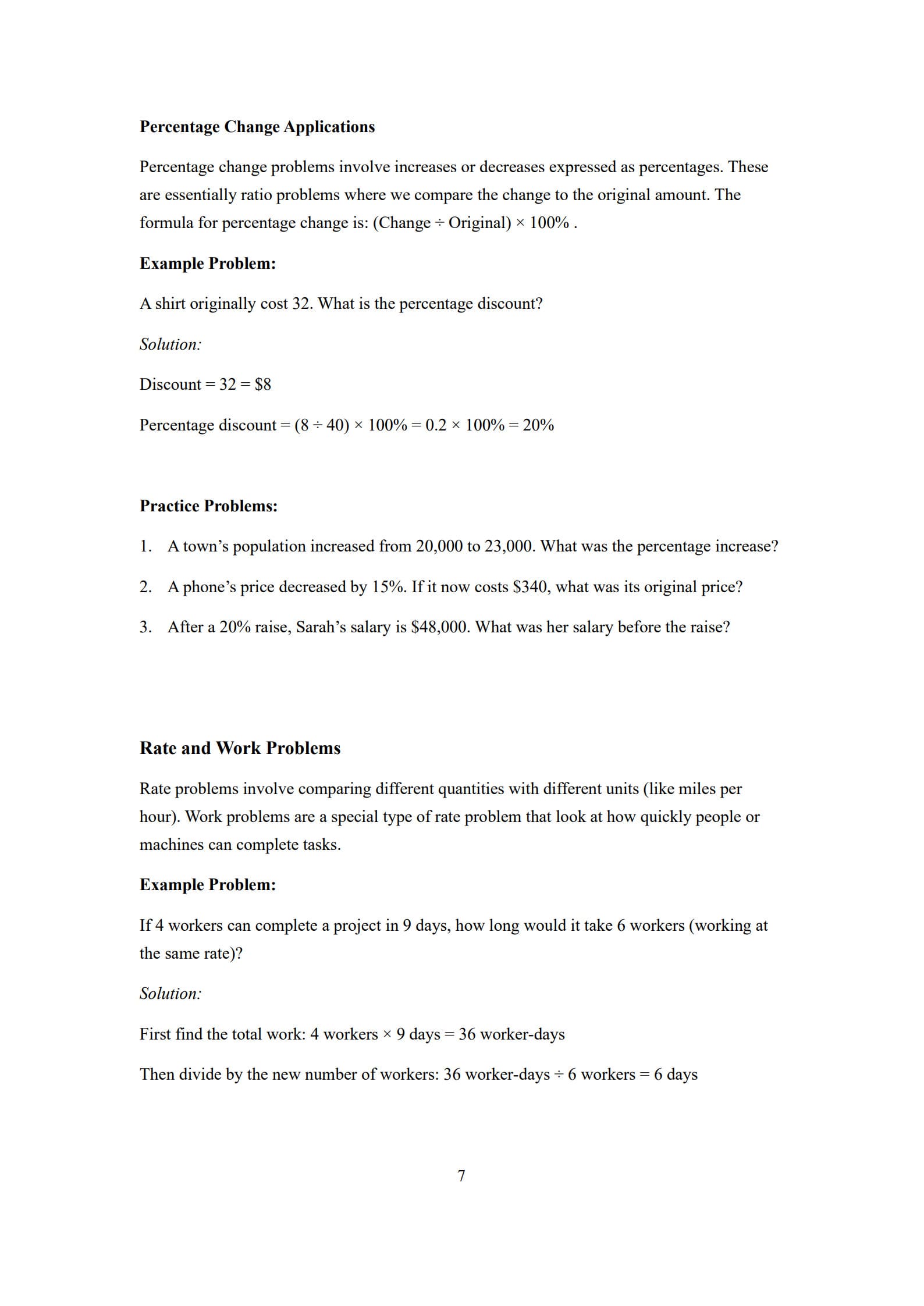
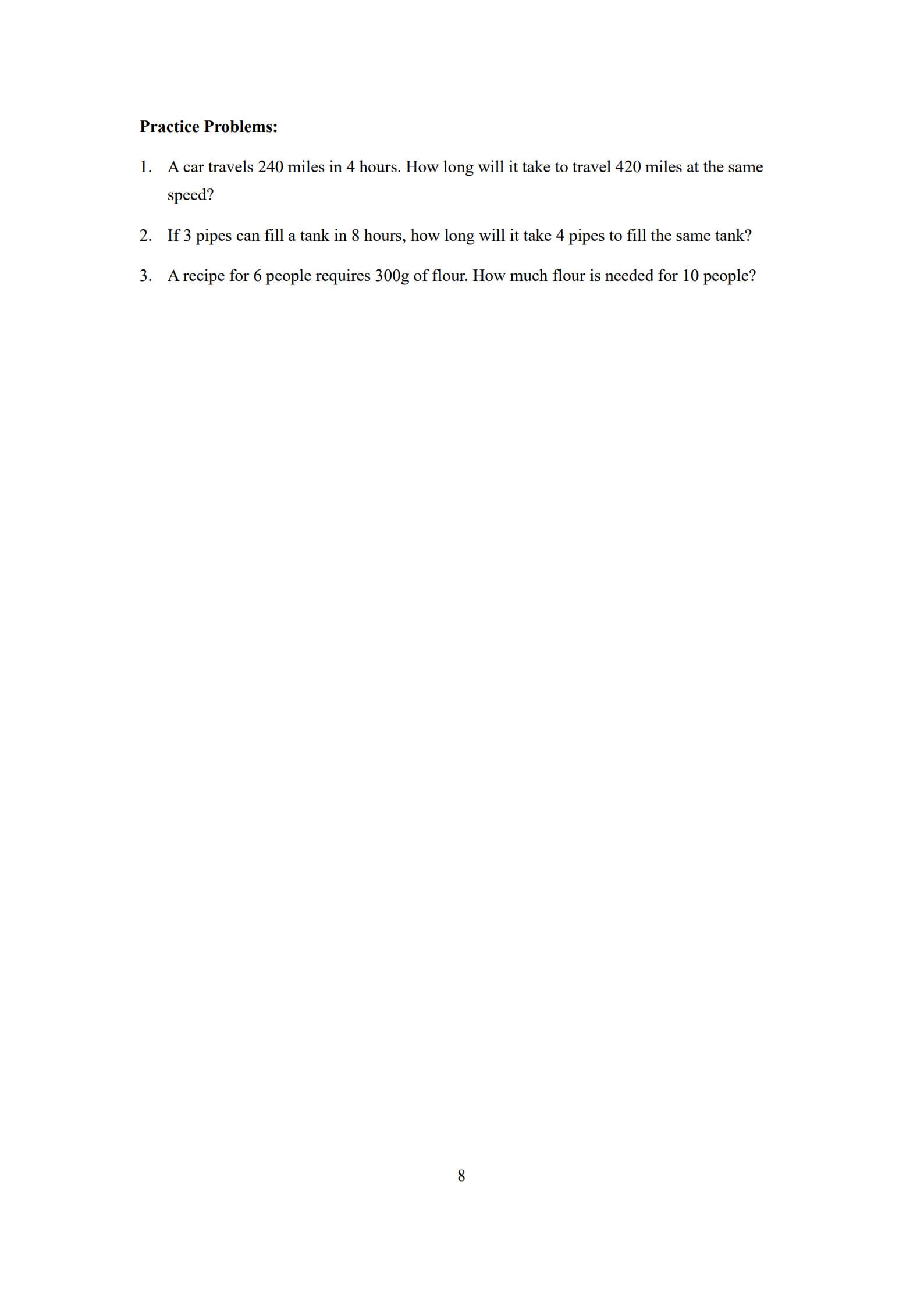
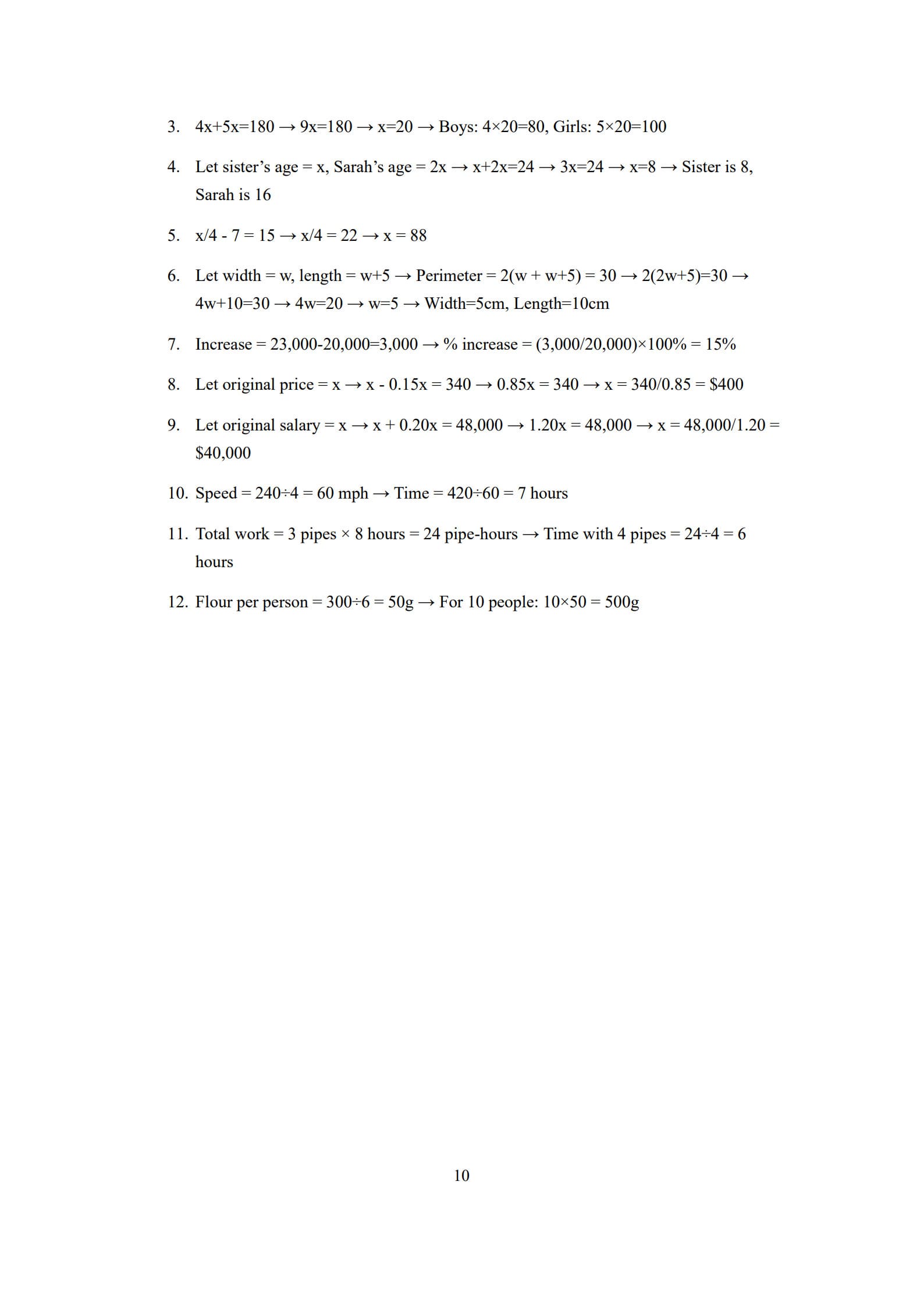
These exercises teach learners to interpret answers based on context—a skill vital for standardized tests and daily decision-making. The template also includes percentage change and rate problems, like calculating travel time (240 miles in 4 hours → speed=60 mph → 420 miles takes 7 hours). By connecting math to real scenarios, the template makes advanced concepts accessible.
How to Use the Template on PDF Agile
PDF Agile’s template turns static problems into interactive learning experiences. Follow these steps to get started:
Step 1: Access the Multiplication and Division Word Problems Template
Open the PDF Agile app and navigate to the Template Library. Search for “Multiplication and Division Word Problems” and click “Use Template.” The template is from beginner to advanced sections, including examples, practice problems, and answer keys.
Step 2: Customize for Your Needs
Personalize the template by adding your name, date, or notes. Use the built-in highlighting and drawing tools to mark keywords, sketch arrays, or annotate solutions. For group learning, duplicate pages to create worksheets for different skill levels.
Step 3: Solve and Check Answers
Work through each problem sequentially. The template’s answer key allows self-assessment or instructor-led review. For multi-step problems, use the blank spaces to show your work, ensuring clarity and logical flow.
Step 4: Save and Share
Export your completed worksheet as a PDF or print it directly. Share via email or cloud storage for collaborative learning. PDF Agile’s digital signature feature also lets educators validate completed work.
Tip: Use the app’s “Add Page” feature to create bonus problems based on the template’s structure, reinforcing concepts through repetition.
Conclusion
Multiplication and division word problems are more than math exercises—they are tools for developing analytical thinking. PDF Agile’s template simplifies this journey by offering a structured, visually appealing, and practical resource. From arrays and tape diagrams to multi-step challenges and ratio applications, the template covers every skill level while emphasizing real-world relevance.
By integrating this template into your learning routine, you’ll not only improve math fluency but also cultivate problem-solving strategies that extend beyond the classroom. Whether you’re a student aiming for mastery or an educator seeking a reliable teaching aid, PDF Agile’s template ensures that every problem becomes an opportunity for growth. Explore it today and discover how easy it is to turn word problems into wins.