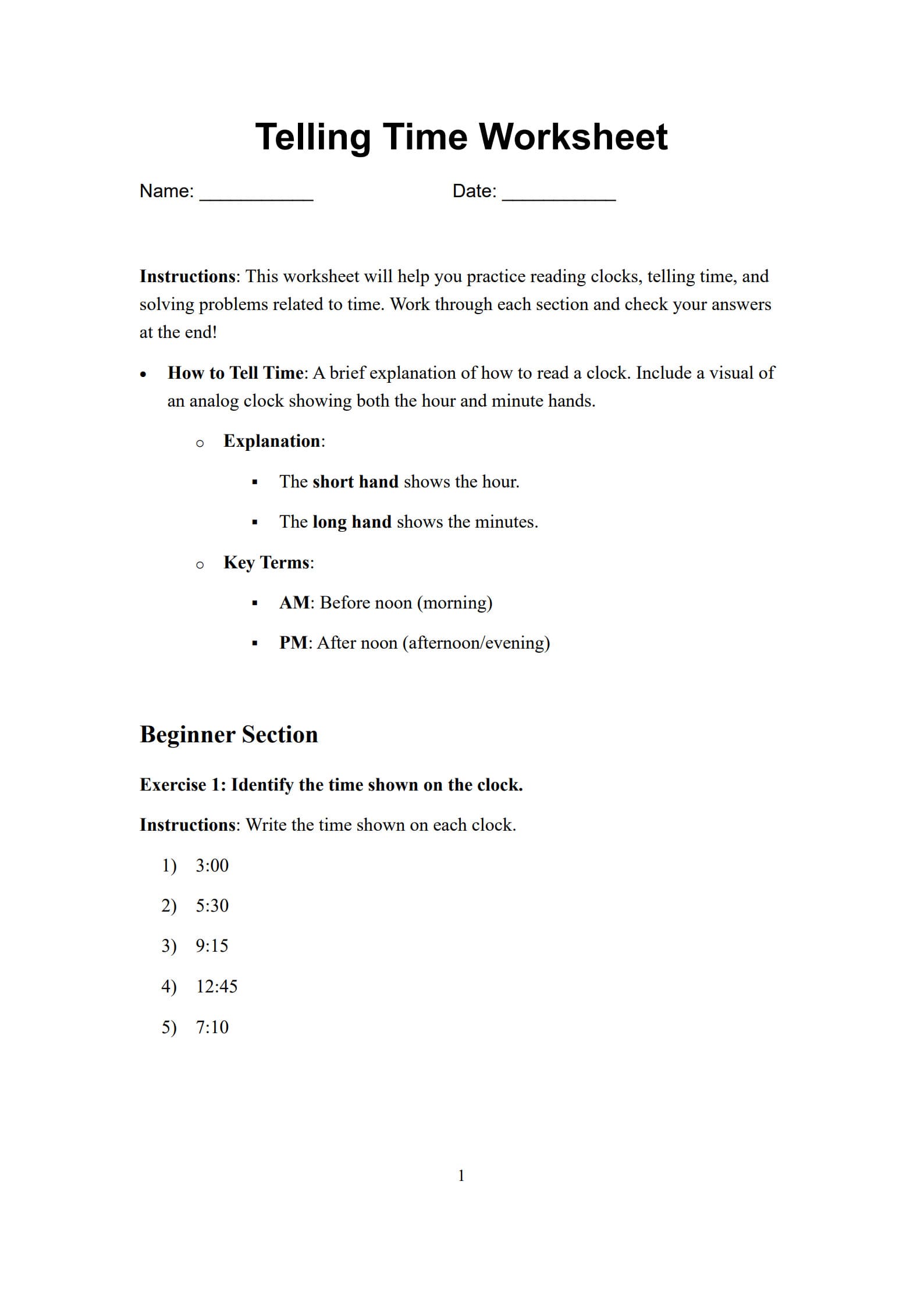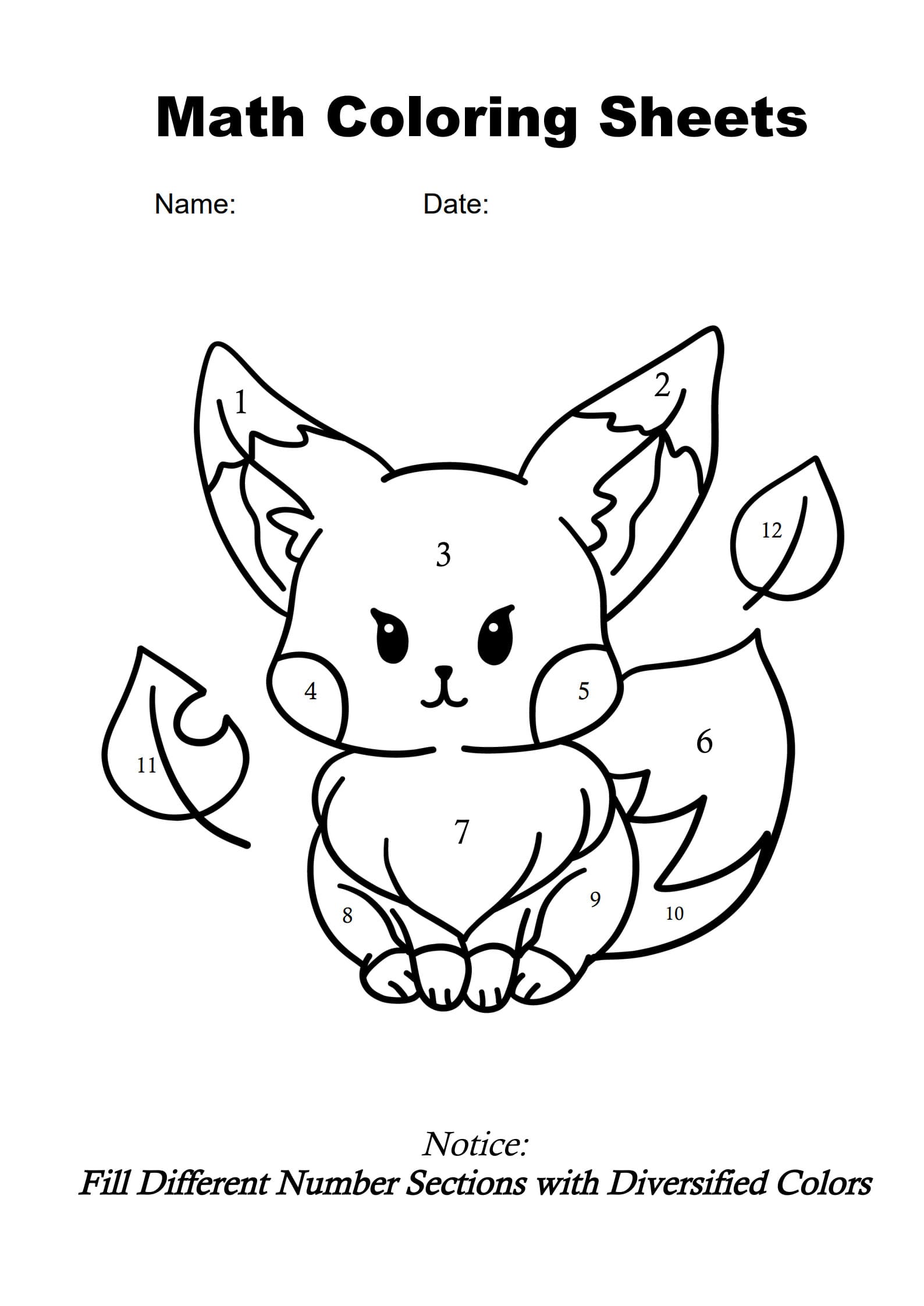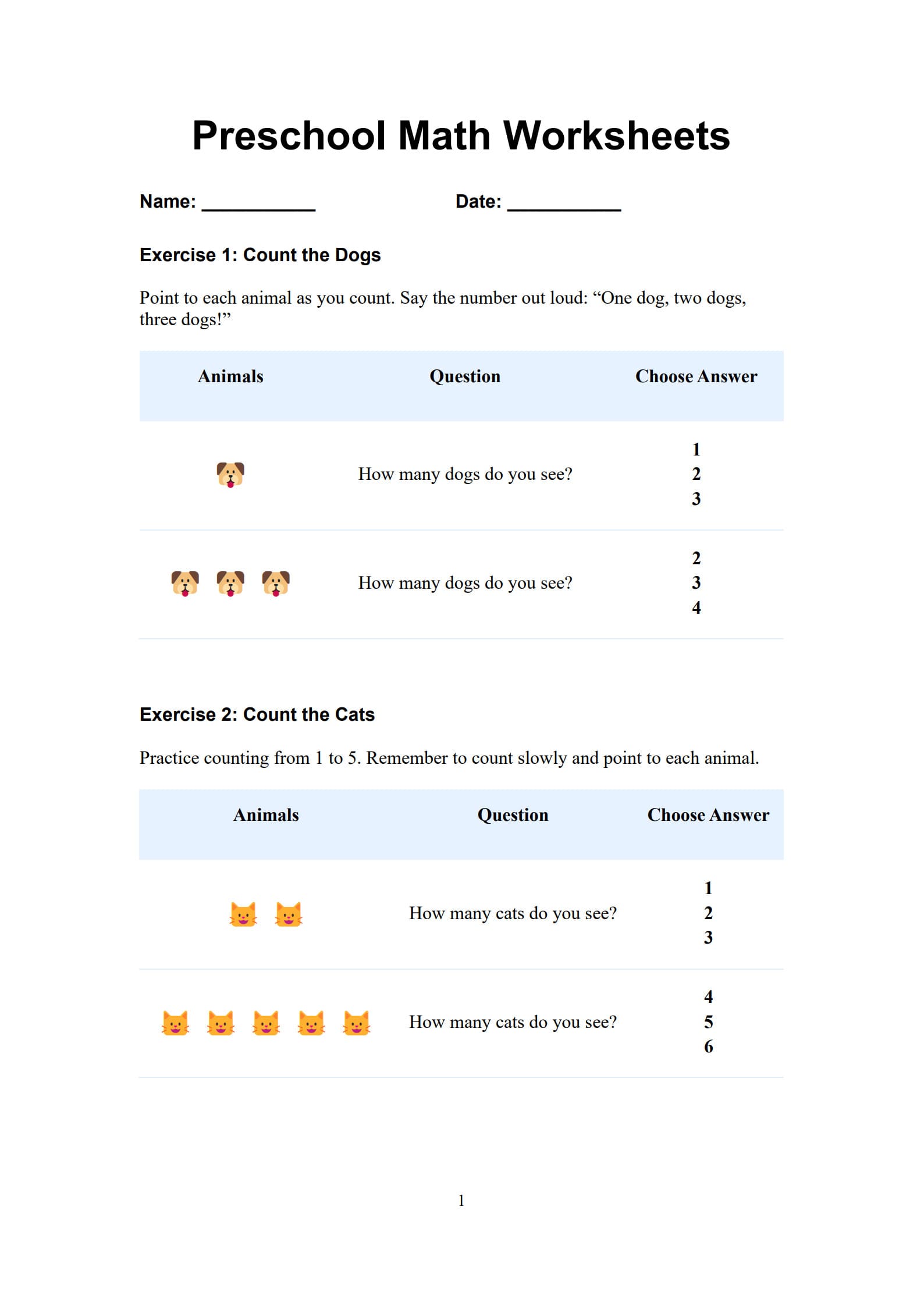


Welcome to PDF Agile, where learning meets innovation! We are thrilled to introduce our specially designed Kindergarten Math Worksheet template, a comprehensive tool crafted to lay a strong mathematical foundation for young learners. This template transforms fundamental math concepts into a series of engaging, playful activities. Whether you are a parent seeking to supplement your child’s education or a teacher looking for structured classroom resources, our ready-to-use PDF provides a seamless experience. It covers everything from number recognition to simple problem-solving, ensuring a holistic approach to early math education. By integrating this template into your routine, you turn everyday moments into valuable learning opportunities, making math both accessible and enjoyable for kindergarteners.
How Can Beginner-Level Kindergarten Math Activities Build a Strong Foundation?
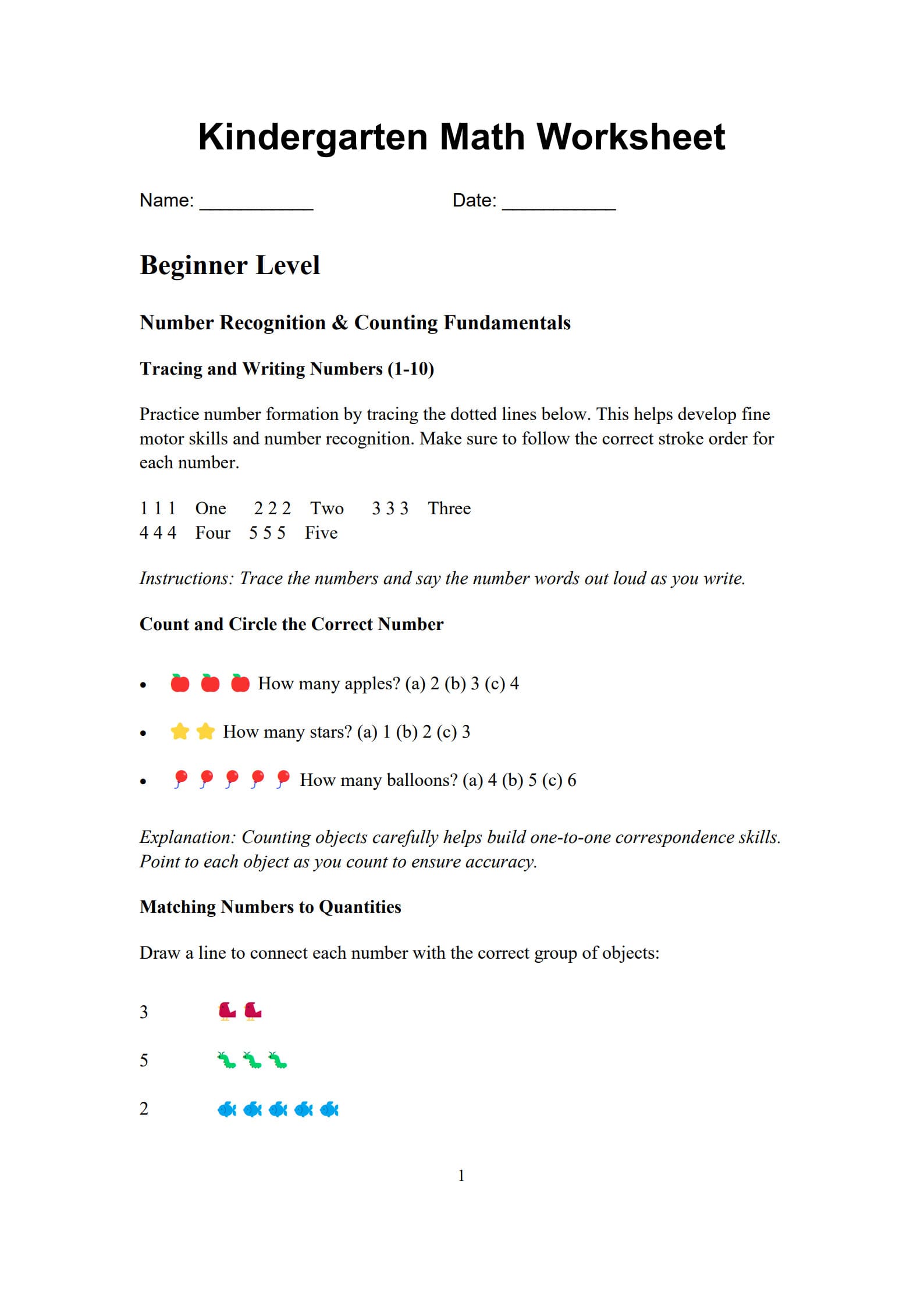
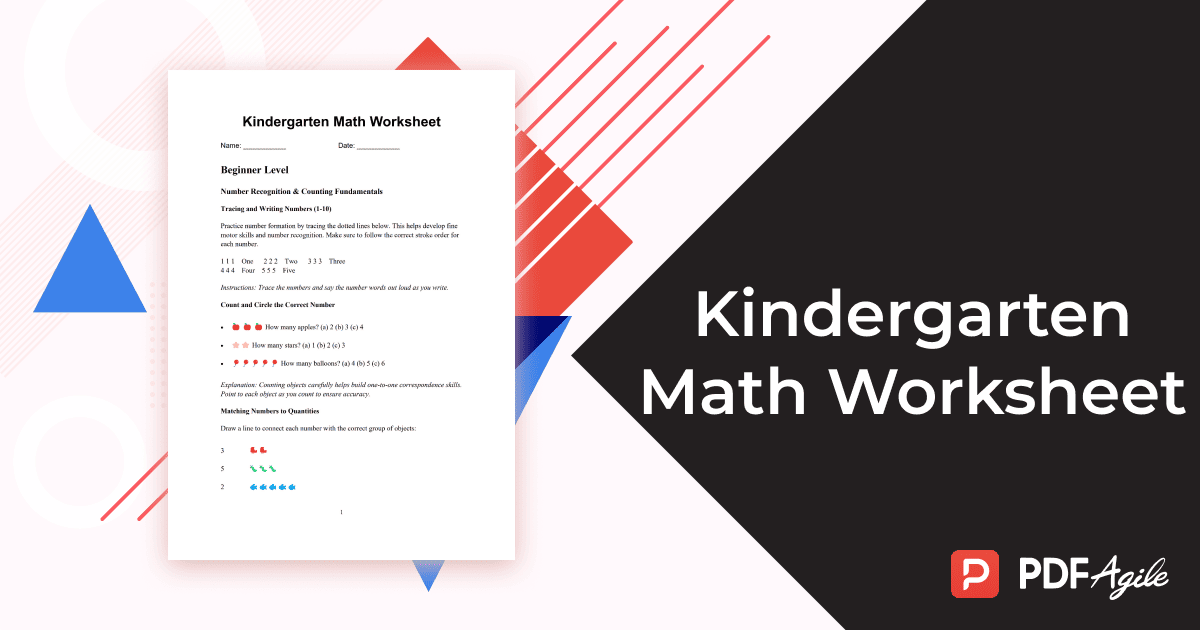
What is the first step in a child’s mathematical journey? Our preschool math worksheets PDF begin with essential beginner activities designed to build confidence and foundational skills. The initial section focuses on Number Recognition and Counting Fundamentals, which are critical for early development. For instance, the “Tracing and Writing Numbers (1-10)” exercise helps children practice number formation by following dotted lines. This activity is more than just writing; it develops fine motor skills and reinforces number recognition. As recommended in the worksheet, encourage your child to say the number words aloud while tracing—this multisensory approach enhances memory and understanding.
Next, the “Count and Circle the Correct Number” activity uses familiar objects like apples, stars, and balloons to teach one-to-one correspondence. For example, when asked “How many apples?” with options (a) 2, (b) 3, or (c) 4, children learn to count carefully and identify the correct quantity. This practical application makes abstract numbers tangible. Similarly, “Matching Numbers to Quantities” requires drawing lines to connect numerals like 3 or 5 with corresponding object groups, reinforcing the relationship between symbols and amounts. These kindergarten math activities are thoughtfully sequenced to ensure that learning is incremental, stress-free, and effective, setting a positive tone for more complex topics.
What Role Do Kindergarten Math Worksheets Addition and Subtraction Play in Skill Development?
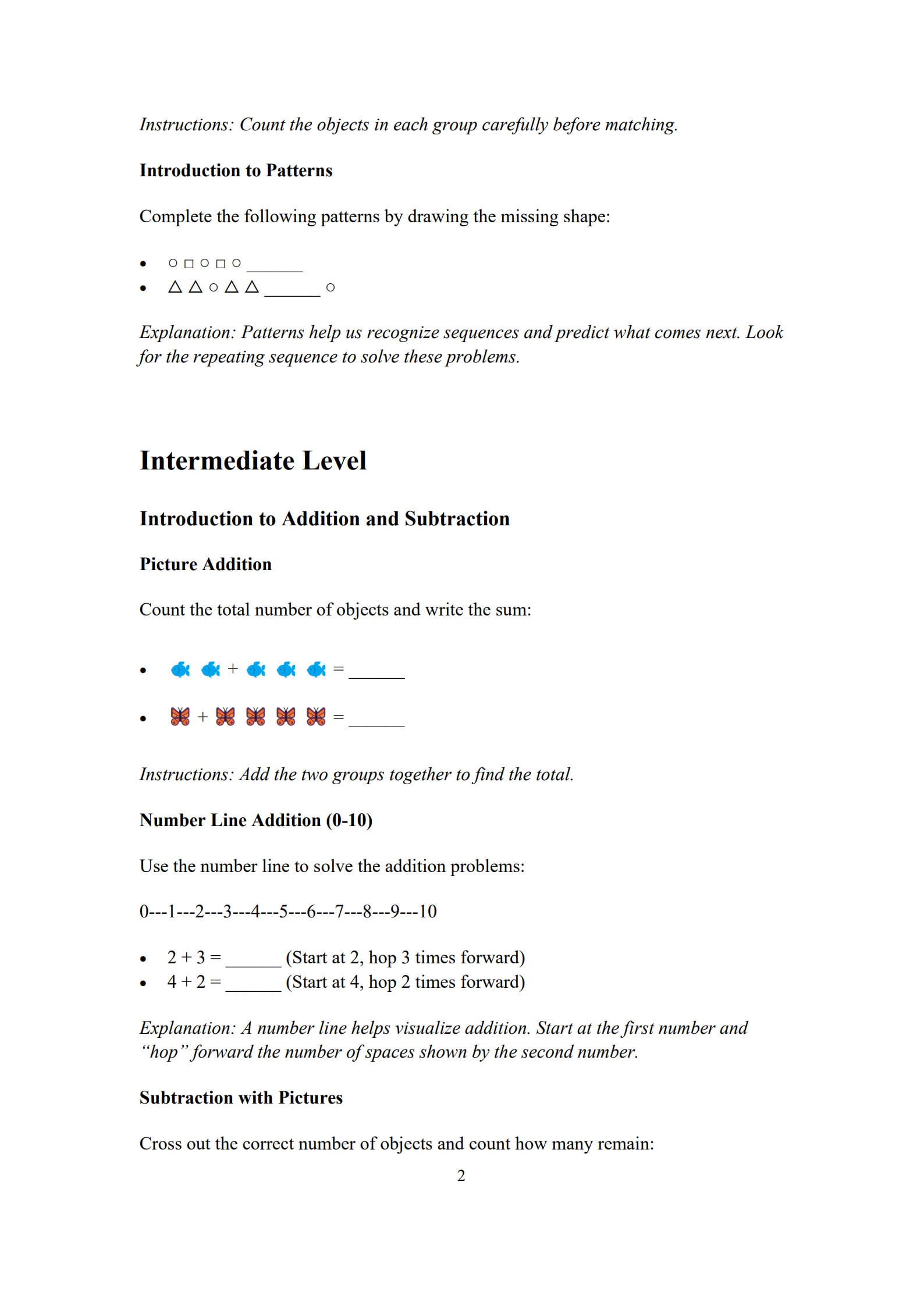
How do children transition from counting to calculating? The intermediate section of our worksheet introduces addition and subtraction through visual and interactive methods. Picture Addition, for example, presents groups of objects like fish or butterflies. Children count the total items, such as 2 fish + 3 fish, and write the sum (5). This hands-on approach simplifies abstract concepts by allowing learners to see and manipulate quantities, making kindergarten math worksheets addition both intuitive and engaging.
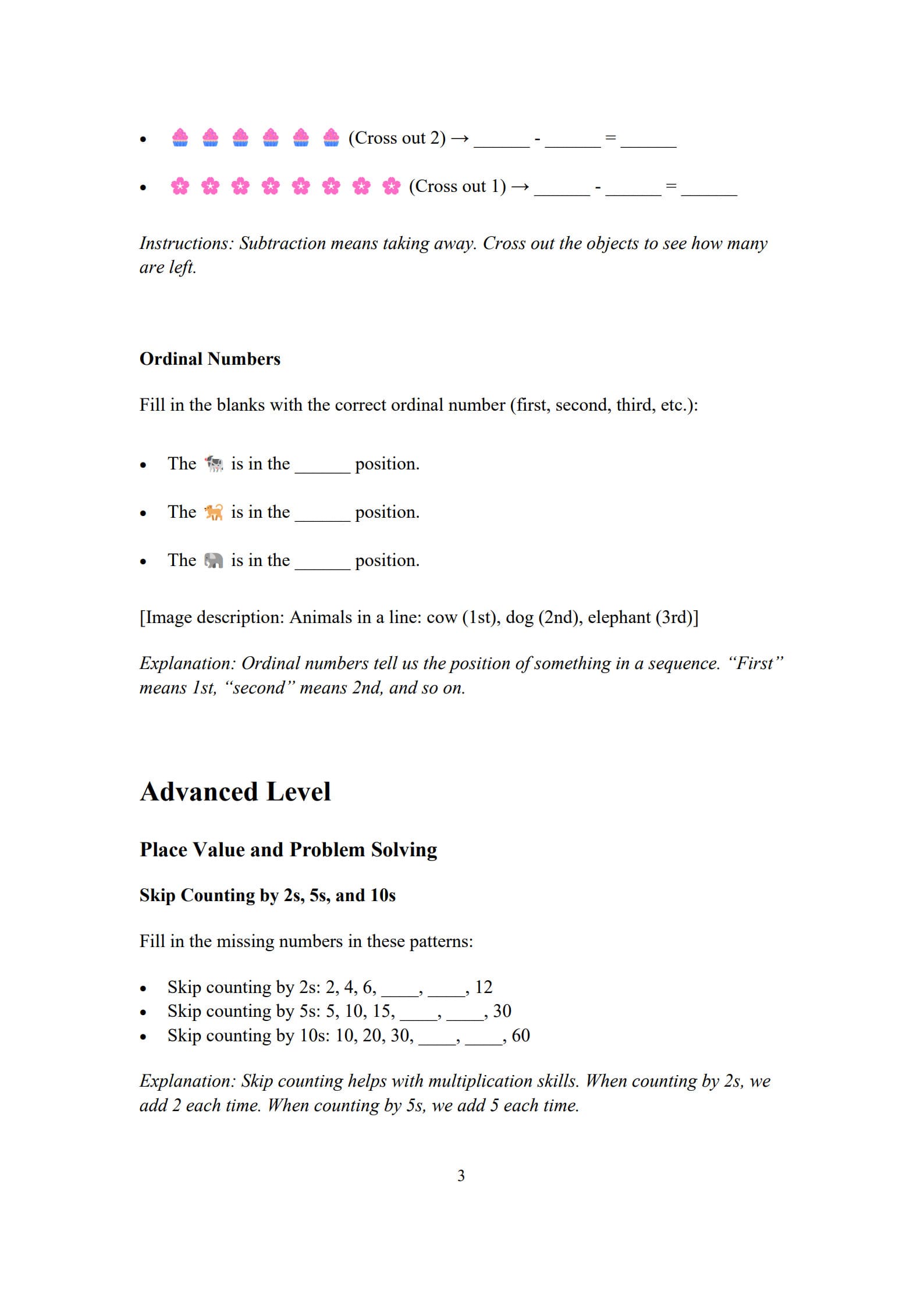
Subtraction is introduced equally creatively with “Subtraction with Pictures,” where children cross out objects to find the remainder. If there are 6 cupcakes and the instruction is to cross out 2, they visually grasp that 6 - 2 = 4. Additionally, the Number Line Addition exercise (e.g., 2+3) teaches kids to “hop” forward on a numbered line, fostering a deeper understanding of operations beyond mere memorization. These activities are complemented by Ordinal Numbers practice, where children identify positions like first, second, and third using illustrated sequences of animals. By integrating these elements, our worksheets ensure that addition and subtraction are not just learned but experienced, building critical thinking and problem-solving skills in a supportive way.
Advancing Skills with Structured Challenges
As children master basics, our worksheet progresses to advanced topics like Place Value and Skip Counting. This section is designed to challenge young minds while reinforcing previous learning. For example, Skip Counting by 2s, 5s, and 10s encourages pattern recognition—a precursor to multiplication. The sequence 2, 4, 6, _, 12 prompts learners to identify missing numbers (8), enhancing their numerical fluency.
To illustrate the worksheet’s comprehensive coverage, here is a breakdown of its core components:
| Level | Key Skills | Example Activity |
|---|---|---|
| Beginner | Number recognition, counting | Tracing numbers 1-10; counting objects |
| Intermediate | Addition, subtraction, sequencing | Picture addition; ordinal numbers |
| Advanced | Skip counting, problem-solving | Comparing numbers (e.g., 9 < 11) |
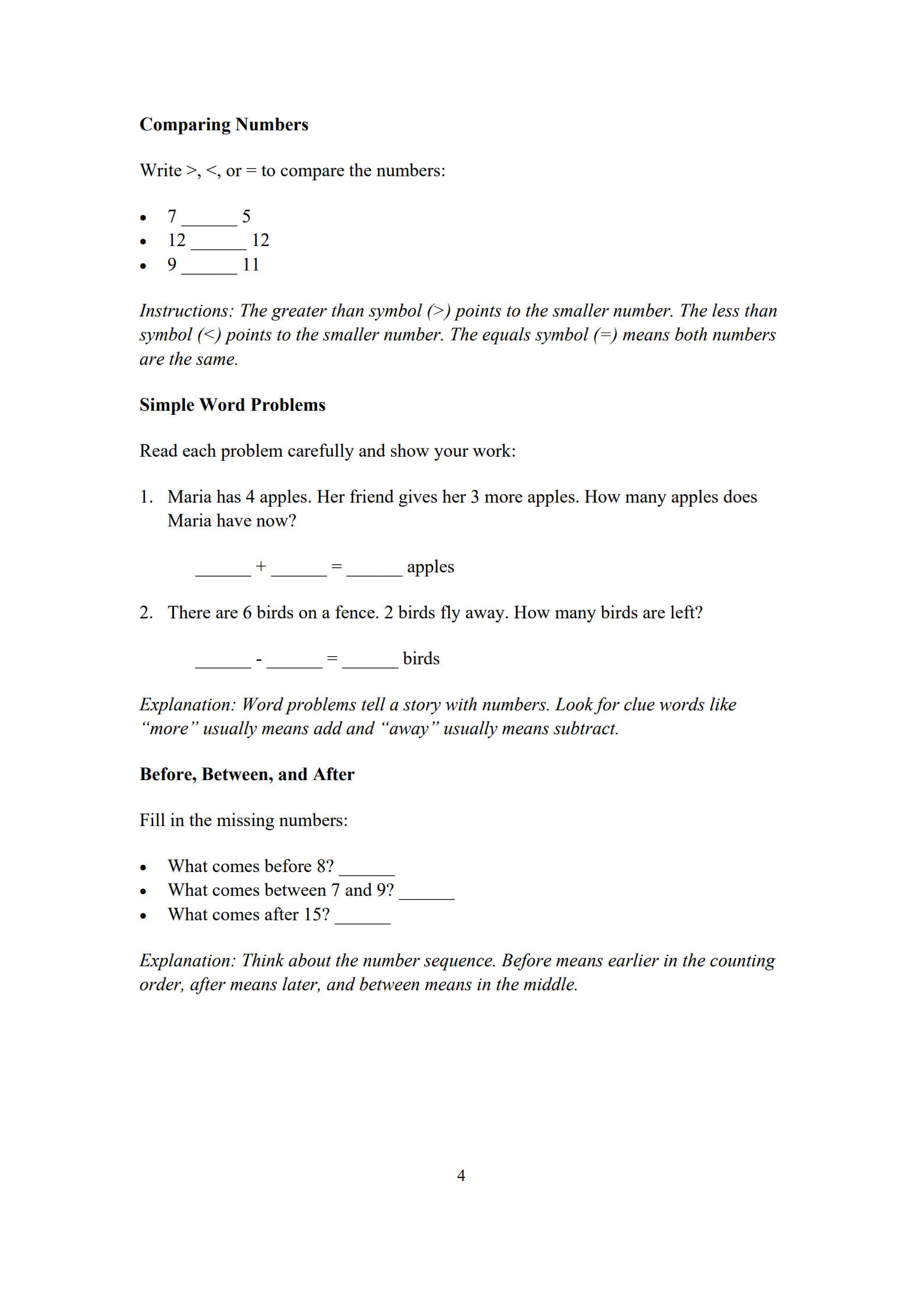
Furthermore, Simple Word Problems contextualize math in real-life scenarios, such as determining how many apples Maria has after receiving more. This teaches children to apply skills in varied situations, while exercises like “Before, Between, and After” (e.g., what comes between 7 and 9?) strengthen their grasp of number sequences. Each activity is structured to build confidence through gradual complexity, ensuring that learning remains dynamic and effective.
Maximizing Learning with Free Kindergarten Math Worksheets
Why are free kindergarten math worksheets a valuable resource for every family? Accessibility is key to equitable education, and our template is designed to be both high-quality and freely available. The activities within—from counting balloons to solving word problems—are crafted by educators to align with early learning standards. For parents, this means no prior teaching experience is necessary; the worksheet guides you and your child through each step, with clear instructions and examples.
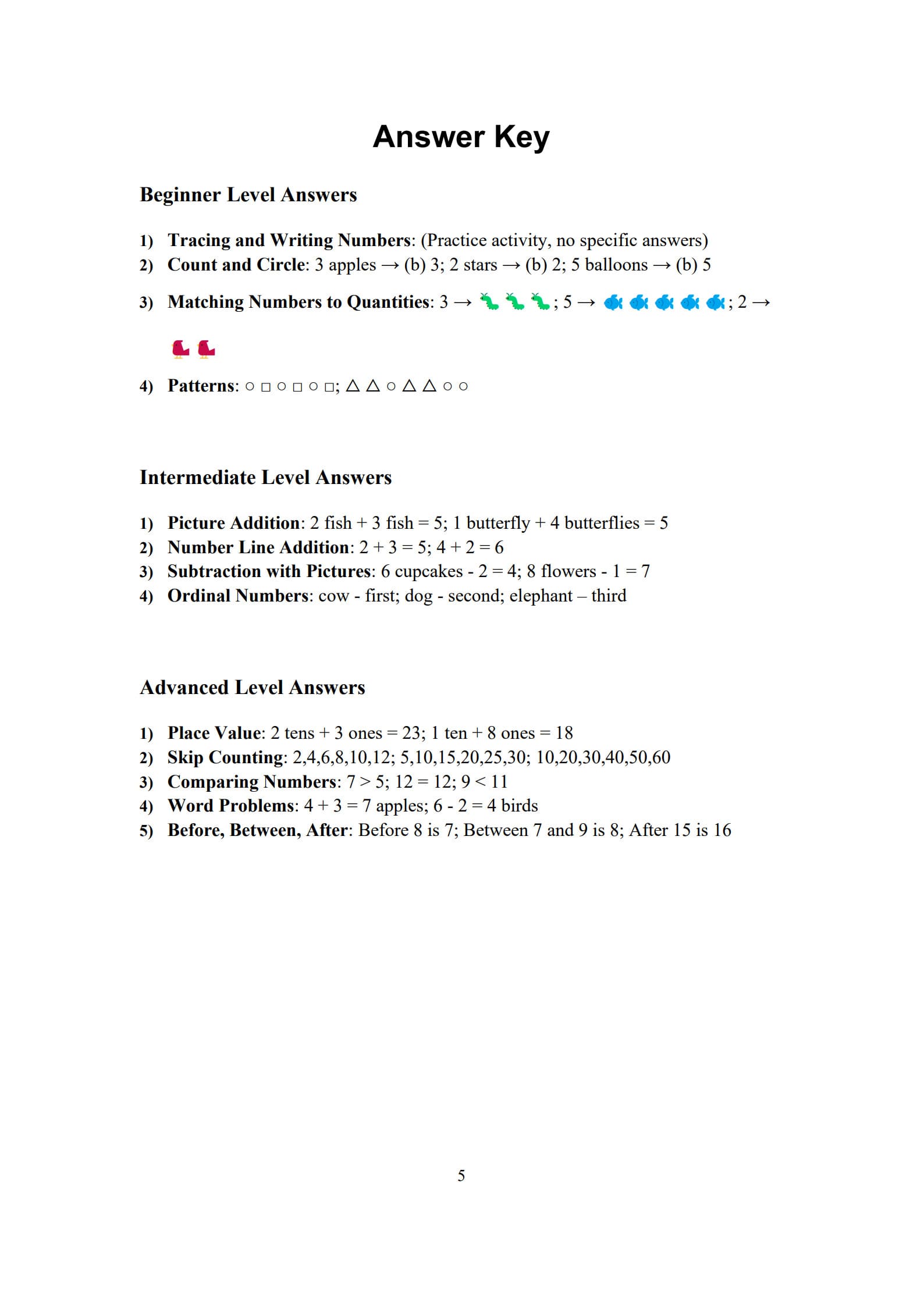
In classroom settings, teachers can use these worksheets for group lessons or individual practice. The Answer Key included in the template allows for quick assessment, saving time while providing insights into each child’s progress. Whether used as a core resource or a supplementary tool, these free kindergarten math worksheets offer flexibility and convenience. They can be printed for hands-on practice or used digitally on tablets, making them ideal for modern learning environments. By incorporating diverse exercises like pattern completion and number comparisons, the template keeps children motivated and engaged, turning math practice into an exciting adventure.
How to Use This Template on PDF Agile
Using our Kindergarten Math Worksheet template in PDF Agile is simple and efficient. Follow these steps to get started:
Step 1: Access the Kindergarten Math Worksheet Template
Visit the PDF Agile Template Library and search for “Kindergarten Math Worksheet.” Click “Use Template” to instantly open the pre-designed PDF in our editor. The template is fully customizable, allowing you to adjust colors, fonts, or add your child’s name before beginning.
Step 2: Personalize the Content
Replace any placeholder text with your child’s details, such as name and date. You can also modify examples to include their favorite objects (e.g., swapping apples for toys) to increase engagement. The intuitive drag-and-drop interface makes editing effortless, even for first-time users.
Step 3: Complete the Activities
Work through the worksheet section by section, using PDF Agile’s annotation tools to draw, circle, or write answers directly on the PDF. For tracing exercises, the highlighter tool can guide little hands, while the shape tool helps in pattern activities.
Step 4: Save and Share
Once completed, save the worksheet to your device. You can also share it digitally with teachers or family members via email or link, ensuring seamless collaboration. For repeated practice, easily reset the template and print copies for future sessions.
Step 5: Track Progress
Use PDF Agile’s comment feature to note areas of improvement or success. This helps in monitoring your child’s development over time, making the template a dynamic part of their learning journey.
Conclusion
In summary, our Kindergarten Math Worksheet template on PDF Agile is more than just a set of exercises—it’s a gateway to nurturing a lifelong love for math. By blending essential skills with playful activities, it empowers children to explore numbers, patterns, and operations with confidence. The structured progression from beginner to advanced levels ensures that learning is both challenging and rewarding, while the accessibility of a free PDF makes it an indispensable tool for every family and educator.
We encourage you to integrate this resource into your daily routine, whether as a morning warm-up or an evening review session. The joy of watching a child proudly circle the correct number of apples or solve their first word problem is unmatched. With PDF Agile, you have everything you need to support that journey—anytime, anywhere. Start today, and discover how simple, engaging kindergarten math activities can shape the problem-solvers of tomorrow.