

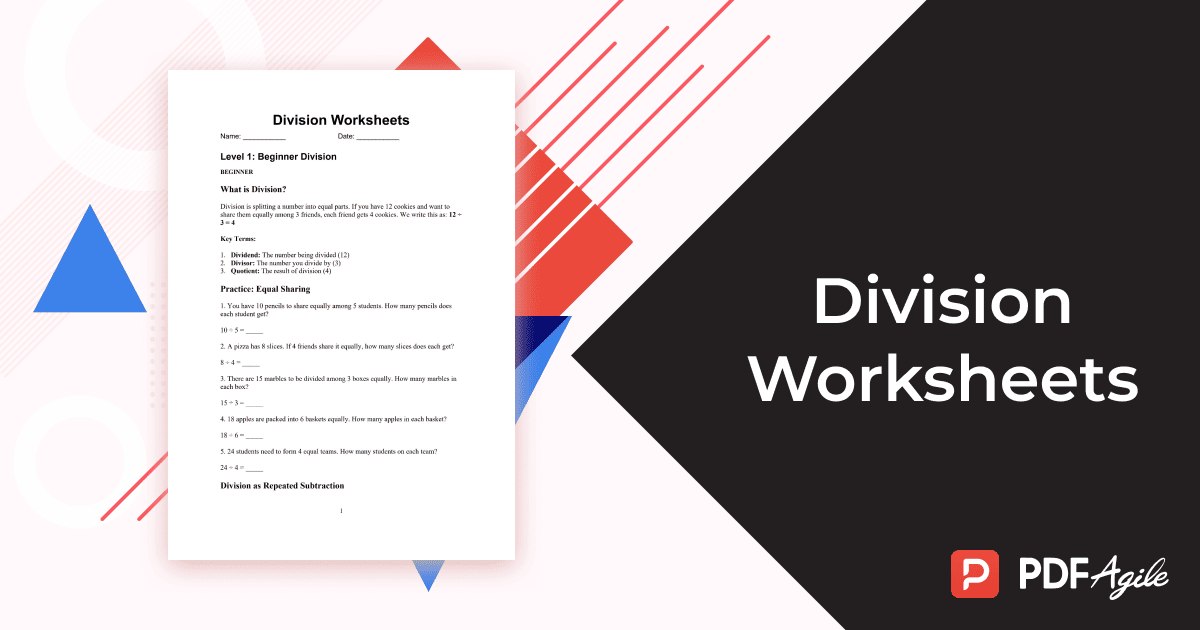
Mathematics is a journey of discovery, and division is a cornerstone of numerical fluency. For educators, parents, and learners seeking structured yet creative resources, PDF Agile’s Division Worksheets template transforms abstract concepts into tangible skills. Whether you’re introducing division for the first time or reinforcing long division techniques, this template combines pedagogical rigor with real-world applications. In this essay, we’ll explore how the template’s content—drawn directly from its curated problems—can be leveraged to build confidence and mastery. Plus, we’ll guide you through using the template seamlessly in PDF Agile’s app. Let’s dive into the world of division!
Why Start with Simple Division Worksheets?
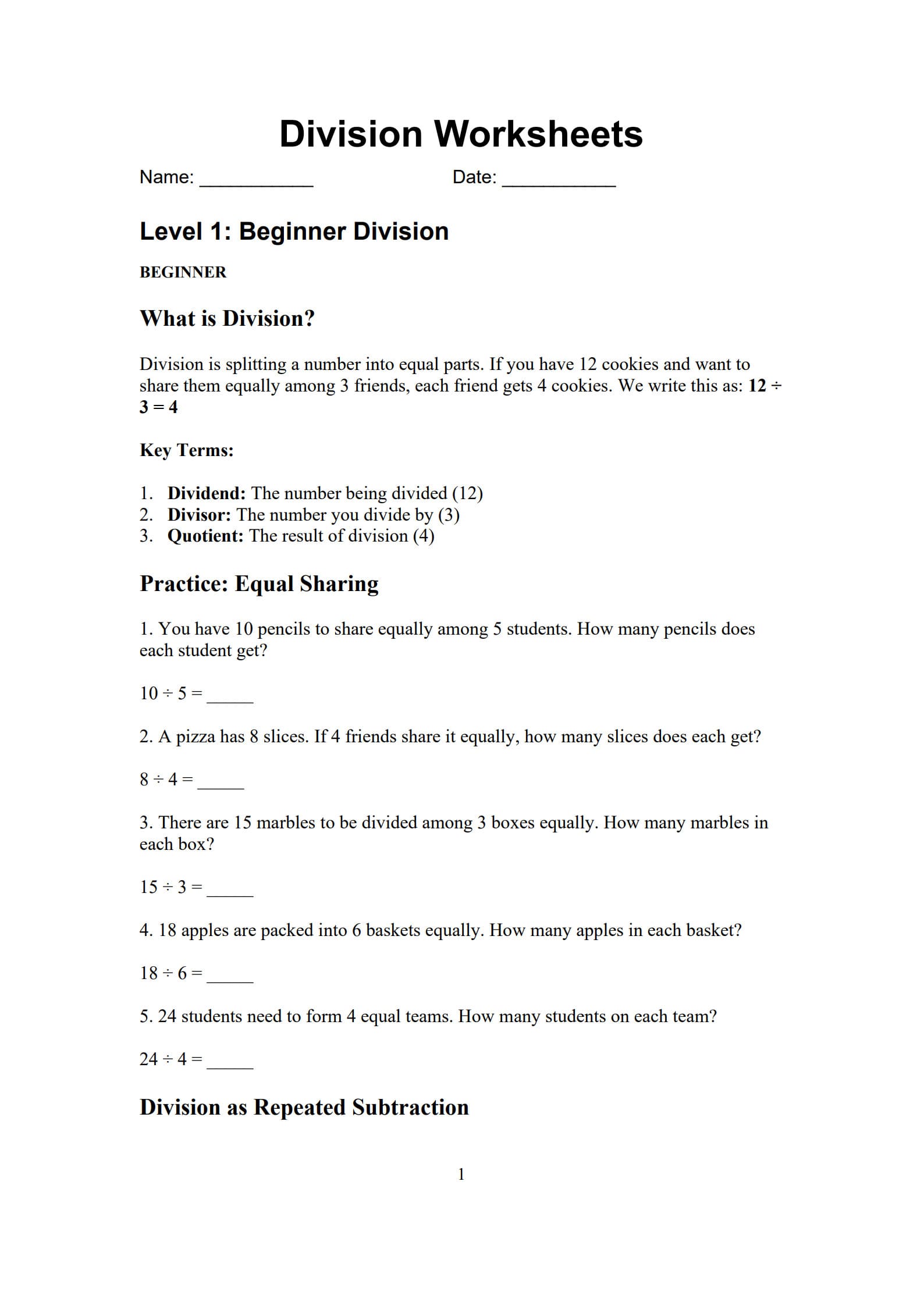
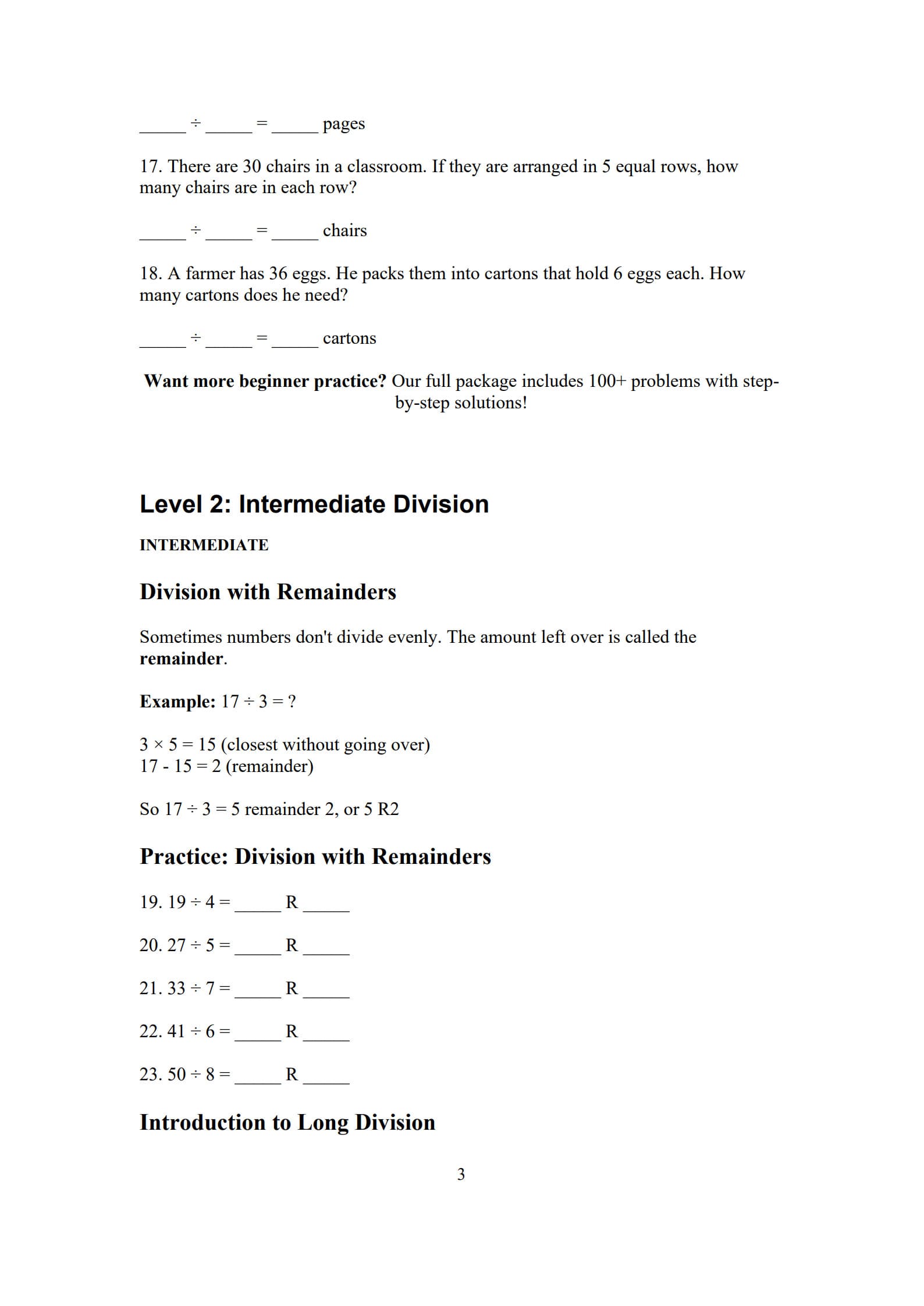
How does division relate to everyday life? The template’s beginner section answers this by framing division as "equal sharing." For example, one problem asks: "You have 10 pencils to share equally among 5 students. How many pencils does each get?"(10 ÷ 5 = ?). Such scenarios make abstract concepts relatable. The worksheet introduces key terms—dividend, divisor, and quotient—with clear definitions, ensuring learners grasp the vocabulary behind the operations.
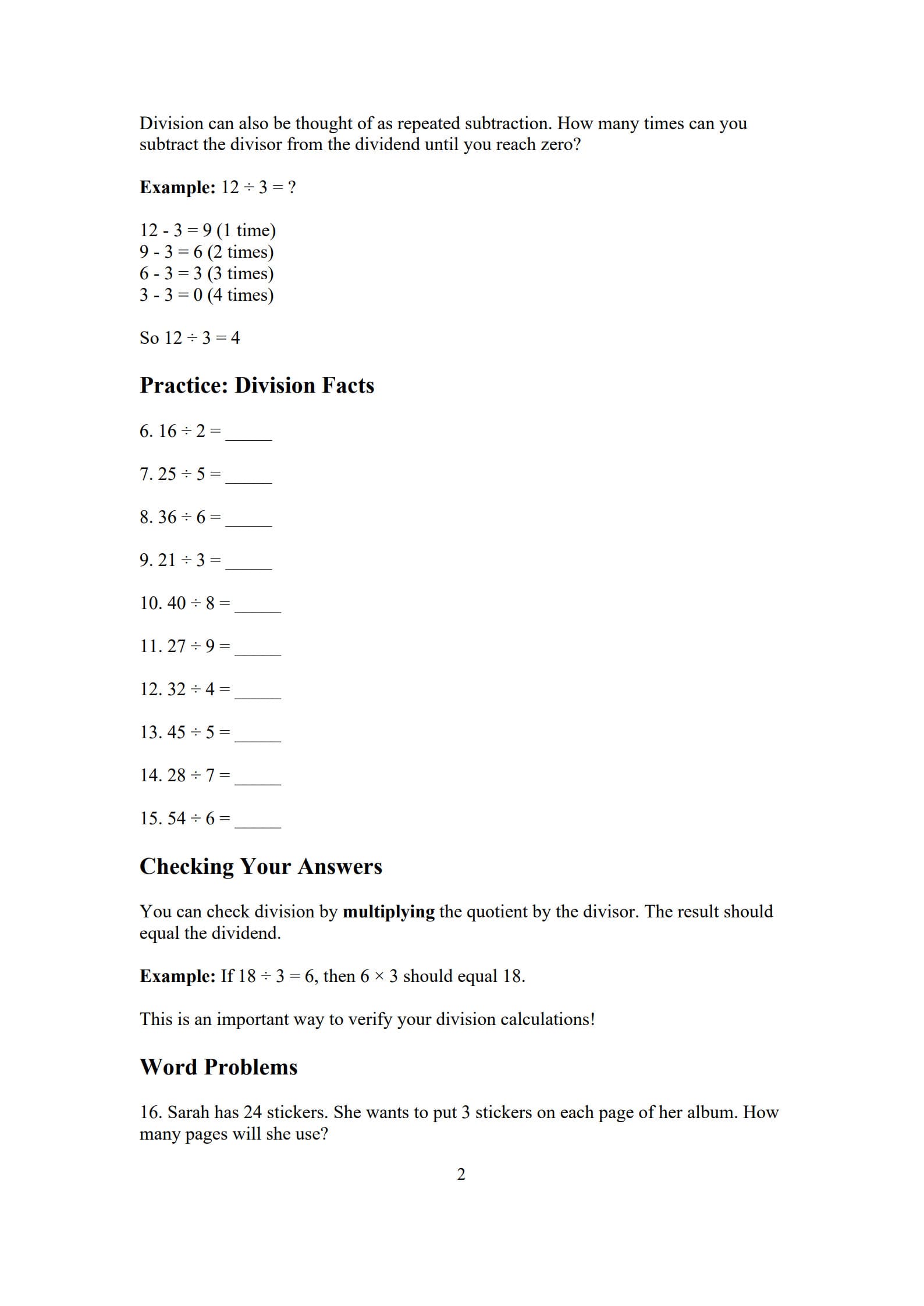
Another strength of these beginner division worksheets is their focus on repeated subtraction. For instance, 12 ÷ 3 is illustrated by subtracting 3 repeatedly until reaching zero: 12 – 3 = 9 (1 time), 9 – 3 = 6 (2 times), and so on. This visual approach reinforces division as inverse multiplication. With 15 practice problems—like dividing 24 students into 4 equal teams (24 ÷ 4 = ?)—the template ensures foundational fluency. These simple division worksheets are ideal for young learners, fostering confidence through incremental challenges.
Tackling Long Division Problems: From Basics to Complex Calculations
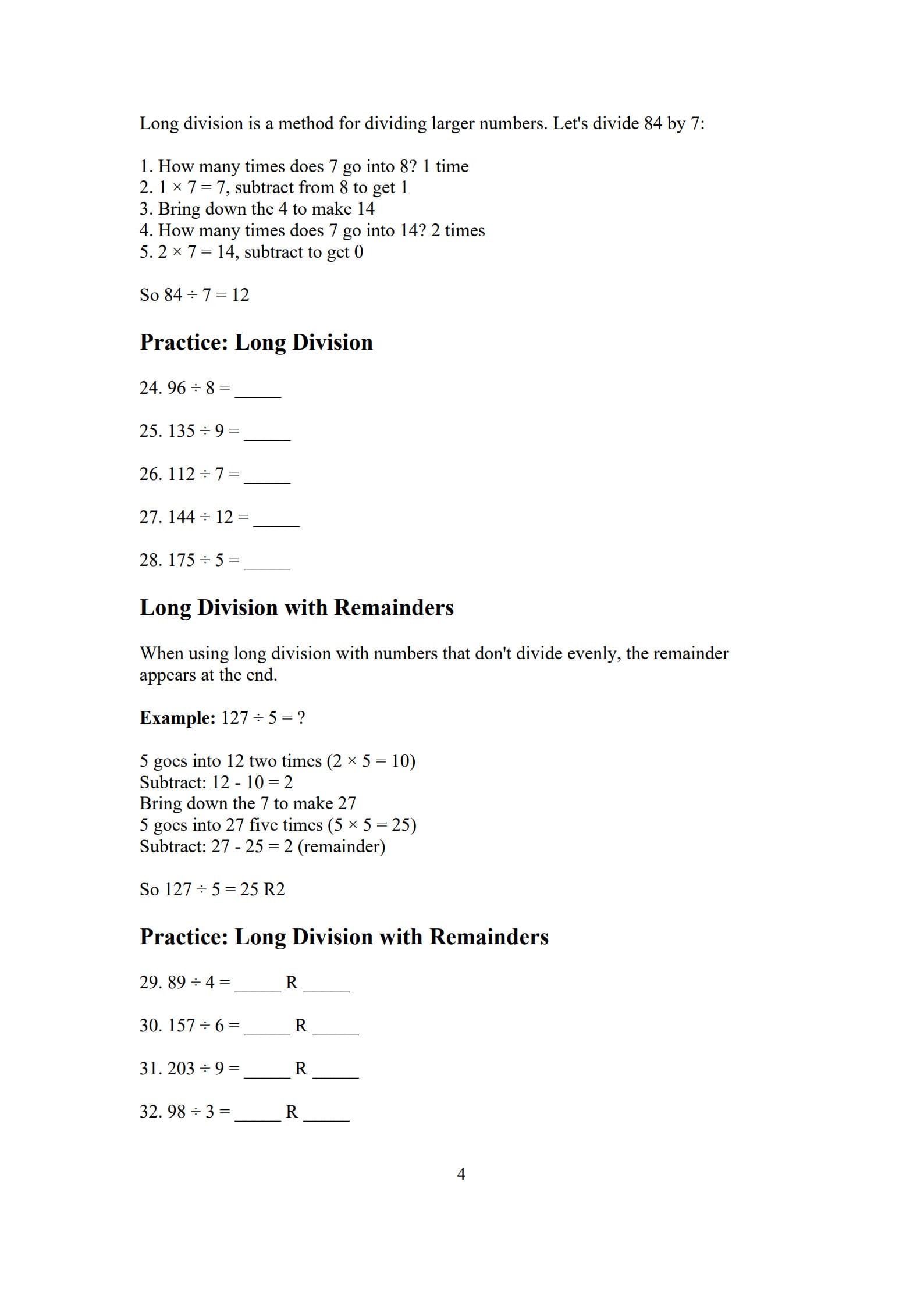
Long division often intimidates students, but the template breaks it into manageable steps. Take 84 ÷ 7: the worksheet guides learners to first ask, "How many times does 7 go into 8?" (1 time), then multiply, subtract, and bring down digits. This methodical approach demystifies the process. The intermediate section includes long division problems like 96 ÷ 8 and 135 ÷ 9, each reinforcing place value and estimation skills.
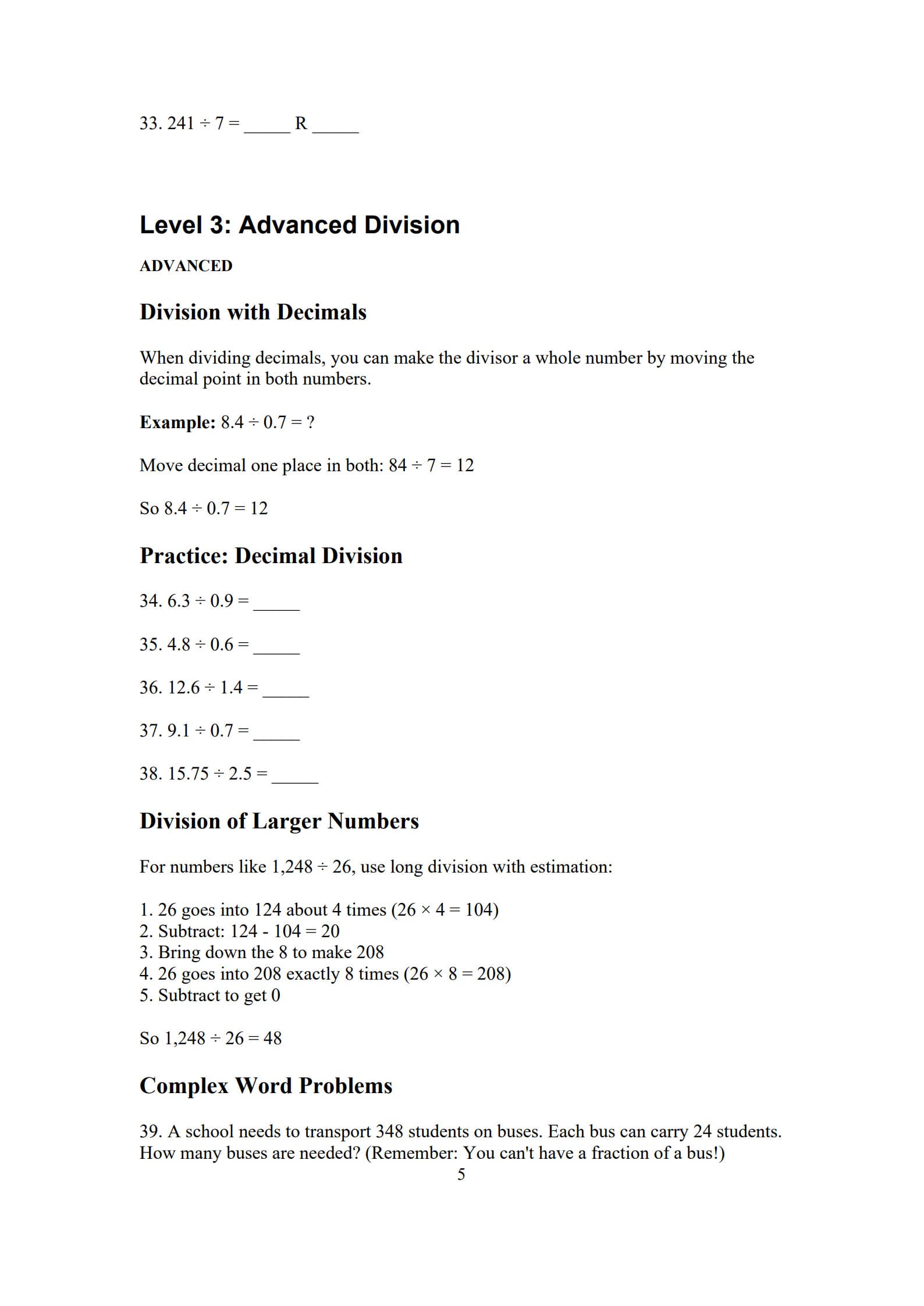
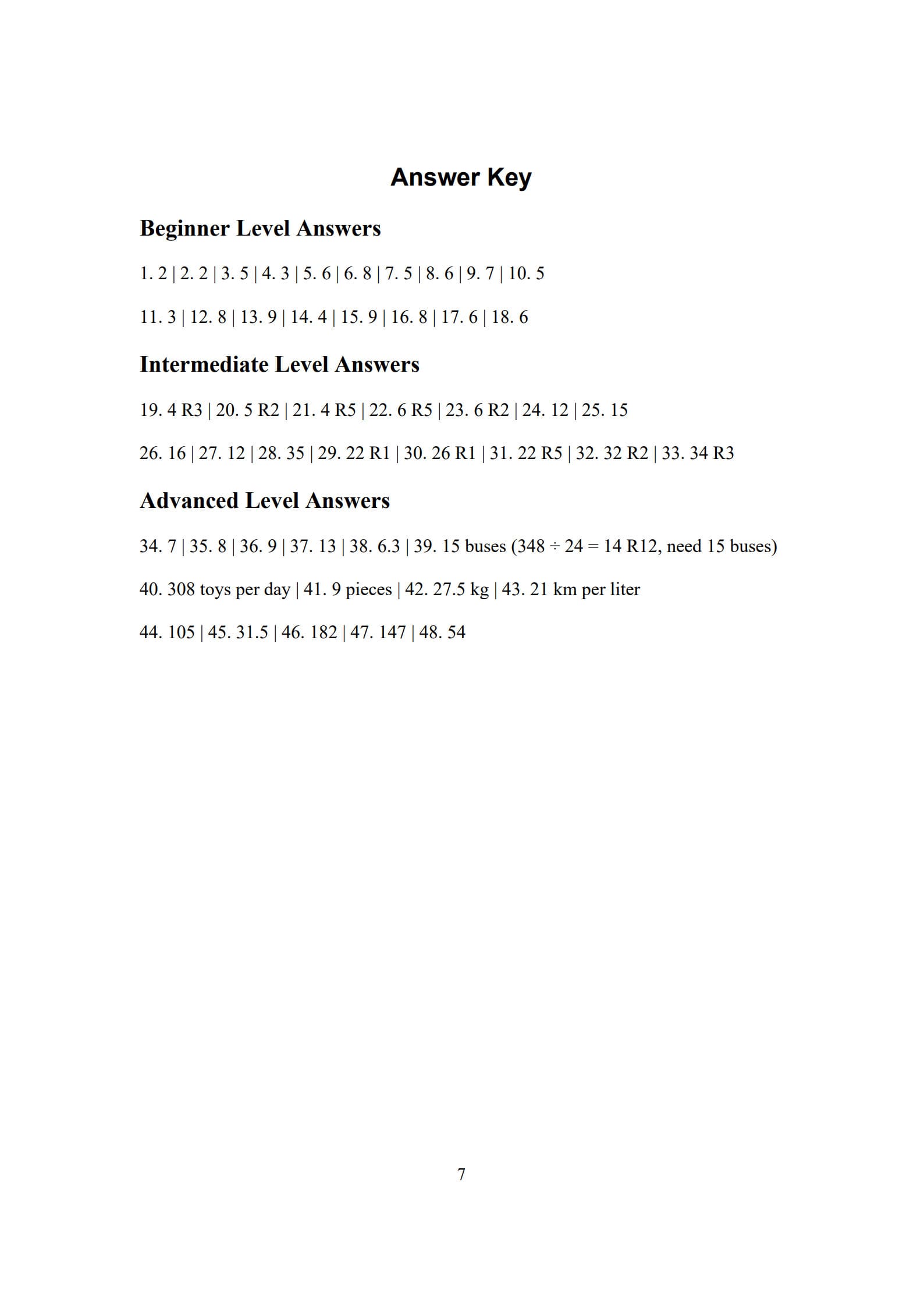
To enhance engagement, the template incorporates real-world contexts. For example, "A school needs to transport 348 students on buses. Each bus carries 24 students. How many buses are needed?"(348 ÷ 24 = 14 R12, requiring 15 buses). Such division practice problems teach learners to interpret remainders practically. The included answer key allows self-assessment, making it easy to track progress. By combining structured exercises with relatable scenarios, these worksheets turn complex calculations into achievable goals.
Level Up with Division Practice Problems: Decimals, Remainders, and Critical Thinking
As learners advance, the template introduces decimals and remainders. For decimal division, it simplifies problems like 8.4 ÷ 0.7 by moving decimal points (84 ÷ 7 = 12). Similarly, 15.75 ÷ 2.5 becomes 157.5 ÷ 25 = 6.3, emphasizing flexibility with numbers. These division practice problems bridge arithmetic to real-life applications, such as calculating fuel efficiency (346.5 km ÷ 16.5 liters = 21 km per liter).
A table summarizing problem types can help visualize this progression:
| Problem Type | Example from Template | Key Skill Developed |
|---|---|---|
| Equal Sharing | 18 ÷ 6 = ? | Basic division fluency |
| Long Division | 112 ÷ 7 = ? | Multi-digit computation |
| Decimals | 12.6 ÷ 1.4 = ? | Decimal place value |
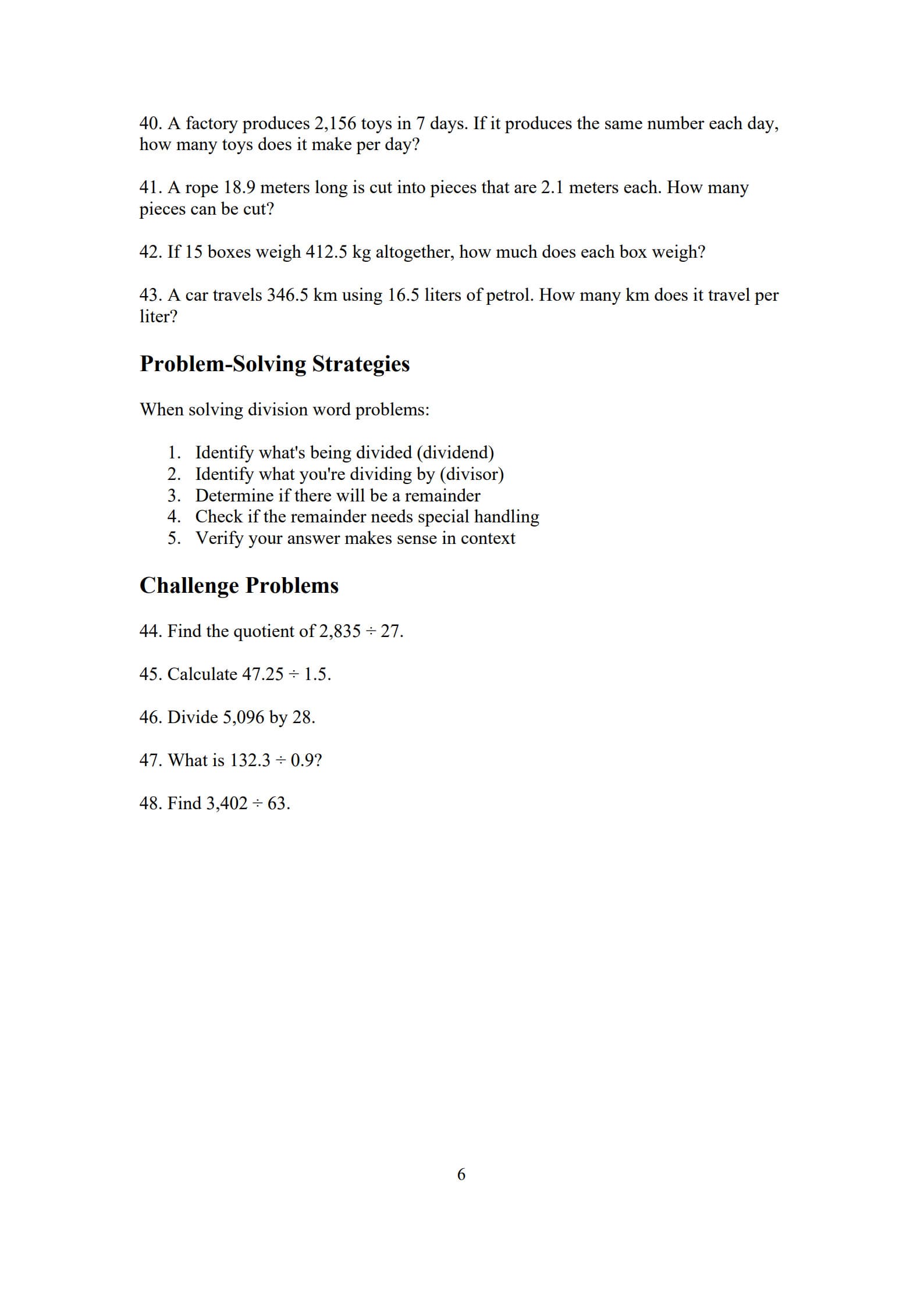
| Real-World Word Problems | 2,156 toys ÷ 7 days = ? | Contextual interpretation |
As free printable division worksheets, these resources offer accessibility without sacrificing depth.
Tips for Using the Template Effectively
To optimize the template, encourage learners to:
- Start with beginner problems to build confidence.
- Use the answer key for self-checking—e.g., verify 27 ÷ 9 = 3 by multiplying 3 × 9.
- Apply problem-solving strategies: Identify dividends/divisors, check remainders, and contextualize answers.
For educators, the template’s scaffolding—from simple division to multi-step challenges—supports differentiated instruction. The word problems, like dividing 18.9 meters of rope into 2.1-meter pieces (18.9 ÷ 2.1 = 9), foster critical thinking.
How to Use This Template on PDF Agile?
Unlock the full potential of the Division Worksheets template in PDF Agile’s app with these steps:
Step 1: Access the Template
Open PDF Agile and navigate to the Template Library. Search for "Division Worksheets" and click "Use Template." The pre-designed layout includes sections for beginner to advanced problems, complete with answer keys.
Step 2: Customize for Your Needs
Add your student’s name, date, or instructions using the text-editing tool. Adjust difficulty levels by hiding or highlighting specific problems—e.g., focus only on long division problems for a targeted lesson.
Step 3: Solve and Annotate
Use the app’s annotation features to fill in answers digitally. For example, type solutions directly into blanks like 36 ÷ 6 = __or draw repeated subtraction steps for visual learners.
Step 4: Save and Share
Export the completed worksheet as a PDF for printing or digital sharing. The app’s cloud integration lets you sync progress across devices, ideal for remote learning.
Step 5: Iterate with New Problems
Leverage the template’s structure to create variations—e.g., replace "cookies" with "apples" in word problems—using PDF Agile’s editable fields.
Conclusion
PDF Agile’s Division Worksheets template is more than a set of problems—it’s a comprehensive toolkit for mastering division. By blending foundational concepts with real-world challenges, it caters to diverse learning styles. From simple division worksheets to advanced decimal exercises, every section builds toward autonomy and confidence. The integration with PDF Agile’s app ensures flexibility, whether you’re teaching in a classroom or at home. Embrace this resource to make division practice dynamic, meaningful, and fun. Download the template today and watch learners conquer one of math’s most essential skills!