

Expanding your vocabulary is a cornerstone of mastering the English language, and understanding antonyms—words with opposite meanings—is a powerful way to enhance your expression. PDF Agile is thrilled to introduce our meticulously designed Antonyms Worksheet template, a dynamic tool crafted to support English learners at every stage of their journey. This ready-to-use template, available directly within the PDF Agile app, transforms traditional learning into an interactive, engaging experience. Whether you are a beginner distinguishing between “hot” and “cold” or an advanced learner exploring nuanced contrasts like “optimistic” and “pessimistic,” this worksheet provides structured practice that builds confidence and competence.
Why Are Antonyms Exercises Essential for Building a Strong Vocabulary Foundation?
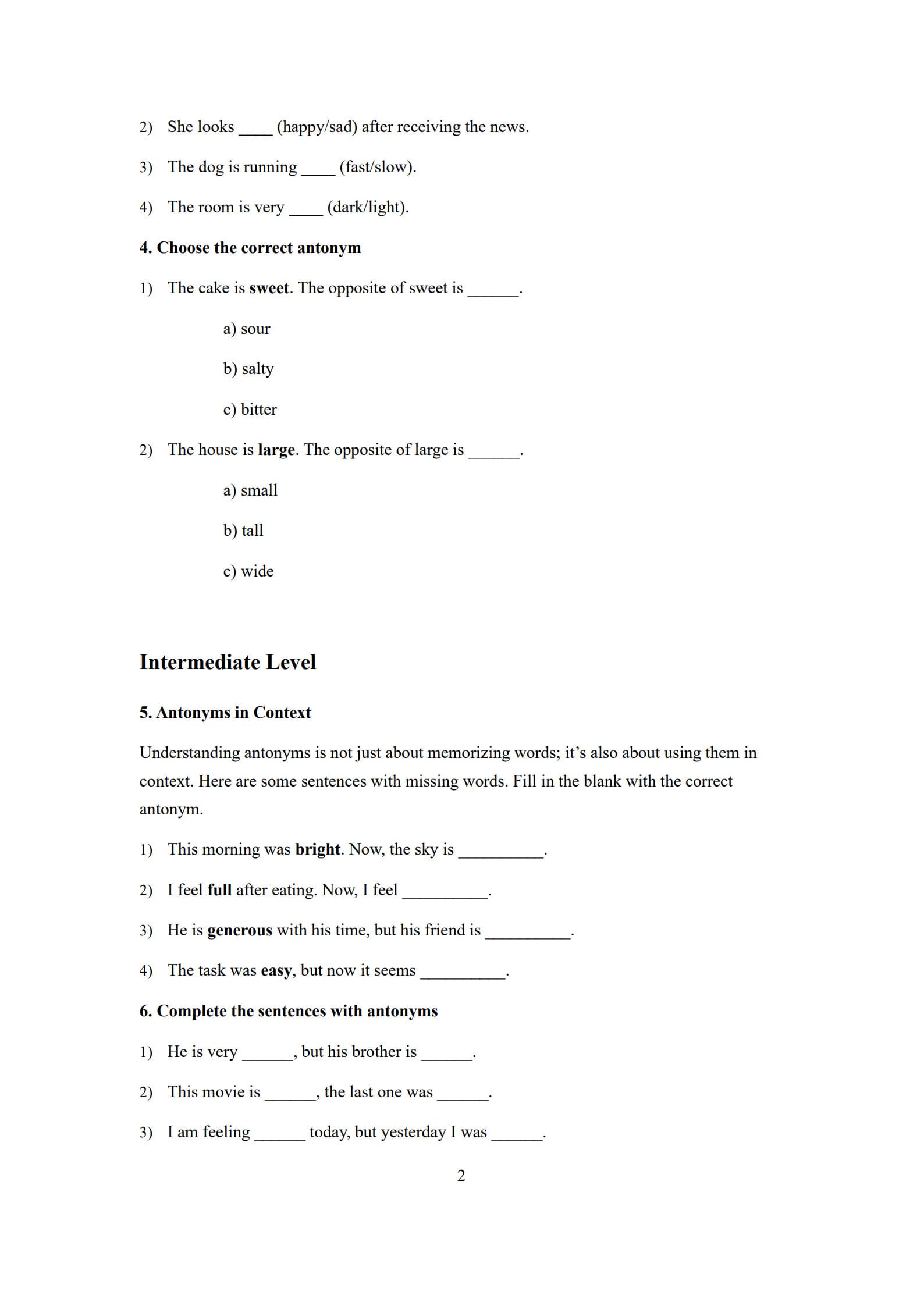
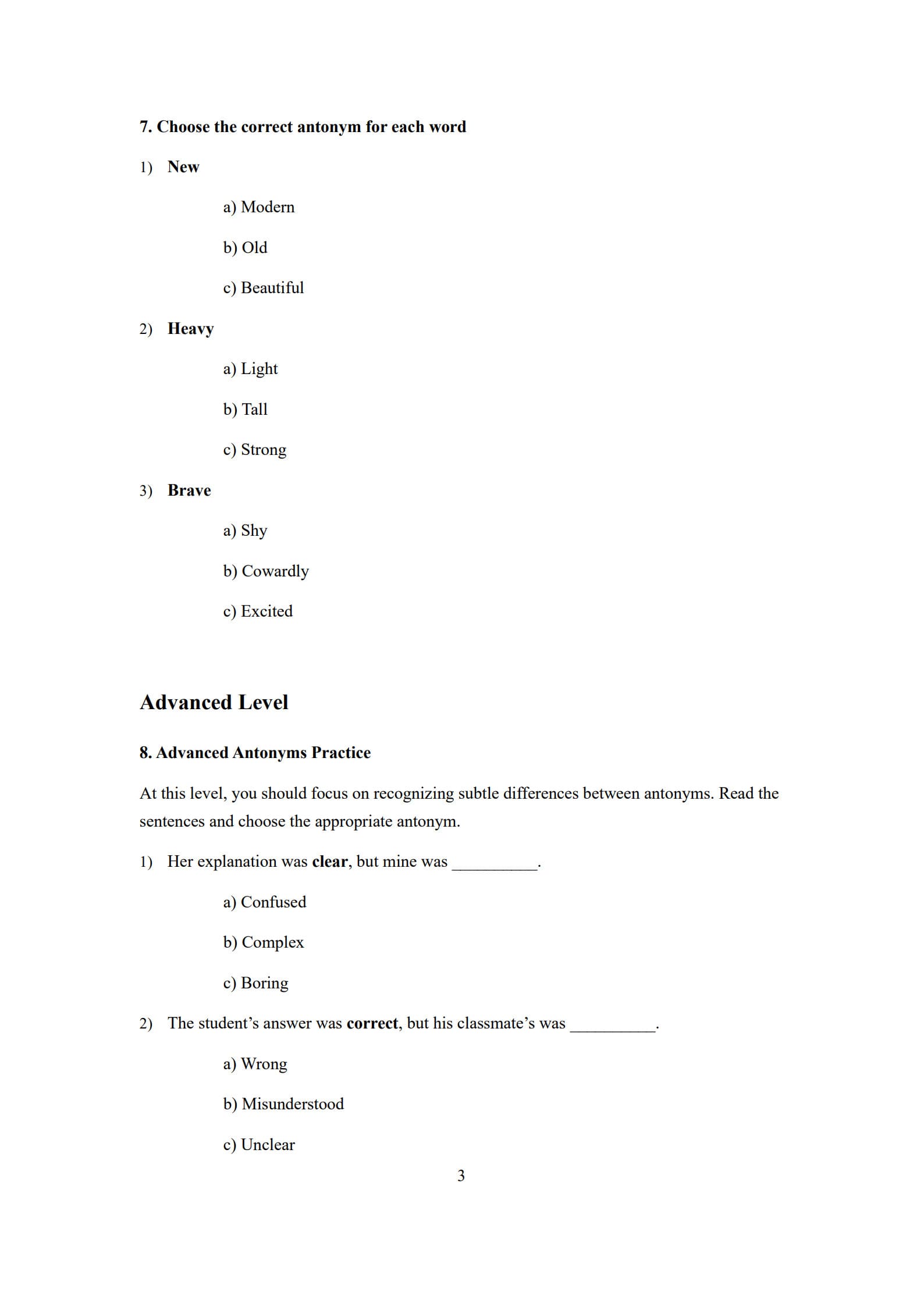
Have you ever struggled to find the right word to express a contrasting idea? Antonyms exercises are fundamental because they do more than just teach word pairs; they deepen your understanding of context and sharpen your ability to think critically about language. For instance, consider the beginner-level question from our template: “The cake is sweet. The opposite of sweet is…” with options like sour, salty, and bitter. This simple exercise pushes you to recall not just any opposite, but the most accurate one based on common usage. By repeatedly engaging with such tasks, you train your brain to make quick, precise associations, which is invaluable for everyday communication, writing, and even standardized tests.
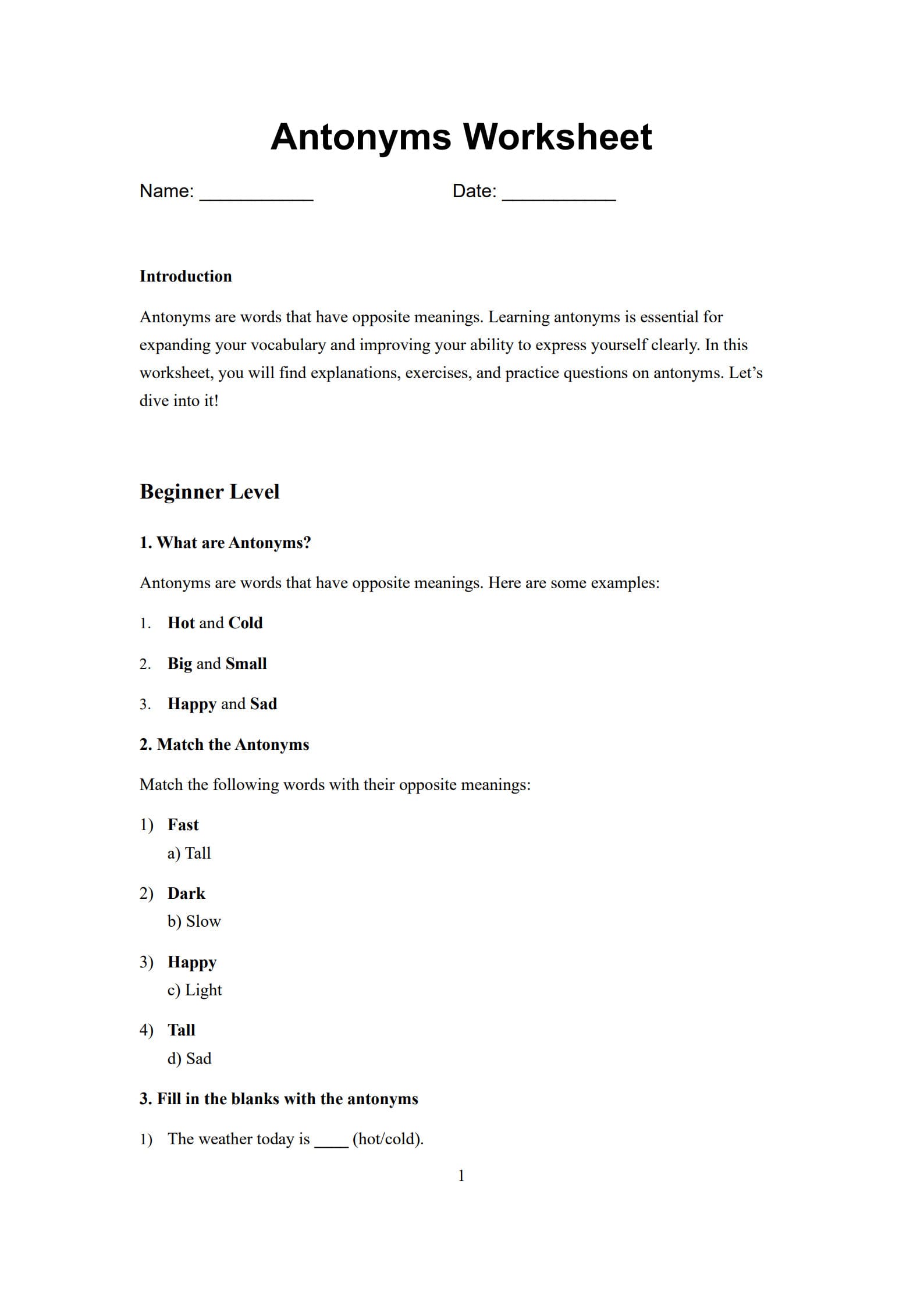
Our worksheet is structured to cater to different proficiency levels, ensuring that everyone from novices to advanced learners finds value. The beginner section introduces basic antonyms like fast/slow and dark/light, laying a solid groundwork. As you progress, the intermediate portion challenges you to apply these opposites in sentences, such as completing “This morning was bright. Now, the sky is…” Here, you move beyond memorization to real-world application, reinforcing retention. These exercises are designed to be iterative; each level builds on the previous one, gradually increasing in complexity to match your growing skills. This methodical approach ensures that you aren’t just learning words in isolation but are understanding how they function within the language ecosystem.
What Makes This Antonyms Worksheet Ideal for Self-Paced Learning?
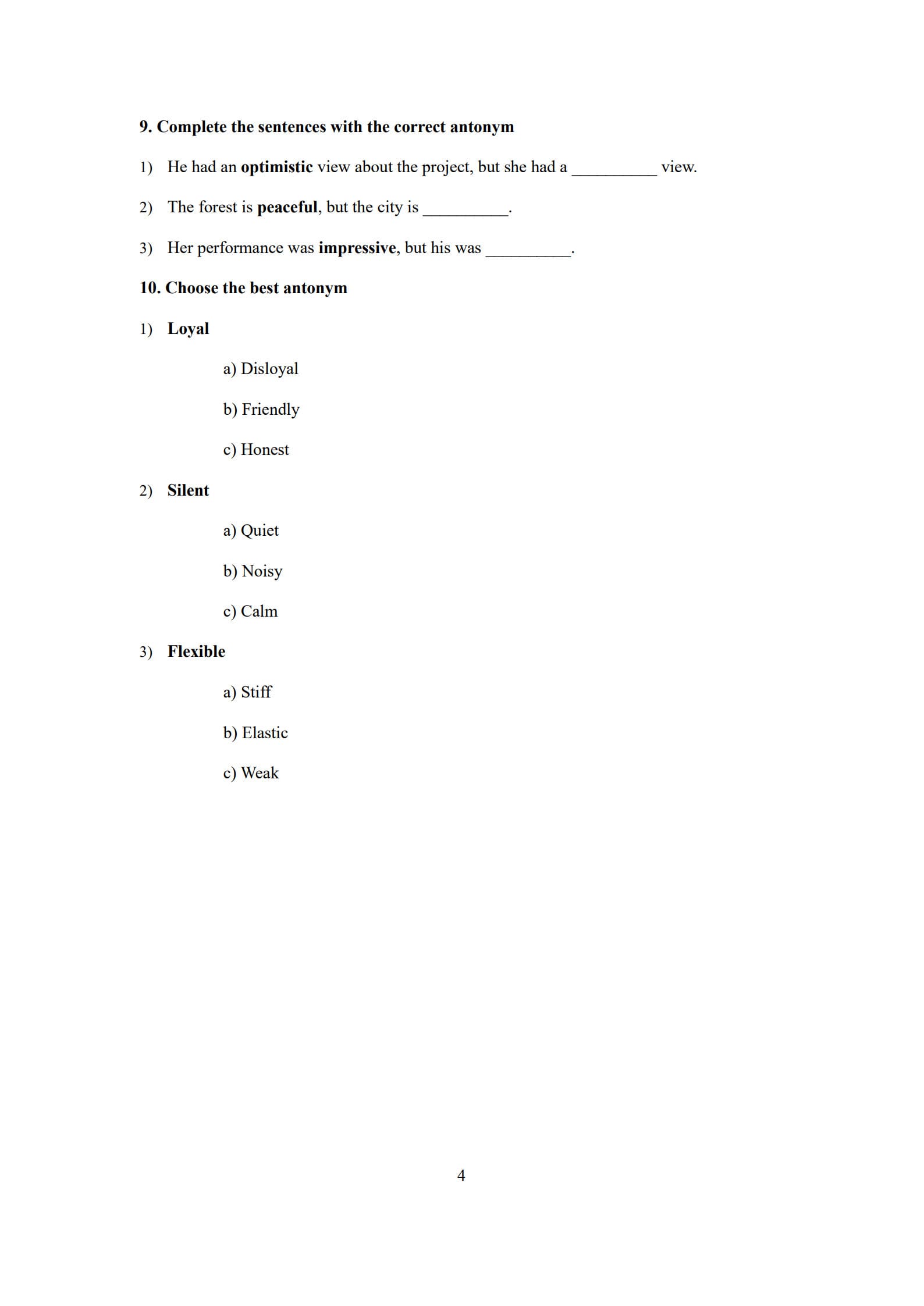
Self-paced learning is the future of education, and PDF Agile’s worksheet is designed to fit seamlessly into your schedule. The template’s tiered structure—beginner, intermediate, and advanced—allows you to start at your comfort level and progress at your own speed. For example, if you’re unsure about basic antonyms, you can spend extra time on the matching exercises, like pairing “Tall” with “Short.” Once mastered, you can move to more challenging tasks, such as the advanced question: “Her explanation was clear, but mine was…” with options like confused, complex, or boring. This flexibility ensures that learning remains stress-free and tailored to your individual needs.
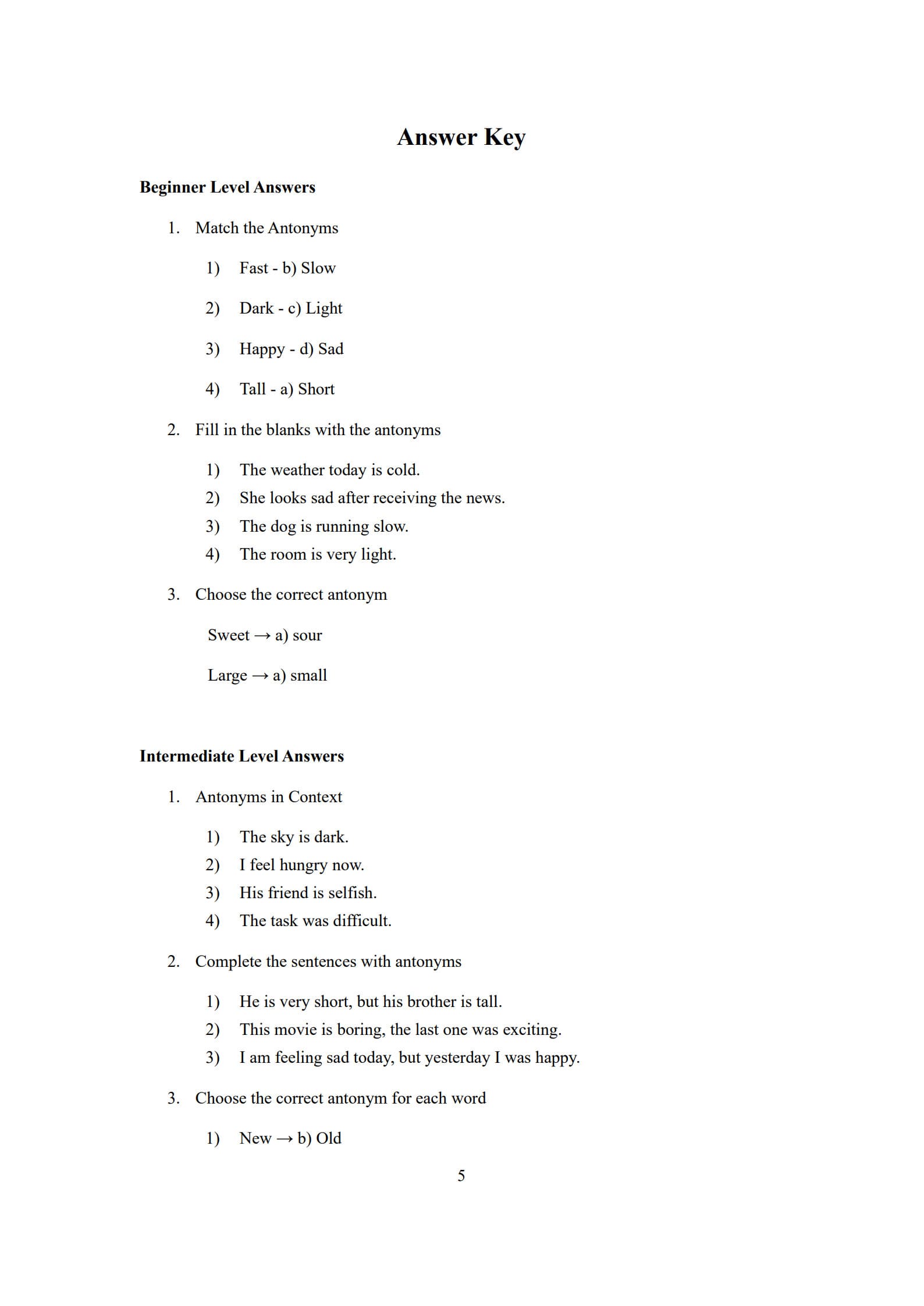
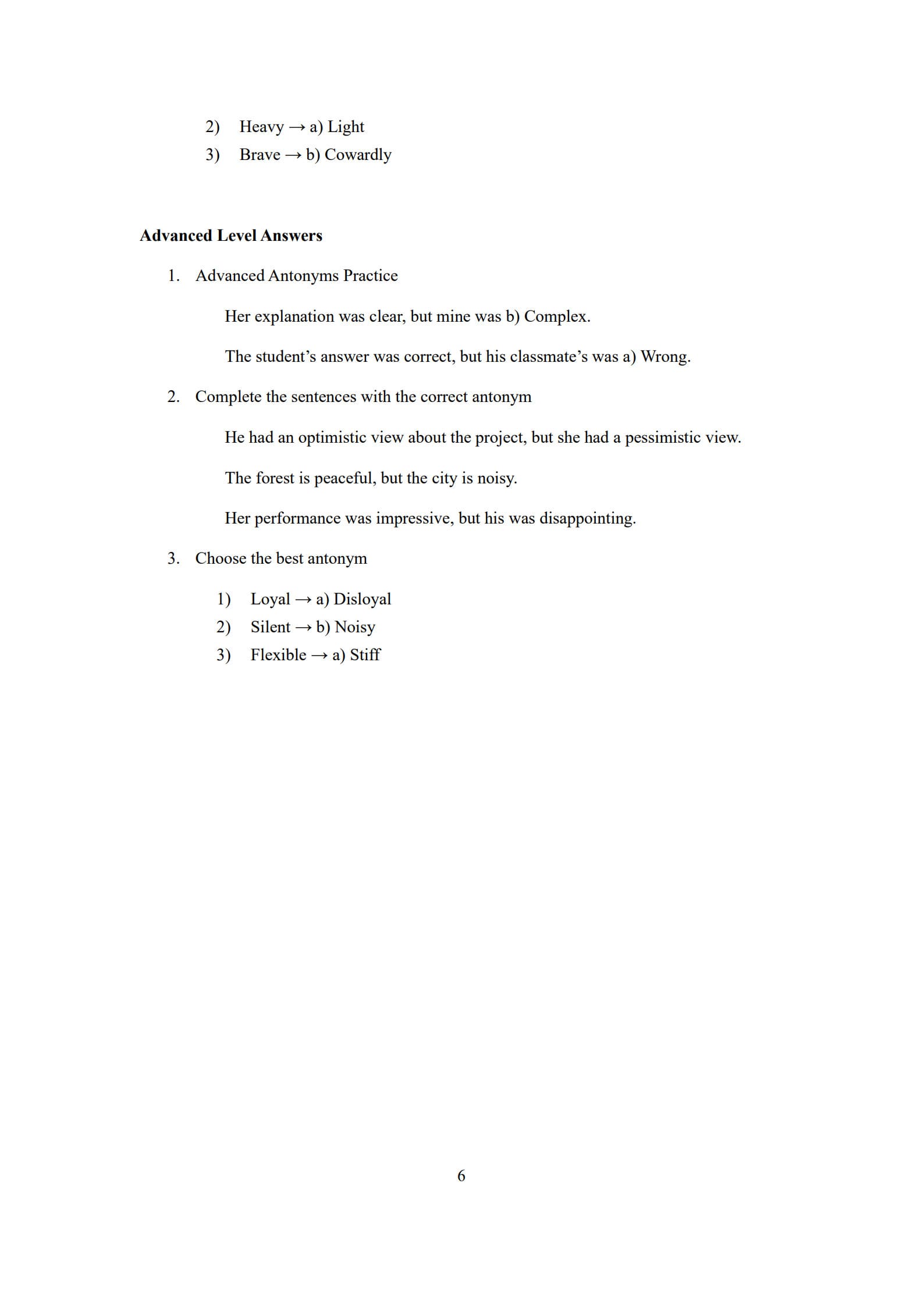
The worksheet also includes instant feedback mechanisms through its answer key, which is embedded directly in the template. After attempting an exercise like “Choose the correct antonym for Heavy,” you can immediately check your answer against the key (e.g., Light). This immediate reinforcement helps correct mistakes on the spot, turning errors into learning opportunities. Moreover, the clear, concise layout of the exercises—such as fill-in-the-blanks and multiple-choice questions—minimizes distractions, allowing you to focus entirely on content. Whether you have 10 minutes during a commute or an hour at home, the template’s user-friendly design makes it easy to dive in and make progress.
To illustrate the template’s adaptability, the table below outlines how each section caters to different learning goals:
| Section | Learning Focus | Example Exercise | Benefit for Self-Paced Study |
|---|---|---|---|
| Beginner | Basic antonym recognition | Match “Fast” to “Slow” | Builds foundation with simple, memorable pairs |
| Intermediate | Contextual application | Fill in: “I feel full after eating. Now, I feel ______” | Develops real-world usage skills |
| Advanced | Nuanced contrasts | Choose the antonym for “Brave” (e.g., Cowardly) | Enhances critical thinking for advanced communication |
This structured yet flexible approach makes the worksheet perfect for learners who value autonomy. You can repeat exercises, skip sections, or challenge yourself with advanced questions—all without external pressure. By integrating this template into your routine, you take control of your learning journey, building confidence with every completed page.
How Does the Template Foster Engagement Through Interactive Learning?
Engagement is key to effective learning, and PDF Agile’s worksheet employs interactive elements to keep you motivated. The exercises are designed to feel like puzzles rather than chores. For instance, the matching activity where you connect “Dark” to “Light” taps into your problem-solving skills, making learning feel like a game. This playful approach reduces the anxiety often associated with vocabulary drills and encourages repeated practice. As you progress, the tasks evolve to maintain interest; the advanced section, for example, presents scenarios like “The forest is peaceful, but the city is…” prompting you to think creatively about contrasts in environment.
The template also promotes active participation through varied question formats. Instead of relying solely on multiple-choice questions, it incorporates fill-in-the-blanks, sentence completion, and open-ended prompts. In the intermediate section, you’re asked to complete sentences like “This movie is ______, the last one was ______,” which invites you to draw on personal experiences or opinions. This personalization makes the content more relatable and memorable. Additionally, the answer key provides a sense of accomplishment as you check correct responses, reinforcing positive learning habits.
Furthermore, the worksheet encourages collaborative learning. While designed for individual use, it can easily be adapted for group study—for example, by discussing why “complex” is a better antonym for “clear” than “confused” in certain contexts. This social aspect fosters deeper understanding through dialogue. PDF Agile’s template isn’t just a static document; it’s a versatile tool that adapts to your learning style, whether you prefer solitary reflection or interactive discussion. By keeping you engaged through variety and challenge, it ensures that vocabulary practice remains a rewarding part of your language journey.
How to Use This Template on PDF Agile: A Step-by-Step Guide
Using the Antonyms Worksheet template in PDF Agile is straightforward and efficient. Follow these steps to get started:
Step 1: Access the Antonyms Worksheet Template in PDF Agile
Open the PDF Agile app and navigate to the Template Library. Search for “Antonyms Worksheet” and select it. The template is pre-formatted with clear sections for beginner, intermediate, and advanced exercises, complete with instructions and examples like “Match the Antonyms” and “Fill in the blanks.” Click “Use Template” to create a customizable copy instantly.
Step 2: Personalize the Worksheet
Add your name and date to the designated fields at the top. You can also modify exercises to focus on specific antonyms—for example, replace “Hot/Cold” with other word pairs if you want to review particular vocabulary. PDF Agile’s editing tools allow you to highlight key sections or add notes for further study.
Step 3: Complete the Exercises Digitally
Use the app’s fillable fields to answer questions directly. For instance, type “light” in the blank for “The room is very ______” or select multiple-choice options like “sour” for the antonym of “sweet.” The digital format lets you erase and retry easily, making practice stress-free.
Step 4: Review with the Answer Key
Refer to the built-in answer key at the end of the template to check your work. For advanced exercises, such as choosing the best antonym for “Flexible” (e.g., Stiff), use the key to understand subtle distinctions. Save your completed worksheet for future reference or share it with a tutor for feedback.
Step 5: Export and Share
Once finished, export the worksheet as a PDF to maintain its layout. You can print it for offline practice or email it to study partners.
Conclusion
Mastering antonyms is more than an academic exercise—it’s a gateway to eloquent self-expression and confident communication. PDF Agile’s Antonyms Worksheet template provides a structured, engaging path to achieve this goal, with exercises tailored to every learning stage. From foundational pairs like “big/small” to advanced concepts like “optimistic/pessimistic,” the template builds skills incrementally, ensuring steady progress. Its emphasis on context and critical thinking prepares you for real-world language use, while the self-paced design fits seamlessly into modern lifestyles.
We encourage you to explore this template within PDF Agile and discover how it can transform your vocabulary practice. Whether you’re a student, professional, or lifelong learner, this resource offers the tools to make English learning both effective and enjoyable. Start your journey today and experience the satisfaction of finding the perfect word for every situation.