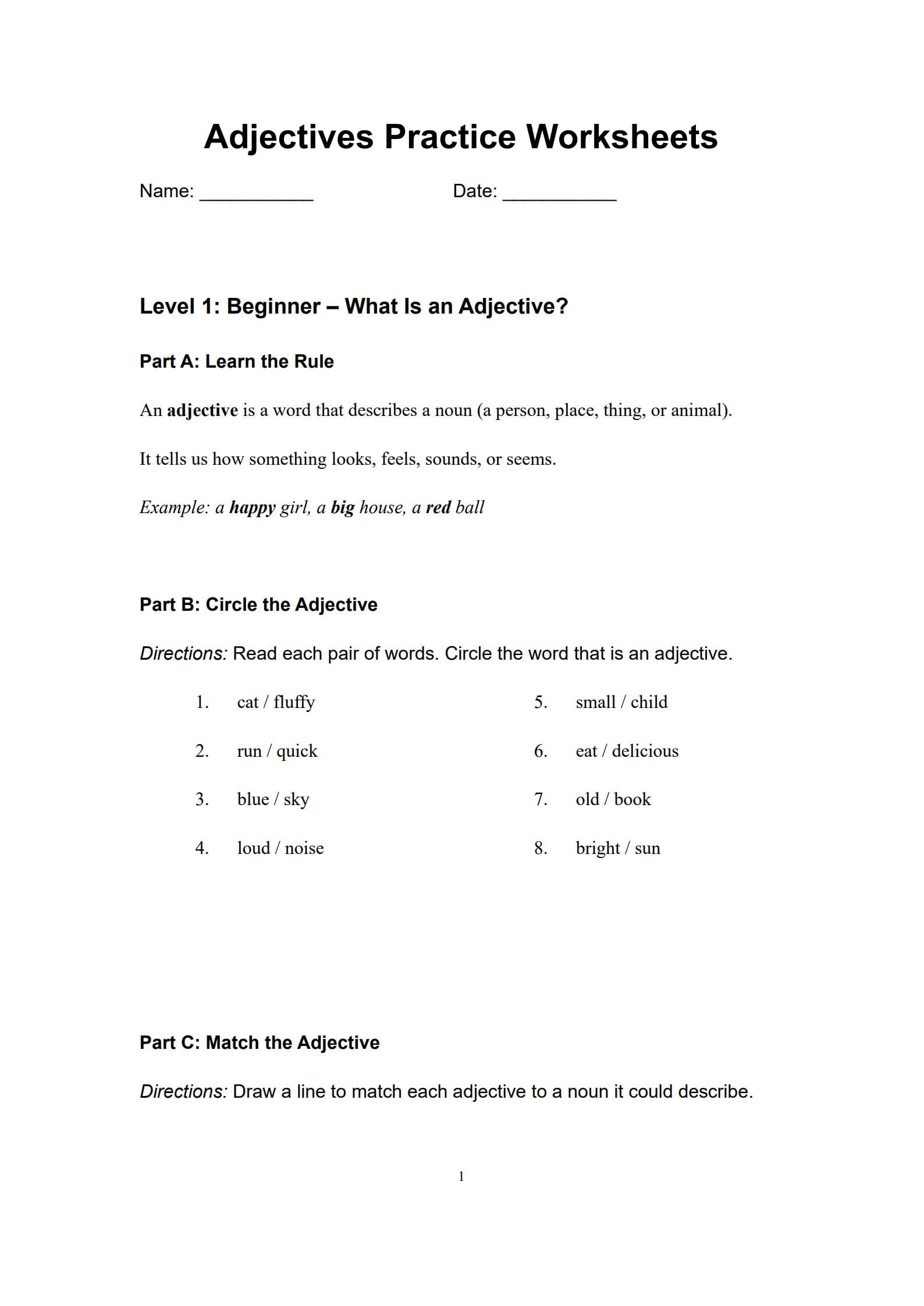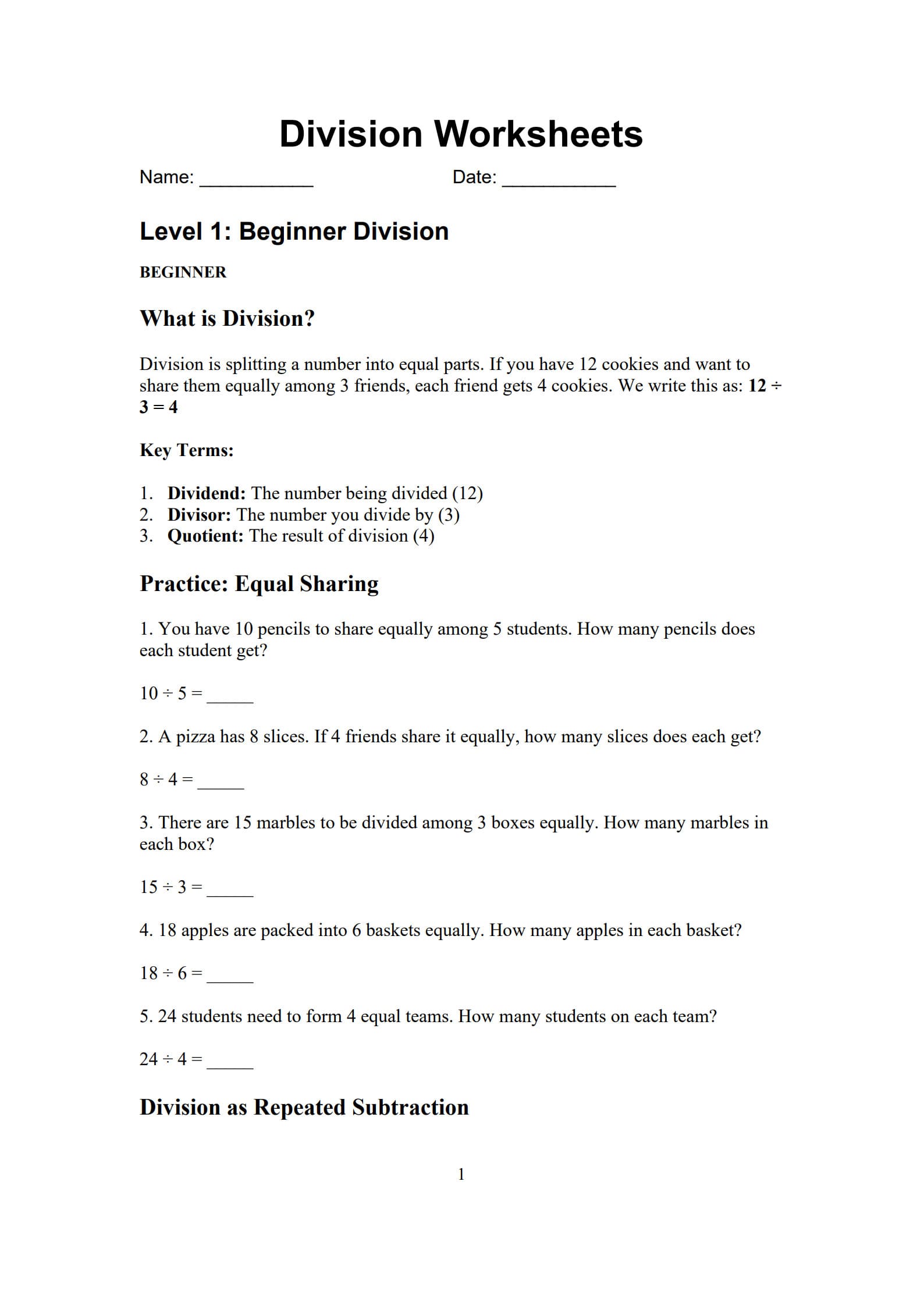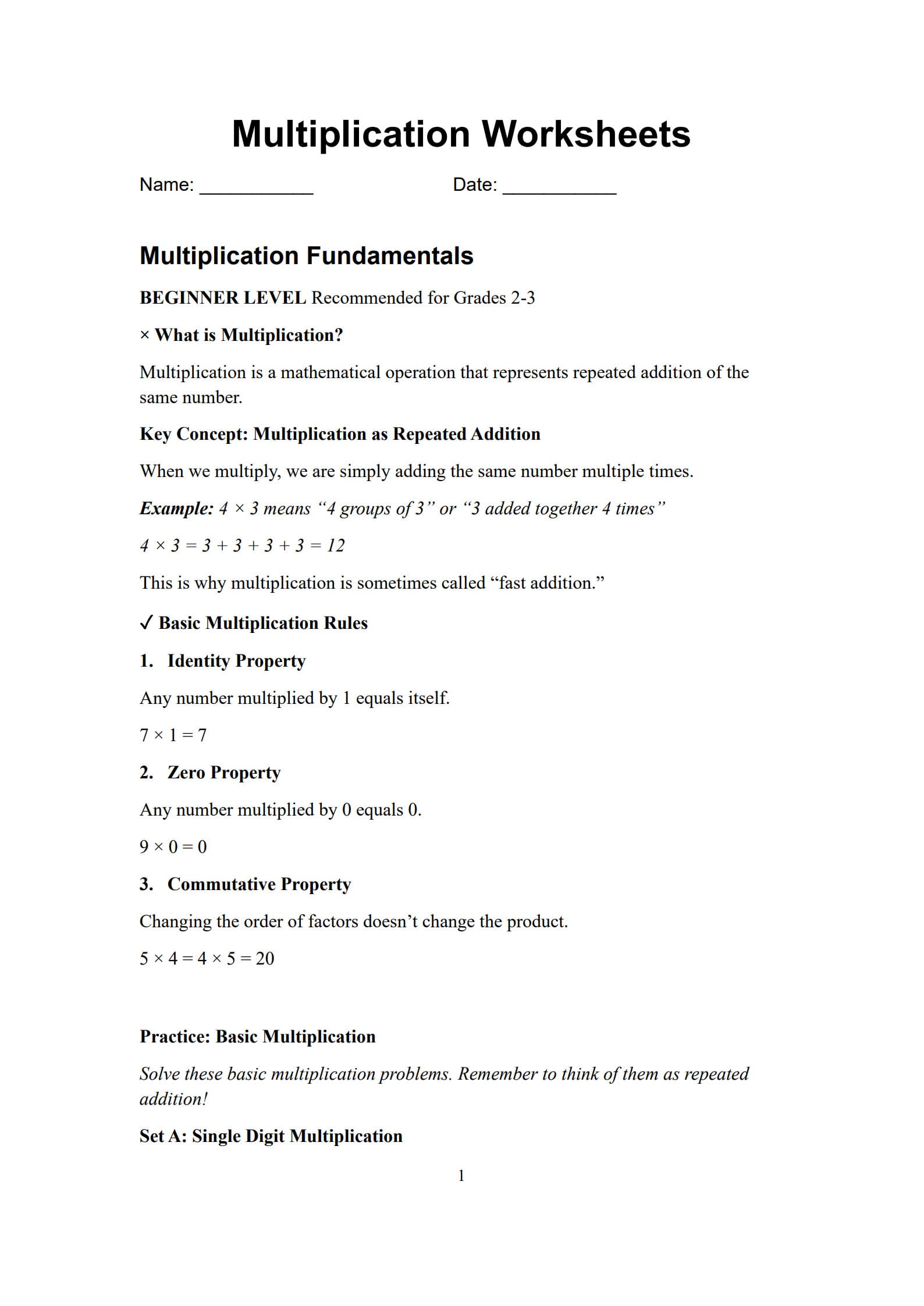


PDF Agile offers a comprehensive, ready-to-use template titled “Addition Worksheets,” designed to make learning addition engaging, structured, and effective. This template, which you can instantly access and customize in the PDF Agile app, caters to beginners, intermediate, and advanced learners, ensuring a gradual build-up of skills. By using this template, you not only save time but also empower learners to conquer addition problems with confidence. In this essay, we’ll explore how this template transforms abstract concepts into tangible skills, making math learning an exciting journey. Let’s dive into the structured sections that highlight the template’s key features, ensuring every user can harness its full potential for academic success.
What is Inside this Free Addition Worksheets?
Have you ever wondered how to introduce addition in a way that feels like play rather than work? The beginner section of our free printable addition worksheets tackles this by focusing on single-digit addition, the cornerstone of arithmetic. It begins by defining addition as “putting together” groups of items, using relatable examples like combining apples—3 apples plus 2 more make 5 apples. This approach demystifies math, making it accessible even to young learners. The template includes visual aids, such as circle diagrams (e.g., 3 + 4 = 7 shown as 000 + 0000 = 0000000), which help visualize the process. Tips like using fingers or counters encourage hands-on learning, fostering a deeper understanding beyond mere memorization.
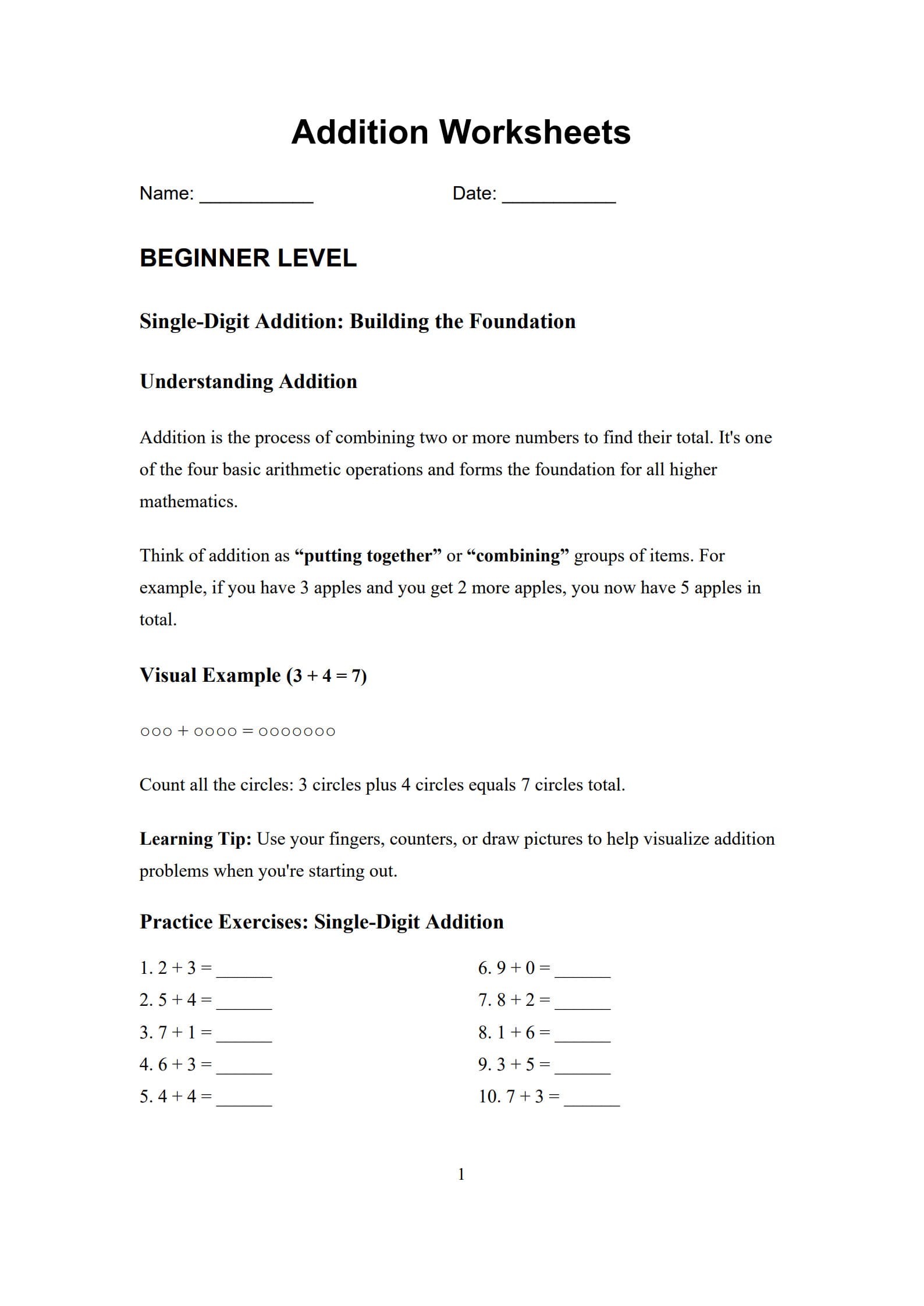
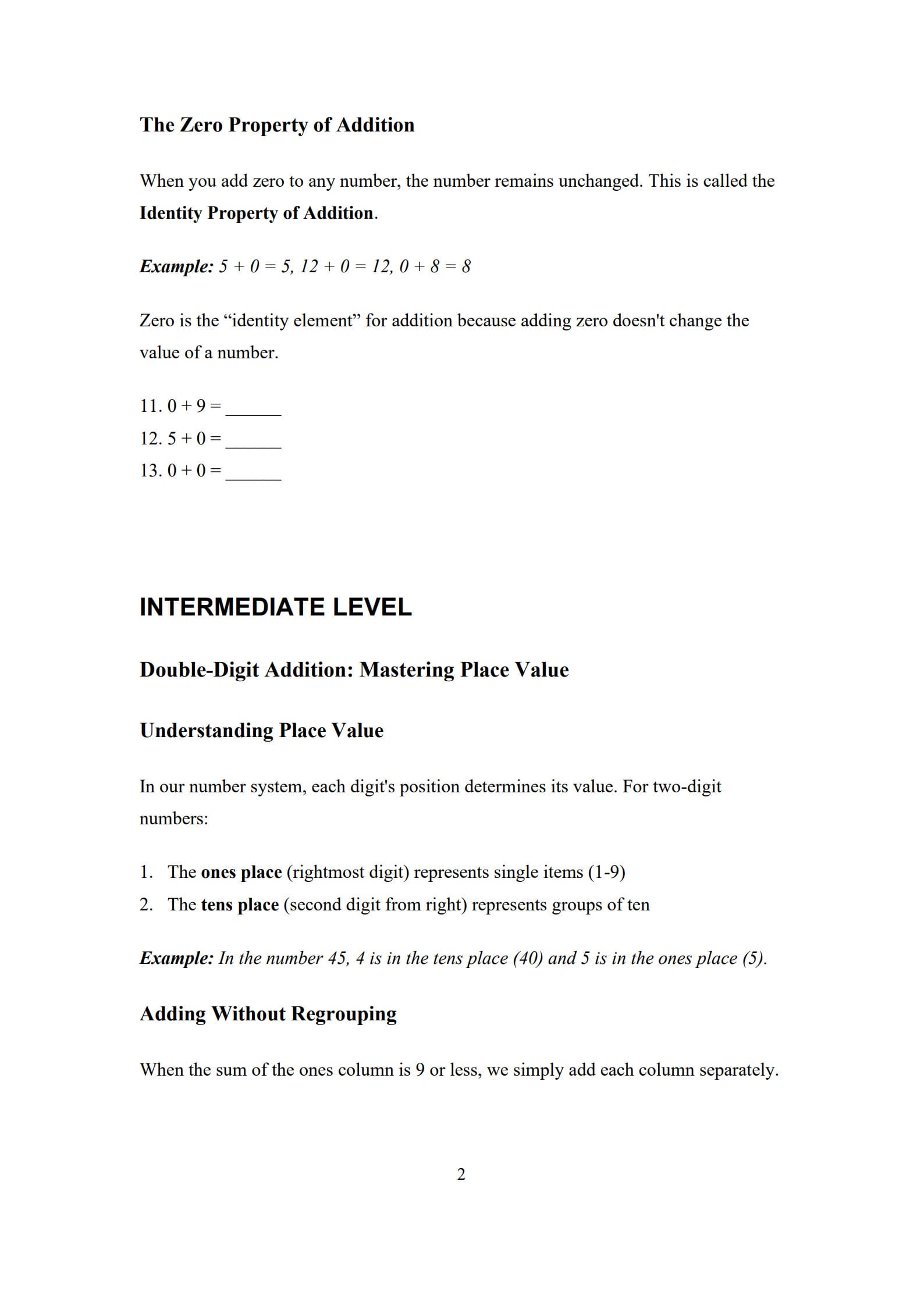
Practice exercises are central to this section, with problems like 2 + 3 = ? and 9 + 0 = ? designed to reinforce skills gradually. Importantly, the template explains the Zero Property of Addition—adding zero leaves a number unchanged—through examples like 5 + 0 = 5. This not only builds computational fluency but also introduces key mathematical properties early on. By starting with these basic addition worksheets, learners develop confidence and a positive mindset toward math. The structured format ensures that each problem builds on the previous one, reducing frustration and promoting incremental progress. Whether used in a classroom or at home, this section turns initial hesitations into enthusiasm, setting the stage for more complex challenges.
Tackling Addition Problems and Mastering Two-Digit Numbers with Regrouping
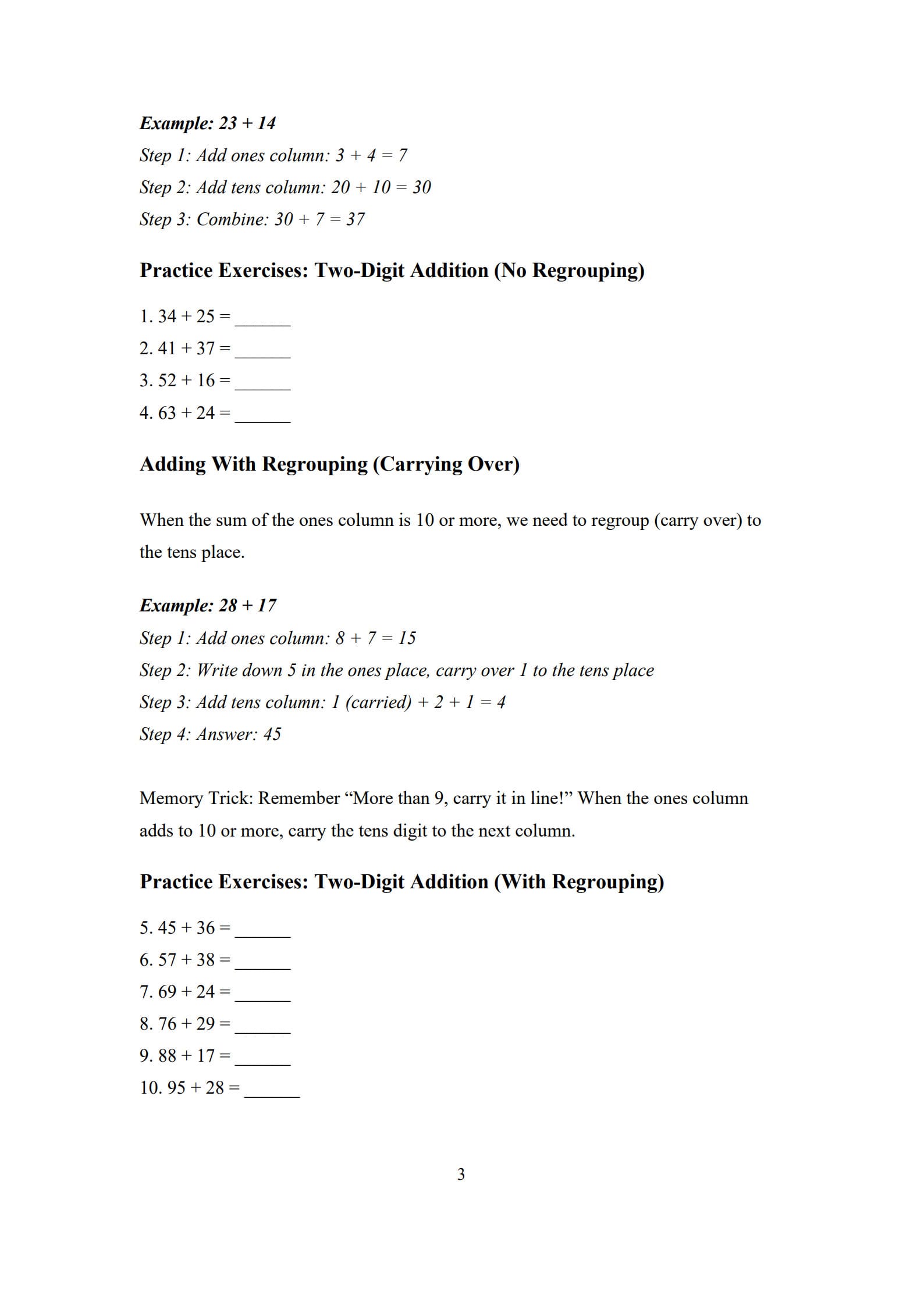
What happens when single-digit addition is no longer enough? The intermediate level of our template addresses this by diving into adding 2 digit numbers worksheet activities, which emphasize place value and regrouping. This section starts by explaining that two-digit numbers have tens and ones places—for instance, in 45, the 4 represents 40 (tens) and the 5 represents 5 (ones). This foundational knowledge is crucial for understanding how addition works beyond basic counts. The template breaks down problems into manageable steps: first, add the ones column; if the sum is 9 or less, simply combine the tens (e.g., 23 + 14 = 37). But when the ones column sums to 10 or more, regrouping (or “carrying over”) is introduced, as in 28 + 17: add ones (8+7=15), write down 5, carry over 1 to the tens, then add tens (1+2+1=4) for a total of 45.
To make this engaging, the template includes a memory trick: “More than 9, carry it in line!” Practice exercises like 45 + 36 = ? and 57 + 38 = ? allow learners to apply these steps, solidifying their skills. A real-world application—such as calculating total spending when Emma buys a book for 27—shows how addition is used in everyday scenarios like shopping. This section not only hones computational accuracy but also develops logical thinking. By presenting addition problems in a clear, sequential manner, the template ensures that learners grasp the why behind the how, turning potential stumbling blocks into stepping stones for advanced math.
Enhance Skills with Basic Addition Worksheets: Advancing to Three-Digit Numbers
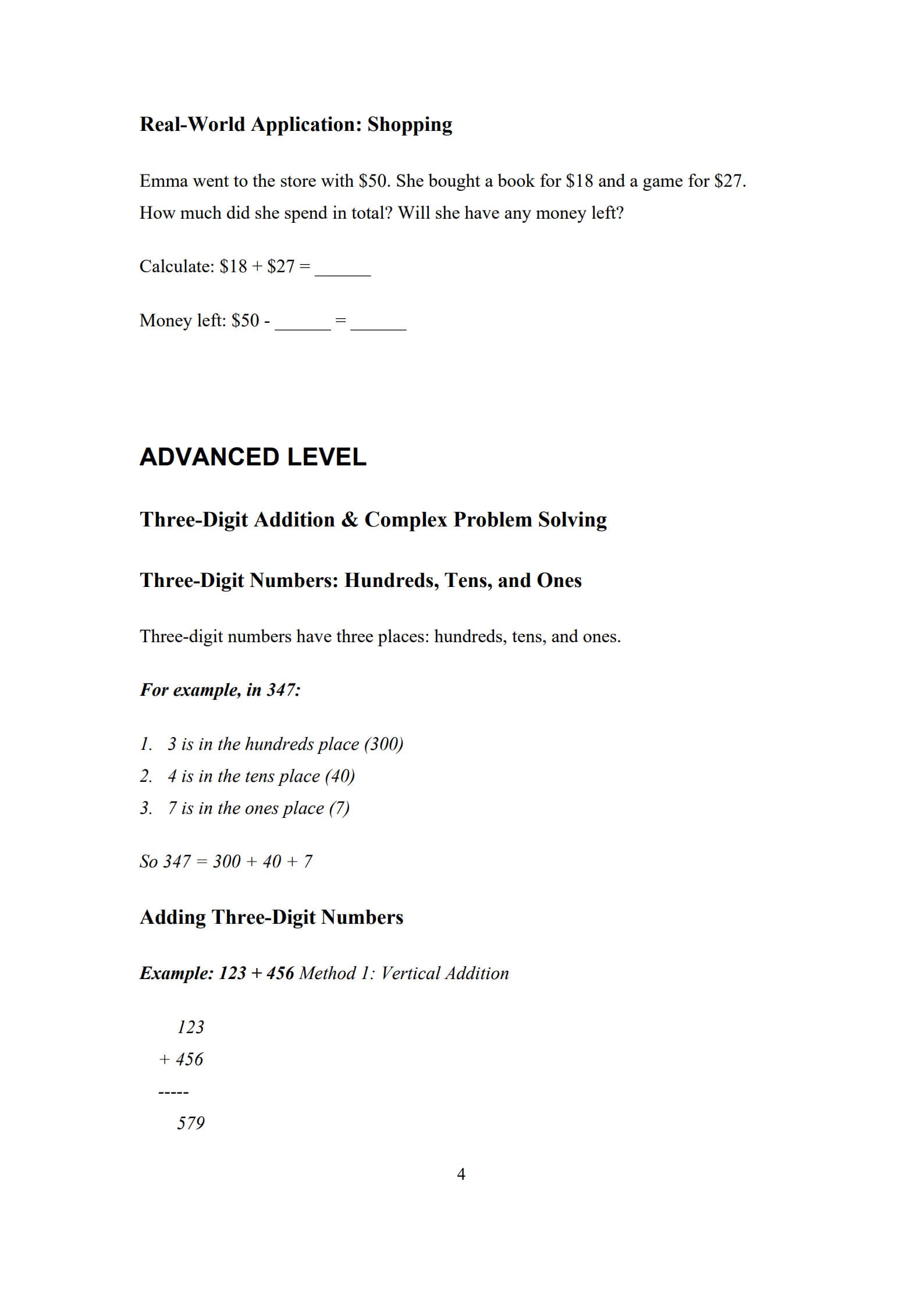
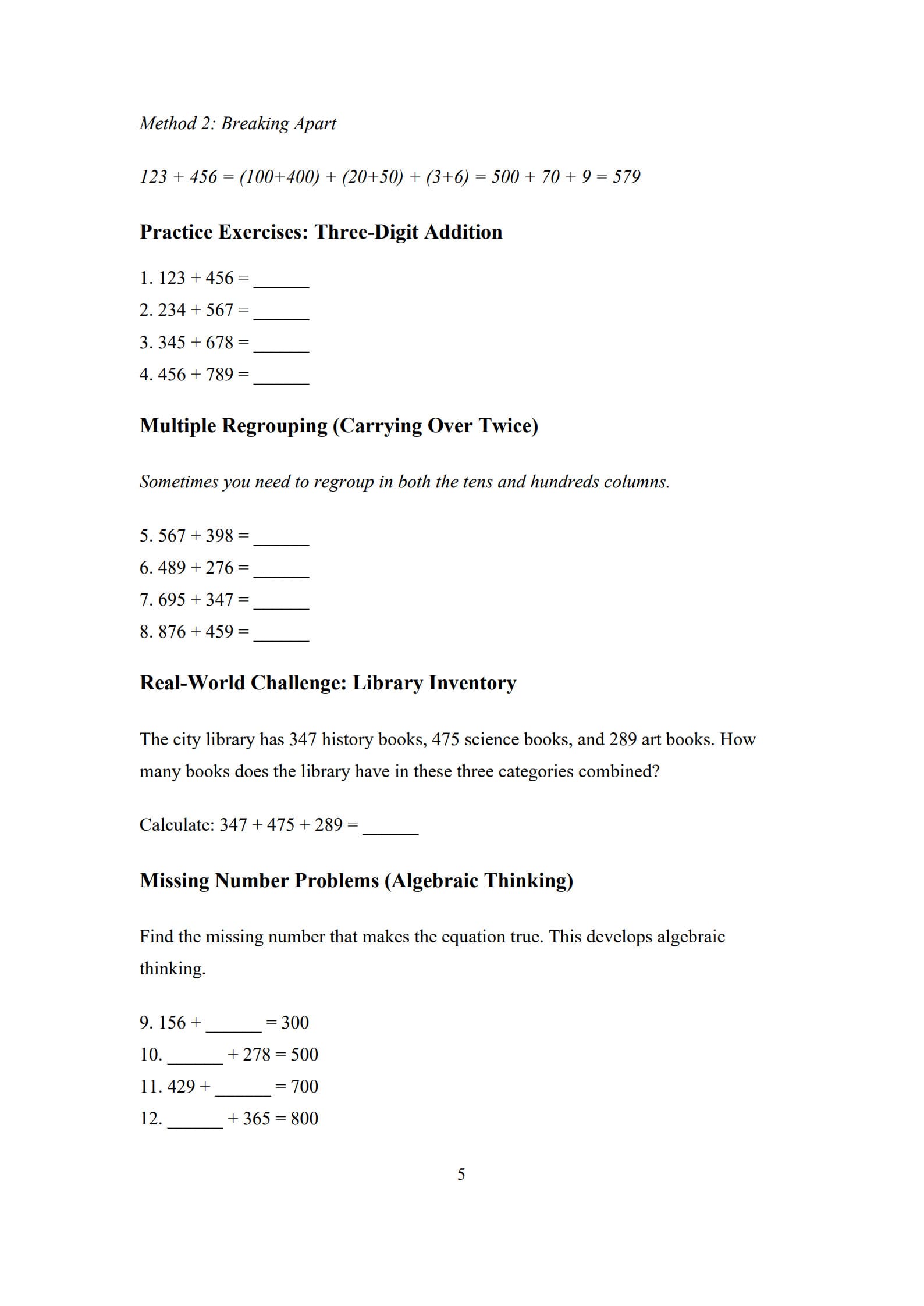
Ready to level up? The advanced section of our basic addition worksheets introduces three-digit addition, incorporating hundreds, tens, and ones places. For example, the number 347 is broken down as 300 + 40 + 7, helping learners visualize place value on a larger scale. The template offers two methods: vertical addition (e.g., 123 + 456 = 579) and “breaking apart” (adding hundreds, tens, and ones separately). This flexibility accommodates different learning styles, ensuring that every student can find an approach that resonates. Problems like 123 + 456 = ? and 345 + 678 = ? provide ample practice, while multiple regrouping exercises—where carrying over occurs in both tens and hundreds columns, as in 567 + 398—challenge learners to pay close attention to detail.
A real-world challenge, such as calculating the total books in a library (347 history + 475 science + 289 art books), reinforces the practicality of these skills. Additionally, missing number problems (e.g., 156 + ? = 300) foster algebraic thinking by encouraging learners to work backwards. This section transforms addition from a mechanical task into a puzzle-solving activity, boosting critical thinking. The template’s progression from simple to complex ensures that learners build stamina and precision, preparing them for higher math concepts. With these free printable addition worksheets, students gain not just answers but a deep, conceptual understanding that makes math meaningful and fun.
Free Printable Addition Worksheets for Real-World Application and Beyond
How can addition worksheets stay relevant outside the classroom? This section of the template emphasizes application through scenarios like the shopping problem (total cost of 27) and the library inventory challenge, which require learners to synthesize addition skills in context. Such exercises bridge the gap between abstract math and daily life, showing that addition is essential for budgeting, inventory management, and more. The missing number problems, like ? + 278 = 500, add a layer of problem-solving that develops algebraic reasoning—a key skill for future math success. By including these elements, the template goes beyond rote practice, encouraging learners to think creatively and analytically.
To keep engagement high, the template incorporates varied formats. For instance, a summary table of problem types can help learners track their progress:
| Skill Level | Focus Area | Example Problem | Real-World Link |
|---|---|---|---|
| Beginner | Single-Digit Addition | 2 + 3 = ? | Counting items |
| Intermediate | Two-Digit Addition | 45 + 36 = ? | Shopping totals |
| Advanced | Three-Digit Addition | 347 + 475 = ? | Library counts |
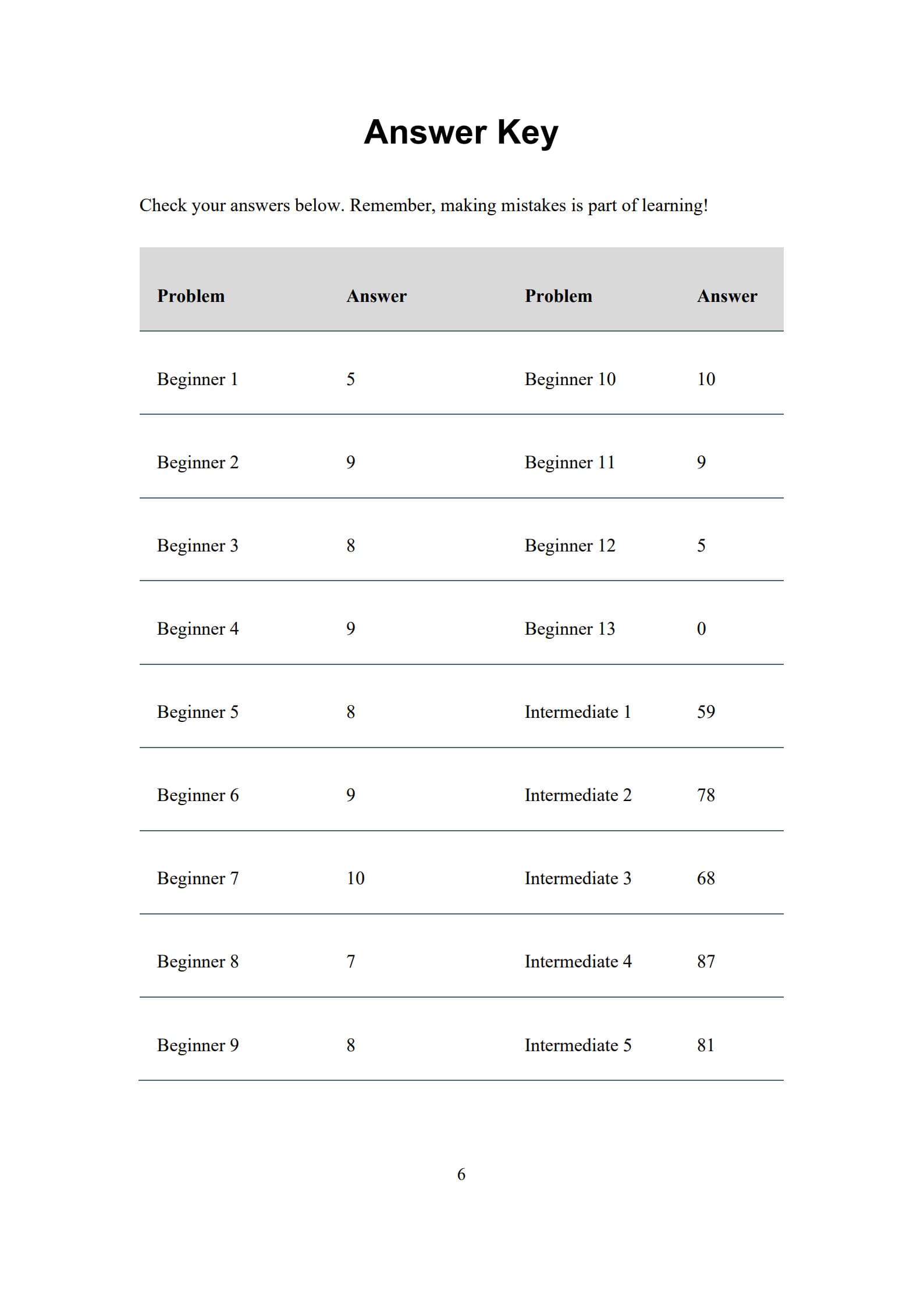
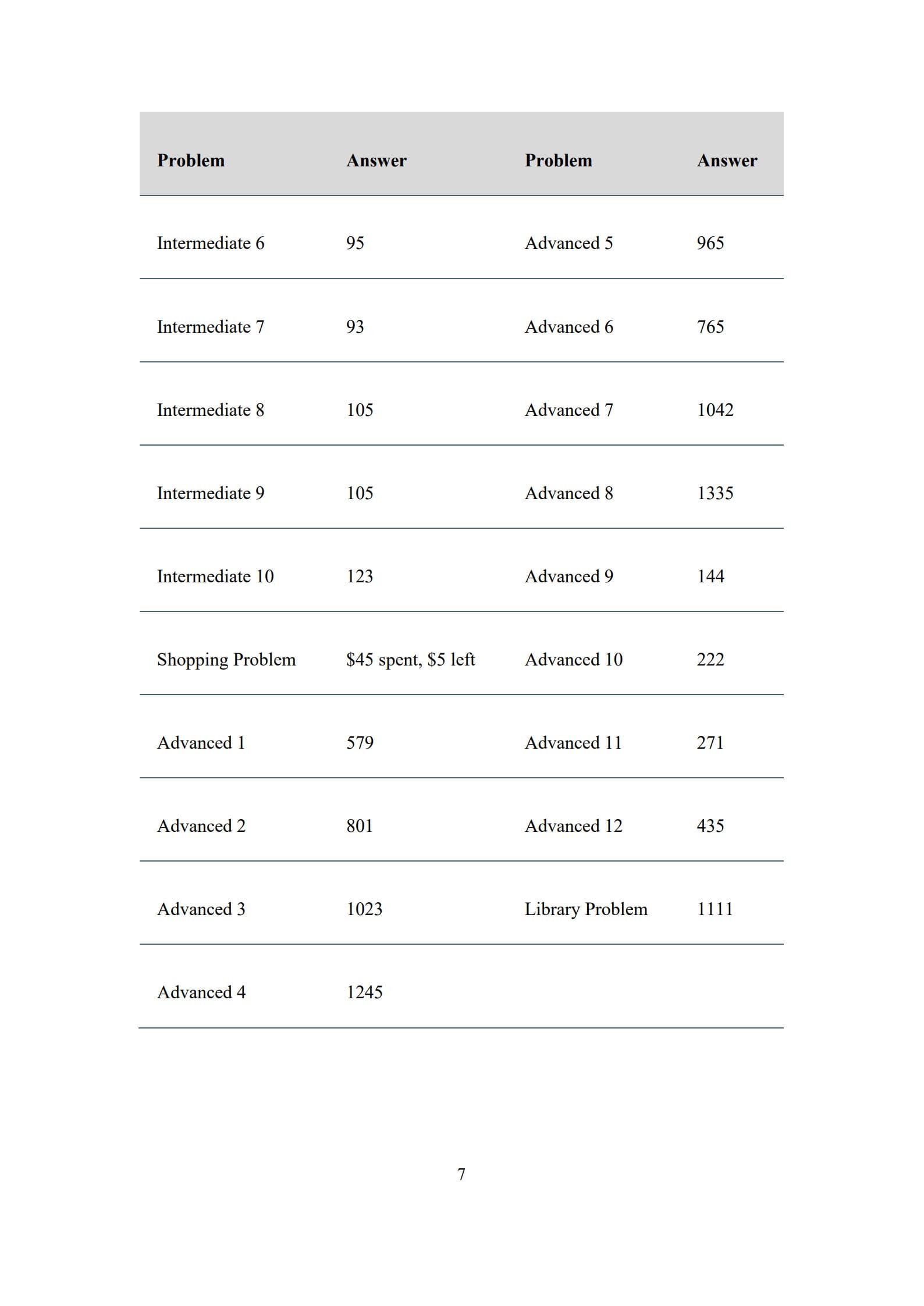
This structured approach ensures that learners see the bigger picture, making addition problems feel less like chores and more like adventures. The answer key at the end allows for self-assessment, promoting independence and resilience. By using these free addition worksheets, educators and parents can provide a holistic learning experience that combines practice, application, and reflection, ultimately fostering a lifelong love for math.
How to Use This Template on PDF Agile
Unlocking the power of these addition worksheets is straightforward with PDF Agile. Follow these four simple steps to get started:
- Download the Addition Worksheets Template: Visit the PDF Agile Template Library and search for “Addition Worksheets.” Click to download the free template—it comes pre-formatted with beginner, intermediate, and advanced sections, including exercises, examples, and an answer key. Alternatively, click “Use Template” on this page to open it directly in the app for instant customization.
- Customize for Your Needs: Personalize the worksheets by adding a learner’s name, date, or specific instructions. PDF Agile’s editing tools let you modify text, highlight key sections, or even insert additional problems tailored to your focus areas, such as emphasizing adding 2 digit numbers worksheet activities for extra practice.
- Integrate Interactive Elements: Use PDF Agile’s features to enhance engagement. For example, add digital annotations for hints or use the signature tool for teacher/parent feedback. You can also insert hyperlinks to online resources or videos that explain concepts like regrouping.
- Save, Share, and Print: Once customized, save your version as a PDF for easy sharing via email or printing. The template is optimized for both digital use (on tablets or computers) and physical copies, making it ideal for classrooms, homework, or remote learning. For best results, print the free printable addition worksheets on standard paper and use them repeatedly for practice.
With PDF Agile, these worksheets become a dynamic resource that adapts to any learning environment, ensuring efficiency and effectiveness.
Conclusion
In summary, the Addition Worksheets template in PDF Agile is more than just a set of problems—it’s a comprehensive learning tool that grows with the student. From basic addition worksheets for beginners to complex three-digit challenges, it covers all essentials in a structured, engaging manner. By incorporating real-world applications and algebraic thinking, it prepares learners not just for tests but for life. We encourage you to explore this template in PDF Agile, where customization and accessibility meet educational excellence. Start today, and watch confidence in math soar—one addition problem at a time!