

Welcome to PDF Agile’s comprehensive guide to mastering one of English grammar’s most fundamental concepts: active and passive voice. Whether you’re an English learner seeking to improve your writing skills or an educator looking for effective teaching materials, our active voice and passive voice worksheet template offers a structured, engaging approach to grammar practice. This professionally designed template, available exclusively on PDF Agile, transforms complex grammatical concepts into manageable, interactive exercises.
Why Should You Master Active and Passive Voice with Our Worksheet?
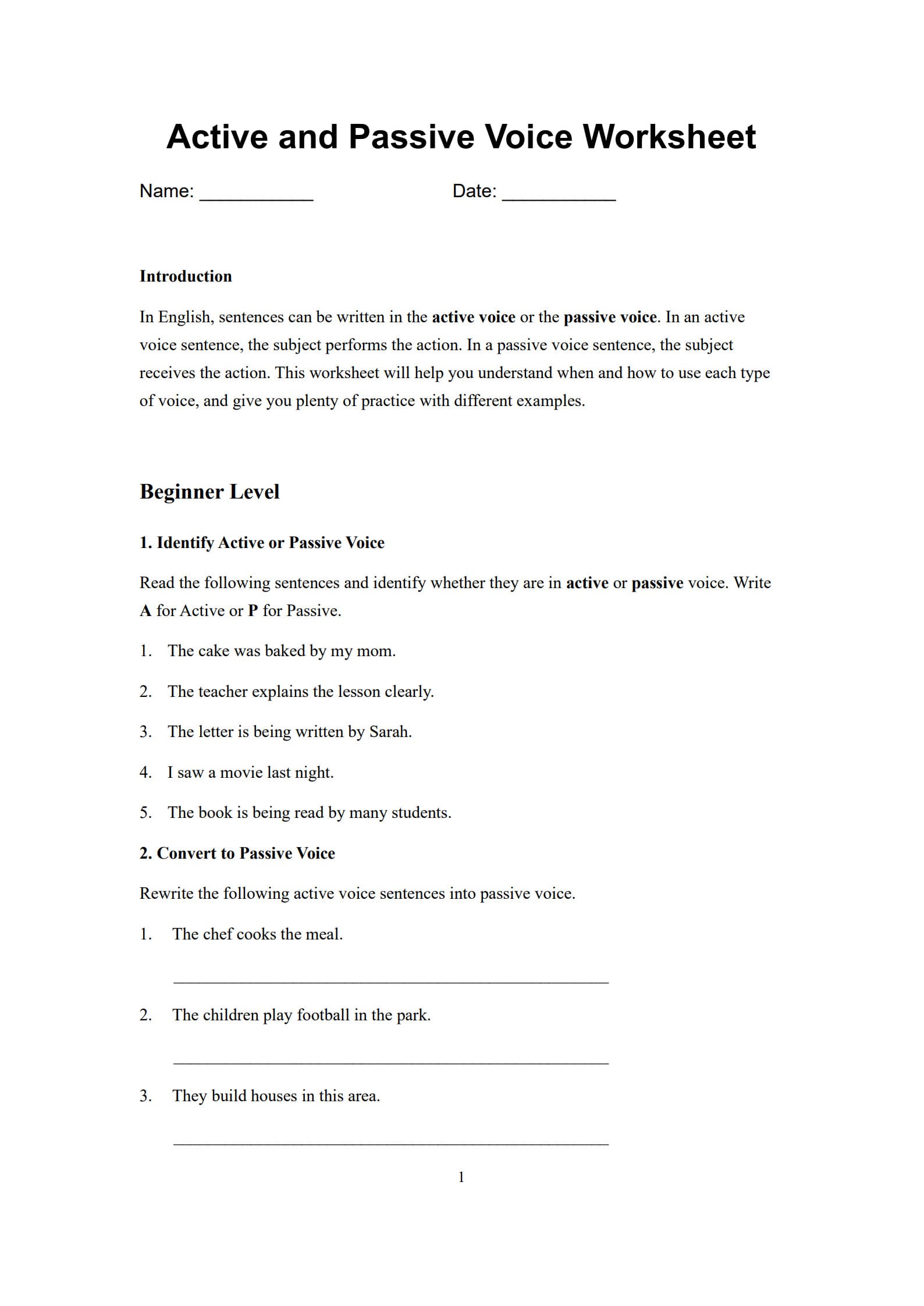
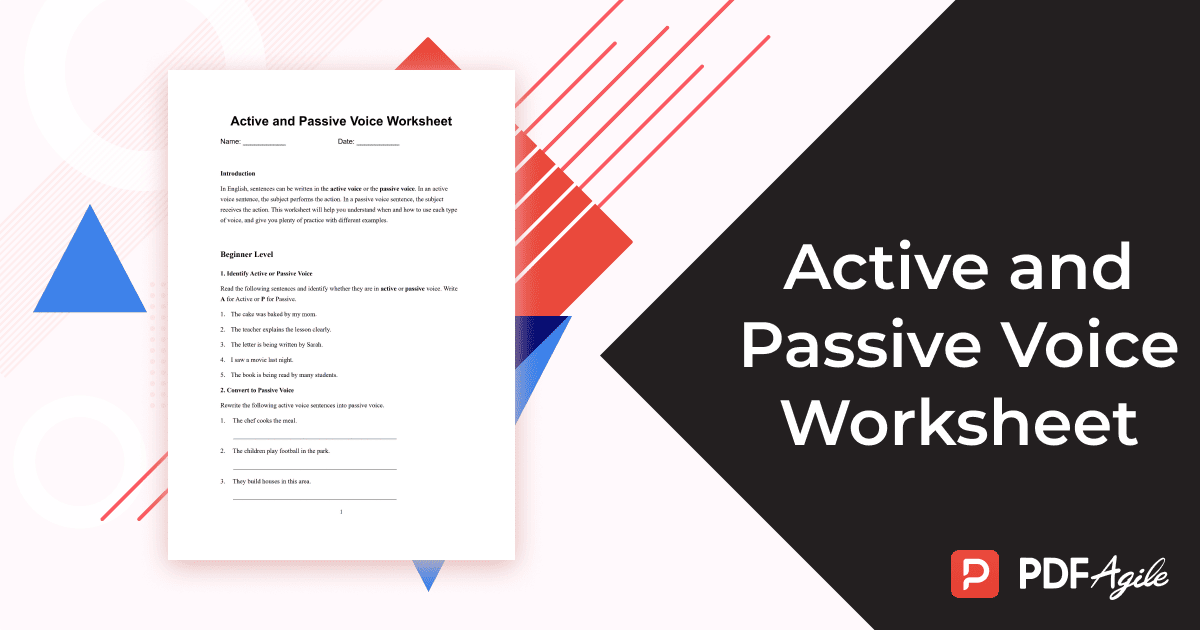
Have you ever wondered why professional writers vary between active and passive voice? Or struggled to identify which voice would make your writing more effective? Our active voice passive voice worksheet addresses these exact challenges through targeted practice. The template begins with fundamental identification exercises where you determine whether sentences like “The cake was baked by my mom” (passive) or “The teacher explains the lesson clearly” (active) use appropriate voice. This foundational practice develops your instinct for recognizing how the subject’s relationship to the action changes between voices.
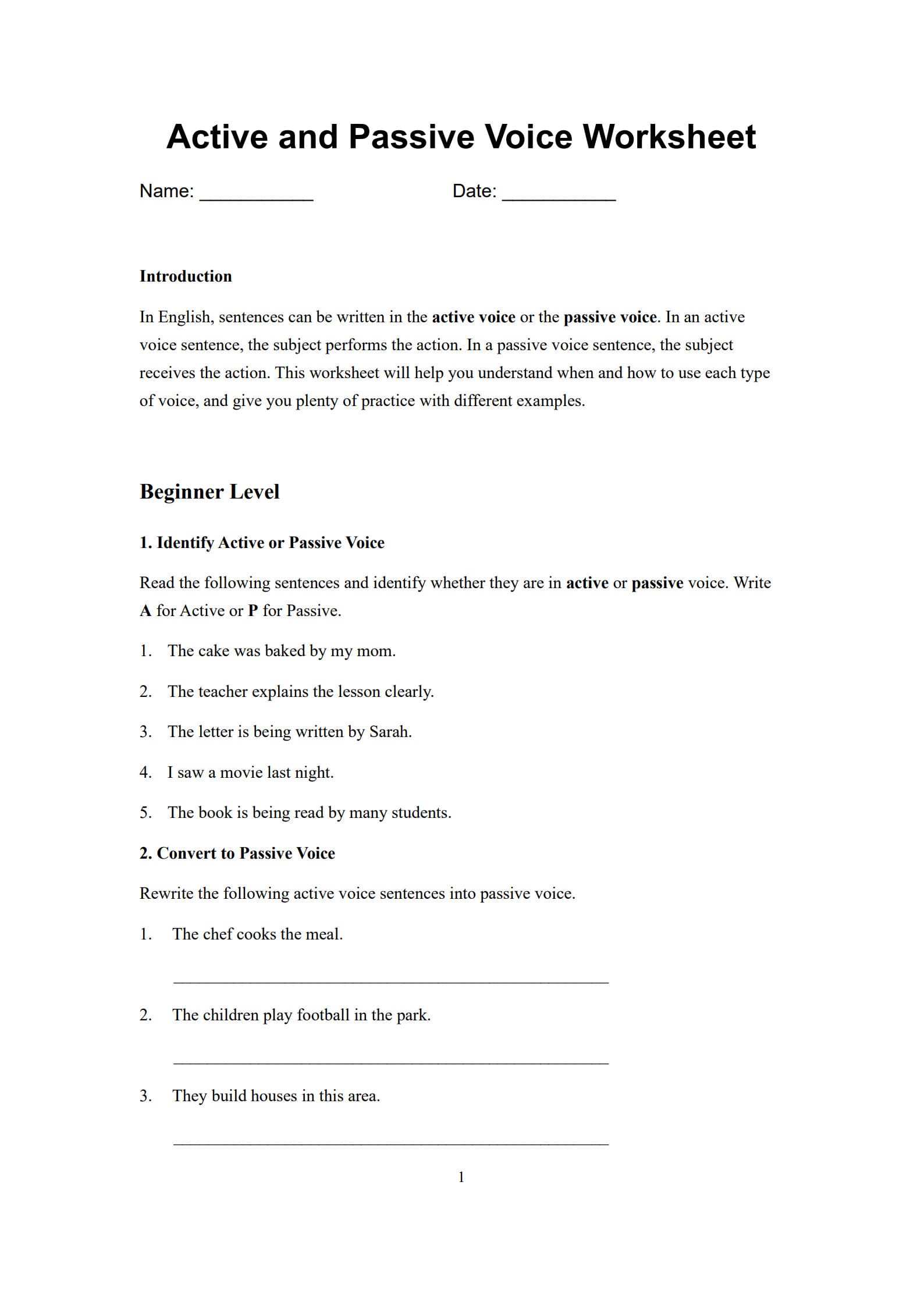
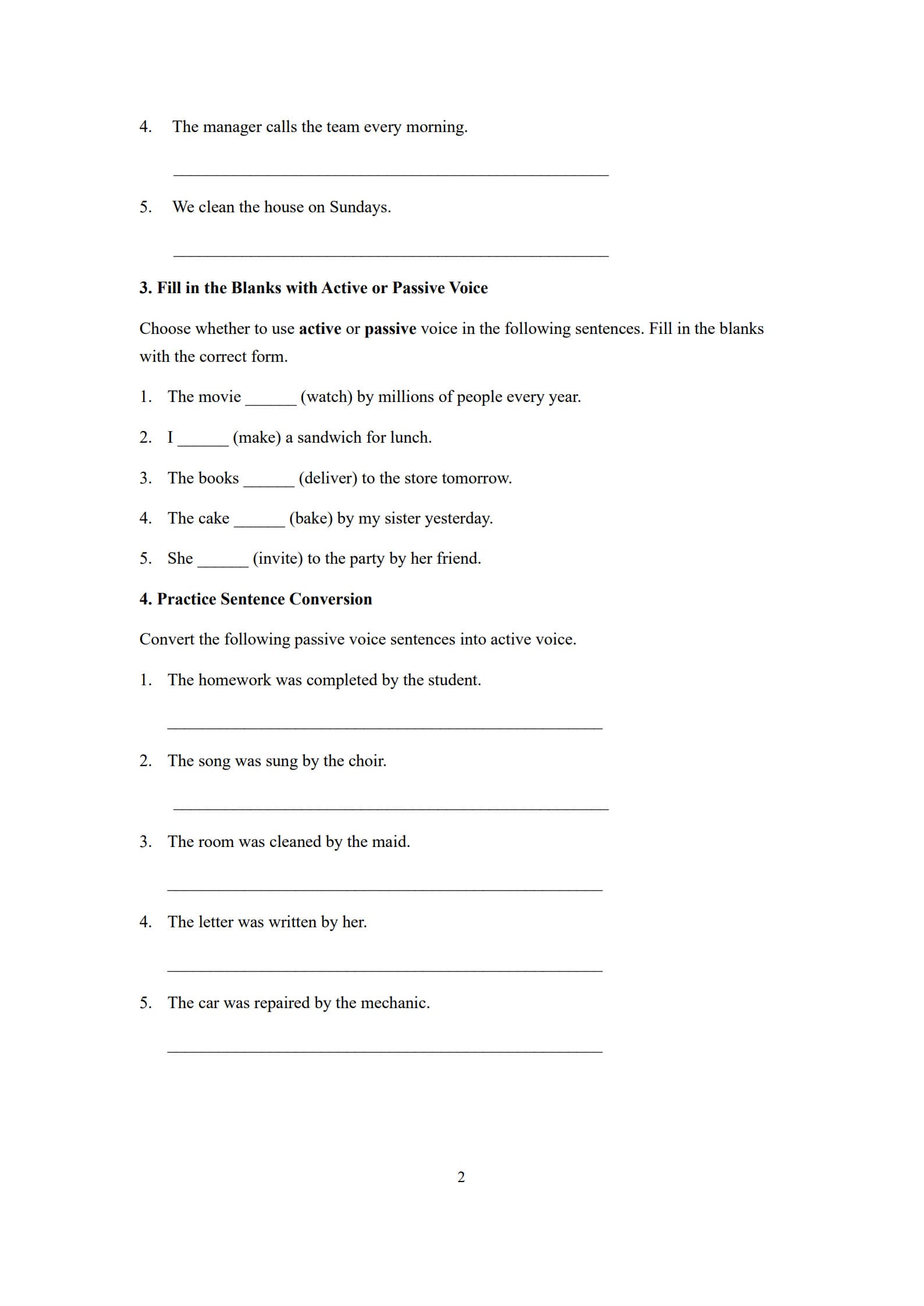
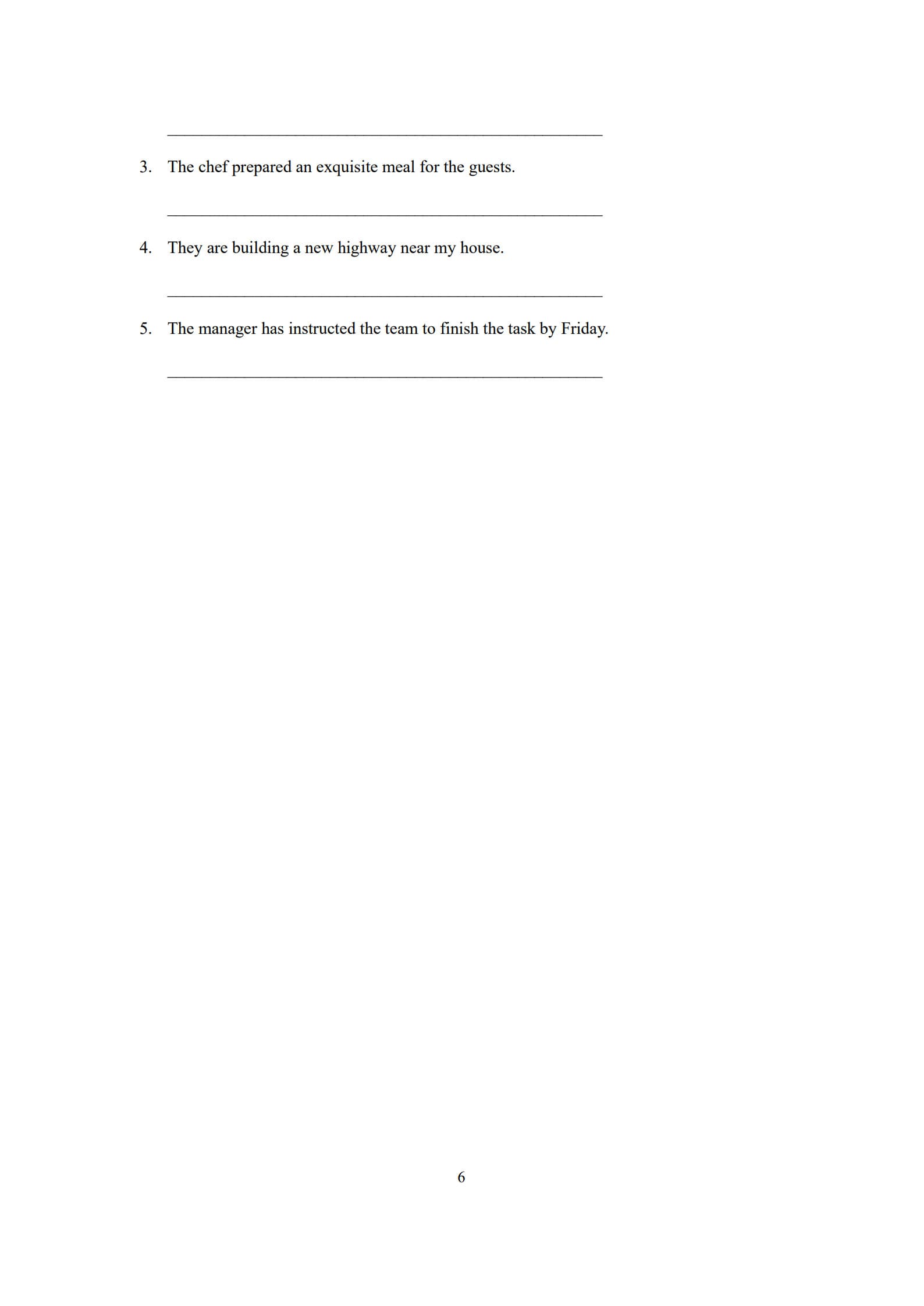
The worksheet’s beginner level systematically builds your understanding through multiple exercise types. The conversion section teaches you to transform active sentences like “The chef cooks the meal” into their passive equivalents (“The meal is cooked by the chef”). This hands-on practice ensures you internalize the structural differences between voices. The fill-in-the-blank exercises further reinforce this knowledge by requiring you to select correct verb forms, such as choosing between “is watched” (passive) and “watch” (active) for the sentence “The movie ______ by millions of people every year.”
How Do Passive Voice Exercises with Answers Accelerate Your Learning?
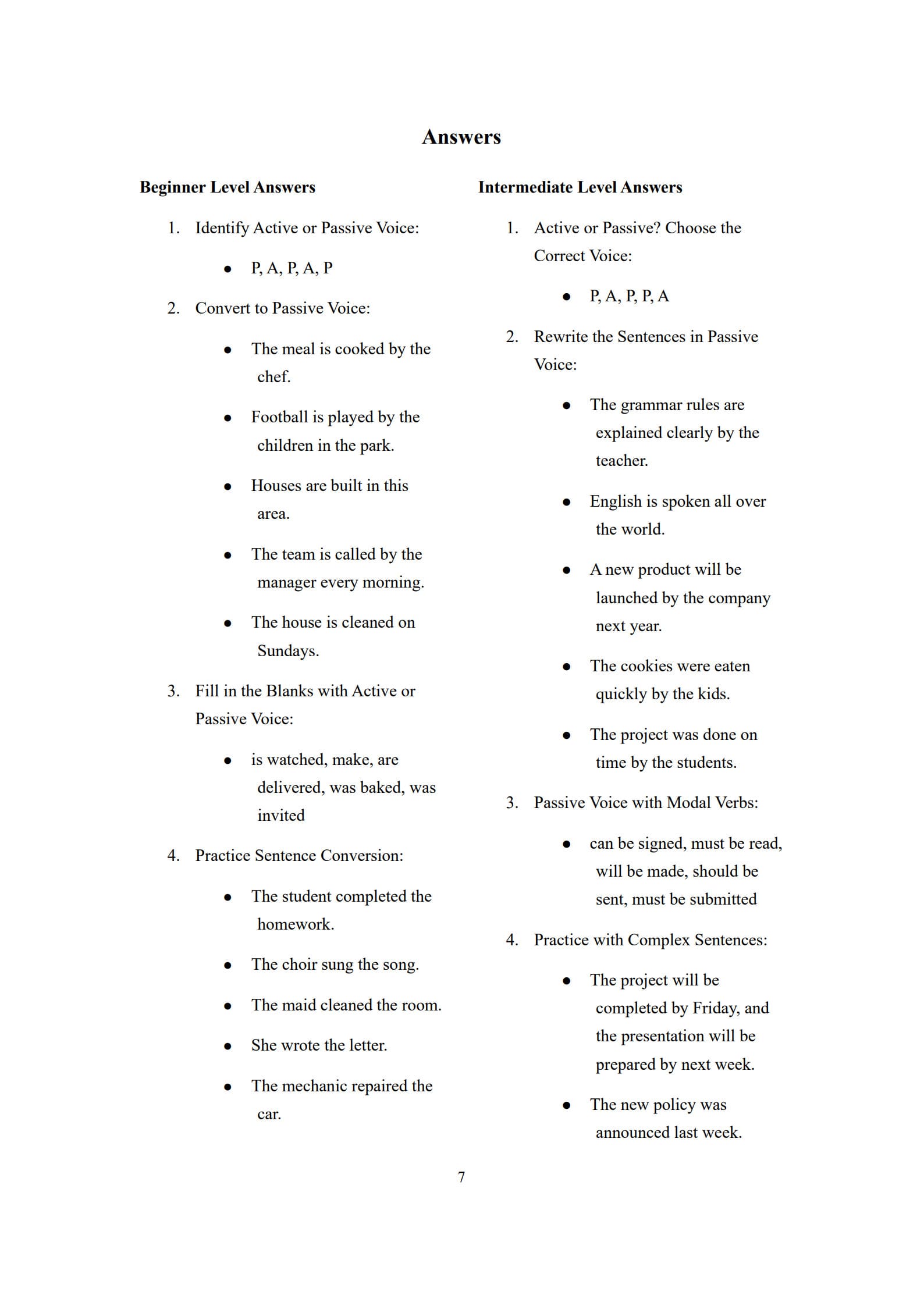
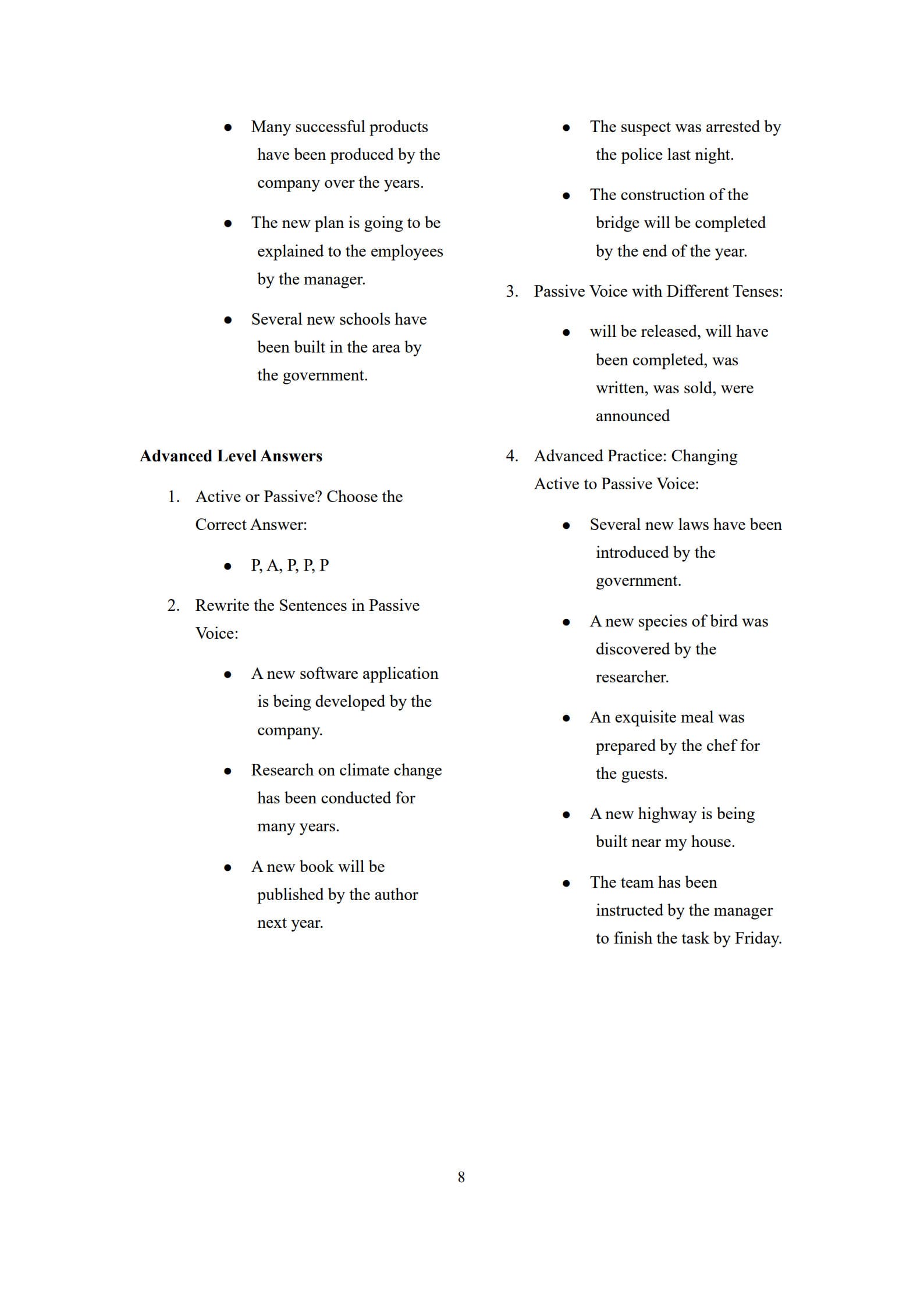
Immediate feedback is crucial for effective language learning, which is why our template includes comprehensive answer keys for all passive voice exercises with answers. This feature allows you to self-assess your progress and identify areas needing improvement. For example, after attempting to convert “The children play football in the park” to passive voice, you can immediately check if your answer matches the correct transformation: “Football is played by the children in the park.” This instant verification reinforces correct patterns and prevents the internalization of errors.
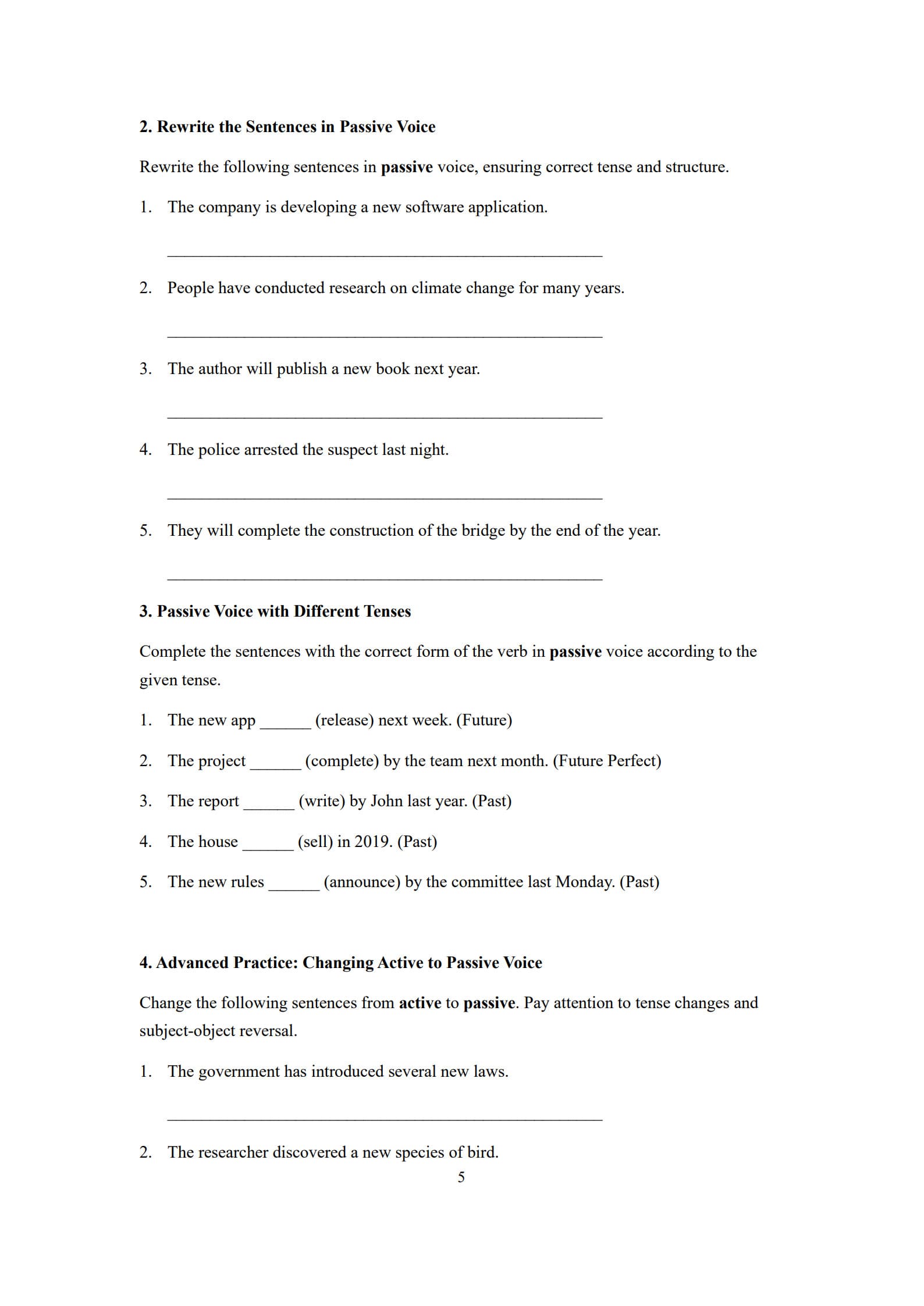
The answer section is strategically organized by difficulty level, making it easy to focus on specific challenge areas. Beginner answers confirm basic conversions, while intermediate solutions demonstrate proper use of modal auxiliaries in passive constructions. Advanced answers model complex transformations like changing “The government has introduced several new laws” to “Several new laws have been introduced by the government.” Each answered exercise serves as an additional learning example, showing you not just what is correct, but why it’s correct.
What Makes Our Grammar Voice Worksheet Different from Traditional Methods?
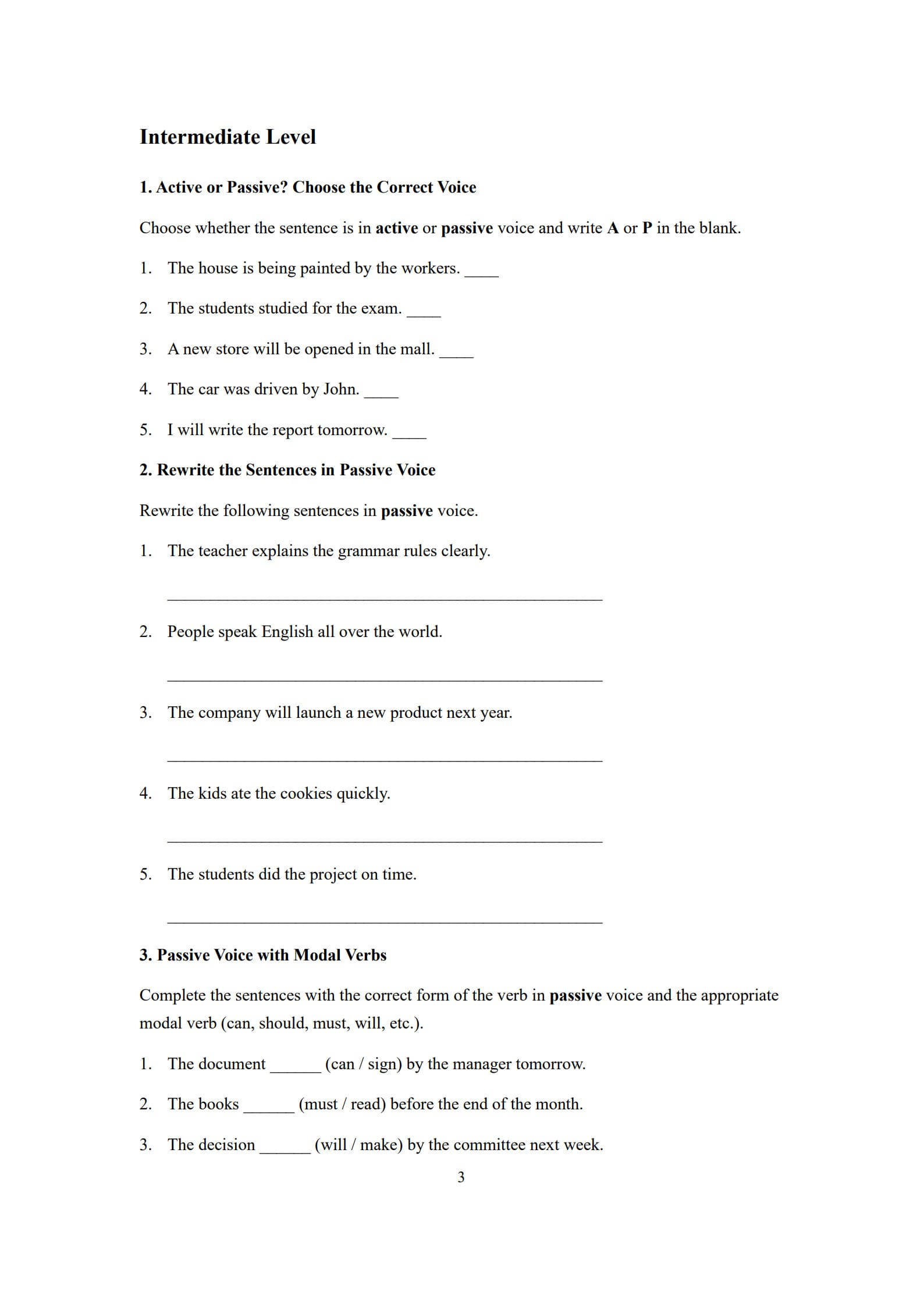
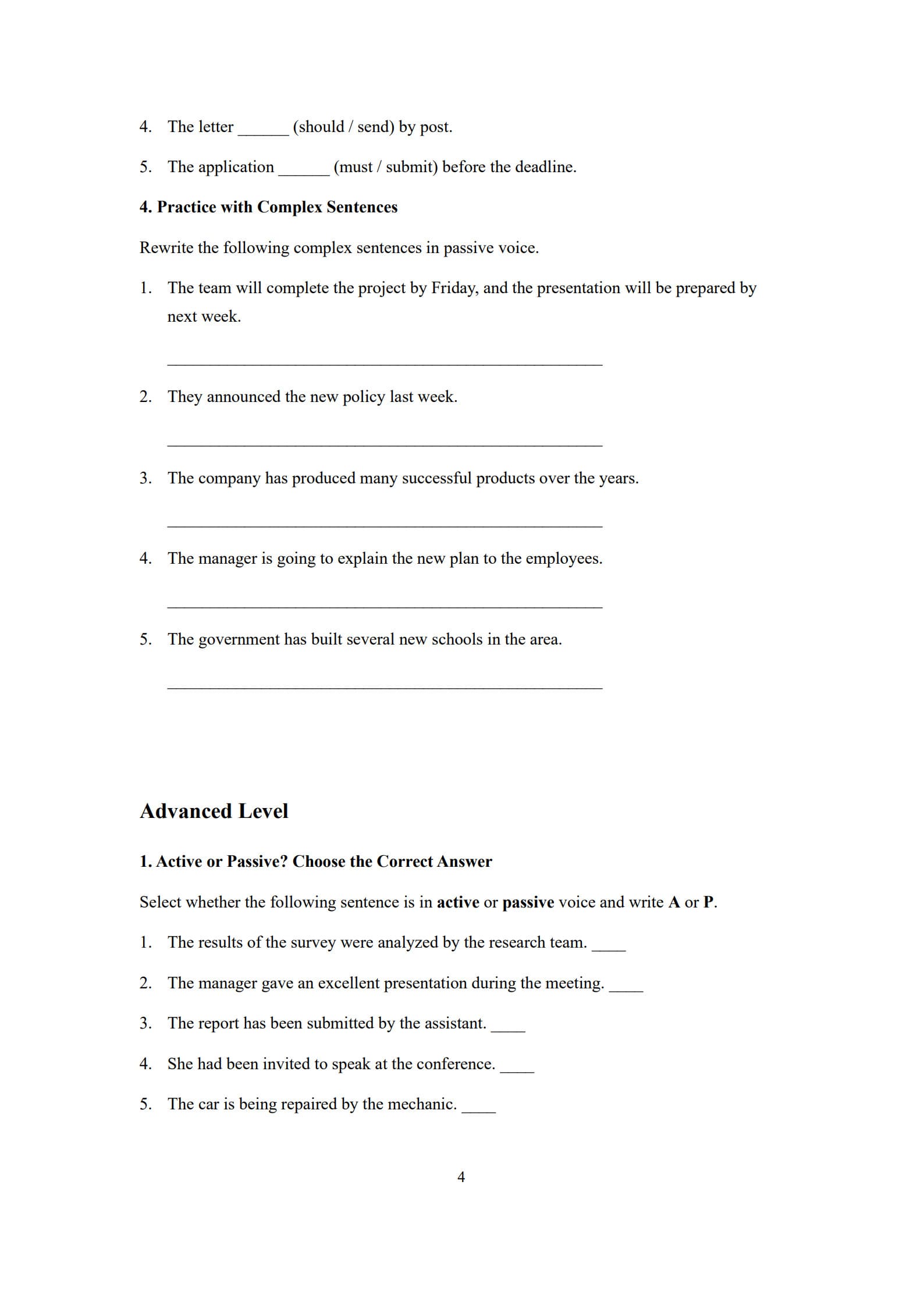
Traditional grammar worksheets often present concepts in isolation, but our grammar voice worksheet takes an integrated approach that reflects real-world language use. The template’s design incorporates multiple exercise formats—identification, conversion, fill-in-the-blanks, and sentence rewriting—ensuring you develop a versatile understanding of active and passive voice. This varied approach accommodates different learning styles and prevents the monotony that often accompanies grammar practice.
The worksheet’s content progression mirrors natural language acquisition. It begins with concrete examples like “I saw a movie last night” (active) and “The letter is being written by Sarah” (passive) before advancing to abstract applications. This scaffolding ensures that each new concept builds comfortably on previous knowledge. The intermediate section introduces modal verbs in passive voice, while the advanced level incorporates perfect tenses and complex sentence structures—precisely the progression needed for genuine mastery.
Table: Exercise Types and Their Learning Benefits
| Exercise Type | Example | Skill Developed |
|---|---|---|
| Voice Identification | “The book is being read by many students” → Passive | Recognition of structural cues |
| Voice Conversion | Active: “They build houses” → Passive: “Houses are built” | Understanding of syntactic changes |
| Modal Passives | “The decision will be made by the committee” | Application of auxiliaries in passive voice |
| Tense Variations | “The new rules were announced last Monday” | Control over temporal aspects |
This multidimensional approach ensures that you don’t just memorize rules but develop an intuitive understanding of when and why to use each voice. The template’s careful design means you’re learning grammar in context, making it more likely that you’ll successfully apply these skills in your own writing and speaking.
How to Use This Template on PDF Agile
Step 1: Access the Active and Passive Voice Worksheet Template
Navigate to the PDF Agile Template Library and search for “Active and Passive Voice Worksheet.” Alternatively, click the “Use Template” button directly from this instructional page. The template comes pre-formatted with all exercises and answer keys, ready for immediate use. The professional layout includes clear section headings, ample writing space, and organized answer sections for easy self-assessment.
Step 2: Customize for Your Learning Needs
While the template is complete as provided, PDF Agile’s editing tools allow you to personalize your learning experience. You can highlight key instructions, add notes to specific exercises, or even modify examples to match your interests. The flexible format means you can focus on areas most relevant to your learning goals—whether that’s basic voice identification or advanced sentence transformations with complex tenses.
Step 3: Complete Exercises Using Interactive Tools
Utilize PDF Agile’s annotation features to complete the exercises directly within the app. The fillable form fields allow you to type responses for conversion exercises, while the highlighting tool helps you identify key elements in sentences. For hands-on practice, use the drawing tool to underline subjects and verbs, reinforcing your understanding of sentence structure. These interactive features transform passive reading into active learning.
Step 4: Check Your Answers and Track Progress
Compare your responses with the comprehensive answer key included in the template. PDF Agile’s split-screen view allows you to view exercises and answers simultaneously, making self-assessment efficient and effective. Use the bookmark feature to flag challenging exercises for future review, creating a personalized study plan based on your specific needs.
Step 5: Save, Print, or Share Your Completed Work
Once you’ve finished the worksheet, save your annotated version for future reference.
Conclusion
Mastering active and passive voice is essential for developing sophisticated English writing skills, and our expertly designed worksheet template makes this journey both effective and engaging. The structured approach—progressing from basic identification to advanced transformations—ensures you build a solid foundation before tackling more complex concepts. With immediate access to answers and the ability to customize your learning experience, this template adapts to your individual needs and pace.