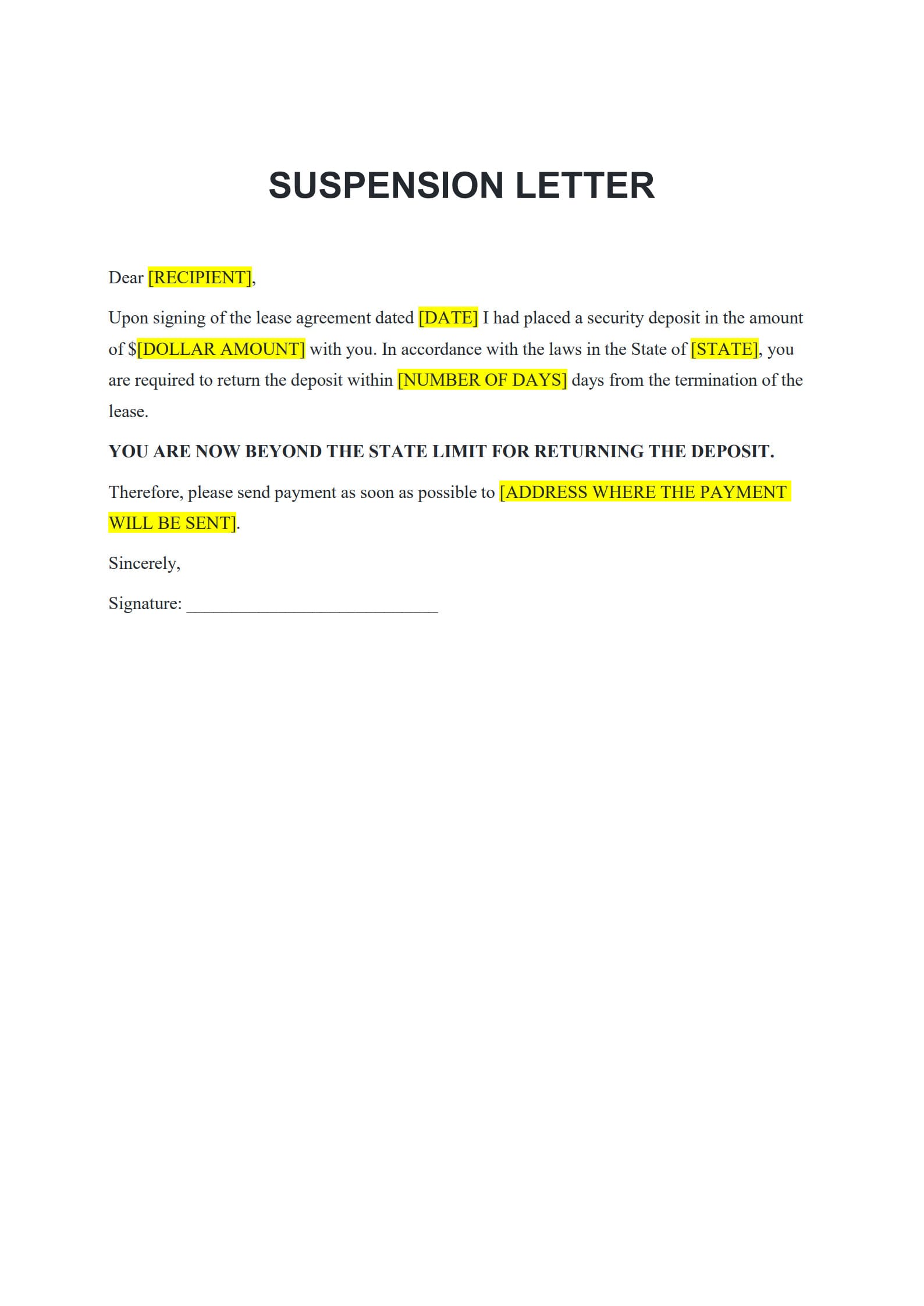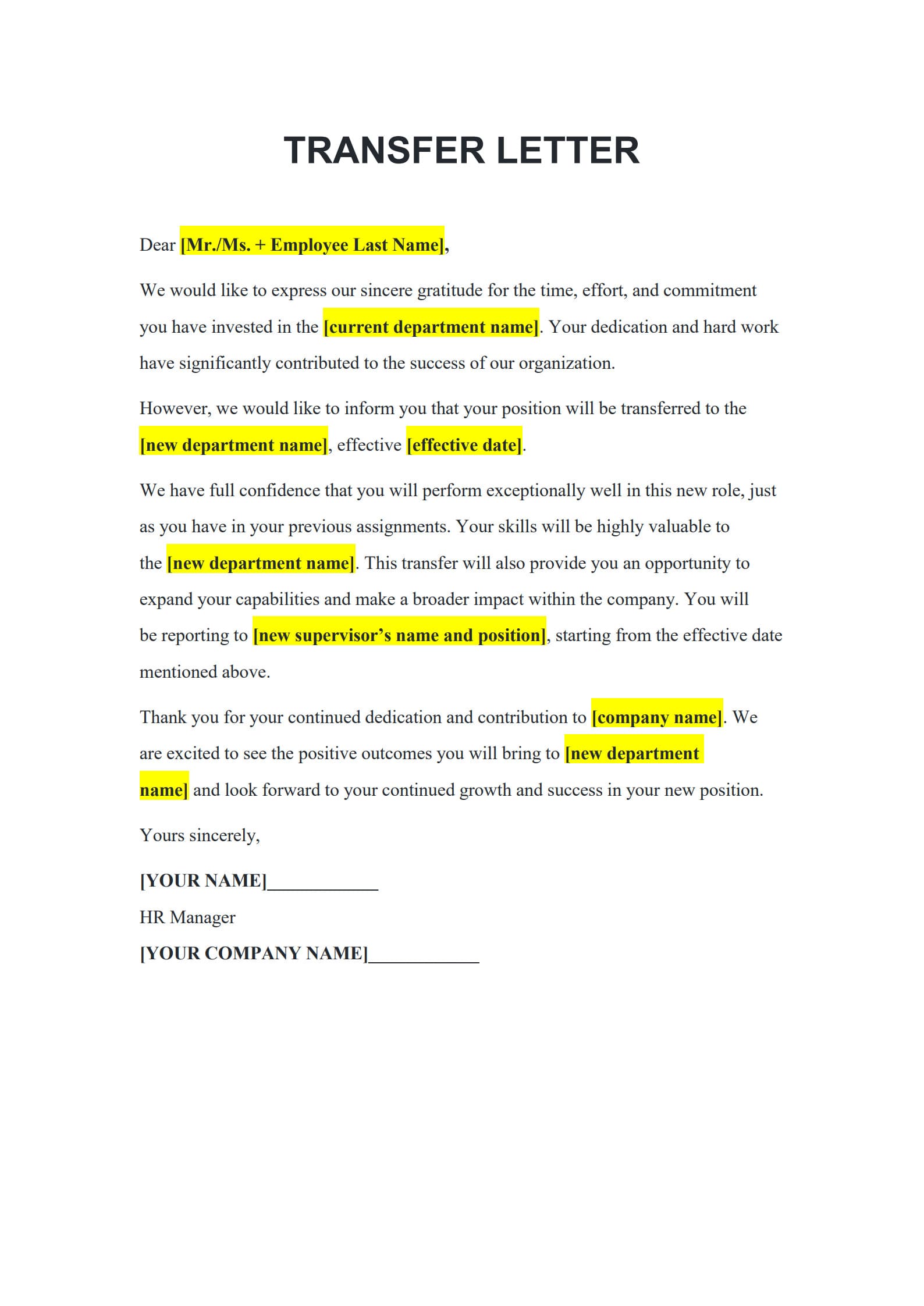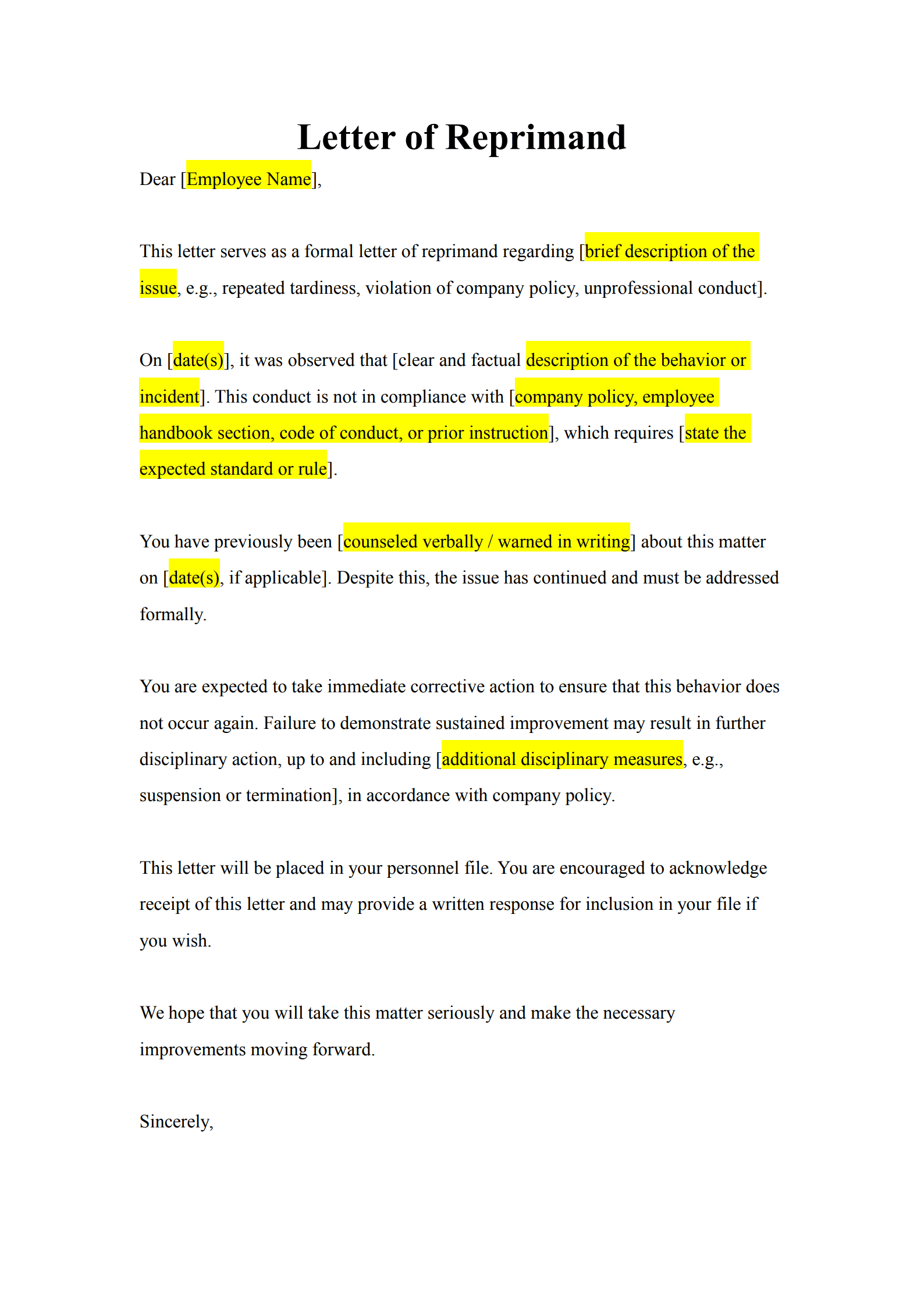


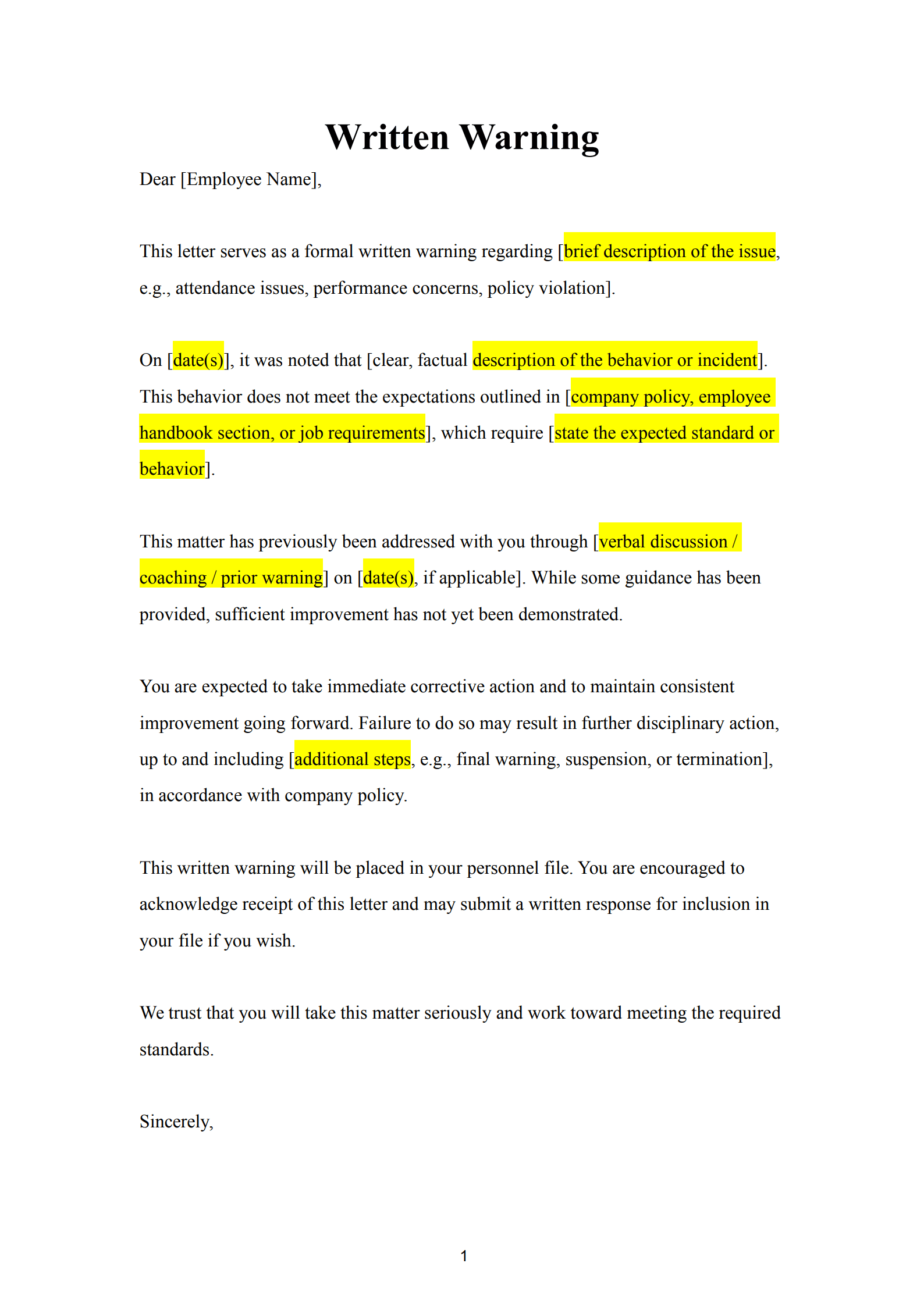
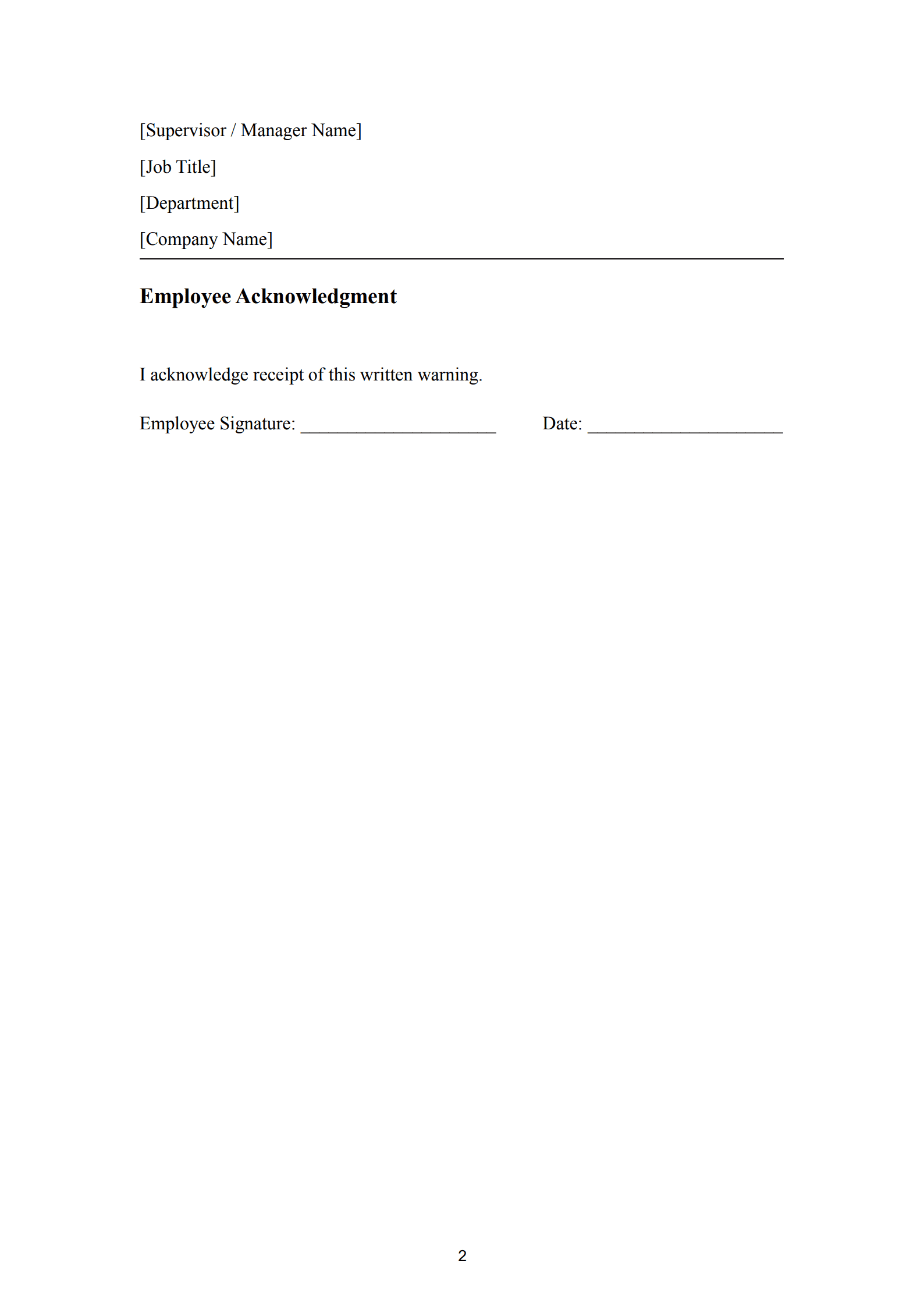
Maintaining discipline and professionalism in the workplace requires clear communication and proper documentation. A warning letter serves as a formal written notice that informs an employee about inappropriate behavior, policy violations, or performance deficiencies, while giving them the opportunity to correct their actions.
Using a professional Warning Letter Template ensures that every disciplinary communication remains consistent, objective, and compliant with company policies and labor laws. With PDF Agile, HR professionals and managers can easily create, edit, and manage warning letters in PDF format—saving time, maintaining uniformity, and protecting both the organization and its employees through transparent documentation.
1. What Is a Staff Warning Letter?
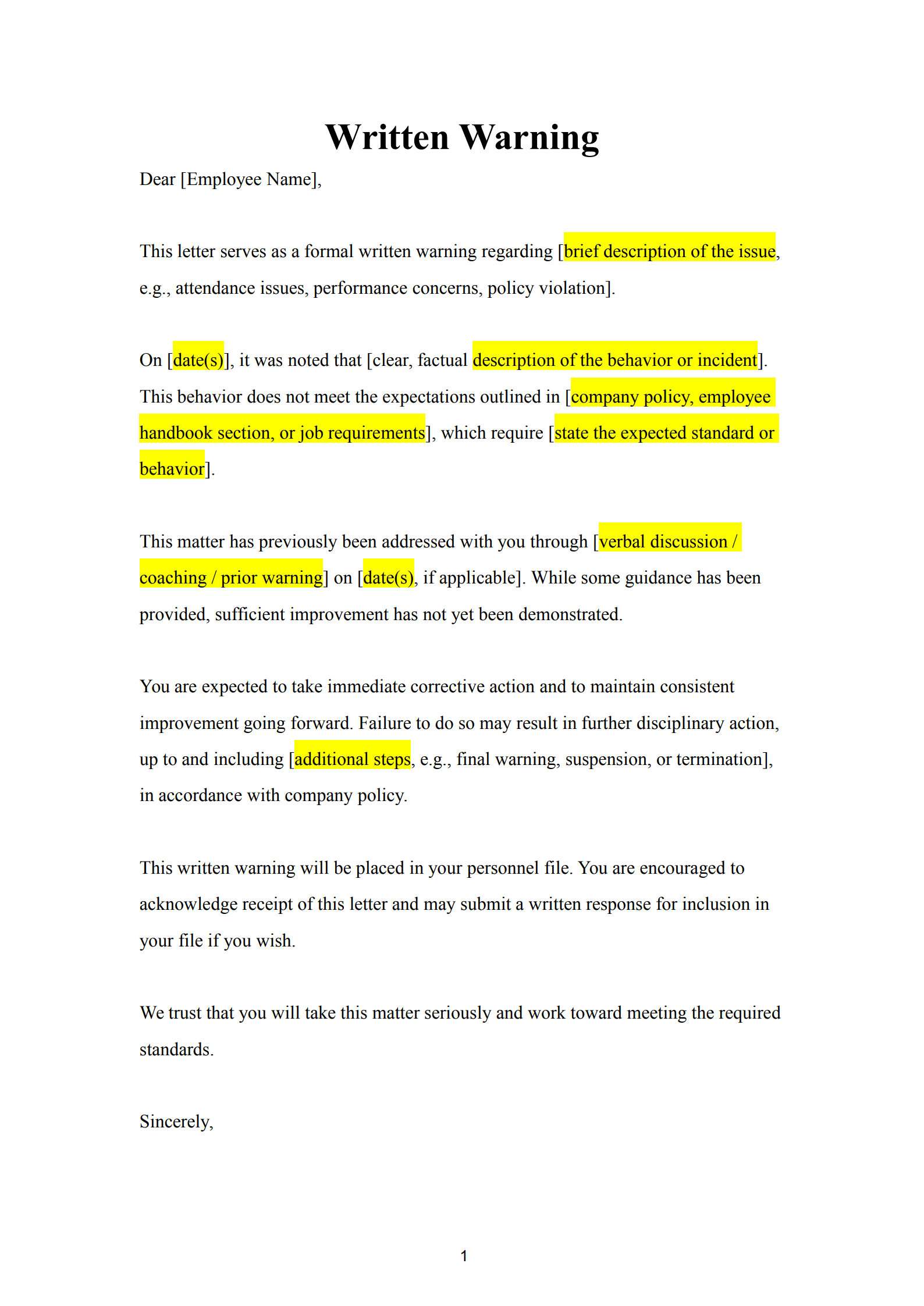
A staff warning letter is a formal written notice issued by an employer or supervisor to correct an employee’s inappropriate conduct, violation of company policy, or repeated performance issues.
Unlike a verbal warning, a written warning becomes part of the employee’s personnel record and clearly communicates that the problem requires immediate improvement. It outlines the issue, expected corrective actions, and possible consequences if the behavior continues.
2. Why Warning Letters Are Important in the Workplace
Warning letters play a crucial role in establishing fairness, clarity, and accountability:
- Document disciplinary actions for organizational records
- Provide employees with a formal opportunity to improve
- Demonstrate consistent enforcement of company policies
- Reduce the risk of legal disputes by showing procedural transparency
- Strengthen communication between management and staff
Issuing well-documented warning letters ensures both the employer and employee are protected through clear documentation.
3. Key Elements of a Professional Warning Letter
A clear, professional warning letter typically includes the following key components:
- Employee Information – Name, position, department, and employee ID (if applicable)
- Date of Issue – The date the letter is officially issued
- Details of the Incident or Performance Issue – A factual summary of what occurred
- Reference to Previous Warnings (if any) – Mention any prior communication regarding similar conduct
- Expected Behavior or Improvement Plan – Outline the corrective steps expected
- Consequences of Non-Improvement – State what may happen if behavior doesn’t change
- Signatures – From the supervisor, HR representative, and optionally, the employee
Clarity, professionalism, and accuracy in language are critical to the effectiveness of a warning letter.
4. How to Create with an Effective Written Warning Template Step by Step?
When drafting a warning letter, follow these steps for consistency and fairness:
Step 1: Review the facts – Gather relevant evidence, reports, or witness statements.
Step 2: Use a professional tone – Remain factual, neutral, and free from emotion.
Step 3: State the issue clearly – Specify the exact behavior or performance concern.
Step 4: Connect to company policy – Reference the policy or rule being violated.
Step 5: Describe the expected improvement – Outline clear, actionable expectations.
Step 6: Mention potential consequences – Communicate follow-up steps if there’s no improvement.
Step 7: Invite acknowledgment – Include a section for the employee’s signature or written acknowledgment.
Following a structured template ensures each warning is legally compliant and free from ambiguity.
5. Final Written Warning Template
5.1 What Is a Final Written Warning?
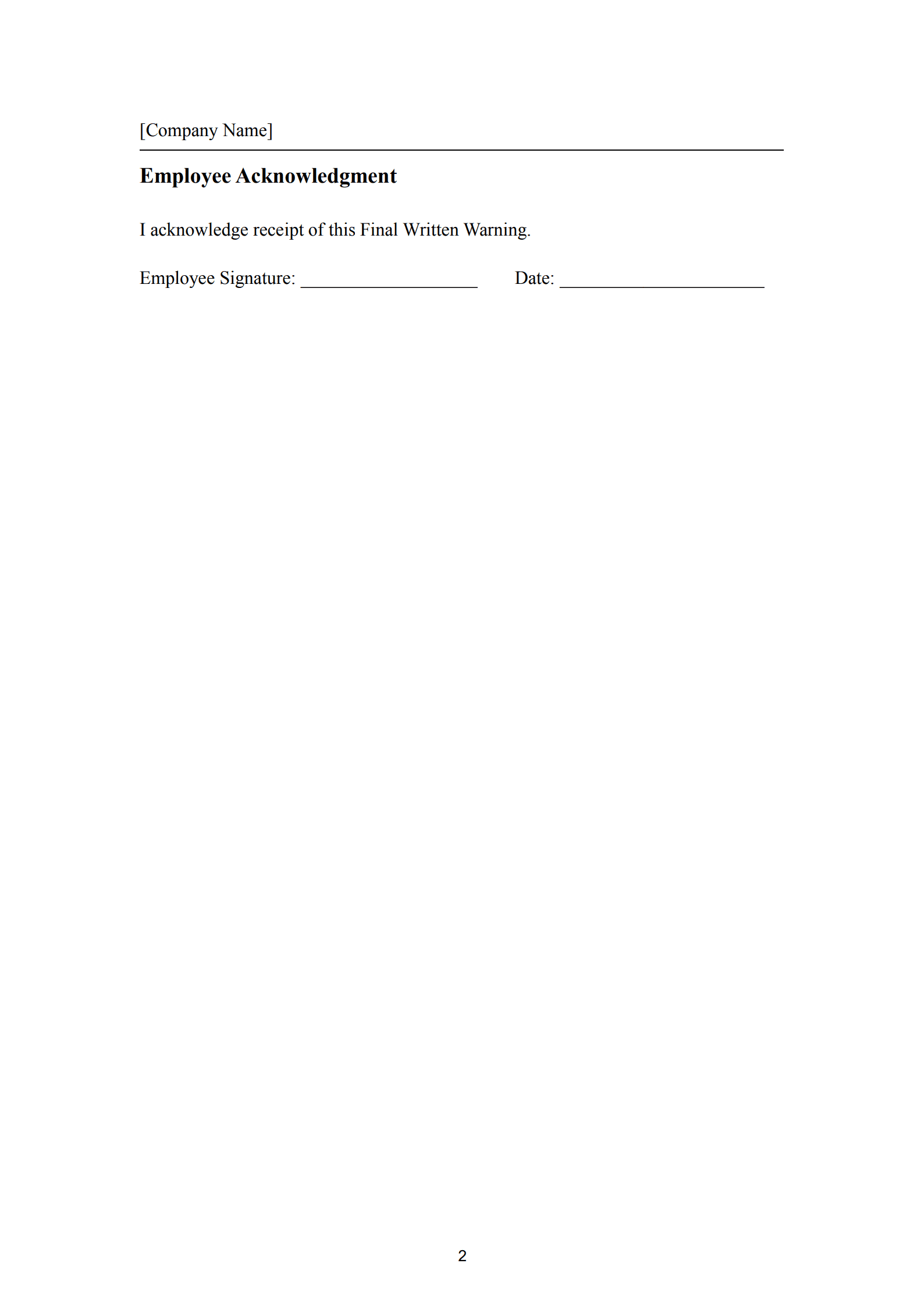
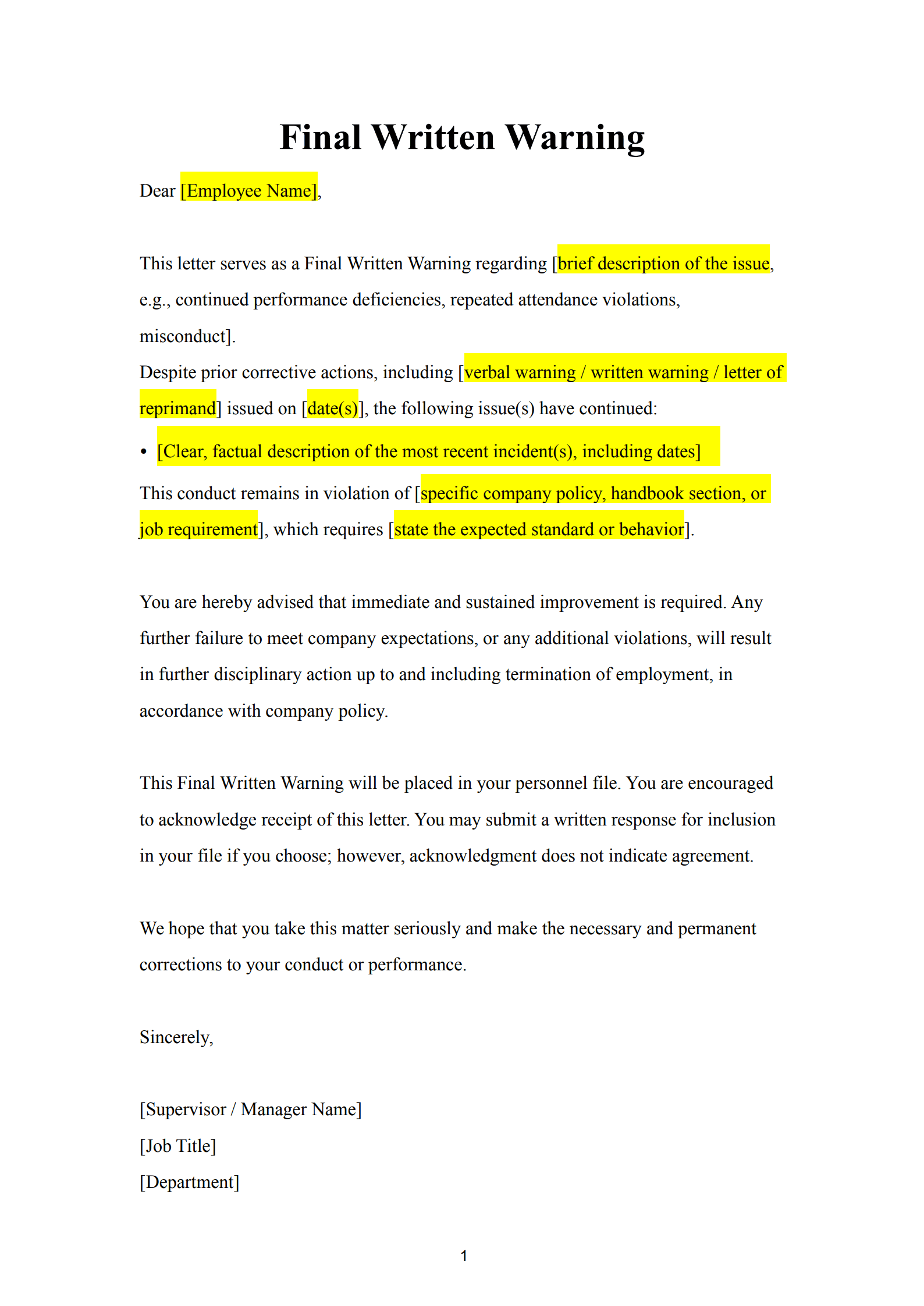
A final written warning is the last formal step in the disciplinary process before termination. It indicates that previous warnings have been ignored or that the issue is serious enough to warrant one last opportunity to improve.
5.2 When to Issue a Final Written Warning
Employers may issue a final warning when:
The employee repeatedly violates company policies.
Prior written or verbal warnings have not resulted in improvement.
A single incident of serious misconduct occurs.
5.3 Structure of a Final Written Warning Letter
A professional final warning letter should include:
A clear heading indicating it is a Final Written Warning
Description of repeated or serious misconduct
Reference to all prior warnings and discussions
Statement of potential termination if behavior continues
Specific improvement conditions and deadlines
Signature and acknowledgment section
5.4 Example Outline for a Final Written Warning Letter
- Heading: Final Written Warning
- Employee Details and Date
- Issue Summary: Describe the recurring issue or violation
- Previous Warnings: Reference prior steps taken
- Required Action: Define expected improvements and time frames
- Consequences: Clearly state termination as the next step
- Signatures: Employer and employee acknowledgment
This document communicates urgency while still giving employees a final opportunity to rectify their behavior.
6. Common Mistakes to Avoid When Writing a Warning Letter
Avoid these common pitfalls to ensure the warning letter remains professional and effective:
- Using emotional or accusatory language
- Omitting essential details such as dates or incidents
- Issuing a letter without prior discussion or investigation
- Being unclear about expected improvements
- Failing to retain a copy for personnel records
Precision and professionalism are key to maintaining credibility and fairness.
7. Tone Tips for Writing a Warning Letter
To keep the message clear and professional:
- Maintain a neutral and objective tone
- Focus on behavior, not personality
- Cite specific facts or evidence
- Offer constructive guidance alongside corrective measures
- Ensure consistency with organizational policies and previous actions
- Close courteously, expressing confidence in the employee’s ability to improve
A well-balanced tone reinforces accountability while showing respect and fairness.
Conclusion
A warning letter is a critical HR tool that promotes accountability and provides documentation of behavior that requires correction. It supports both fairness and clarity within the workplace.
Using PDF Agile’s editable Warning Letter Template enables HR teams to efficiently issue formal notices that meet legal, ethical, and professional standards. You can easily customize, fill, and share the letter in secure PDF format, ensuring all disciplinary communications are managed consistently.
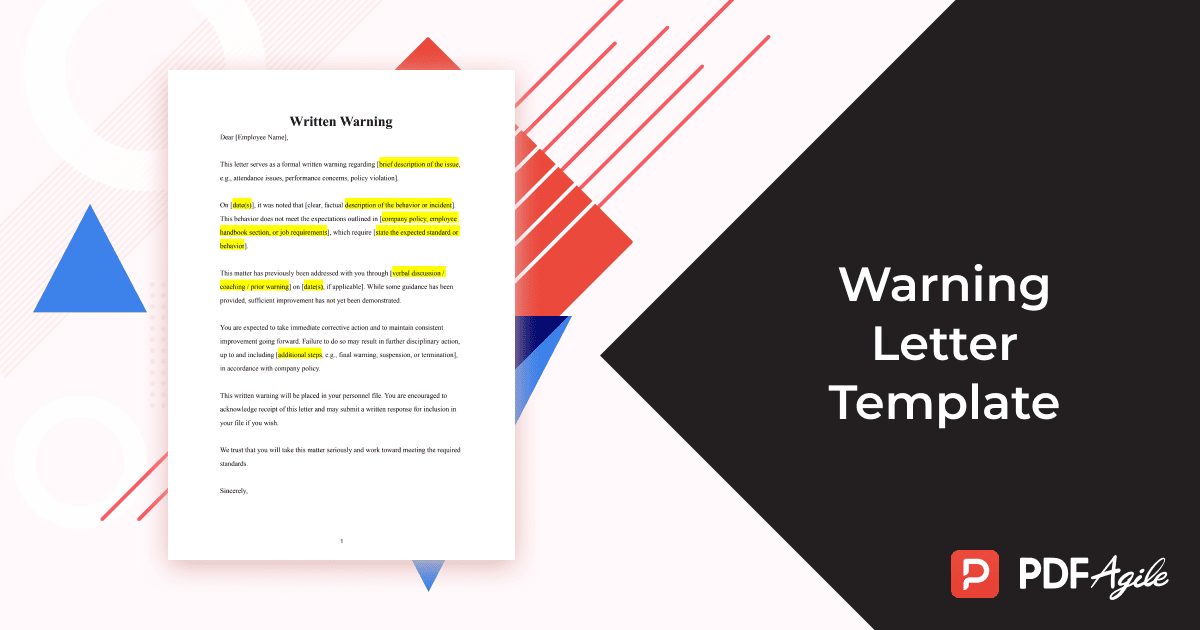
Free Download: Printable Warning Letter Template
You can download the Warning Letter Template mentioned above by clicking Use Template button on this page. Customize it to fit your specific needs and preferences.
9. FAQs about Warning Letter Template
9.1 What is the difference between a warning letter and a final warning letter?
A warning letter serves as an initial written notice, while a final warning letter is issued when issues persist despite earlier warnings, signaling that termination may follow.
9.2 How many warning letters should be given before termination?
Company policies vary, but typically there are two to three warnings—verbal, written, and final—before termination.
9.3 Can I issue a warning letter via email?
Yes, as long as it complies with company policy and the employee acknowledges receipt. However, a signed printed copy is preferable for official records.
9.4 What should I do if an employee refuses to sign the warning letter?
Document the refusal with a witness signature or HR note. The warning remains valid; acknowledgment only confirms receipt, not agreement.