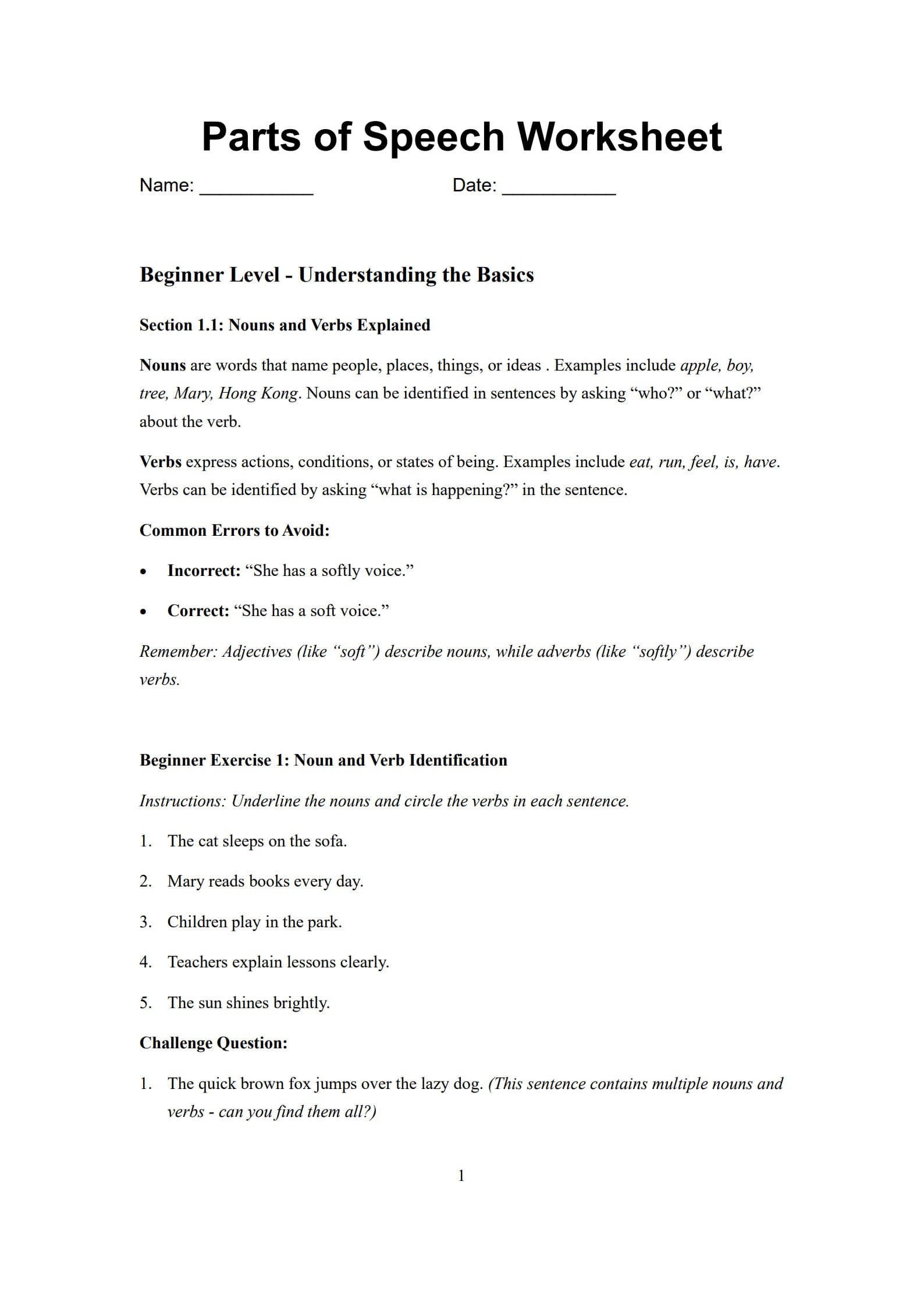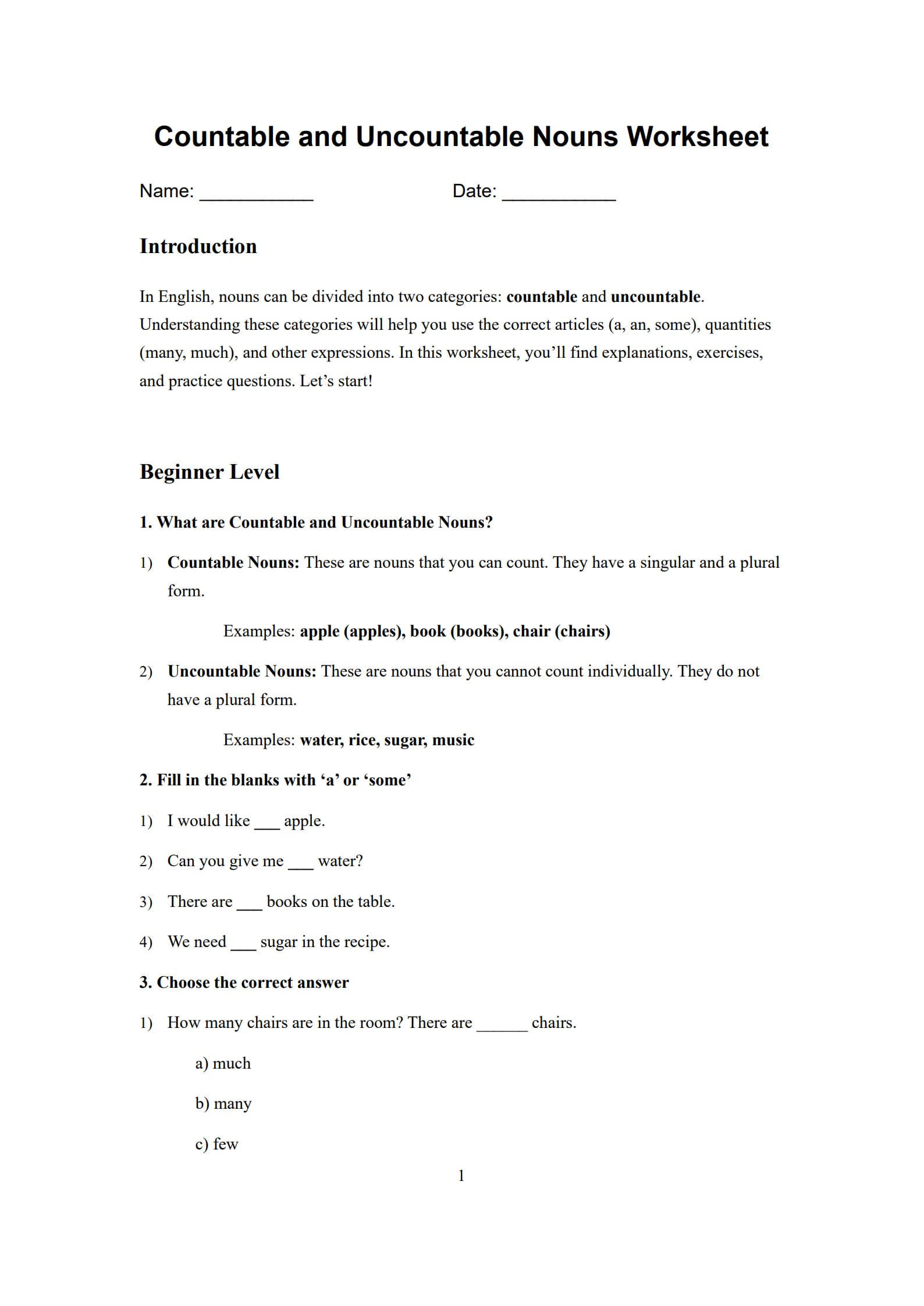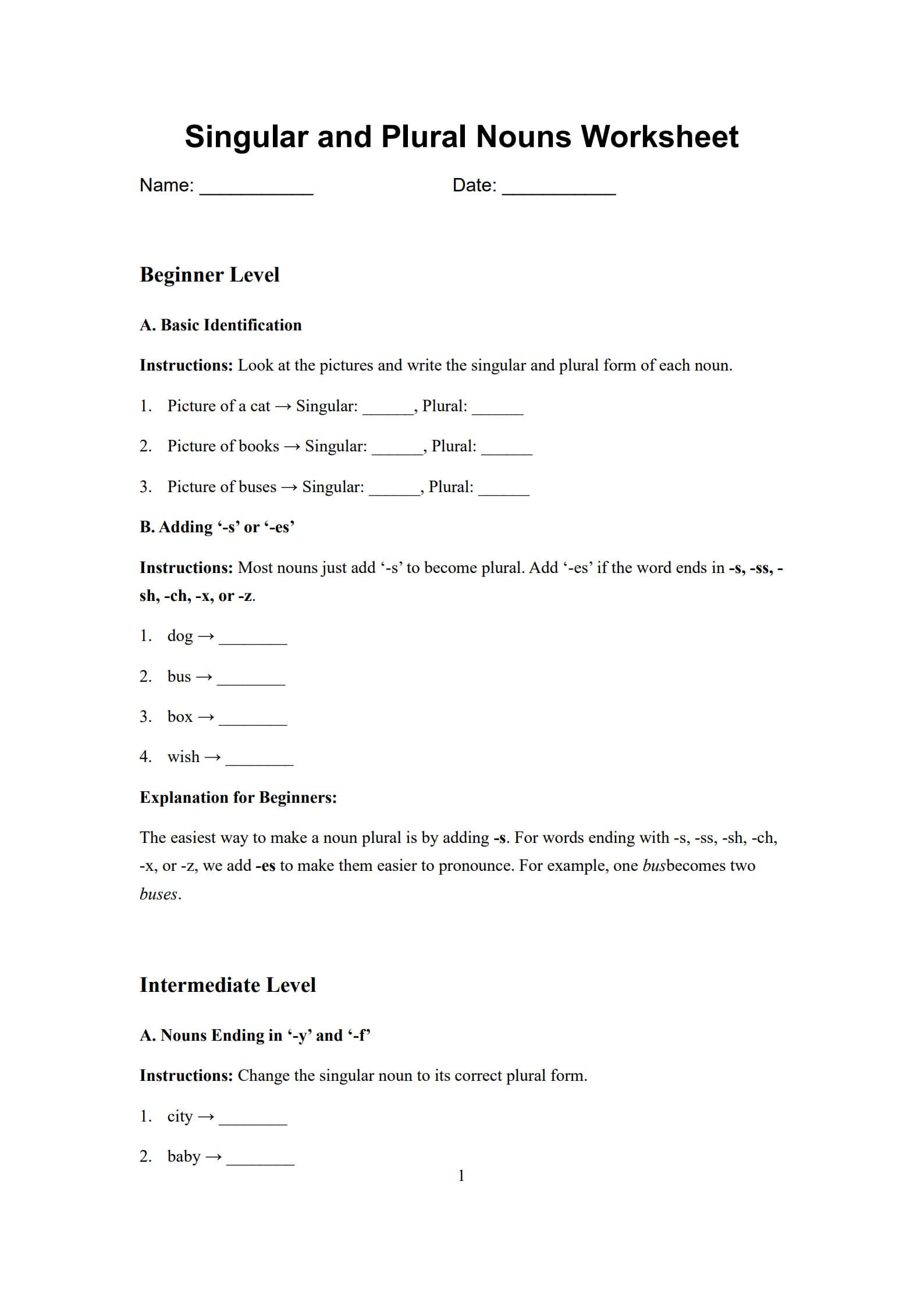


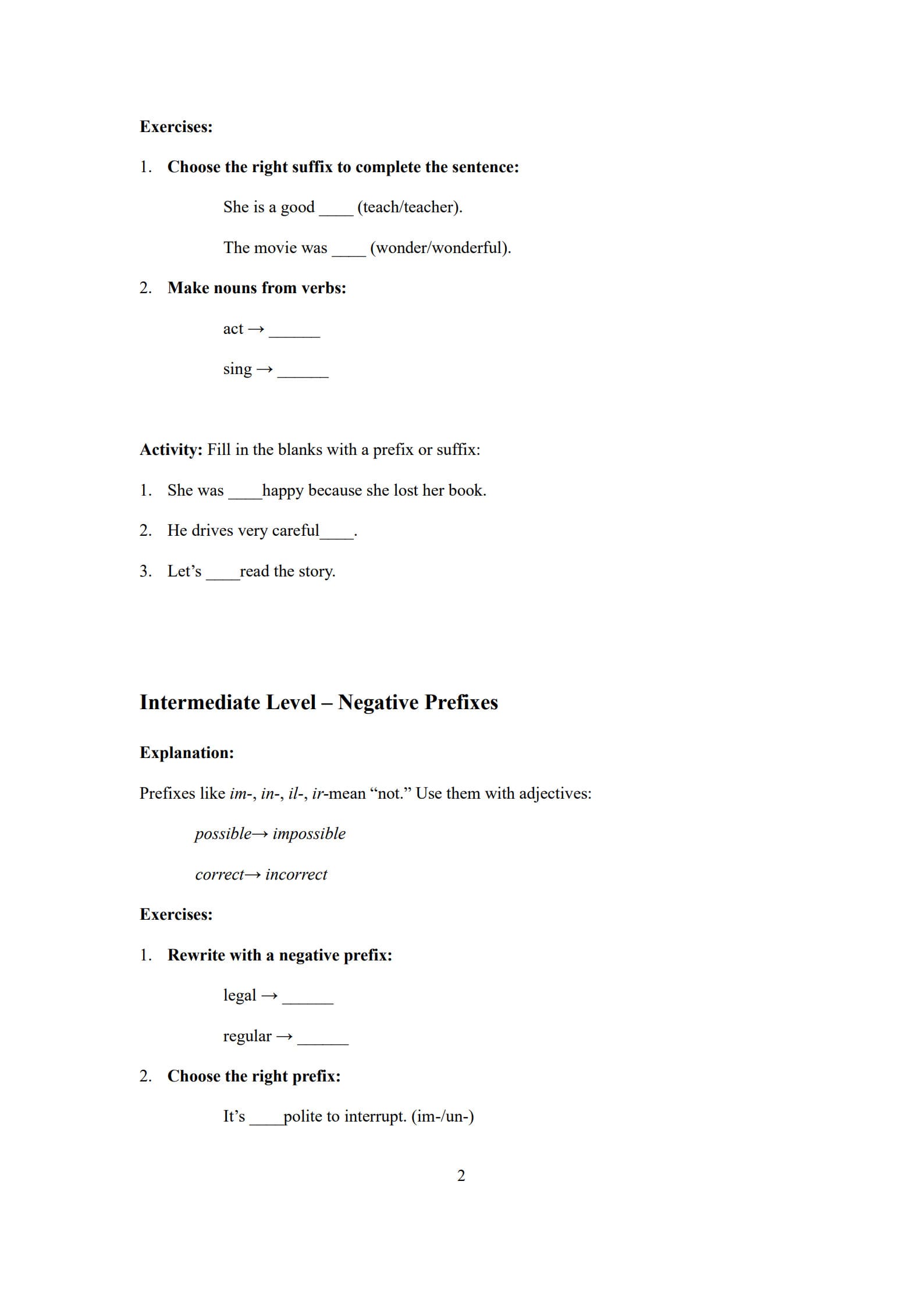
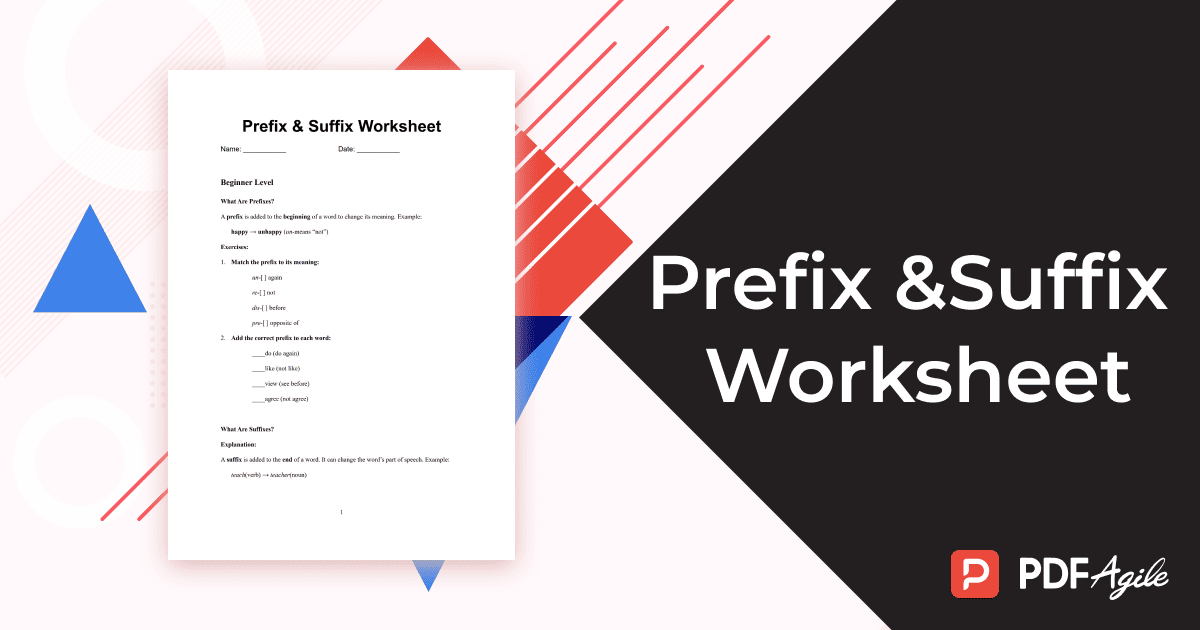
Are you looking to strengthen your understanding of English word formation in a structured, engaging way? PDF Agile’s ready-to-use Prefix and Suffix Worksheet template is designed to guide learners at every level—from beginner to advanced—through the fascinating mechanics of prefixes and suffixes. This template, which you can instantly customize and use within the PDF Agile app, offers a complete learning journey with clear explanations, practical exercises, and real-time application.
What Makes a Great Prefix and Suffix Exercise?
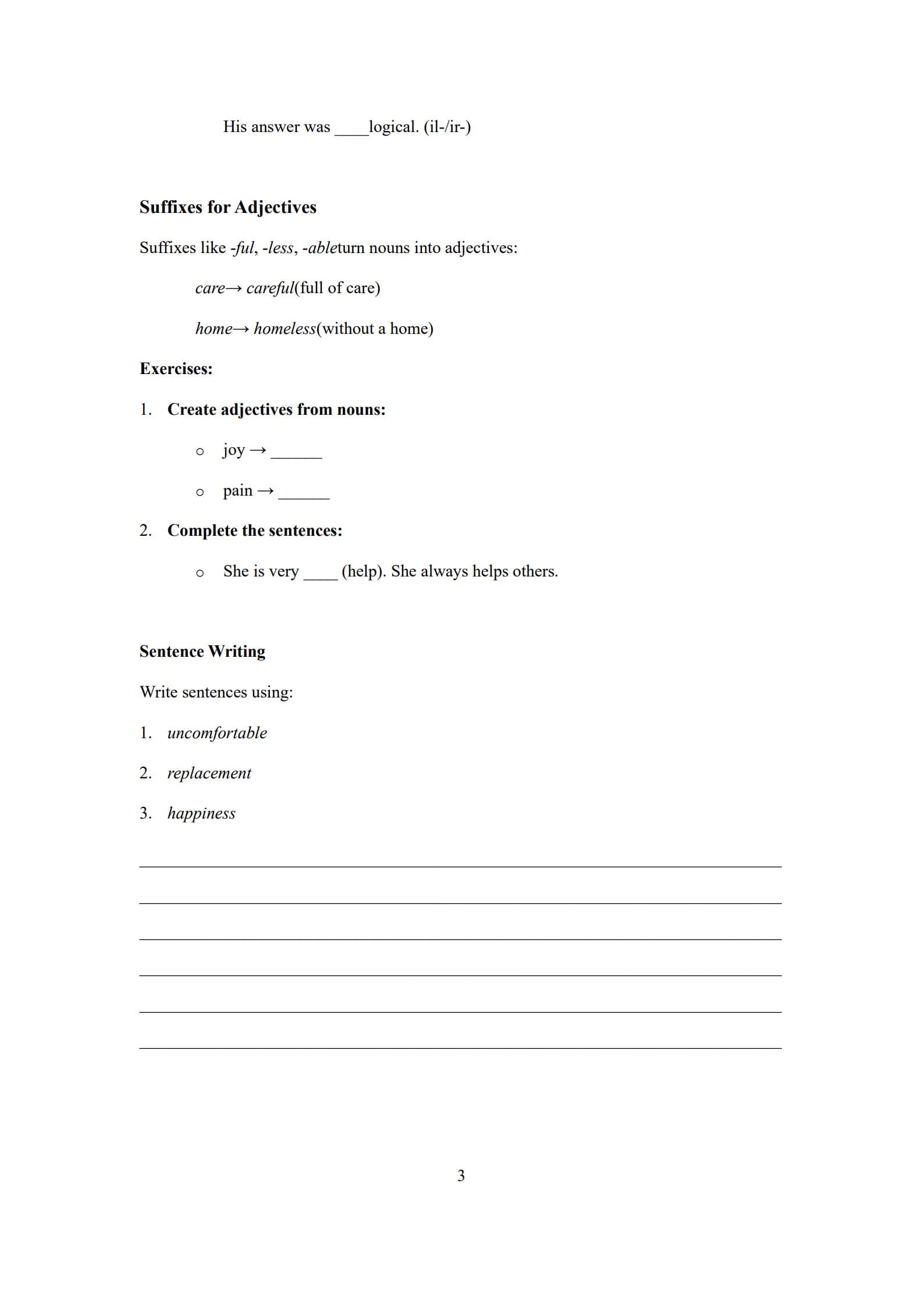
What if you could turn a simple word like “happy” into “unhappy” with just one prefix? Or change “teach” into “teacher” by adding a suffix? Our worksheet begins with exactly these kinds of transformations, offering a gentle introduction for those new to English word formation. The beginner section is structured to build confidence through matching exercises, word completion tasks, and simple sentence fill-ins. For example, one exercise asks learners to match prefixes like un-, re-, dis-, and pre-to their meanings—such as “not,” “again,” “opposite of,” and “before.” This type of prefix and suffix exercise reinforces recognition and recall, which are crucial for vocabulary growth.
Another key part of the beginner level is the focus on suffixes and how they change a word’s part of speech. Learners practice turning verbs like “act” and “sing” into nouns by adding suffixes, helping them see how English builds families of words from a single root. Each activity is designed to be intuitive, with examples drawn directly from the template, such as creating “redo” from “do” or “dislike” from “like.” By the end of this section, users will have a solid grasp of how small additions to words can alter meaning and function—a foundation that supports more advanced learning. The template ensures that every prefix worksheet activity is self-explanatory and progressive, making it ideal for self-study or classroom use.
Why are these exercises so effective? They blend repetition with contextual learning. Instead of memorizing lists, learners apply prefixes and suffixes in mini-tasks, like completing the sentence: “She is a good (teach/teacher).” This approach bridges the gap between theory and usage, ensuring that skills are not just learned but retained. Whether you’re a student, teacher, or independent learner, the beginner section offers a welcoming entry point into the world of affixes.
How Can Intermediate Worksheets Deepen Your Skills?
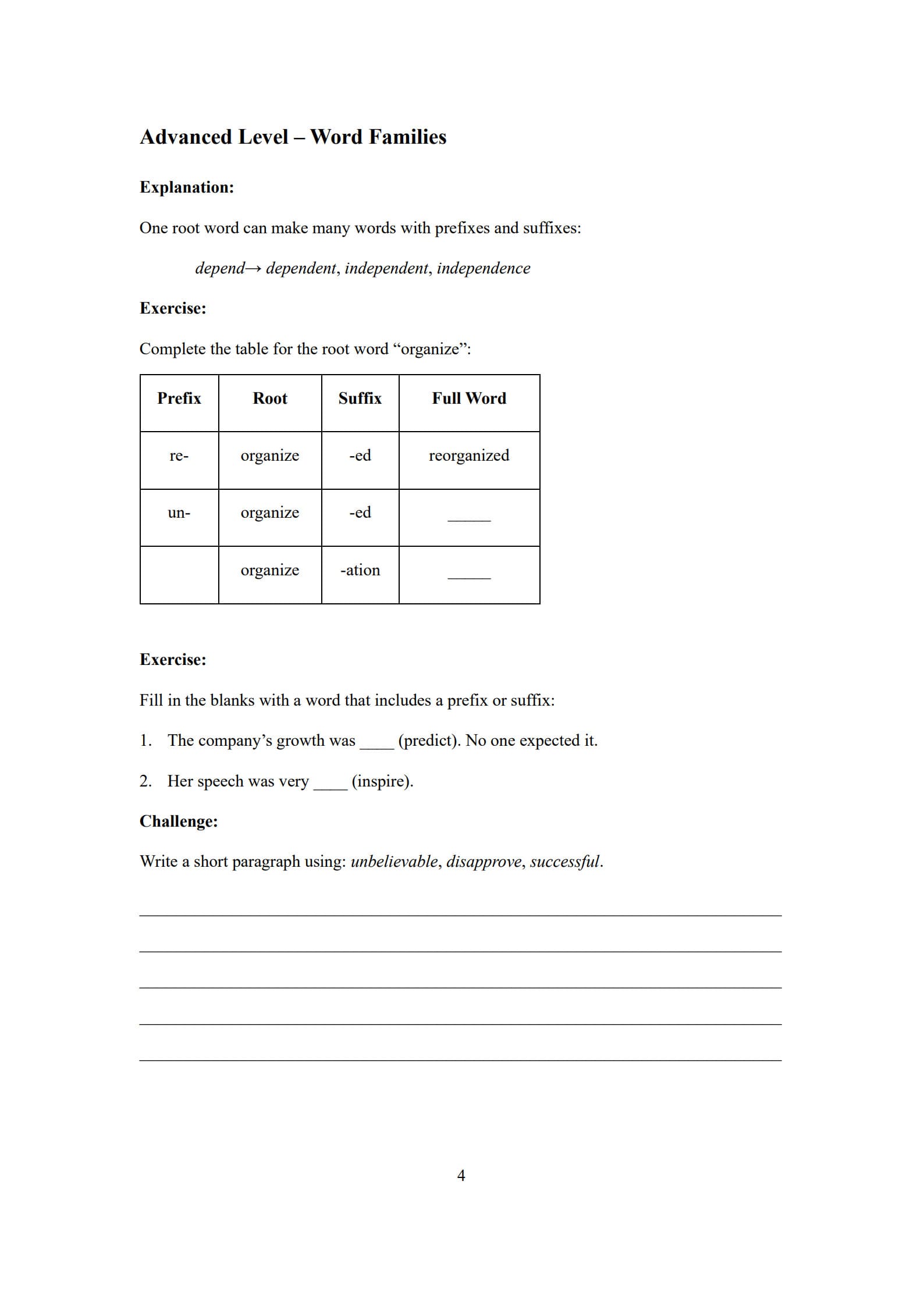
Ready to level up? The intermediate section of the worksheet tackles negative prefixes like im-, in-, il-, and ir-, which all mean “not” but are used in specific contexts. For instance, the template guides learners to transform “legal” into “illegal” or “regular” into “irregular,” highlighting spelling patterns that determine prefix choice. This segment goes beyond basic definitions, encouraging learners to analyze word roots and apply the correct prefix based on conventions. Exercises here include rewriting words with negative prefixes and selecting the right prefix for gaps in sentences, such as: “It’s ___ polite to interrupt.” (Answer: im-). These prefixes and suffixes worksheets challenge users to think critically, moving from recognition to application.
The intermediate level also introduces suffix usage for forming adjectives. Learners explore suffixes like -ful, -less, and -able, which turn nouns into descriptive words—for example, “joy” becomes “joyful,” and “pain” becomes “painful.” A table-based activity helps visualize these transformations, making it easier to grasp patterns. Here’s a simplified version from the template:
| Prefix | Root | Suffix | Full Word |
|---|---|---|---|
| (none) | joy | -ful | joyful |
| (none) | pain | -less | painless |
| un- | acceptable | (none) | unacceptable |
This table format allows learners to see the building blocks of words, reinforcing how prefixes and suffixes interact with roots. By working through these exercises, users gain a deeper understanding of word families and usage nuances, which are essential for fluency. The intermediate section effectively bridges simple and advanced concepts, ensuring a smooth learning curve.
What’s the takeaway? These activities make abstract rules tangible. By practicing with real examples from the template, learners develop an intuitive sense of which affix to use and when. This hands-on experience is invaluable for avoiding common mistakes and building a more sophisticated vocabulary.
Advanced Word Families: Building Vocabulary through Roots and Affixes
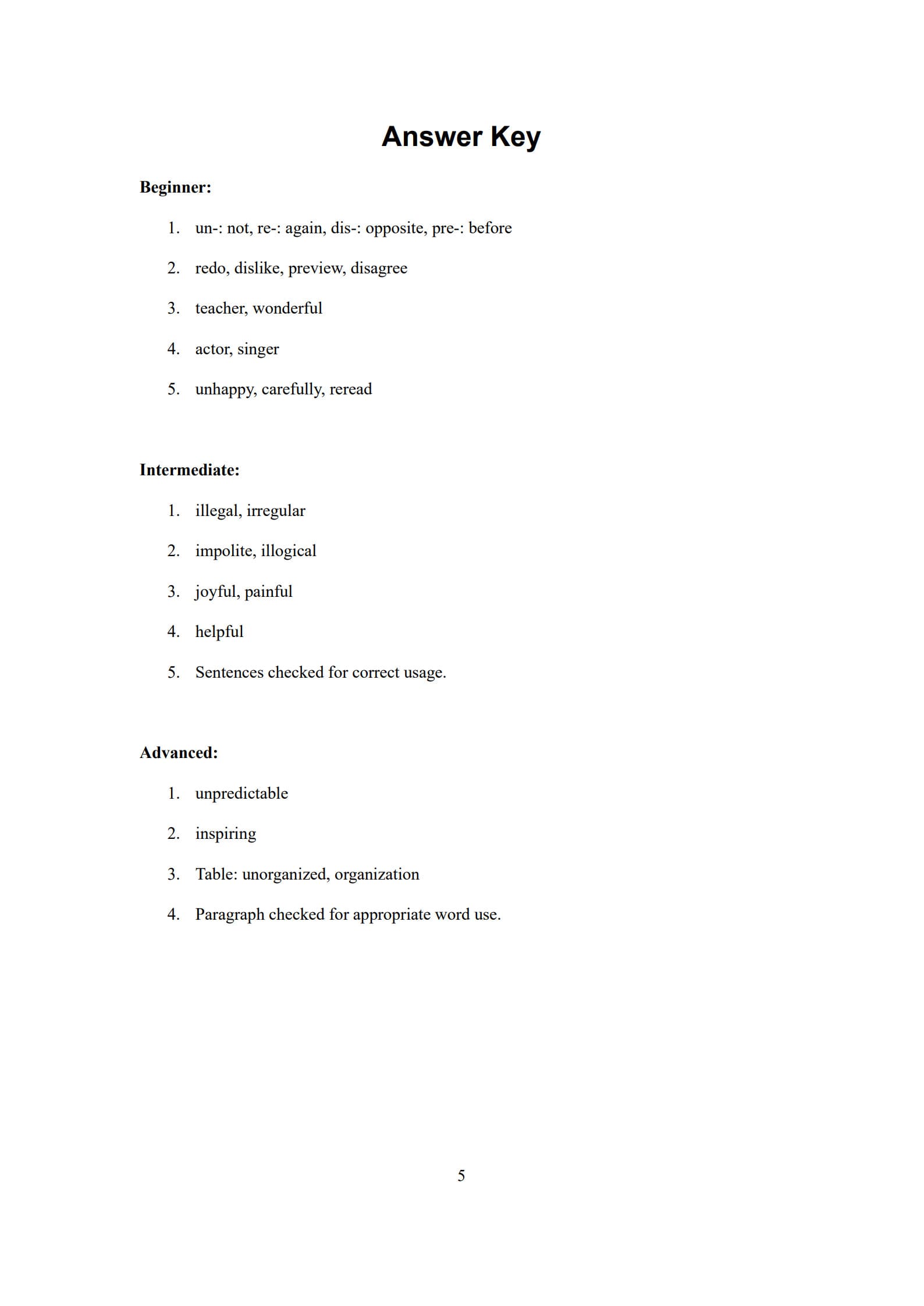
At the advanced level, the worksheet shifts focus to word families—groups of words derived from a single root through the addition of prefixes and suffixes. This section highlights how mastering affixes can exponentially expand your vocabulary. For example, the root “organize” can generate words like “reorganized,” “unorganized,” and “organization,” each with distinct meanings and uses. The template includes a table completion exercise where learners fill in missing prefixes, suffixes, or full words based on the root “organize.” This activity not only tests knowledge but also encourages learners to think systematically about word formation.
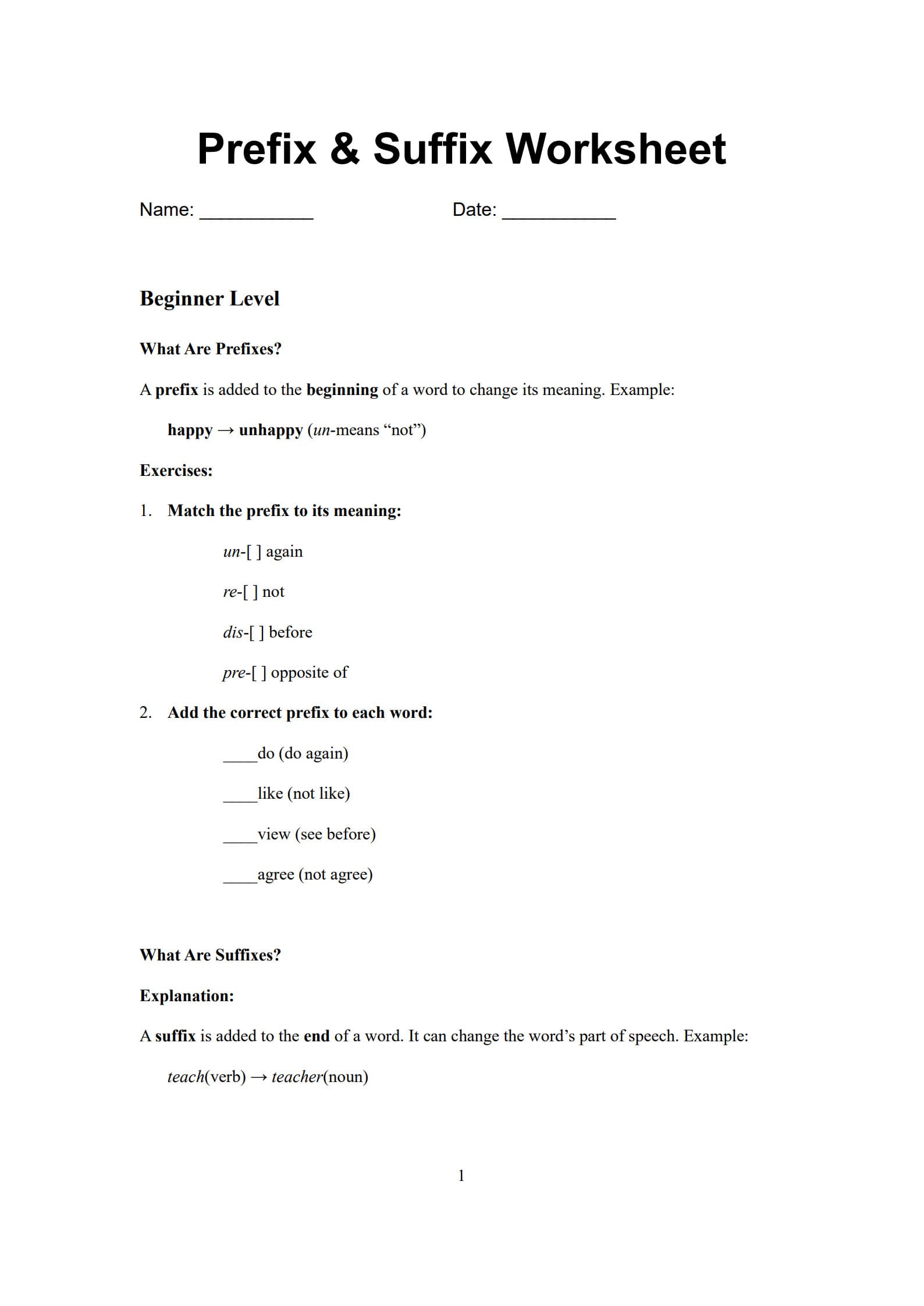
Another advanced exercise challenges users to fill in blanks with appropriately affixed words, such as completing “The company’s growth was ___ (predict)” with “unpredictable.” These tasks simulate real-world language use, requiring learners to consider context, part of speech, and meaning. The culmination is a creative writing challenge: composing a short paragraph using words like “unbelievable,” “disapprove,” and “successful.” This integrates all the skills practiced in the worksheet, promoting active use rather than passive recognition. Advanced learners will appreciate how this section mirrors the complexity of natural English, preparing them for academic or professional communication.
Why are word families so powerful? They reveal the logic behind English vocabulary, turning seemingly irregular words into predictable patterns. By studying roots and affixes, learners can decode unfamiliar words and express ideas with precision. The advanced section of the template is designed to foster this analytical ability, making it an indispensable tool for serious language enthusiasts.
How to Use This Prefix and Suffix Worksheet Template in PDF Agile
Using PDF Agile’s Prefix and Suffix Worksheet template is straightforward and efficient. Follow these steps to customize and complete the worksheet directly in the app:
Step 1: Access the Prefix Suffix Worksheet Template in PDF Agile
Open the PDF Agile app and navigate to the Template Library. Search for “Prefix and Suffix Worksheet” and select it. You can preview the template to ensure it meets your needs, then click “Use Template” to create an editable copy in your workspace. The template comes pre-formatted with clear sections for beginner, intermediate, and advanced exercises, so you can start personalizing it immediately.
Step 2: Customize the Content for Your Learning Goals
The template is fully editable, allowing you to tailor it to your specific objectives. For example, you might add more examples from your textbook or focus on certain prefixes like un-or re-. Use PDF Agile’s text editing tools to modify instructions, insert additional exercises, or highlight key points. You can also adjust the difficulty level by simplifying or expanding activities—perfect for teachers creating differentiated lessons.
Step 3: Complete the Exercises Digitally or by Hand
With PDF Agile, you have the flexibility to fill out the worksheet digitally or print it for handwritten practice. Use the app’s form-filling features to type answers directly into fields, or enable drawing tools to annotate responses. The app auto-saves your progress, so you can work at your own pace.
Step 4: Review and Share Your Completed Worksheet
Once finished, proofread your work using PDF Agile’s comment and highlight tools to mark corrections or notes. Save the final version as a PDF for easy sharing via email or cloud storage.
Conclusion
In summary, PDF Agile’s Prefix and Suffix Worksheet template offers a structured, engaging path to mastering English word formation. From beginner-friendly matching tasks to advanced word family challenges, every section is designed to build skills incrementally. By using real examples like “redo,” “unpredictable,” or “organization,” the template ensures that learning is practical and relevant. The integration of tables, fill-in exercises, and creative writing tasks caters to diverse learning styles, making it a versatile resource for independent learners and educators alike.