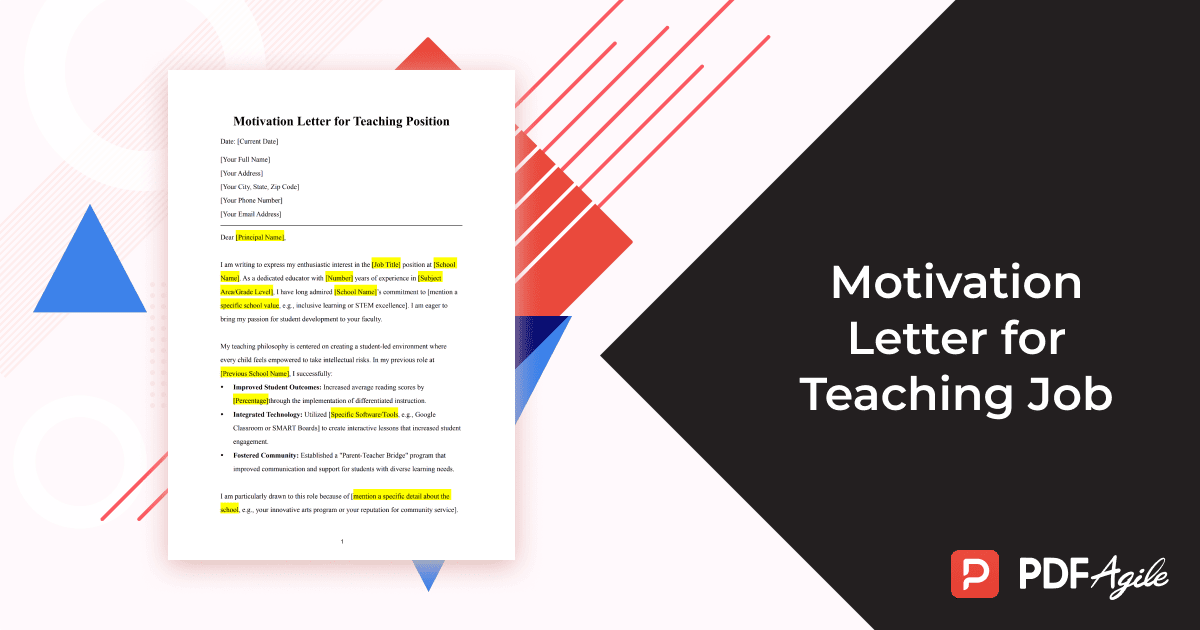


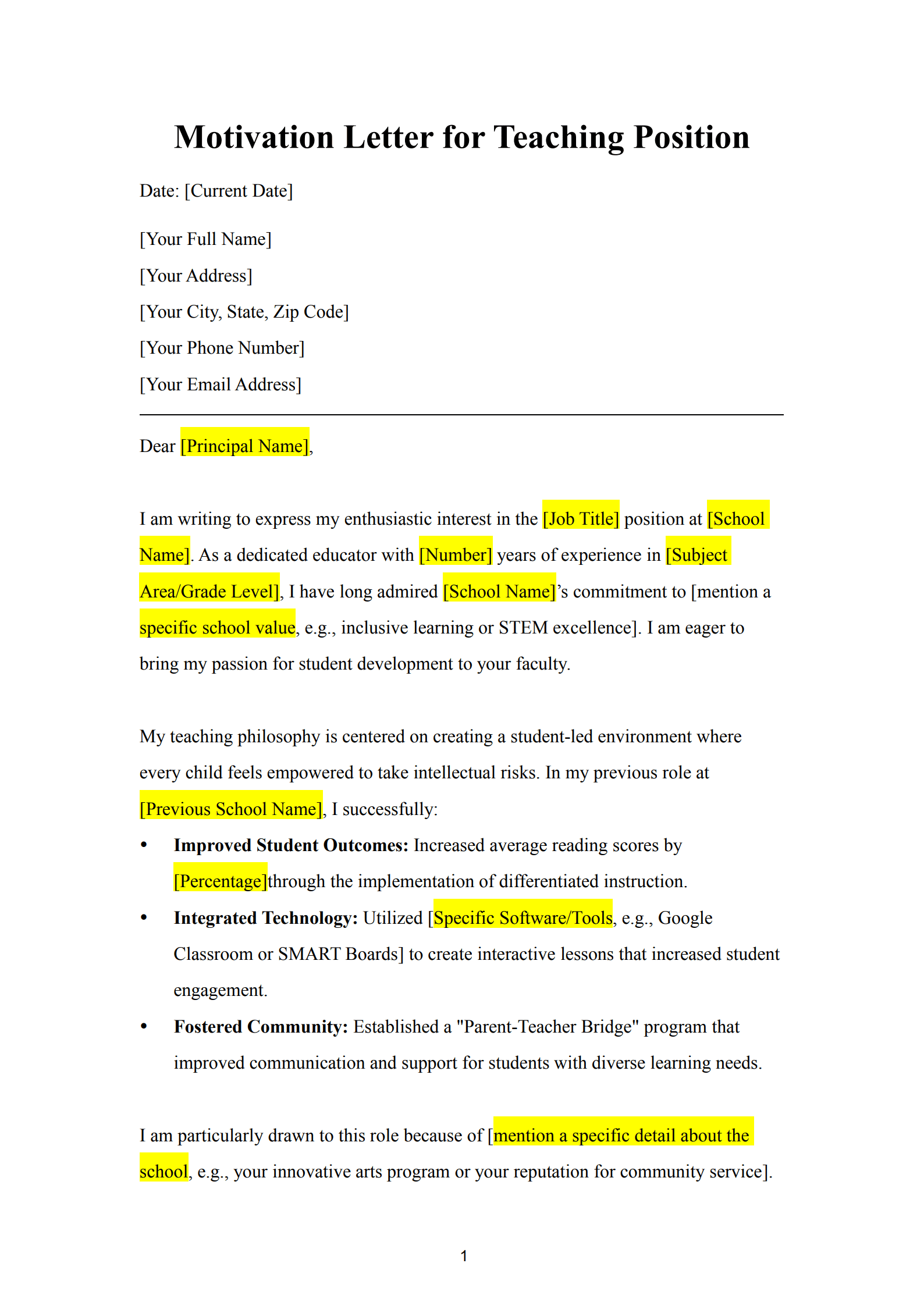
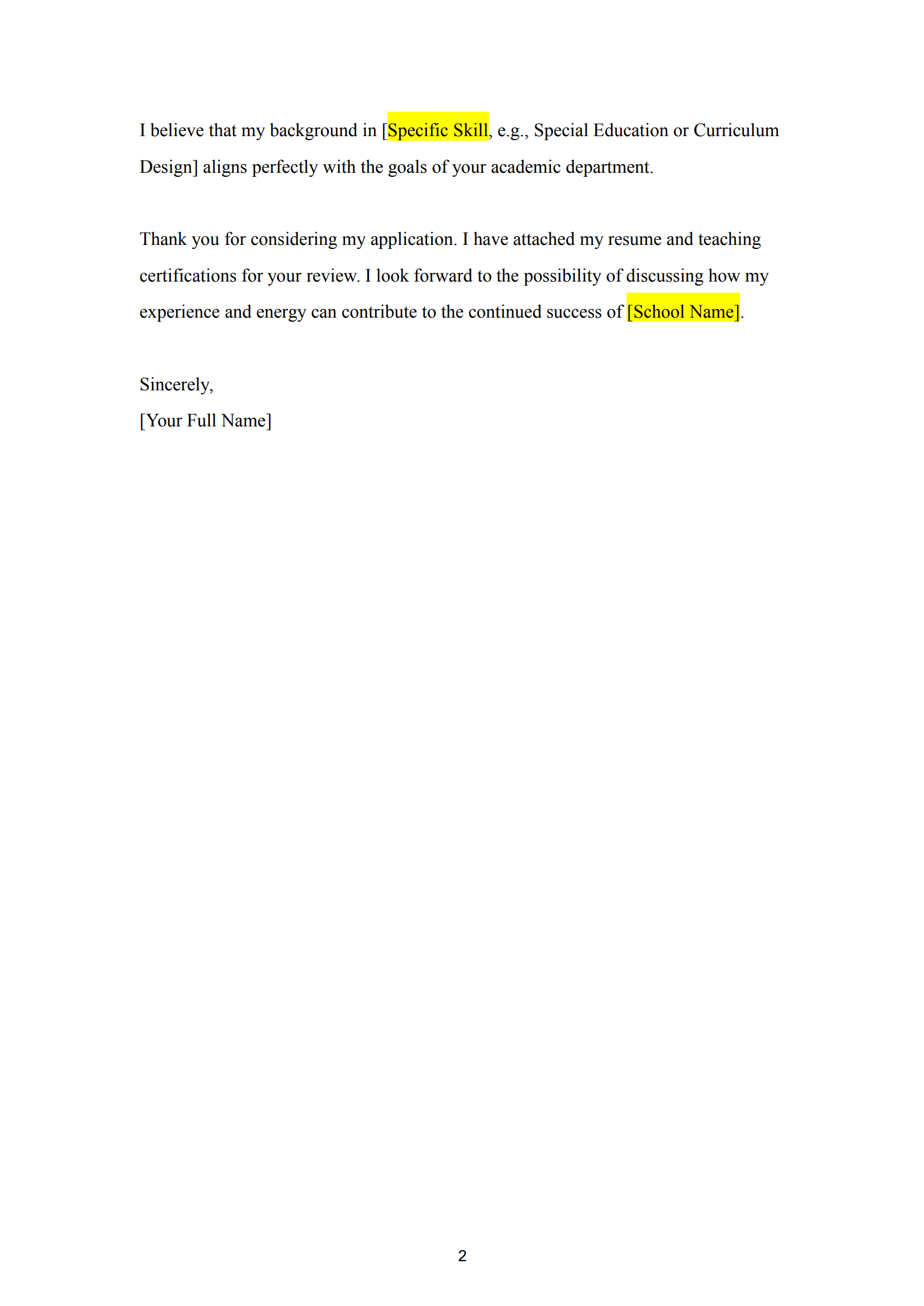
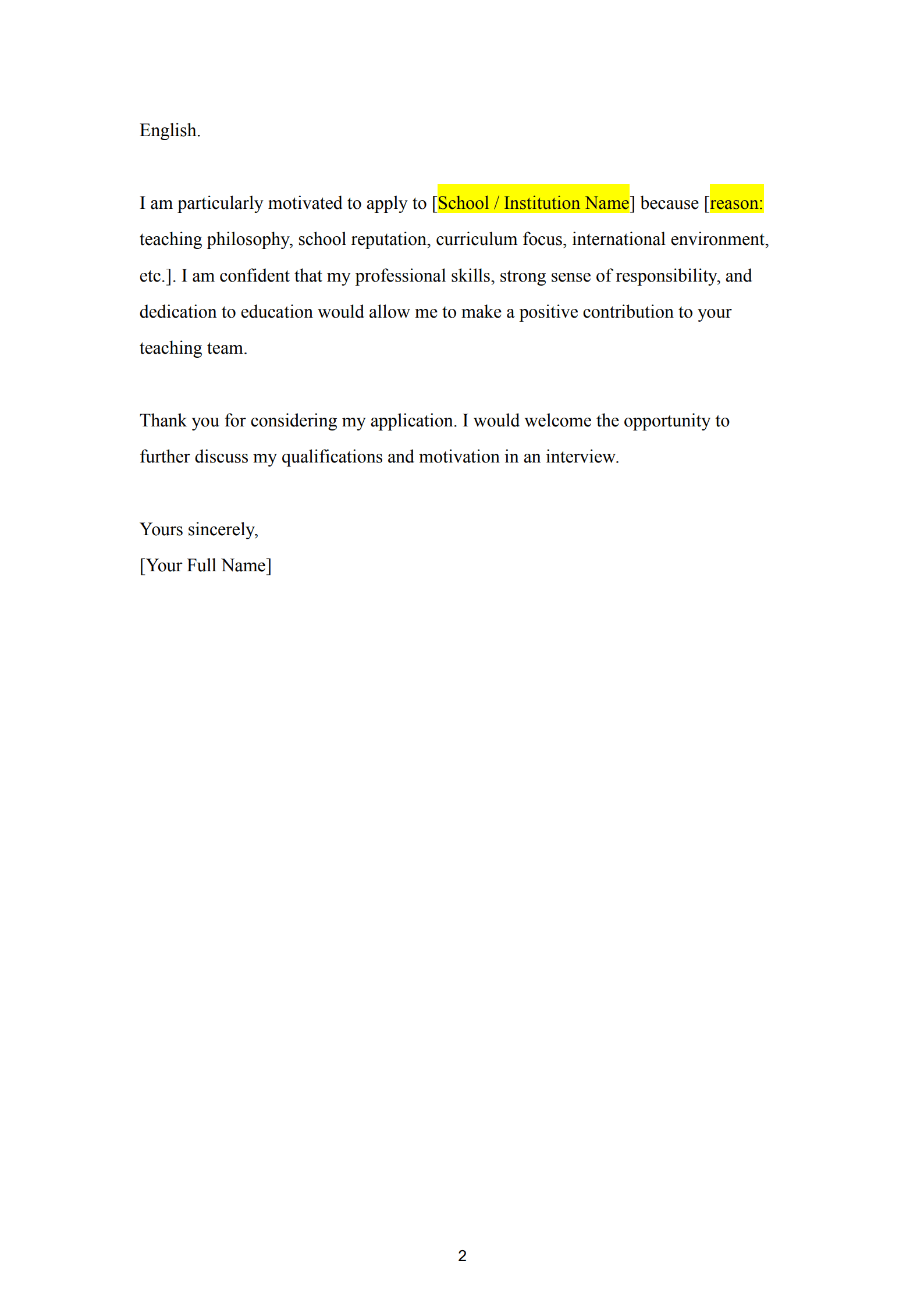
Educating young minds takes more than qualifications—it takes genuine passion, patience, and purpose. A Motivation Letter for a Teaching Job is your opportunity to communicate those qualities directly to potential employers.
At PDF Agile, we help educators present their motivation with clarity and credibility. Our printable and editable teacher motivation letter template gives you a ready-to-use framework that ensures your letter is organized, persuasive, and beautifully formatted—so you can focus on expressing your passion for teaching.
1. What Is a Motivation Letter for a Teaching Job?
A motivation letter for a teaching position is a personalized statement that highlights your passion for education, your teaching philosophy, and the skills that make you an effective teacher. It complements your resume by explaining why you want to teach and why you’re an ideal fit for the school.
This letter allows hiring committees to see beyond qualifications—to understand your values, enthusiasm, and fit within the school community.
2. Importance of a Motivation Letter in the Education Sector
Schools value teachers who are not only skilled but deeply committed. A motivation letter helps you:
- Convey your educational philosophy and teaching style.
- Demonstrate alignment with the school’s values and mission.
- Provide personal insights that your CV cannot capture.
- Build an emotional connection through authentic storytelling.
In a profession driven by inspiration, an effective motivation letter can make all the difference.
3. Key Components of a Teacher Motivation Letter
A well-written teacher motivation letter should include:
- Header: Your name, contact info, and the school’s details.
- Introduction: The position you’re applying for and why.
- Body paragraphs:
- Your teaching background and relevant qualifications.
- Personal connection to education and learning.
- Key teaching achievements or classroom examples.
- Closing: Express appreciation and enthusiasm for an interview opportunity.
- Signature: A professional closing line with your name.
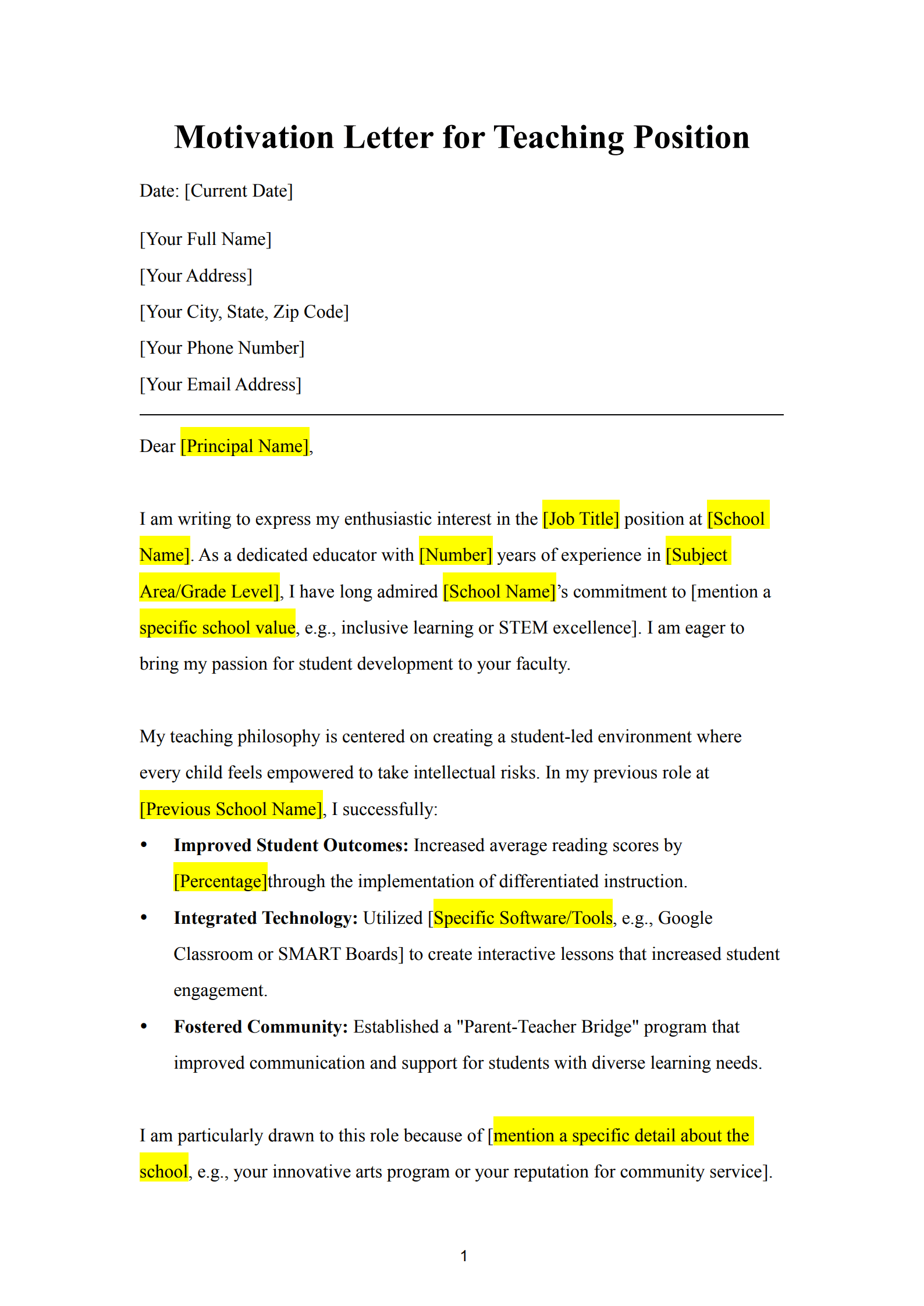
PDF Agile’s editable teaching job template ensures you never miss an essential section.
4. How to Write a Motivation Letter for a Teaching Position
Follow these steps for a standout letter:
Step 1: Start with a strong opening: Capture attention with genuine enthusiasm.
Step 2: Explain your motivation: Share what inspired your teaching journey.
Step 3: Connect your experience: Relate past success to the target role.
Step 4: Personalize for each institution: Mention the school’s values or teaching approach.
Step 5: End with confidence: Invite them to review your CV or schedule an interview.
With PDF Agile, you can easily format, adjust tone, and export your letter into a polished, professional PDF in minutes.
5. Example: English Teacher Motivation Letter
5.1 Why English Teaching Requires a Specific Motivation Approach
Teaching English is not just about grammar—it’s about communication, confidence, and creativity. An English teacher motivation letter should demonstrate linguistic passion and cultural empathy.
5.2 Specific Skills to Highlight in an English Teacher Motivation Letter
- Strong language proficiency and grammar command.
- Effective classroom management and communicative teaching style.
- Ability to adapt lessons for diverse learner levels.
- Use of technology and media to engage students.
- Passion for literature and cross-cultural learning.
5.3 Sample Structure for an English Teacher Motivation Letter
- Introduction: Express your love for language and teaching.
- Body: Highlight degrees, certifications (e.g., TEFL, TESOL), and teaching experiences.
- Impact Statement: Describe how your teaching improves student performance or confidence.
- Closing: Affirm commitment to helping students reach their full potential.
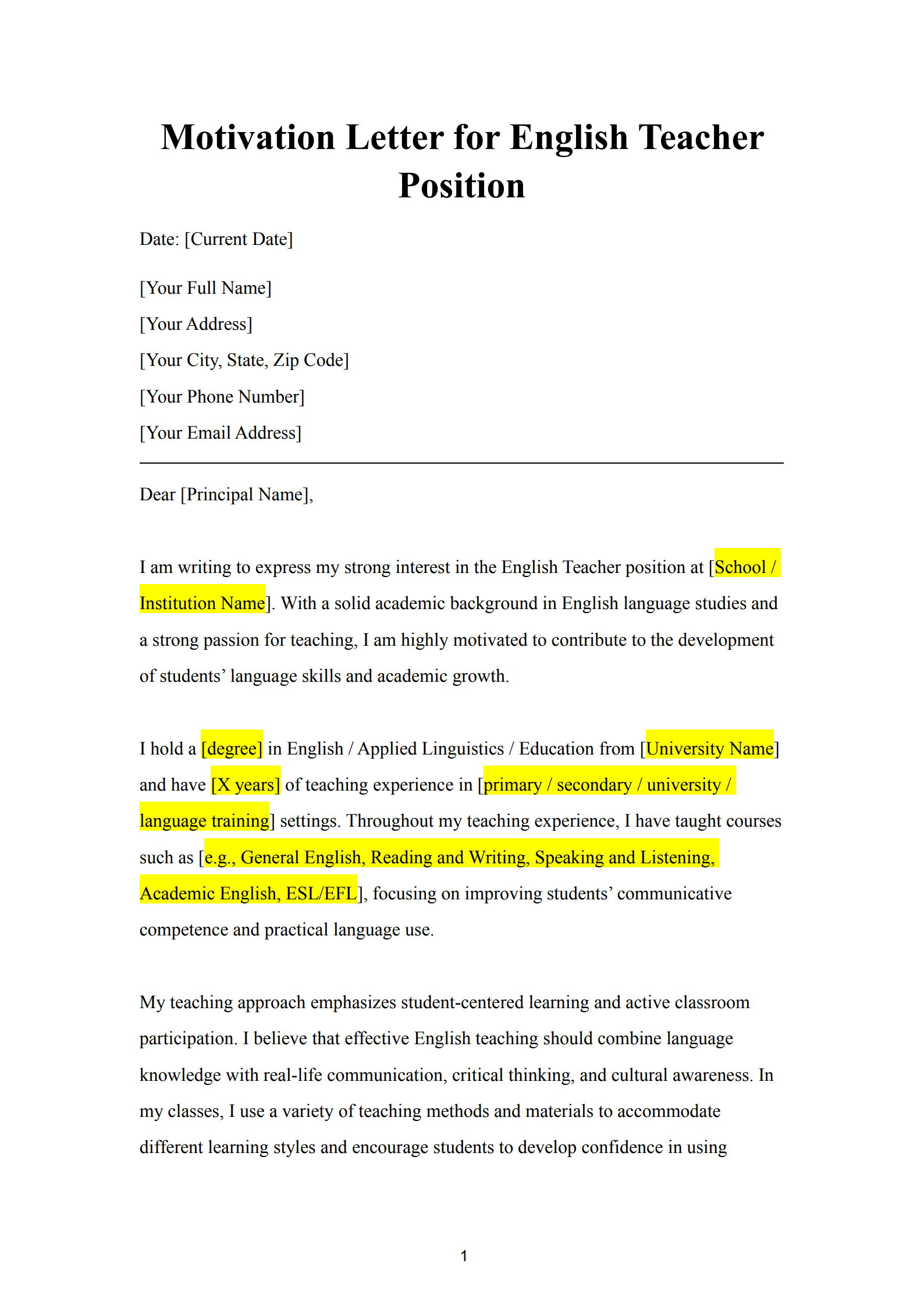
With PDF Agile’s editable template, you can adapt this structure seamlessly.
6. Common Mistakes to Avoid in a Teaching Motivation Letter
- Submitting a generic, copy-paste letter without personal touch.
- Focusing only on yourself instead of student outcomes.
- Using lengthy, complex sentences instead of clear communication.
- Forgetting to tailor tone for the school or educational level.
- Missing proofreading—minor typos can distract from your professionalism.
- Attention to detail shows the care you’ll bring into your classroom.
7. Tips to Make Your Motivation Letter Stand Out
- Be genuine: Let your true passion for teaching shine.
- Show empathy: Include examples of student growth or engagement.
- Stay concise: One page is ideal—quality over quantity.
- Mention values: Show alignment with the school’s mission.
- Format neatly: Use PDF Agile to maintain a professional layout with consistency.
Conclusion
A thoughtful Motivation Letter for a Teaching Job can help you transform your educational passion into a meaningful career opportunity. With PDF Agile’s printable and editable templates, you can focus on sharing your personal teaching story—while we take care of presentation, clarity, and design.
Start your next chapter in education with confidence, structure, and style.
FAQs about Motivation Letter for Teaching Job
Q: How do I write a motivation letter for a teaching job with no experience?
Focus on your education, internships, volunteer work, and transferable skills like organization, leadership, and communication.
Q: How long should a motivation letter for a teaching job be?
Keep it one page—clear, concise, and focused on impact rather than length.
Q: How do I start a motivation letter for a teacher position?
Begin with a personal and purpose-driven opening, such as why you became interested in teaching or what motivated you to apply to that school.
Free Download: Printable Motivation Letter for Teaching Job
You can download the Motivation Letter for Teaching Job mentioned above by clicking “Use Template” button on this page. Customize it to fit your specific needs and preferences.