

Are you looking to master English conditional sentences in a structured, engaging, and effective way? Whether you’re a beginner grasping the basics or an advanced learner refining your skills, PDF Agile’s Conditional Sentences Worksheet template is your ideal companion. This professionally designed template—complete with clear explanations, guided exercises, and an answer key—helps you learn and practice zero, first, second, and third conditionals with ease. In this instructional essay, we’ll explore how this template works, why it’s effective, and how you can start using it instantly in the PDF Agile app to accelerate your English learning journey.
What Are Conditional Sentences, and Why Use a Conditional Worksheet?
Conditional sentences allow us to express hypothetical situations, general truths, and real or imagined outcomes—making them essential for fluent English communication. But how can you practice them systematically? That’s where a structured conditional worksheet comes in.
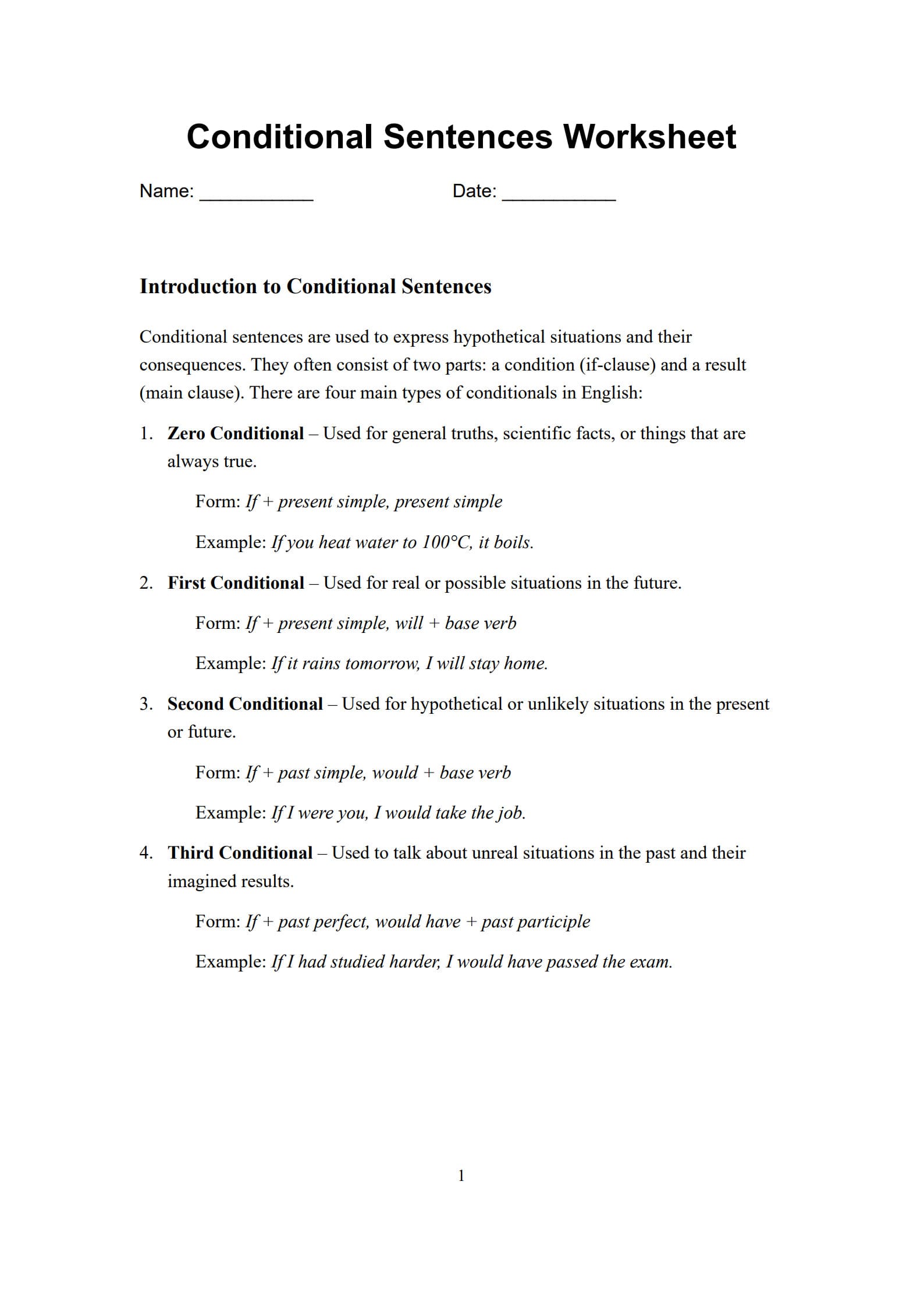
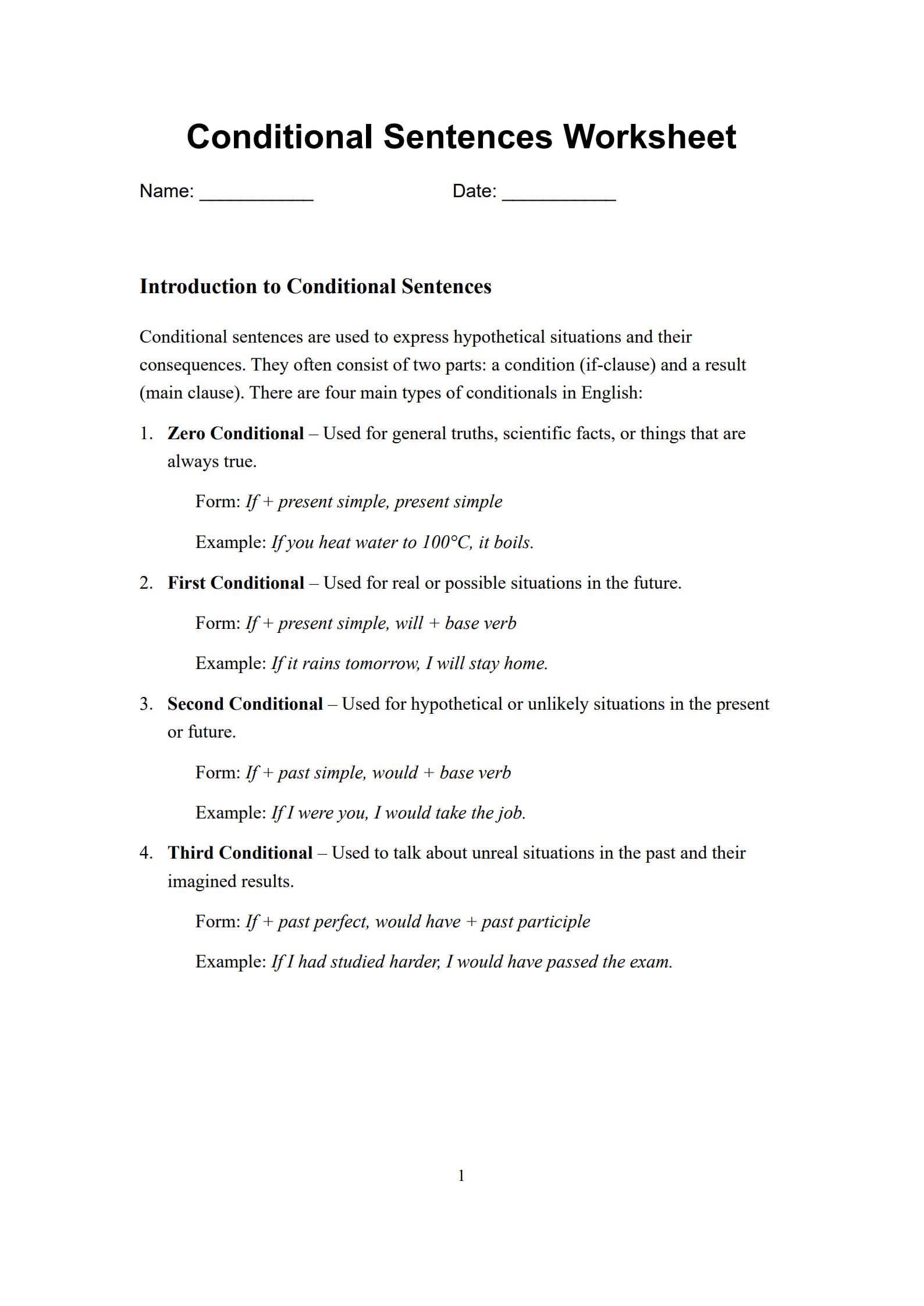
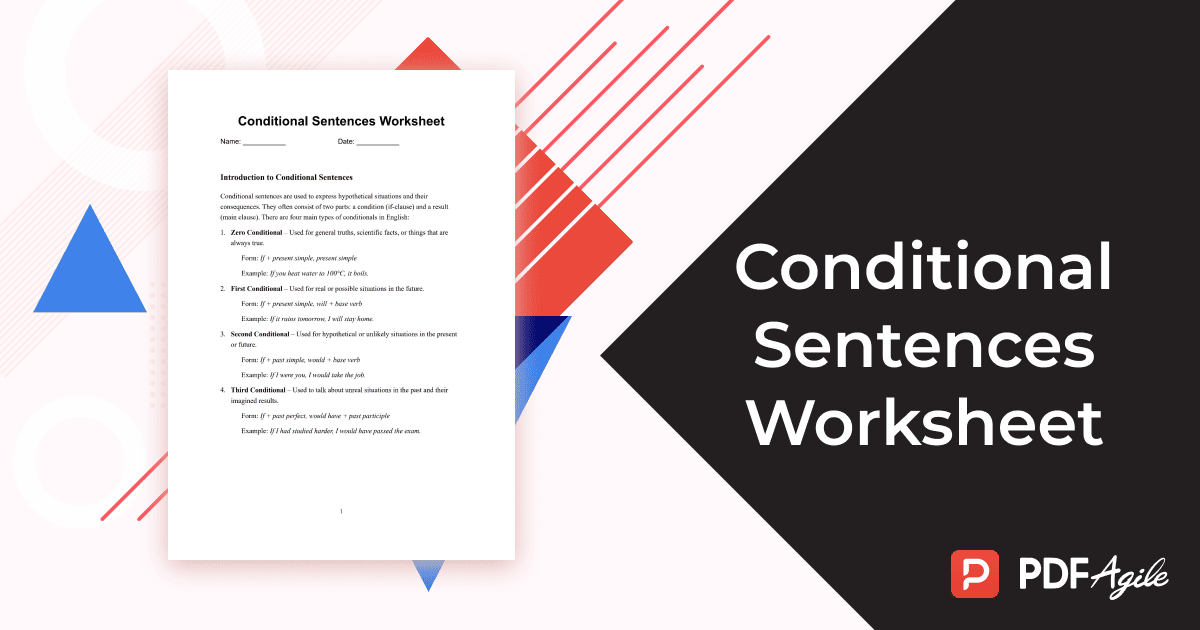
Our worksheet begins with an introduction that breaks down conditionals into four clear types: zero (general truths), first (real future possibilities), second (unlikely or hypothetical situations), and third (past unreal situations). Each type is explained with a formula and an example, such as, “If you heat water to 100°C, it boils.” This approach helps learners grasp the logic behind the grammar before diving into exercises.
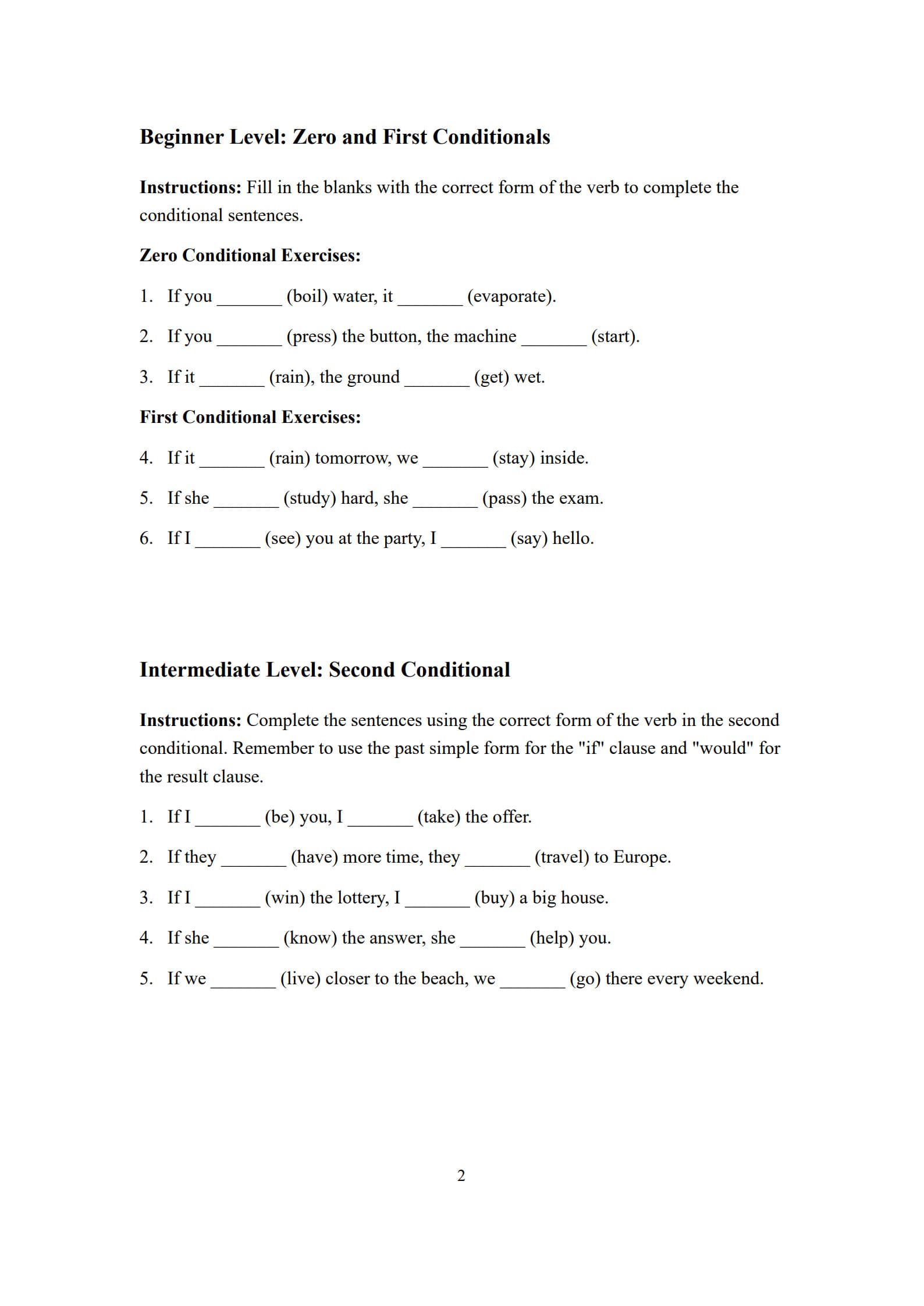
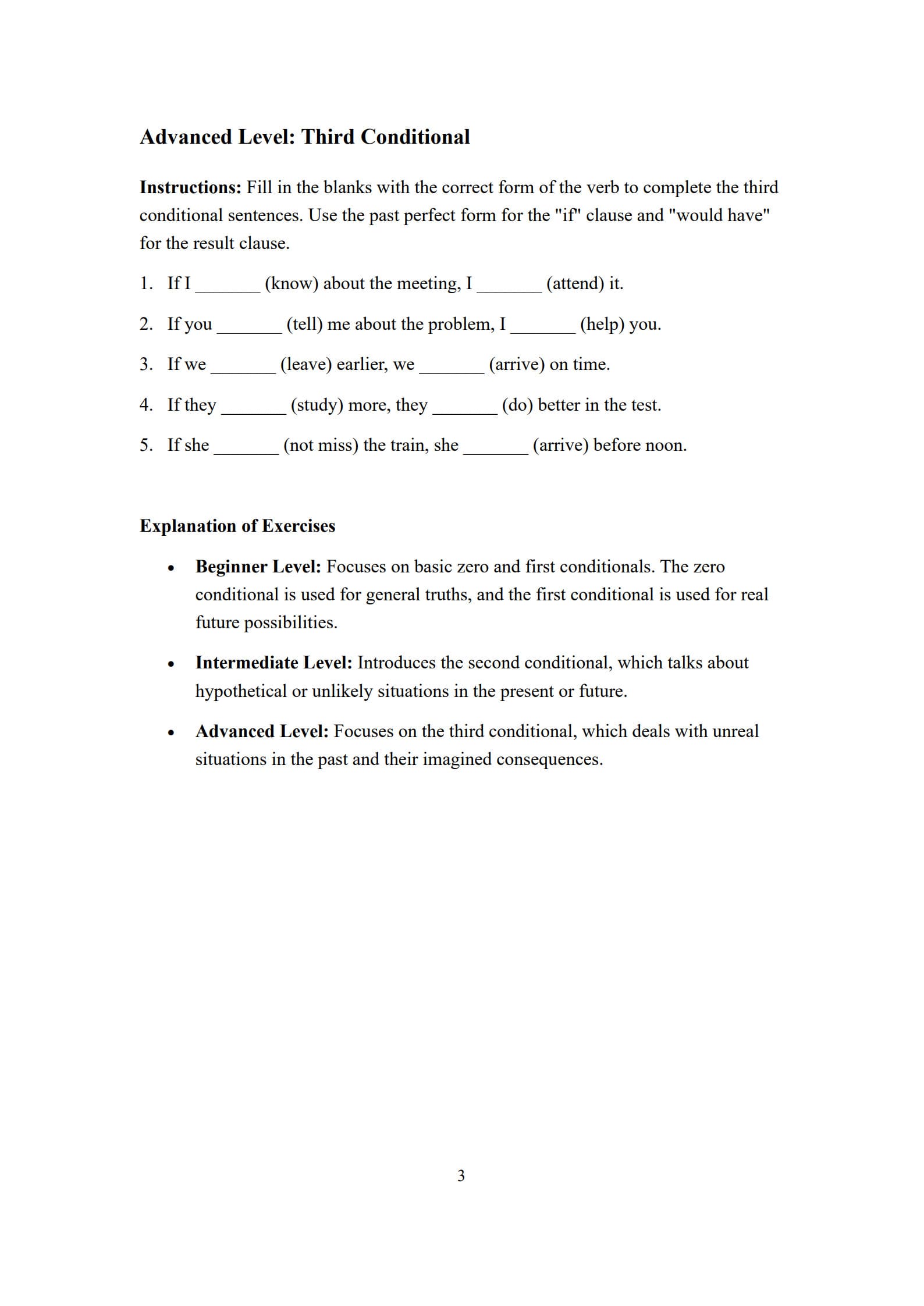
The worksheet is organized into three progressive levels: Beginner (zero and first conditionals), Intermediate (second conditional), and Advanced (third conditional). For instance, the beginner section includes fill-in-the-blank exercises like, “If it ______ (rain), the ground ______ (get) wet.” By practicing with such focused tasks, you build confidence step by step.
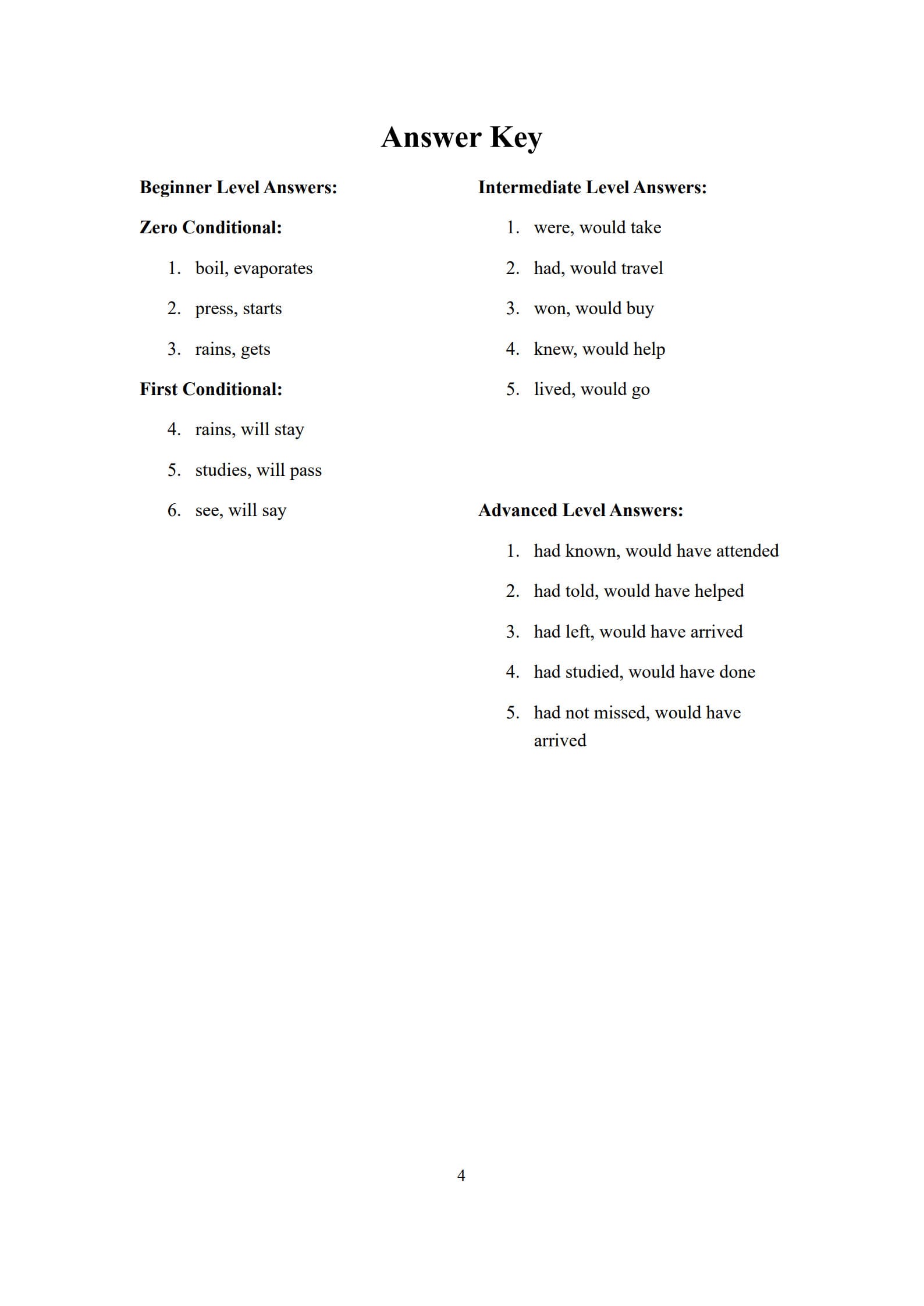
Why is this worksheet so effective? It turns passive learning into active practice. Instead of just reading rules, you immediately apply them. The built-in answer key lets you check your progress, making it ideal for self-study or classroom use.
How Can a Conditional Exercises PDF Enhance Your Learning Experience?
A conditional exercises PDF offers portability, accessibility, and interactivity—especially when designed for apps like PDF Agile. But what makes our template stand out?
First, it’s more than a static document; it’s a reusable learning tool. For example, the zero conditional exercises reinforce scientific facts or habitual actions, like, “If you press the button, the machine starts.” By repeating these patterns, you internalize the structures naturally. The PDF format allows you to complete exercises on any device, online or offline, and save your answers for later review.
Second, the template includes conditionals mixed exercises implicitly through its leveled structure. While each section focuses on one conditional type, the progression encourages you to mix and compare forms. For instance, after mastering the first conditional (“If it rains tomorrow, we will stay inside”), you advance to the second conditional (“If I were you, I would take the offer”). This gradual complexity prevents overwhelm and promotes long-term retention.
Below is a table summarizing the exercise types and their learning objectives:
| Section | Conditional Type | Example Exercise | Learning Goal |
|---|---|---|---|
| Beginner | Zero & First | If she studies, she will pass. | Apply rules to real-world scenarios |
| Intermediate | Second | If they had time, they would travel. | Express hypothetical ideas |
| Advanced | Third | If I had known, I would have attended. | Analyze past unreal situations |
Breaking Down the Worksheet: From Zero to Third Conditionals
Let’s explore each section of the worksheet in detail, using examples directly from the template.
The Beginner Level focuses on zero and first conditionals. Zero conditionals, like “If you boil water, it evaporates,” describe universal truths. First conditionals, such as “If it rains tomorrow, we will stay inside,” involve future possibilities. These exercises build a foundation by using simple present and future tenses.
The Intermediate Level introduces the second conditional through hypothetical scenarios. For example, “If I won the lottery, I would buy a big house.” This section teaches you to discuss dreams or unlikely events, using past simple and “would” + base verb.
Finally, the Advanced Level covers the third conditional, which reflects on past events with imagined outcomes. An exercise like, “If they had studied more, they would have done better,” helps you express regret or speculation about the past. Each level includes 5-6 exercises, ensuring ample practice.
Maximizing Your Practice with If Clauses Worksheet Activities
An if clauses worksheet is most effective when it encourages critical thinking. Our template achieves this through contextualized exercises.
For instance, the second conditional prompt, “If I were you, I would take the job,” not only practices grammar but also sparks reflection on real-life decision-making. Similarly, the third conditional exercise, “If we had left earlier, we would have arrived on time,” invites learners to analyze past actions and their consequences.
To get the most out of the worksheet, try these tips:
- Repeat exercises aloud to improve pronunciation and fluency.
- Create your own examples based on the template’s patterns.
- Use the answer key strategically—attempt all exercises first, then check your answers to identify weak areas.
How to Use the Conditional Sentences Worksheet Template in PDF Agile
Using the Conditional Sentences Worksheet template in PDF Agile is simple and efficient. Follow these steps to start learning immediately:
Step 1: Access the Conditional Sentences Worksheet in PDF Agile
Open the PDF Agile app and navigate to the Template Library. Search for “Conditional Sentences Worksheet” and click “Use Template.” The template comes pre-formatted with instructions, exercises, and a clean layout—ready for you to personalize.
Step 2: Complete the Exercises Digitally
Fill in the blanks directly using PDF Agile’s editing tool. For example, type your answers for zero conditional exercises like, “If you ______ (press) the button, the machine ______ (start).” The app auto-saves your progress, allowing you to work at your own pace.
Step 3: Review Using the Answer Key
After completing the exercises, refer to the answer key included in the template. Compare your responses with the correct answers (e.g., “press, starts” for the example above) to self-assess your understanding.
Step 4: Save, Share, or Print Your Work
Save your completed worksheet as a PDF for future reference. You can also share it with a teacher or study group via email or print it for offline practice.
Conclusion
Conditional sentences are a cornerstone of advanced English grammar, and mastering them opens doors to more nuanced and confident communication. PDF Agile’s Conditional Sentences Worksheet template provides a structured, interactive, and accessible way to achieve this goal. By combining clear explanations with hands-on exercises, it turns complex grammar rules into manageable learning steps.
We encourage you to download the template today and experience the difference a well-designed resource can make. Whether you’re studying alone or teaching others, this tool adapts to your needs. And remember, consistency is key—revisit the worksheet regularly to reinforce your skills.
Ready to take the next step? Explore more English grammar templates in PDF Agile’s library, and share your feedback with us. Happy learning!