


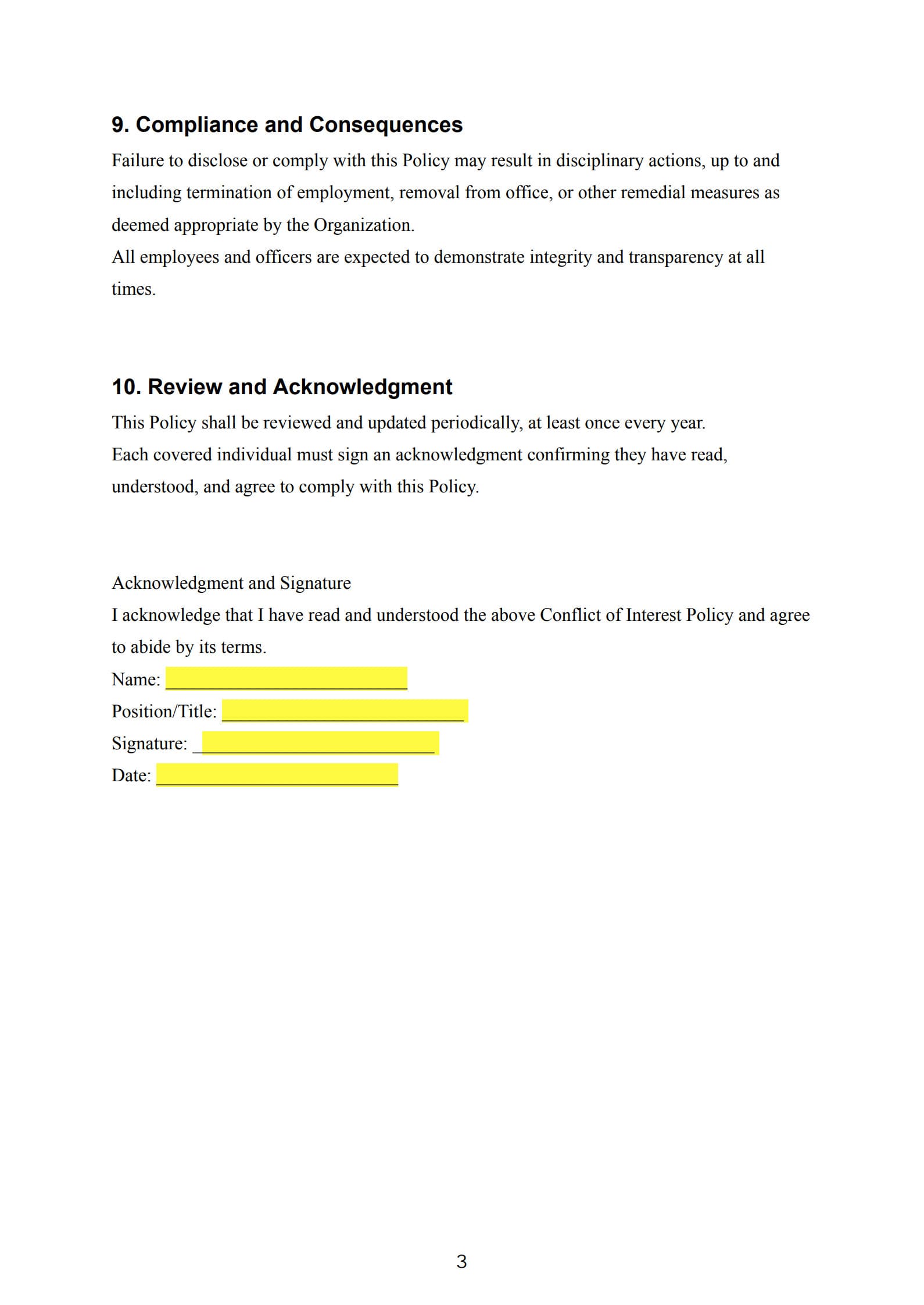
Maintaining trust, transparency, and integrity within an organization begins with a clearly defined Conflict of Interest Policy. Whether you manage a corporate office, a nonprofit, or a growing startup, setting clear expectations about ethical behavior helps protect your organization’s reputation and ensures fair decision-making.
This article explains what a conflict of interest policy is, why it’s important, what to include, and how to create one using editable templates.
1. What Is a Conflict of Interest Policy?
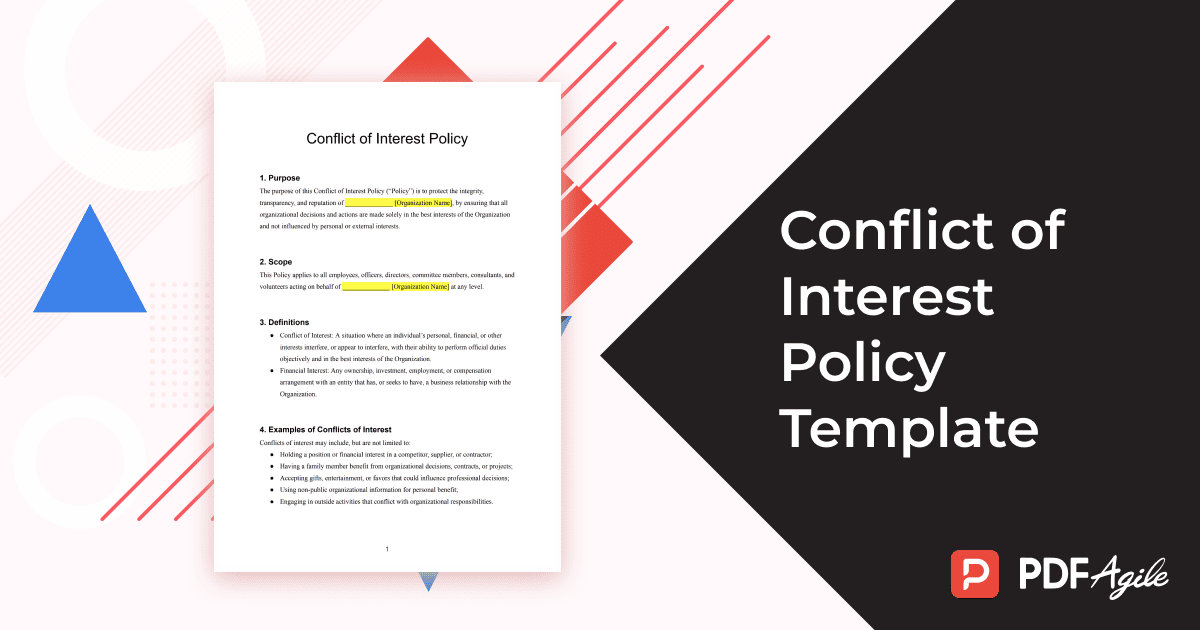
A Conflict of Interest Policy is an internal business document that outlines how employees, executives, and board members should handle situations where their personal interests might conflict with the company’s interests.
It provides guidance on identifying, disclosing, and managing conflicts to ensure professional decisions are made objectively and ethically.
Conflicts of interest can arise in many forms — for example:
- Personal financial gain from company contracts
- Family or friend relationships influencing business decisions
- Holding outside jobs or investments that affect impartiality
The goal of this policy is to prevent bias and maintain the integrity of company operations.
2. Why Do Businesses Need a Conflict of Interest Policy?
A clear and comprehensive Conflict of Interest Policy offers benefits to both the organization and its team members:
- Ethical decision-making: Encourages fairness and transparency at all levels.
- Reputation protection: Prevents actions that might harm the company’s image or stakeholder trust.
- Legal compliance: Helps ensure adherence to corporate governance standards and industry regulations.
- Workplace harmony: Reduces misunderstandings and promotes accountability.
- Employee confidence: Provides clear procedures for reporting potential conflicts without fear of retaliation.
In short, it builds a culture of honesty and mutual respect that supports long-term success.
3. What Should Be Included in a Conflict of Interest Policy?
An effective policy clearly defines expectations while still being concise and practical. Key components include:
- Purpose and Scope – Explain why the policy exists and whom it applies to (e.g., all employees, managers, board members, and contractors).
- Definitions – Clarify what counts as a “conflict of interest” and provide real-world examples.
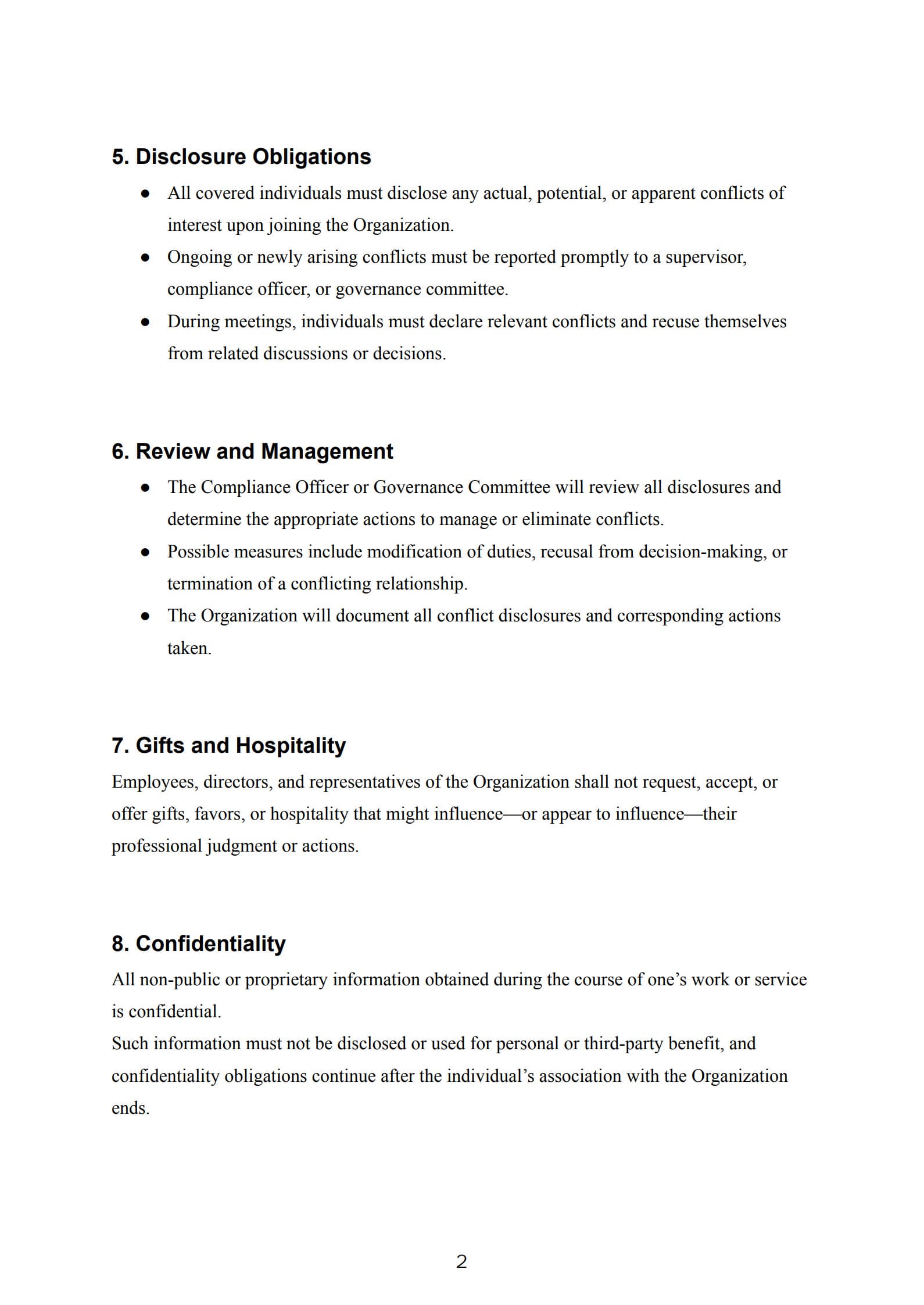
- Disclosure Responsibilities – Outline how employees should report potential conflicts and to whom.
- Management Process – Describe how the organization will review, evaluate, and resolve disclosed conflicts.
- Confidentiality and Non-Retaliation – Assure employees that disclosures will remain confidential and will not result in disciplinary action.
- Acknowledgment Requirement – Require all staff or directors to sign the policy, confirming they understand and agree to follow it.
- Review and Update Cycle – Specify how frequently the policy will be reviewed (e.g., annually).
These elements ensure the policy maintains transparency and prevents misuse or misinterpretation.
4. How to Write a Conflict of Interest Policy Using Templates
Creating a professional Conflict of Interest Policy from scratch can be time-consuming. To streamline the process, use a free editable policy template that you can customize to your organization’s structure, size, and culture.
How to use the conflict of interest policy template effectively:
1. Download the template
Access a free, editable version from your policy library or business form generator.
2. Open the file for editing
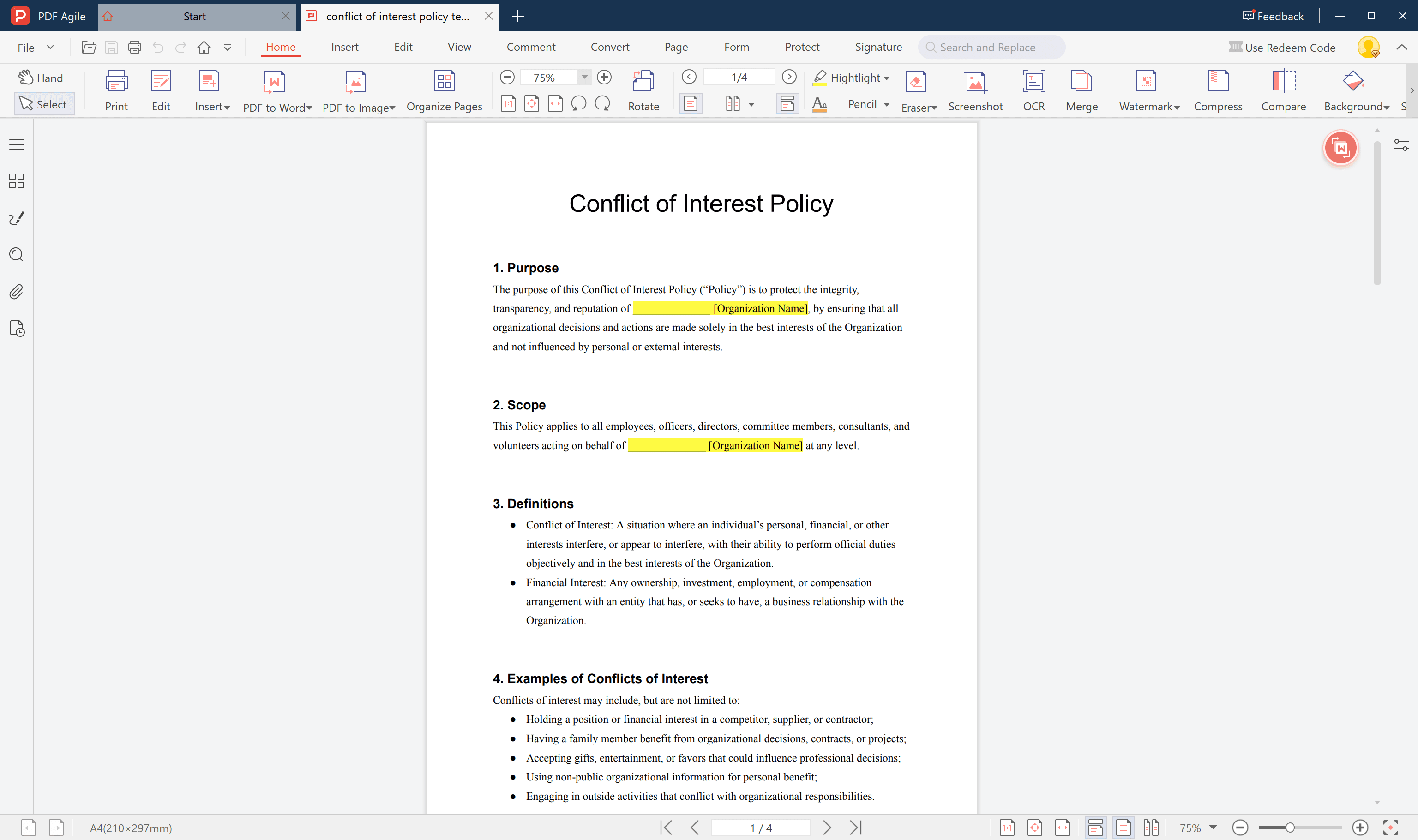
Use a tool like PDF Agile or Word to edit, fill, and format the sections easily.
3. Customize the details
Adapt the definitions, examples, and disclosure process to align with your company’s ethics code and reporting structure.
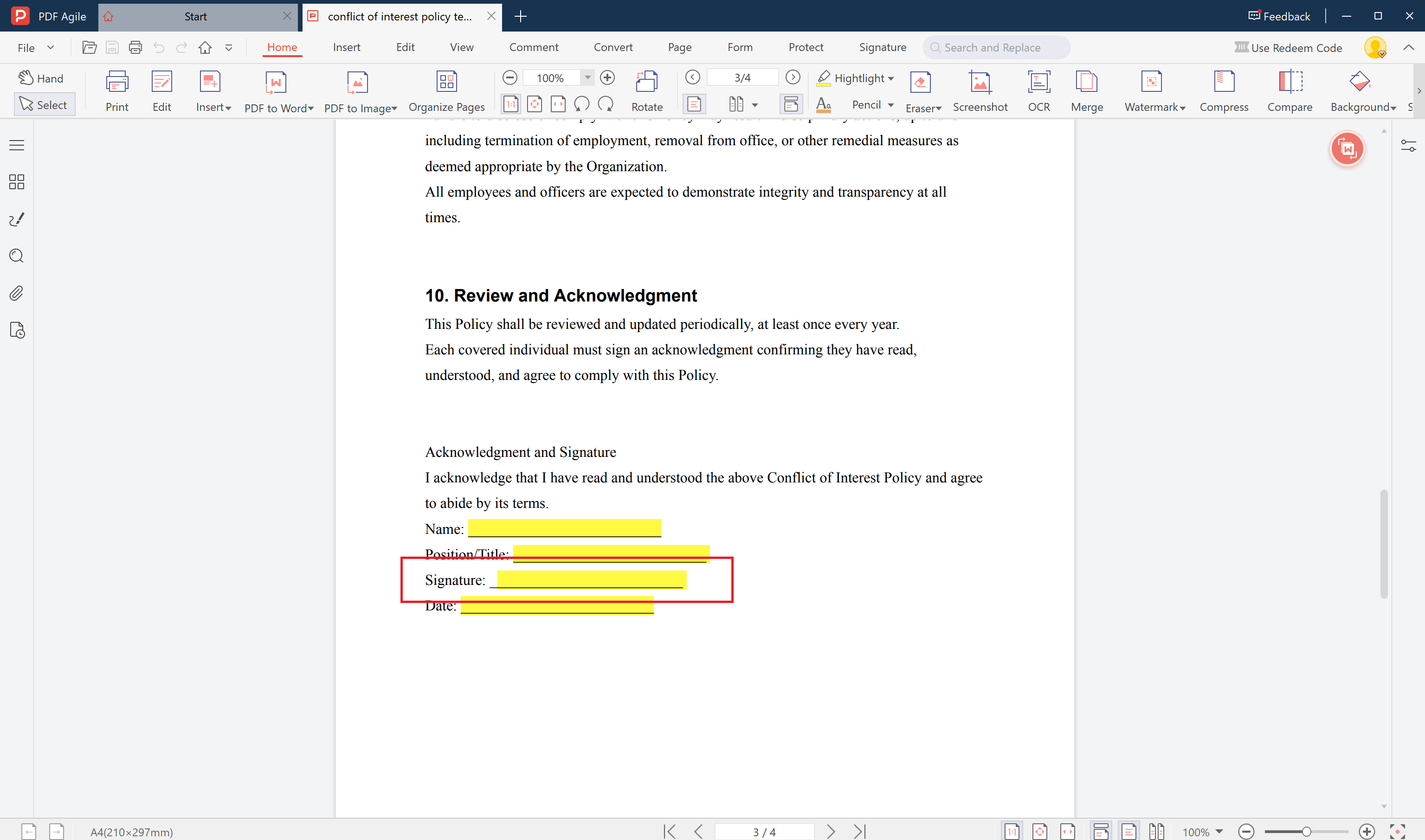
4. Add acknowledgment and signature fields
Include spaces for employees or board members to sign, confirming they’ve read and accepted the policy.
5. Review and publish
Check for accuracy, circulate for feedback, then export the final version in PDF or Word format for official adoption.
Using a pre-formatted template ensures consistency while allowing customization to match your company’s tone, governance style, and compliance needs.
5. FAQs about Conflict of Interest Policy
5.1 What Are the Main Types of Conflicts of Interest?
The main types include:
- Financial conflicts – personal investments or gifts that influence business decisions.
- Relational conflicts – favoritism toward friends, family members, or partners.
- Competing interests – holding a side job or position with a competitor.
- Confidentiality conflicts – sharing privileged company information for personal gain.
5.2 Who Needs to Sign a Conflict of Interest Policy?
Typically, all employees, executives, and board members are required to read and sign the policy to acknowledge their understanding and duty to comply. Contractors and consultants may also be asked to sign when their work involves potential conflicts.
5.3 How Often Should the Conflict of Interest Policy Be Reviewed?
Best practice recommends reviewing and updating the policy annually or whenever there are major organizational, legal, or structural changes. Regular reviews help ensure the policy remains current and effective.
Conclusion
A well-crafted Conflict of Interest Policy safeguards your organization’s integrity, prevents ethical breaches, and promotes trust among stakeholders.
By using an editable and printable template, you can quickly build a policy tailored to your team’s structure and values—one that ensures accountability, fairness, and transparency at every level.
Protect your reputation, clarify expectations, and cultivate a culture of trust—one policy at a time.