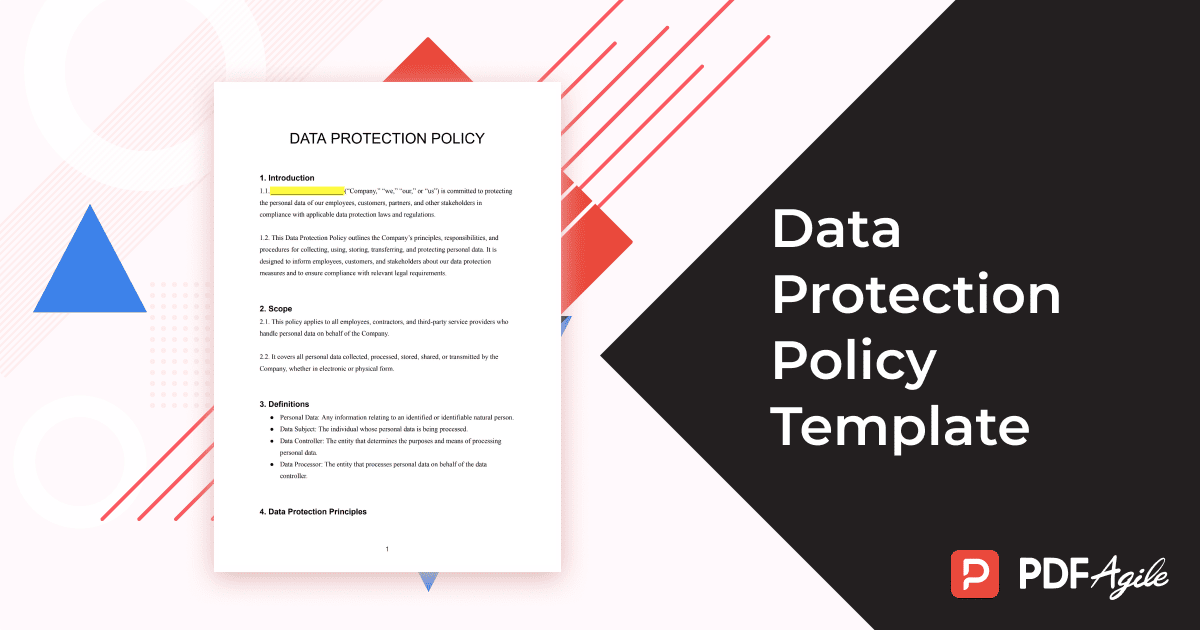



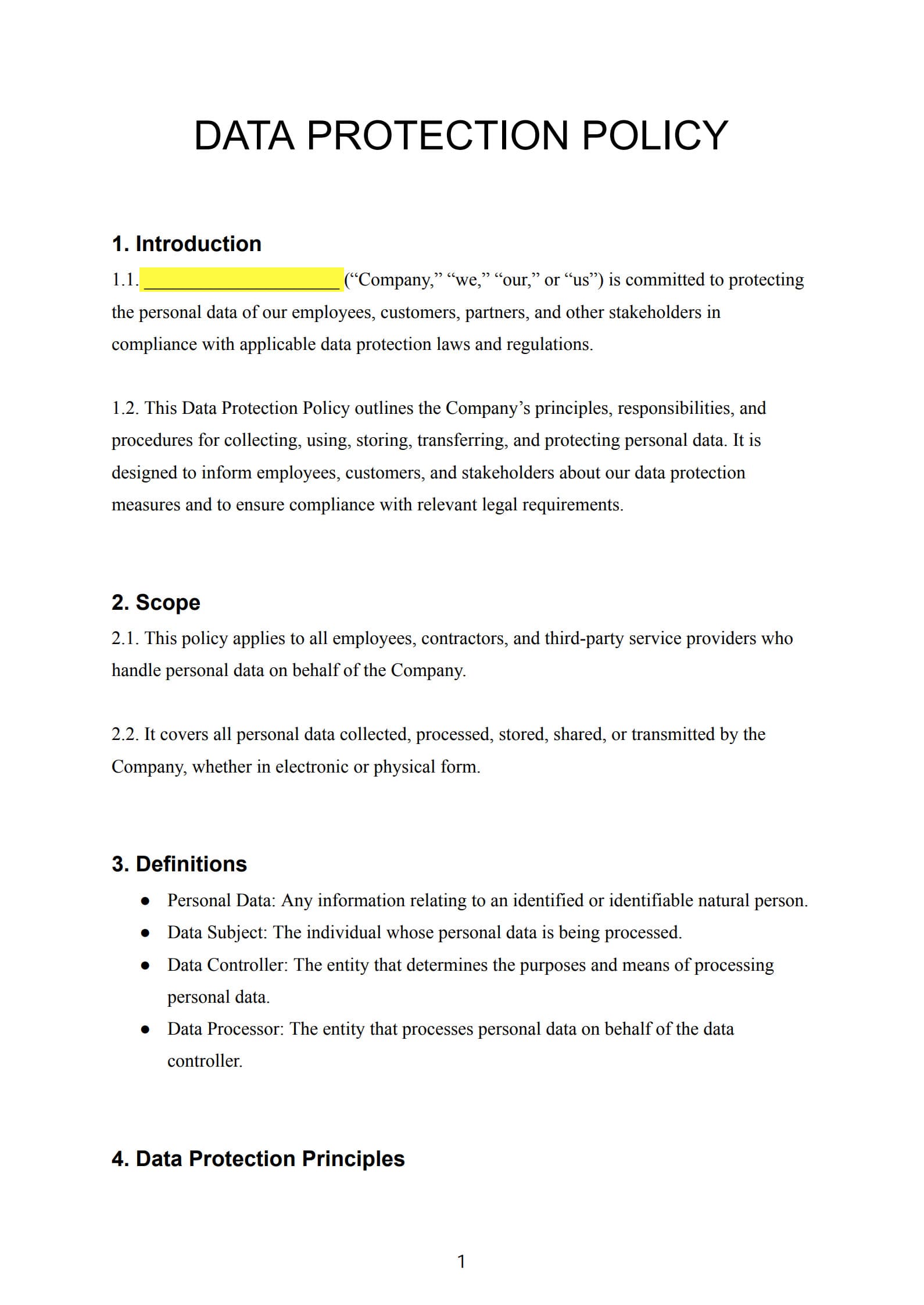
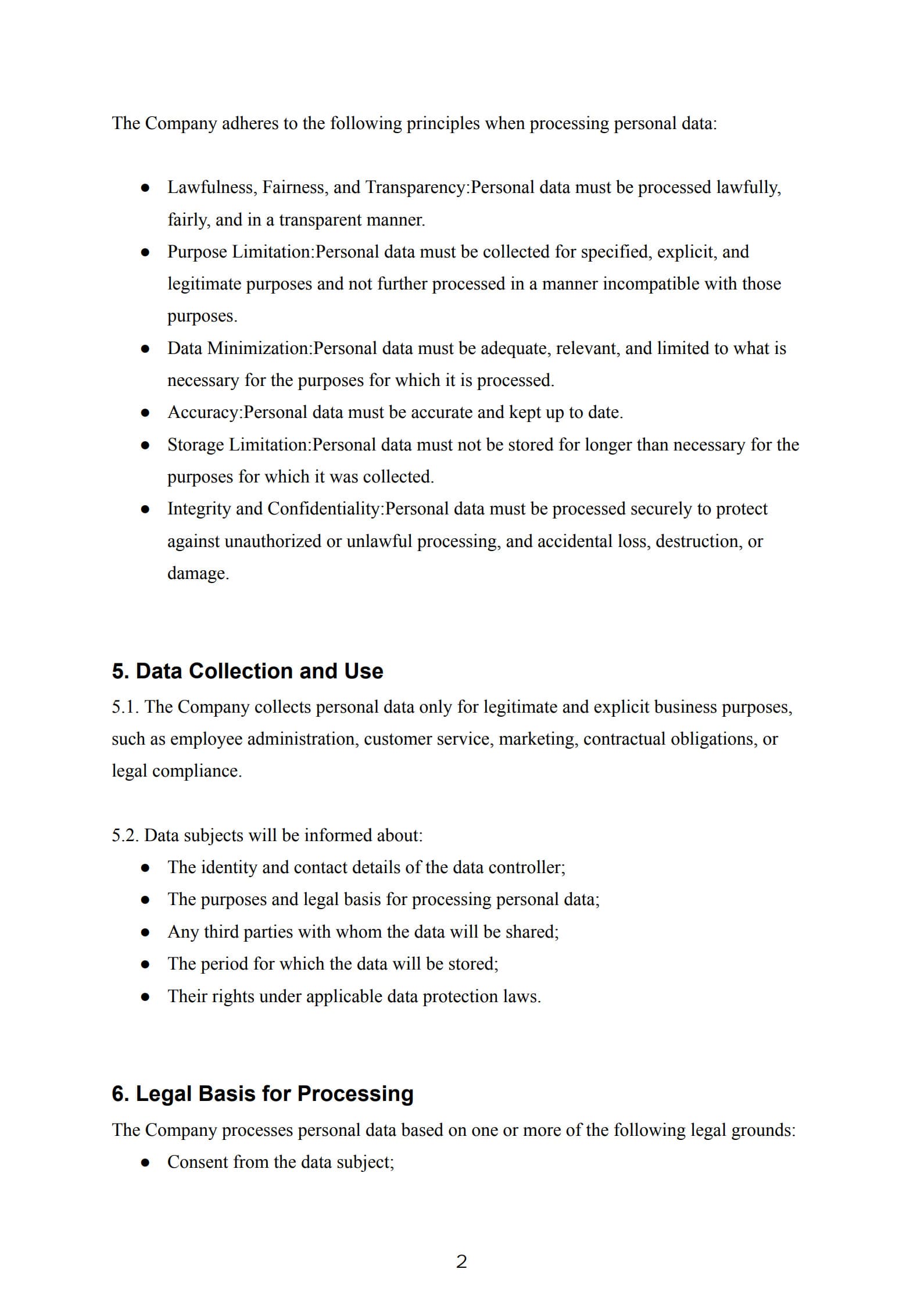
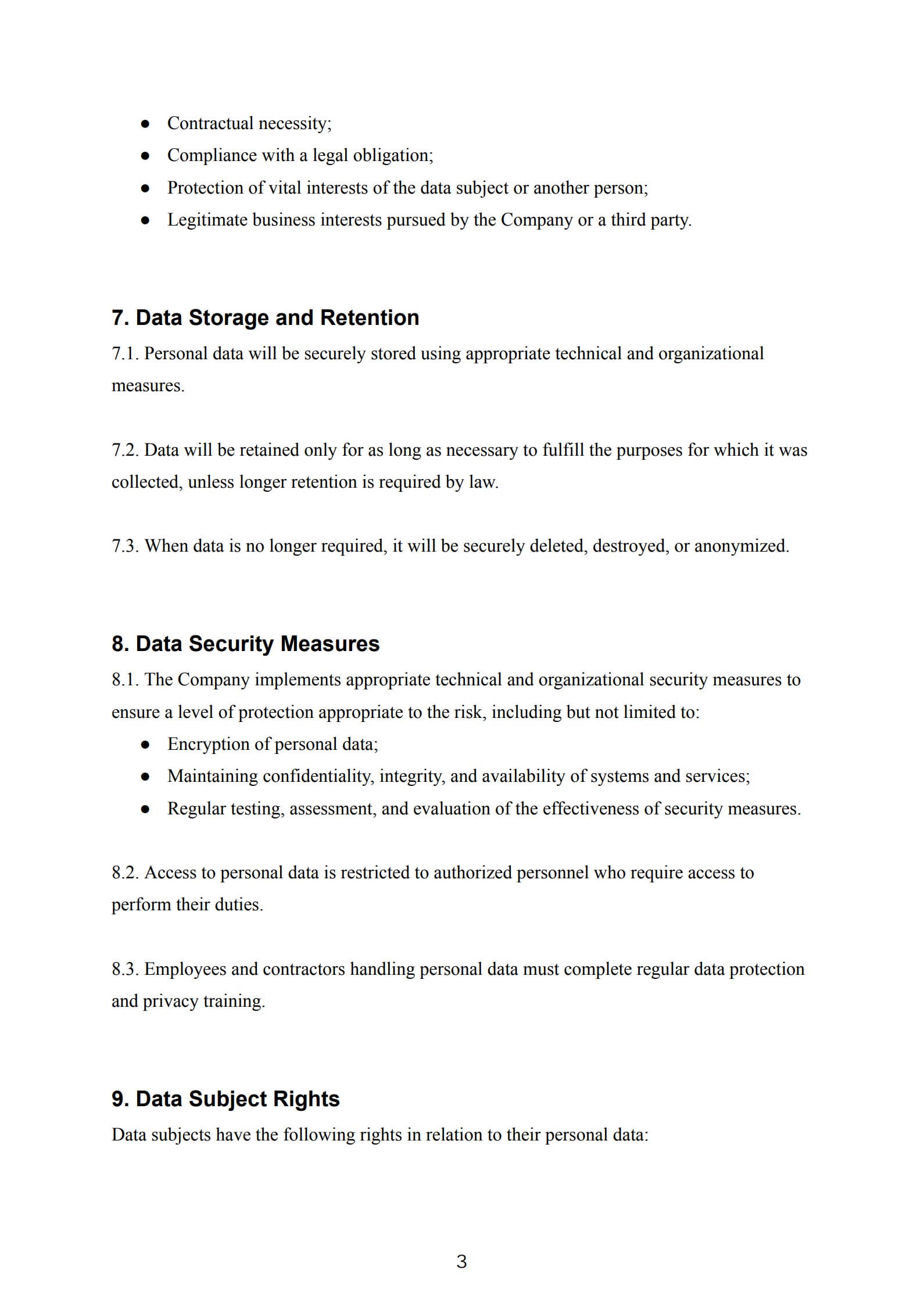
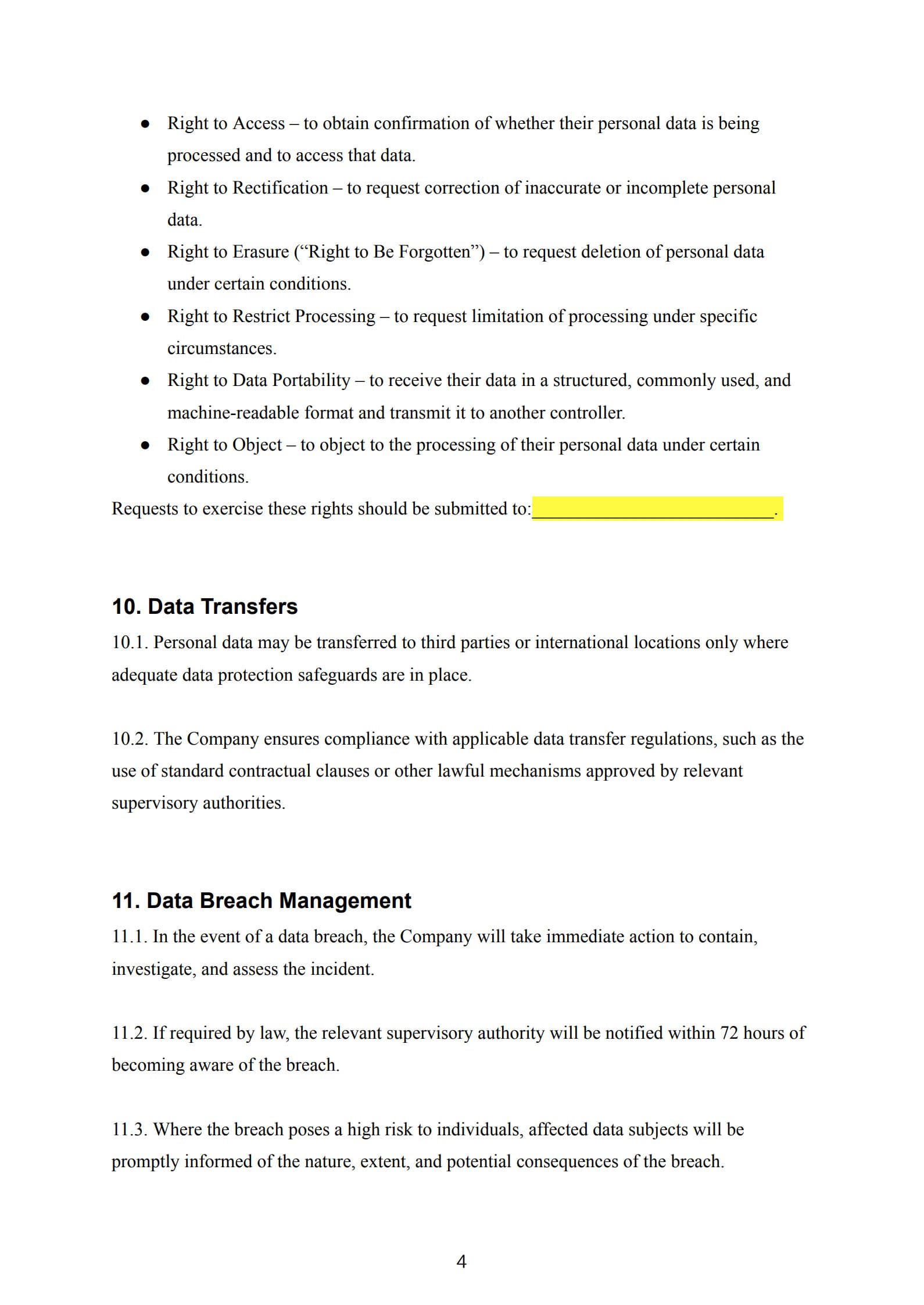
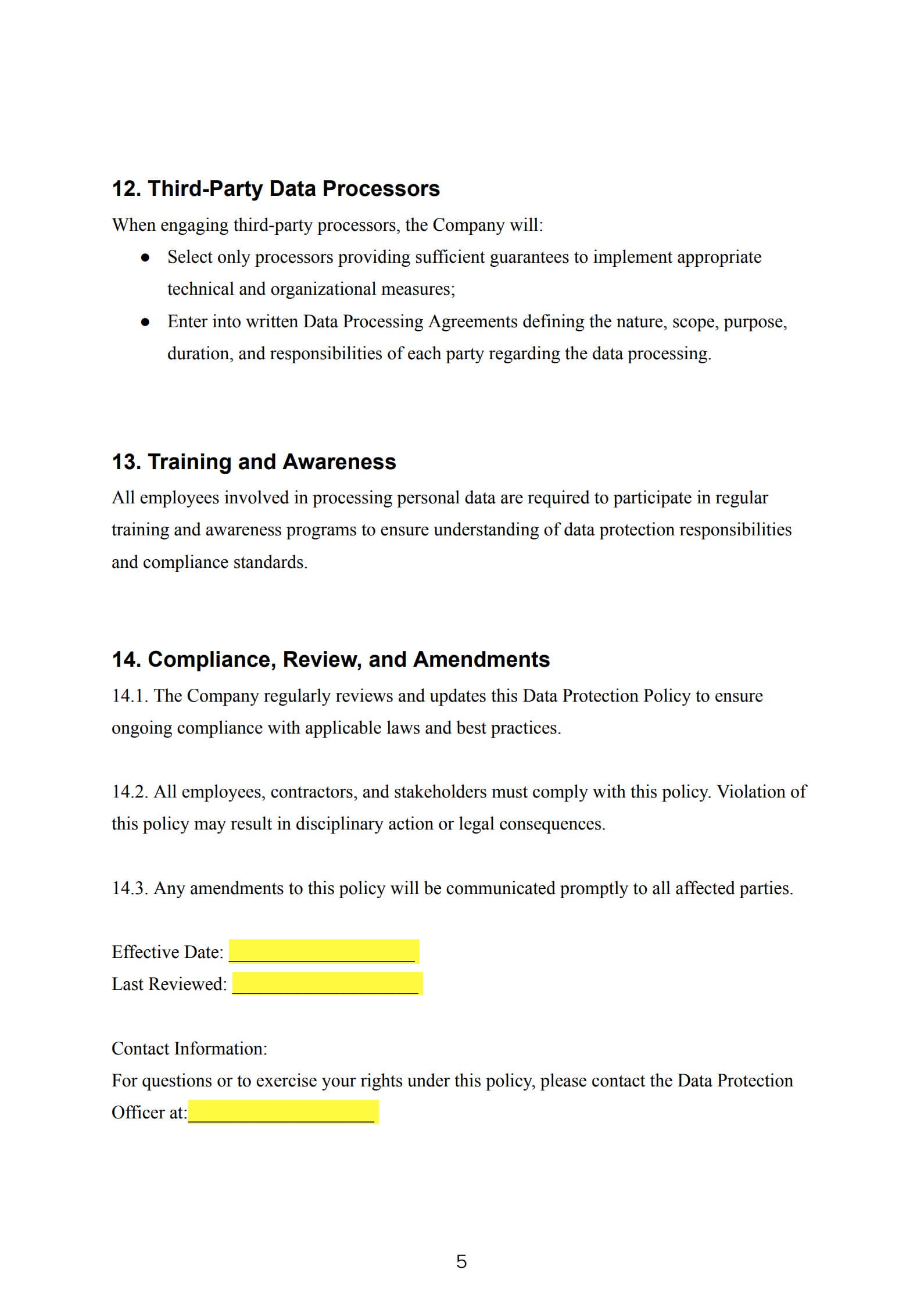
A Data Protection Policy is a fundamental document for any organization that handles personal or sensitive information. It defines how data is collected, processed, stored, and shared, ensuring that all activities comply with privacy laws and security standards. A well‑designed policy helps companies protect confidential data, prevent breaches, and build trust with customers, employees, and partners.
In this article, you’ll learn what a Data Protection Policy is, why it is crucial for modern organizations, the key components it should include, and how you can easily create your own using our free, fillable PDF template from PDF Agile.
1. What Is a Data Protection Policy?
A Data Protection Policy is an official document that outlines how an organization collects, stores, processes, and safeguards personal and sensitive data. It sets clear guidelines to ensure information is handled lawfully, confidentially, and securely.
This policy applies to all employees, contractors, and third parties who access company data, helping protect both the organization and its clients from privacy risks, regulatory violations, and potential data breaches.
2. Why Is Data Protection Important?
Data protection is essential for maintaining trust, compliance, and business integrity. Key reasons include:
- Legal Compliance – Adhering to international regulations such as GDPR, CCPA, or local data laws.
- Reputation Management – Preventing data leaks that could damage customer confidence.
- Operational Security – Ensuring systems and staff manage data consistently and safely.
- Business Continuity – Protecting data availability in the event of cyberattacks or hardware failures.
A robust data protection policy reduces the likelihood of costly incidents and helps employees act responsibly when dealing with sensitive information.
3. What Should a Data Protection Policy Include?
A comprehensive policy generally covers:
- Purpose and Scope – Explains the objective and which data types and activities are included.
- Legal Basis for Processing – References to applicable data protection laws or standards.
- Roles and Responsibilities – Defines who is responsible for enforcing and monitoring compliance.
- Data Collection and Storage – Specifies how data is obtained, classified, and retained.
- Access Control and Security Measures – Describes technical and physical protection methods.
- Data Sharing and Third‑Party Management – Outlines handling of external processing or vendor access.
- Incident Response and Breach Protocol – Defines actions to take when data is compromised.
- Policy Review and Training – Ensures updates and staff awareness programs are in place.
4. How to Write a Data Protection Policy Using Templates
With PDF Agile, you can easily draft and maintain a full‑featured policy in a few steps:
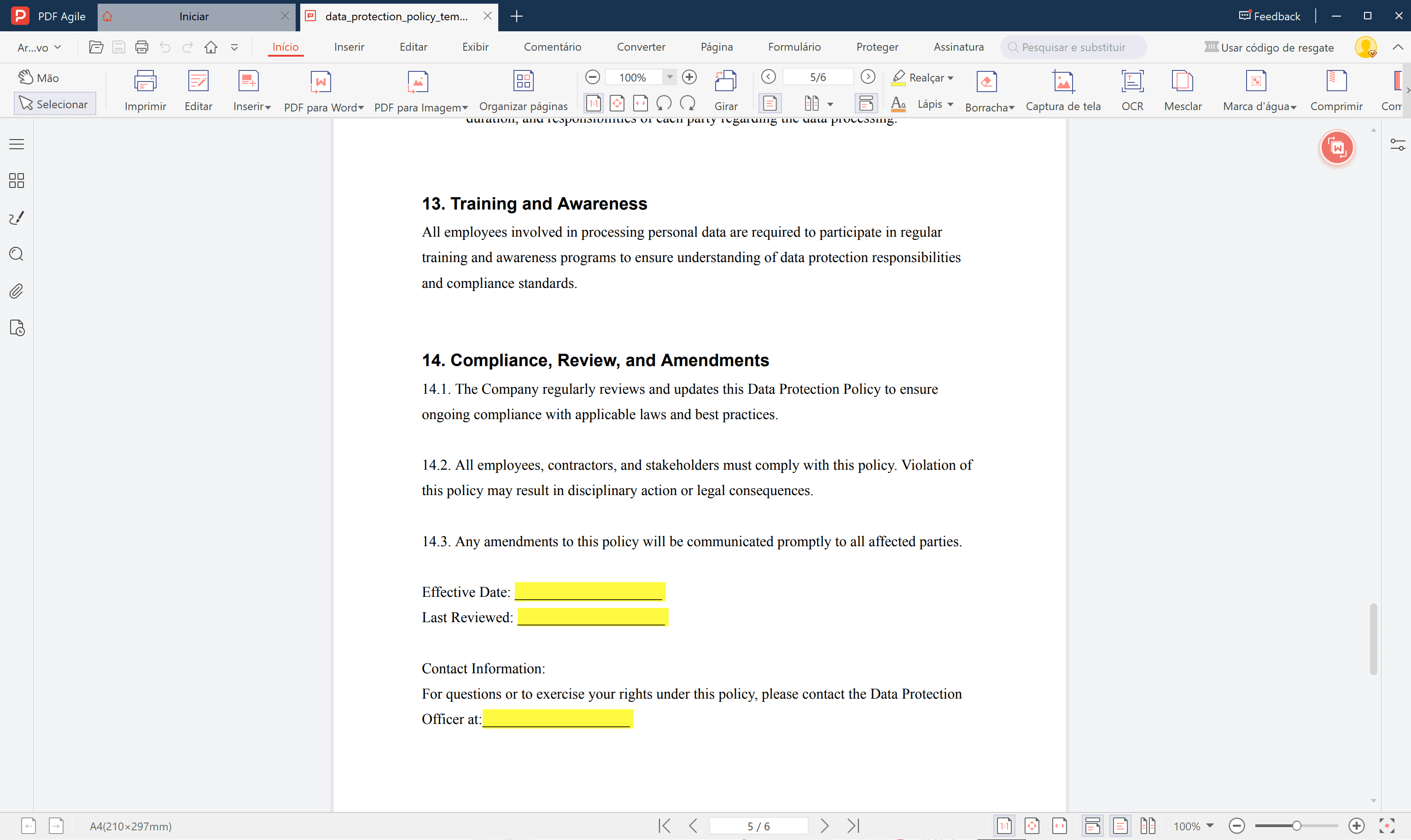
Step 1 – Download the Free Template
Click “Download Template” to get a printable, editable PDF policy file.
Step 2 – Open the File in PDF Agile
Load the document into PDF Agile and start editing right away.
Step 3 – Fill in Company Information
Add your organization’s name, data controllers, and contact details.
Step 4 – Customize Regulatory References
Adjust compliance references (e.g., GDPR for Europe or CCPA for California).
Step 5 – Save and Distribute
Save the completed version as PDF or Word and circulate among your teams or partners.
PDF Agile helps ensure a clear, well‑designed, and compliant policy layout for daily use.
5. FAQs about Data Protection Policy
5.1 How does a data protection policy ensure compliance with legal and regulatory requirements?
It formally documents your organization’s approach to data handling in alignment with relevant laws and includes accountability measures, reporting lines, and audits that prove compliance during inspections.
5.2 How should a company respond to a data breach incident?
Immediately identify and contain the breach, notify affected individuals and authorities, investigate root causes, and update security controls to prevent recurrence.
5.3 How often should data policies be reviewed?
At least once a year or whenever regulations, systems, or business models change.
6. Conclusion
A strong Data Protection Policy safeguards business continuity, compliance, and stakeholder trust.
Download this free, printable, and editable Data Protection Policy Template via PDF Agile to start building a compliant information‑security framework for your organization today.