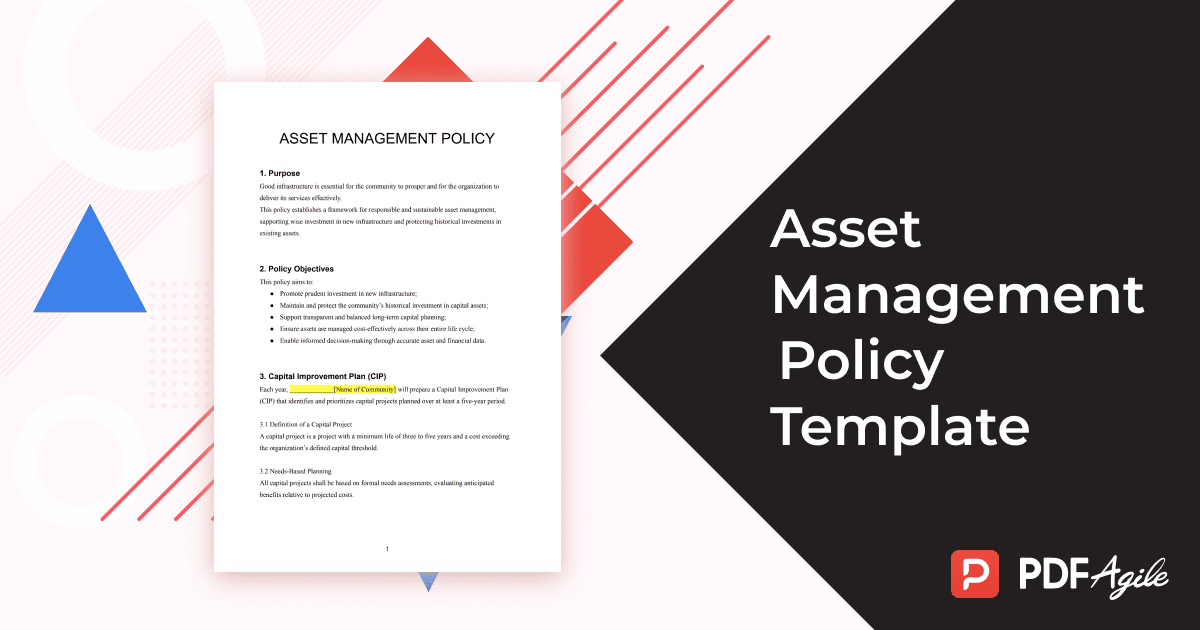



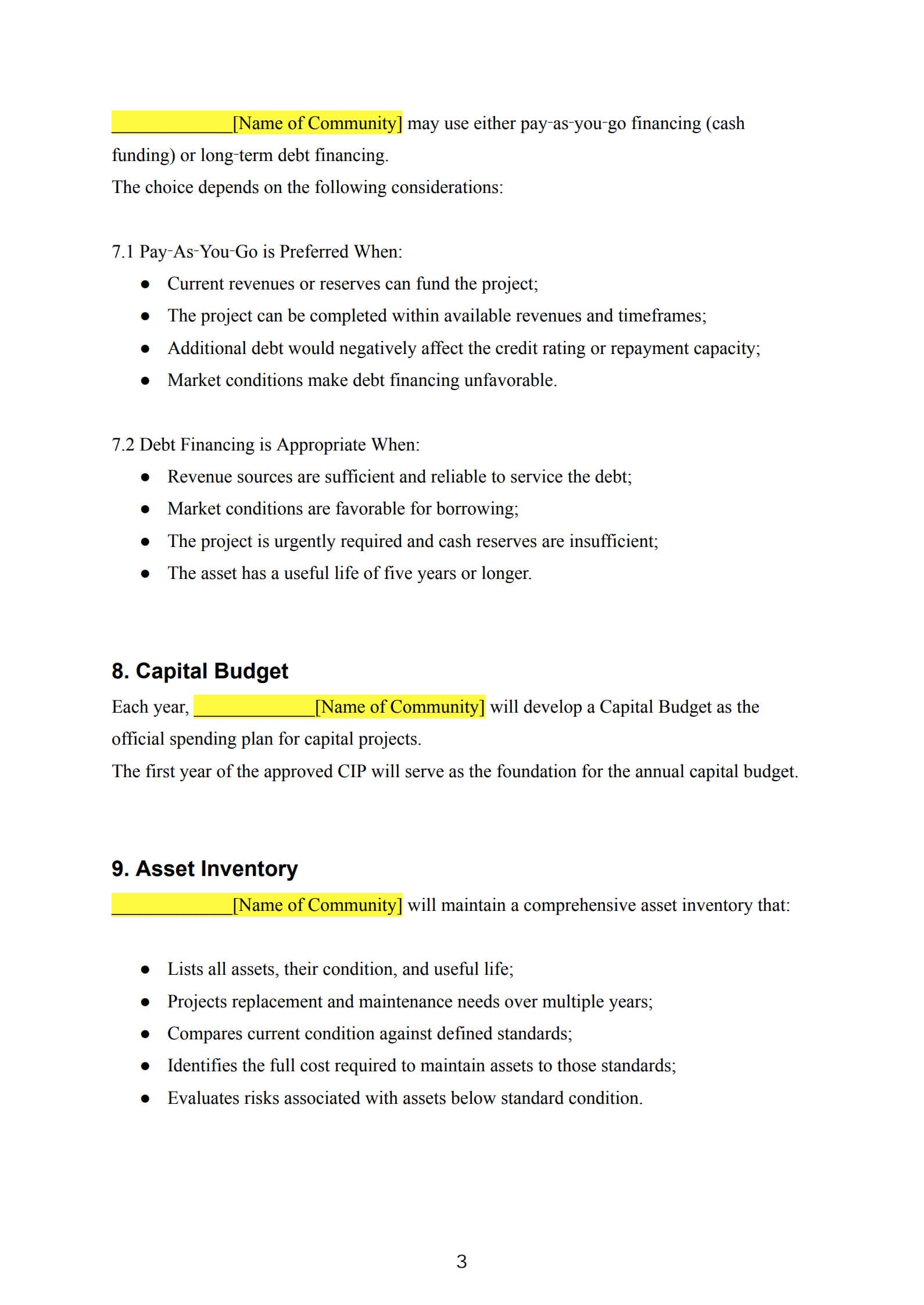
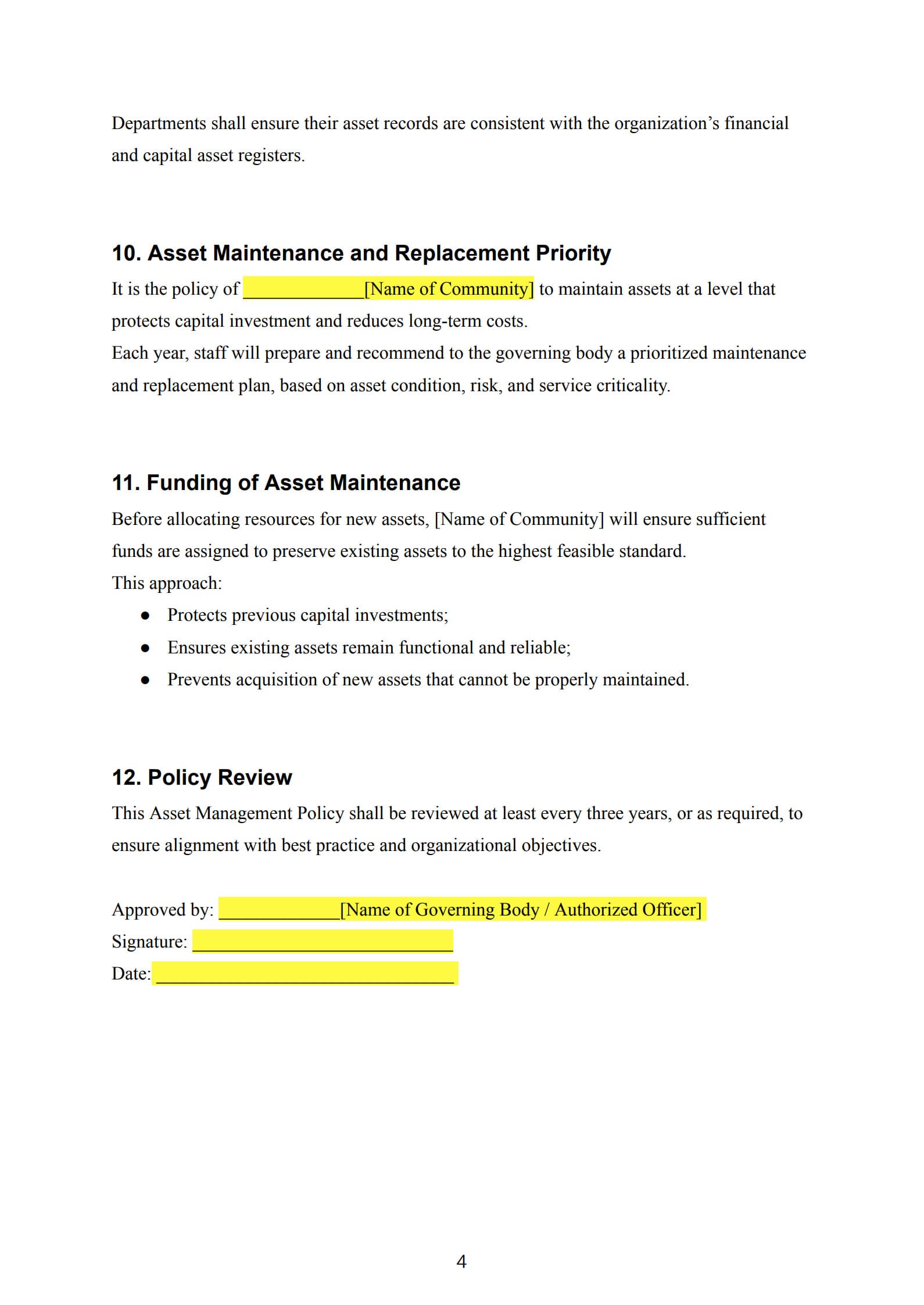
An Asset Management Policy is a key document that defines how an organization controls, maintains, and optimizes its assets throughout their entire lifecycle. It ensures that all physical and digital resources—such as equipment, property, software, and data—are properly tracked, safeguarded, and used efficiently to support business objectives.
In this article, you’ll learn what an asset management policy is, why it’s important for organizations of all sizes, what essential components it should include, and how you can quickly create your own professional policy using our free, fillable PDF template from PDF Agile.
1. Overview: What Is an Asset Management Policy?
An Asset Management Policy is a strategic document that outlines how an organization manages its physical and digital assets throughout their life cycles. It establishes a framework for acquiring, maintaining, utilizing, and disposing of assets efficiently and responsibly.
This policy ensures that business assets—such as equipment, property, software, and data—are properly tracked, safeguarded, and optimized to support the company’s operational and financial goals.
A well‑defined asset management policy helps align asset‑related decisions with organizational objectives, ensuring accountability and cost‑effective resource use.
2. Importance of Having an Asset Management Policy
Implementing a formal asset management policy is crucial for businesses of all sizes. It helps:
- Maintain accountability – Clearly defines ownership and responsibilities.
- Extend asset lifespan – Regular maintenance plans prevent premature wear or loss.
- Reduce costs – Minimizes unnecessary purchases and operational inefficiencies.
- Comply with regulations – Ensures compliance with accounting standards and audit requirements.
- Enhance financial transparency – Provides accurate asset data for budgeting and reporting.
Without a consistent approach to asset management, organizations risk resource misallocation, data inaccuracies, or avoidable losses.
3.Key Components of an Asset Management Policy Template
A comprehensive policy typically includes:
- Purpose and Scope – Defines objectives and applicable assets.
- Roles and Responsibilities – Identifies personnel accountable for asset recording and monitoring.
- Asset Acquisition and Registration – Procedures for procurement and documentation.
- Asset Maintenance and Usage Guidelines – Standards for operation, storage, and servicing.
- Asset Disposal and Replacement – Defines how obsolete or unused assets are handled.
- Compliance and Record Keeping – Details reporting standards and audit processes.
- Review Cycle – Specifies how often the policy is reviewed or updated.
Using a structured template ensures consistency and simplifies ongoing policy management.
4. How to Create an Effective Asset Management Policy
You can use PDF Agile to create a customized and professional policy document that meets your organization’s standards.
Step 1 – Download the Free Template
Click the download button to get the printable and fillable PDF Asset Management Policy Template.
Step 2 – Open with PDF Agile
Launch PDF Agile and open the downloaded file.
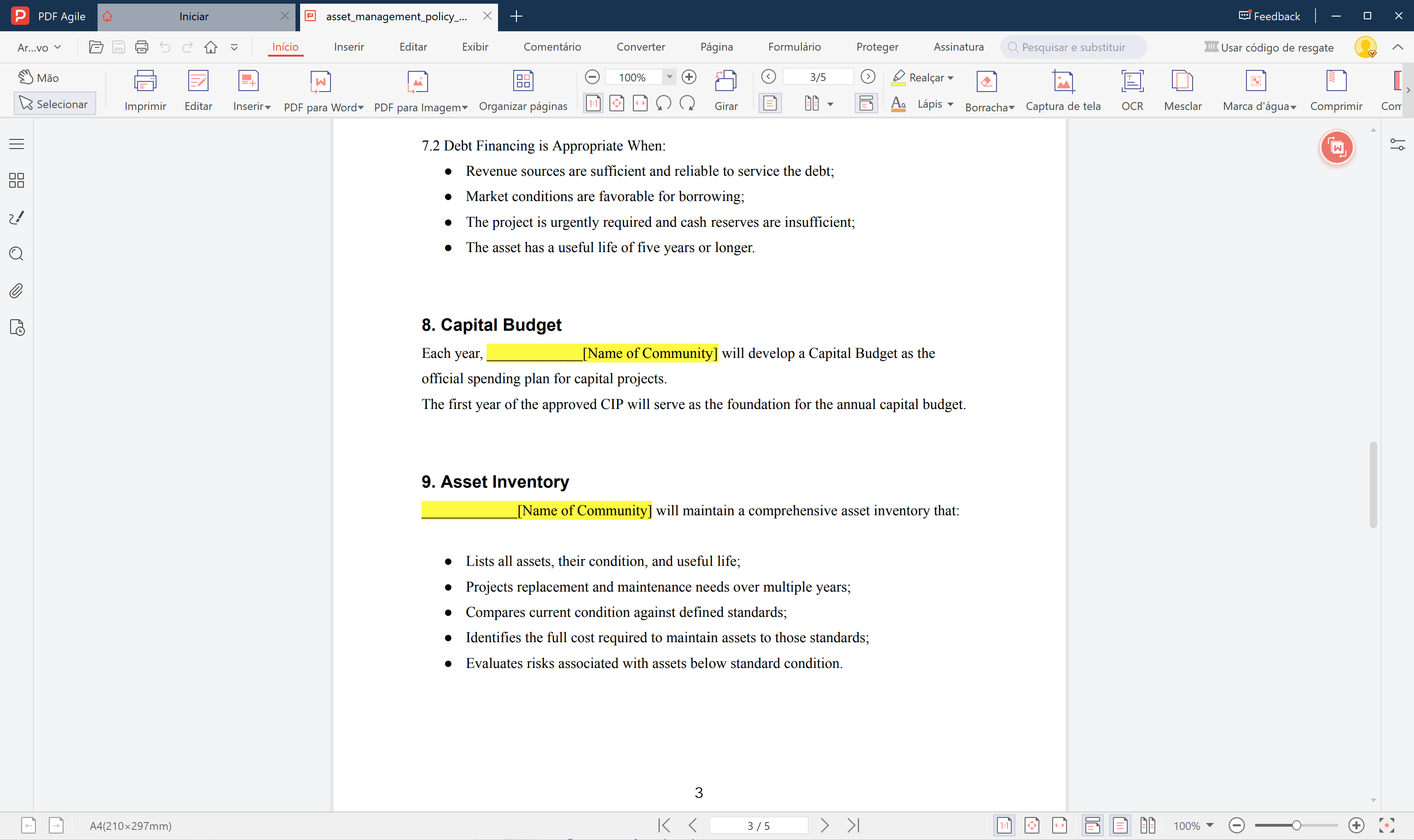
Step 3 – Edit Policy Sections
Replace sample text with your company name, procedure details, and asset categories.
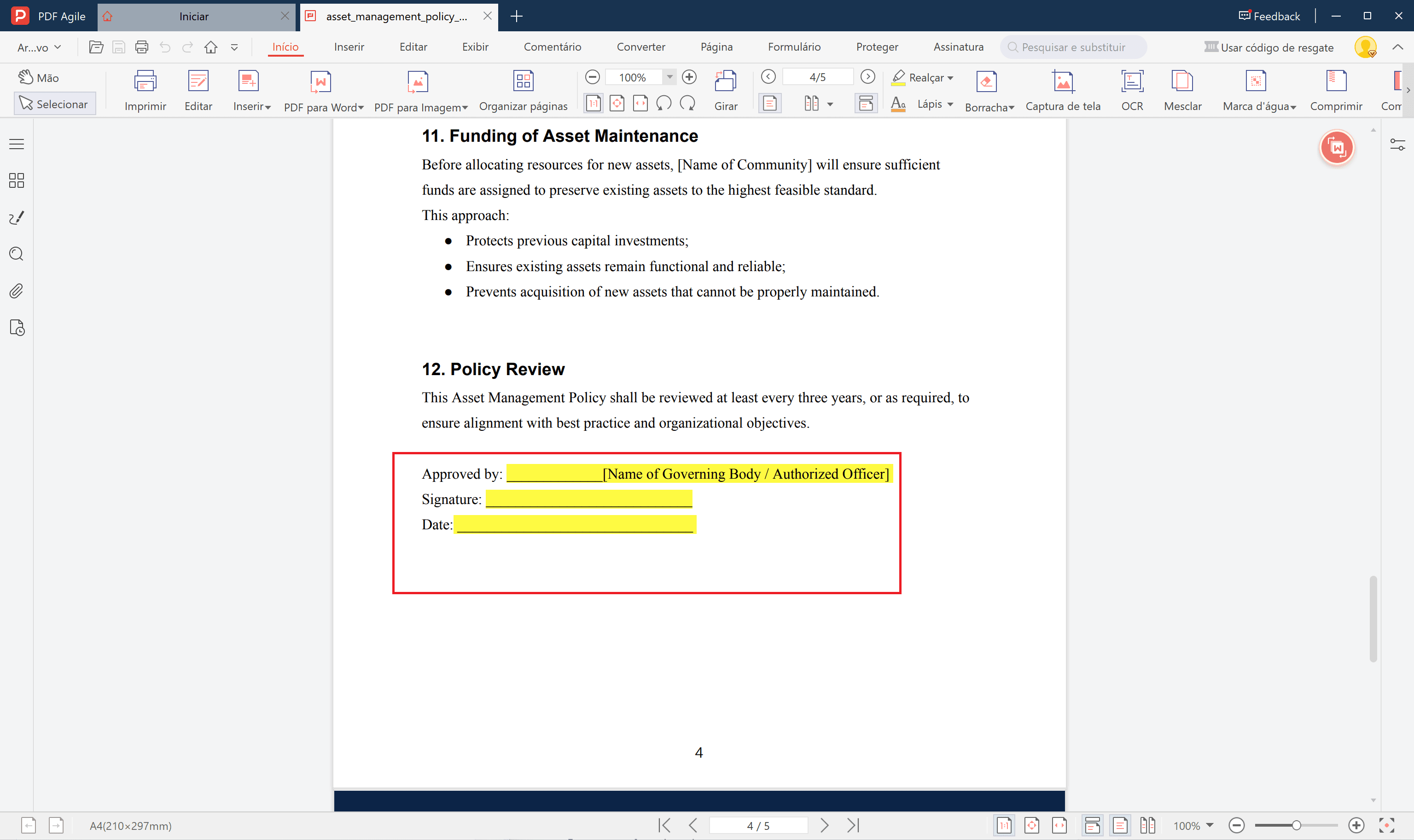
Step 4 – Add Your Branding and Approval Fields
Insert your organization’s logo or manager signature boxes.
Step 5 – Save and Share
Export the final version in PDF or Word format to distribute digitally or print for internal approval.
PDF Agile lets you maintain accuracy and uniform design across all policy documents with ease.
5. Customization Tips for Using the Asset Management Policy Template
- Adapt terminology to match internal systems (e.g., inventory numbers, asset codes).
- Define asset thresholds — what qualifies as a reportable asset.
- Include security protocols for digital assets and data protection.
- Incorporate depreciation methods for accounting clarity.
- Align the layout with company branding using PDF Agile’s editing tools.
6. Frequently Asked Questions (FAQs)
6.1 Who is responsible for enforcing the policy?
Usually, the Asset Manager or Finance Department oversees implementation, with department heads ensuring compliance among their teams.
6.2 How often should the policy be reviewed or updated?
Review it annually or whenever there are significant operational or regulatory changes.
6.3 Can small businesses benefit from an asset management policy?
Yes. Even small teams gain efficiency and control by tracking equipment, licenses, and software with a clear, written policy.
7. Conclusion
An Asset Management Policy is vital for protecting resources, improving financial control, and supporting organizational growth.
Download this free, printable, and fillable Asset Management Policy Template via PDF Agile to streamline asset tracking and ensure long‑term operational success.