


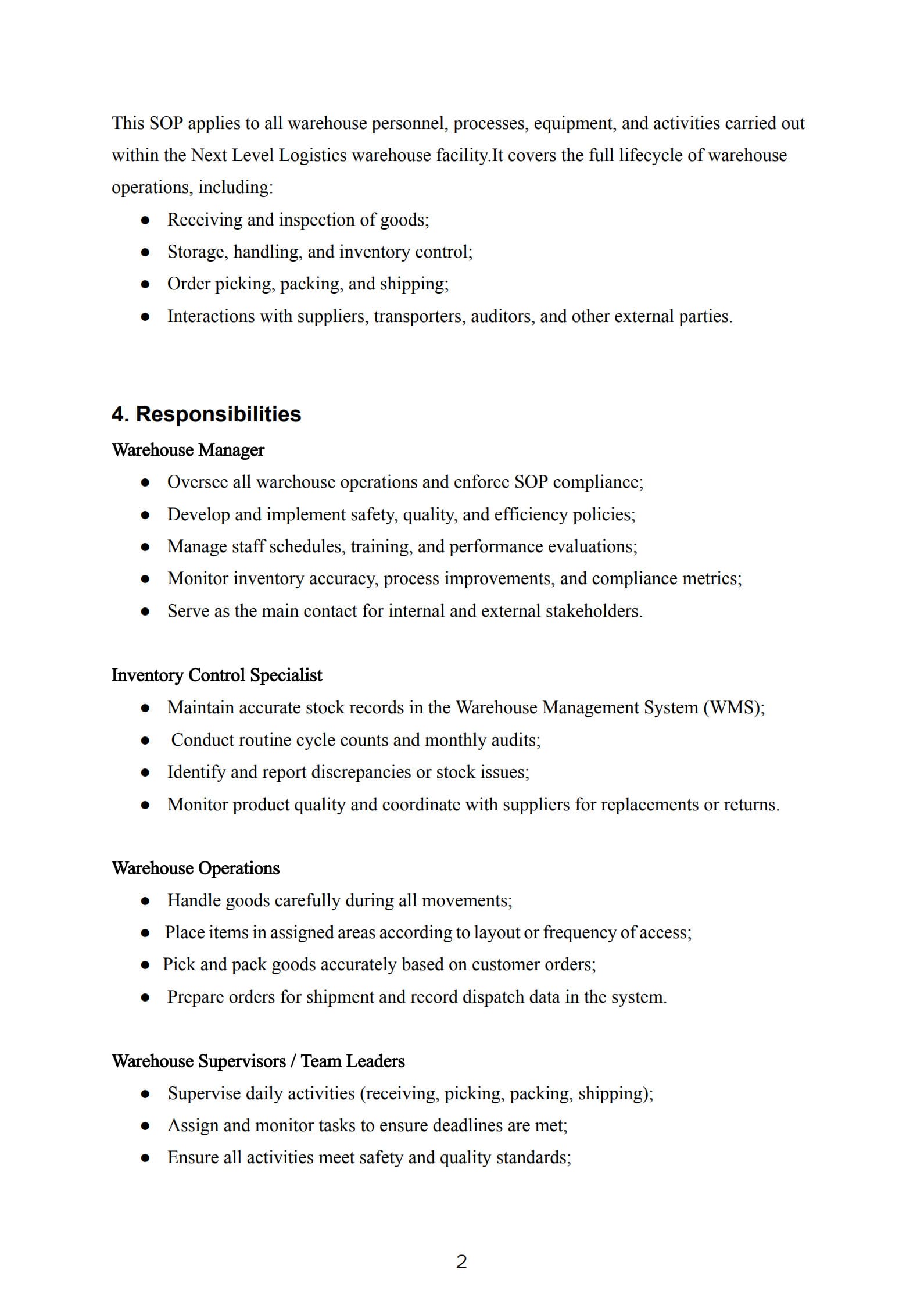
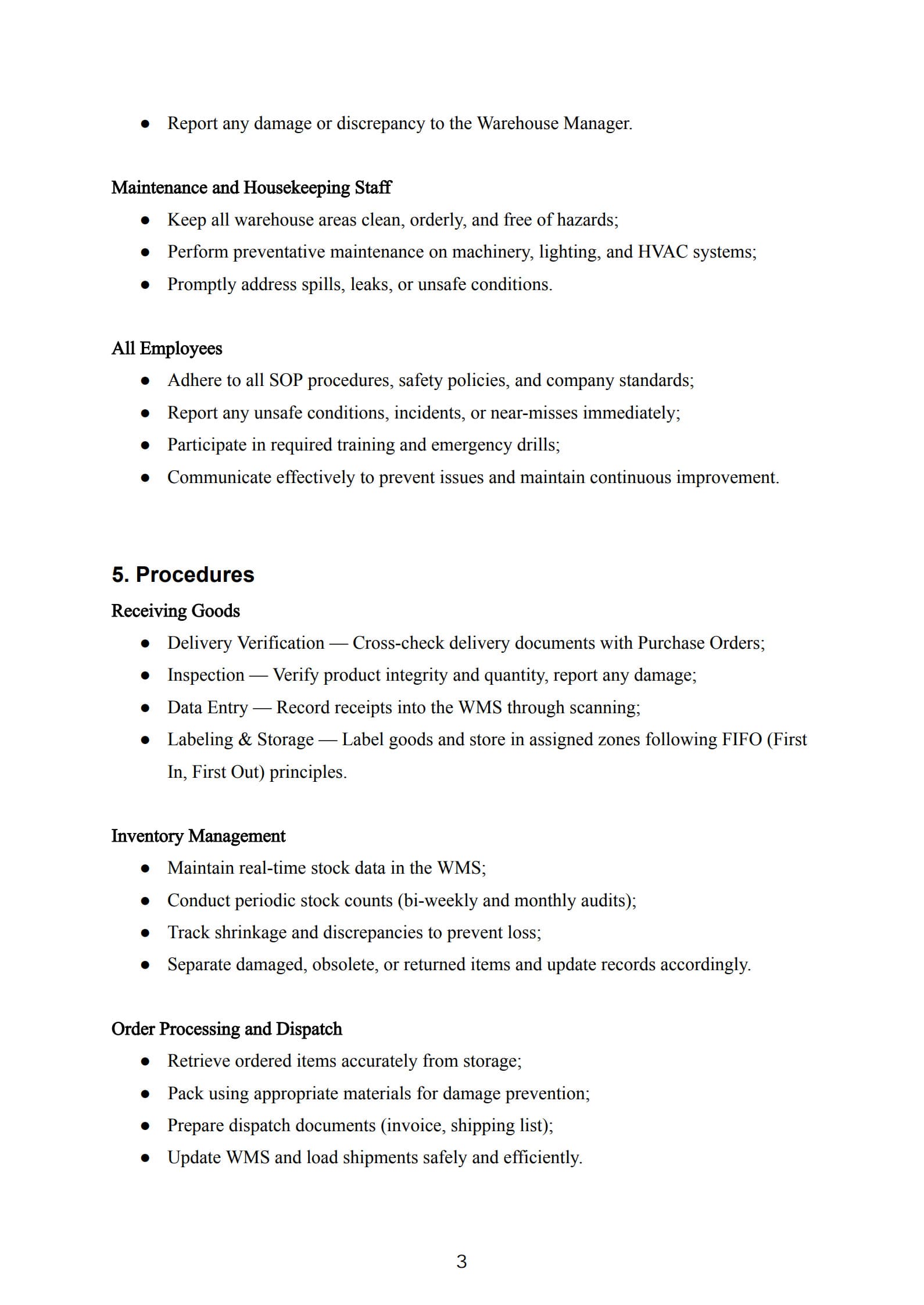
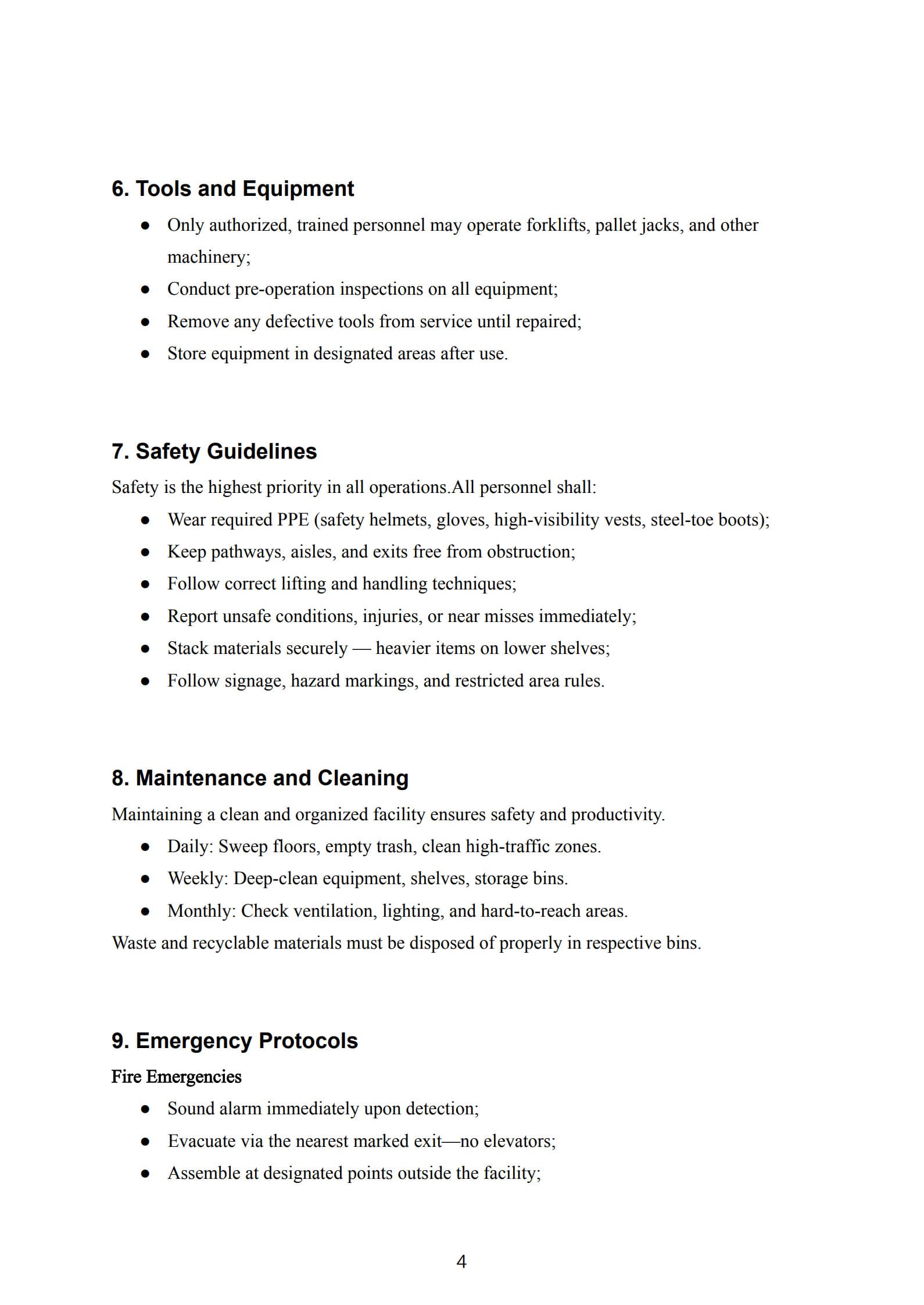
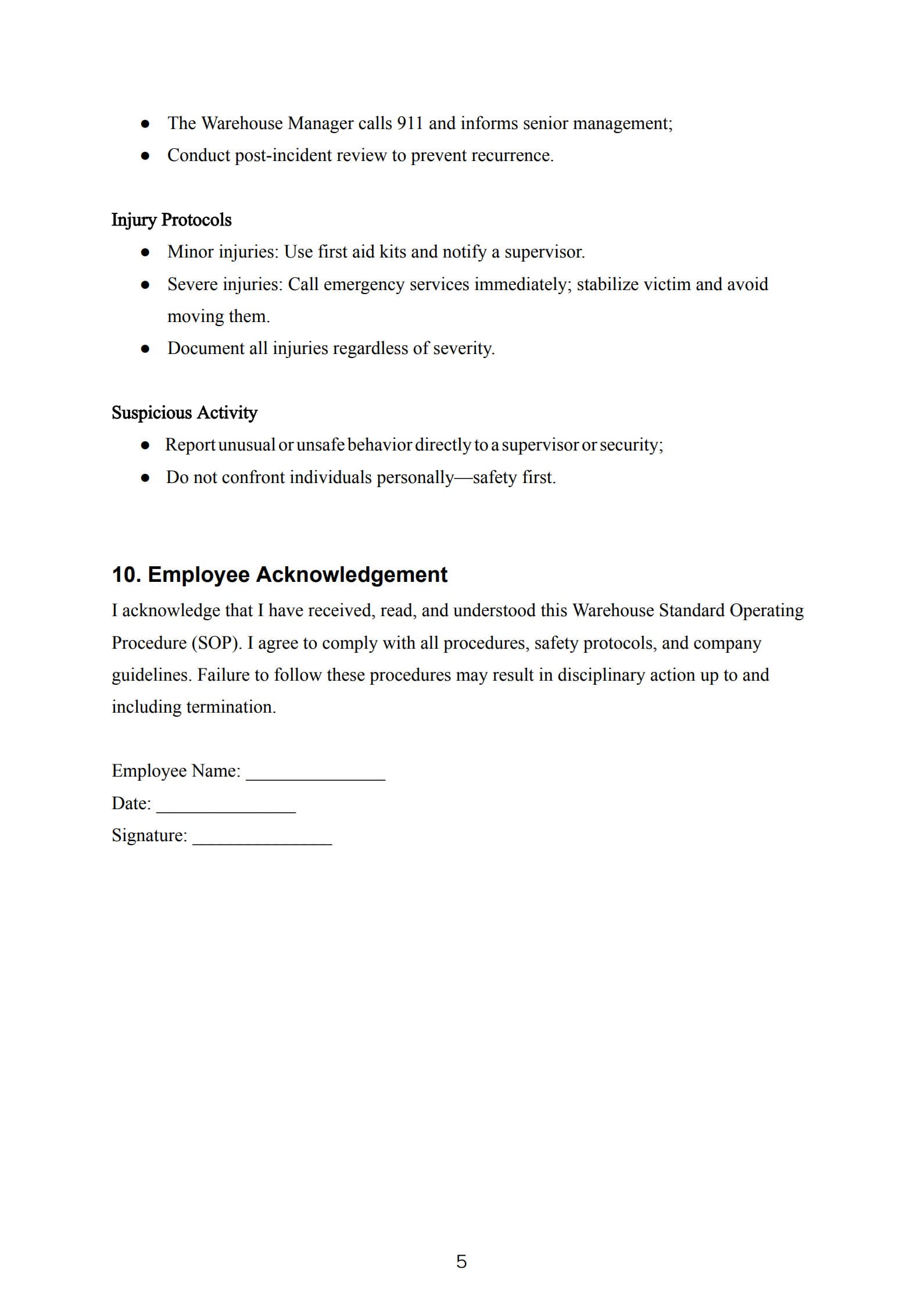
A Warehouse Standard Operating Procedure (SOP) is a crucial document that defines how day‑to‑day warehouse activities should be carried out to ensure safety, efficiency, and consistency. It covers essential operations such as inventory management, goods receiving and dispatching, equipment handling, and compliance with workplace safety regulations. Both managers and staff rely on clear SOPs to maintain organized workflows, minimize errors, and achieve high operational standards.
In this article, you’ll learn what a warehouse SOP is, why it’s important, what key elements to include, and how you can easily create your own using our free, editable PDF template from PDF Agile.
1.What Is a Warehouse SOP (Standard Operating Procedure)?
A Warehouse SOP (Standard Operating Procedure) is a detailed document that defines standardized workflows, responsibilities, and safety protocols for warehouse operations.
It serves as a step‑by‑step reference for staff to perform receiving, storage, picking, packing, and dispatching activities efficiently and consistently.
SOPs help reduce human error, maintain compliance with company policies, and ensure that operational standards are upheld across all warehouse functions.
2. Why Does Your Warehouse Need SOPs?
Implementing clear SOPs strengthens warehouse management by:
- Improving Efficiency – Standardized routines minimize confusion and downtime.
- Ensuring Safety Compliance – Reduces workplace injuries through defined handling rules.
- Enhancing Training Quality – New employees can quickly learn verified procedures.
- Maintaining Inventory Accuracy – Prevents loss or misplacement of stock.
- Facilitating Audits and Performance Tracking – Makes operations measurable and transparent.
SOPs form the backbone of warehouse productivity and operational stability.
3. Key Sections of a Warehouse SOP
A comprehensive Warehouse SOP usually includes:
- Purpose and Scope – Define what the document covers and its objectives.
- Roles and Responsibilities – Assign accountability to managers, operators, and quality teams.
- Safety Guidelines – Specify PPE requirements, hazard controls, and emergency procedures.
- Receiving and Inspection – Detail procedures for inbound products and quality checks.
- Storage and Inventory Control – Outline labeling, stacking, and tracking methods.
- Order Picking and Packing – Set standards for accuracy and packaging quality.
- Dispatch and Transportation – Describe steps for shipment preparation and documentation.
- Record Keeping and Review – Track revisions and establish periodic evaluations.
Consistent structure ensures every department follows the same operating logic.
4. How to Create a Warehouse SOP with Templates
You can easily draft or update a professional SOP file using PDF Agile.
Step 1 – Download the Free Template
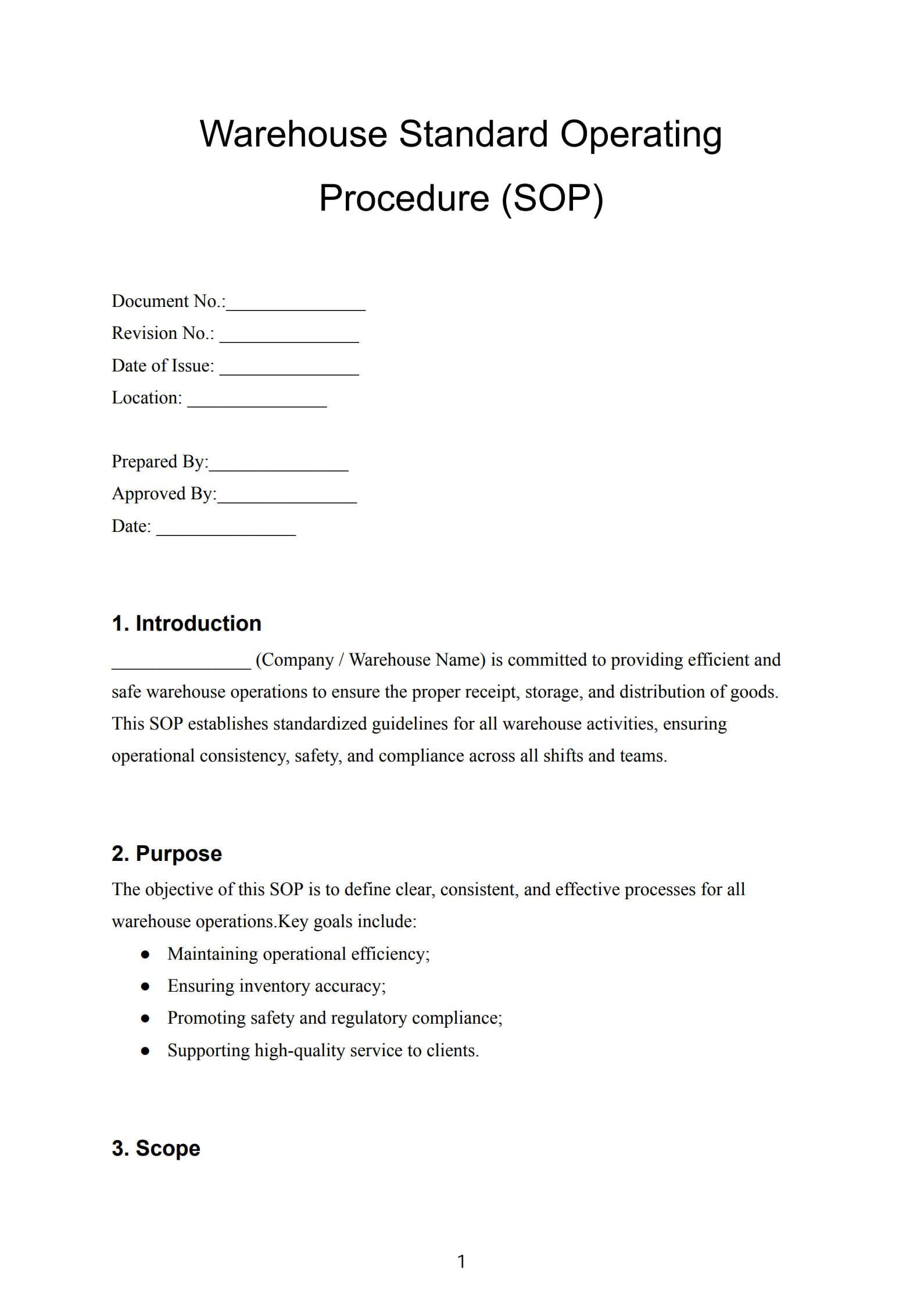
Click “Download Template” to obtain the fillable and printable PDF Warehouse SOP Template.
Step 2 – Open in PDF Agile
Import the file into PDF Agile to start editing directly.
Step 3 – Customize Operational Details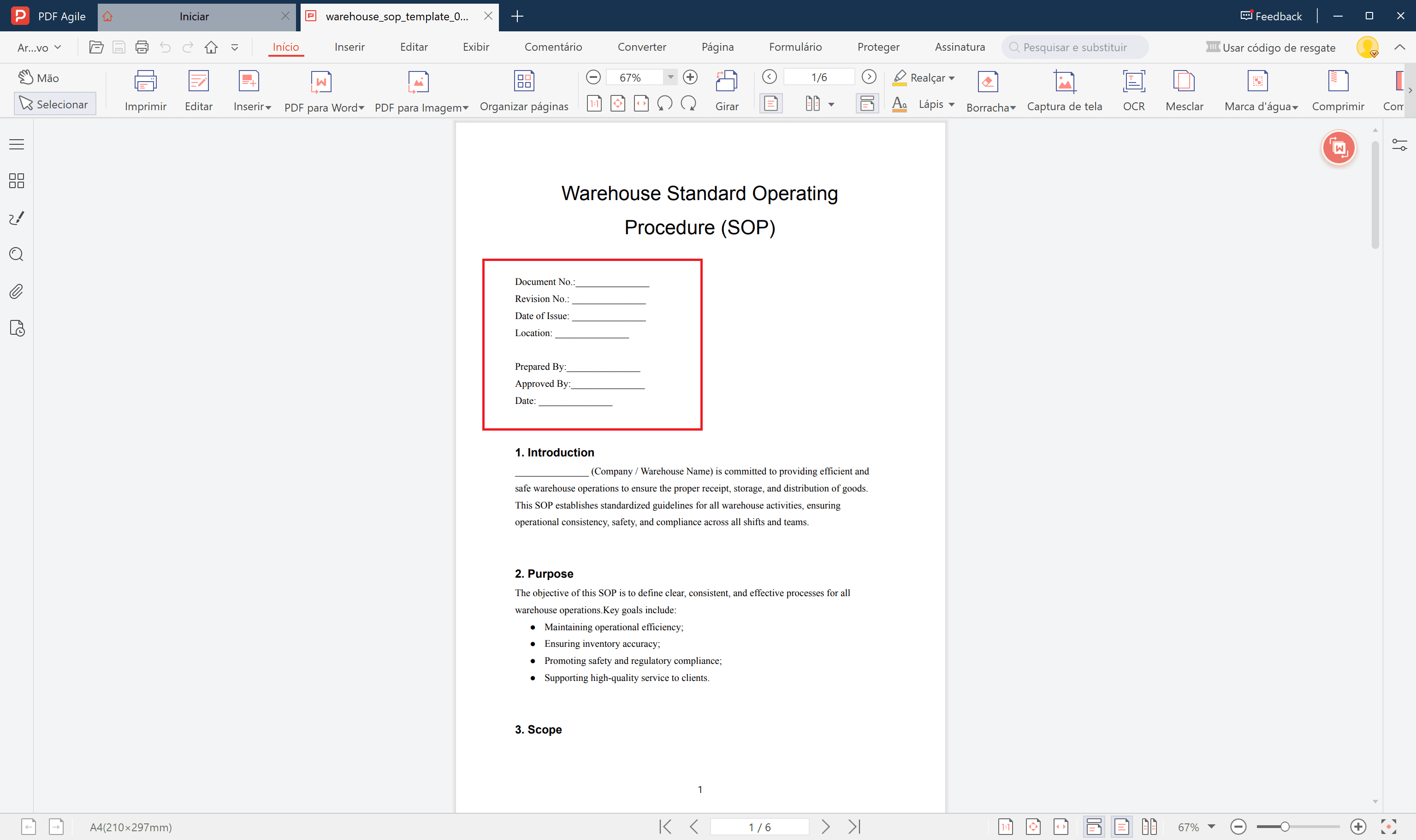
Step 4 – Add Department Logos and Sign‑off Fields
Personalize the layout for internal approval.
Step 5 – Save and Distribute
Export your completed SOP as PDF or Word and share it with warehouse staff.
Using PDF Agile ensures your SOPs are visually consistent, accessible, and up to date.
5. Tips to Improve Efficiency with SOP Implementation
- Train staff regularly on procedure updates.
- Use visual aids such as diagrams or floor maps.
- Assign supervisors to audit SOP compliance.
- Store all SOPs in a central, accessible system.
- Review and revise documents semi‑annually.
Well‑implemented SOPs promote consistency and reduce the cost of warehouse operations.
6. FAQs about Warehouse SOPs
6.1 How is an SOP different from a workflow?
An SOP is a formal, documented process describing each operational step with accountabilities, while a workflow is a visual or system‑based representation of those steps in sequence.
6.2 Who is responsible for reviewing SOP updates?
Typically the Warehouse Manager or Operations Supervisor coordinates reviews with the Safety and Quality Departments.
6.3 How to train new staff on SOP compliance?
Include SOP modules in onboarding sessions, conduct demonstration walk‑throughs, and periodically assess employee adherence.
7. Conclusion
Clear and well-structured Standard Operating Procedures (SOPs) are essential for maintaining operational consistency, safety, and productivity in any warehouse environment.
Download this free, fillable, and printable Warehouse SOP Template from PDF Agile, and start standardizing your warehouse management processes today.