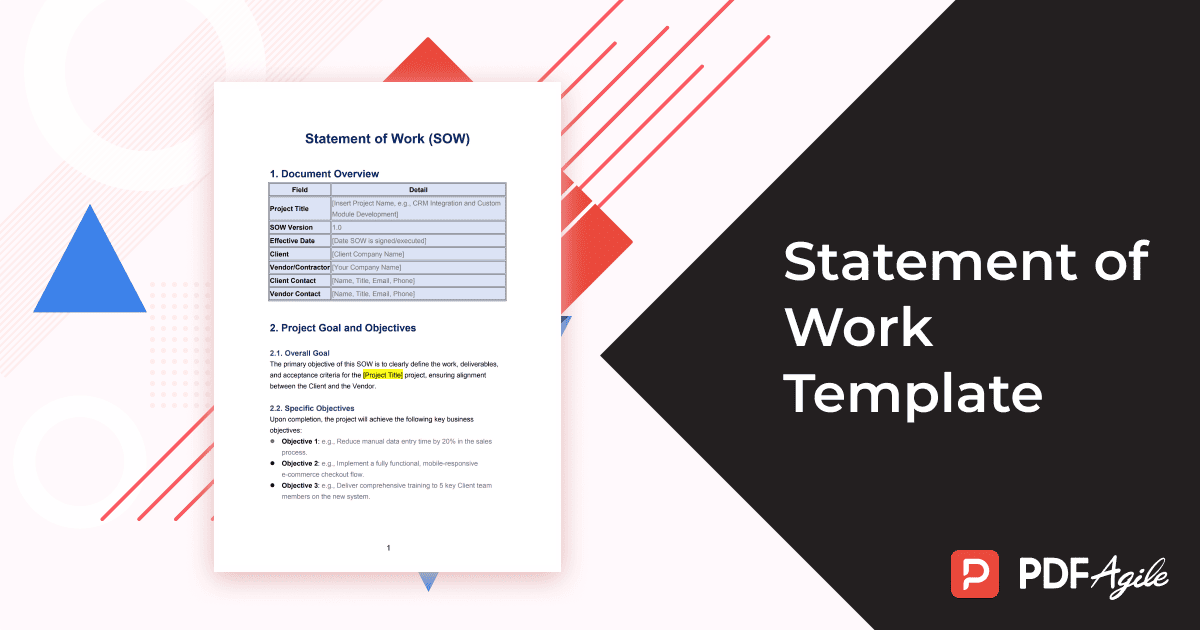



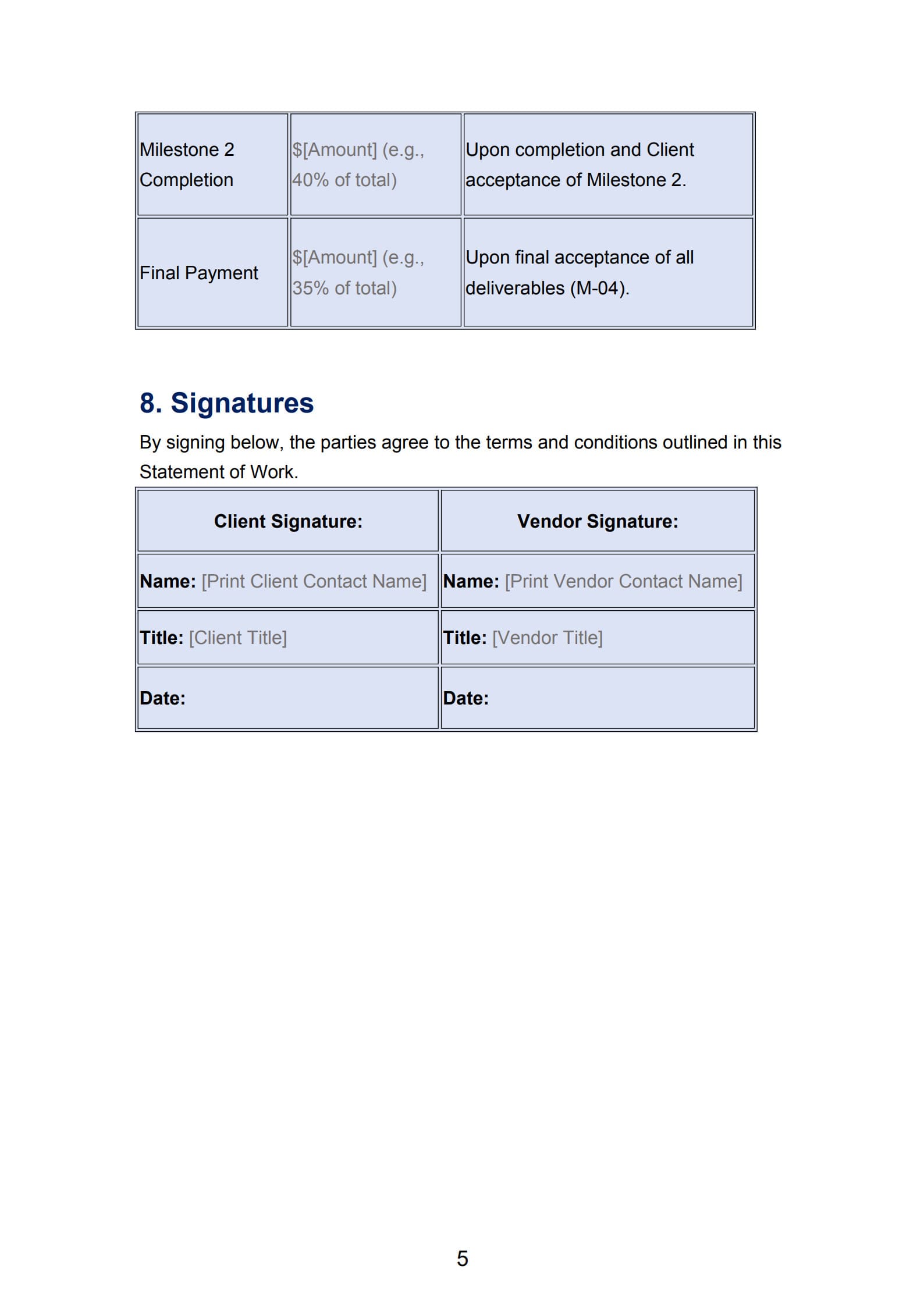
A Statement of Work (SOW) is one of the most essential documents in any project. It defines the scope, deliverables, acceptance criteria, responsibilities, timelines, and payment terms between the client and the vendor. With a well‑drafted SOW, both sides understand exactly what is being delivered, when, and how success will be measured.
In this article, you’ll learn what a Statement of Work is, why every project needs one, what to include in yours, and how to easily create your own using our free fillable statement of work template.
1. What Exactly Is a Statement of Work (SOW)?
A Statement of Work (SOW) is a formal project agreement that specifies the “who, what, when, and how” of a project. It transforms discussions and expectations into a clear written plan that both parties can sign and follow.
It serves as a contractual roadmap that defines accountability, ensures transparency, and sets measurable expectations.
2. Why Every Project Needs an SOW
When a project starts without a clear SOW, problems quickly arise — misaligned expectations, missed deadlines, unclear deliverables, and billing disputes.
A well‑defined SOW helps both the client and the vendor avoid such issues. It prevents scope creep by clarifying exactly what is included and excluded in the project. It also forms a legal and operational reference point that everyone can rely on when evaluating progress or handling changes. For clients, its assurance that deliverables are measurable and accepted only when quality criteria are met. For vendors, it ensures that payments are linked to verified milestones and clearly documented responsibilities.
Put simply, a strong SOW is the blueprint that keeps your project efficient, accountable, and on track.
3. Step-by-Step: How to Draft Your Own with SOW Template
Follow these simple steps to create a professional SOW using our free fillable PDF template:
- Download the template file and open it using PDF Agile.
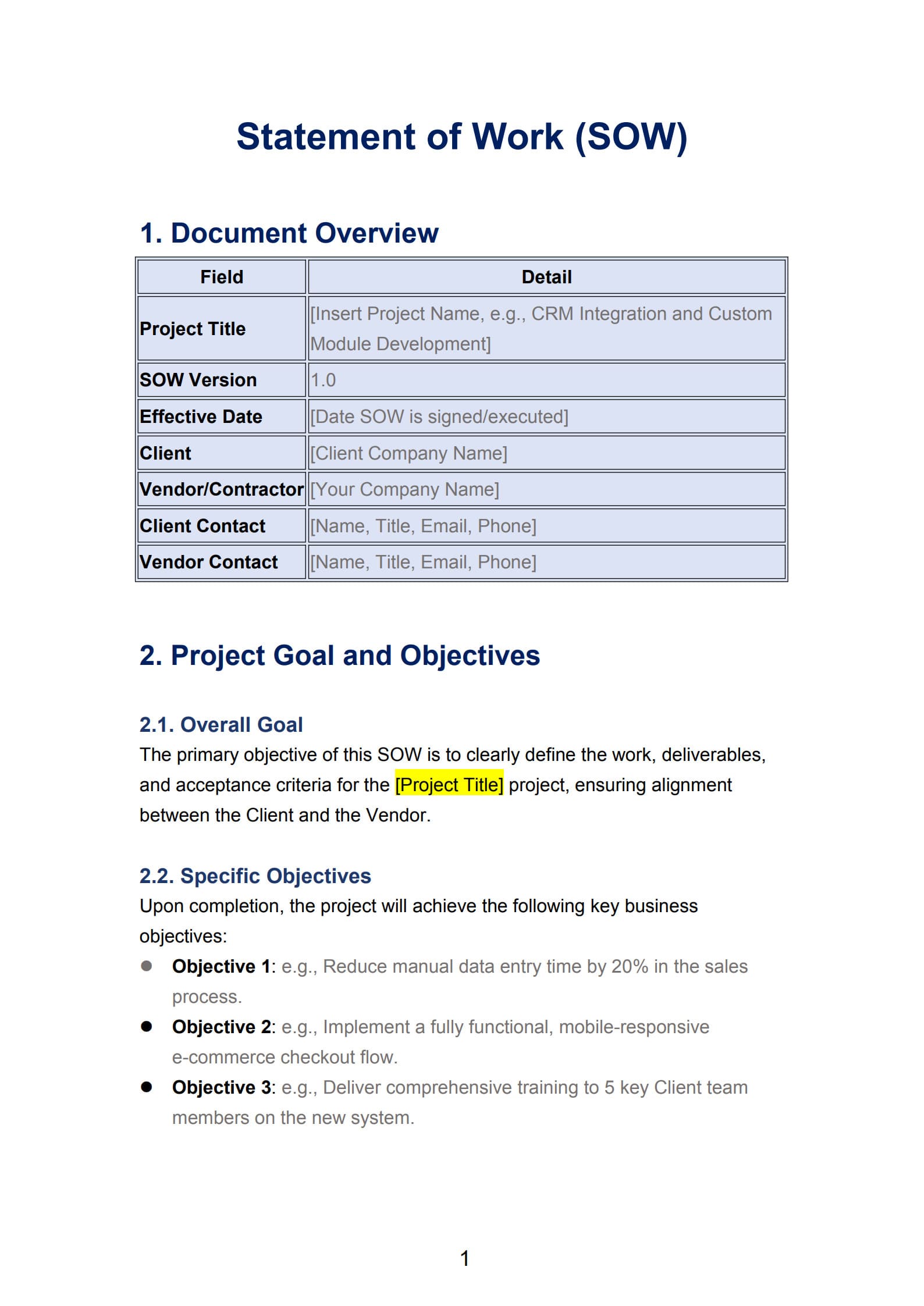
- Complete the Document Overview – Enter the project title, version, effective date, and contact details.
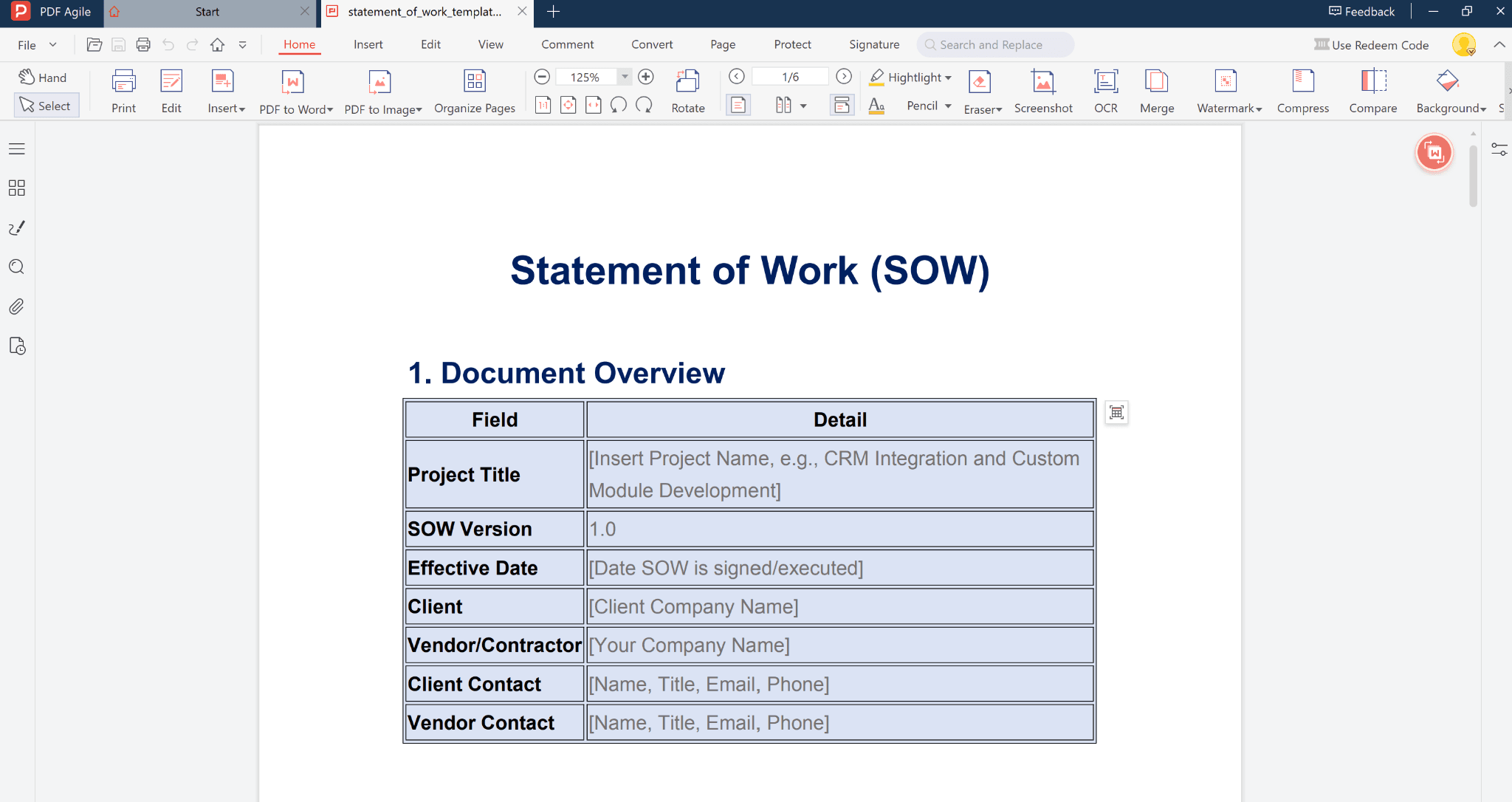
- Define the Project Goal and Objectives – Write one overall goal and at least three specific measurable objectives.
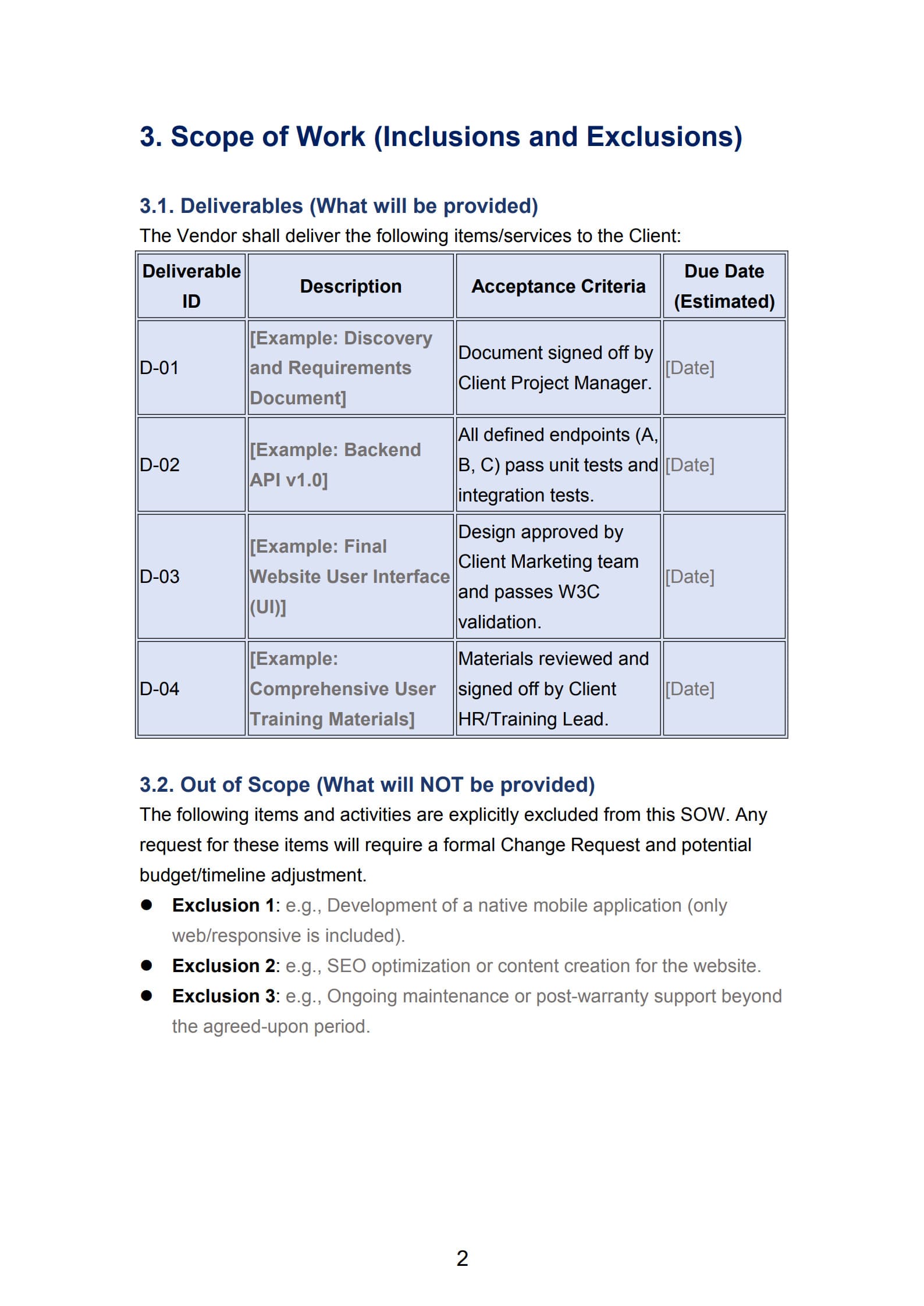
- Describe the Scope of Work – List what will be delivered and what will not. Be explicit about deliverables and exclusions.
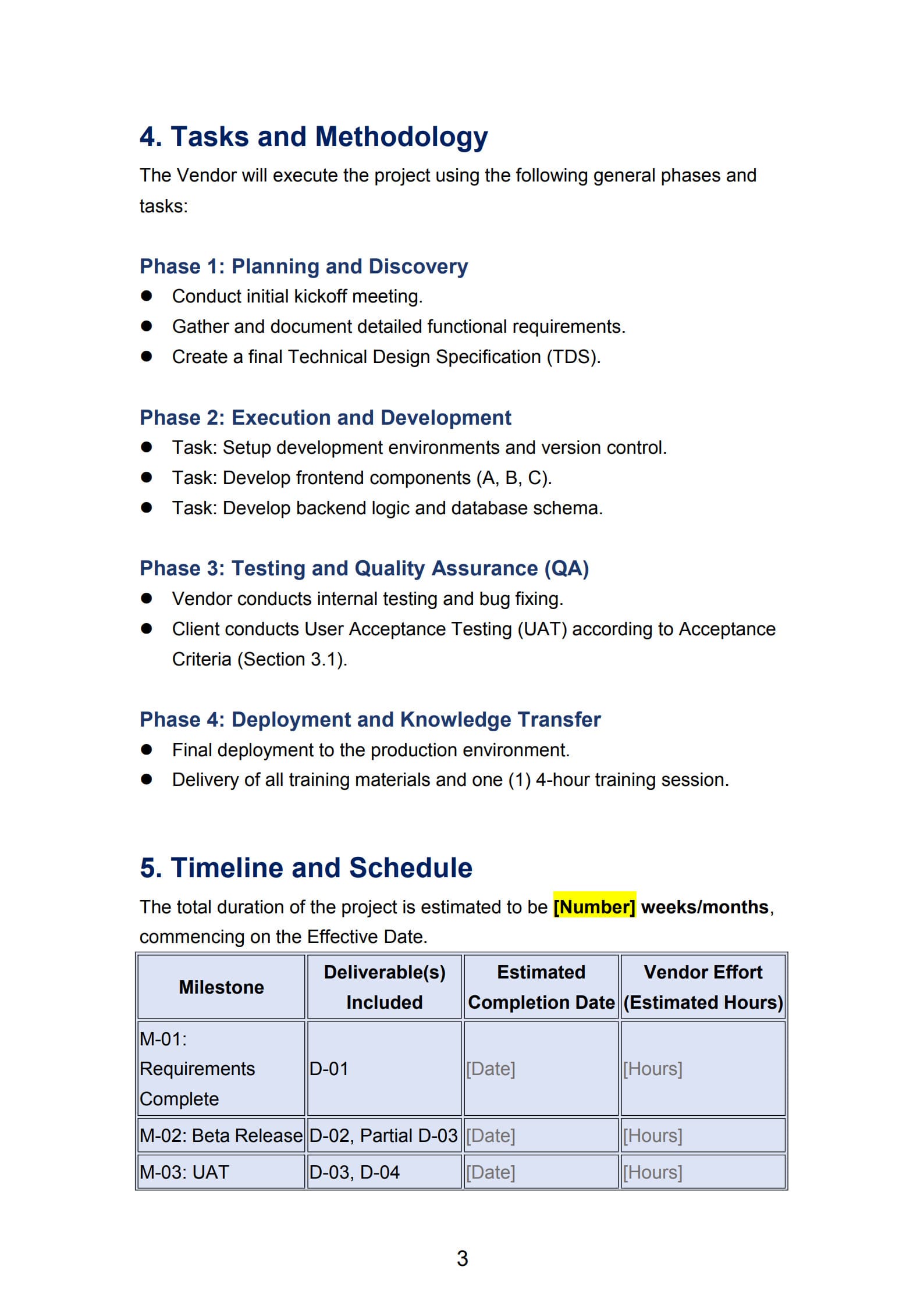
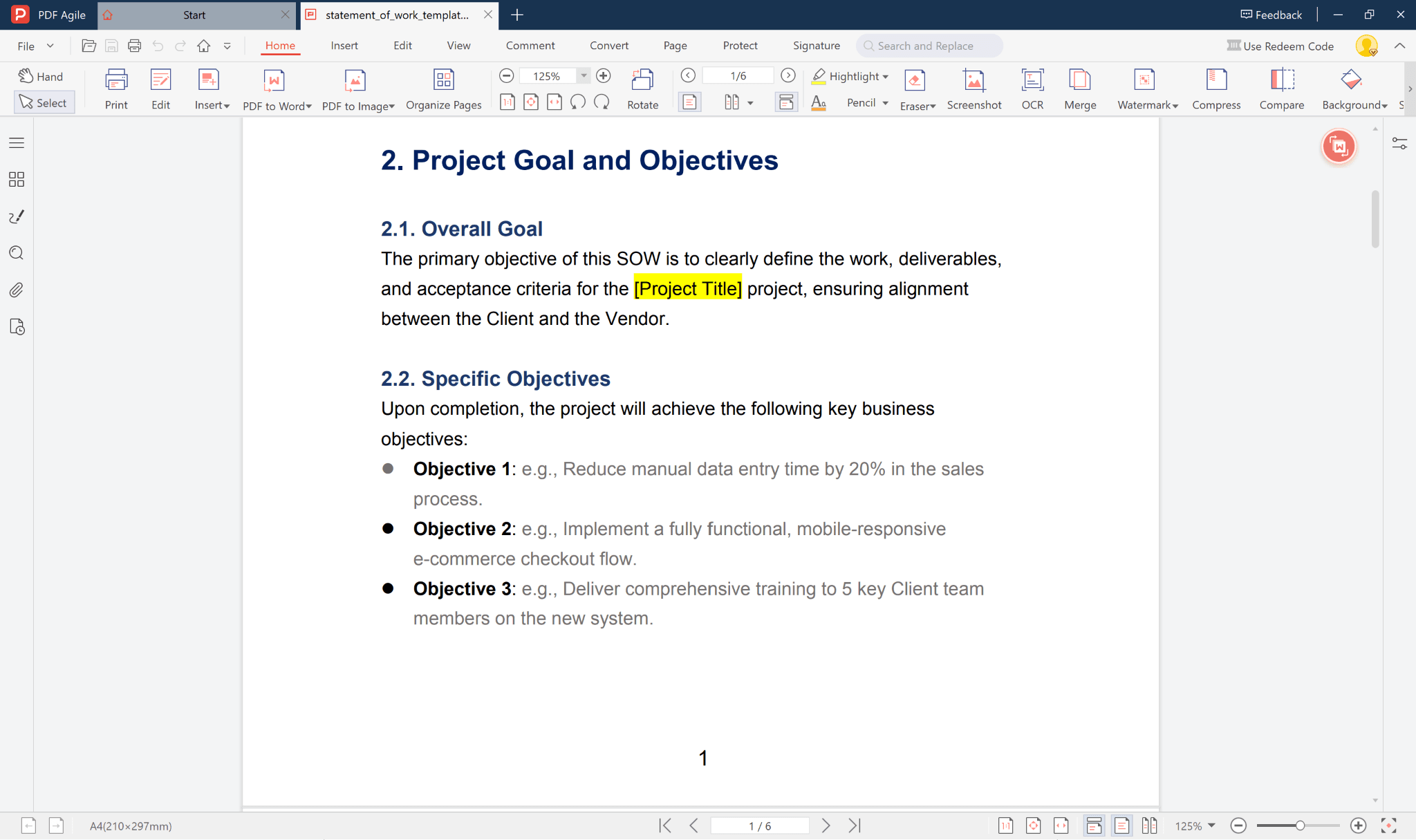
- Outline Tasks and Methodology – Divide the project into logical phases: planning, execution, testing, deployment, and training.
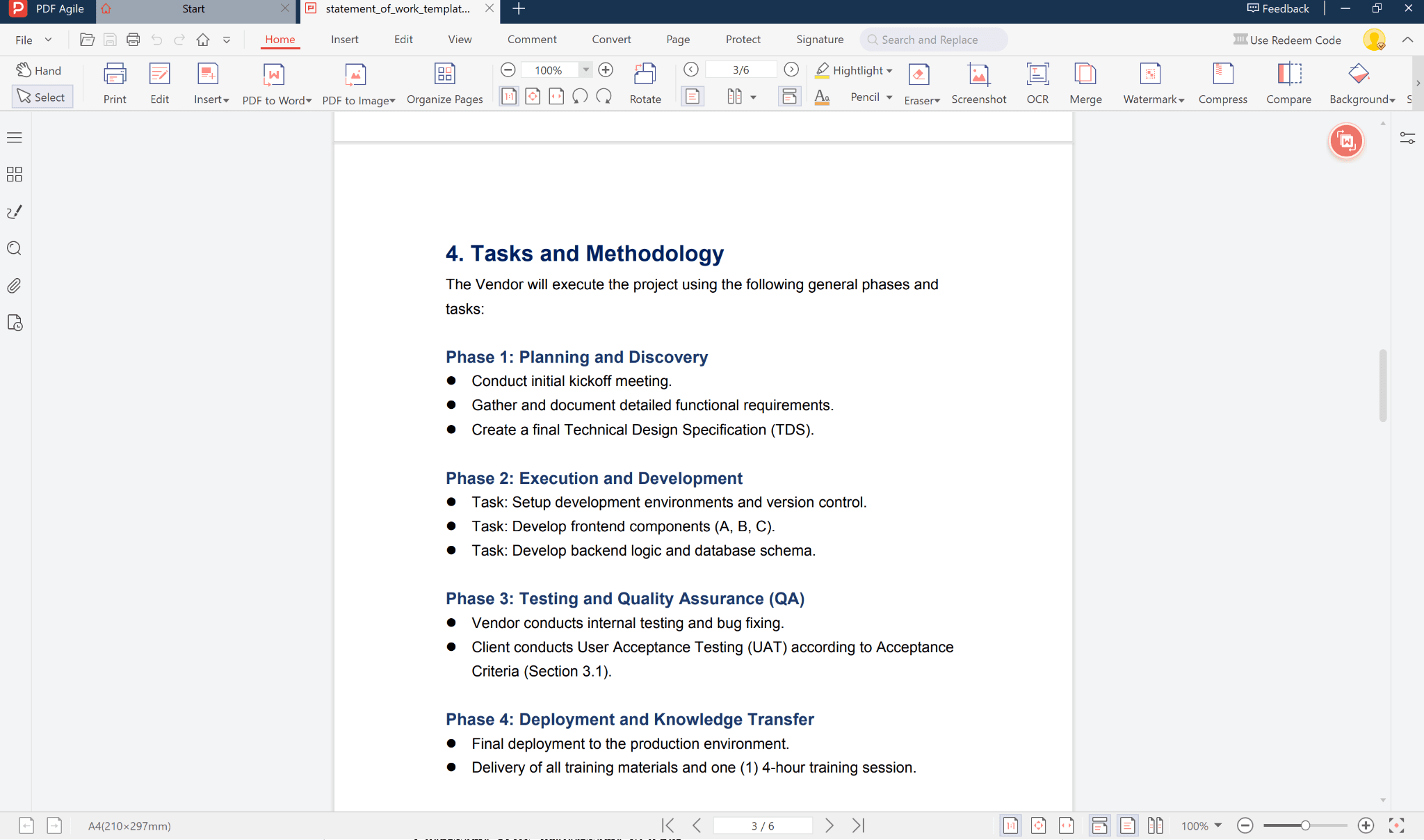
- Set the Timeline and Milestones – Indicate when each deliverable or milestone is expected to be completed.
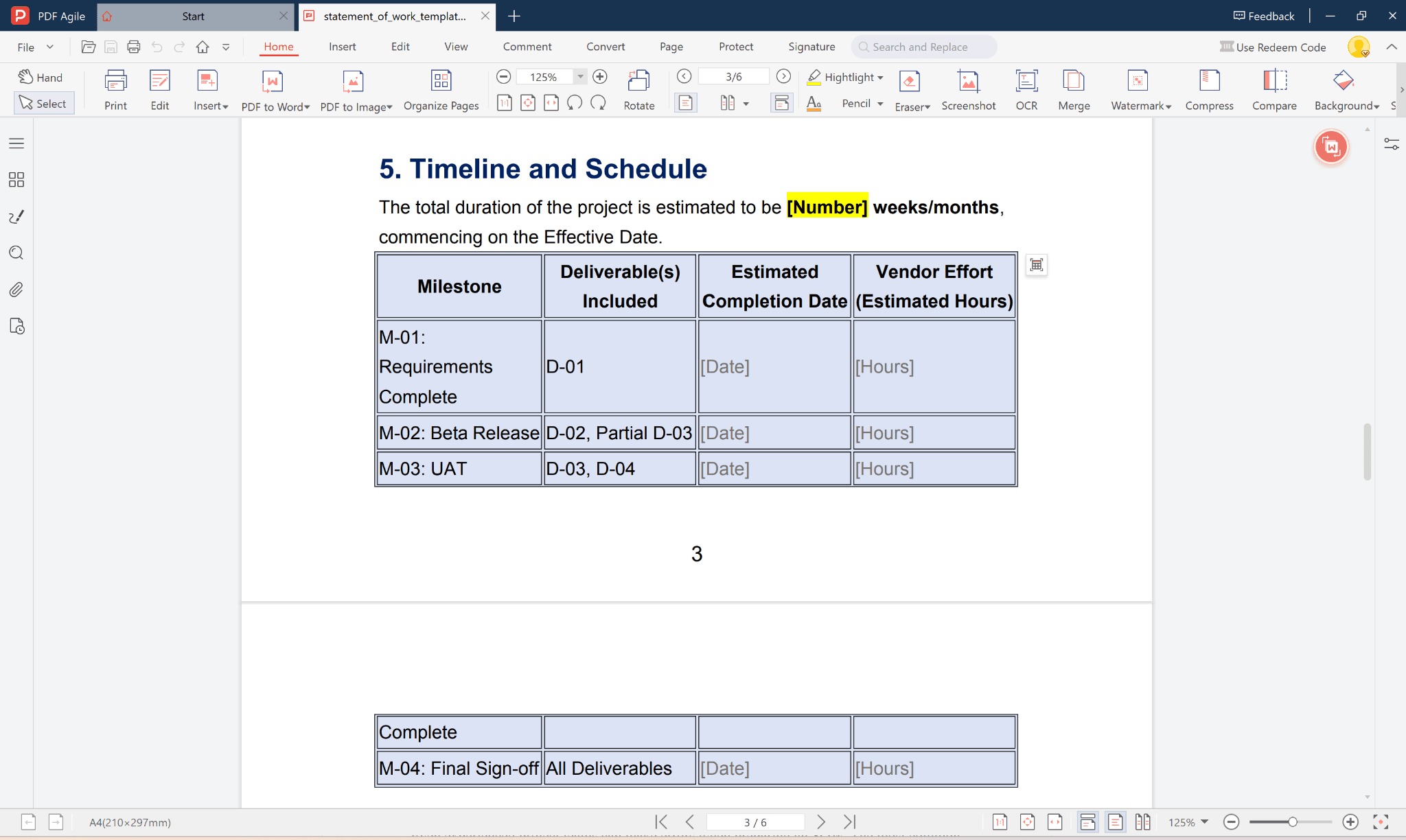
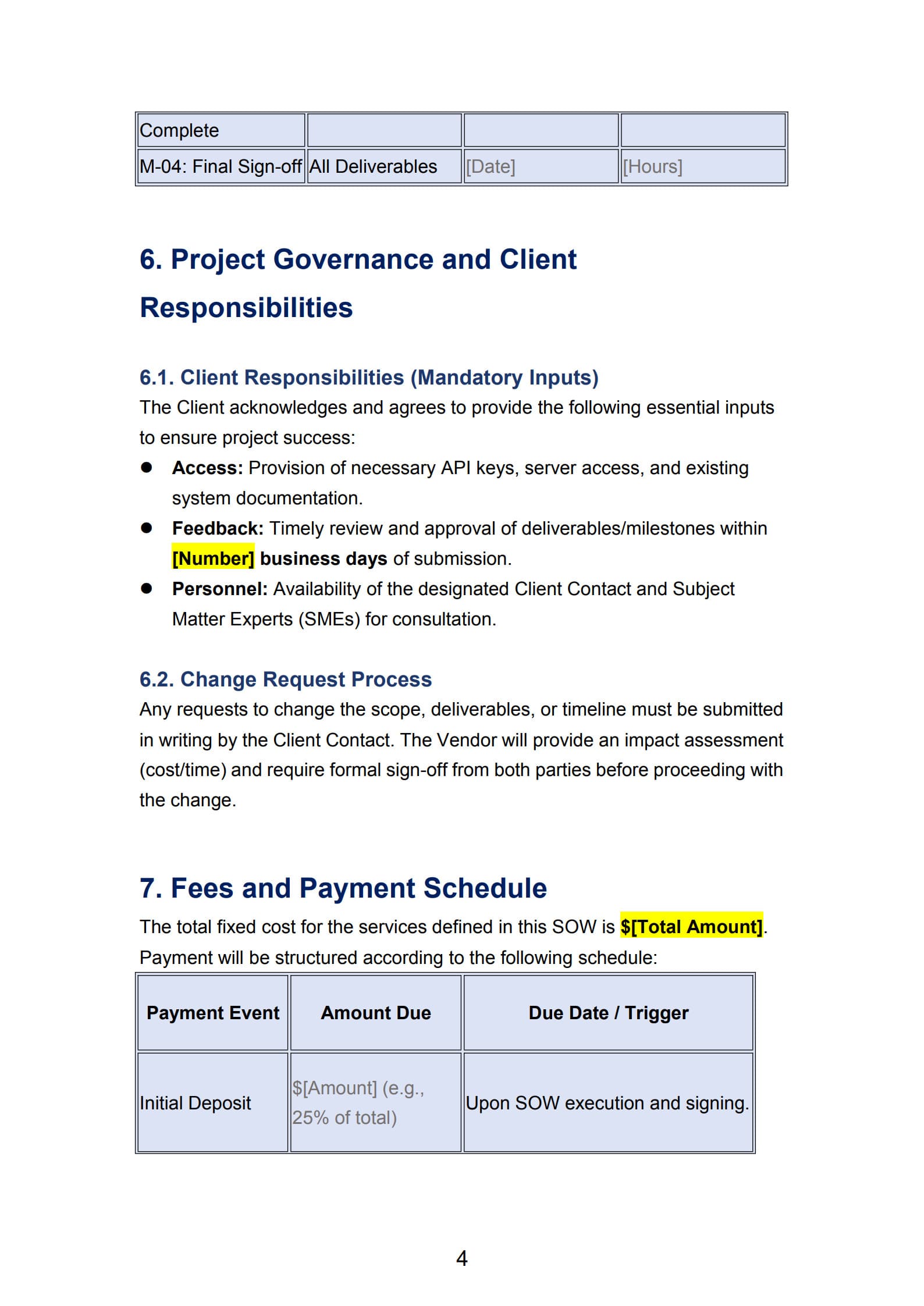
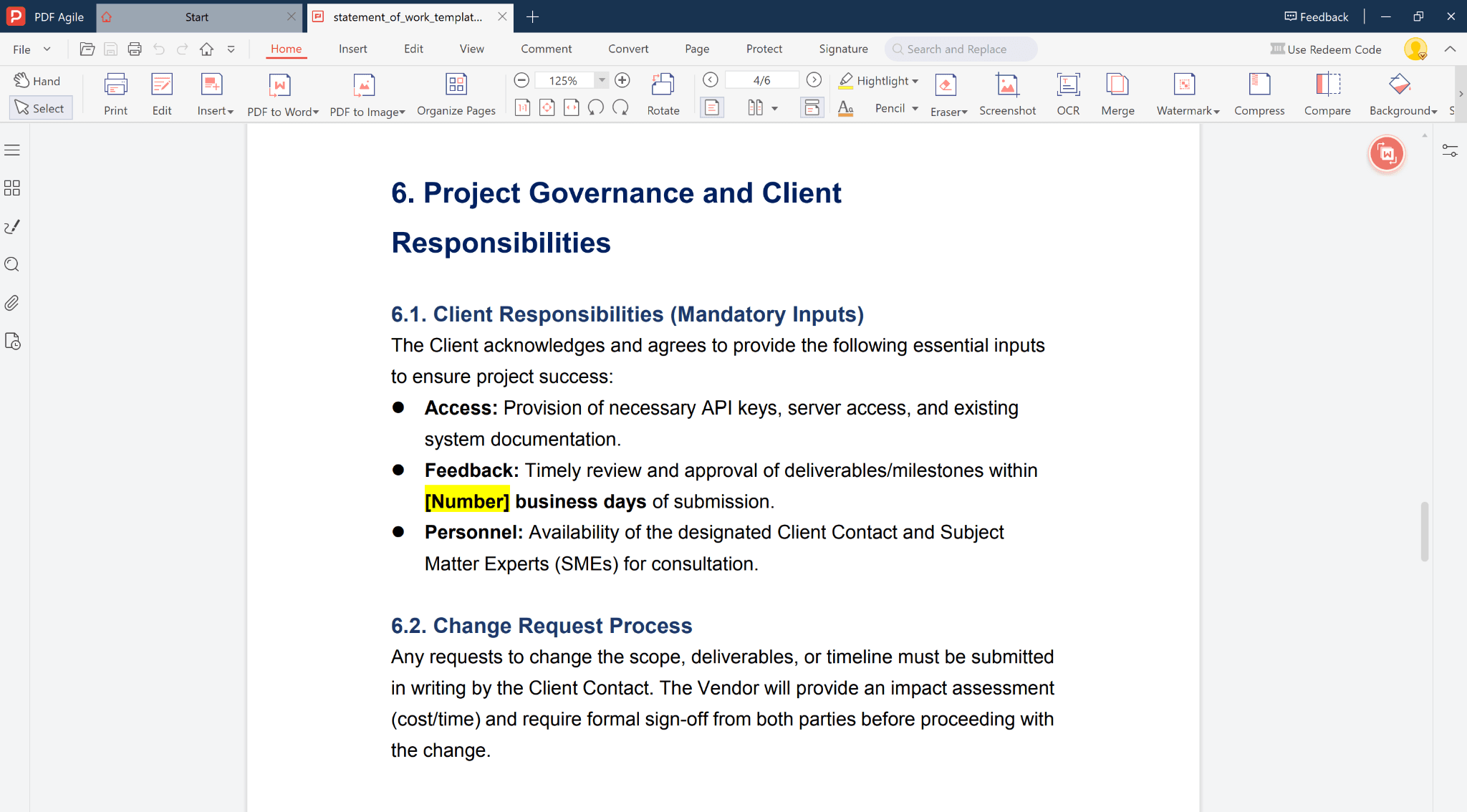
- Project Governance and Client Responsibilities-Defining Roles, Responsibilities, and Change Control
- Add Fees and Payment Terms – Detail how much is due at signing, upon milestone completion, and at final delivery.
- After completing the document, review it carefully for consistency and accuracy. Make sure both sides understand every section. Once approved, sign the file electronically (via DocuSign or Adobe Sign) and save it with a clear name such as ClientName_SOW_ProjectName_v1.0.pdf
Plus, if you'd like to make clear of the scope of work, don't hesitate to use our scope of work template.
4. Learn from Statement of Work Example and Avoid Common SOW Mistakes
Even experienced project teams can make errors when preparing an SOW. The most common mistakes include using vague language, forgetting to specify acceptance criteria or deadlines, omitting exclusions, failing to update version numbers after revisions, and leaving out the official signature page.
Avoiding these pitfalls will make your SOW a reliable foundation rather than a source of misunderstanding.
Remember, clarity is the ultimate goal — a simple and precise SOW is far more effective than a long but confusing one.
5. Conclusion
A clear, well‑structured Statement of Work protects both client and vendor. Using our fillable template helps you focus on results — not paperwork — and start your project on the right foot.