


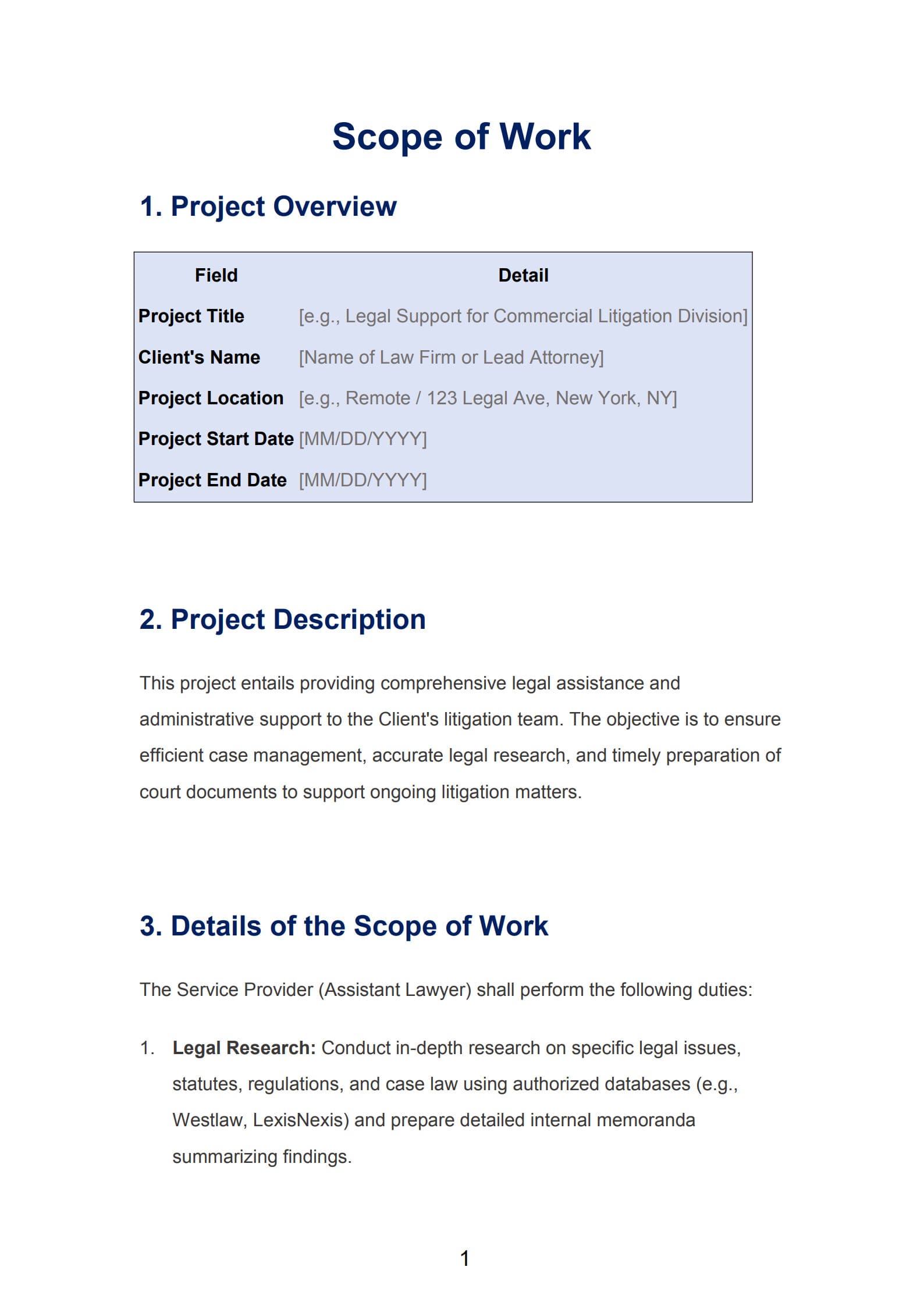
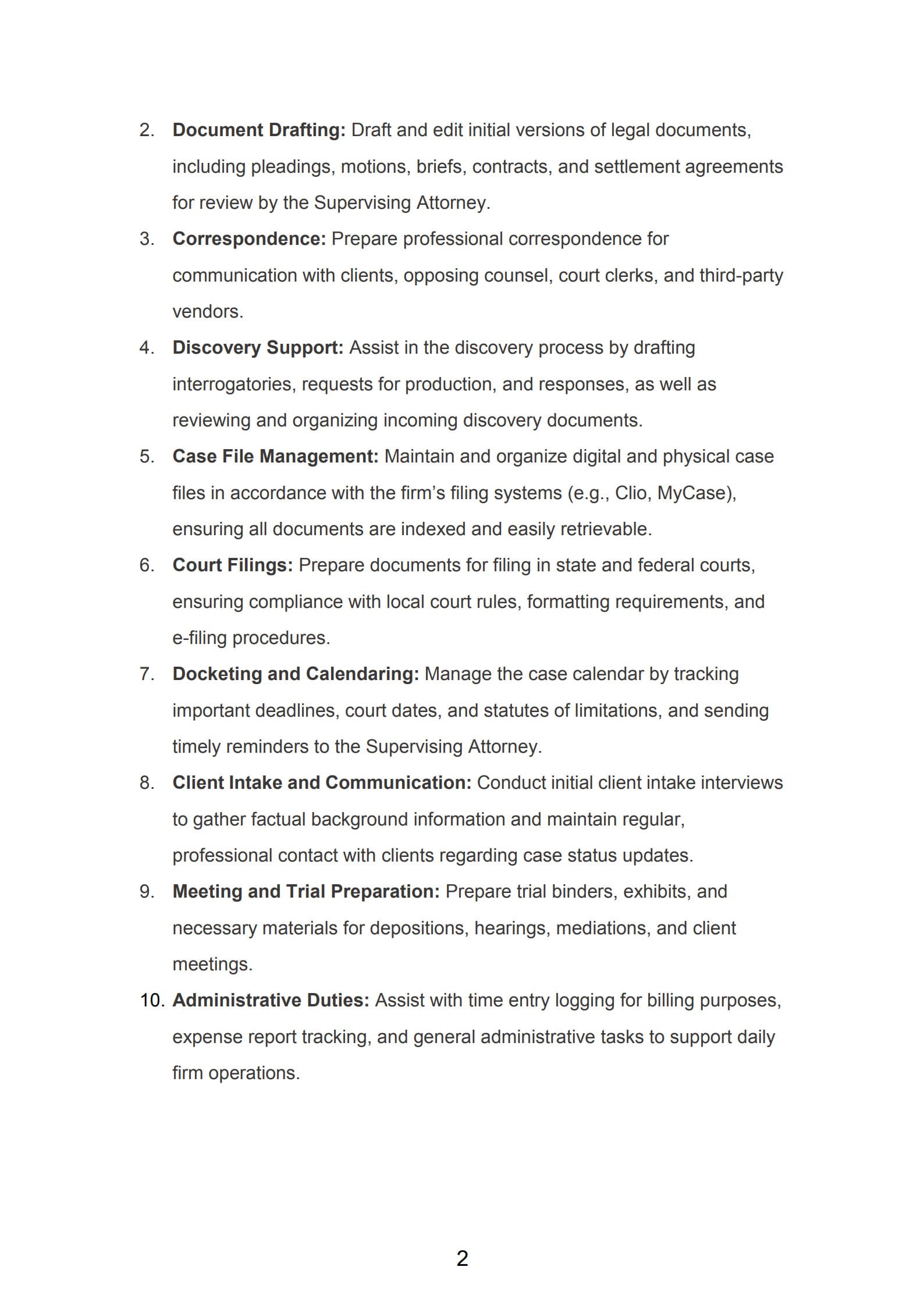
The Scope of Work (SOW) document is arguably the single most important document in the project lifecycle. It serves as a formal agreement that details all aspects of a project, from the goals and deliverables to the tasks, timelines, and payment structure. Whether you are a freelance consultant, a software development agency, or a construction manager, a clear SOW prevents scope creep and protects both the service provider and the client.
1. What is a Scope of Work (SOW)?
The Scope of Work is a legally binding document that outlines the work to be performed by a service provider (vendor) for a client. It clearly defines the boundaries of the project, establishing what is included (in-scope) and, equally important, what is explicitly not included (out-of-scope).
The SOW is typically created after a preliminary proposal or statement of capabilities has been accepted but before the actual work begins. It provides the detailed execution plan and budget that the entire project will be measured against.
2. Why is a Scope of Work Important?
A strong SOW provides clarity, controls costs, and mitigates risks, making it indispensable for successful project delivery.
- Prevents Scope Creep: This is the most critical function. "Scope creep" occurs when project requirements grow and shift over time without adjusting the budget or timeline. The SOW acts as the contractual defense against this, requiring a formal change order for any new requests.
- Aligns Stakeholders: It ensures that the client and the vendor have the same understanding of the project's success metrics and deliverables. Everyone agrees on the "finish line" before the race starts.
- Facilitates Dispute Resolution: Should a disagreement arise over project completion, quality, or payment, the SOW is the definitive reference document used to determine whether the vendor fulfilled their contractual obligations.
- Basis for Pricing: The detailed list of tasks and deliverables allows the vendor to accurately estimate resources, time, and ultimately, the total project cost.
3. What a Scope of Work Document Should Include
A comprehensive SOW should be structured logically to guide stakeholders through the project details. While sections may vary based on industry (IT vs. construction), the following seven components are mandatory for a complete and effective SOW:
| Section | Purpose | Key Content |
| 1. Introduction & Objectives | The high-level "Why" and "What" of the project. | Project goal, background, and business challenge being addressed. |
| 2. Deliverables | The tangible, measurable outcomes the vendor will provide. | Specific reports, finalized code, designs, or physical products. Avoid vague terms. |
| 3. Project Tasks & Methodology | The specific steps, processes, and phases used to achieve the deliverables. | A detailed breakdown of all tasks, from discovery to final deployment/installation. |
| 4. Timeline & Milestones | The schedule for completion, often tied to payments. | Key dates, acceptance deadlines, and a final completion date. |
| 5. Success Criteria & Acceptance | How the client will officially approve the work done. | Specific metrics (e.g., website load time < 2 seconds, 95% test coverage) and the sign-off process. |
| 6. Exclusions (Out-of-Scope) | Clearly states what the vendor is not responsible for. | Specific features not being developed, providing client data, or training beyond a set limit. |
| 7. Payment Terms | The financial arrangement between the parties. | Total cost, payment schedule (e.g., 25% upon signing, 25% upon Milestone 1, 50% upon completion), and late payment penalties. |
4. Learn from Good Scope of Work Examples
Good SOWs are clear, actionable, and leave no room for subjective interpretation. They differ based on industry needs:
IT/Software Development SOW Example:
Focuses heavily on exclusions (Section 6) to prevent scope creep. For instance, it might explicitly state: "Mobile application development (iOS/Android) is out of scope. Deliverables are limited to a responsive web application only." Acceptance Criteria (Section 5) will be quantitative (e.g., "All user stories pass UAT tests").
Marketing/Content SOW Example:
Defines deliverables by quantity and type. A good example would specify “Five (5) 1,500-word blog articles per month. Delivery includes one round of revisions per article. Design and distribution (posting) are out of scope.”
Construction/Installation SOW Example:
Emphasizes specific materials, compliance, and on-site duties. The document would detail the exact type of flooring, the required safety certifications, and exclusions like "Removal of existing debris is the client's responsibility."
5. How to Write a Scope of Work with Template
Using a template simplifies the process, ensuring no critical section is missed.
- Select the Right Template: Choose a template that matches your project type (e.g., a time-and-materials template for consulting or a fixed-price template for a clear product delivery).
- Start with the "Why" (Section 1): Define the project's overall objective in one or two clear sentences. Everything that follows must support this objective.
- Detail the Deliverables (Section 2): List these as nouns—things that can be physically handed over or demonstrably completed (e.g., "Finalized 40-page Brand Guideline PDF," not "Help the client understand their brand").
- Create the Work Breakdown Structure (Section 3): Break down the project into logical phases (e.g., Discovery, Design, Development, Testing, Deployment). Under each phase, list the specific tasks required. This section is often the most detailed.
- Finalize Exclusions and Acceptance (Sections 5 & 6): Before presenting the SOW, review every deliverable and ask, "What could the client assume is included that isn't?" Add those assumptions to the Exclusions section. Define the acceptance criteria as objectively as possible.
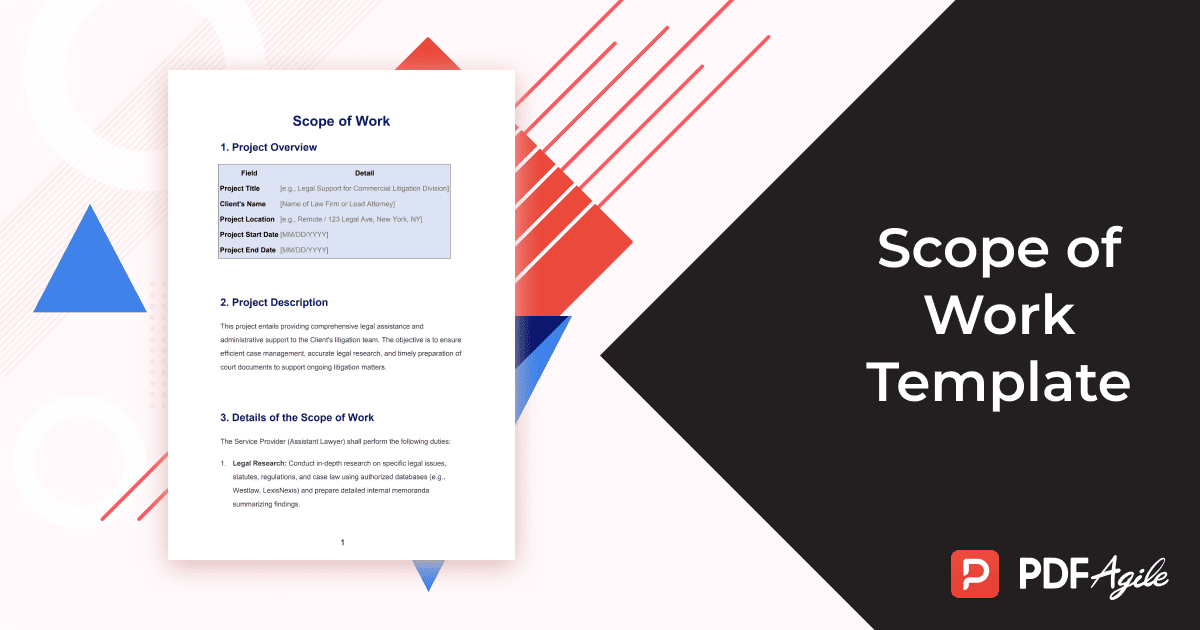
Free Download: Editable Scope of Work Template PDF
You can download the scope of work template mentioned above by clicking Use Template button on this page. Customize it to fit your specific needs and preferences. Plus, PDF Agile also offers statement of work template for you to customize and fit your needs.
6. Tips to Make Your Scope of Work Clear
The goal is to eliminate ambiguity. Your SOW should be bulletproof against misinterpretation.
- Use Active and Specific Language: Avoid vague verbs like "assist," "support," or "manage." Instead, use "design," "develop," "install," or "deliver."
- Define Terminology: Include a brief glossary at the start. If you use acronyms (UAT, QA, API), define them immediately. If you refer to "Standard Working Hours," specify what those hours are.
- Incorporate Reference Materials: State that the SOW is to be read in conjunction with other documents, such as the initial proposal, wireframes, or technical specifications. This prevents the SOW itself from becoming overly long.
- Quantify Everything Possible: If it involves time, money, or quantity, use numbers. Instead of "frequent status updates," write "Weekly 30-minute status meeting via video conference." Instead of "high-resolution images," write "Images delivered in JPEG format at a minimum of 300 DPI."
Conclusion
The scope of work is the essential agreement that turns a great idea into a manageable, structured project. By defining the "what," the "how," and the "when" in explicit detail, you protect your budget, your timeline, and your professional relationship with the client. Use this framework to create your own SOW, and remember that investing time in a clear SOW upfront will save you ten times that amount of time in dispute resolution later. Let me know if you would like me to draft a specific section of an SOW for a fictional project, like a website redesign or a consulting engagement!