


The shipping policy is a foundational legal document for any e-commerce business. It outlines all the terms and conditions related to the shipment of goods, including processing times, costs, delivery estimates, and handling of international orders. A transparent and well-written policy is crucial for managing customer expectations, reducing support tickets, and protecting your business from disputes related to delivery times and fees.
1. What is a Shipping Policy?
A shipping policy is a document or page on your website that formally explains to customers how and when you ship products. It serves as a comprehensive guide covering everything that happens between the moment an order is placed and the moment it arrives at the customer's door.
Unlike a Terms of Service agreement, which is broad, the Shipping Policy is narrowly focused on logistics. It acts as a contract of commitment regarding delivery performance. By making this document accessible, you prevent situations where a customer assumes a 2-day delivery when your standard processing time is actually 5-7 business days.
2. Why Does a Shipping Policy Matter?
A high-quality shipping policy directly impacts your business’s credibility and bottom line.
- Sets Accurate Expectations: The number one cause of customer complaints is unclear or unmet expectations regarding delivery speed. A detailed policy manages this proactively, reducing the chance of negative reviews and support inquiries.
- Reduces Cart Abandonment: Hidden shipping costs or vague delivery timelines are major contributors to cart abandonment. Providing clear, easy-to-find information early in the shopping process instills confidence.
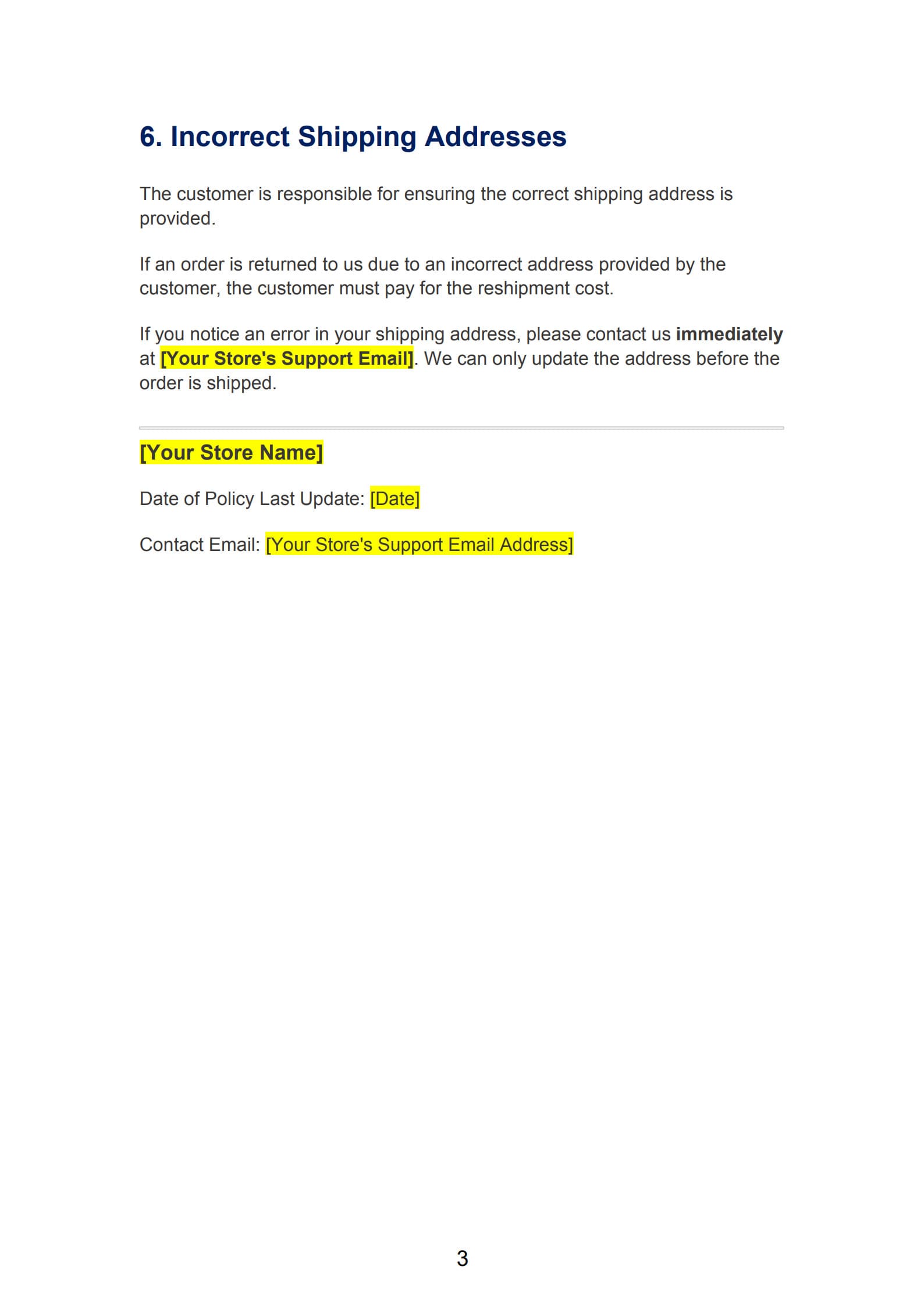
- Supports International Compliance: For businesses selling globally, the policy must address duties, taxes, and customs fees, ensuring compliance and preventing unexpected costs for the buyer upon delivery.
- Legal Protection: It clearly defines when the responsibility for the package transfers from the seller to the buyer (e.g., once the tracking confirms delivery), which is essential in resolving disputes over lost or stolen packages.
3. What Information Should Be Included in Your Shipping Policy?
An effective shipping policy must address several key logistical stages. If any of these points are not applicable to your business (e.g., you do not ship internationally), state that clearly in the policy.
| Component | Detail Required | Example Wording |
| Processing Time | The time required for fulfillment before the order leaves your warehouse. | "All orders are processed within 1-3 business days (excluding weekends and holidays)." |
| Shipping Rates & Costs | A clear breakdown of costs, often separated by carrier, speed, and weight/value tiers. | "Standard Shipping (3-5 days) is $5.99. Free shipping is offered on orders over $75." |
| Shipping Methods & Delivery Estimates | Specific carrier options and the time from shipping date to arrival. | "We offer USPS Priority (2-3 days) and FedEx Ground (3-7 days)." |
| P.O. Boxes & Military Addresses | Any restrictions on shipping to non-standard addresses (APO/FPO/DPO). | "We can ship to P.O. Boxes via USPS only. FedEx/UPS delivery is not available." |
| International Shipping | Address customs, duties, and import taxes. Crucially, specify who is responsible for these fees. | "The customer is responsible for all customs and import fees imposed by the destination country." |
| Damages, Issues, and Loss | The procedure for handling packages that arrive damaged or are lost in transit. | "If your order arrives damaged, please contact us immediately at support@store.com with a photo of the item and the packaging." |
4. Learn from Good Shipping Policy Examples
Good shipping policies are structured to answer the customer's most urgent questions immediately: "How fast?" and "How much?" They are often displayed in a clean, easily navigable format.
Here are three examples of how different e-commerce platforms approach policies:
Shopify Shipping Policy Example (Direct-to-Consumer):
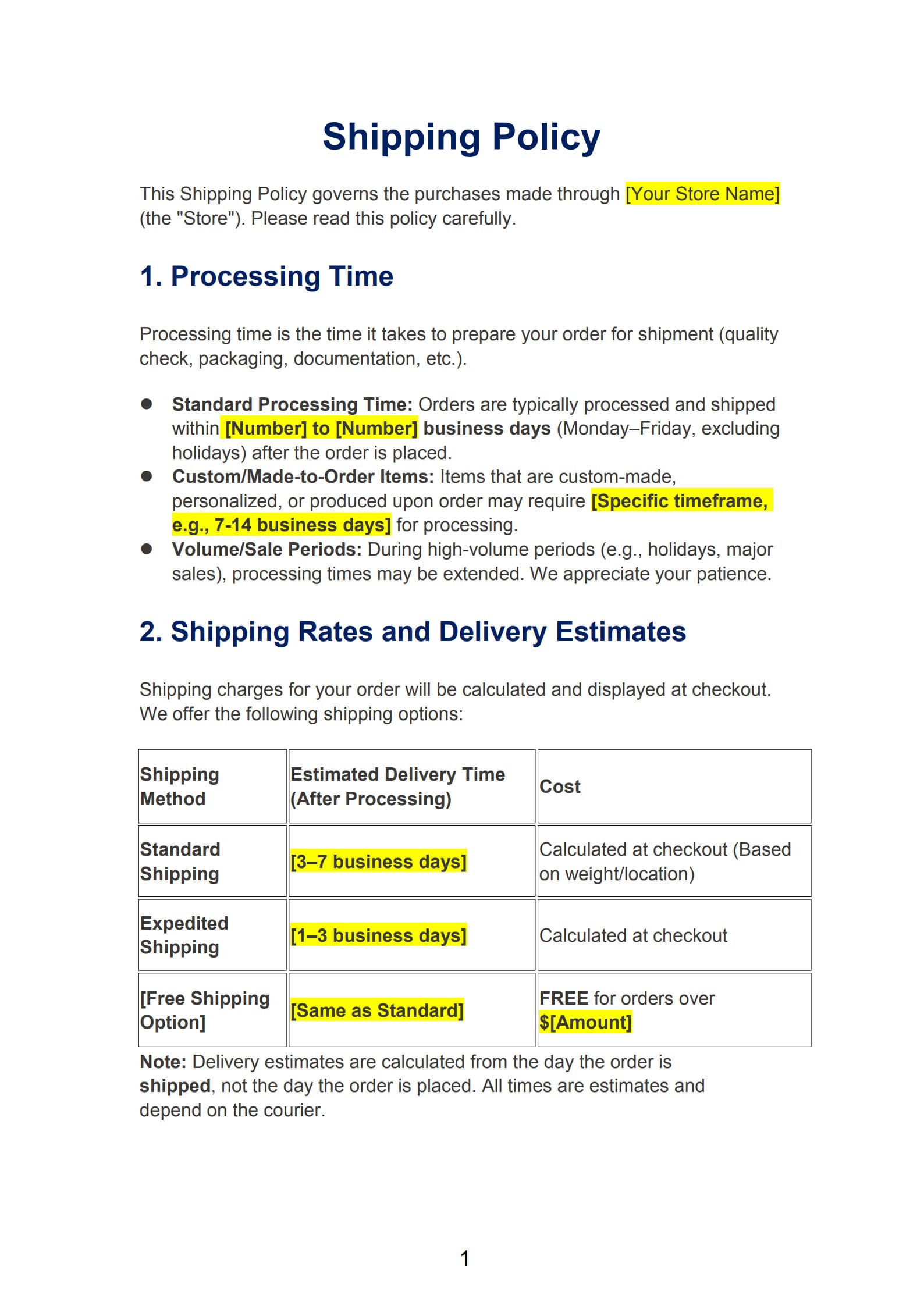
These policies are typically highly detailed, focusing on brand transparency. They often include a clear table listing processing time, domestic rates, international rates, and fulfillment location (especially if dropshipping or using multiple warehouses). They leverage Shopify's capabilities to offer tiered shipping (e.g., based on cart value).
Shipping Policy Example of Amazon Sellers (Marketplace/FBA):
While Amazon sets the core rules for FBA (Fulfilled by Amazon), third-party seller policies focus on their handling time (which must be quick to compete) and exceptions. Good sellers clearly state that delivery is managed by Amazon but clarify their in-house response time for customer service issues related to the order.
Shipping Policy Example of eBay Sellers (Individual/Small Business):
eBay policies are often simpler but must be extremely explicit. They frequently specify the exact shipping carrier (USPS First Class, FedEx Home Delivery) and clearly state the handling time (e.g., "Ships within 2 business days of payment cleared"). The best policies include a clear notice that tracking information will be provided within 24 hours of shipment.
5. How to Write an Effective Shipping Policy with Templates
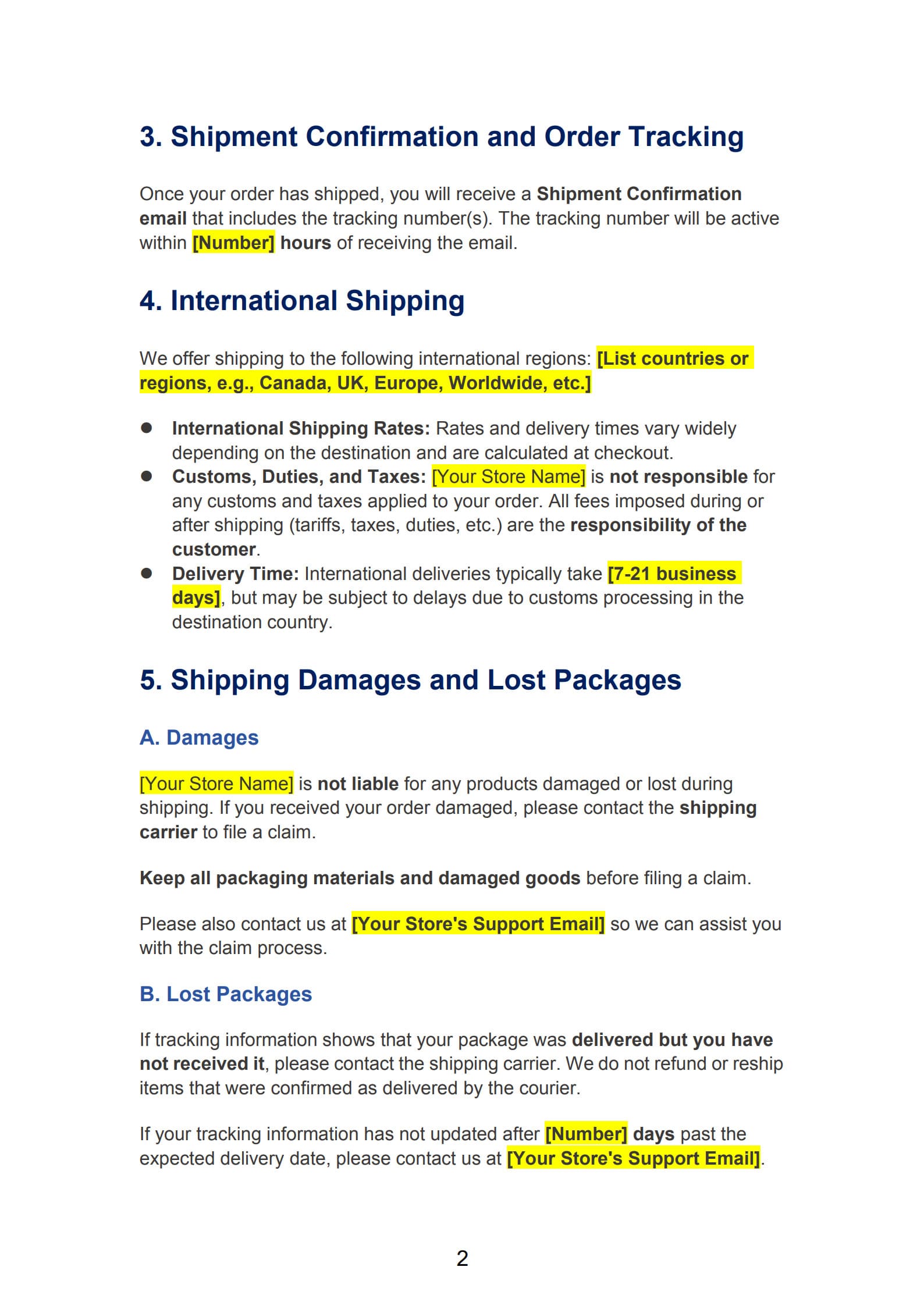
Starting with a reliable template ensures you cover all the necessary legal and logistical bases.
- Use a Starter Template: Begin with a template designed for your region (e.g., a US-based template will focus on USPS/UPS; a European template will include rules for VAT and stricter consumer rights).
- Define Your True Processing Time: Be honest and conservative. If your team usually takes one day, state "1-2 business days." Padding this time slightly gives you a buffer during busy periods without disappointing customers.
- Create a Rate Matrix: Replace template placeholders with your actual shipping costs and delivery estimates. Organize this information into a simple table for maximum readability (as shown in Section 3).
- Determine Your International Strategy: Decide whether you want to calculate duties and taxes at checkout (DDP - Delivered Duty Paid, safer for the customer) or if the customer will pay them upon delivery (DDU - Delivered Duty Unpaid, requires explicit policy wording).
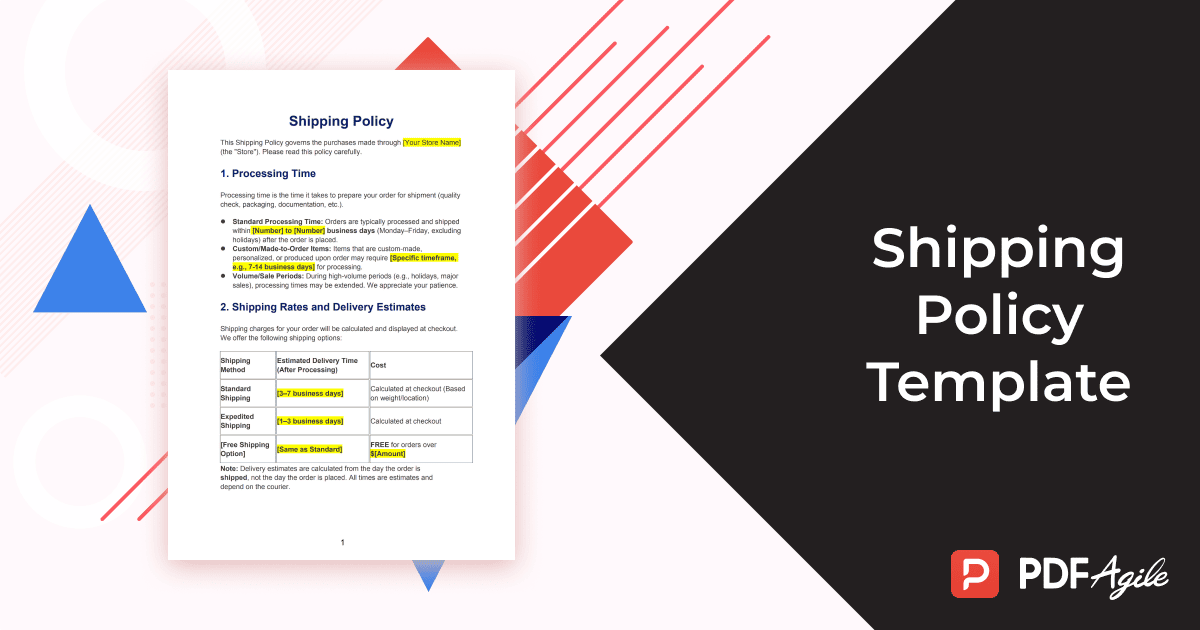
Free Download: Editable Shipping Policy Template
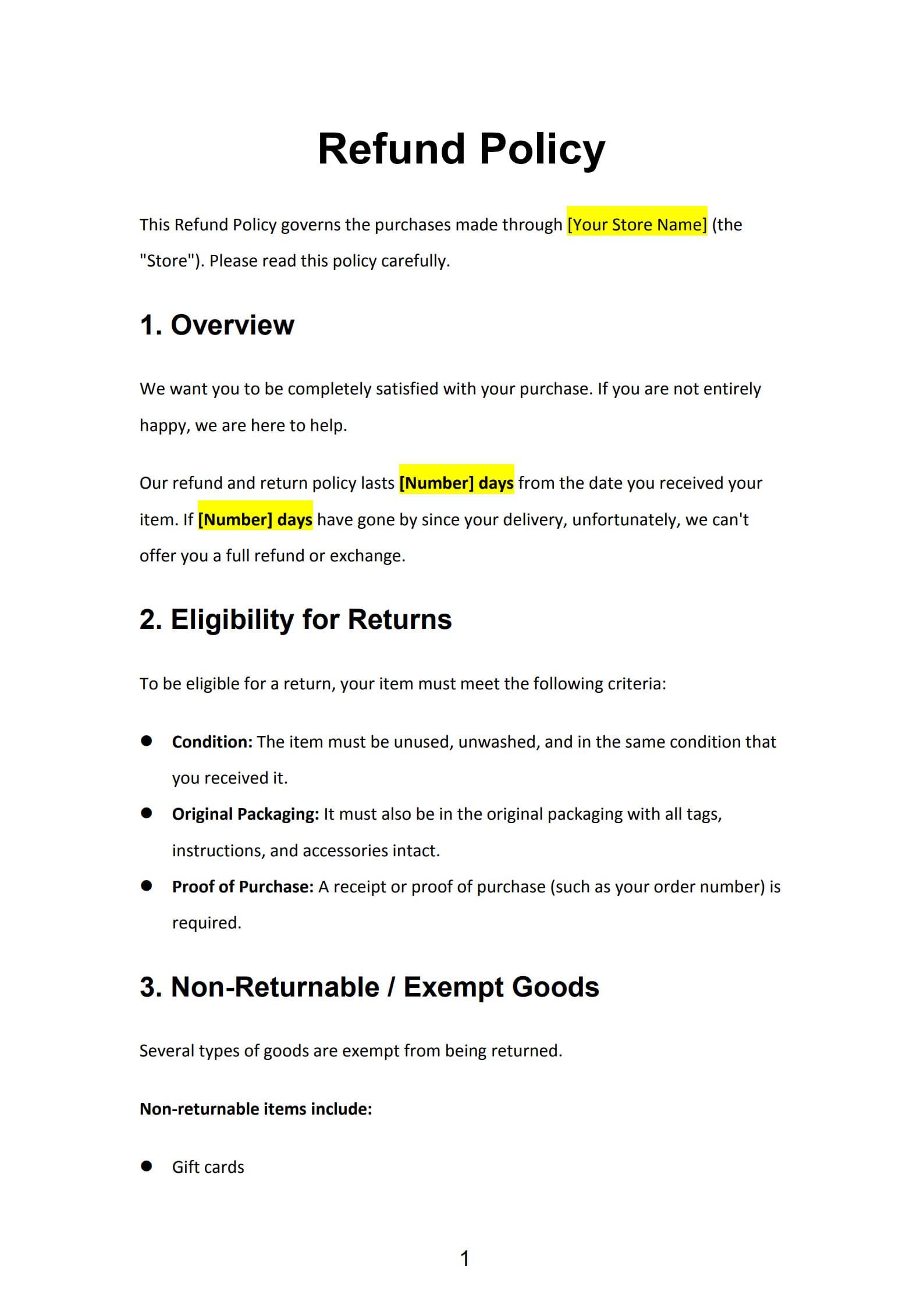
You can download the shipping policy template mentioned above by clicking Use Template button on this page. Customize it to fit your specific needs and preferences. Plus, PDF Agile also offers refund policy template for Shopify sellers to customize.
6. Writing Tips to Polish Your Shipping Policy on Shopify
Leveraging Shopify's platform features makes your policy more professional and actionable.
- Link from the Footer and Checkout: After publishing your policy as a static page in Shopify (Online Store > Pages), ensure it is linked in the Footer Menu and the Checkout Process (Settings > Legal). This satisfies best practices for transparency.
- Be Specific About Carriers and Rates: Don't just say "Standard Shipping." Use the terminology customers see on the tracking page, e.g., "USPS First-Class Package Service" or "Shopify Shipping." Ensure the rates listed in your policy exactly match the rates configured in your Shopify shipping settings.
- Use the Tracking Page: Mention in your policy that once the order status moves to "Fulfilled" in Shopify, the customer will automatically receive an email with their tracking link. This directs customer service questions away from your inbox.
- Address High-Value Shipments: If you sell expensive items, include a clause stating whether you require a signature upon delivery. This is a vital protection, and your policy must state this requirement clearly so customers know they must be home to sign for the package.
- Maintain Consistency with Inventory: If you use multiple locations (e.g., a primary warehouse plus a dropshipper), clarify that shipping times may vary based on the item's location and that items may arrive in separate packages.
Conclusion
A comprehensive shipping policy is your business's best defense against customer disappointment and administrative overhead. By clearly detailing your processing times, shipping costs, and handling of international orders, you build trust and ensure a smoother post-purchase experience. Use the framework provided to create a policy that is not only legally sound but also easy for every customer to understand. If you'd like to draft a specific section or need help structuring your shipping tiers, just let me know!