


A clear, accessible, and fair refund policy is one of the most critical legal documents for any business selling goods or services, whether online or in a physical store. It governs the relationship between the buyer and the seller after a purchase is made, protecting both parties from misunderstandings and disputes.
This guide details the purpose of a refund policy, outlines its mandatory components, and provides essential writing tips to ensure your policy is legally sound and customer-friendly.
1. What is a Refund Policy?
A refund policy (often called a return and exchange policy) is a set of contractual rules and conditions that dictate the terms under which a seller accepts returned merchandise or cancels a service and provides compensation to the buyer.
It is a public-facing document that clearly communicates a business's commitment to customer satisfaction while safeguarding against fraudulent returns or excessive financial loss.
Key Definition: A refund policy is not legally required everywhere for all sales, but once a business publishes one, it becomes a legally binding contract with the customer regarding returns. Furthermore, specific consumer protection laws (like those in the EU and Australia) mandate minimum return rights for online sales, which your policy must reflect.
2. Why Does a Refund Policy Matter?
An effective refund policy is more than just a legal necessity; it is a powerful business tool that contributes significantly to trust and sales.
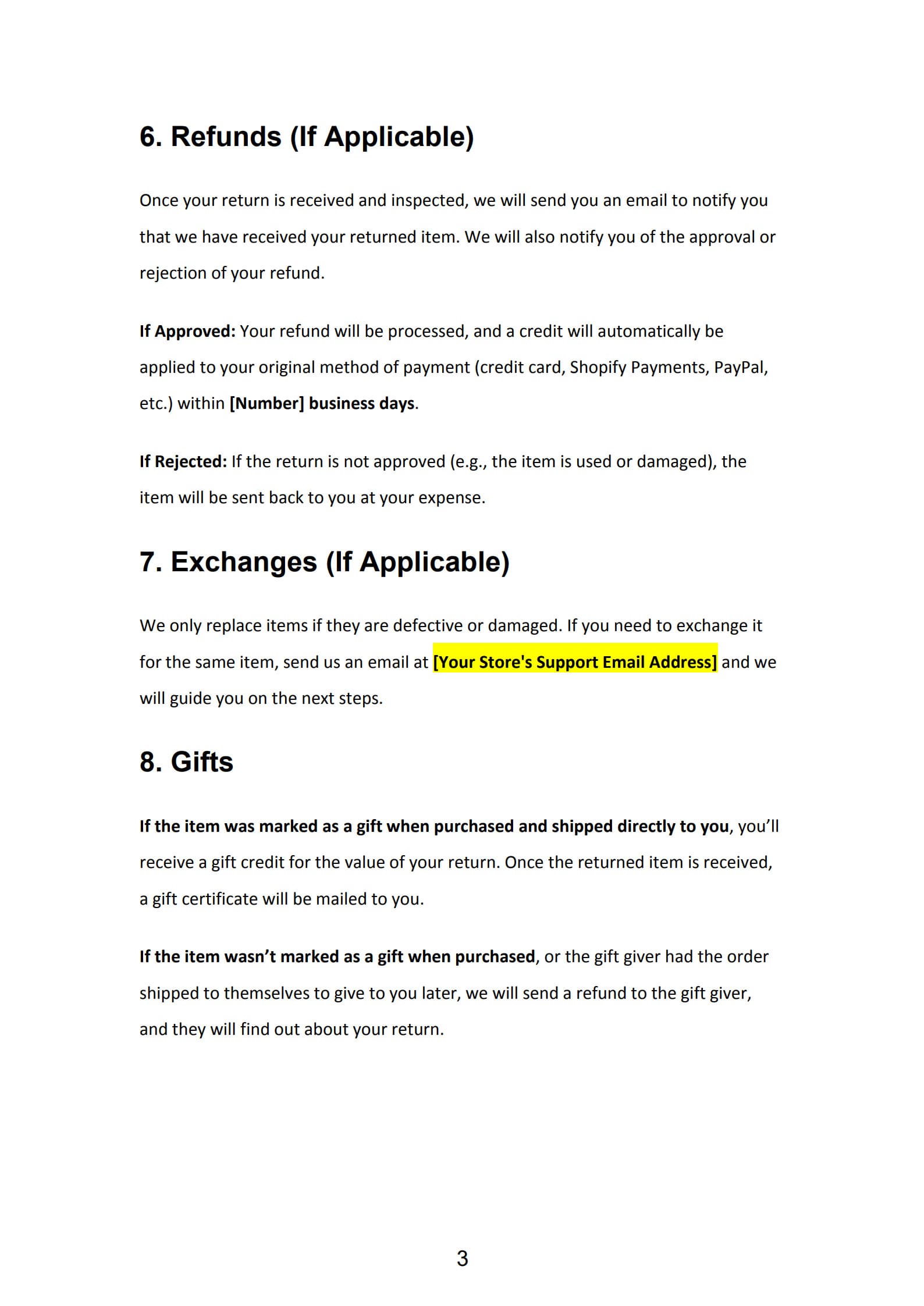
- Builds Customer Trust: Transparent policies reassure potential buyers that they can make a risk-free purchase, leading to higher conversion rates. Customers are more likely to buy if they know a straightforward way out exists.
- Reduces Disputes and Support Costs: A clearly written policy answers common questions proactively, reducing the volume of customer service inquiries, chargebacks, and time spent resolving disagreements.
- Legal Compliance: It ensures your business adheres to state, federal, or international consumer protection laws regarding statutory minimum return periods and conditions.
- Sets Clear Boundaries: It defines the acceptable condition of returned items, the time limits for returns, and any processing fees, protecting the business from abuse of the return process.
3. What Information Should Be Included in Your Refund Policy?
A policy is only effective if it is exhaustive. The following components should be clearly detailed in your document:
| Component | Detail Required | Example Wording |
| Eligibility/Timeframe | The period during which a return or refund is accepted. | "Returns are accepted within 30 days of purchase or delivery." |
| Condition of Item | What state must the product be in for a successful return? | "Items must be unused, unwashed, and include all original tags and packaging." |
| Non-Refundable Items | Any products or services that cannot be returned or refunded. | "Gift cards, downloadable software, and personalized items are final sale." |
| Form of Refund | How the customer will receive their money back. | "Refunds will be processed to the original payment method, or issued as store credit." |
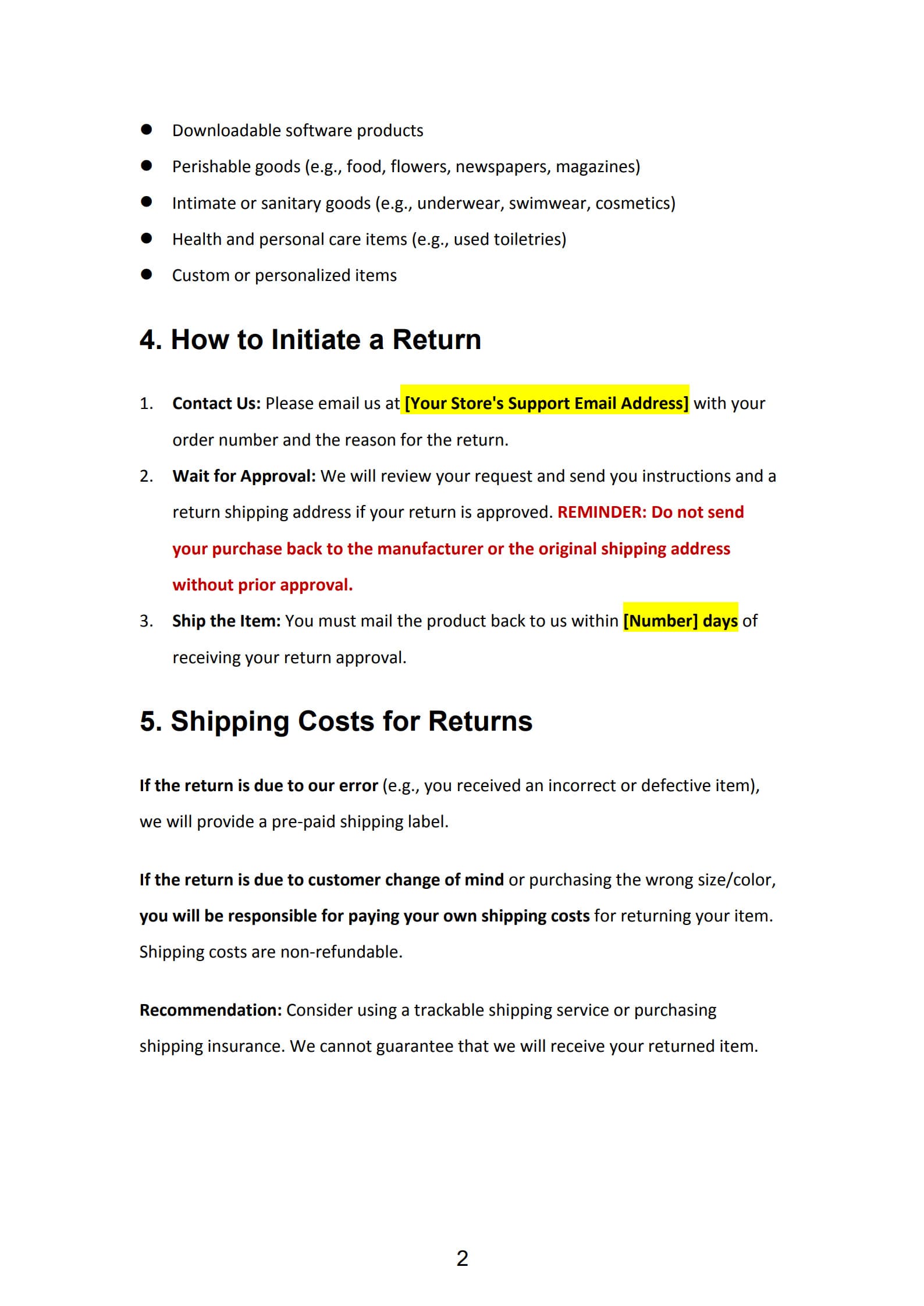
| Return Process | The step-by-step instructions for initiating a return. | "To start a return, please email us at returns@example.com with your order number." |
| Shipping Costs | Who pays for the return shipping (the customer or the company)? | "The customer is responsible for return shipping costs, unless the item is defective." |
4. Learn from Good Refund Policy Examples
Good policies share two key characteristics: they are easy to find (linked clearly in the footer and at checkout) and they are easy to understand. They often use clear headings, bullet points, and plain language, avoiding legalistic jargon.
Good examples often provide a summary table or flow chart at the top, allowing customers to quickly check their eligibility without having to read the entire legal document. For instance, a policy might explicitly state:
- Electronics: 15 days; must be in original, sealed packaging.
- Apparel: 60 days, must have tags attached.
- Clearance/Sale Items: Final sale.
This structure immediately manages expectations and prevents unnecessary customer friction.
5. How to Write an Effective Refund Policy with Templates
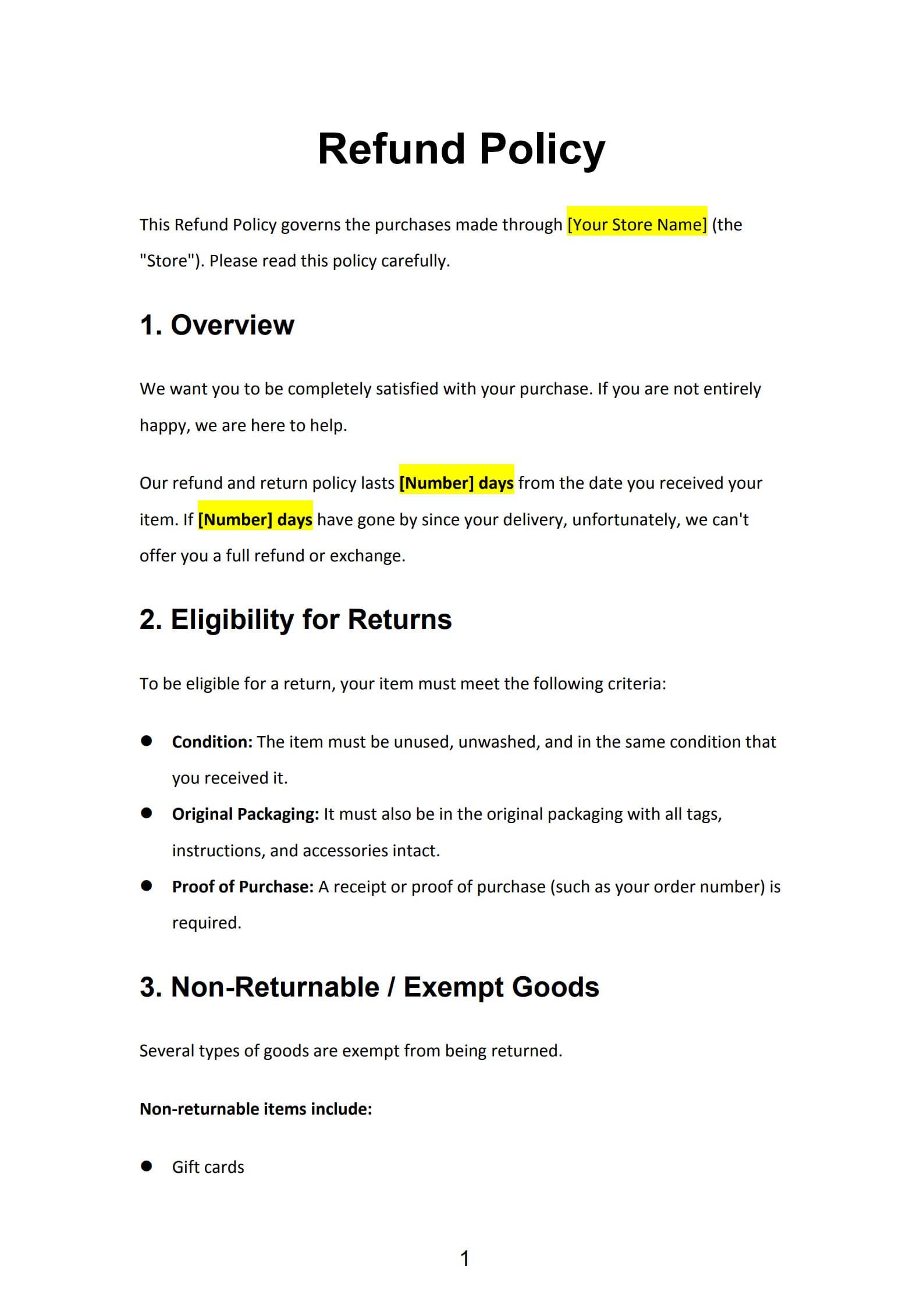
Using a template is the fastest and most reliable way to start, as it provides the correct legal structure and mandatory clauses.
- Select a Relevant Template: Choose a template designed for your business type (e.g., e-commerce, software-as-a-service, or physical retail).
- Fill in the Timeframes: This is the most crucial customization. Decide on a definitive period (e.g., 14 days, 30 days, or 90 days). A longer period often signals higher confidence in your product.
- Define Non-Eligibility: Clearly list your exceptions. If you sell hygiene products, specify that items must be unopened. If you sell services, specify the conditions under which a service agreement can be canceled (e.g., "Full refund if cancellation is requested more than 7 days before the start date").
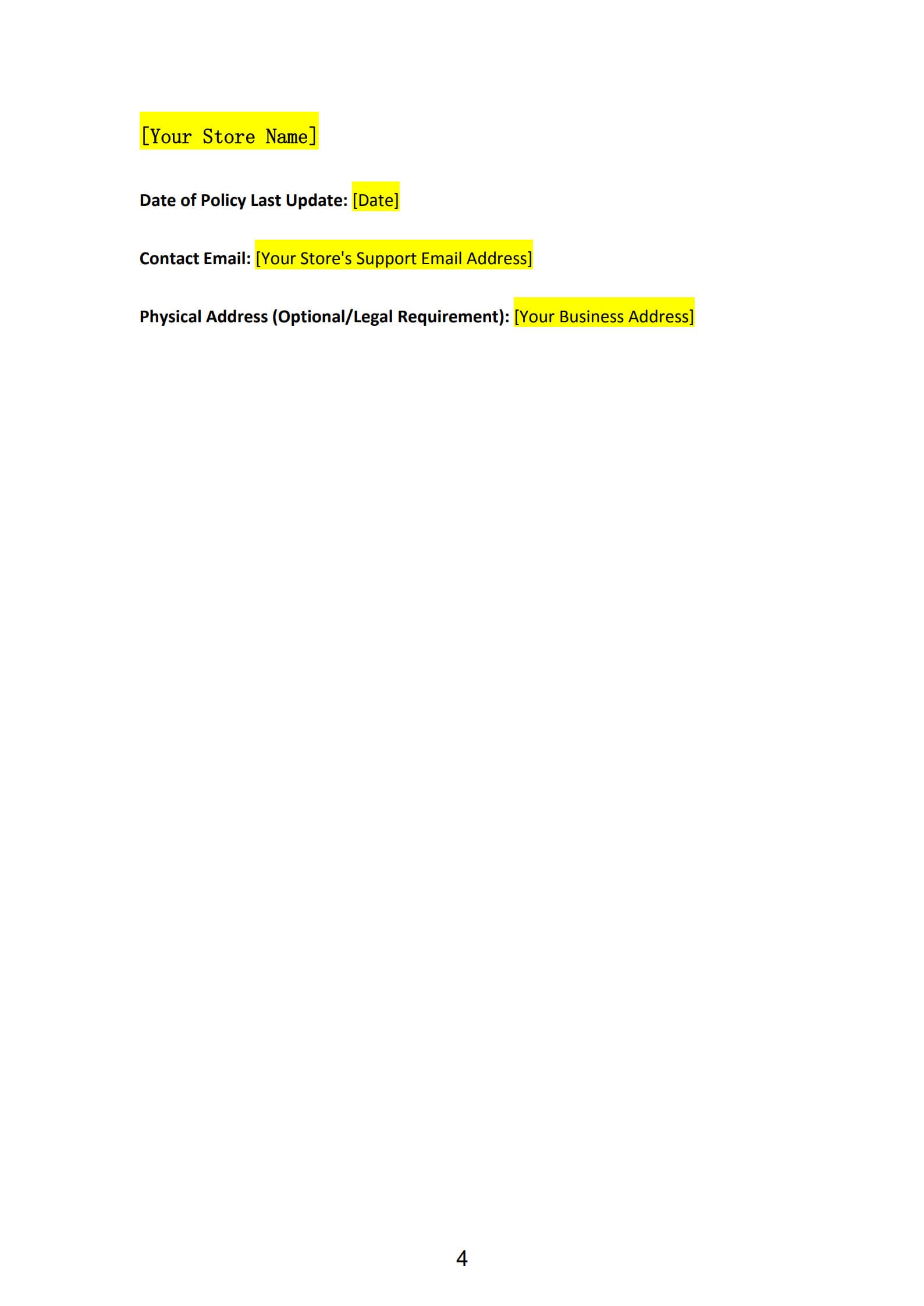
- Tailor the Return Process: Insert your specific business workflow, including the required contact method, the return merchandise authorization (RMA) process, and the physical return address.
- Review the Legal Nuances: If you operate internationally, ensure the template language is adjusted to meet the strictest regulations applicable to your target market.
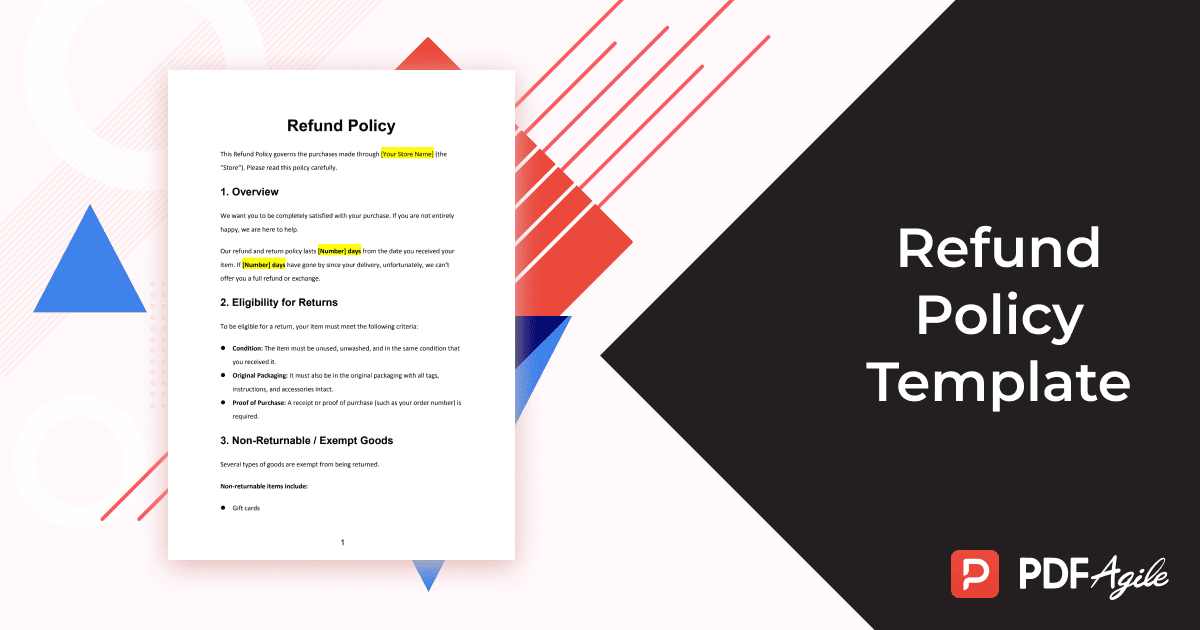
Free Download: Editable Refund Policy Template
You can download the return policy template mentioned above by clicking Use Template button on this page. Customize it to fit your specific needs and preferences.
6. Writing Tips to Polish Your Return and Refund Policy on Shopify
Tailoring your refund policy specifically for the Shopify platform involves leveraging its built-in features for both generation and accessibility.
- Use the Built-In Policy Generator: Shopify offers a free refund policy template generator in the Settings > Legal section. Start here, as it provides standardized legal language that integrates seamlessly with the platform's features (like the checkout process). Always customize this template to reflect your specific timeframes, product exclusions, and return shipping costs.
- Prioritize Accessibility via Navigation: Ensure the policy is immediately visible. In your Shopify theme, add the link to your Refund Policy page in the Footer Menu and ensure it's displayed clearly on the Cart page and the Checkout page footer (which is automatically handled by Shopify's legal settings).
- Set Clear Return Shipping Rules: Shopify's shipping settings allow you to define rules for return labels. Make sure your policy language is consistent with how you implement this:
- If the customer pays for return shipping, state it clearly.
- If you provide free return labels, highlight this as a benefit.
- Manage Expectations for Processing Time: Since Shopify handles the payment gateway process, be specific about when the refund period starts. Include a clause that separates the return delivery time from the refund processing time (e.g., "Please allow 5-7 business days for us to inspect the returned item, plus an additional 3-10 business days for your bank to process the refund").
- Define Exclusions for Digital/Print-on-Demand: If your store uses fulfillment methods like dropshipping or print-on-demand (POD), the return logistics can be complex. Your policy must clearly state that some items may be shipped back directly to the supplier and define specific limitations for customized items (often "final sale").
In summary, a refund policy is a critical blend of legal protection and customer service. By defining clear timeframes, eligibility criteria, and process steps, you not only comply with regulatory standards but also significantly boost customer trust and reduce administrative headaches. Remember to utilize the specific tools Shopify provides to generate and display your policy effectively. Let me know if you'd like a draft PDF template or to work through customizing a policy for a specific product type!