


Starting a nonprofit is an exciting step toward making a difference — but before your organization can operate effectively, you need a solid governance foundation. That foundation is your nonprofit bylaws.
Bylaws define how your organization is structured, how decisions are made, and how accountability is maintained. They’re not just a legal formality; they’re the blueprint for how your nonprofit functions day to day.
In this guide, you’ll learn what nonprofit bylaws are, what to include, and how to create your own using our free printable template. Whether you’re forming a new nonprofit or reviewing your current governance documents, this article will help you build bylaws that support your mission and meet legal requirements.
1. The Role of Bylaws in a Nonprofit
Bylaws serve as the internal constitution of your nonprofit organization. They define how your nonprofit operates — from decision-making rules and board duties to membership rights and amendment procedures.
While your Articles of Incorporation establish your nonprofit’s legal existence, your bylaws outline how your team actually governs itself day-to-day. They help maintain transparency, consistency, and accountability among board members and officers.
Without clearly written bylaws, nonprofits often face confusion over voting rights, leadership transitions, and meeting protocols. In short, bylaws ensure everyone understands their roles and responsibilities, providing both stability and credibility to your mission.
2. Key Elements Every Nonprofit Bylaws Should Include
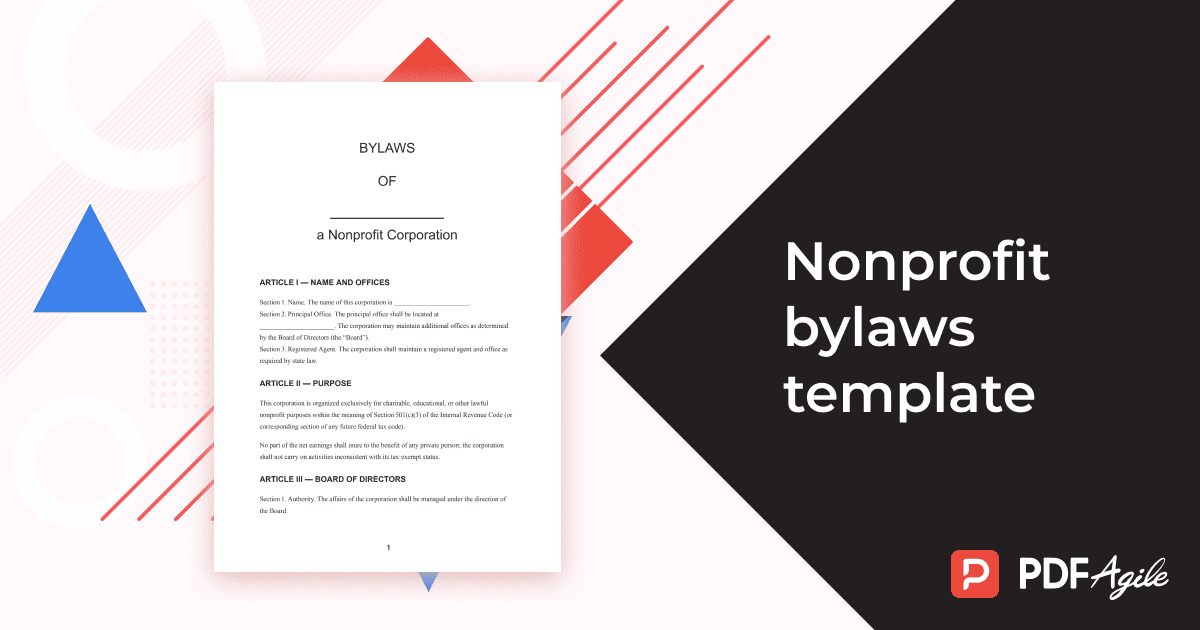
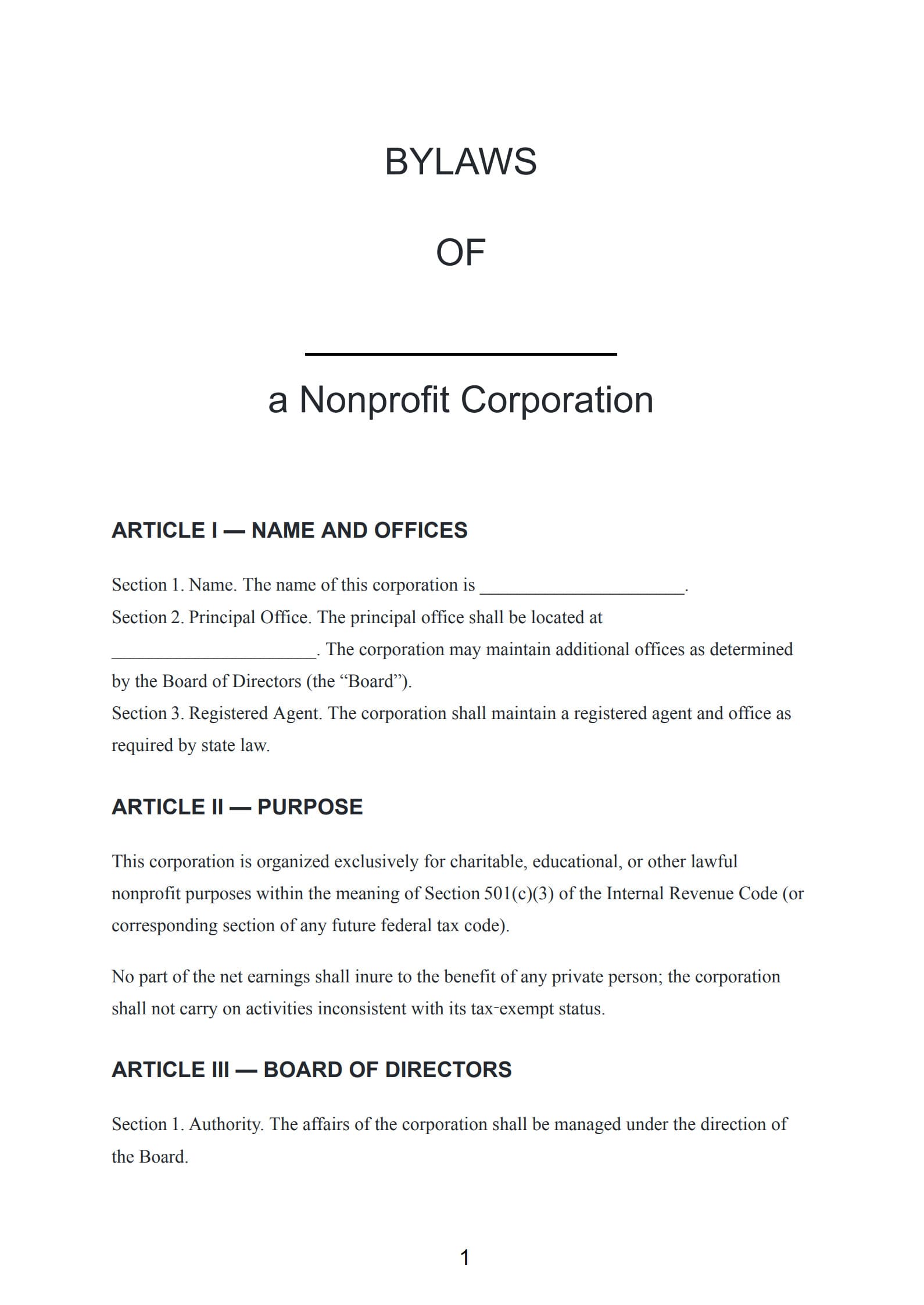
Every nonprofit has its unique goals and structure, but there are several sections that almost all bylaws should contain. Below are some of the essential components, check this sample bylaws for nonprofit organizations:
- Organization Name and Purpose
Define your nonprofit’s official name and overarching purpose. This section ties directly back to your mission and the charitable goals stated in your Articles of Incorporation.
- Board of Directors
Specify how many directors you’ll have, their qualifications, term lengths, responsibilities, and how new directors are elected or removed.
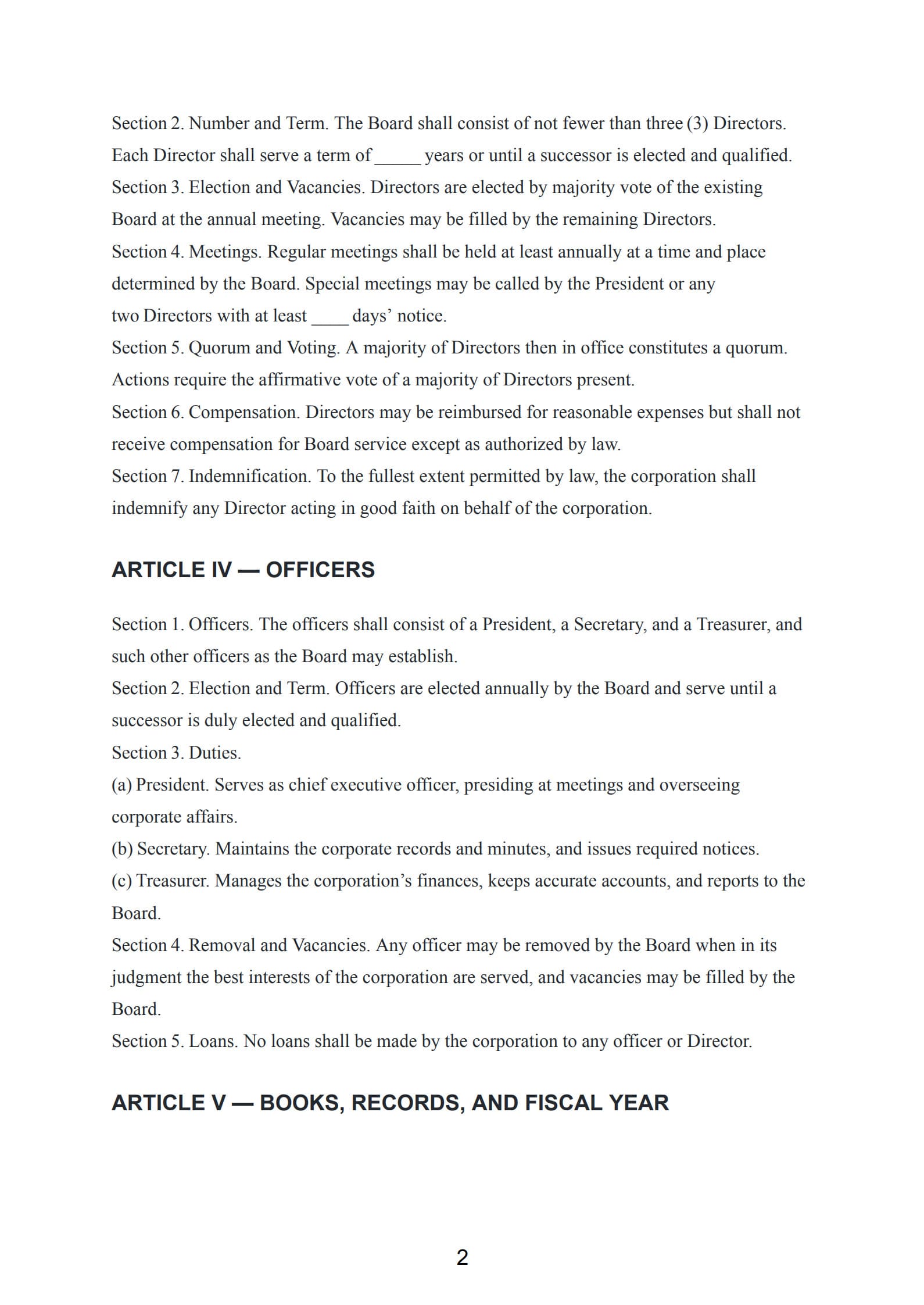
- Officers and Their Duties
Outline the positions such as President, Secretary, and Treasurer, along with their specific responsibilities.
- Meetings and Voting Procedures
Clarify when regular board meetings occur, how special meetings can be called, what constitutes a quorum, and how votes are taken.
- Membership (if applicable)
Define who qualifies as a member, voting rights, and how members can be admitted or removed.
- Committees
Identify any standing or ad hoc committees and their functions.
- Conflict of Interest Policy
Prevent conflicts by requiring full disclosure and setting decision-making standards.
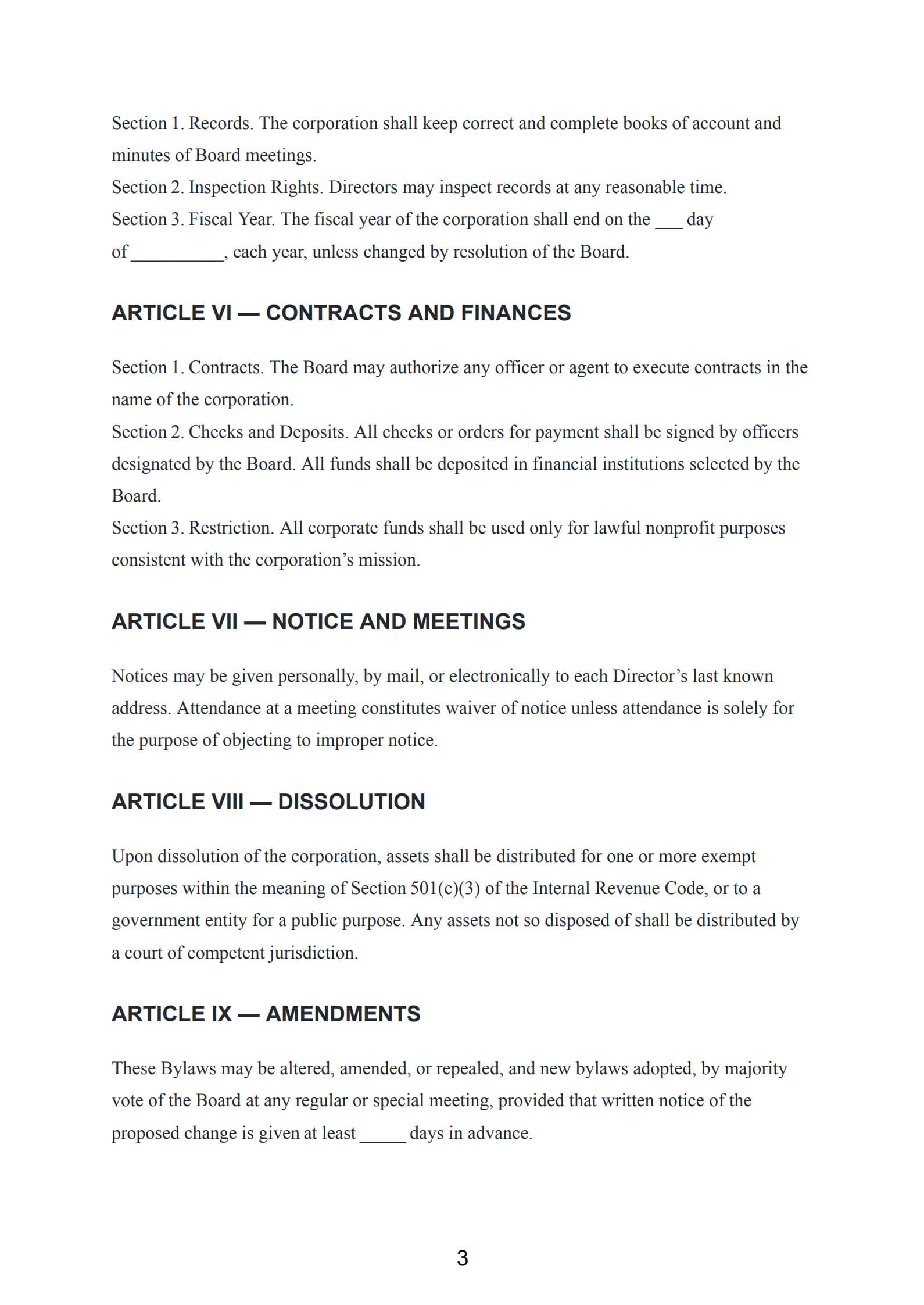
- Amendments
Detail how changes to the bylaws can be proposed, approved, and documented.
These sections together form a clear governance system that strengthens board collaboration and reduces ambiguity in nonprofit management.
3. How to Use Our Free Nonprofit Bylaws Template
Writing bylaws from scratch can be overwhelming, especially for new founders. That’s why we’ve created a free and printable Nonprofit Bylaws Template to help you get started quickly.
How to use the template:
1. Download the free nonprofit bylaws template.
2. Open it using PDF Agile.
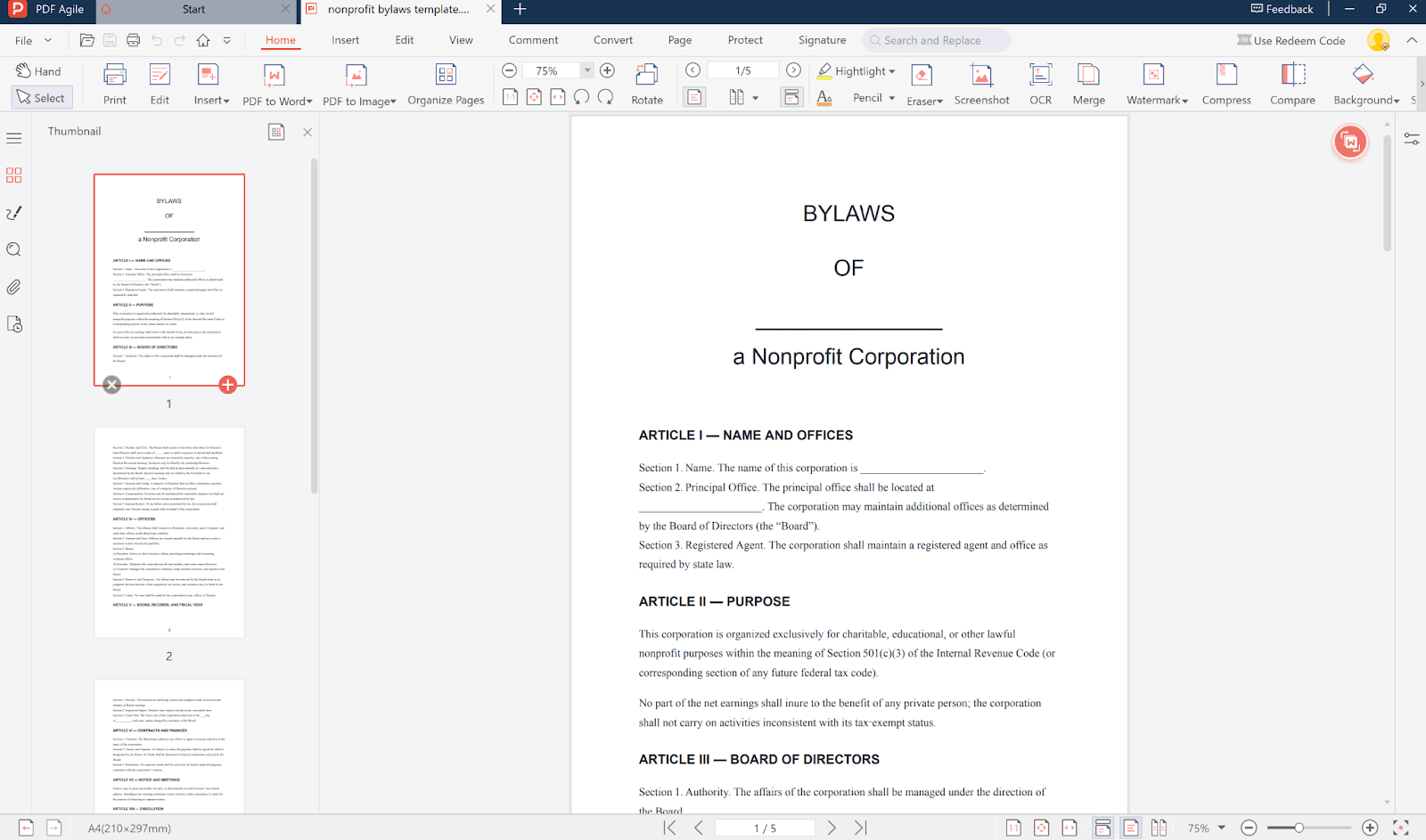
3. Customize the details.
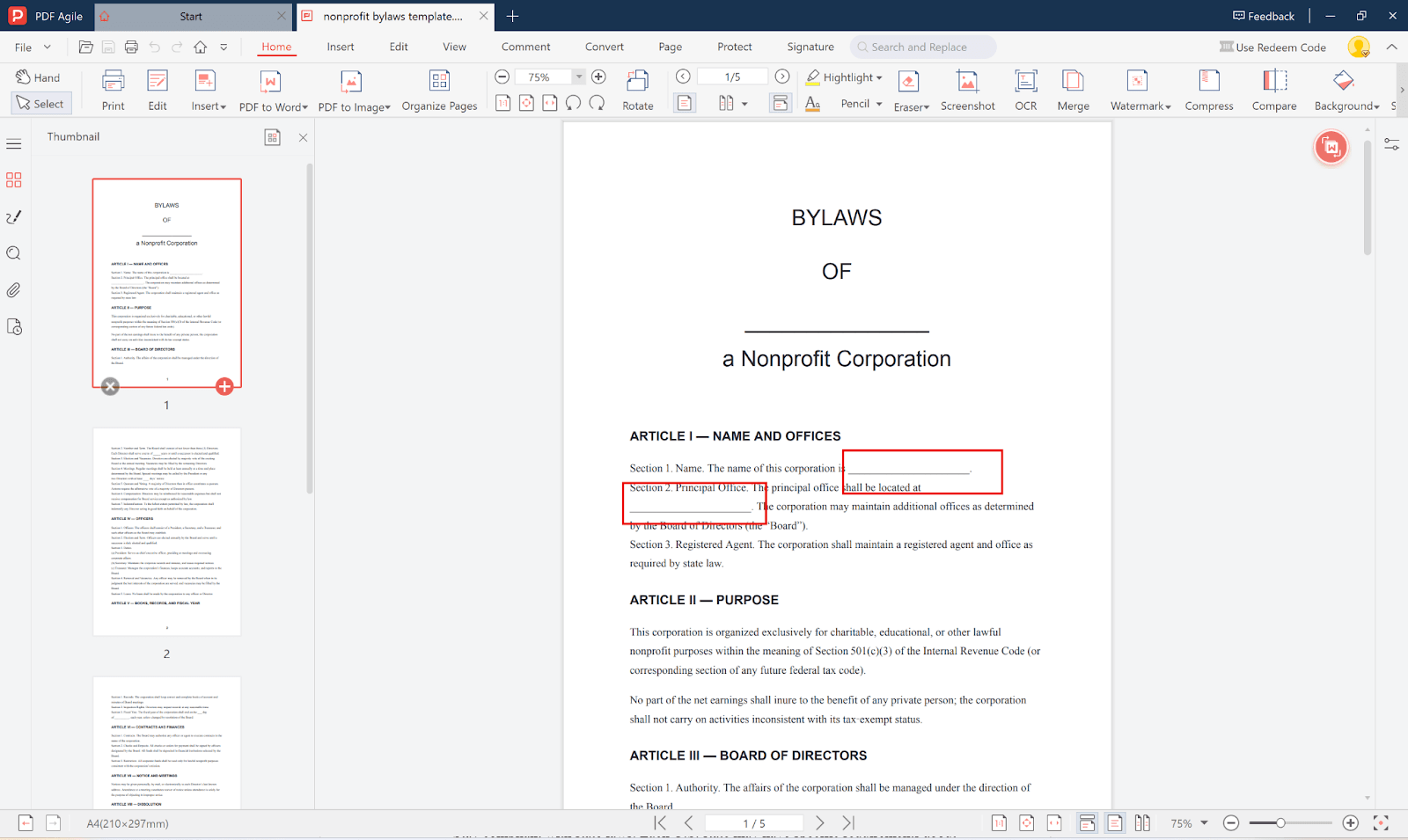
4. Add Signatures.
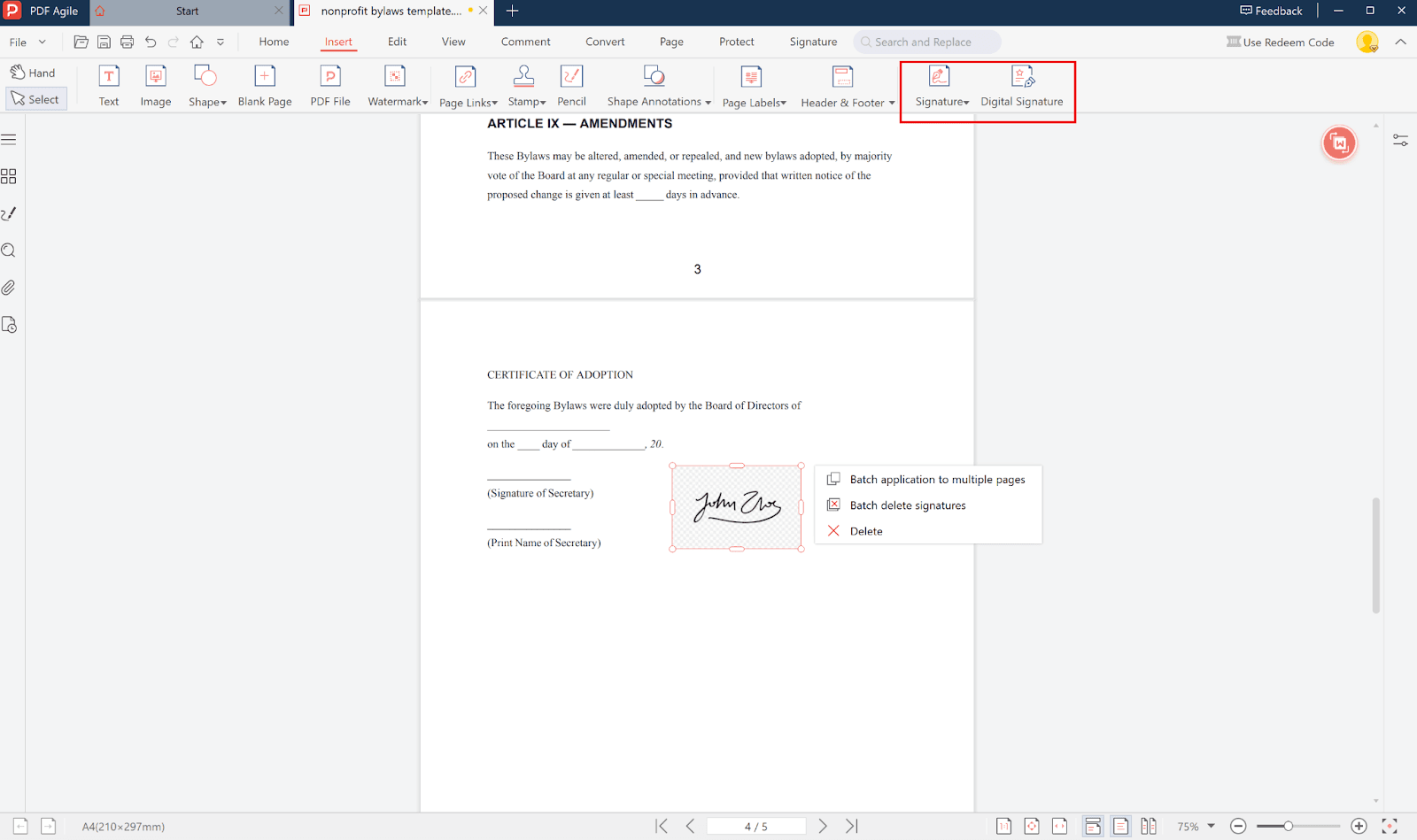
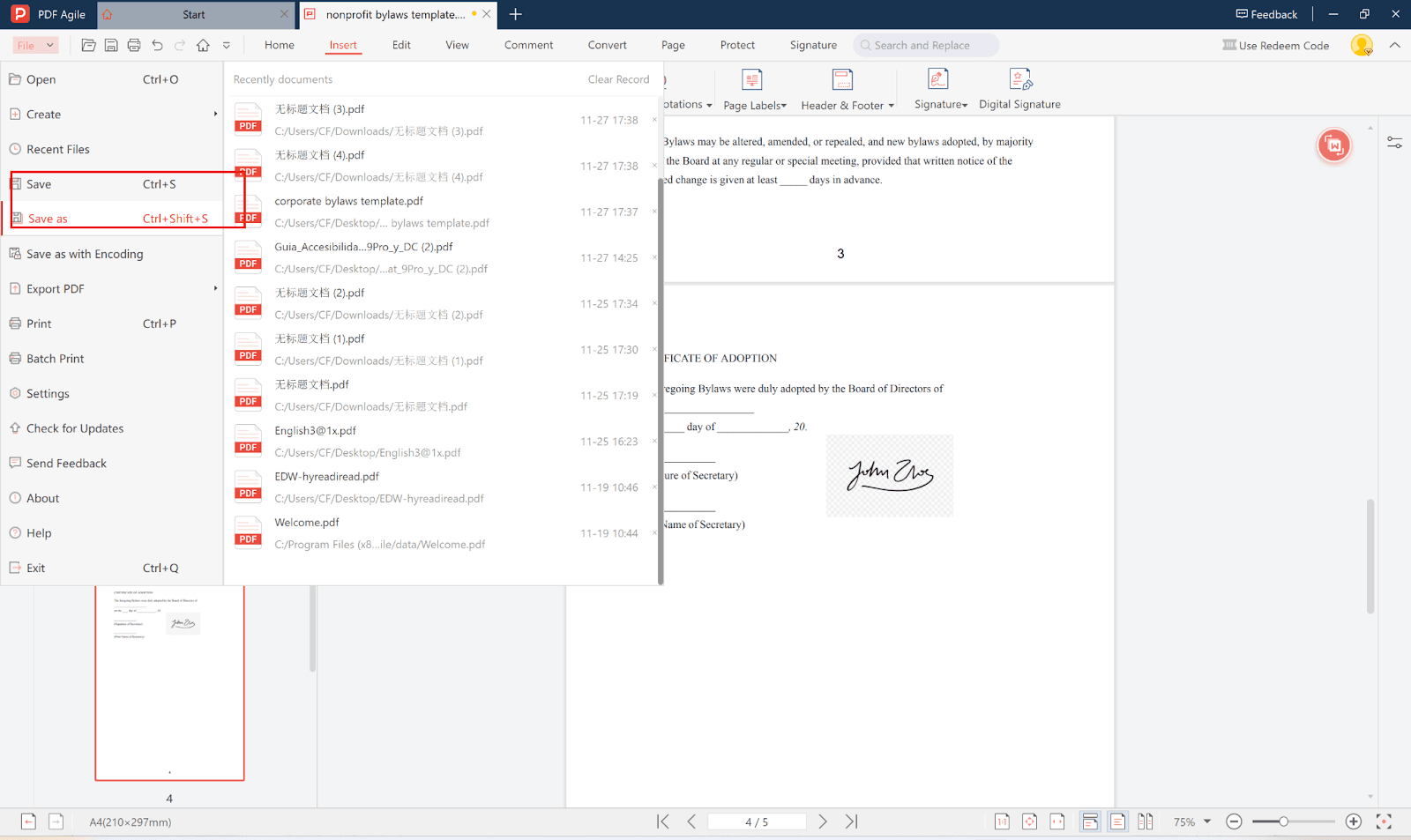
5. Save and Export the Final Document
This pre-formatted template saves time while still giving you flexibility to adapt it to your state’s regulations and your nonprofit’s unique structure.
4. Practical Tips for Writing Effective Nonprofit Bylaws
Even with a template, thoughtful customization is key. Keep the following tips in mind as you draft or revise your bylaws:
- Use clear and consistent language. Avoid legal jargon — bylaws should be readable to all board members.
- Stay compliant with state laws. Each U.S. state may have specific requirements about director counts, annual meetings, or quorum rules.
- Align with your mission and operations. The bylaws should reflect how your nonprofit truly functions, not just what looks good on paper.
- Review regularly. Revisit your bylaws at least every two to three years, or whenever your nonprofit expands or changes focus.
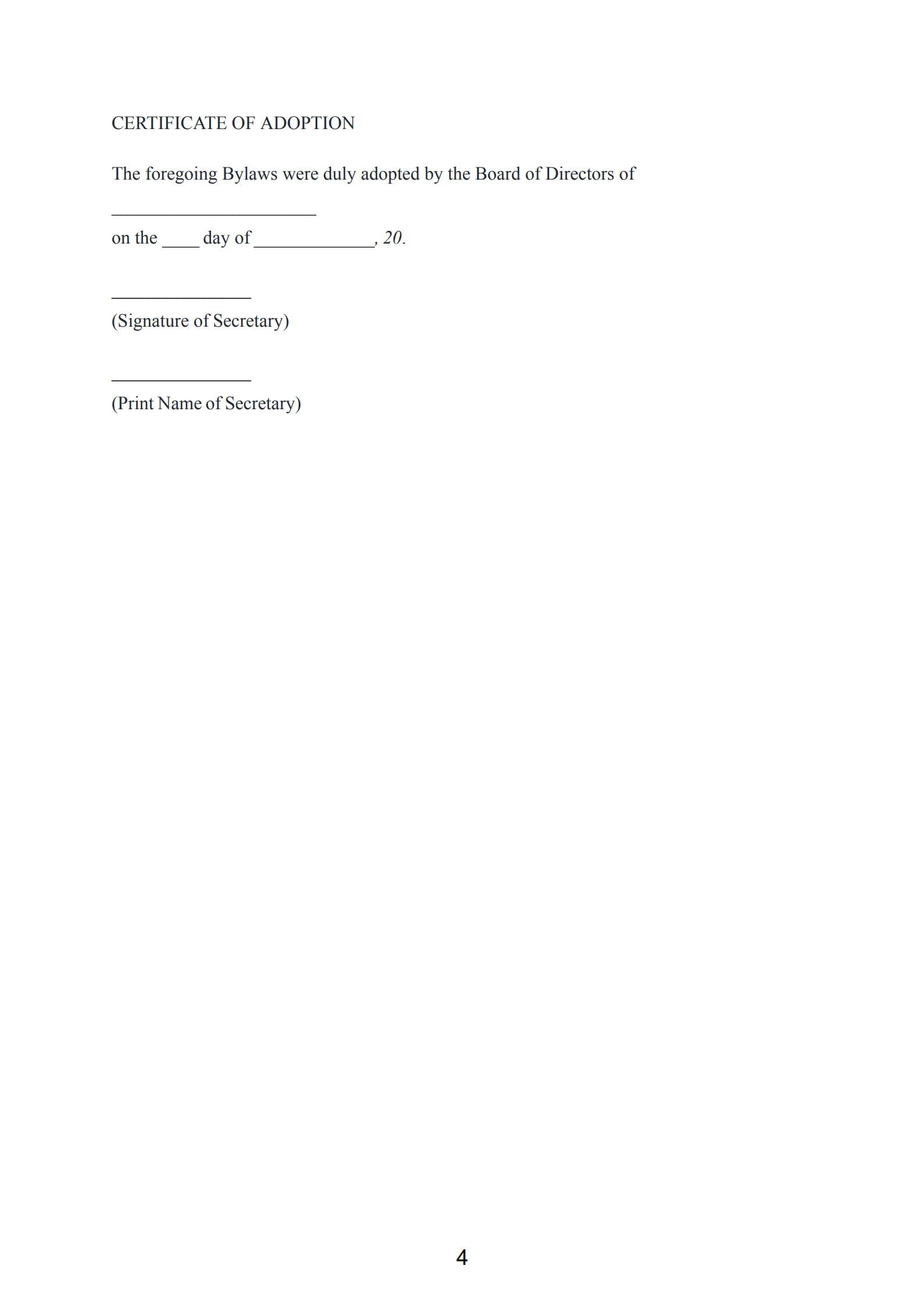
- Document all approvals. Have every amendment approved by the board and keep signed copies for your records.
Well-crafted bylaws don’t just satisfy legal requirements — they also guide healthy governance and improve board accountability.
Conclusion
Your nonprofit’s bylaws are more than a legal formality — they’re the foundation for lasting organizational success. By clearly defining how your board operates and decisions are made, your nonprofit will remain transparent, efficient, and mission-driven.
Whether you’re launching a new organization or updating an existing one, our free, printable Nonprofit Bylaws Template gives you a strong starting point to build upon.
Free Download: Printable Nonprofit Bylaws Template
Download your free template today and create bylaws that empower your nonprofit to thrive. Plus, PDF Agile also offers corporate bylaws template for you to fully customize and match your needs.