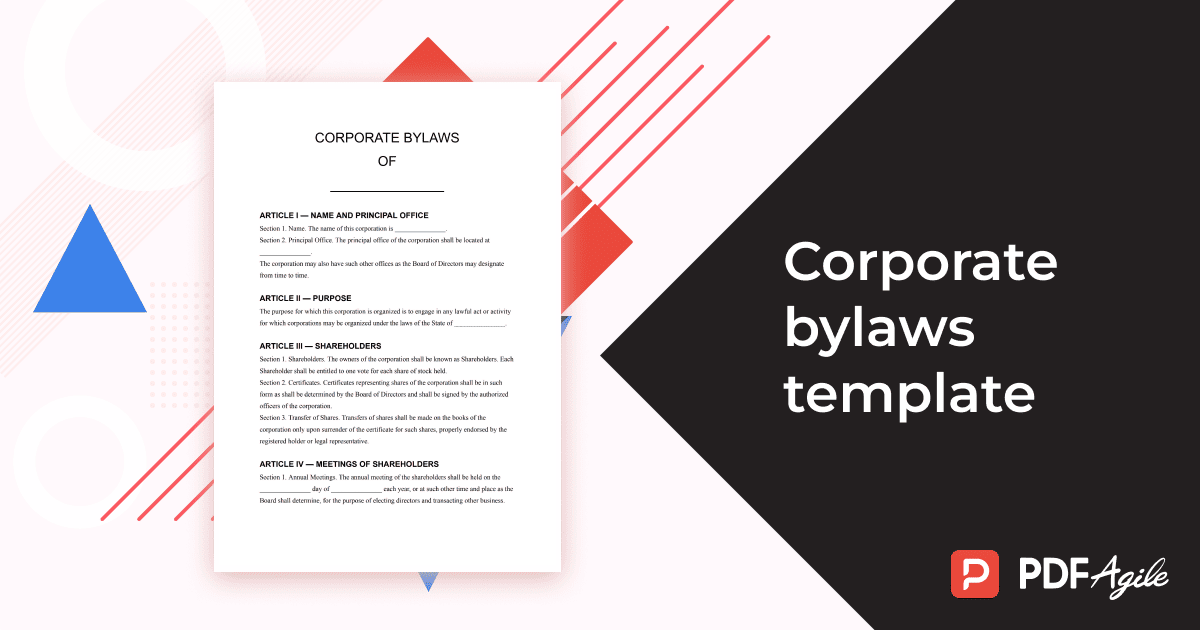



Creating strong corporate bylaws is one of the most important steps after forming a corporation. These bylaws act as the internal rulebook that defines how your company operates, how meetings are conducted, and how key decisions are made.
In this article, you’ll find a clear explanation of what corporate bylaws are, why they matter, what information they should include, and how to write them using a free and editable corporate bylaws template.
1. What Are Corporate Bylaws?
Corporate bylaws are the internal regulations that outline how a corporation will be governed and managed. They are adopted by the board of directors after the company is officially incorporated.
These bylaws describe important operational details such as:
- How directors and officers are elected
- The frequency of meetings and voting procedures
- The rights and responsibilities of shareholders
- How conflicts and amendments are handled
Unlike the Articles of Incorporation, which are filed with the state, corporate bylaws are kept internally and serve as a day-to-day guide for running the corporation.
2. Why Are Corporate Bylaws Important?
Corporate bylaws are essential for several reasons — both legal and practical.
- Legal compliance: Most U.S. states require corporations to adopt bylaws once they are formed. Without them, you may risk noncompliance with state corporate laws.
- Clarity and structure: Bylaws define decision-making authority and ensure that everyone understands their role in the company’s management.
- Conflict prevention: Clearly written bylaws help prevent misunderstandings or disputes among shareholders or directors.
- Credibility: Financial institutions, auditors, and investors often review your bylaws as part of due diligence.
- Operational consistency: They outline standardized procedures for meetings, elections, and approvals — ensuring your company runs smoothly.
Simply put, corporate bylaws help your organization maintain transparency and accountability.
3. What Information Should Corporate Bylaws Include?
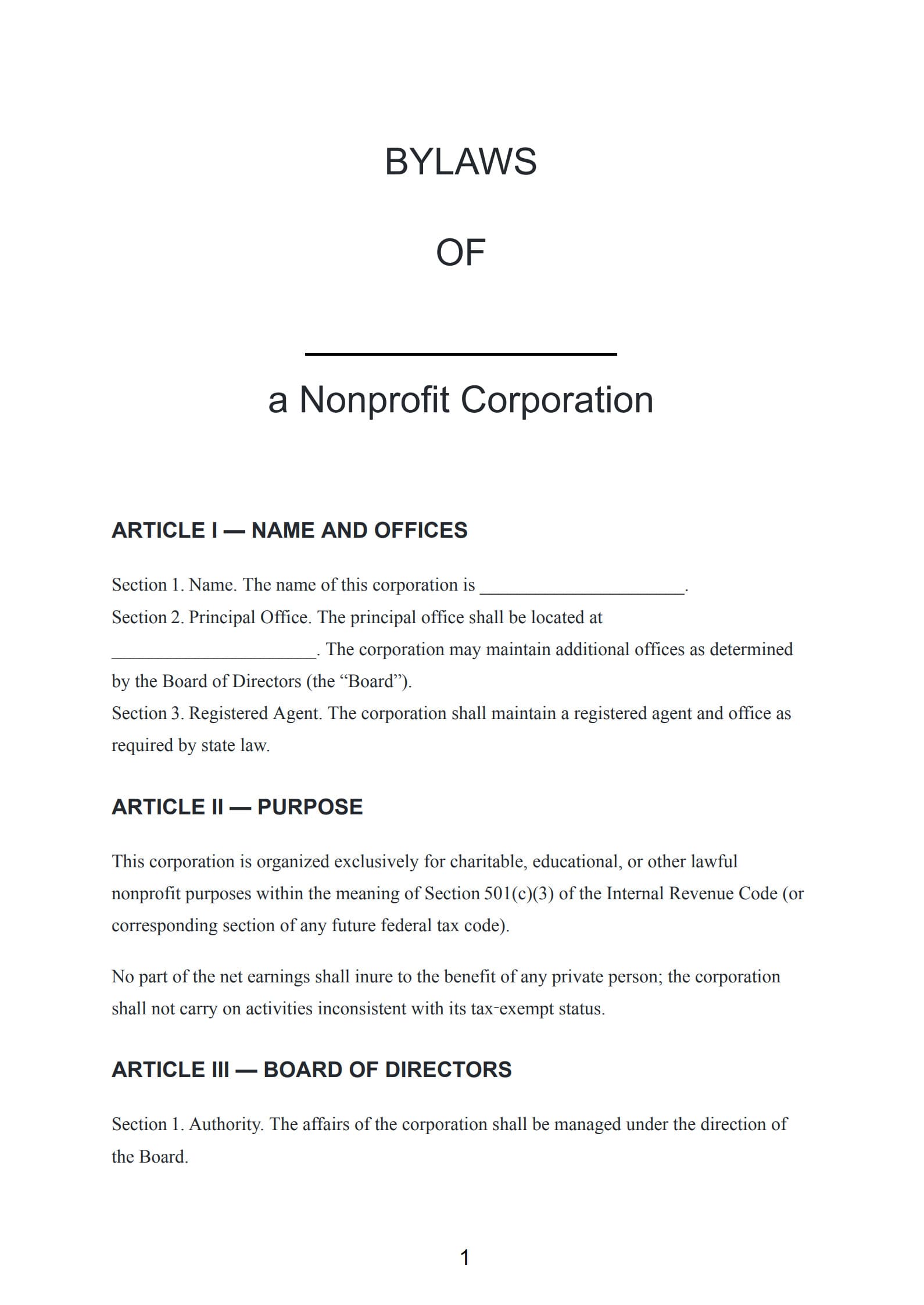
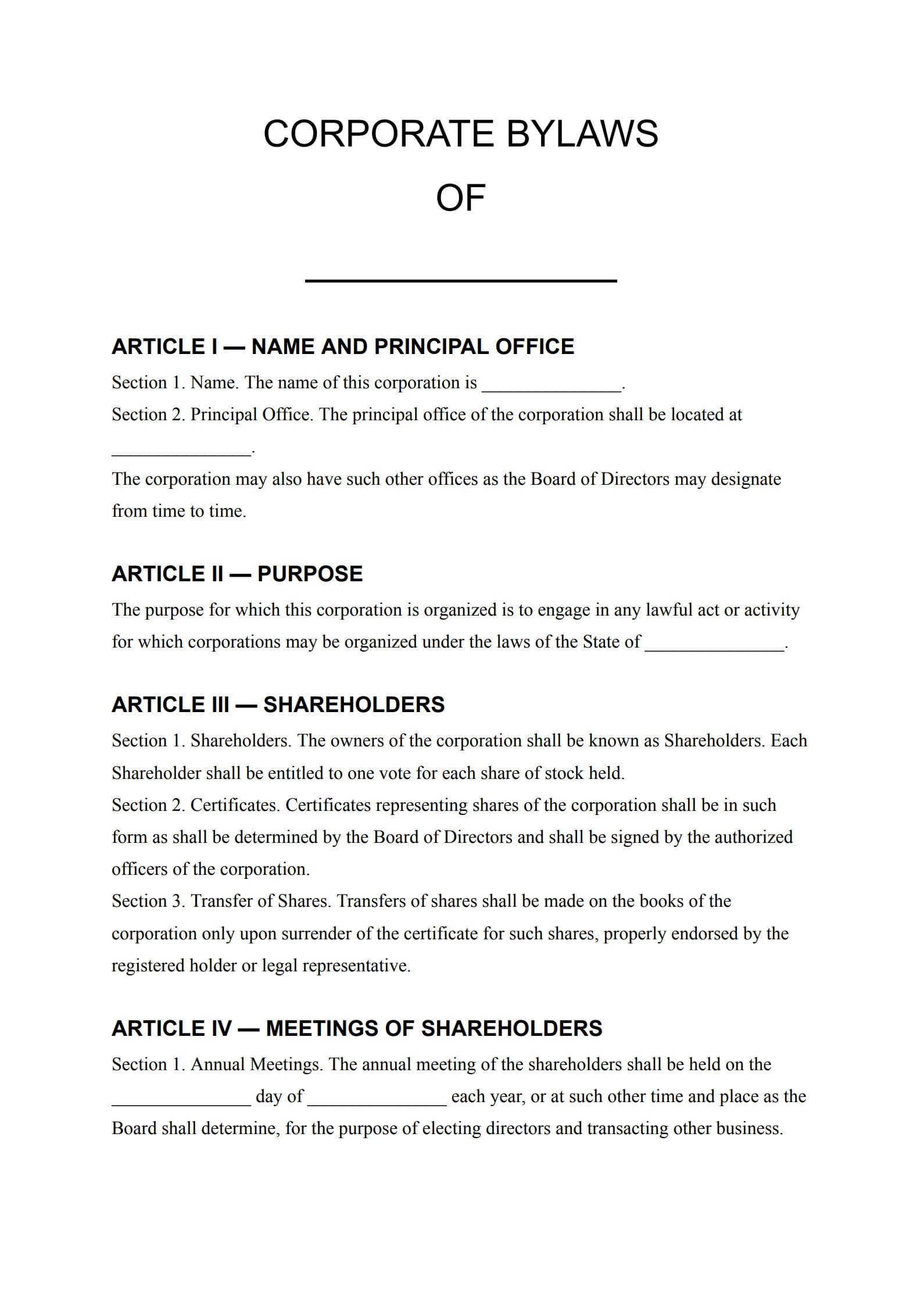
A well-drafted set of bylaws should be detailed enough to cover all operational and governance aspects of your corporation. When using a corporate bylaws template, make sure it includes these sections:
- Company name and principal office: The corporation’s legal name and business address.
- Corporate purpose: A brief statement describing the main business activities.
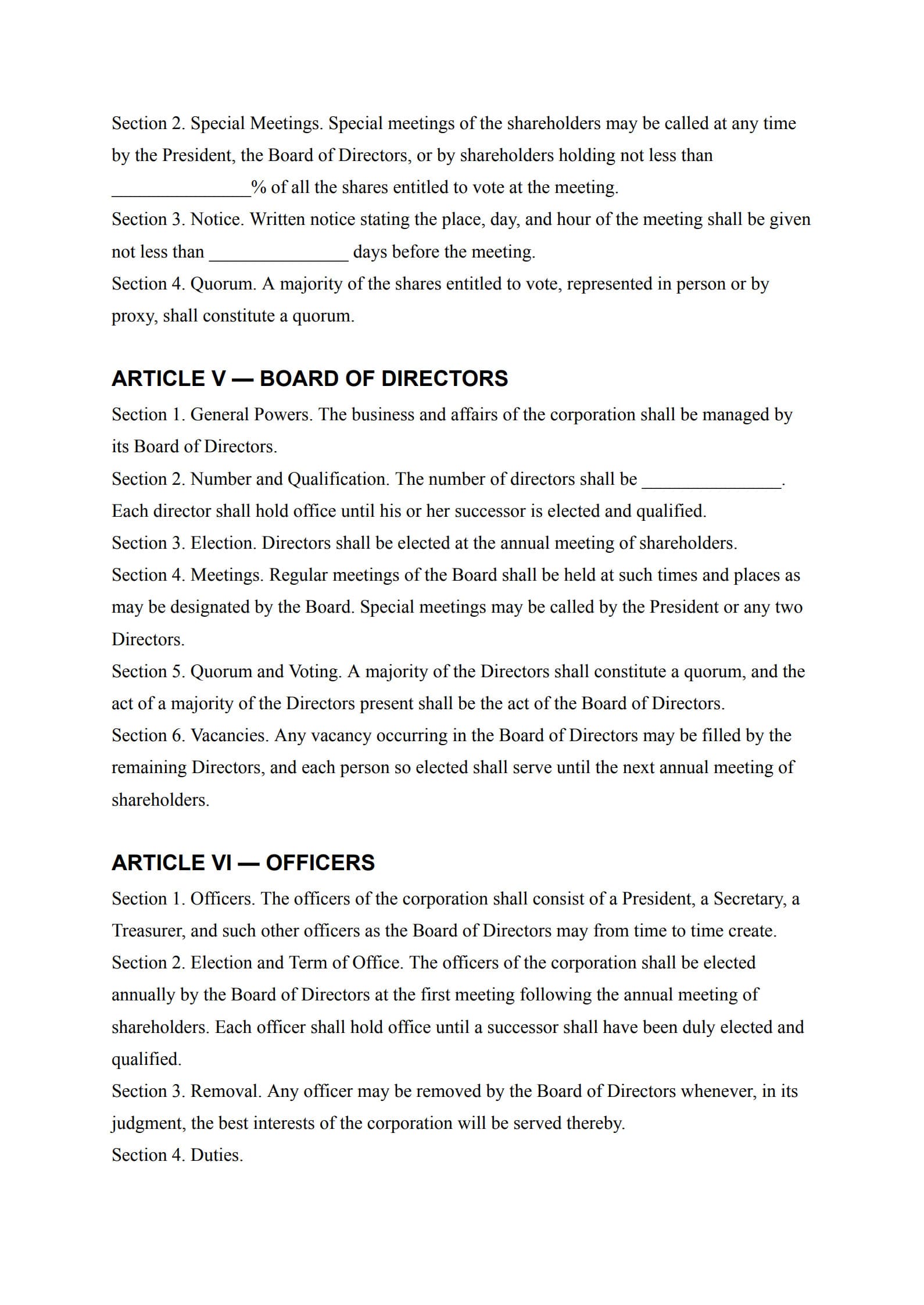
- Board of directors: The number of directors, their qualifications, terms, and the election or removal process.
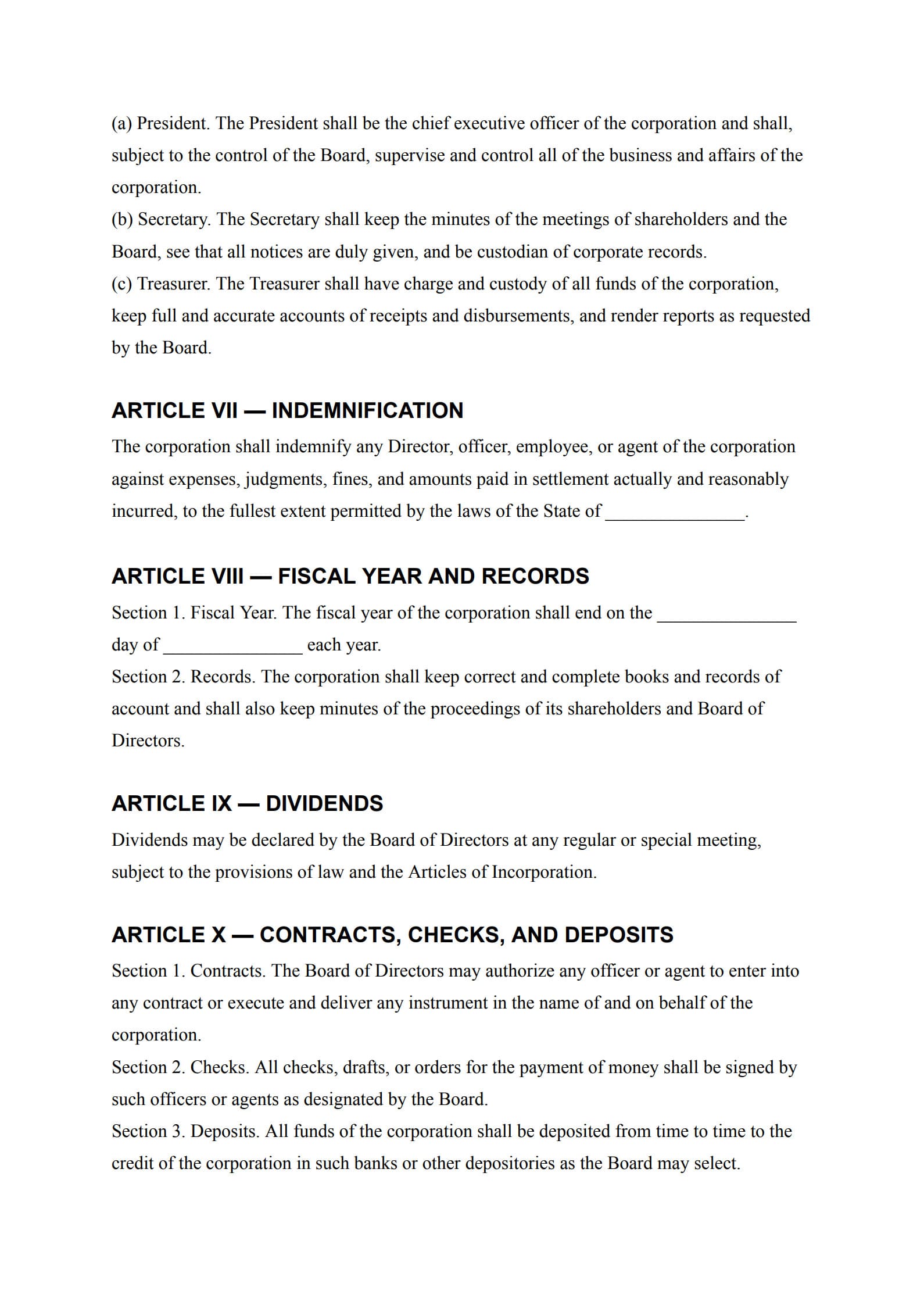
- Officers and duties: Roles such as President, Treasurer, and Secretary, and their responsibilities.
- Shareholders’ meetings: Rules for annual and special meetings, notice requirements, and quorum definitions.
- Voting procedures: How votes are counted, recorded, and approved.
- Stock issuance and transfers: Guidelines for issuing and transferring company shares.
- Recordkeeping: Where corporate records are stored and who manages them.
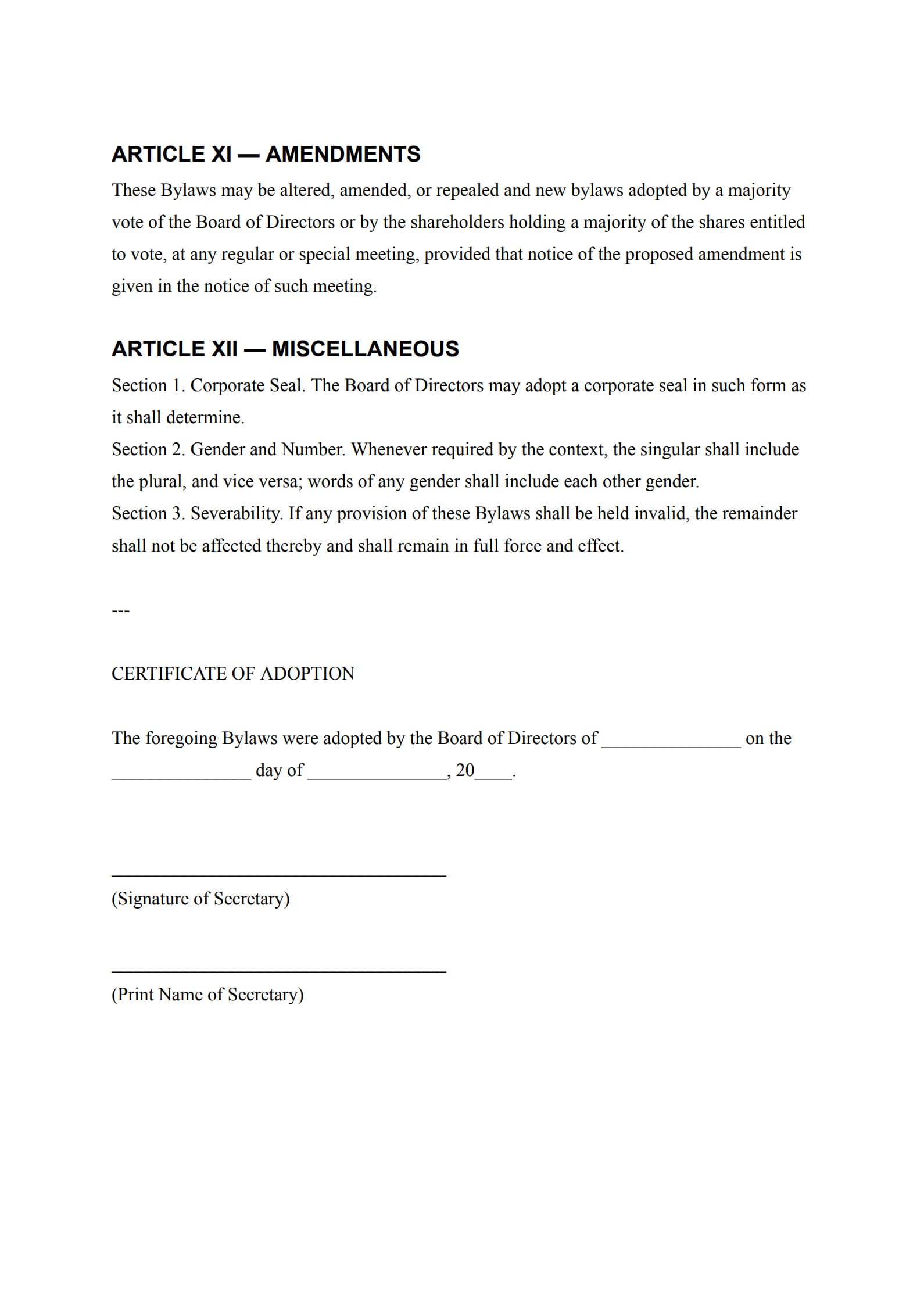
- Amendments: The process for making future changes to the bylaws.
Each corporation can customize these sections based on its size, structure, and legal requirements.
4. How to Write Corporate Bylaws (Step-by-Step Guide)
Writing corporate bylaws doesn’t have to be complicated. With an intuitive tool like PDF Agile, you can easily create, edit, and finalize your bylaws within minutes.PDF Agile allows you to open and modify PDF templates, adjust bylaws clauses, add electronic signatures, and export the final version — all in one streamlined workflow.
Here’s a detailed, step-by-step guide on how to create a corporate bylaws document using PDF Agile:
Step 1: Download and Install PDF Agile
Go to the official PDF Agile website, choose your operating system (Windows or Mac), and install the software.
Once launched, you’re ready to open or create your corporate bylaws document.

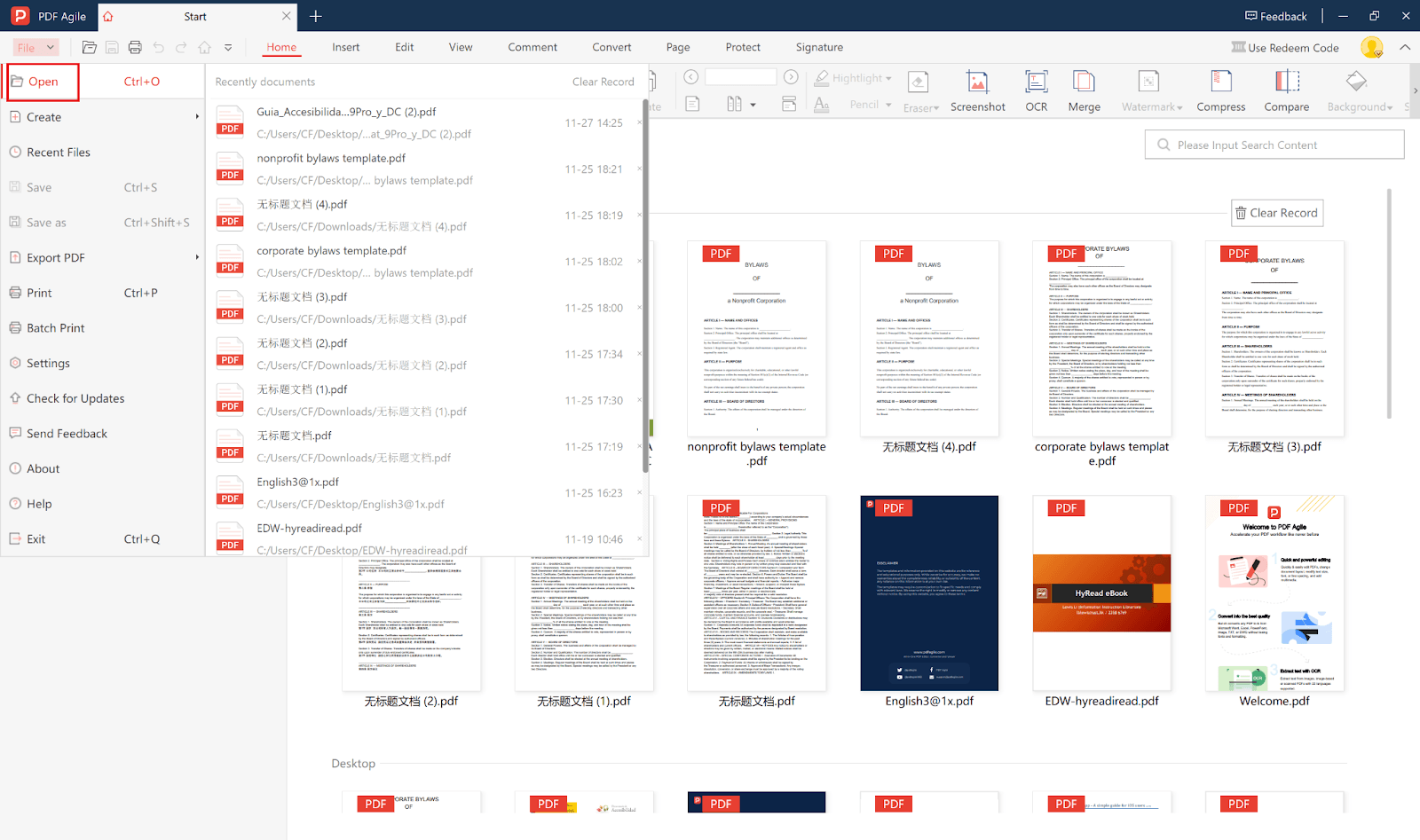
Step 2: Import a Corporate Bylaws Template
On the home screen, click “Open File” and select your free editable corporate bylaws template.
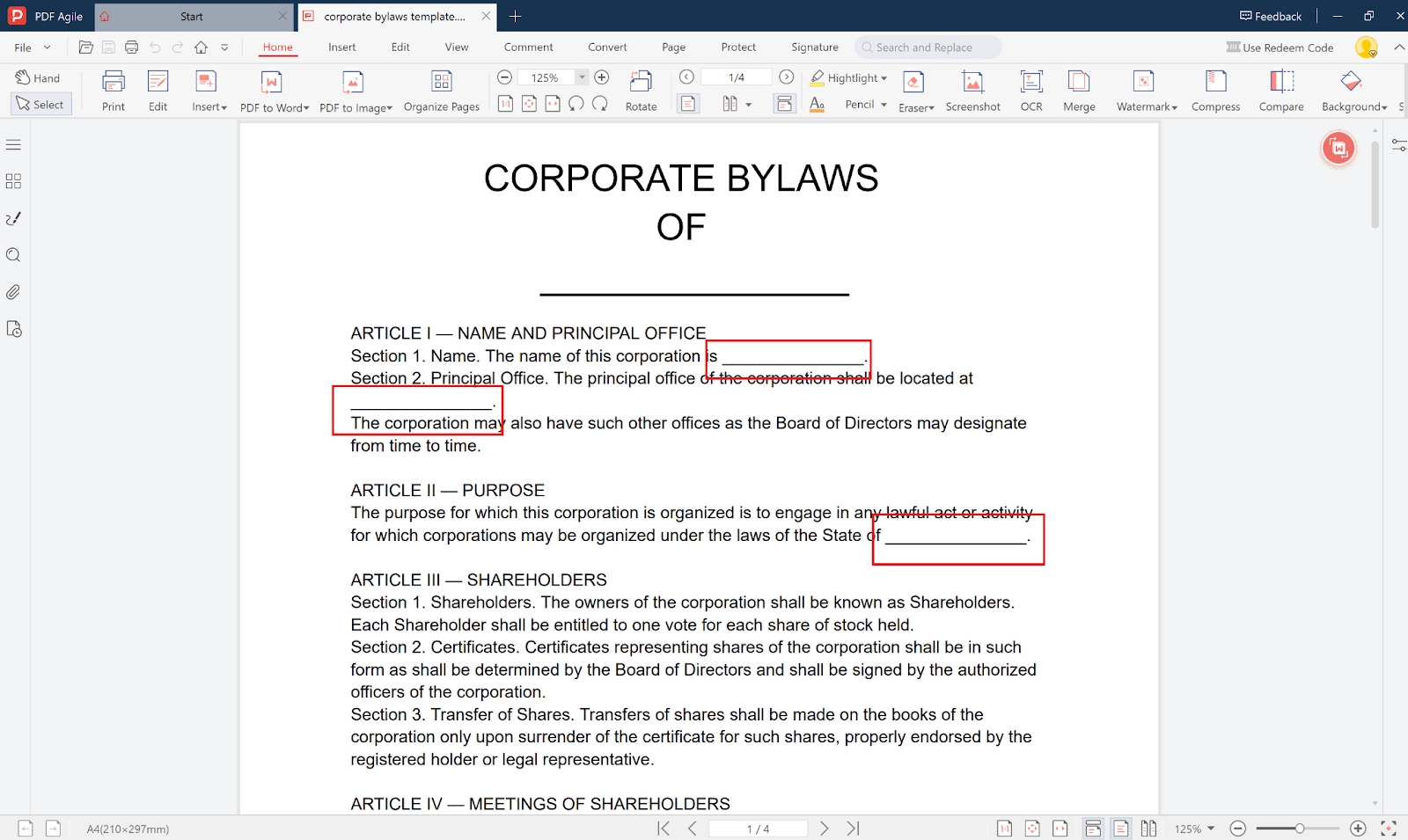
Step 3: Customize Company Information
Fill in your company’s key details,PDF Agile enables full-text editing with customized fonts, headers, and formatting to ensure your bylaws look both professional and legally compliant.
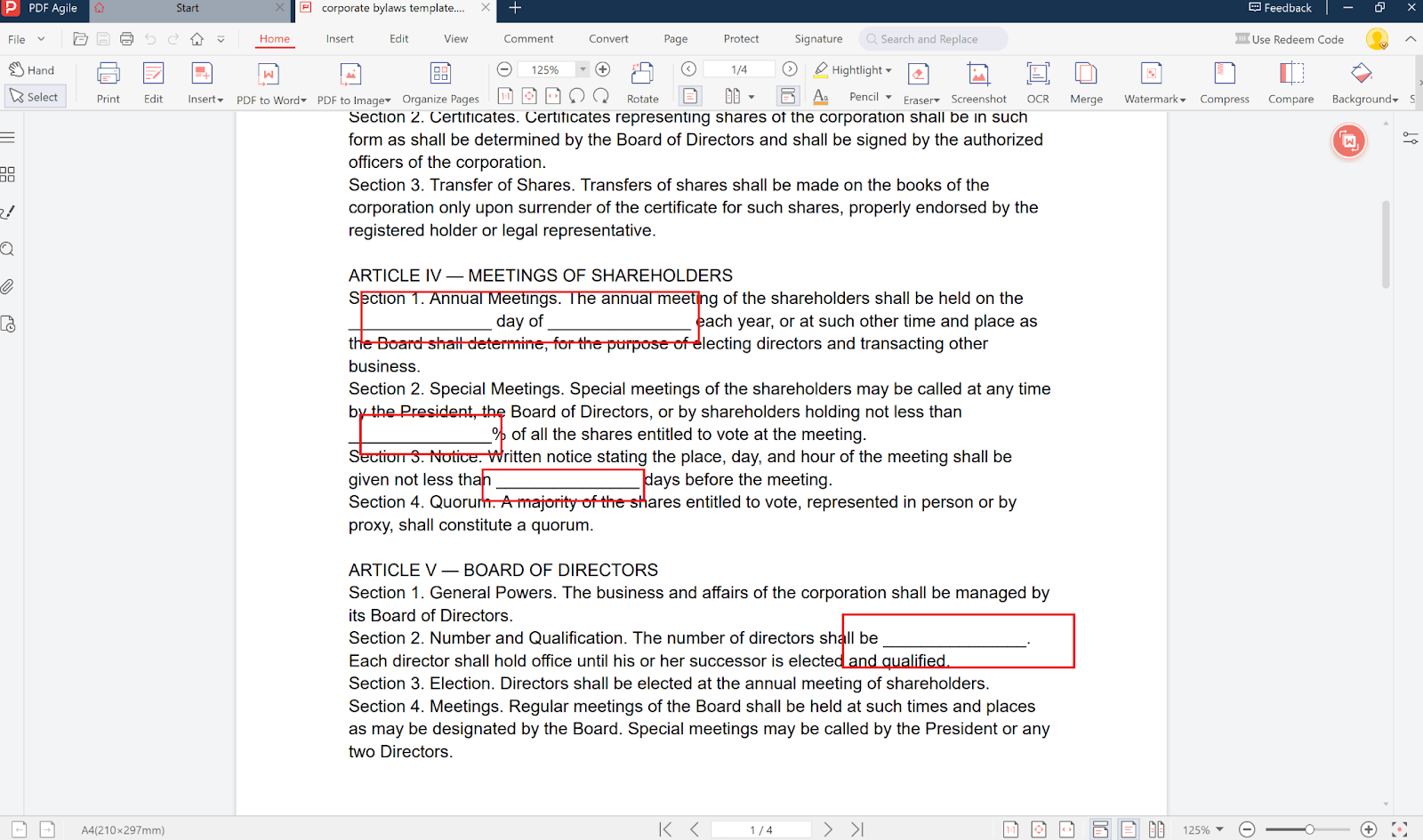
Step 4: Edit Bylaws Clauses
Update individual sections as needed,if you need to add new provisions, simply click “Add Page”.
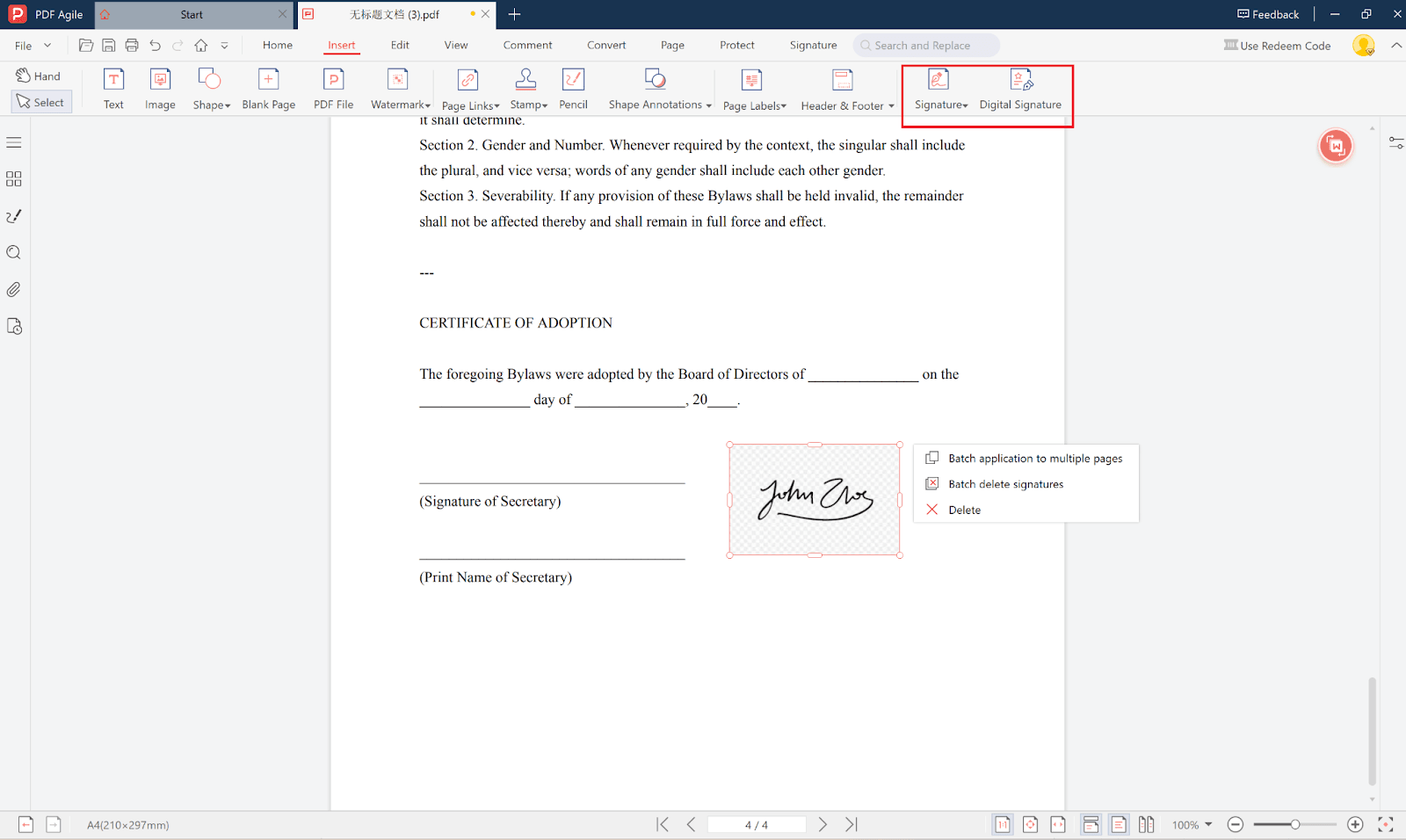
Step 5: Add Signatures and Approval Section
After the draft is complete, it must be approved and signed by the board.
Go to “Sign” → “Add E-signature” in PDF Agile to insert your handwritten signature or upload a digital version.
You can also add the signer’s title, date, and notes for official recordkeeping.
Step 6: Save and Export the Final Document
When everything looks good, go to File → Save As, and export your finalized bylaws.
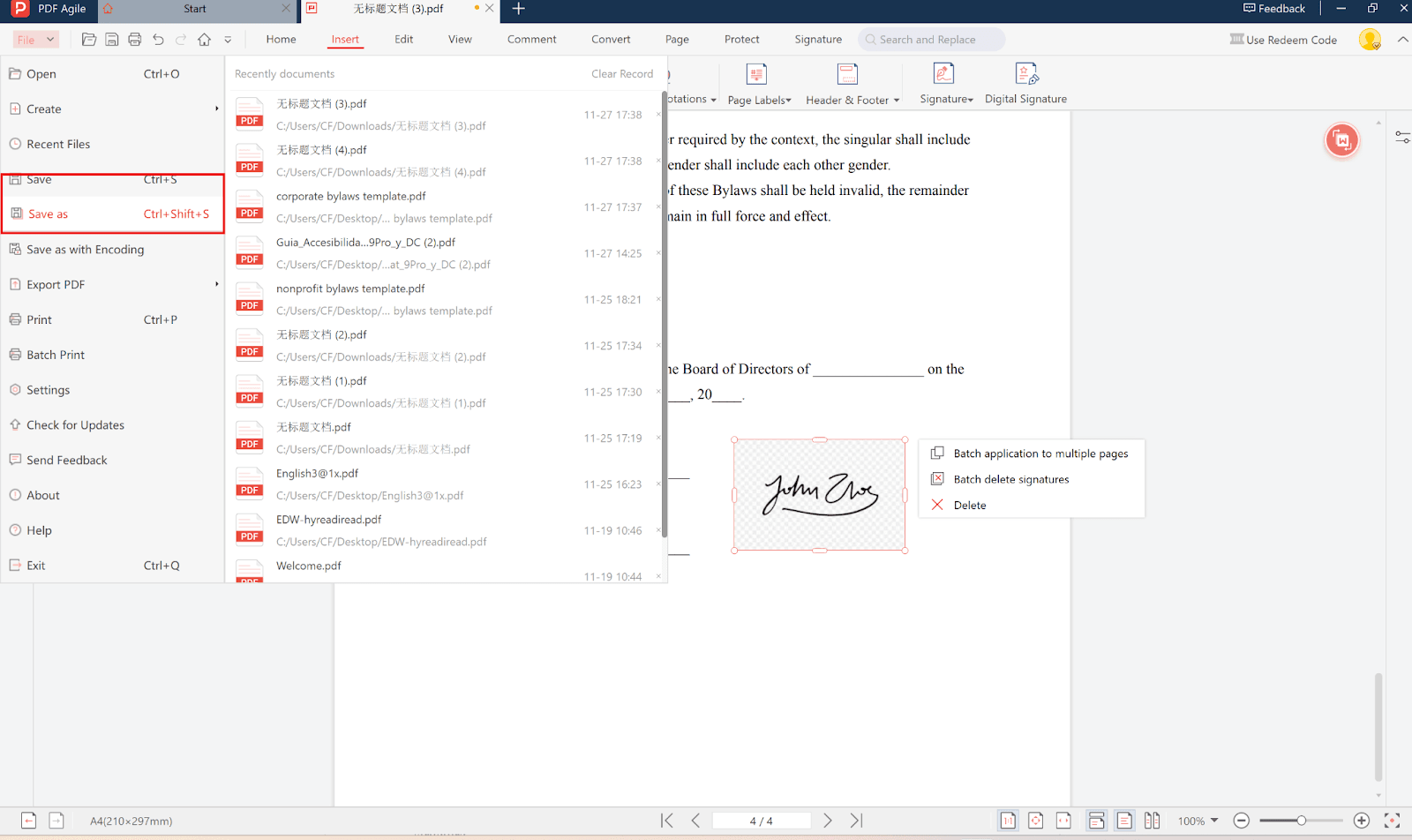
By following these steps, you’ll create a clear, legally sound document that supports smooth corporate governance.
5. FAQs About Corporate Bylaws
5.1 Are Corporate Bylaws Public Record?
No. Corporate bylaws are not public documents. They are kept internally and are not filed with the state or federal government. Only your Articles of Incorporation are typically a matter of public record.
5.2 Do All Corporations Need Corporate Bylaws?
Yes. Almost all states require newly formed corporations to adopt bylaws as part of their internal governance. Even when not legally required, having bylaws helps ensure professionalism and operational clarity.
5.3 How Often Should Corporate Bylaws Be Updated?
It’s advisable to review and update your corporate bylaws at least once a year — or whenever major organizational changes occur, such as changes in ownership, officers, or business structure.
Conclusion
Corporate bylaws form the backbone of good corporate governance. They establish clear rules, define leadership roles, and protect both shareholders and directors from potential disputes.
Free Download: Printable Corporate Bylaws Template
By using a free and editable corporate bylaws template, you can easily create a set of customized bylaws that fit your company’s unique structure and comply with state requirements. Regularly reviewing and updating these bylaws ensures your corporation continues to run smoothly and transparently.