


Whether you are a landlord protecting a valuable investment or a tenant securing your security deposit, a rental inspection checklist is your most important document. It bridges the gap between expectations and reality, ensuring that the property's condition is documented with transparency and precision.
1. Why is an Effective Rental Inspection Checklist Important?
An effective checklist serves as a legal and financial safeguard for both parties. Without one, move-out day often becomes a "he-said, she-said" battle over damages.
- For Landlords: it provides documented proof of the property's condition before a tenant moves in. This makes it easier to justify deductions from a security deposit if damage occurs beyond normal wear and tear.
- For Tenants: It acts as an insurance policy. By noting existing scratches, stains, or broken fixtures at the start, you ensure you aren't held liable for problems you didn't cause.
- Mutual Transparency: It sets a standard for maintenance and clear communication, fostering a better landlord-tenant relationship.
2. What Should Be Included in the Rental Inspection Checklist?
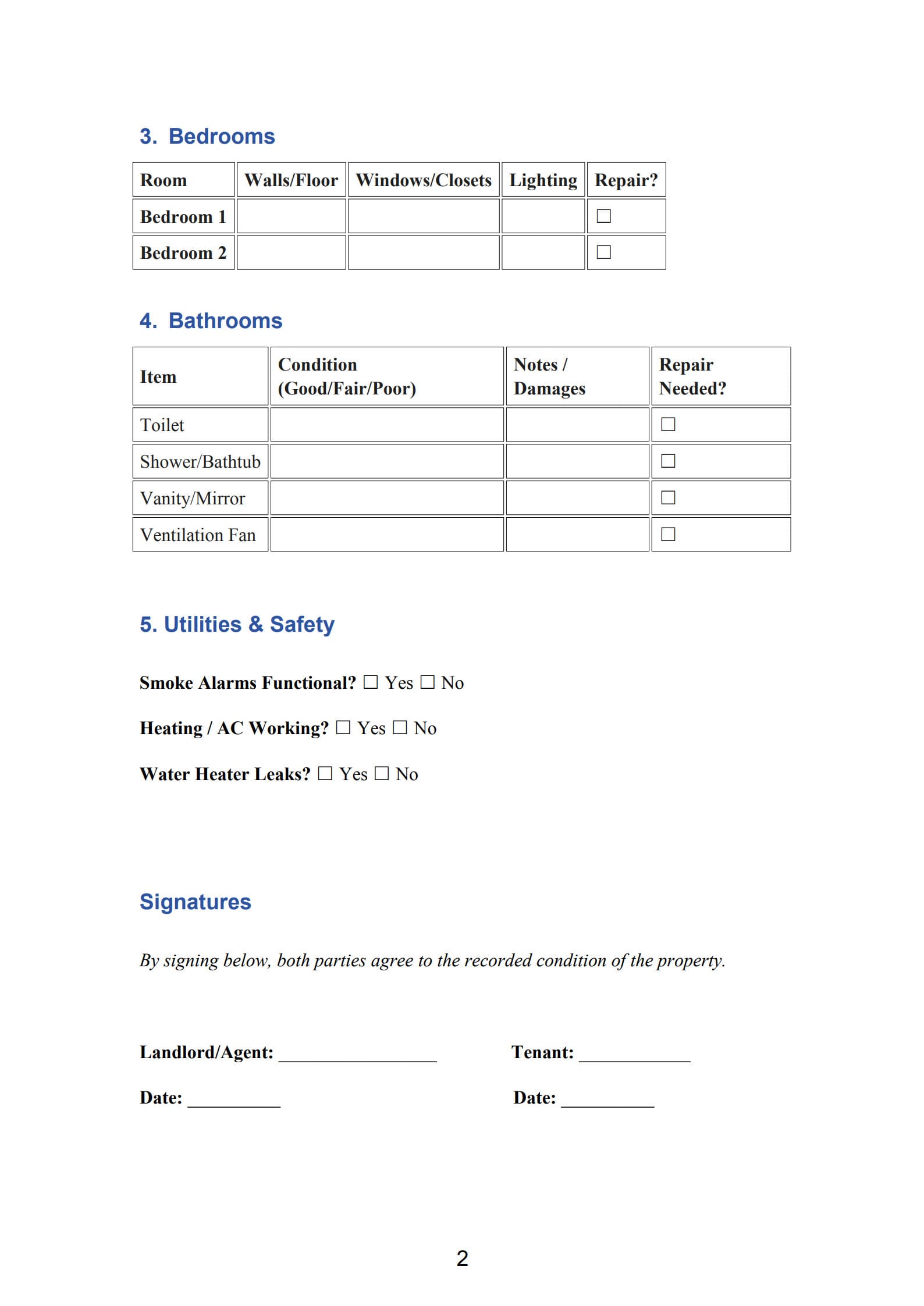
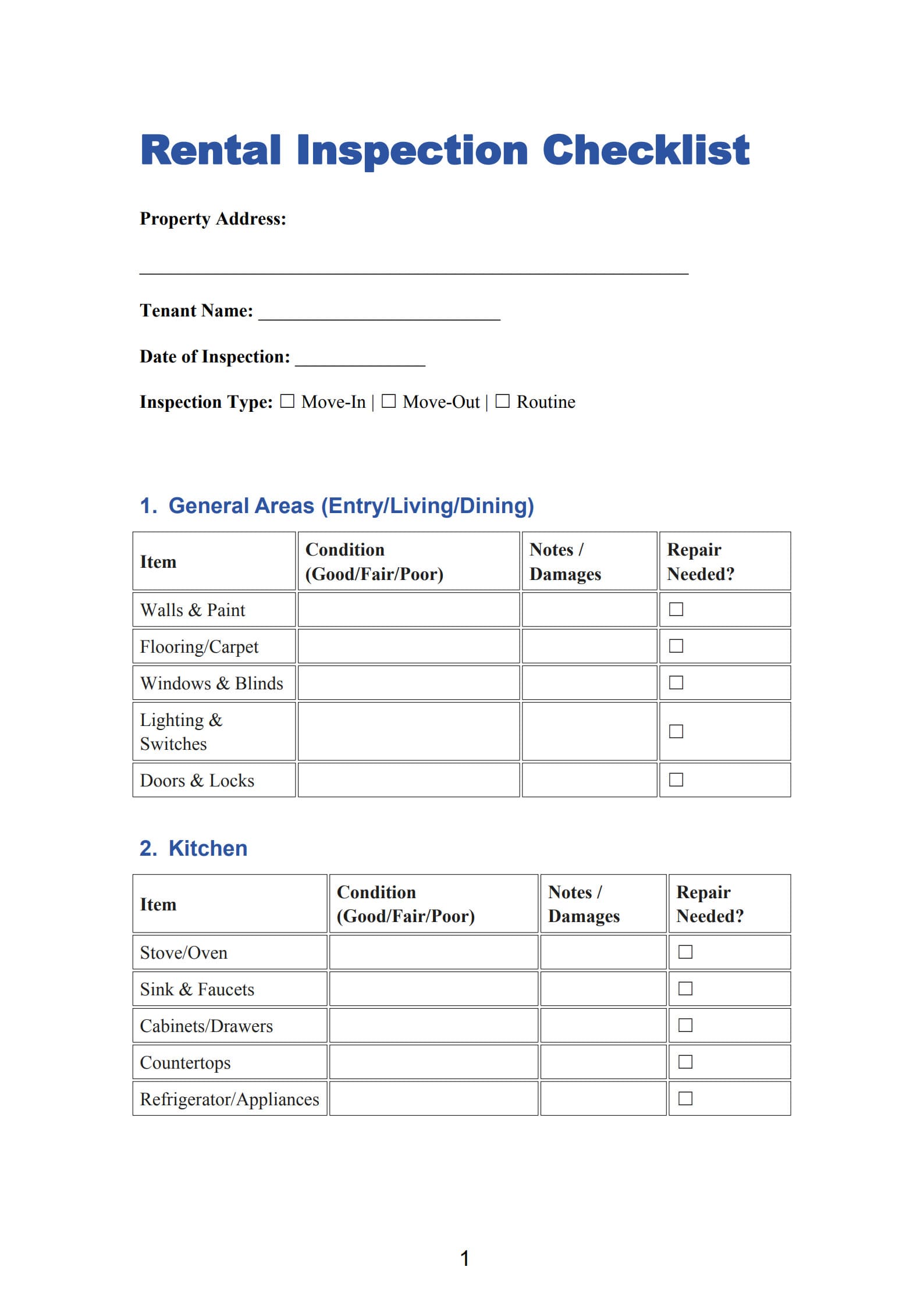
A comprehensive checklist should cover every inch of the property. For the best results, break the list down by room and include columns for "Condition at Move-in," "Condition at Move-out," and "Estimated Cost of Repair."
Essential Areas to Inspect:
- General/Structural: Walls, ceilings, floors, windows, locks, and smoke detectors.
- Kitchen: Stove/oven, refrigerator, dishwasher, sink, cabinets, and countertops.
- Bathrooms: Toilet, shower/tub, tiling, vanity, and exhaust fans.
- Utilities: HVAC system, water heater, electrical outlets, and light fixtures.
- Exterior: Entryways, patios, and landscaping (if applicable).
3. When to Use a Rental Inspection Checklist?
Timing is everything. There are four primary instances when you should pull out your checklist:
- Move-In (The Walkthrough): Conducted before or on the day the tenant takes possession.
- Routine/Seasonal Inspections: Performed every 3–6 months to check for leaks, filter changes, or unauthorized alterations.
- Drive-By Inspections: Periodic external checks to ensure the property's curb appeal and basic exterior maintenance.
- Move-Out: The final walkthrough after the tenant has cleared their belongings to assess final damages.
4. How to Create a Rental Inspection Checklist with a Template
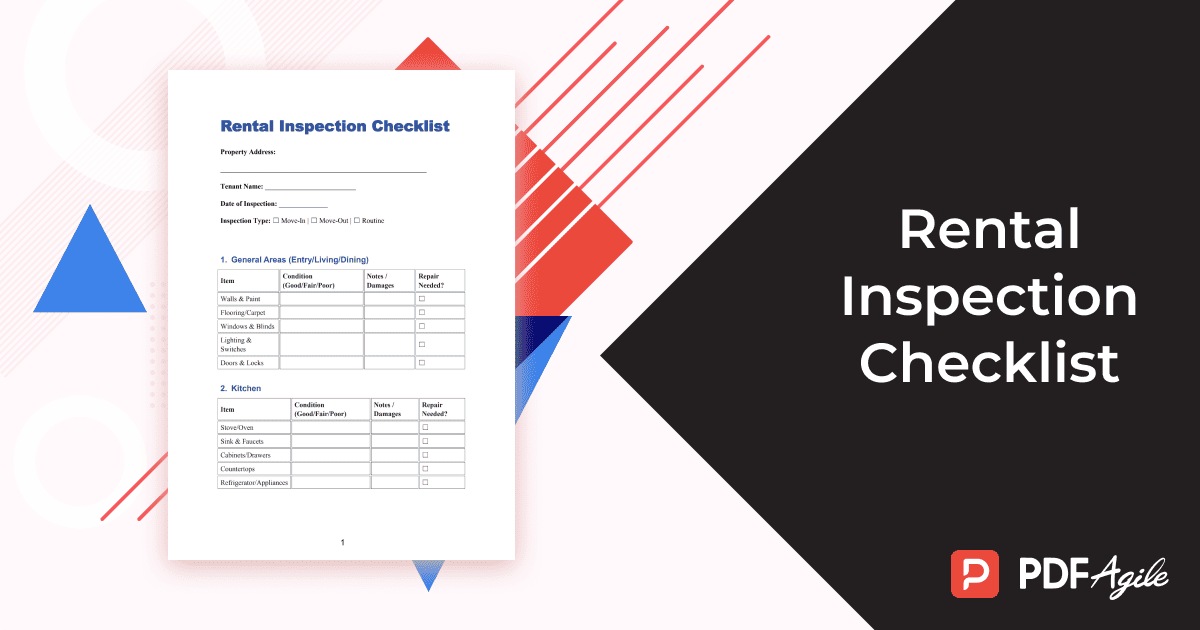
Creating a professional checklist doesn't have to be difficult. Using a tool like PDF Agile allows you to create an editable PDF that can be signed digitally.
- Step 1: Click “Use Template” on the right side of this page and you will get an editable and printable rental inspection checklist template to get started instantly without hassle.
- Step 2: Open this template in PDF Agile, you can choose to edit it directly or convert it to Word format to finish the rest of the rental walkthrough checklist.
- Step 3: Use the "Edit" feature to add checkboxes, signature lines, and date fields.
- Step 4: You can even add "Image Placeholders" so you can attach photos of specific damages directly into the PDF if applicable.
- Step 5: Save the result file or print it.
5. What to Do After Completing the Apartment Inspection Checklist?
Once the walkthrough is done, don't just file the paper away. Follow these steps:
- Sign and Date: Both the landlord and tenant must sign the document to make it valid.
- Attach Photos: Take high-quality photos of any noted issues and attach them to the digital PDF file.
- Distribute Copies: Both parties should receive a finalized copy immediately.
- Schedule Repairs: If the inspection revealed urgent maintenance issues (like a leaky pipe), the landlord should provide a timeline for repairs.
FAQs About Rental Walkthrough Checklists
1. What is the biggest red flag in a home inspection?
The biggest red flags are usually structural issues, water damage/mold, and faulty wiring. These are not just expensive to fix; they are safety hazards that could make the property uninhabitable.
2. Why do landlords perform rental property inspections?
Landlords perform inspections to ensure the lease agreement is being followed, to identify maintenance needs before they become expensive repairs, and to ensure the property remains safe and sanitary.
3. What do tenants need to know about apartment rental inspections?
Tenants should know they have a right to be present during the inspection. They should also be aware that landlords must usually provide 24 to 48 hours' notice before entering, depending on local laws.
4. What if a tenant was not allowed access for inspection?
If a landlord is denied access despite providing proper legal notice, it is often considered a breach of the lease agreement. Landlords should document the refusal and may need to issue a formal "Notice to Enter" or seek legal advice if the tenant continues to block access.