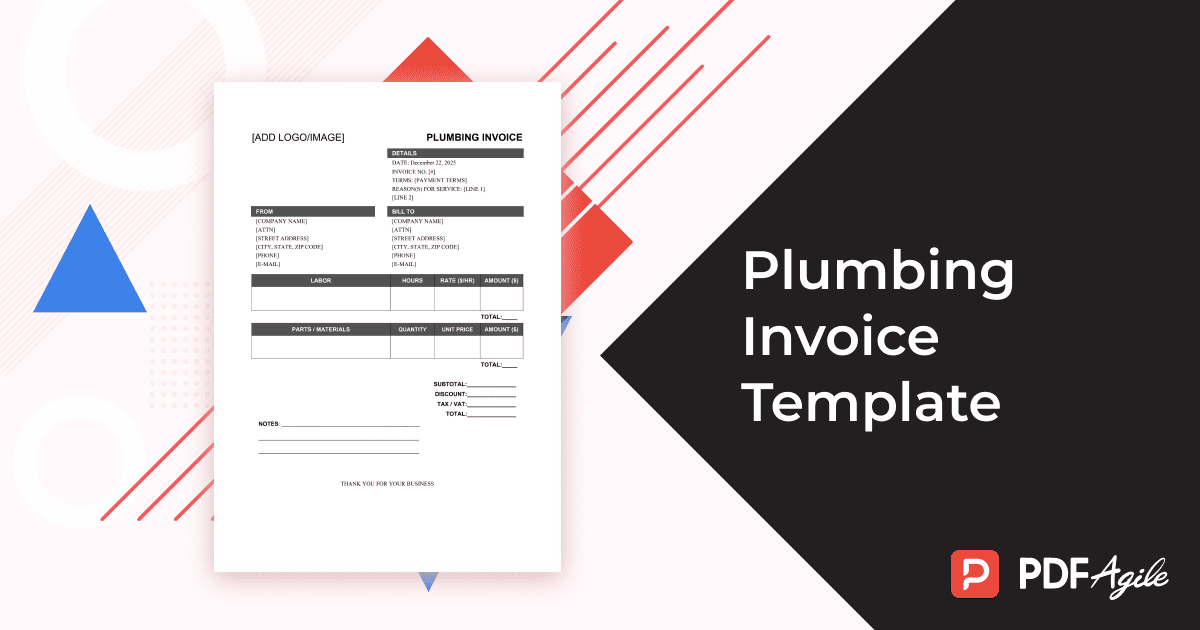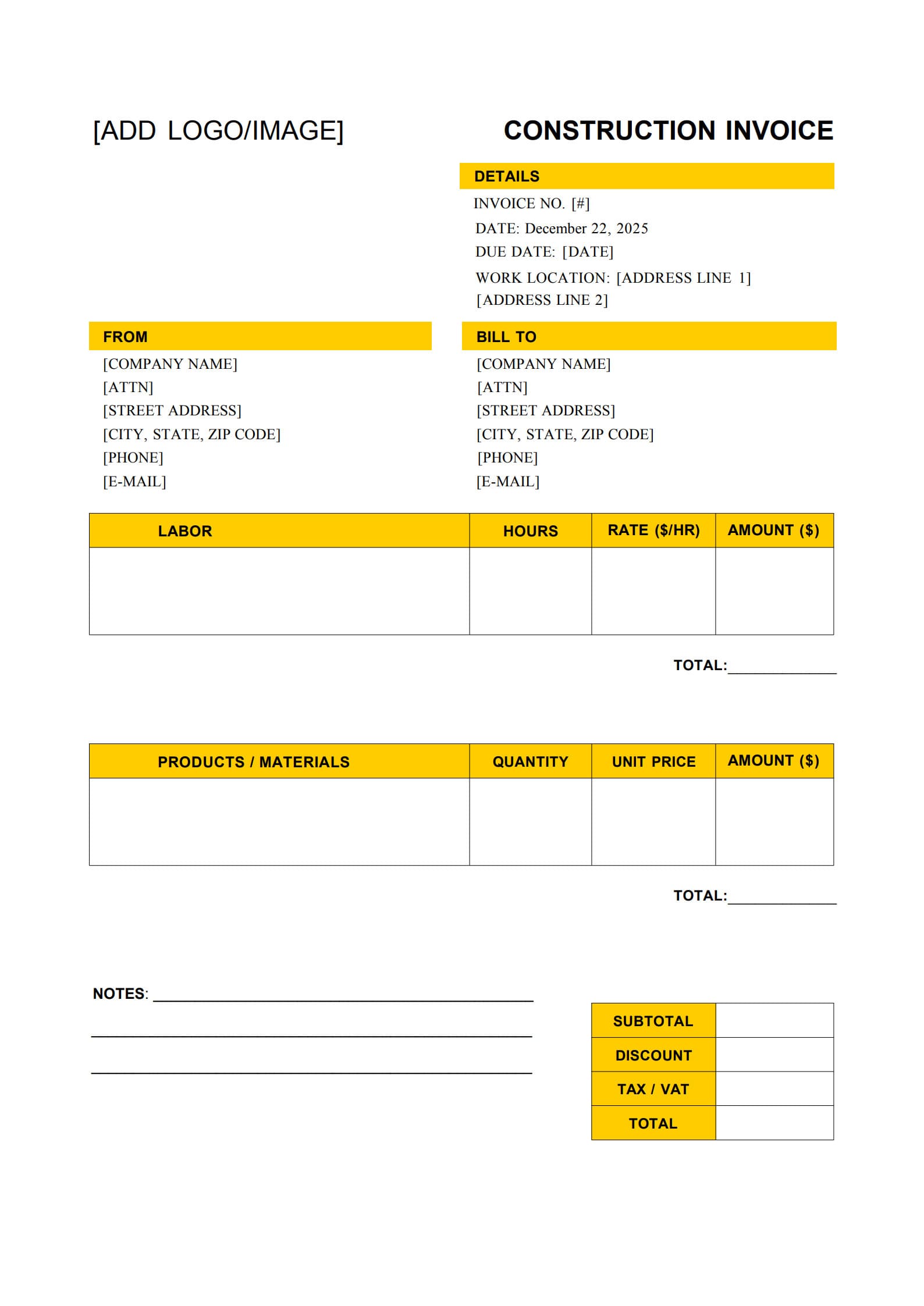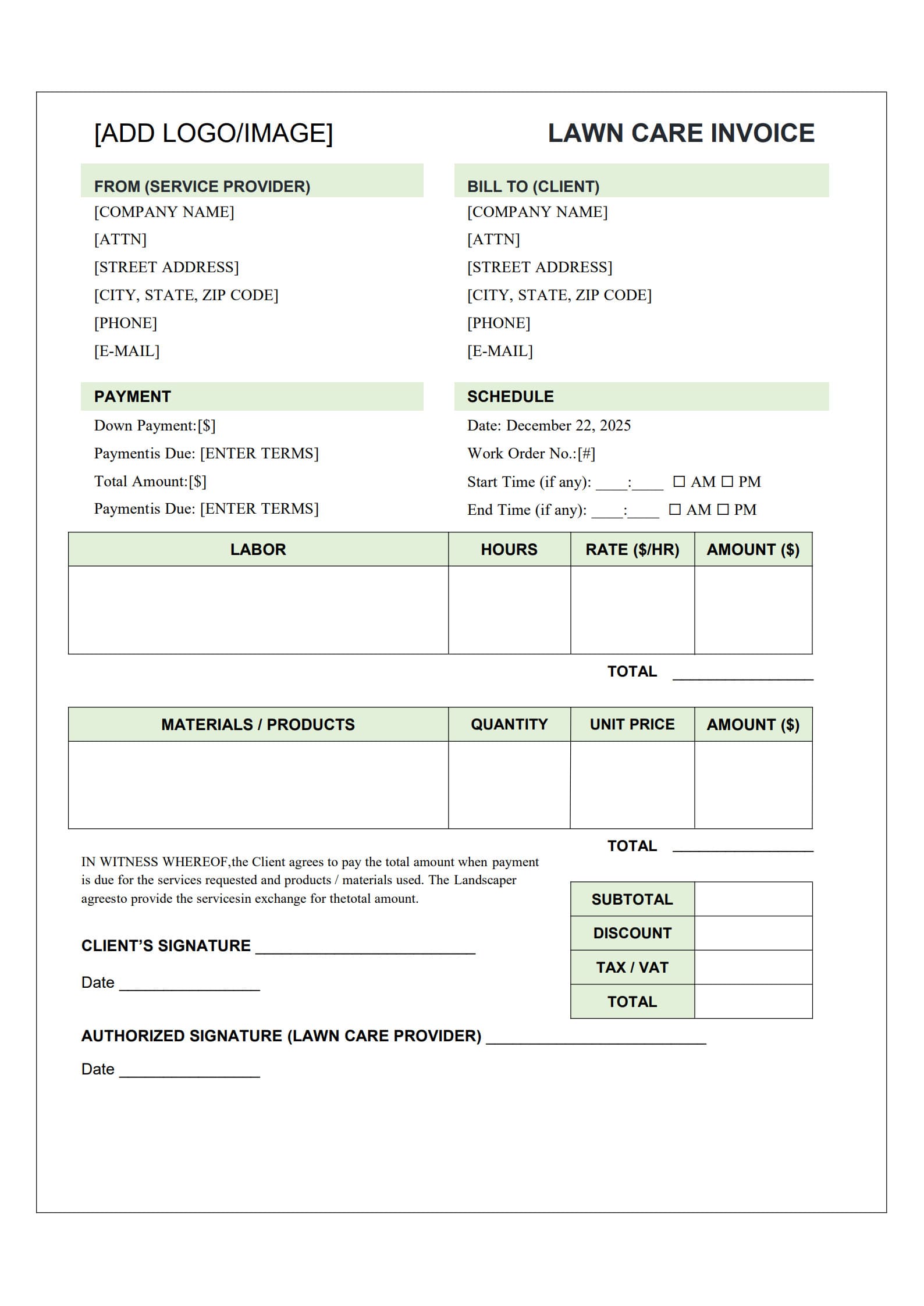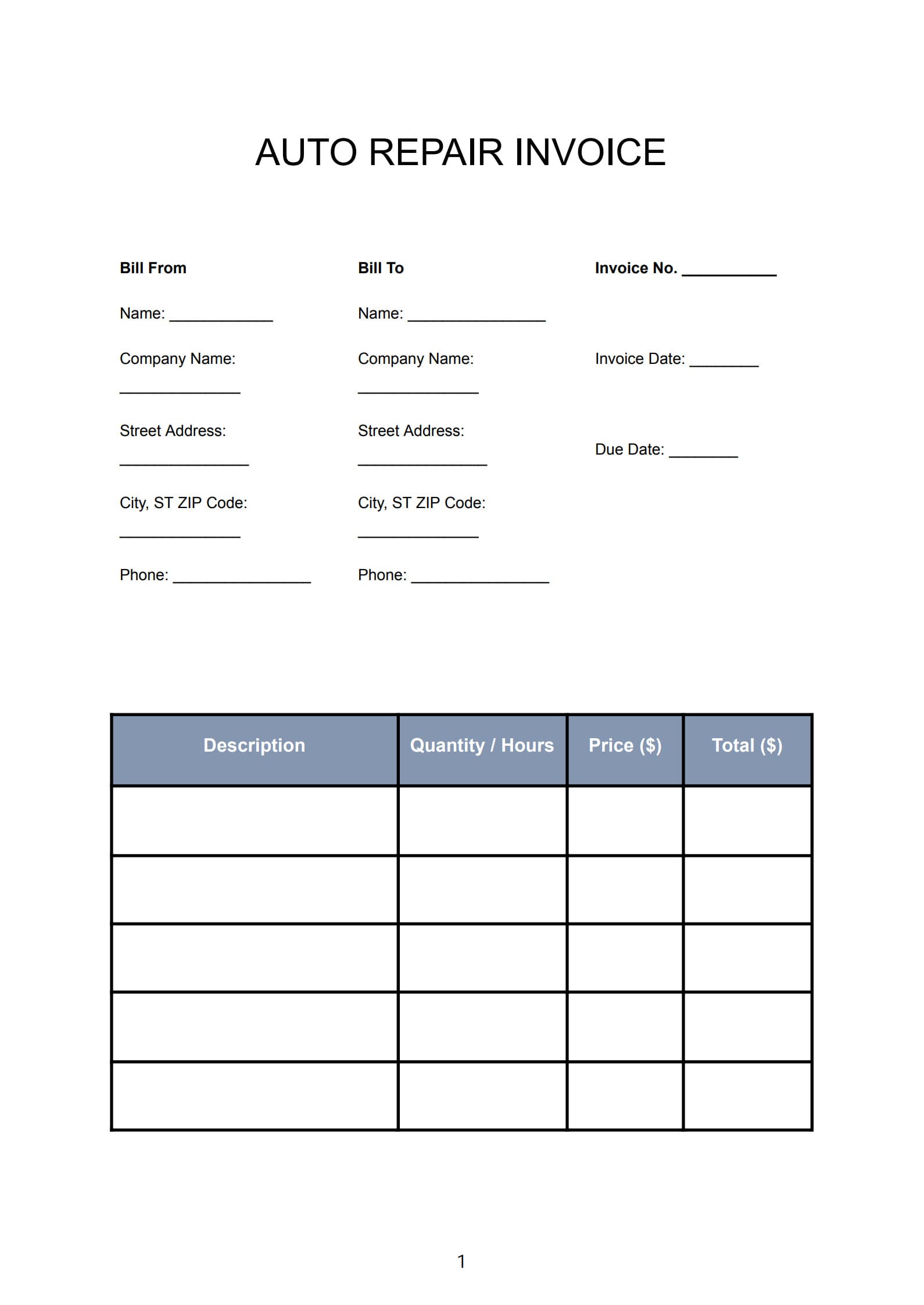



For plumbers and plumbing service businesses, issuing clear, detailed invoices is crucial for maintaining professionalism, ensuring timely payments, and keeping accurate service records. A Plumbing Invoice Template simplifies this process by allowing you to itemize labor, materials, and job details efficiently.
This guide explains what a plumbing invoice is, why it matters, what information should be included, and how to create and customize one using free downloadable templates from PDF Agile.
1. What Is a Plumbing Invoice and Why Does It Matters?
A plumbing invoice is a professional billing document issued by a plumber or plumbing company to a client after completing a service. It outlines what work was performed, materials used, time spent, payment terms, and total cost due.
Whether you’re fixing leaks, installing new fixtures, or performing emergency repairs, an accurate plumbing invoice helps:
- Maintain clear communication between you and your client about costs.
- Serve as a legal record for proof of service and payment.
- Simplify tax filing and expense tracking for your business.
- Reinforce a professional brand image and trustworthiness.
Ultimately, using a standardized invoice helps ensure both transparency and payment consistency across all plumbing jobs.
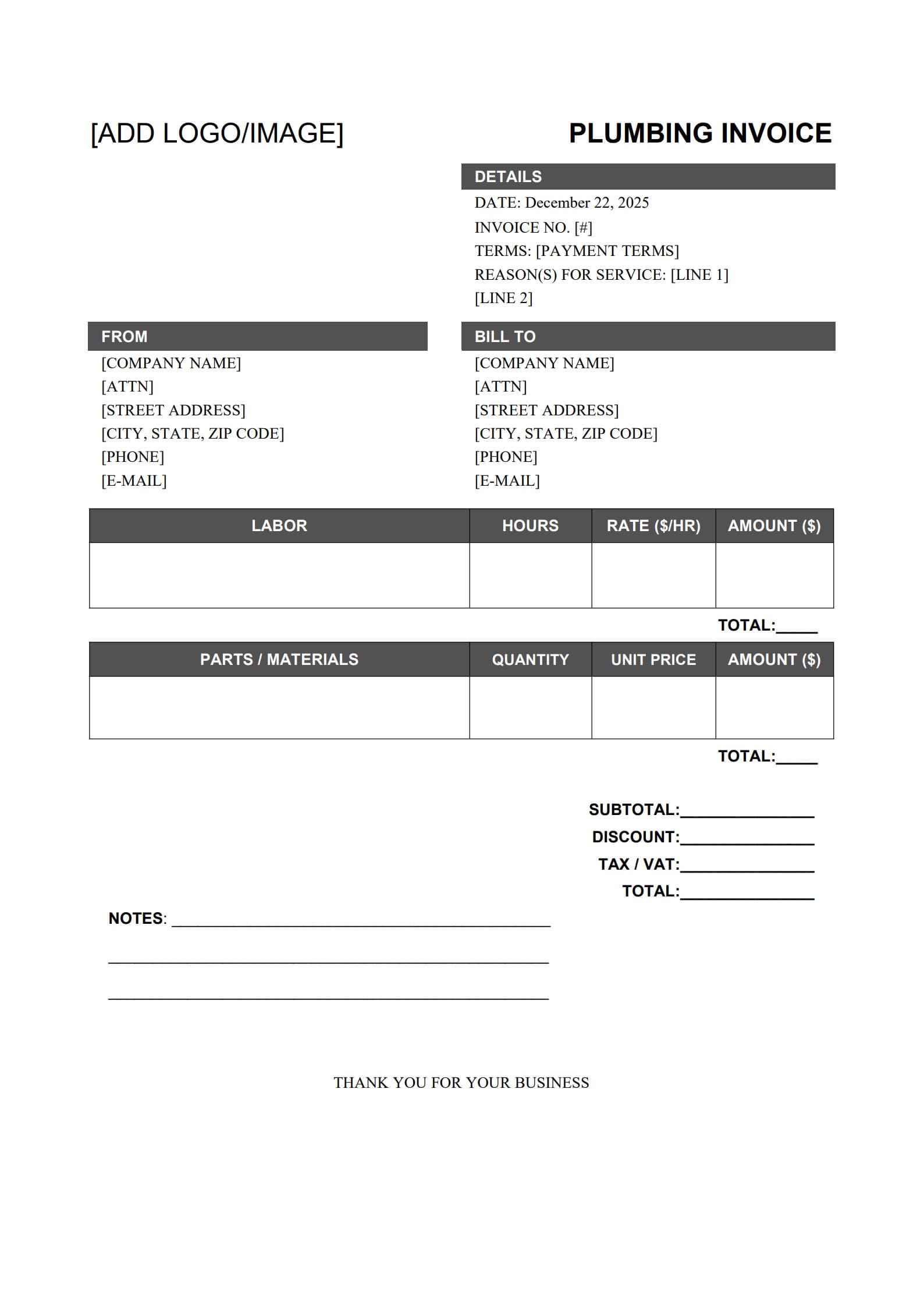
2. What Information Is Required in a Plumbing Service Invoice?
To make your plumbing invoice effective and compliant, include the following essential details:
- Business Details – Company name, logo, address, phone, email, and license number (if applicable).
- Client Details – Customer name, service address, and contact information.
- Invoice Reference – Unique invoice number, issue date, and payment due date.
- Service Description – Specific services performed (e.g., pipe installation, drain cleaning, water heater repair).
- Labor Charges – Either an hourly rate multiplied by the number of hours worked or a flat service fee.
- Material Costs – Detailed list of purchased parts, fixtures, or supplies used in the job.
- Subtotal, Taxes, and Total Due – Clearly show price breakdowns to prevent confusion.
- Payment Terms – State accepted methods (bank transfer, credit card, cash) and time frames (e.g., “Net 15 Days”).
- Notes and Warranties – Add any warranty coverage, safety instructions, or maintenance recommendations.
- Signatures – Optional fields for plumber and client signatures to confirm acknowledgment.
Including all these sections ensures your invoices are complete, transparent, and fully ready for professional use.
3. Steps to Customize a Plumbing Invoice with Free Templates
Creating a customized plumbing invoice is quick and easy with PDF Agile. Follow these steps to design your own:
Step 1: Download a Ready-Made Plumbing Bill Template
Go to PDF Agile, select Plumbing Invoice Template – Free Download, and open it .
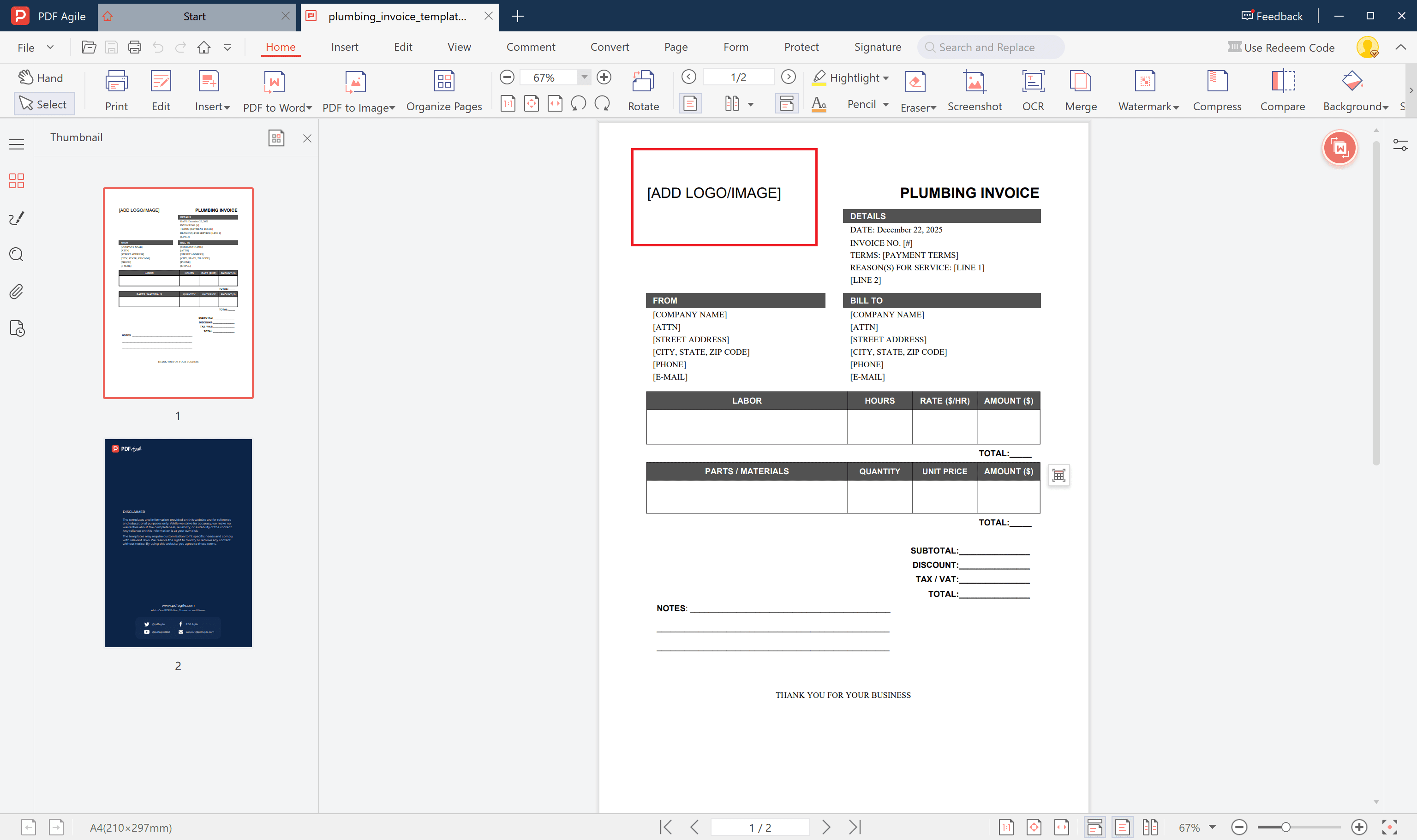
Step 2: Add Your Business Details
Insert your company logo, contact information, and license number. Consistent branding boosts professionalism and client trust.
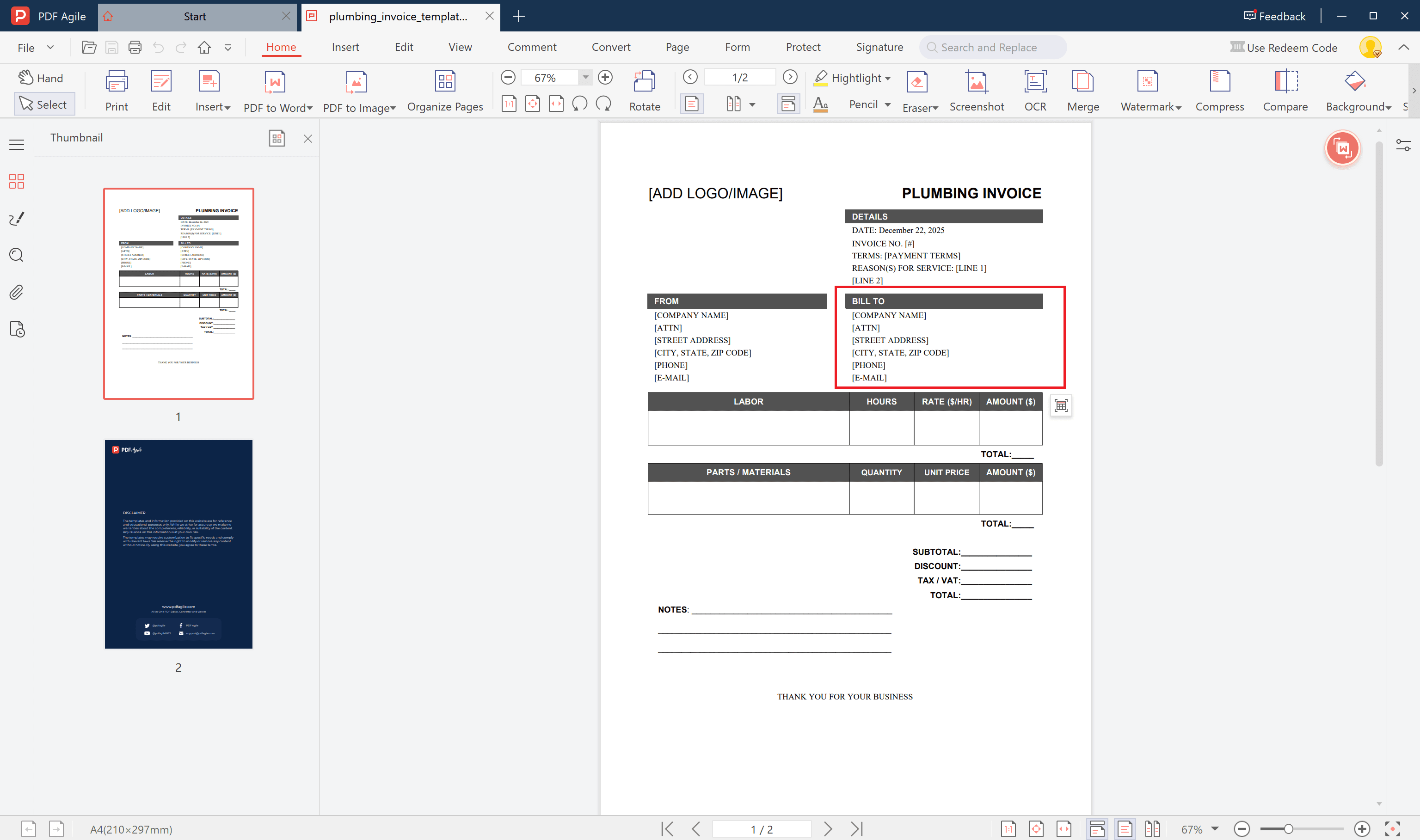
Step 3: Enter Client and Job Information
Add customer details, job address, and service descriptions. Include any relevant reference numbers or work orders.
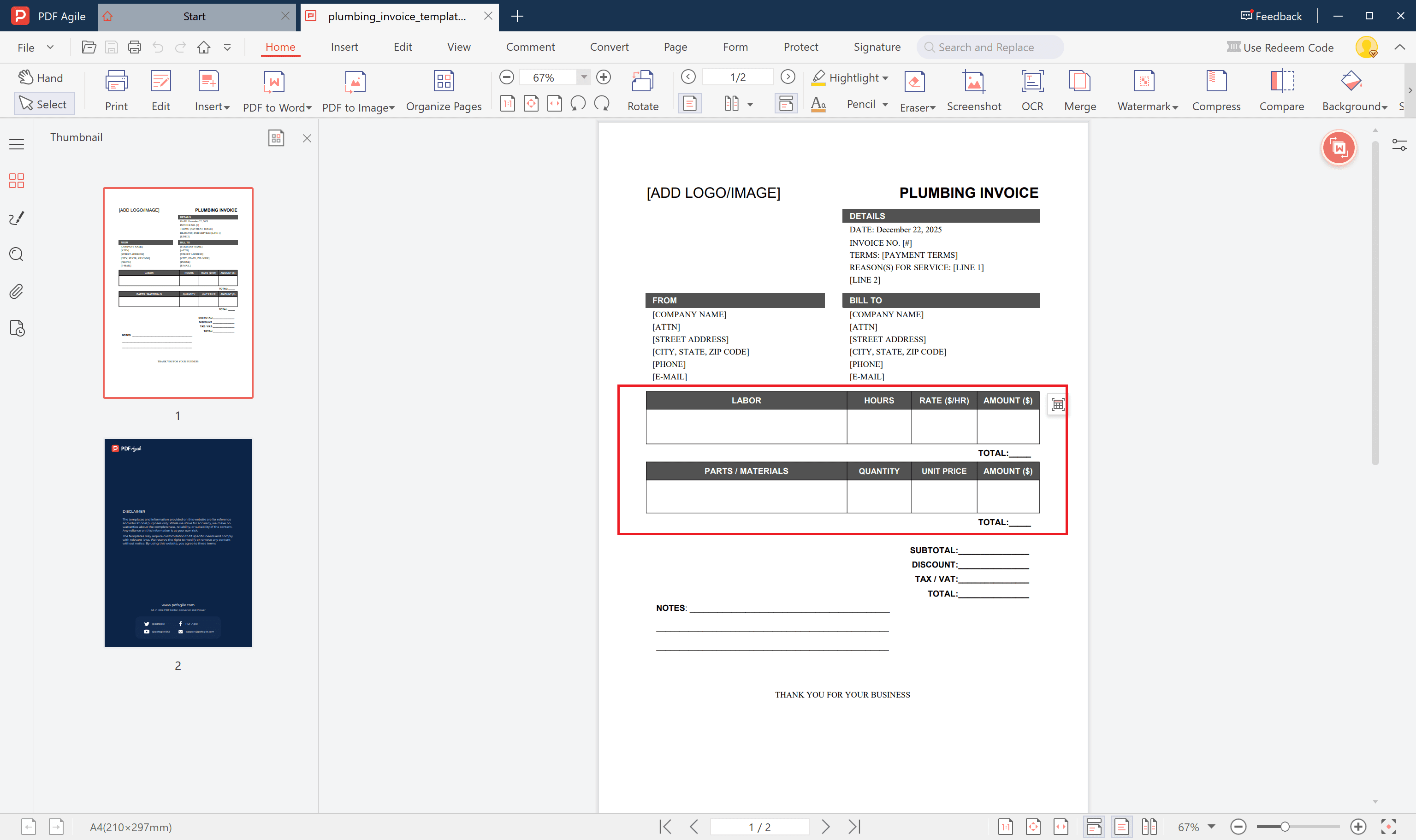
Step 4: Itemize Labor and Materials
List each service and material separately with precise quantities, rates, or prices
Step 5: Save and Send
By following these steps, you maintain professional, consistent invoices that work for one-off jobs or ongoing plumbing contracts.
4. Quick Tips: Avoid Mistakes in Plumbing Billing
Accurate billing helps prevent disputes and payment delays. Here are common pitfalls to avoid:
- Not itemizing materials and labor separately. Clients want a clear breakdown of where their money goes.
- Using inconsistent invoice numbers or dates. Maintain a sequence for easier record-keeping.
- Forgetting local taxes or service fees. Always check regional requirements before sending invoices.
- Failing to document warranty details. Plumbing jobs often include parts warranties; note them clearly.
- Delaying invoices after job completion. The sooner you send it, the faster you get paid.
A little attention to detail helps enhance your credibility and ensures smooth client interactions.
5. FAQs about Plumbing Invoice Templates
5.1 How to calculate hourly rates on a plumbing invoice?
How to Calculate Hourly Charges
To calculate your hourly charges, simply multiply your hourly rate by the total number of hours worked.
Example:
If your rate is $60 per hour and the job took 3.5 hours, then the labor portion is calculated as follows:
$60×3.5=$210
$60×3.5=$210
Always round hours fairly and record your work time clearly to maintain transparency and professionalism.
5.2 Can plumbing invoices include material costs and labor separately?
Yes. In fact, separating labor from materials is best practice. It allows clients to understand individual costs and simplifies inventory and tax planning. Each section should show quantity, unit price, and subtotal.
5.3 How to manage recurring plumbing invoices for maintenance plans?
For clients on ongoing or annual maintenance contracts, set up recurring invoices using PDF Agile’s editable templates. Update service dates and small details while maintaining consistent pricing. This improves workflow efficiency and ensures timely billing cycles.
Conclusion
A professional Plumbing Bill Template helps streamline your billing, clarify charges for clients, and maintain accurate business documentation.
By using PDF Agile, you can easily download, edit, sign, and send invoices in minutes — saving time while keeping every project organized and payment-ready.