




In the modern economic landscape of 2025, trust is often backed by documentation. Whether an individual is applying for a mortgage, renting a high-end apartment, or seeking a visa for international travel, their professional standing and financial stability must be verified by a reliable third party. This is where the employment verification letter becomes an essential tool. It serves as a formal "financial passport," providing the necessary proof that an individual is gainfully employed and possesses the income required to meet their future obligations.
An employment verification letter is one of the most frequently requested documents in the corporate world, yet it is often treated as a last-minute administrative hurdle. For an employer, providing a precise and professional letter is a matter of supporting their staff’s personal milestones. For the employee, this letter is the key to unlocking significant life events. This comprehensive guide will explore the "what, why, and how" of the employment verification letter, ensuring that both employers and employees can navigate the process with accuracy and confidence.
Defining the Employment Verification Letter
At its most fundamental level, an employment verification letter is a formal document provided by an employer that confirms an individual’s current or past employment status with a specific company. While it may seem like a simple statement of facts, its purpose is to provide a layer of security for a third party—such as a bank, a landlord, or a government agency. These entities need to know that the applicant has a stable source of income and a reliable professional history before they approve a high-stakes application.
The employment verification letter typically acts as a bridge of credibility. Because it is written and signed by an authorized representative of the company (usually someone in Human Resources or a direct supervisor), it carries more weight than an employee's self-reported income or a simple pay stub. It provides a holistic view of the person's status, often including their job title, dates of employment, and, in many cases, their salary or bonus structure. By providing an employment verification letter, the company is essentially vouching for the factual accuracy of the employee's professional standing in a format that third-party underwriters can trust.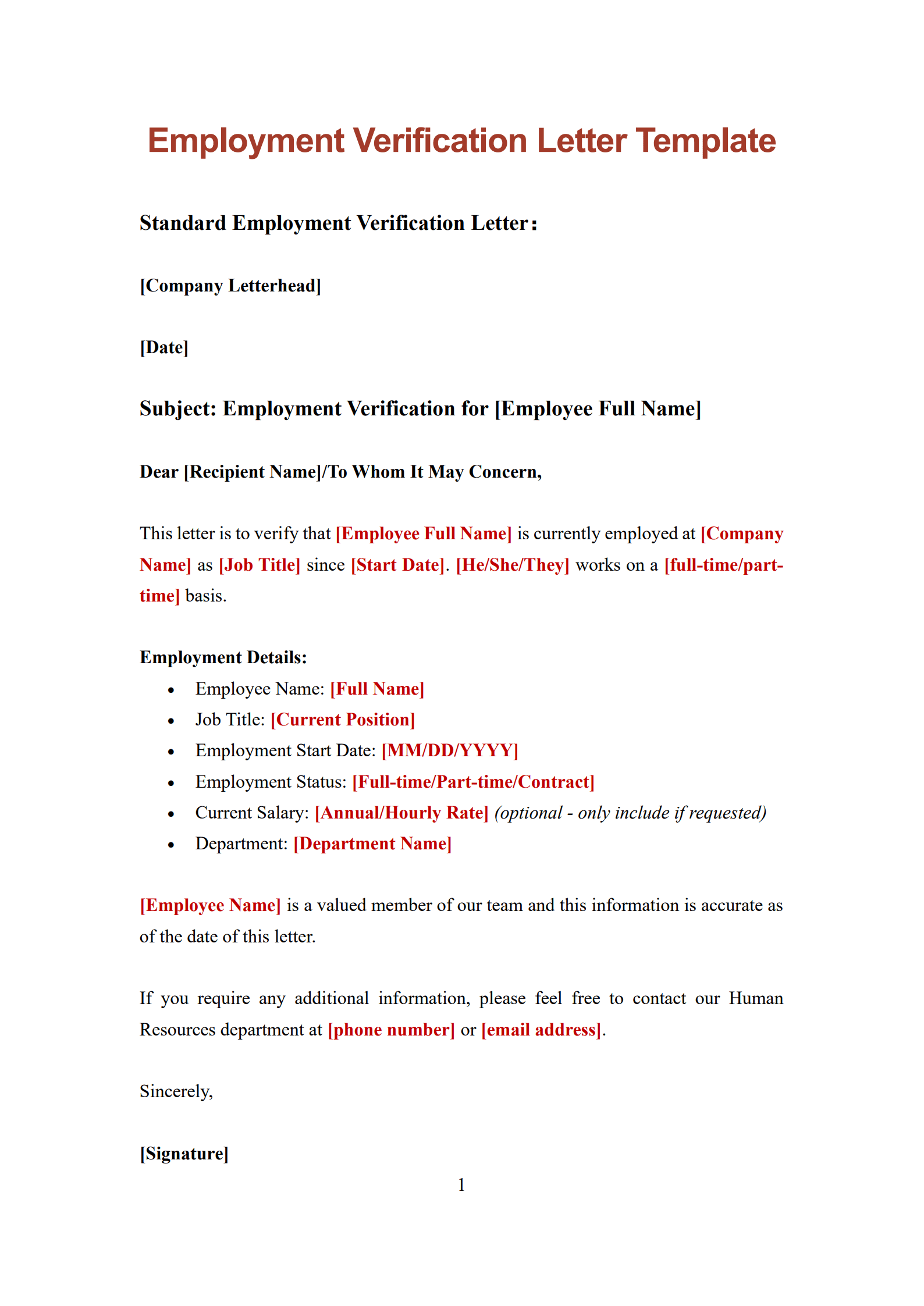
Benefits of an Employment Verification Letter Template
Writing an employment verification letter from scratch for every request is not only time-consuming but also increases the risk of legal or administrative errors. This is why a standardized employment verification letter template is a vital resource for any organization. A template ensures that the company maintains a consistent professional image while protecting both the employer and the employee from the accidental disclosure of private information that could lead to liability.
A well-designed employment verification letter template provides several key advantages. First, it offers legal protection by ensuring that only necessary, factual information is shared, preventing the employer from inadvertently commenting on an employee's performance. Second, it increases efficiency; HR departments can process requests in minutes rather than hours by simply filling in the specific data points within a pre-approved employment verification letter framework. Third, it provides clarity for the recipient, as lenders and agencies prefer a standard format that allows them to quickly find the information they need. Finally, it ensures consistency across the organization, making sure every employee receives the same high level of professional documentation.
Parts of an Employment Verification Letter
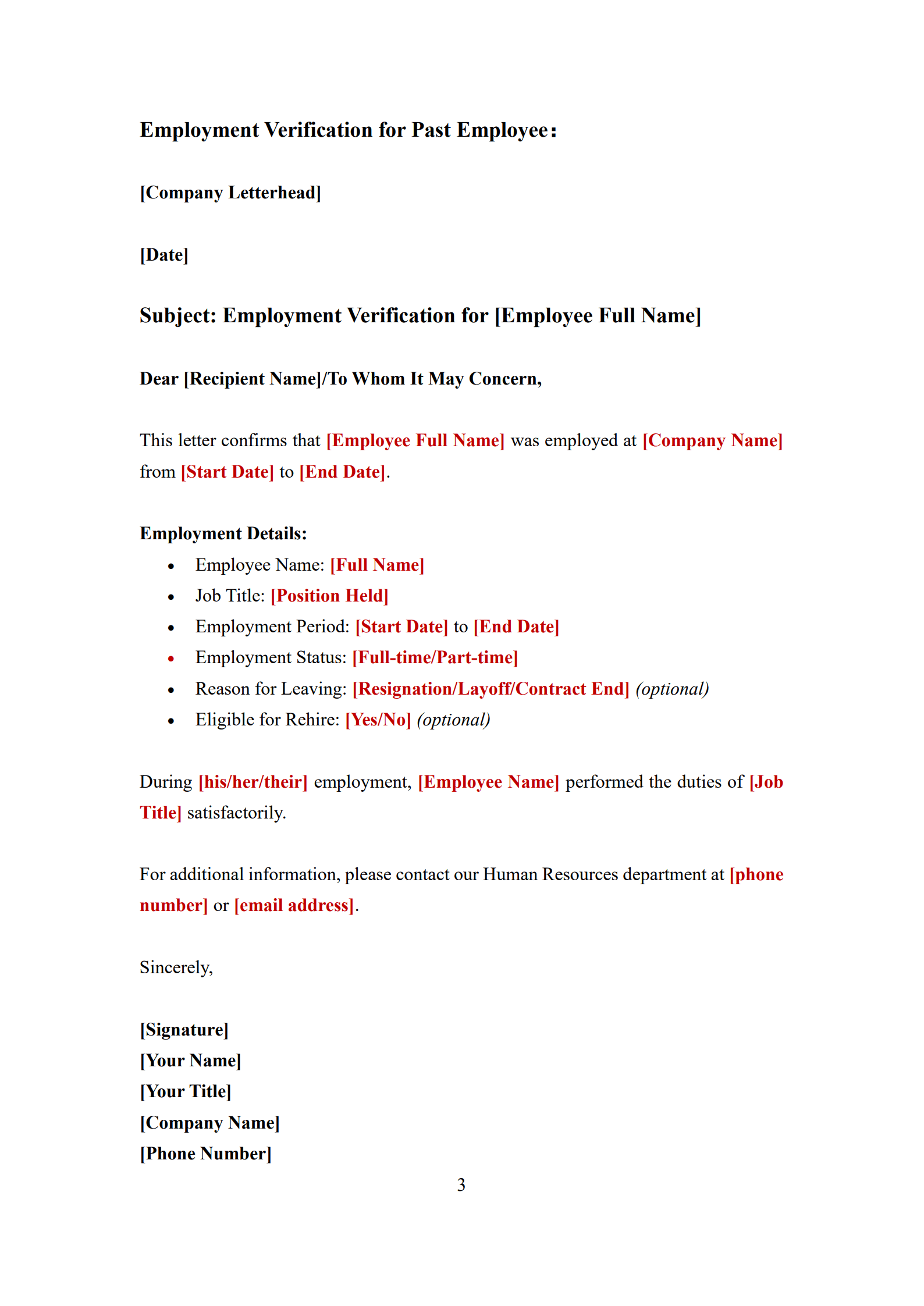
To be effective and accepted by financial or governmental institutions, an employment verification letter must follow a specific professional structure. If the letter is disorganized or missing key data, it may be rejected, causing significant delays for the employee’s personal plans. Our template is built around five critical pillars of success:
1. The Header of the Employment Verification Letter
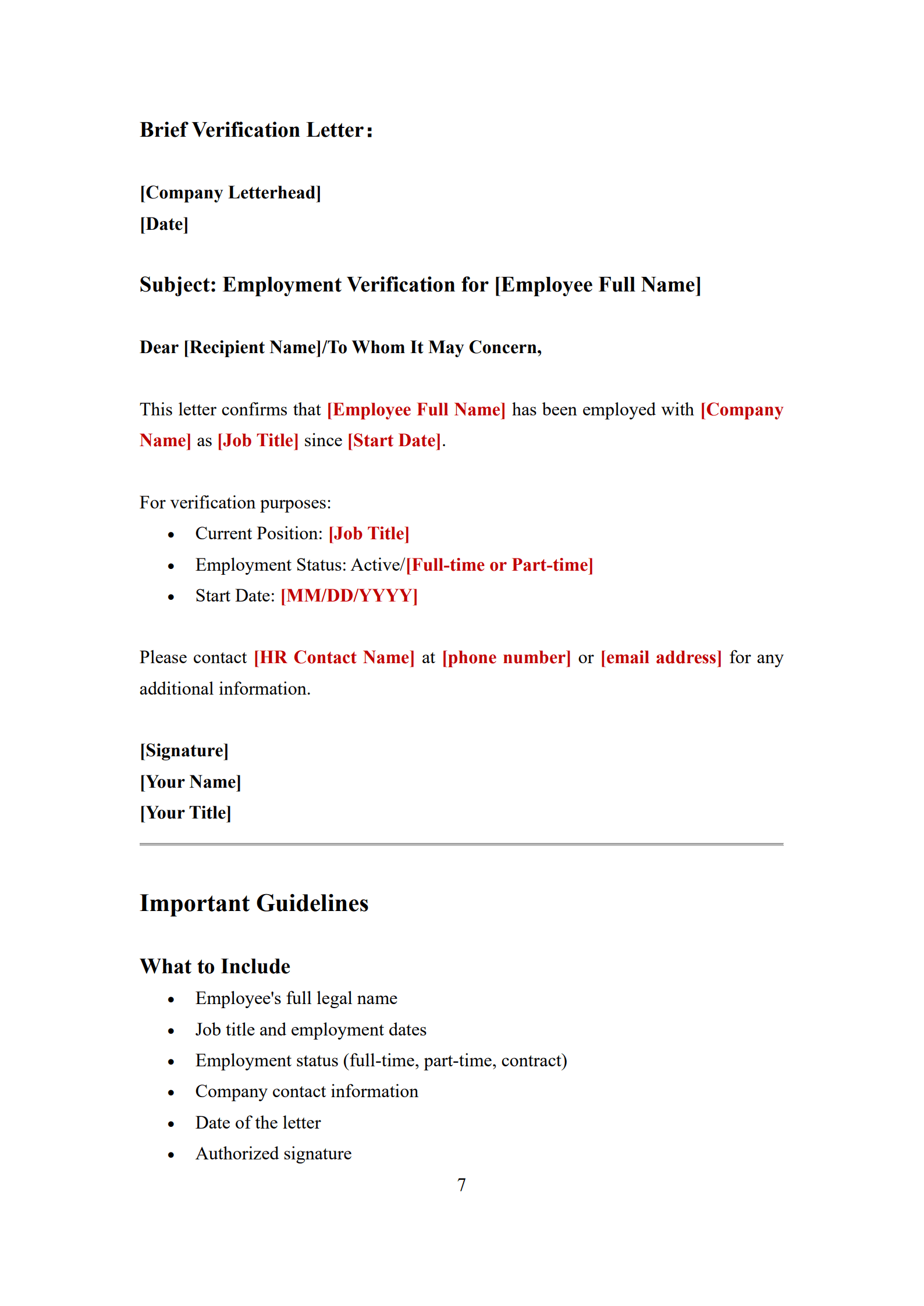
The letter must be printed on official company letterhead. This is non-negotiable for most lenders. The heading of the employment verification letter should include the company’s name, address, and contact information, as well as the date the letter was issued to ensure the information is current.
2. Recipient Data in the Employment Verification Letter
Whenever possible, address the employment verification letter to a specific person or department, such as "To the Mortgage Underwriting Department." If a specific name is not provided, a formal "To Whom It May Concern" is acceptable, but direct addressing is always preferred to show that the letter was generated specifically for the current request.
3. Employment Status in the Employment Verification Letter
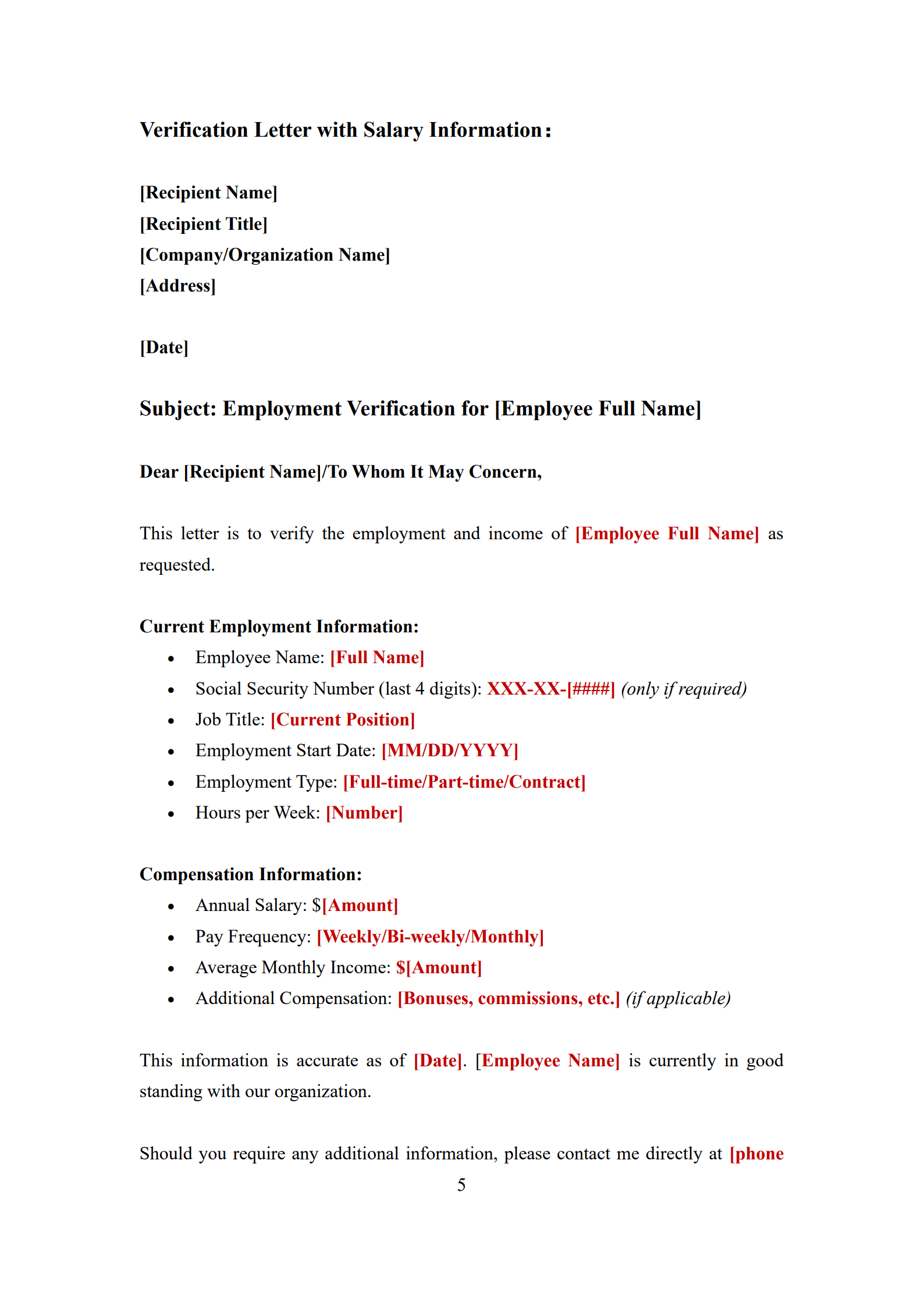
This is the core factual data. The employment verification letter must state the employee's full name, their current job title, and their start date. If the letter is for a former employee, it must also include the date of their departure. It should clearly state whether the employee is full-time, part-time, or a contractor to help the recipient assess the stability of the income.
4. Compensation in the Employment Verification Letter
Many requests, particularly for loans, require proof of income. This section of the employment verification letter should list the employee's gross annual salary. Depending on the request, you may also need to include information about bonuses, commissions, or the frequency of pay to provide a complete financial picture.
5. Signature on the Employment Verification Letter
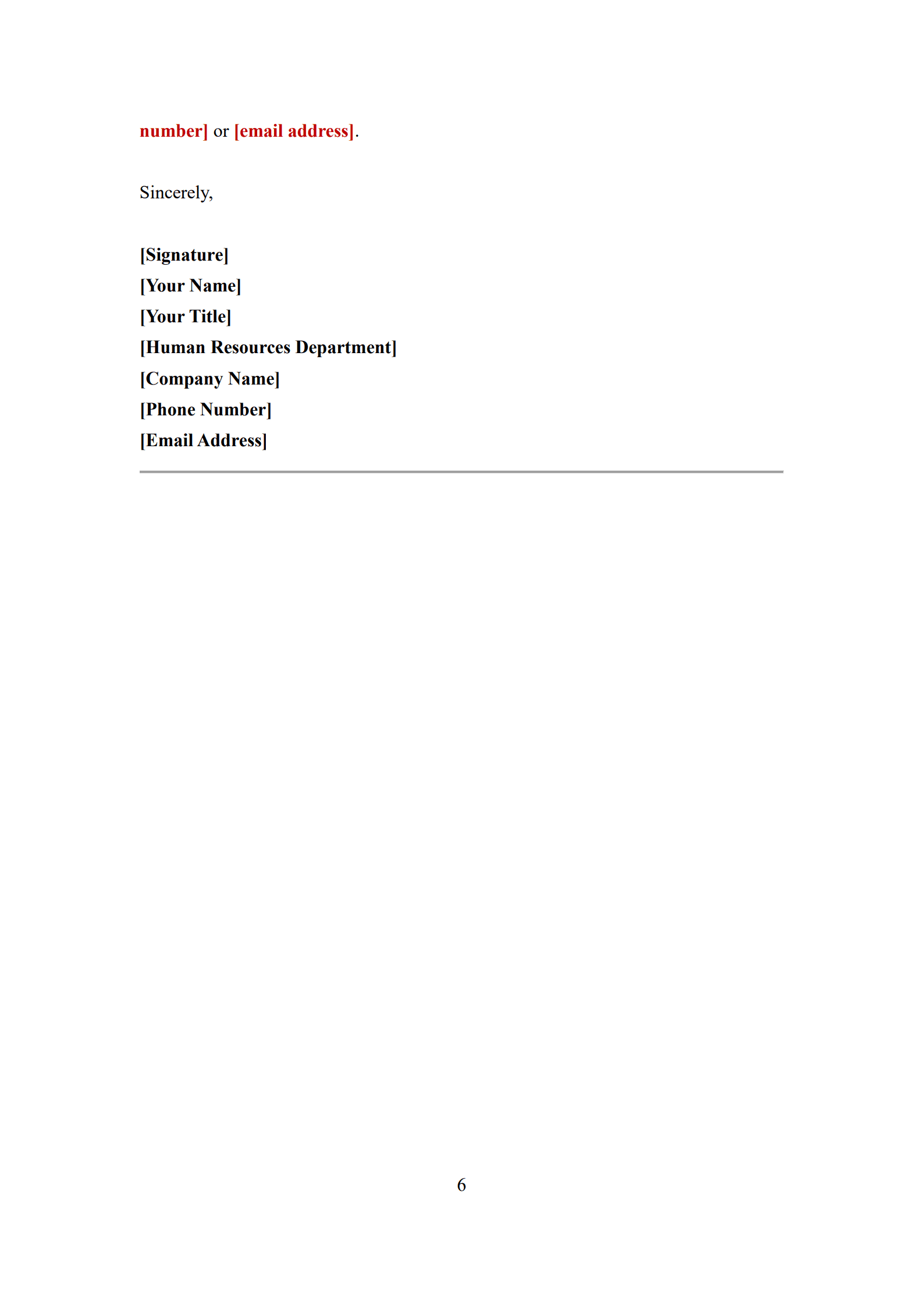
For an employment verification letter to be valid, it must be signed by an authorized representative, such as an HR Manager or a Department Head. The signature should be accompanied by the person’s printed name and title, along with their direct contact information in case the recipient needs to verify the letter's authenticity via a follow-up call.
Tips for Your Employee Employment Verification Letter
While the facts are straightforward, the way you present them in an employment verification letter matters. Professionalism in these documents reflects on the company’s internal organization. Here are several expert strategies to ensure your documentation meets the highest professional standards:
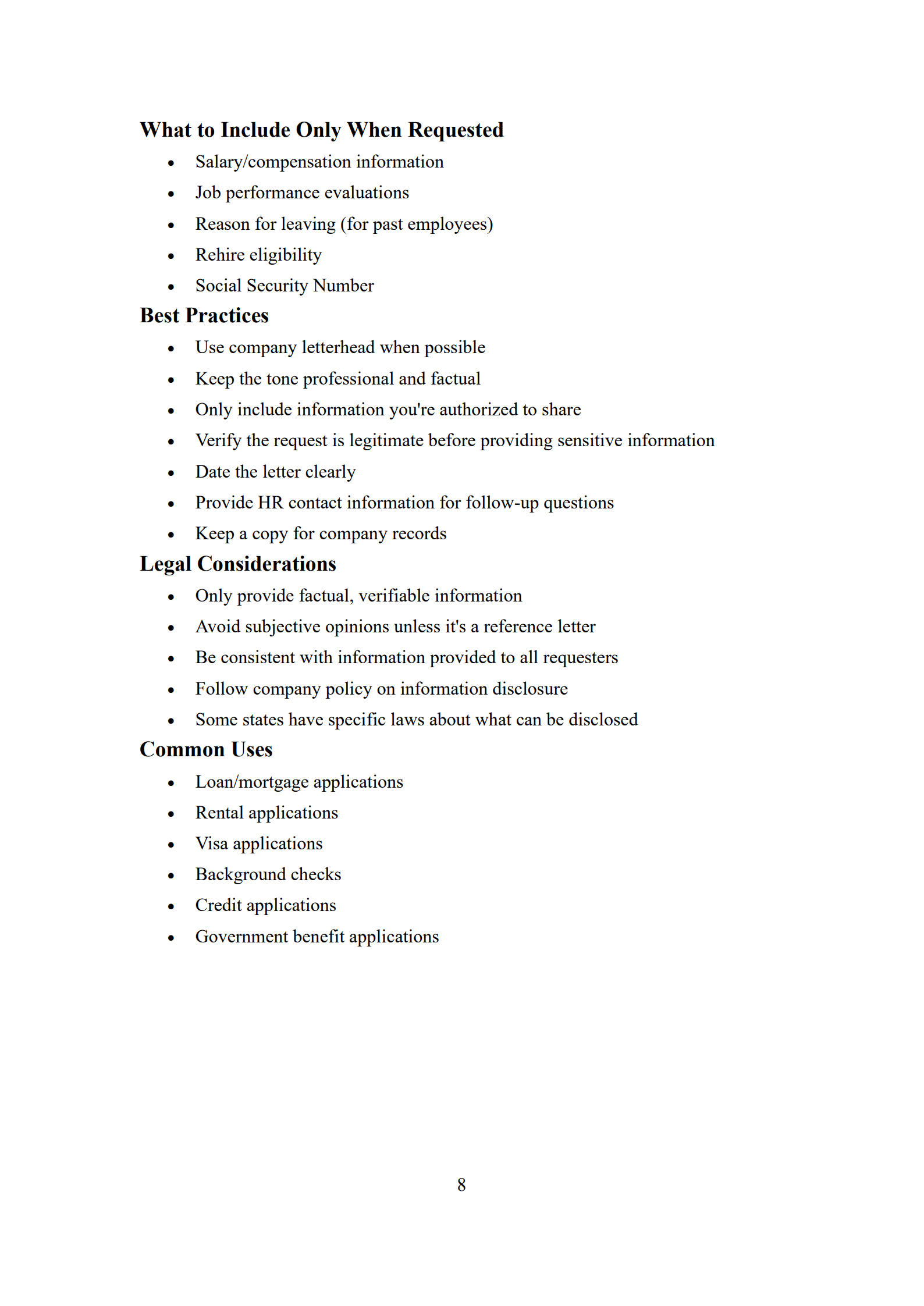
- Stick to the Facts: An employment verification letter is not a reference letter. Do not include opinions on the employee's work ethic, personality, or chances of promotion. Keep the content strictly limited to the data requested by the third party.
- Ensure Privacy Compliance: Before sending an employment verification letter that includes salary information, ensure you have written or digital consent from the employee. This protects the company under various privacy and data protection laws regarding personal financial information.
- Keep it Concise: The recipient of an employment verification letter is looking for specific data points, not a narrative. Avoid unnecessary fluff or "corporate speak." A one-page document is the industry standard for these types of verifications.
- Double-Check All Numbers: A typo in a salary figure or a start date can cause an employee's loan application to be denied or flagged for fraud. Accuracy is the most important trait of a high-quality employment verification letter.
- Use a Professional Tone: Maintain a neutral, objective tone throughout the employment verification letter. This reinforces the credibility of the document and the organization providing it.
Use Our Job Verification Letter Template
Whether you are an HR professional looking to streamline your workflow or an employee needing to provide proof of income to a landlord, there is no need to struggle with formatting. We have developed a comprehensive, legally-sound, and professionally formatted template that is ready for immediate use in 2025.
Click "Use template" on the page now to generate a polished employment verification letter that satisfies the requirements of any bank, landlord, or agency with ease.
FAQs about Employment Verification Letter
Q: Who is authorized to sign an employment verification letter?
A: Usually, a member of the Human Resources department or the employee's direct manager signs the employment verification letter. In smaller companies, the owner or CEO may handle these requests to ensure the data is authoritative.
Q: Can I refuse to provide an employment verification letter for a former employee?
A: While laws vary, most companies provide a basic employment verification letter for former staff as a matter of policy. It is generally recommended to at least confirm the dates of employment to help former staff move on to new opportunities without unnecessary friction.
Q: Should I include the reason for termination in an employment verification letter?
A: No. A standard employment verification letter should never include the reason an employee left. Providing this information can create significant legal liability and is generally not required by lenders or landlords.
Q: Is a digital signature acceptable on an employment verification letter?
A: In 2025, yes. Most modern lenders and agencies accept a digital signature on an employment verification letter, provided it is sent from an official company email address or a verified document-signing platform like DocuSign.
Q: What if the employee is self-employed and needs an employment verification letter?
A: If someone is self-employed, an employment verification letter is typically replaced by an "Attestation Letter" from their CPA. However, they can technically write their own letter, though it carries much less weight with lenders unless backed by tax returns.
Final Thoughts
The employment verification letter is a small document that carries immense weight. It is the final piece of the puzzle for many of life’s biggest transitions, from buying a home to securing a new apartment. For the employer, it is a simple but powerful way to support the financial and personal well-being of their team members. For the employee, it is the verification that proves their hard work is a stable foundation for their future.
By utilizing our professional guide and the accompanying employment verification letter template, you ensure that this process is handled with the highest level of integrity and efficiency. You can avoid the common pitfalls of administrative errors and privacy concerns by sticking to a proven, structured format. Download the template, fill in the necessary facts, and finalize your employment verification letter today—providing the clarity and trust needed to move forward with confidence.