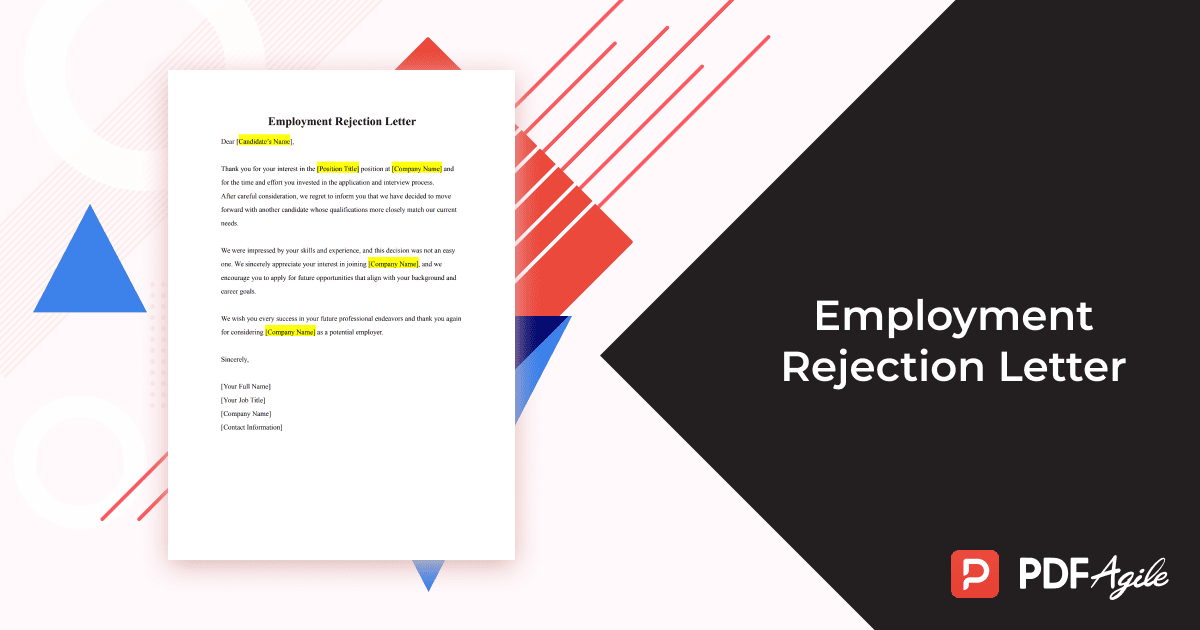



An employment rejection letter is an essential part of the hiring process. It enables employers to maintain professionalism and courtesy when informing applicants that they were not selected for a role. Sending rejection letters promptly upholds your organization’s reputation, fosters goodwill, and keeps positive relationships with potential future candidates.
Using PDF Agile’s editable employment rejection letter template helps you streamline communication, maintain consistency, and save time in the hiring process.
1. What is an Employment Rejection Letter?
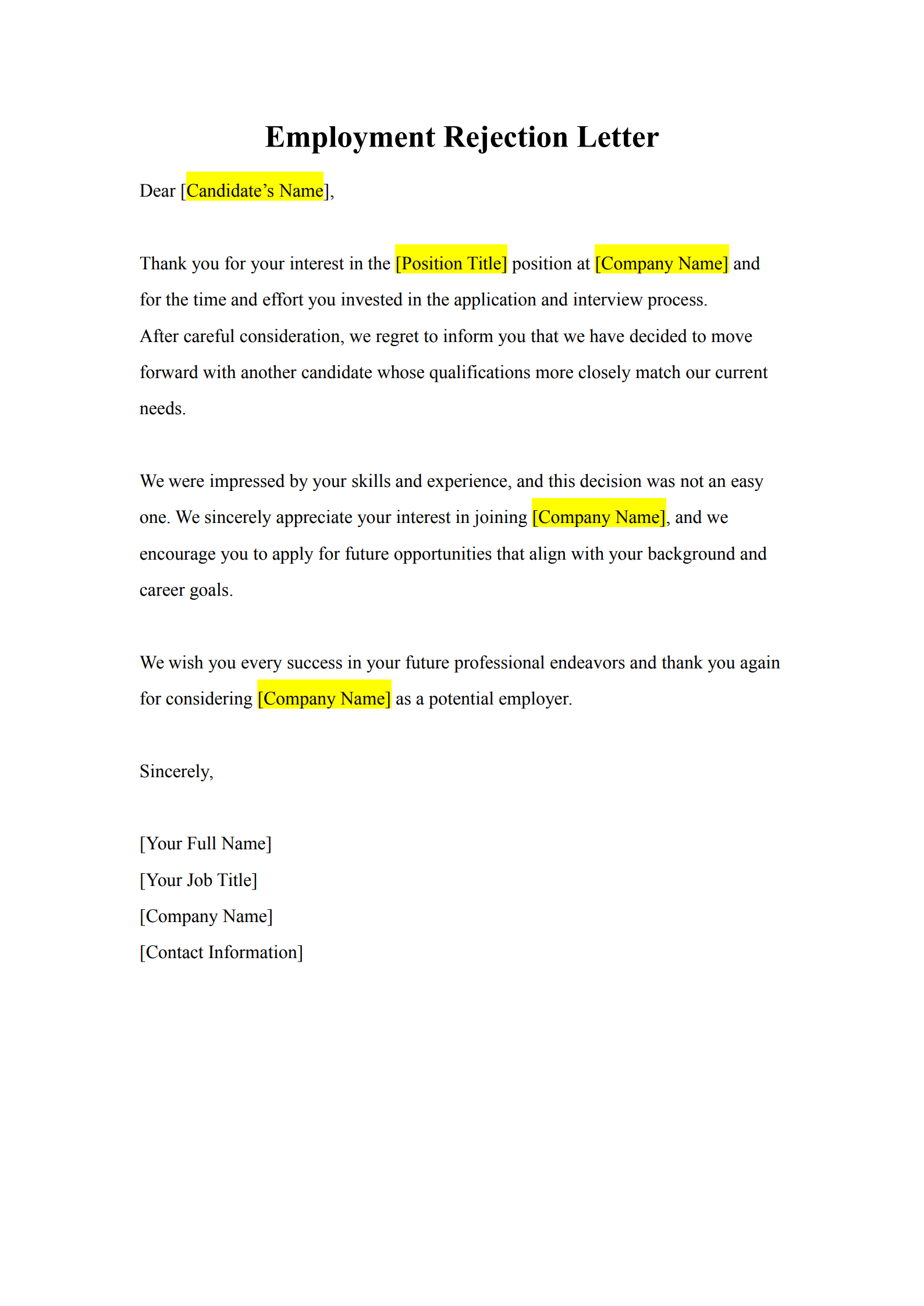
An employment rejection letter formally informs a job applicant that they have not been chosen for the position they applied for. It acknowledges the candidate’s effort and interest, while delivering the decision with tact and professionalism.
Sending a properly worded letter demonstrates courtesy and shows that your organization values every applicant’s time and contribution.
2. When and Why to Send an Employment Rejection Letter
You should send an employment rejection letter after the hiring team has made a final decision and before the new hire has begun onboarding.
Reasons for sending a rejection letter include:
- Maintaining a professional company image
- Providing closure to job applicants
- Reducing follow-up inquiries from candidates
- Preserving potential relationships for future opportunities
Timely communication boosts your company’s credibility and builds trust with applicants.
3. Advantages of Using a Job Rejection Letter Template
Using PDF Agile’s customizable letter template offers several benefits:
- A ready-to-edit layout ensures consistency across all communications
- Templates save time for HR teams and hiring managers
- Professional language guides your tone and structure
- Easy customization to fit your company’s voice and brand
- Reusable format for multiple positions or departments
PDF Agile allows you to edit, print, and send your finalized letter digitally or on company letterhead.
4. Key Points to Include in an Employment Rejection Letter
A complete employment rejection letter should include:
- The applicant’s name and position applied for
- A courteous opening statement
- Clear communication of the decision
- Optional brief reasoning, if appropriate
- Encouragement for future opportunities (optional)
- Gratitude for their interest and effort
- Contact details or team signature
A polite, concise tone ensures professionalism while maintaining respect and empathy for the candidate.
5. Mistakes to Avoid When Writing a Job Rejection Email
When drafting your employment rejection letter, avoid these common errors:
- Using overly generic or impersonal language
- Delaying communication after a decision is made
- Overexplaining or criticizing the candidate’s performance
- Forgetting to personalize the letter with their name or position
- Sending the letter without proofreading for accuracy
6. The Easiest Way to Create an Employment Rejection Letter (with Template)
Creating a professional rejection letter is simple with PDF Agile:
Step 1: Download the free editable employment rejection letter template.
Step 2: Open the file in PDF Agile and insert your company information.
Step 3: Customize candidate details and position title.
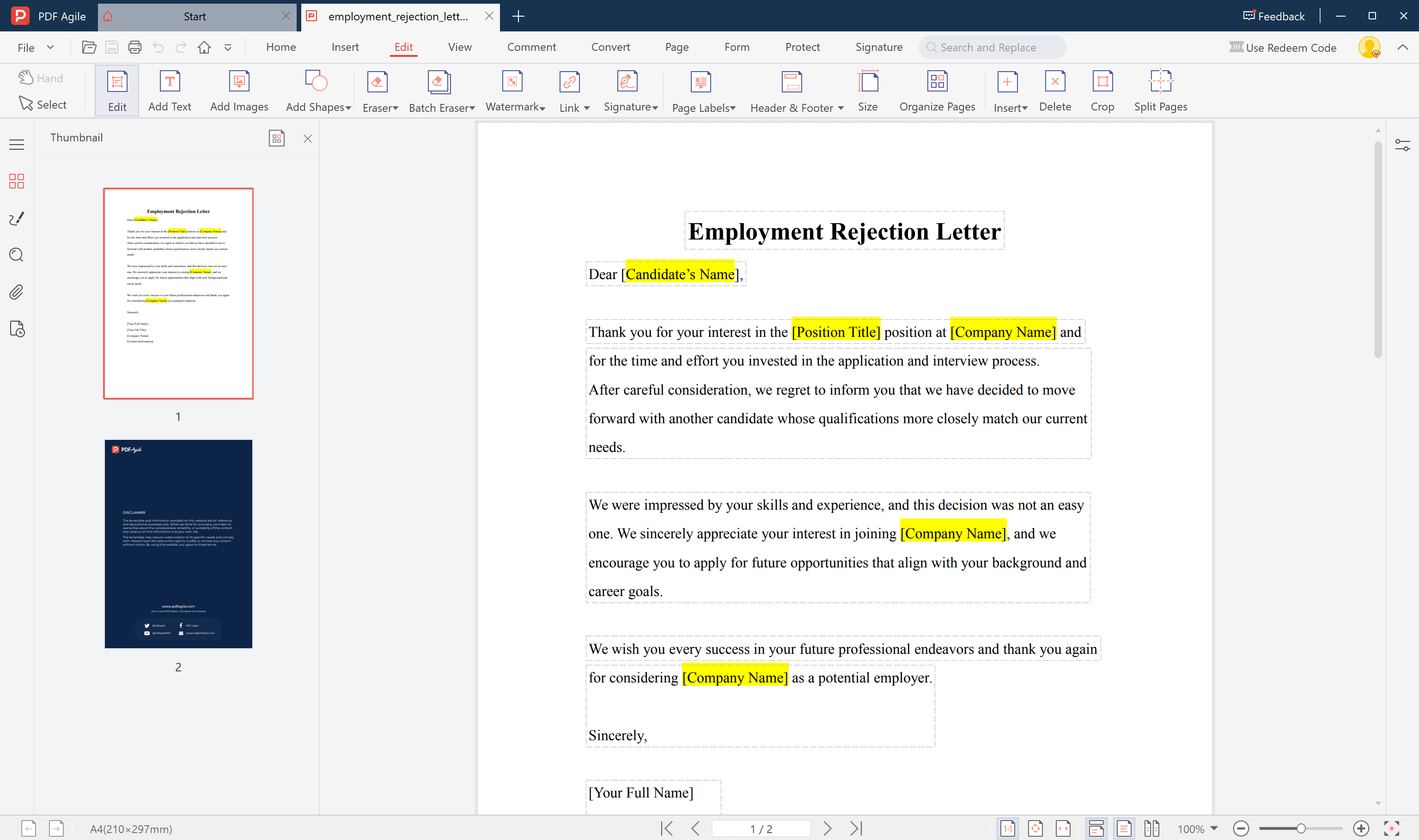
Step 4: Edit the tone to reflect your organization’s style—professional yet considerate.
Step 5: Save, print, or email the letter directly from PDF Agile.
This process helps ensure clear, respectful communication with every applicant.
7. Frequently Asked Questions about Employment Rejection Letters
7.1 What’s the best timing to send a rejection letter?
As a best practice, send the rejection letter within one to two weeks after making your final hiring decision. Prompt communication demonstrates professionalism.
7.2 Should you explain why a candidate wasn’t selected?
It’s optional. Brief, general feedback may be appreciated, but avoid detailed explanations that could spark disagreement or legal concern.
7.3 Can rejection letters be sent via email?
Yes. Email is a common and professional way to deliver rejection messages efficiently while maintaining documentation.
7.4 How do you write a polite but firm rejection?
Thank the candidate, acknowledge their effort, clearly state the decision, and wish them success in their career journey—without offering false hope.
7.5 Is it necessary to keep a record of sent rejection letters?
Yes. Maintaining a record provides helpful documentation for your HR department and ensures consistency and transparency in hiring practices.
Conclusion
An employment rejection letter demonstrates respect and professionalism toward every applicant. By using PDF Agile’s editable and printable rejection letter template, you can communicate difficult decisions gracefully and efficiently.
Clear, courteous writing helps enhance your company’s reputation and ensures candidates leave with a positive impression—keeping the door open for future opportunities.
Free Download: Customizable Employment Rejection Letter
You can download the Employment Rejection Letter mentioned above by clicking Use Template button on this page. Customize it to fit your specific needs and preferences.