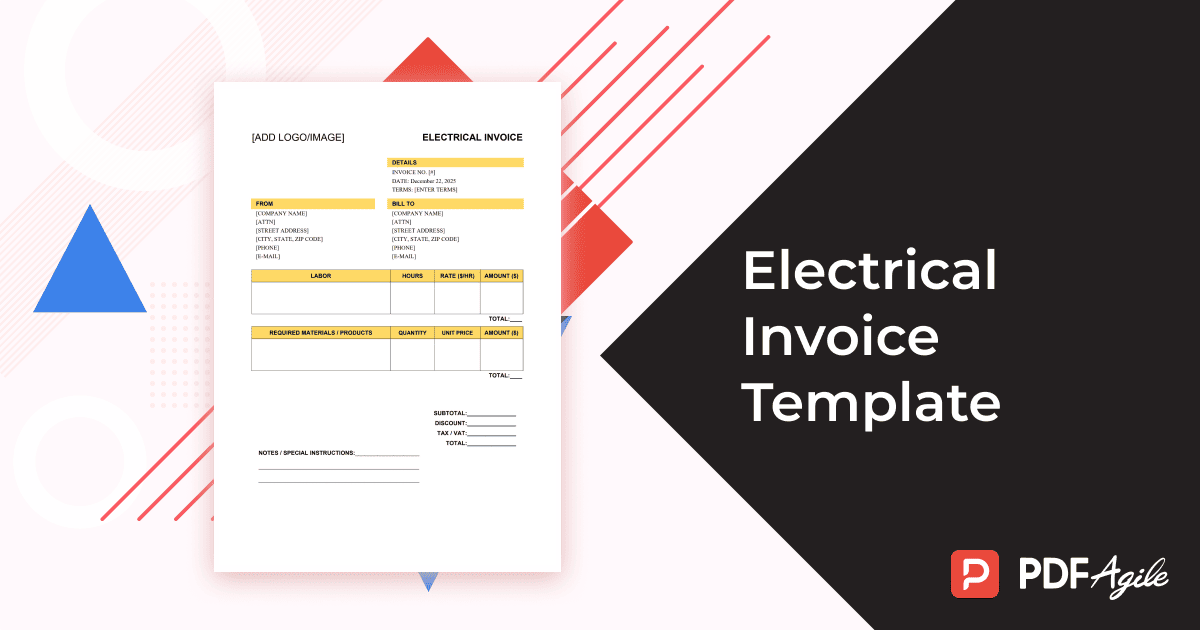



Electrical work involves technical precision — and your invoices should reflect the same level of clarity and professionalism. A well-structured Electrical Invoice Template ensures all details of labor, materials, and service costs are organized and transparent, so clients know exactly what they are paying for.
This guide explains what an electrical invoice is, how using standardized templates improves billing accuracy, what information to include, and how to fill one out step by step using PDF Agile.
1. What Is an Electrical Invoice?
An electrical invoice is a formal billing document that electricians or electrical contractors send to clients after completing a project. It lists the services performed, materials used, labor costs, payment terms, and contact information for both parties.
Electrical invoices are used for projects such as:
- Installing, repairing, or maintaining electrical systems
- Residential and commercial wiring
- Lighting installation
- Electrical inspections or safety upgrades
The invoice serves both as proof of service and a record of payment, ensuring transparent communication and financial documentation between electrician and client.

2. Why Using Standardized Electrical Invoice Templates Improves Accuracy
Using a standardized invoice template saves time and reduces the risk of billing errors or inconsistencies. When you create invoices manually, you might overlook important details — such as tax, job hours, or material costs — leading to confusion or payment delays.
Benefits of using an electrical invoice template:
- Consistency: Every invoice looks professional and uniform.
- Error reduction: Predefined formulas minimize miscalculations.
- Faster workflow: Quick input and automatic totals save time.
- Better record-keeping: Organized digital invoices simplify tracking and filing.
- Professional image: Clear invoices reflect reliability and quality workmanship.
With PDF Agile, you can fill in fields directly, customize layouts, and add logos — ensuring every invoice meets your business standards.
3. What Details Should Be Included in an Electrical Work Invoice
A complete electrical invoice should include all relevant business, client, and job information. Key components are:
- Business Information: Company name, logo, contact info, and license number (if applicable).
- Client Information: Name, address, phone, and email.
- Invoice Details: Invoice number, issue date, payment due date, and reference or job order number.
- Work Description: Specific services performed (e.g., rewiring, panel installation, circuit repair).
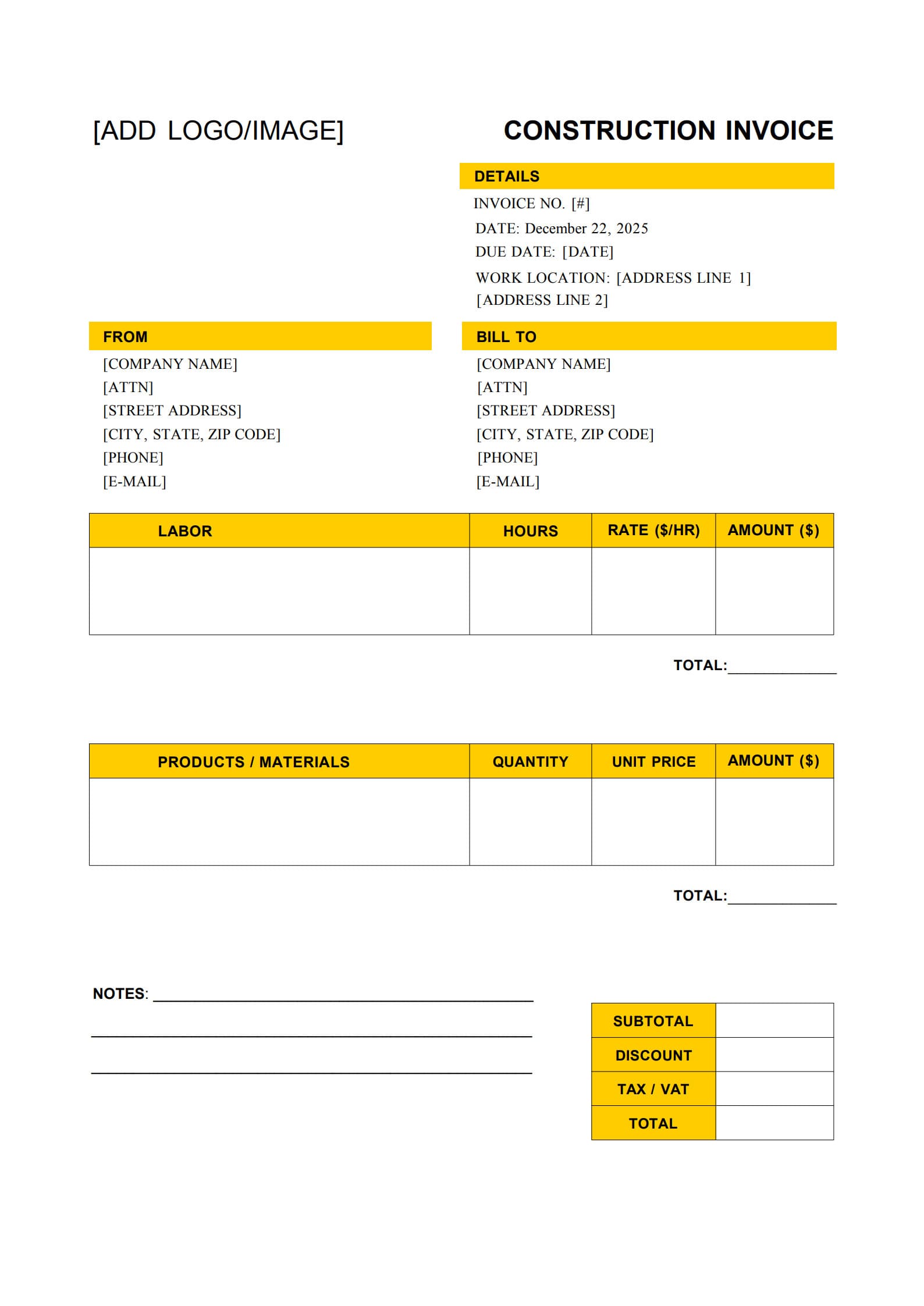
- Labor Charges: Hours worked multiplied by the hourly rate, or a flat rate for a specific service.
- Material or Parts Costs: Itemized list of components (wires, switches, breakers) used in the job.
- Taxes and Total: Subtotal, tax, and total payable amount.
- Payment Terms: Due date, late fees (if applicable), and accepted payment methods.
- Notes/Guarantees: Add any warranty terms or maintenance notes for client reference.
- Signatures: Optional approval by both technician and client for project confirmation.
This structure ensures your invoices are comprehensive, transparent, and easy for clients to review.
4. Step-by-Step Guide to Fill Out an Electrical Invoice Template
Follow these steps to complete your Electrical Invoice Template using PDF Agile tools:
Step 1: Download a Free Template
Visit PDF Agile and choose Electrical Invoice Template – Free Download.
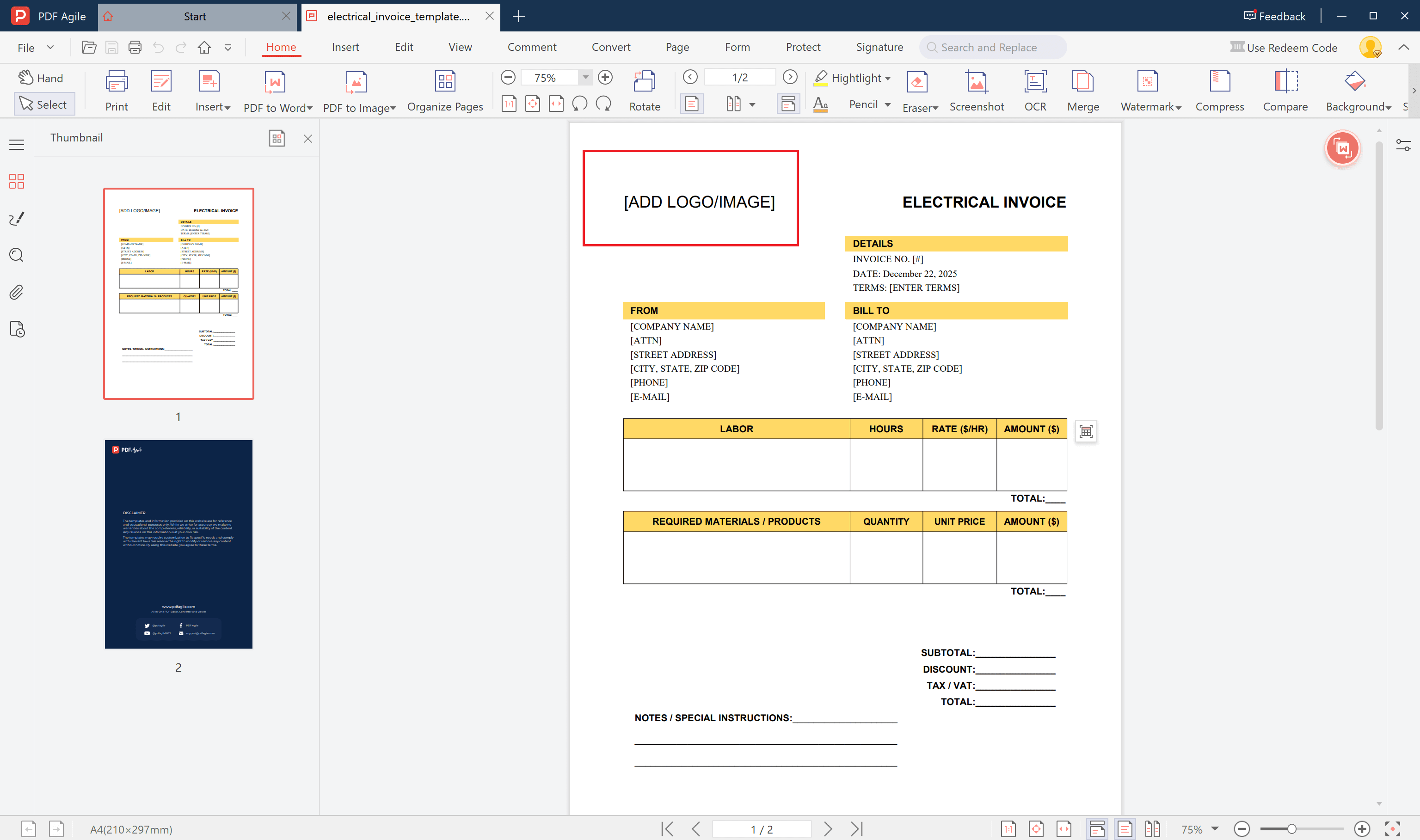
Step 2: Add Business and Branding Elements
Insert your logo. Customizing your brand elements enhances professionalism.
Step 3: Fill in Client and Job Details

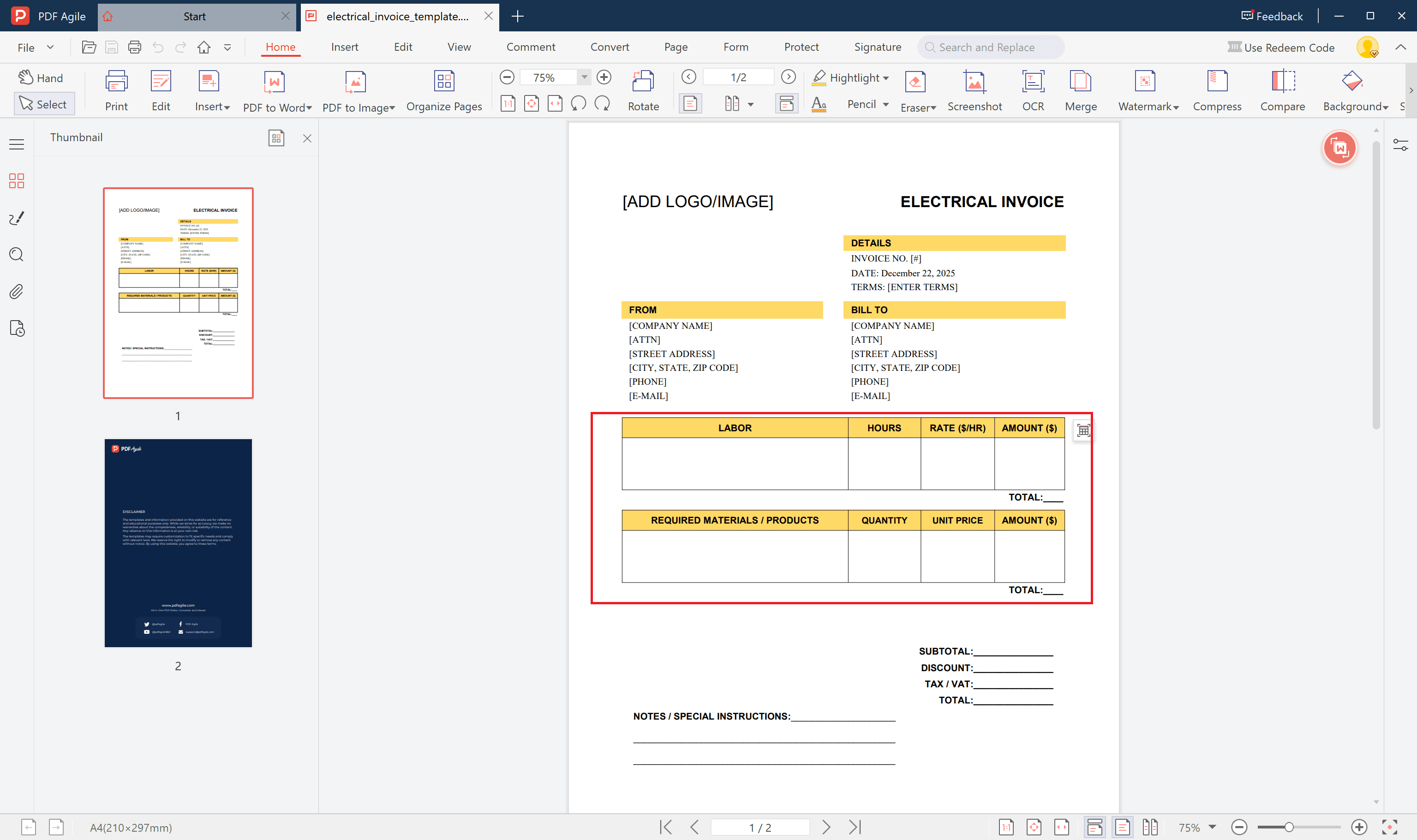
Step 4: Itemize Parts and Labor
List materials and parts used with individual prices.
Step 5: Save and Share
Save your invoice, and send it via email or print it for hand delivery.
These steps help you prepare accurate, ready-to-bill invoices quickly for any size electrical job.
5. Writing Tips to Make Your Electrical Invoice Clear and Professional
- Be detailed but concise. Break down work descriptions clearly, without unnecessary jargon.
- Separate labor and materials. Transparency builds trust and simplifies accounting.
- Use clear due dates. Avoid vague terms like “as soon as possible.” Set specific deadlines.
- Add service warranties. Highlight guarantees for completed work to boost customer confidence.
- Send invoices promptly. Issue the invoice immediately after completing the job to ensure faster payments.
- Use consistent formatting. Uniform font, spacing, and layout improve readability.
Small details in presentation and wording can make a big difference in how clients perceive your professionalism.
6. FAQs about Electrical Invoice Templates
6.1 How to add parts and labor separately in electrical invoices?
In your electrical invoice template, create two distinct sections—one for materials or parts (with quantities, unit costs, and totals) and another for labor (with hourly rate and hours worked). This makes costs more transparent and easier to reconcile later.
6.2 What are common payment terms for electricians?
Standard payment terms often include Net 15, Net 30, or due upon completion. For larger projects, electricians may request an upfront deposit (30–50%) with the balance payable after final inspection or testing.
6.3 How long do clients have to pay an electrical invoice after the job is completed?
In most cases, clients are expected to pay within 7 to 30 days after the job completion, depending on the agreed contract terms. Including this clearly on your invoice — for example, “Payment due within 15 days of invoice date” — prevents misunderstandings and ensures steady cash flow.
Conclusion
A well-structured Electrical Invoice Template helps electricians document their work accurately, present professional bills, and get paid faster.
With PDF Agile, you can easily edit, sign, and share your invoices online — ensuring both professionalism and efficiency in every job.