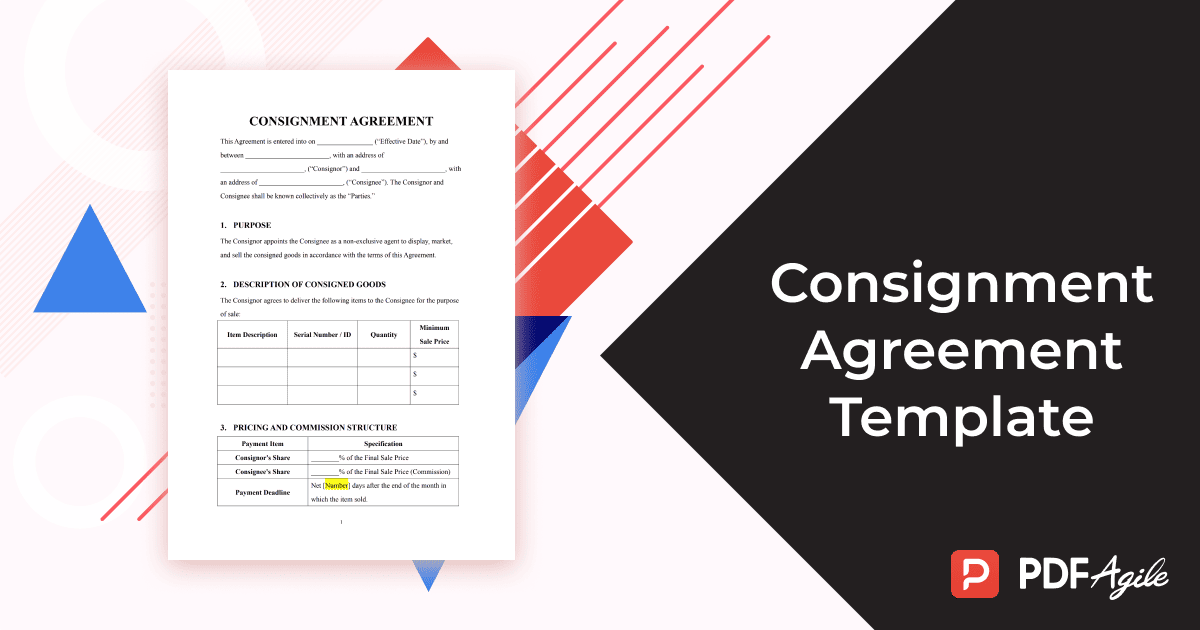



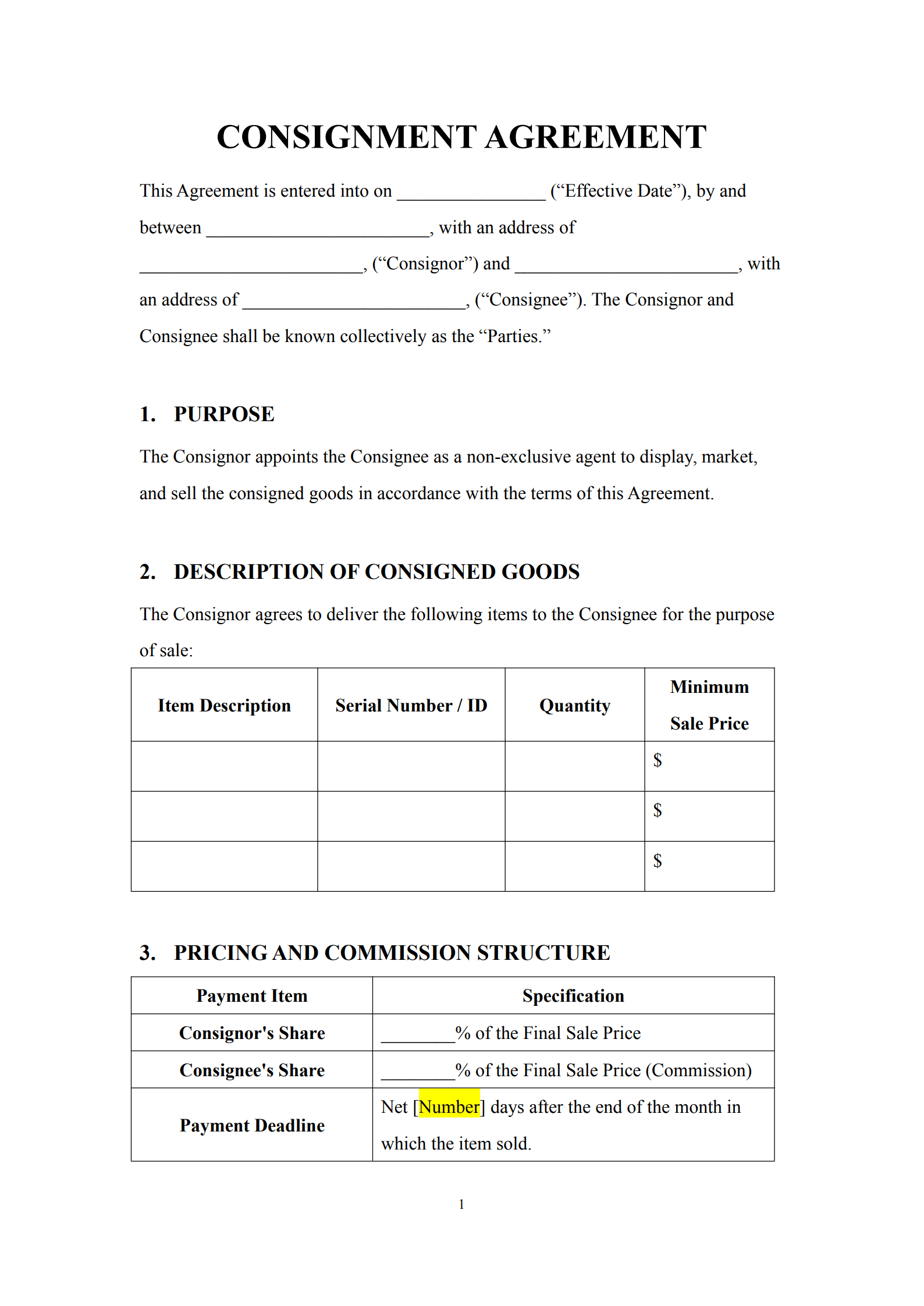
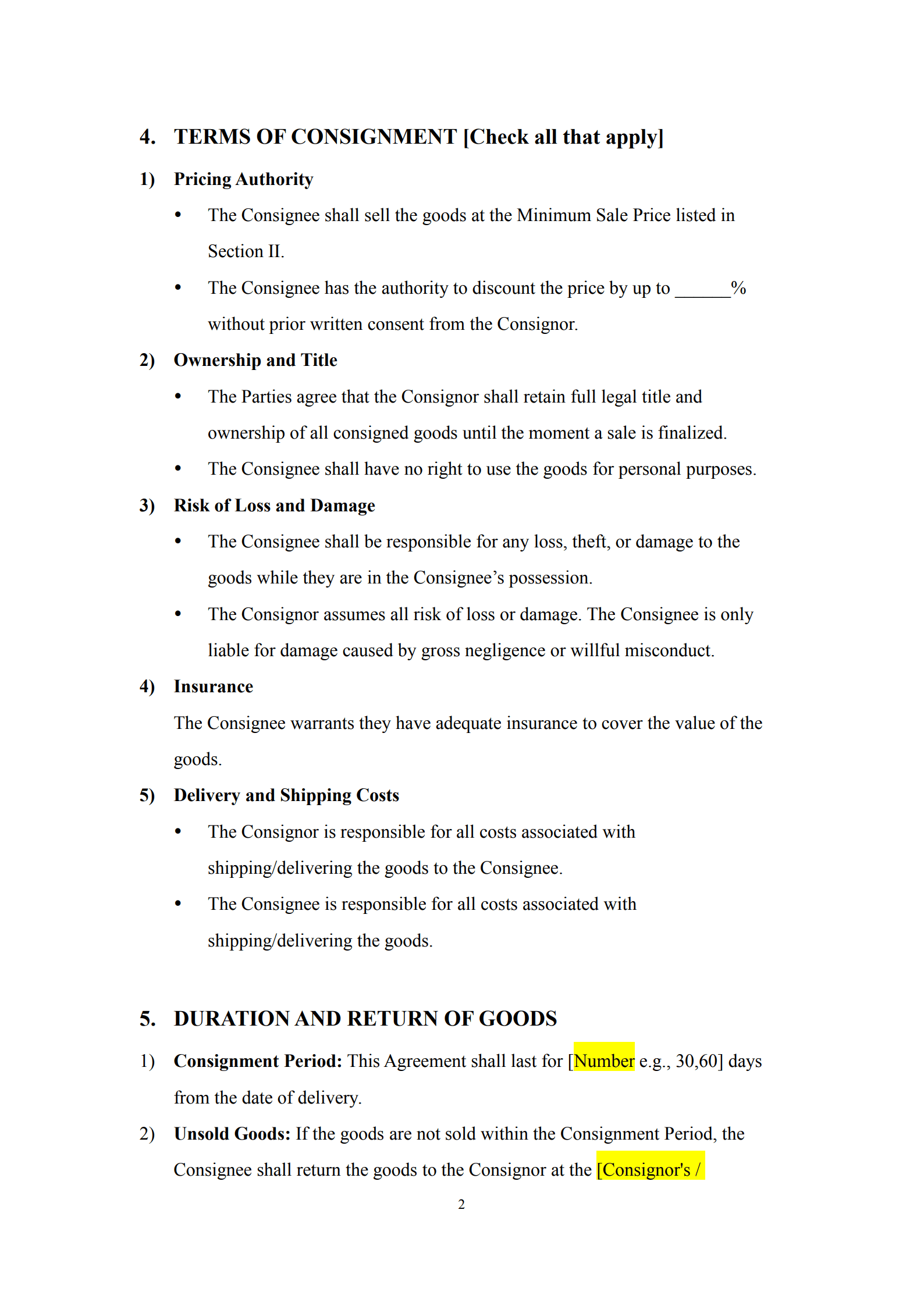
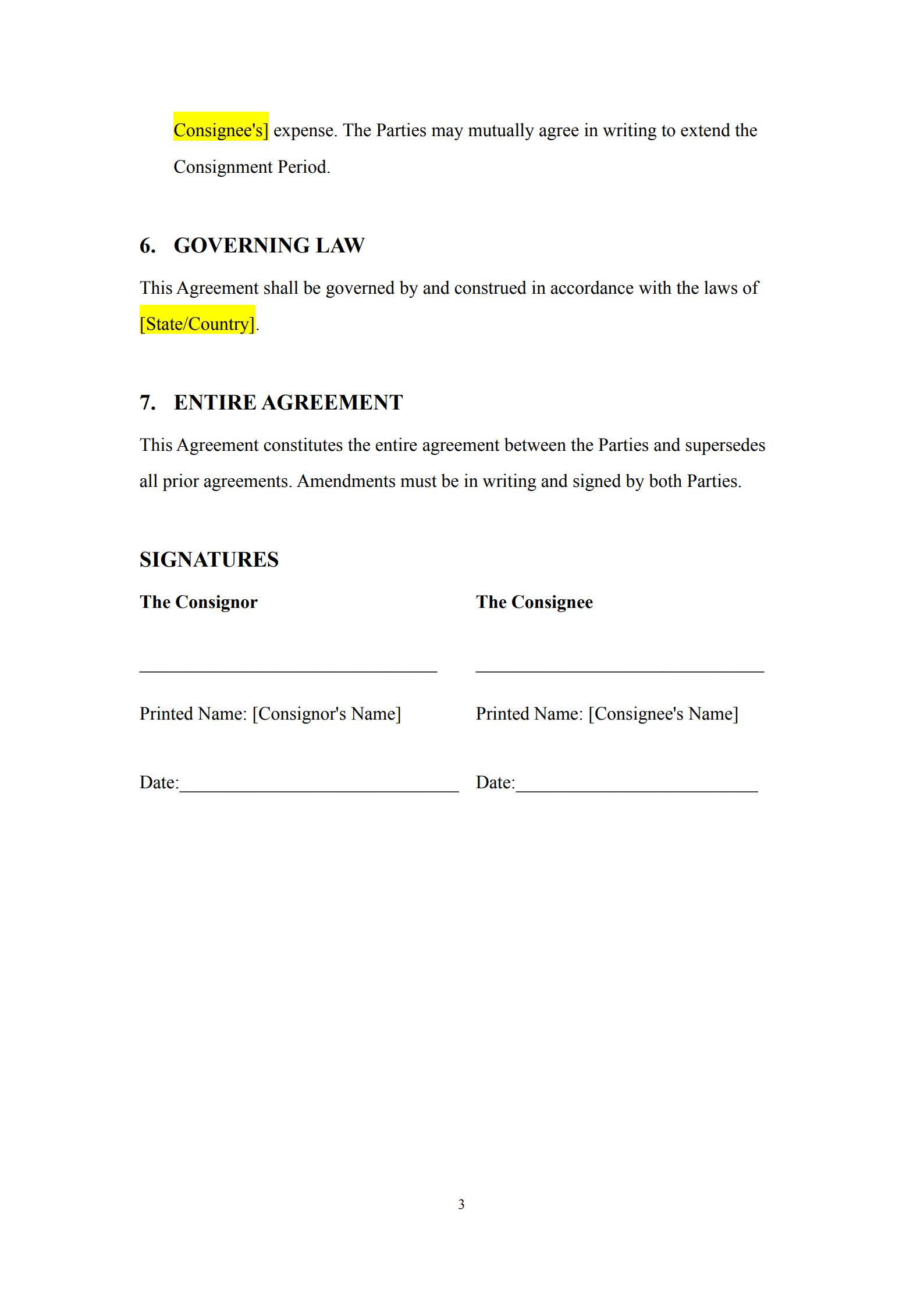
A Consignment Agreement defines the legal relationship between a consignor (the product owner) and a consignee (the seller). It specifies how goods are supplied, marketed, and sold on behalf of the owner, ensuring that both parties clearly understand their rights and responsibilities.
With PDF Agile’s fully editable Consignment Agreement Template, businesses can confidently document terms covering sales commissions, delivery, risk transfer, and payment obligations—reducing disputes and maintaining smooth commercial cooperation.
1. What Is a Consignment Agreement?
A Consignment Agreement is a written contract used when one party (the consignor) provides goods to another (the consignee) for sale while retaining ownership until the goods are sold.
This arrangement allows the consignee to display and sell goods without paying upfront, while the consignor ensures payment only after successful sales. The agreement outlines conditions for storage, pricing, compensation, and unsold goods return.
2. Which Clauses Are Fundamental in a Consignment Agreement?
A complete consignment agreement generally includes:
- Parties and Effective Date – Identify consignor, consignee, and commencement details.
- Description of Goods – Item listing, quantity, and condition.
- Pricing and Commission Structure – Terms for retail pricing, discounts, and sales commissions.
- Payment and Reporting Terms – Frequency, method, and deadlines for remittance.
- Ownership and Title – Clarifies that ownership remains with the consignor until sale.
- Insurance and Liability – Assigns responsibility for loss, damage, or theft.
- Return of Unsold Goods – Procedures and costs for returning inventory.
- Termination and Dispute Resolution – Grounds for ending the agreement and resolving conflicts.
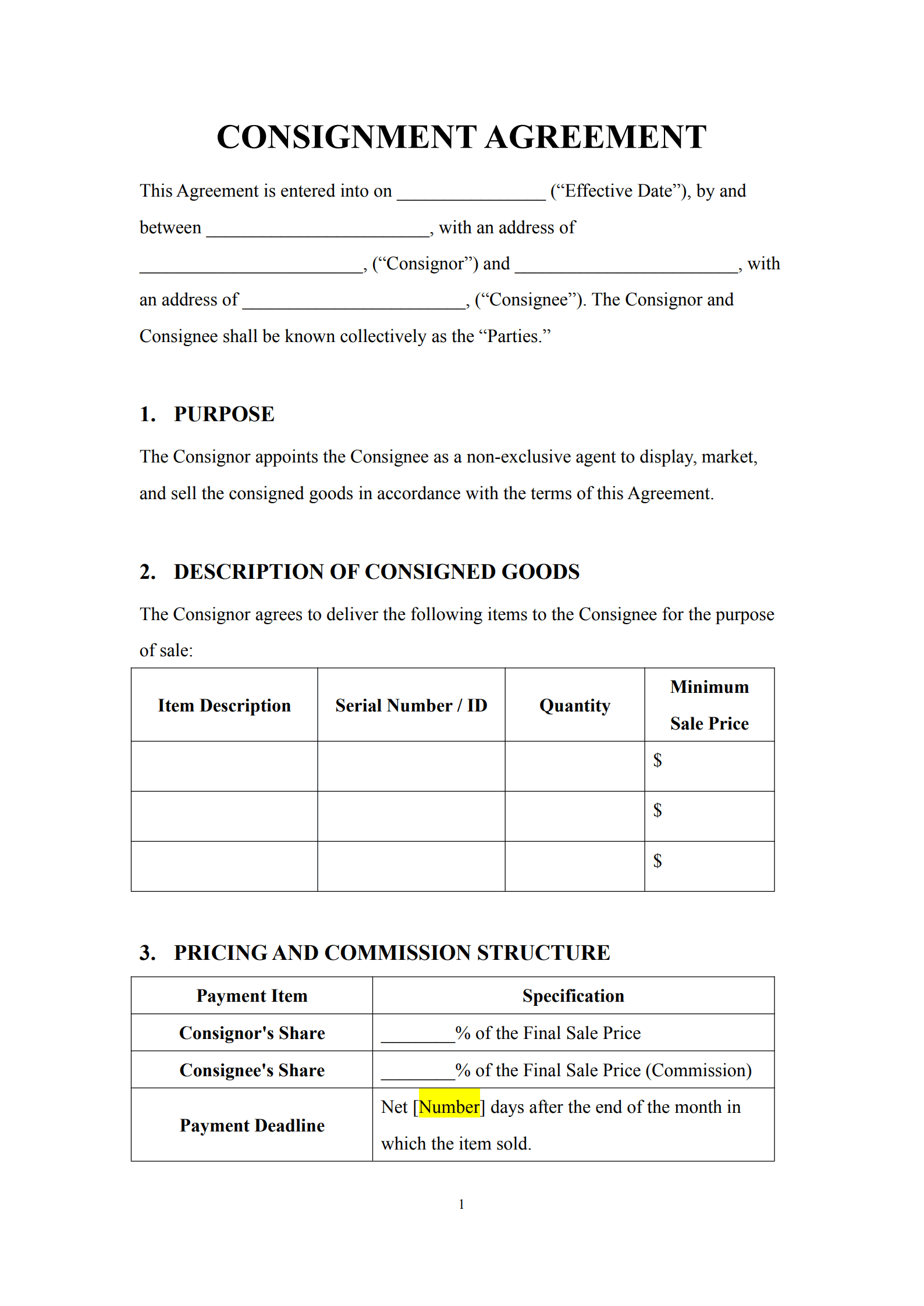
3. Why is a Written Consignment Agreement Essential?
A written contract is crucial whenever you supply goods for sale on consignment, including:
- Retail shops showcasing third-party merchandise.
- Art galleries, boutiques, or antique dealers selling on behalf of artists or collectors.
- Distribution partners selling specialized equipment or handmade products.
- Ecommerce collaborations between suppliers and online retailers.
A signed agreement ensures mutual transparency, avoids payment delays, and protects both assets and brand reputation.
4. Why Does a Professional Consignment Contract Matter?
Without a clear agreement, misunderstandings can easily arise—especially regarding ownership, liability, and payment schedules.
A professional consignment agreement provides:
- Legal protection for both consignor and consignee.
- Defined accountability for inventory and financial records.
- Dispute prevention through clear clauses on payment and returns.
- Scalability for expanding partnerships while maintaining consistent terms.
It serves as a win-win solution that solidifies trust and supports long-term business growth.
5. The Most Effective Way to Create Your Own Consignment Agreement (Use Template)
With PDF Agile’s editable consignment agreement, you can easily:
Step 1: Download and Open the Template – Access the form using any device and PDF Agile software.
Step 2: Fill in Party Information and Product Details – Include item descriptions, pricing, and terms.
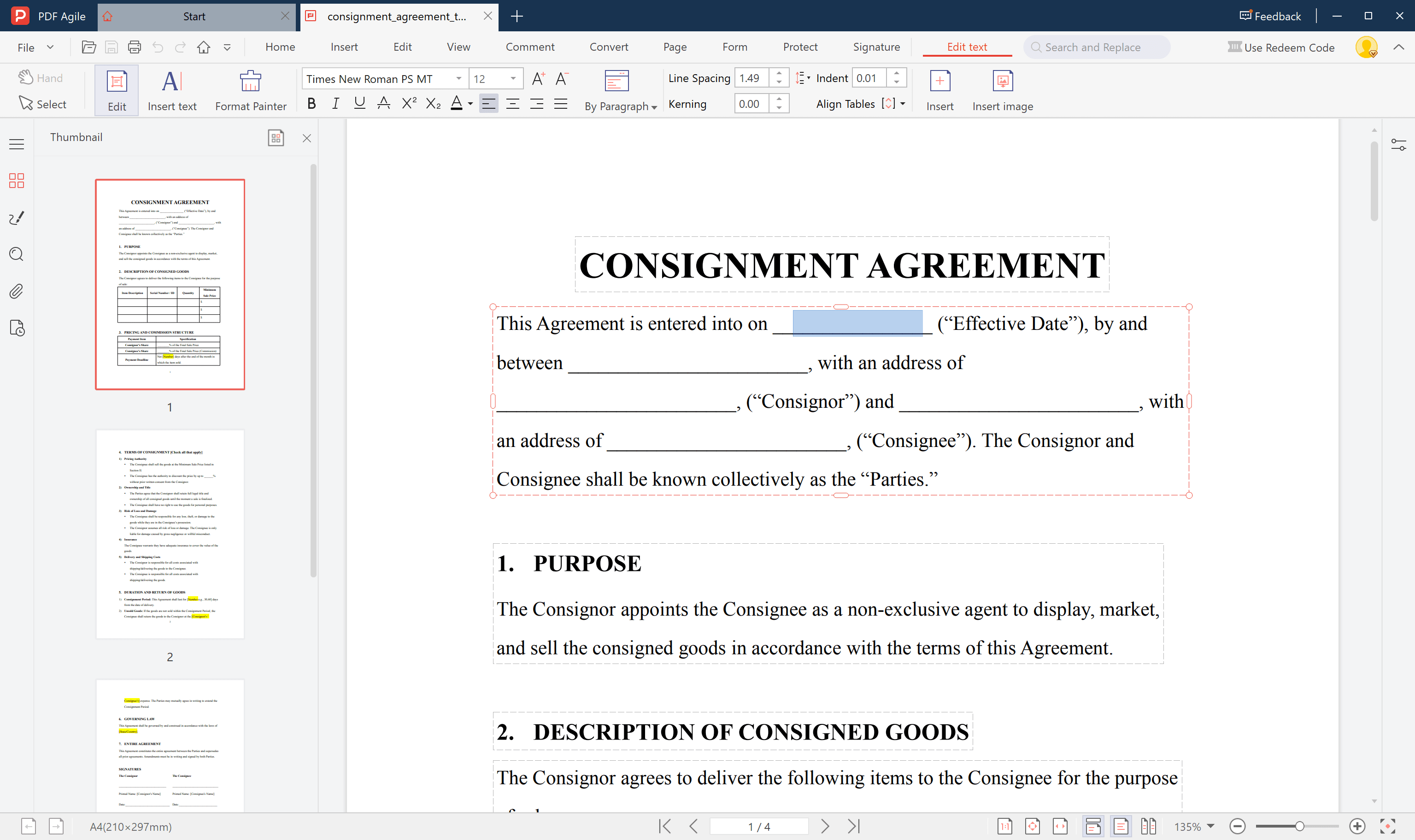
Step 3: Customize Liability and Commission Clauses – Reflect your business’s operational model.
Step 4: Review, Sign, and Store Securely – Obtain digital or physical signatures for authenticity.
Step 5: Share and Update as Needed – Edit and resend the agreement for renewals or new consignments.
PDF Agile ensures a professional layout, accurate formatting, and the ability to collaborate digitally with partners.
FAQs about Consignment Agreement
1. What distinguishes consignment from a standard wholesale purchase?
In a consignment, ownership of goods remains with the consignor until sale, while in wholesale, ownership transfers to the buyer immediately upon purchase.
2. Is a legal review recommended before authorizing the agreement?
Yes. Although this template covers essential legal elements, consulting a contract attorney ensures alignment with local trade and consumer laws.
3. How is insurance and liability for unsold inventory handled?
The consignee usually bears responsibility for protecting goods in their possession. It’s advised to define insurance coverage clearly in the agreement.
4. What are the consequences if the seller fails to remit payments on schedule?
Late or missed payments may incur interest penalties or lead to cancellation of the arrangement as stated in the default or termination clause.
5. Can the commission structure be renegotiated after the goods are delivered?
Yes, changes may be made if both parties agree in writing. However, new terms only apply to future transactions or sales yet to occur.
Conclusion
A Consignment Agreement promotes transparency, fairness, and accountability in supply-chain relationships. Whether you are an artist, designer, retailer, or supplier, documenting your terms helps safeguard both goods and profits.
With PDF Agile’s ready-to-use Consignment Agreement Template, creating legally sound contracts becomes simple—allowing you to focus on growing partnerships and maximizing sales opportunities.
Free Download: Printable Consignment Agreement
You can download the Consignment Agreement Template mentioned above by clicking Use Template button on this page. Customize it to fit your specific needs and preferences.