
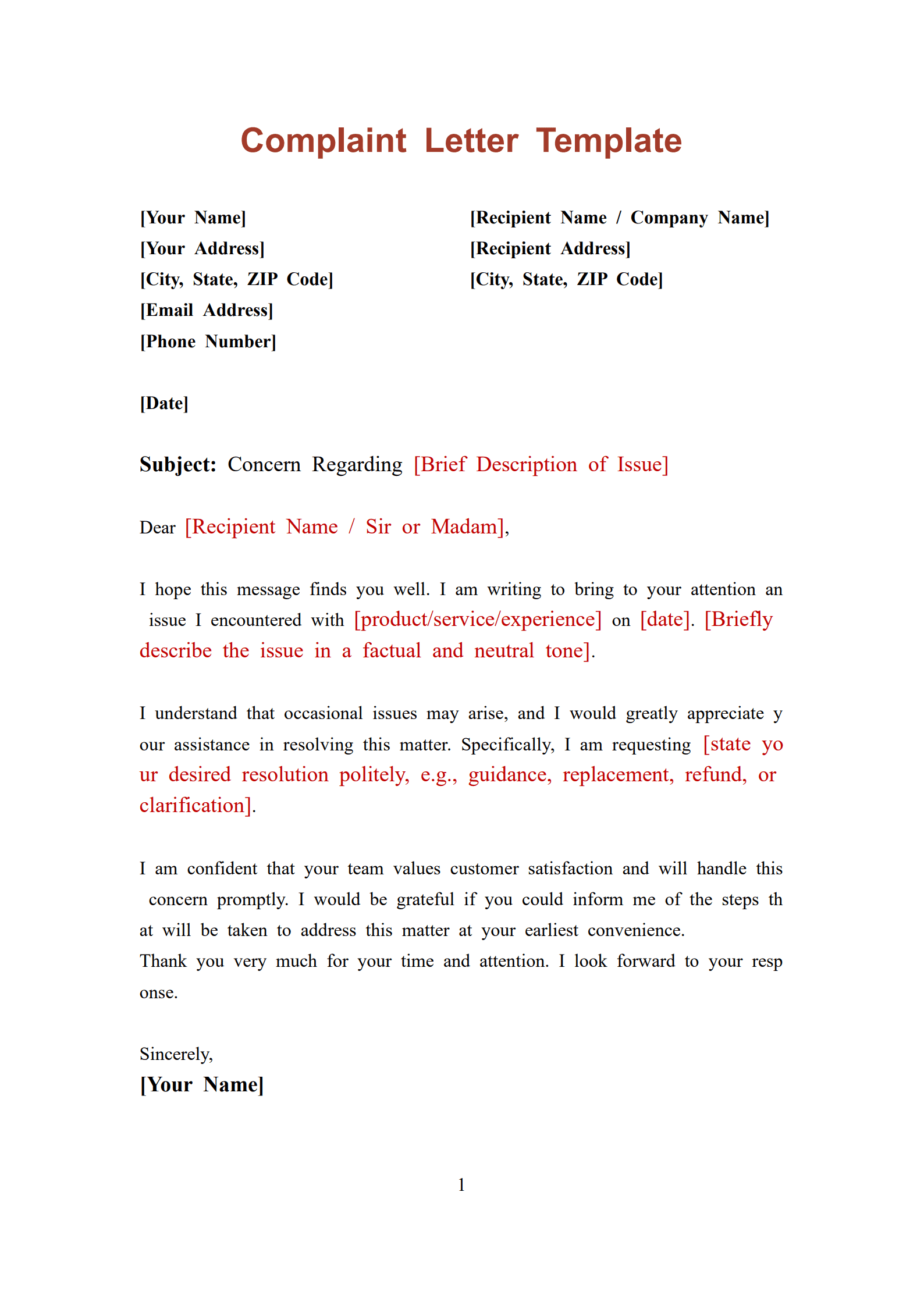
Writing a complaint letter can feel stressful, especially when you are already dealing with a problem. Many people know they should complain in writing, but they are not sure how to start, what tone to use, or what details matter most. That is why a clear complaint letter template can be so useful.
This article explains what a complaint letter is, why it still matters today, and how to use a complaint letter template effectively. You will also find practical tips and common questions answered, so you can write with confidence and clarity.
What Is a Complaint Letter and Why It Matters
A complaint letter is a formal or semi-formal written message used to express dissatisfaction about a product, service, or situation. It is usually sent to a company, organization, landlord, school, or authority that has the power to fix the issue.
Even in a time of online chats and social media, a complaint letter still carries weight. Written complaints create a clear record. They show that you took the time to explain the issue calmly and professionally, rather than reacting emotionally.
A well-written complaint letter does three things:
- It explains what went wrong
- It shows how the issue affected you
- It states what kind of response you are hoping for
Using a complaint letter template helps you cover these points without missing important details.
Why Using a Complaint Letter Template Saves Time
Many people delay writing a complaint because they think it will take too long or feel too complicated. A complaint letter template removes that barrier.
Instead of starting from a blank page, a template gives you a ready-made structure. You only need to add your own facts, dates, and expectations. This can be especially helpful if English is not your first language or if the situation feels sensitive.
A good complaint letter template also helps you:
- Keep a polite and professional tone
- Avoid unnecessary emotional language
- Present your issue in a logical order
By following a clear format, your message is easier to read and more likely to receive a serious response.
When You Should Write a Complaint Letter
A complaint letter is useful in many everyday situations. You might consider writing one if:
- A product you purchased was faulty or not as described
- A service did not meet the promised standard
- You were charged incorrectly or unfairly
- A delivery was delayed or damaged
- A landlord or management company ignored a request
In these cases, verbal complaints or short messages may not be enough. A written complaint letter shows that you are serious and organized, which often leads to better outcomes.
How a Complaint Letter Template Is Structured
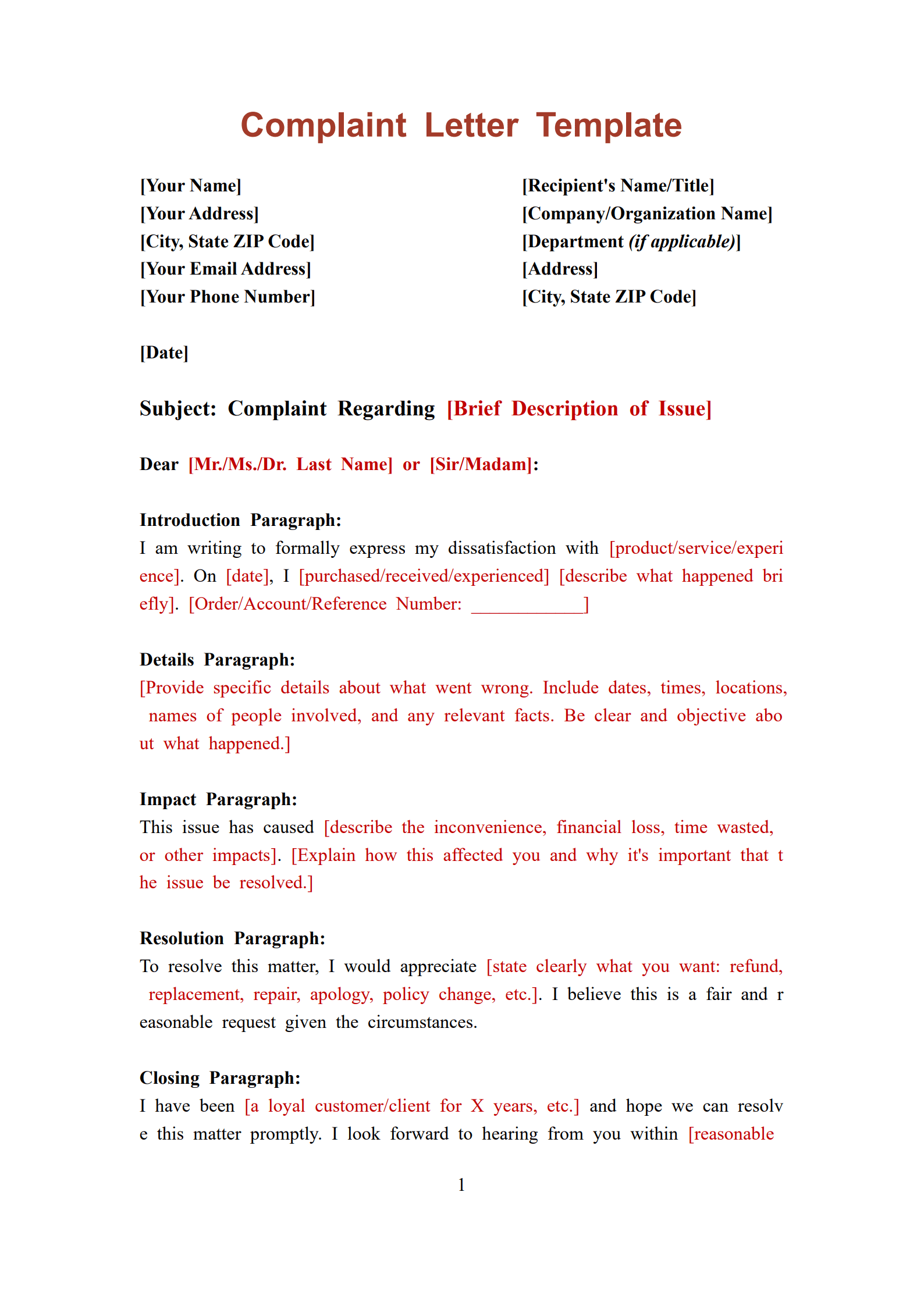
Most complaint letter templates follow a simple and effective structure. Understanding this structure helps you customize the template properly.
A typical complaint letter includes:
- Opening statement
Briefly explain why you are writing. - Description of the issue
Provide clear facts such as dates, order numbers, or locations. - Impact of the problem
Explain how the issue affected you, without exaggeration. - Requested resolution
State what you would like to happen next, such as a refund, repair, or explanation. - Closing and contact details
End politely and include your contact information.
A complaint letter template already organizes these parts for you, so you can focus on content rather than format.
Tips for Writing an Effective Complaint Letter
Even with a template, a few simple tips can make your complaint letter more effective.
First, keep your tone calm and respectful. Anger or threats may reduce the chance of cooperation. A professional tone often receives faster attention.
Second, stick to facts. Mention dates, reference numbers, and specific actions. Clear details make your complaint easier to investigate.
Third, be realistic in your request. Asking for a reasonable solution shows that you are open to dialogue.
Finally, review your letter before sending it. A quick check for clarity and spelling can improve how your message is received.
Using a complaint letter template with these tips in mind can help you communicate clearly without sounding aggressive or vague.
Common Mistakes to Avoid in a Complaint Letter
Many complaint letters fail not because the issue is unimportant, but because the message is unclear.
Common mistakes include:
- Writing long emotional paragraphs without clear facts
- Failing to explain what outcome you want
- Using informal or unclear language
- Forgetting to include contact information
A complaint letter template helps prevent these problems by guiding you step by step. It keeps your message focused and easy to understand.
Complaint Letter Templates for Different Situations
Not all complaints are the same. A complaint letter to a retailer may look different from one sent to a landlord or service provider.
That is why flexible complaint letter templates are helpful. They allow you to adjust the wording while keeping the same professional structure.
You can use the same template for:
- Product quality complaints
- Customer service issues
- Billing or payment disputes
- Delivery and logistics problems
With small edits, one complaint letter template can fit many situations.
Free Download: Your Complaint Letter Template
If you want to save time and avoid formatting issues, using a ready-made template can be a practical choice.
Download our free, customizable templates by clicking the Use Template button on this page. You can add your specific details, adjust the tone if needed, and prepare your letter for printing or digital sending with minimal effort.
This template is designed to help you communicate clearly while keeping a professional and polite style.
Complaint Letter FAQs
Q: How long should a complaint letter be?
A complaint letter should usually be one page or less. Clear and focused letters are easier to read and respond to.
Q: Can I send a complaint letter by email?
Yes. Many organizations accept complaint letters by email. The structure remains the same as a printed letter.
Q: Should I include evidence in a complaint letter?
If possible, yes. You can mention attached receipts, photos, or order numbers to support your case.
Q: What if I do not receive a response?
If there is no reply after a reasonable time, you can send a polite follow-up using the same complaint letter format.
Q: Is a complaint letter legally binding?
A complaint letter itself is not a legal document, but it can serve as written evidence if the issue escalates later.