



We’ve all been there: a product arrives broken, a service isn't what was promised, or a billing error leaves you frustrated. While it’s tempting to vent your frustrations on social media, a formal complaint letter is still the most effective way to trigger a professional resolution.
Companies generally have "Standard Operating Procedures" for formal letters that they don't have for casual comments. Here is how to make your voice heard.
1. Why the "Formal" Approach Works
When you move your complaint from a phone call to a written document, you create a paper trail. This is crucial for:
- Accountability: It creates a permanent record of your grievance.
- Clarity: It prevents the "he-said, she-said" confusion of phone conversations.
- Escalation: If you eventually need to involve a third party (like a consumer protection agency), they will ask for your written correspondence first.
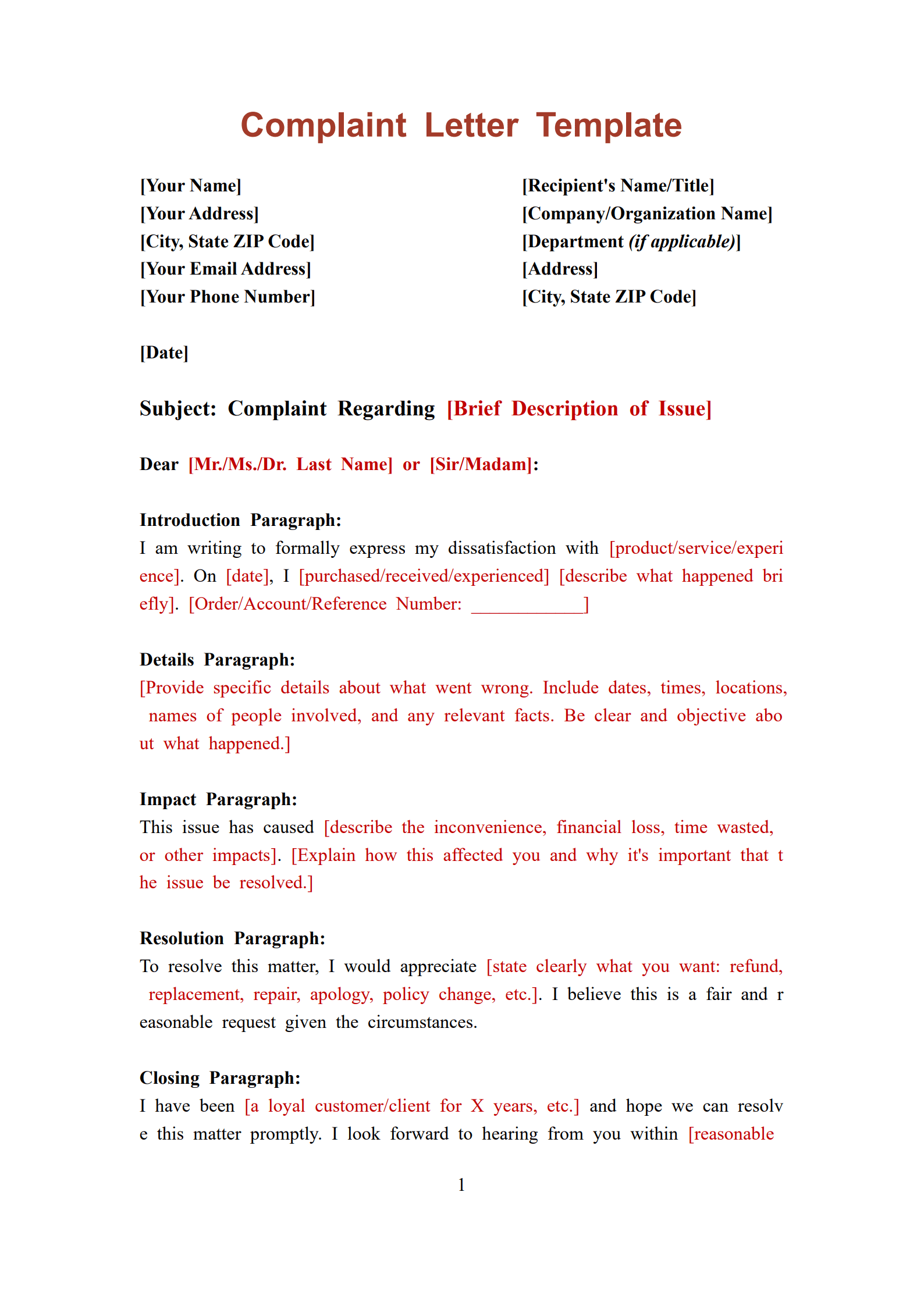
2. The Anatomy of a Powerful Complaint
To ensure your letter isn't ignored, it should follow three core principles:
Keep it Objective
Focus on the facts. Instead of saying, "Your delivery driver was incredibly rude and lazy," try, "The driver refused to bring the package to the door as requested and left it in the rain." Facts are harder to argue against than feelings.
Be Concise
Customer service agents often read hundreds of messages a day. If your letter is four pages long, the main point might get lost. Stick to the "Need to Know" information: What happened, when it happened, and what you want.
Propose a Specific Solution
Don't make the company guess how to make you happy. If you want a 50% refund, ask for it. If you want a replacement part sent via overnight mail, say so. Providing a clear "exit ramp" makes it easier for the agent to hit “Approve.”
3. Common Mistakes to Avoid
- Writing in Anger: Never send the first draft you write while you’re steaming mad. Let it sit for an hour, then edit out the insults.
- Missing Details: Forgetting an order number or the date of service is the number one reason for delays.
- Threatening Legal Action Too Early: Unless you actually have a lawyer ready to go, "I’ll see you in court" usually causes customer service to stop talking to you and hand the file to their legal department, which slows everything down.
4. When to Send Your Letter
If a quick phone call or "live chat" doesn't solve your issue within 24 hours, it is time to send the formal letter. Sending it via email is standard, but for high-value disputes (over $500), sending a physical copy via Certified Mail shows the company you are serious.
FAQs about Apology Letter Template
1. Who should I address my complaint letter to?
If you have a specific contact name from a previous interaction, use it. Otherwise, address the letter to the Customer Service Manager or the Head of Quality Assurance. For larger corporations, sending it to the "Office of the CEO" can sometimes bypass entry-level filters and get your letter seen by a specialized executive team.
2. How long should I wait for a response?
The standard industry wait time is 5 to 10 business days. In your letter, it is helpful to provide a specific deadline (e.g., "I look forward to hearing from you by next Friday"). If you haven't heard back within two weeks, follow up with a phone call or a second email referencing your original letter.
3. Should I send my letter via email or physical mail?
- Email: Best for quick resolutions, small disputes, and digital services. It’s easy to track and free.
- Certified Physical Mail: Best for high-value items, legal disputes, or if you’ve already been ignored via email. Having a signed delivery receipt is powerful evidence if you ever need to go to court.
4. Can I include photos or videos?
Absolutely. In fact, digital evidence is often the deciding factor. If you are emailing, attach clear, well-lit photos of the damage or screenshots of the error. If sending a physical letter, print out the photos or mention that video evidence is available upon request.
5. What should I do if the company denies my request?
If you receive a rejection, don't give up. You can:
- Ask for an escalation: Request that a supervisor review the file.
- Contact a third party: File a report with the Better Business Bureau (BBB) or your state’s Consumer Protection Office.
- Social Media: Sometimes a polite but public post on X (formerly Twitter) or LinkedIn tagging the company can prompt a quicker response from their PR team.
6. Is a "threat" effective in a complaint letter?
Threats of "never shopping here again" or "telling all my friends" are often ignored because they are common. However, stating a factual next step—such as "I will be contacting my credit card company to initiate a chargeback"—is very effective because it carries financial consequences for the business.