


Life doesn't always allow us to be physically present when important documents need to be picked up. Whether you're traveling for work, hospitalized, living abroad, or simply managing a busy schedule, situations arise where someone else must retrieve documents on your behalf. An authorization letter to collect documents provides the legal framework that allows a trusted representative to obtain sensitive paperwork while protecting all parties involved.
What Makes an Authorization Letter to Collect Documents Essential
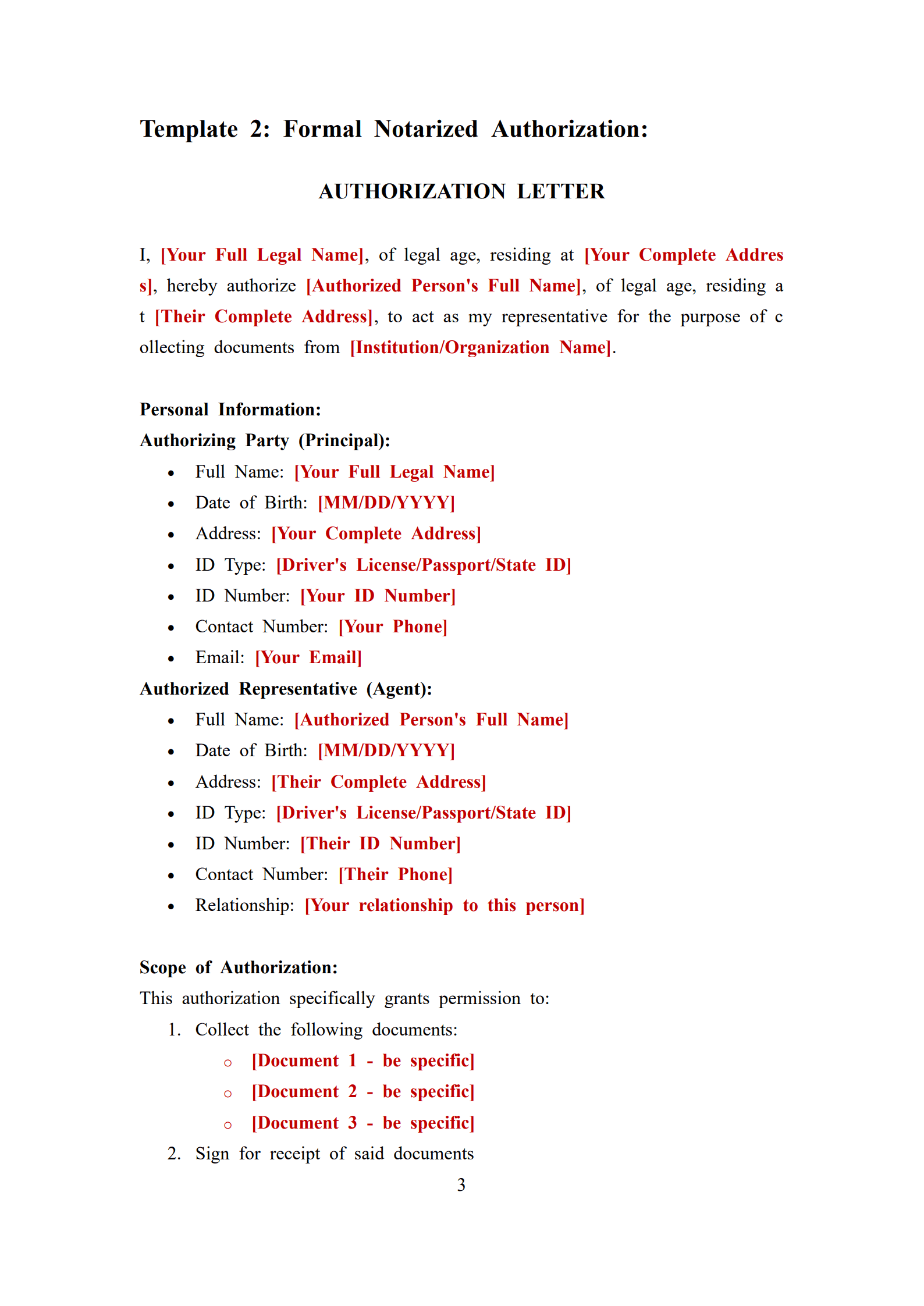
An authorization letter to collect documents is a formal written permission slip that grants another person the legal right to retrieve specific documents from an organization, institution, or government office on your behalf. This document serves as proof that you've explicitly authorized the transaction, protecting both the releasing organization and your representative from potential liability or disputes.
Think of this letter as a temporary transfer of your document collection rights. Without proper authorization, most organizations refuse to release documents to anyone other than the named individual, even family members or close friends. Privacy laws, institutional policies, and liability concerns mean that verbal permission or casual notes rarely suffice for document collection.
The authorization letter to collect documents creates a clear paper trail. Organizations can verify that permission was granted, what documents were authorized for release, and who was designated to collect them. This protects against fraud, identity theft, and unauthorized access to sensitive information while still allowing flexibility when you cannot be present personally.
Beyond practical necessity, an authorization letter to collect documents demonstrates respect for proper procedures. Organizations appreciate receiving proper documentation because it simplifies their processes and reduces their risk. A well-crafted letter often results in faster, smoother document collection compared to showing up without authorization and hoping for accommodation.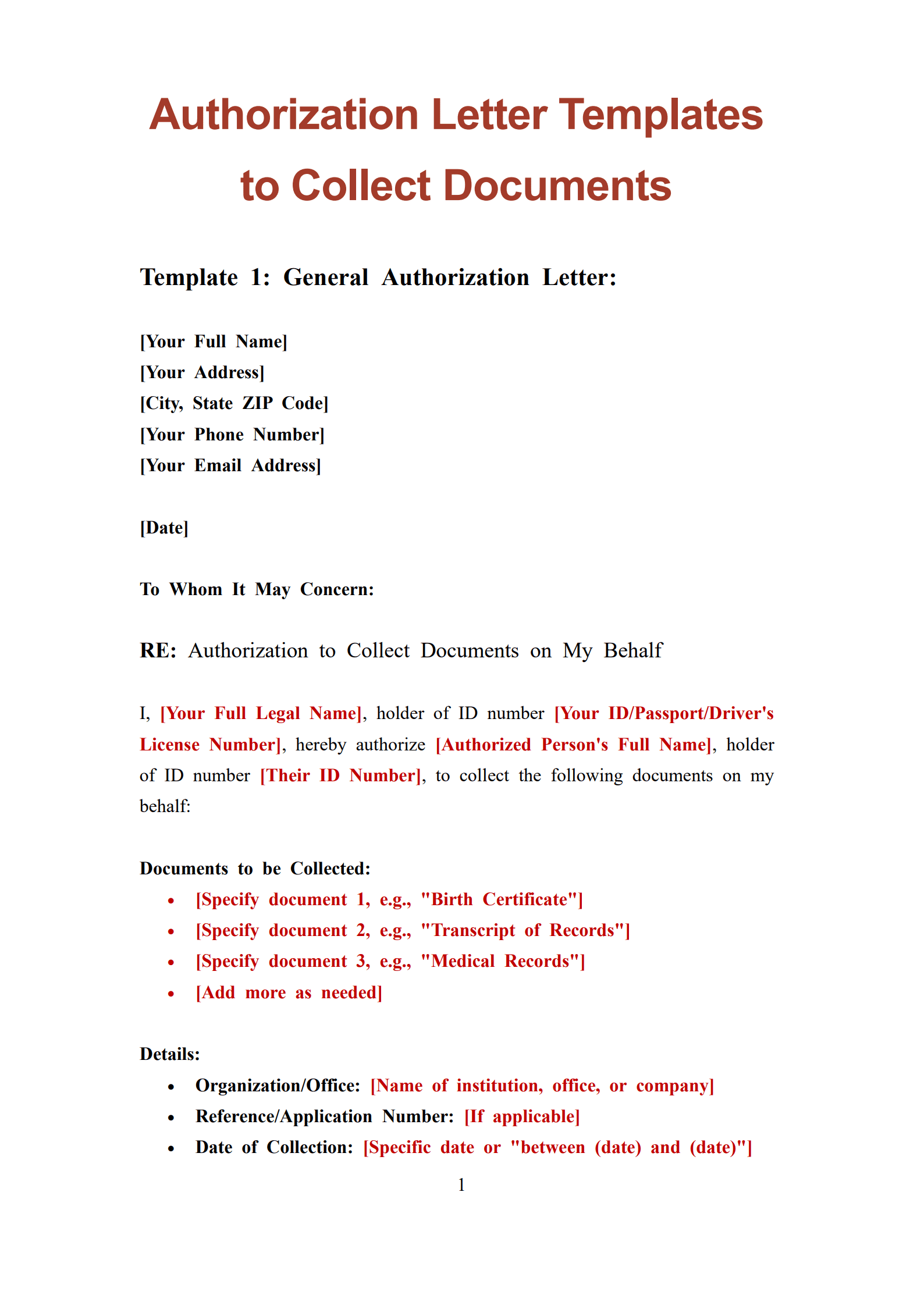
Common Scenarios Requiring an Authorization Letter to Collect Documents
Understanding when you need an authorization letter to collect documents helps you plan ahead and avoid frustrating delays.
Educational Institutions
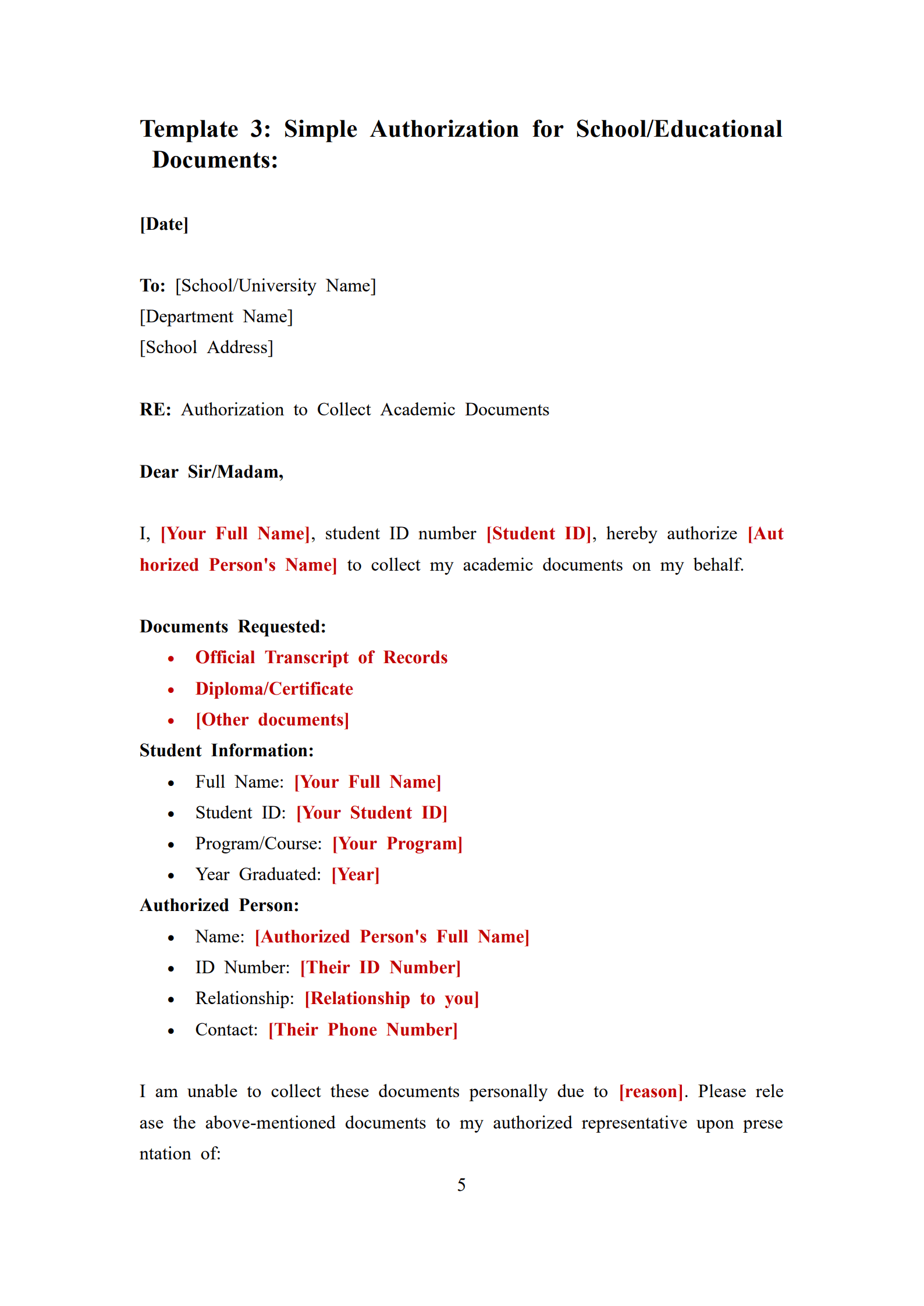
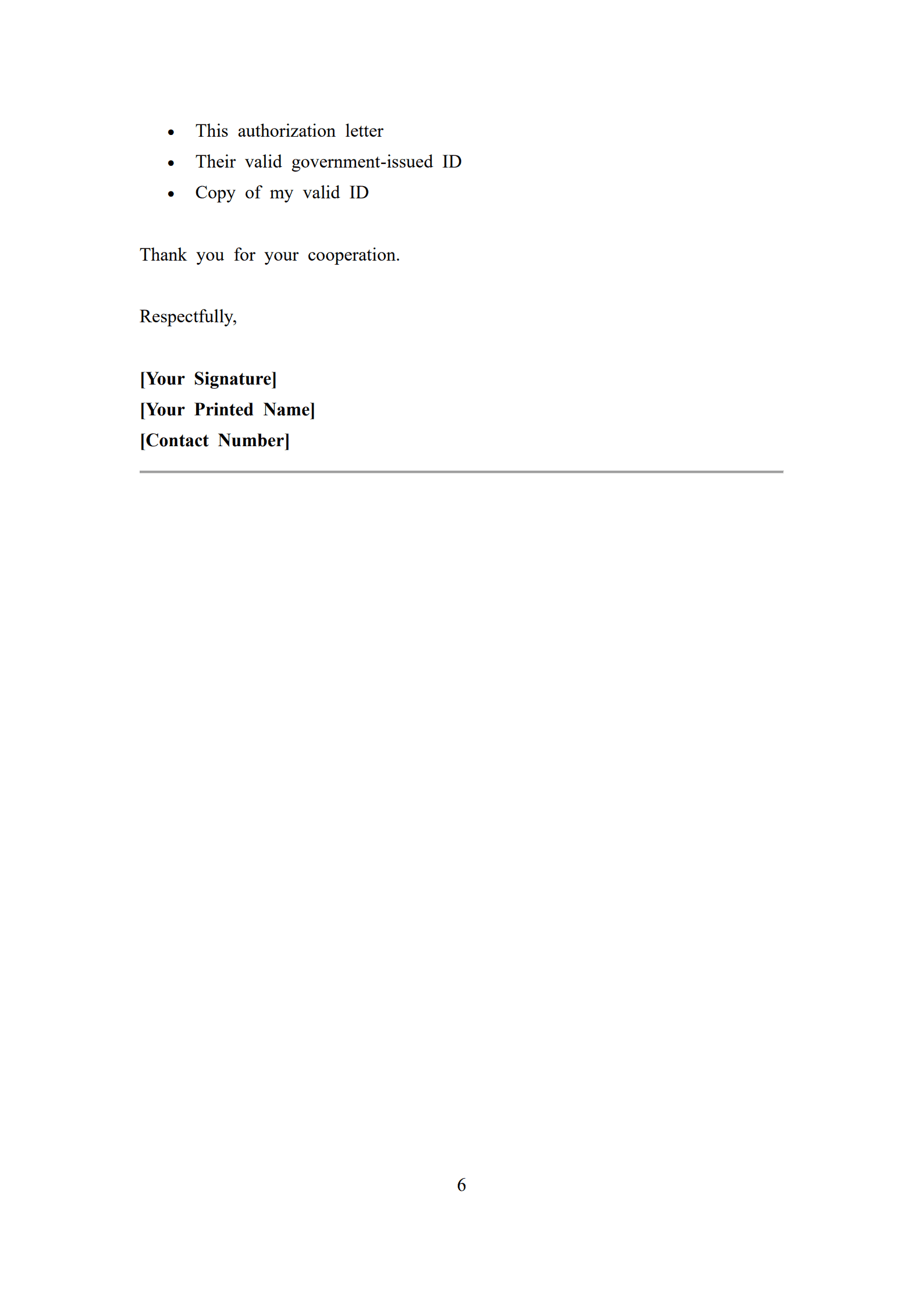
Schools, colleges, and universities frequently require authorization letters when someone other than the student retrieves transcripts, diplomas, certificates, recommendation letters, or academic records. Even parents may need written authorization to collect documents for adult children over 18 due to FERPA privacy regulations.
Medical Facilities
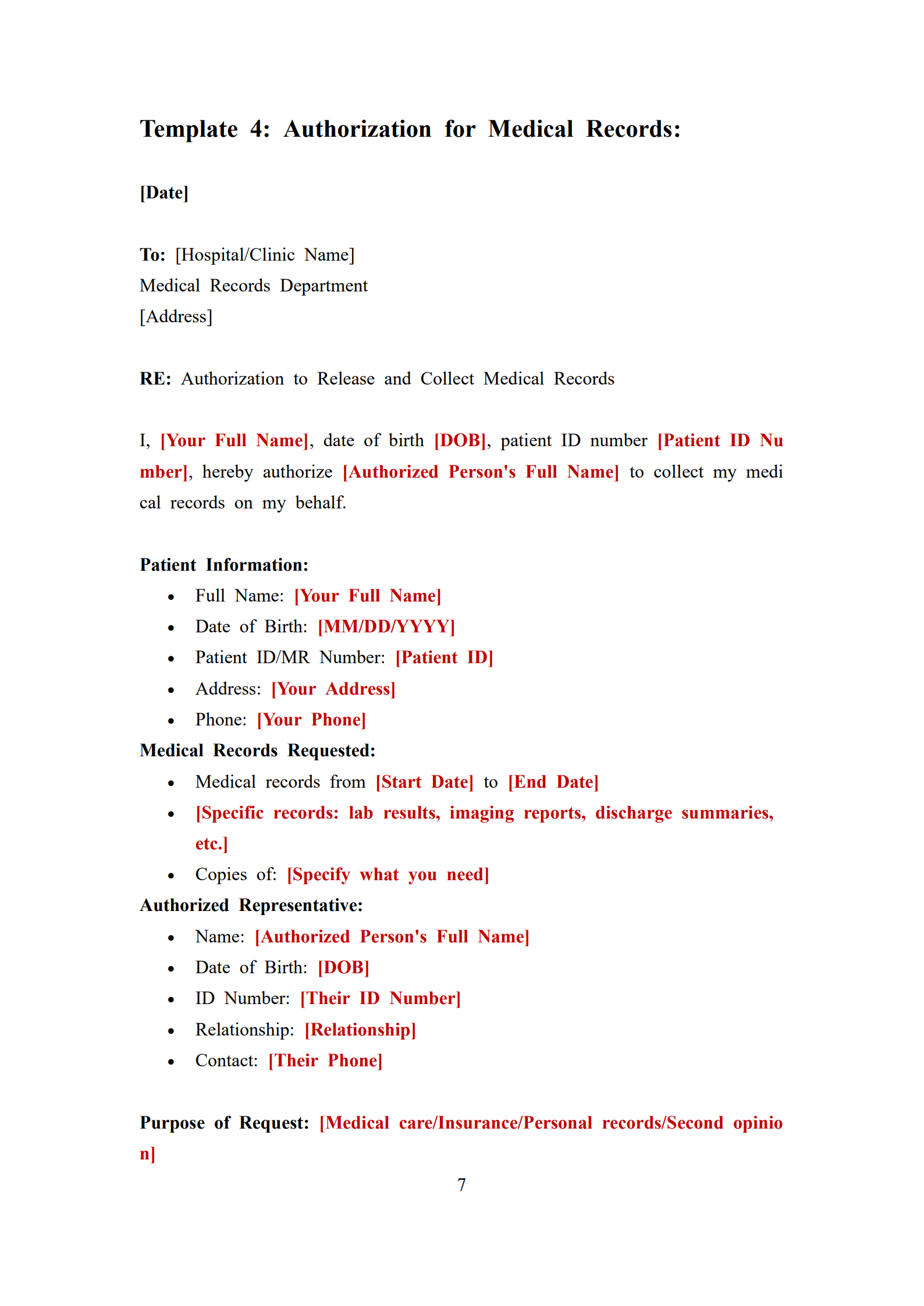
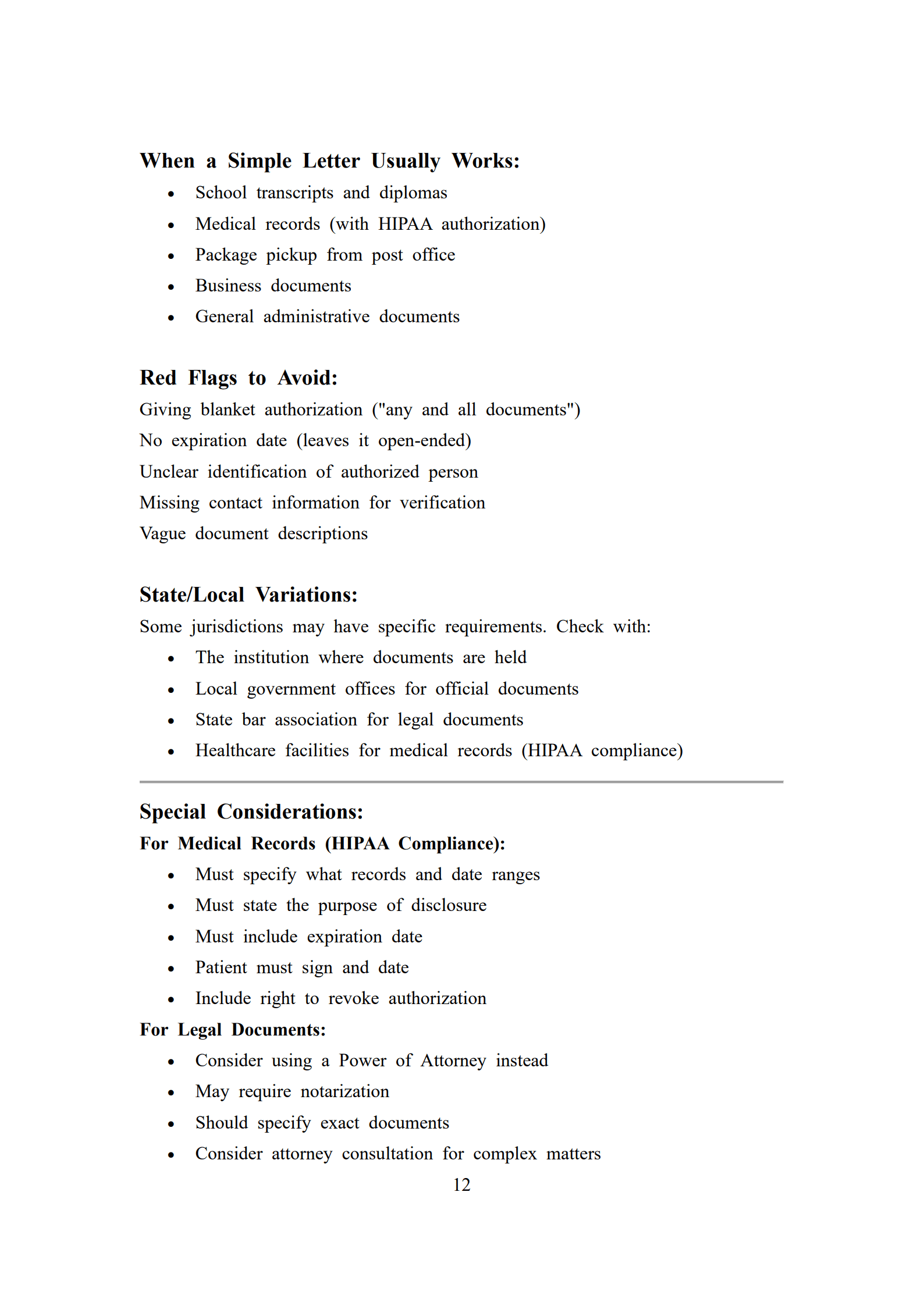
Hospitals, clinics, and doctors' offices must protect patient privacy under HIPAA regulations. An authorization letter to collect documents becomes essential when a family member, caregiver, or representative needs to obtain medical records, test results, discharge summaries, or insurance paperwork on your behalf.
Government Agencies
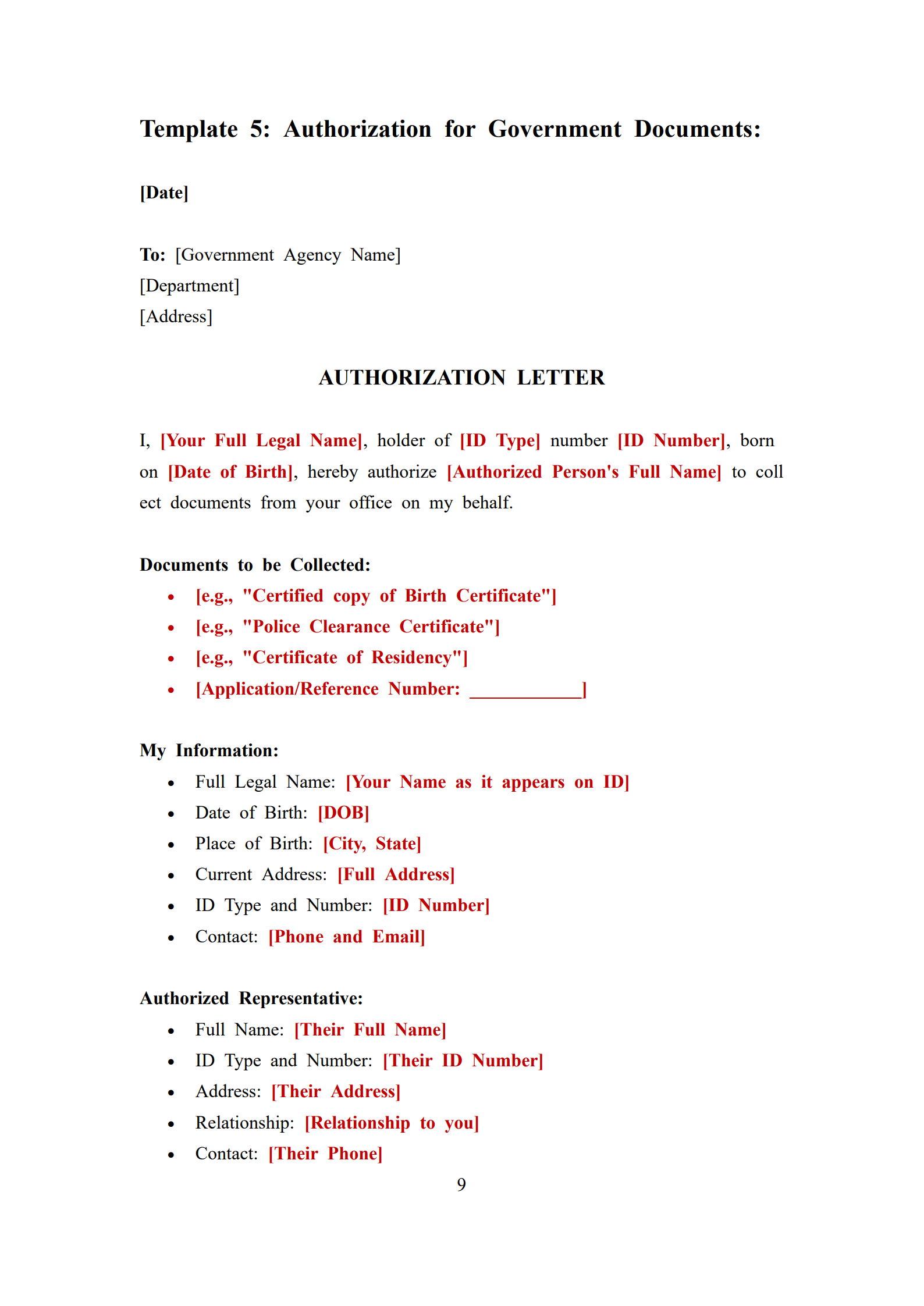
Passport offices, tax authorities, social security offices, and other government entities typically require authorization letters before releasing official documents to anyone except the named individual. The authorization letter to collect documents must often include specific identifying information and may need notarization depending on the agency and document type.
Financial Institutions
Banks, investment firms, and insurance companies deal with sensitive financial information that requires strict access controls. An authorization letter to collect documents allows designated individuals to retrieve bank statements, loan documents, insurance policies, investment records, or other financial paperwork when you're unavailable.
Workplace Documents
Former or current employees might need someone to collect employment letters, tax forms, paycheck stubs, benefits documentation, or other workplace records. An authorization letter to collect documents ensures HR departments comply with company policy while accommodating your needs.
Legal and Real Estate Matters
Property deeds, contracts, court documents, legal notices, and real estate paperwork often require authorization letters when attorneys, real estate agents, or family members need to collect documents on behalf of property owners or parties to legal proceedings.
Critical Elements Your Authorization Letter to Collect Documents Must Include
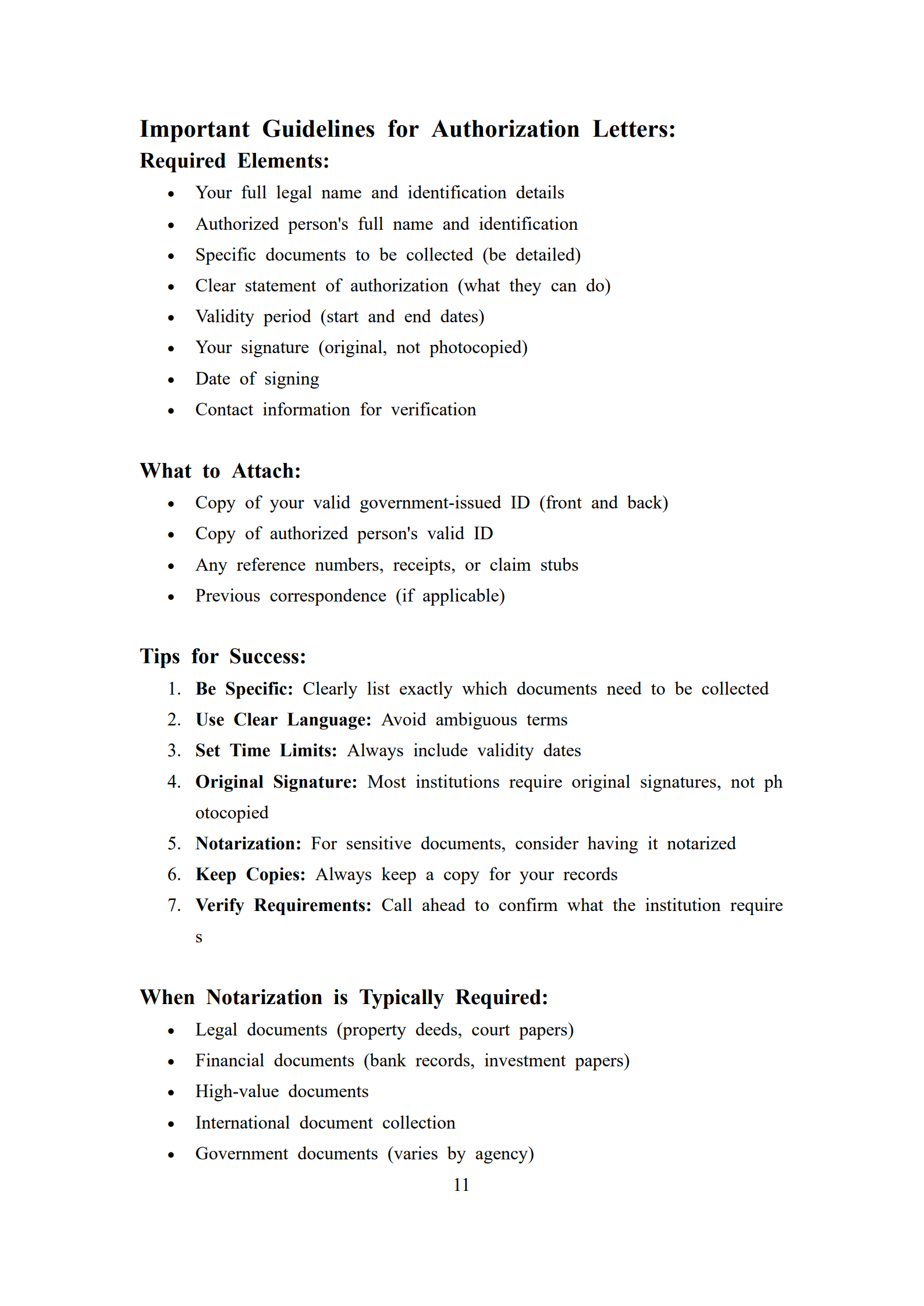
Crafting an effective authorization letter to collect documents requires attention to specific details that establish legitimacy and provide clear instructions.
Your Complete Information
Begin your authorization letter to collect documents with your full legal name exactly as it appears on identification documents. Include your current address, phone number, and email address. Add your date of birth or identification numbers if the releasing organization requires this information for verification purposes.
Representative's Complete Information
Identify the person you're authorizing with their full legal name, address, phone number, and relationship to you. Specify their identification document type and number so the organization can verify their identity when they arrive to collect documents. The authorization letter to collect documents should make absolutely clear who is permitted to act on your behalf.
Specific Documents Authorized
List precisely which documents your representative is authorized to collect. Vague language like "all relevant documents" creates confusion and potential disputes. Your authorization letter to collect documents should name each item specifically: "official transcript for Jane Smith, student ID #123456" or "medical records for treatment dates January 1-15, 2026."
Organization Details
Name the specific organization, department, or office from which documents will be collected. Include contact information and any relevant account, file, or reference numbers. This precision in your authorization letter to collect documents helps the organization locate your records quickly and verify the request's legitimacy.
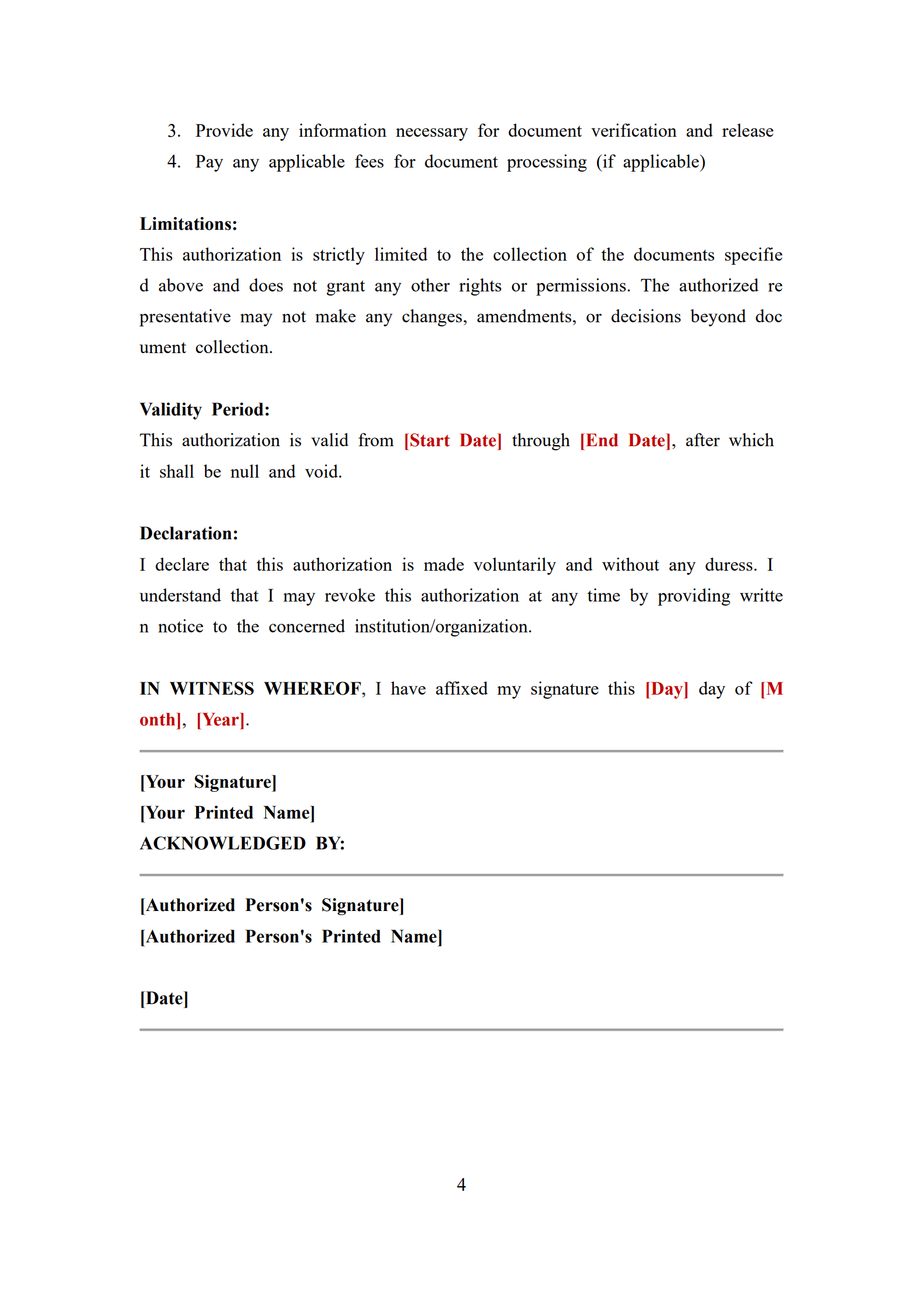
Effective Date and Duration
Specify when the authorization begins and when it expires. Many organizations require that authorization letters to collect documents include validity periods rather than open-ended permissions. A typical timeframe might be "valid from January 15, 2026 through February 15, 2026" or "valid for 30 days from the date below."
Clear Authorization Statement
Include explicit language granting permission: "I hereby authorize [Representative Name] to collect [specific documents] on my behalf from [Organization Name]." This unambiguous statement in your authorization letter to collect documents leaves no room for misinterpretation about your intentions.
Signature and Date
Sign the authorization letter to collect documents in ink if submitting physically, or use a legally recognized digital signature for electronic submissions. Date the letter to establish when permission was granted. Some organizations may require witnesses or notarization, so check requirements beforehand.
Contact Information for Verification
Provide phone numbers and email addresses where the organization can reach you to confirm the authorization if questions arise. This addition to your authorization letter to collect documents provides an extra security layer that many organizations appreciate.
Professional Tips for Authorization Letter to Collect Documents Success
These strategies increase the likelihood your authorization will be accepted without complications.
Build in Extra Time
Submit your authorization letter to collect documents well before you need the paperwork. If the organization requires review, approval, or processing time, last-minute submissions create unnecessary stress. Planning ahead demonstrates professionalism and reduces pressure on everyone involved.
Provide Multiple Contact Methods
Include several ways for organizations to reach you in your authorization letter to collect documents. List your mobile phone, office phone, email, and even alternative contact numbers. The easier you make verification, the smoother the collection process becomes.
Keep Copies for Everyone
Make multiple copies of your authorization letter to collect documents. Provide one to your representative, keep one for your records, and have extras available if the organization needs multiple copies for different departments or file locations.
Choose Your Representative Wisely
Select someone responsible and trustworthy to collect documents on your behalf. Ensure they understand what needs to be collected and that they'll have proper identification when they arrive. Your authorization letter to collect documents is only as effective as the person you designate.
Consider Notarization When Appropriate
For sensitive documents like property deeds, financial records, or legal paperwork, having your authorization letter to collect documents notarized adds credibility. While not always required, notarization provides extra assurance to organizations concerned about fraud or liability.
Communicate with Your Representative
Brief your designated person thoroughly about what they're collecting, where they're going, and what identification they need to bring. Provide them with a copy of the authorization letter to collect documents in advance so they can review it and ask questions.
Follow Up to Confirm Receipt
After submitting your authorization letter to collect documents, contact the organization to verify they received it and that everything is in order. This proactive approach identifies problems early when there's still time to address them.
Potential Challenges with Authorization Letters to Collect Documents
Being aware of common obstacles helps you navigate the document collection process more effectively.
Organizational Policy Variations
Different institutions have different policies about accepting authorization letters to collect documents. What works for one organization might be insufficient for another. Always verify specific requirements rather than assuming a generic letter will suffice.
Identification Verification Issues
Organizations may reject your authorization letter to collect documents if your representative arrives without proper identification matching the information you provided. Ensure your designee brings government-issued photo ID that matches the name on your letter exactly.
Expired or Missing Information
Authorization letters to collect documents that lack dates, have passed expiration dates, or omit critical information frequently get rejected. Double-checking completeness before submission prevents these frustrating situations.
Unexpected Additional Requirements
Sometimes organizations discover additional authorization requirements only when your representative arrives. Your authorization letter to collect documents might need supplemental forms, additional signatures, or other documentation you didn't anticipate. Building flexibility into your timeline accommodates these surprises.
Privacy Law Complications
Strict privacy regulations sometimes override even properly executed authorization letters to collect documents. Healthcare providers, educational institutions, and financial organizations may have specific authorization forms required by law that supersede generic letters.
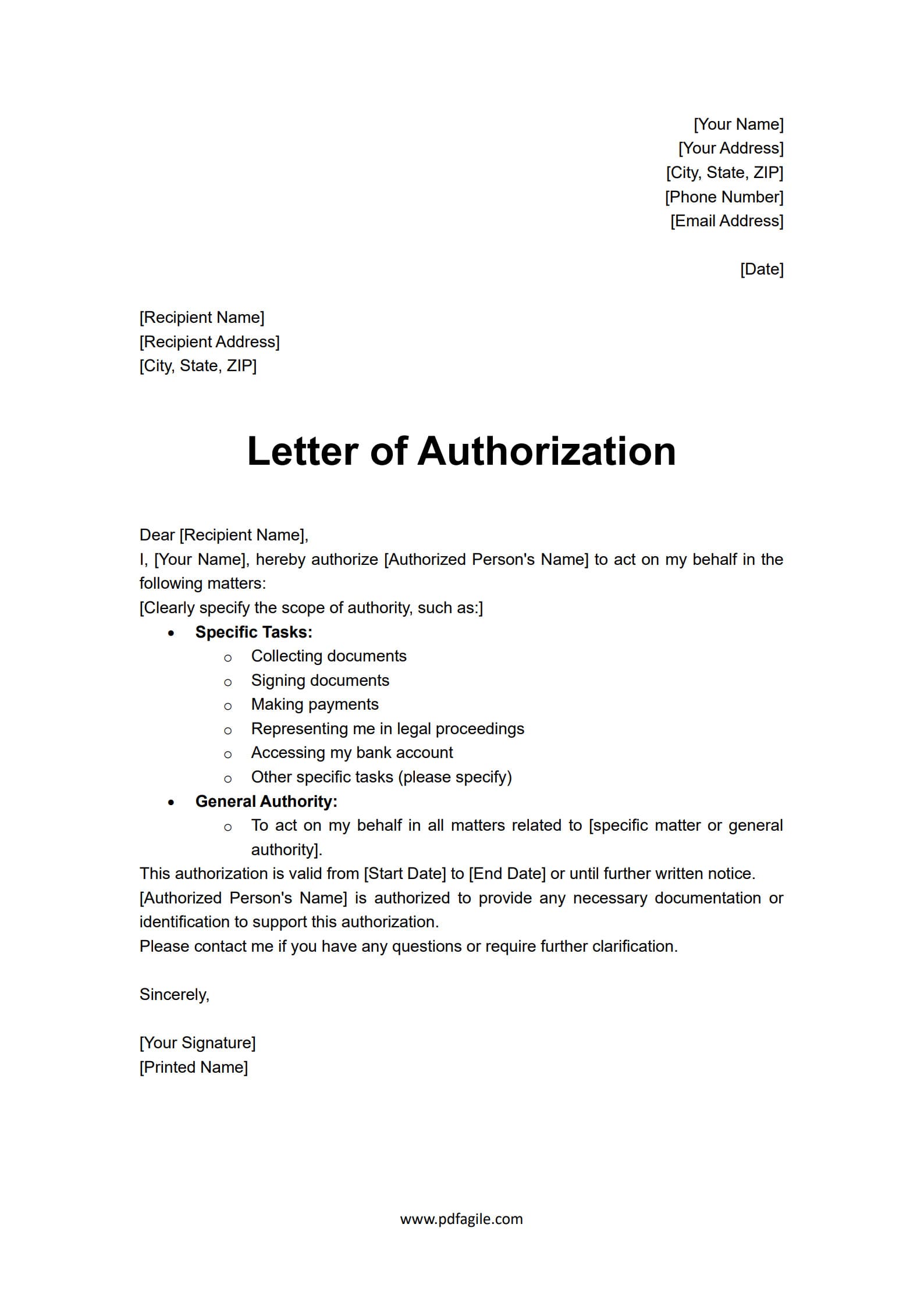
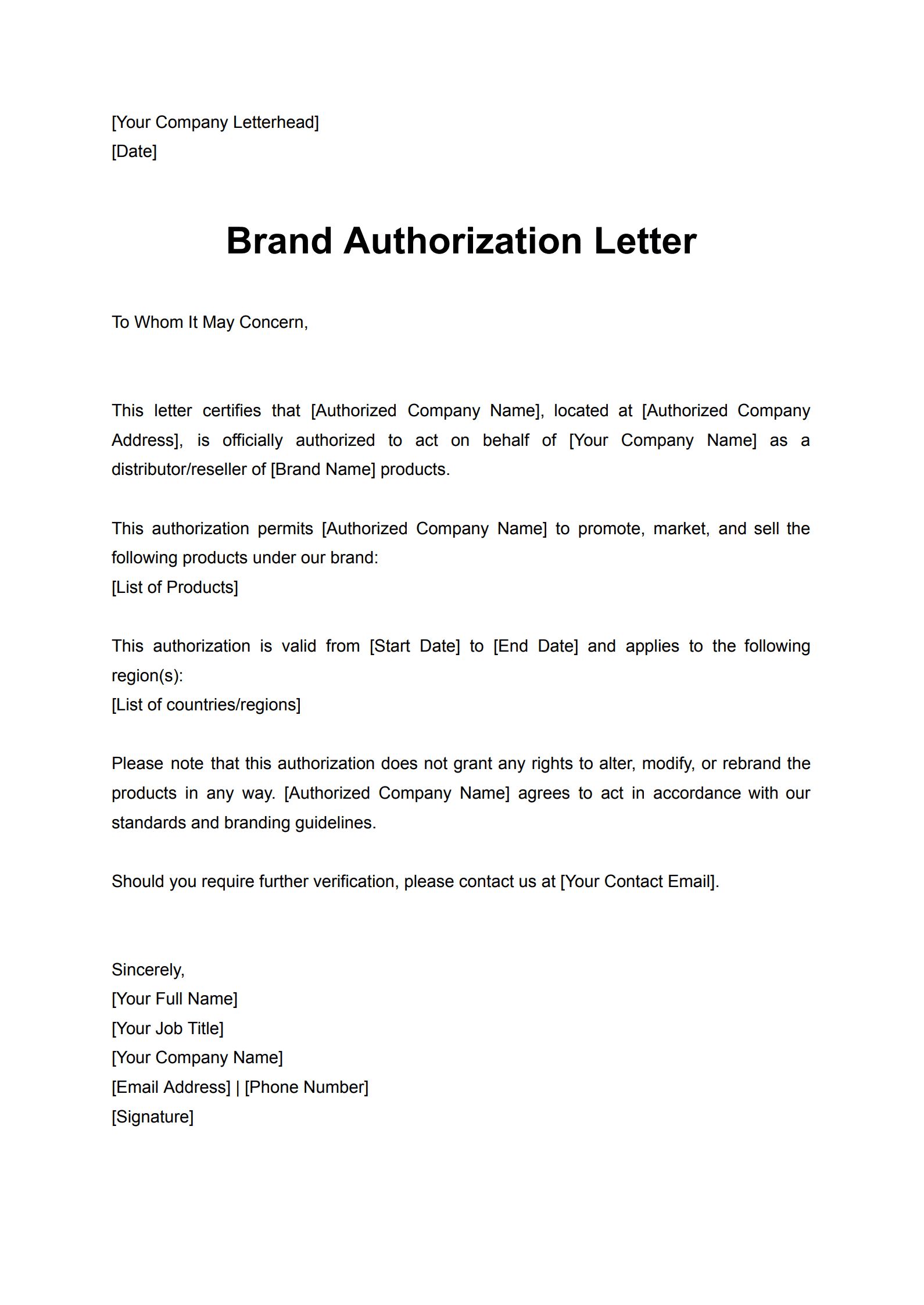
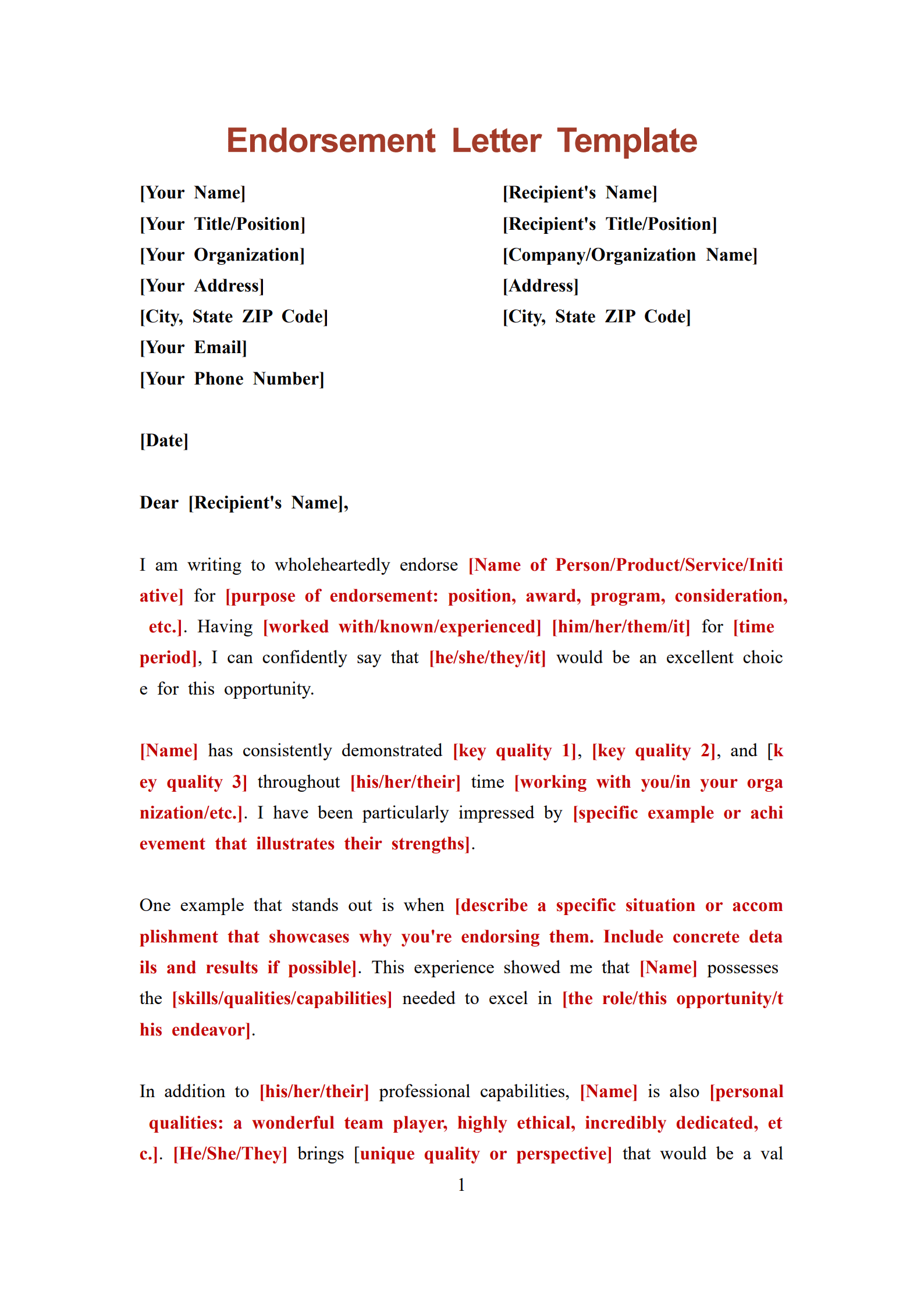
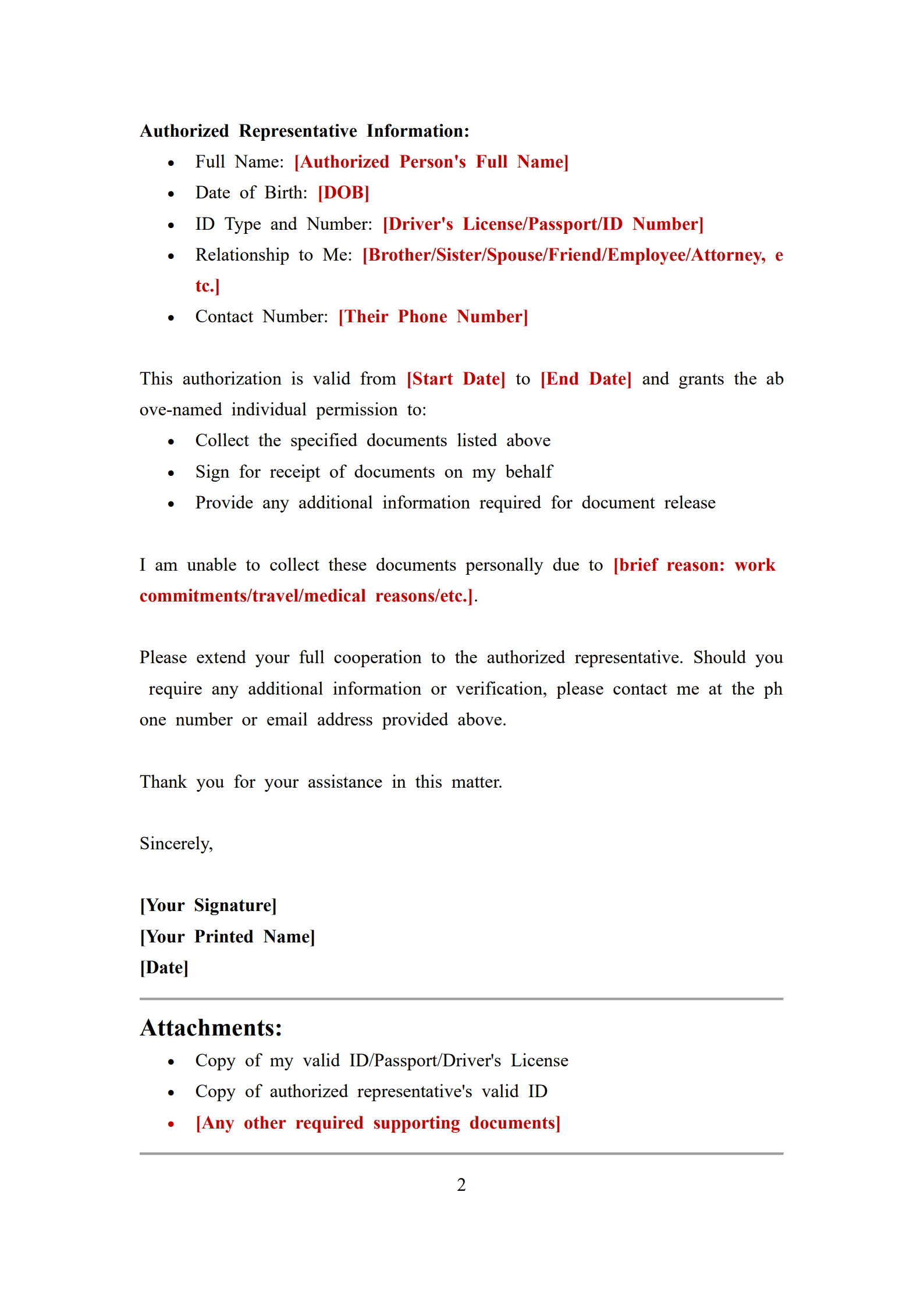
Free Download: Your Authorization Letter to Collect Documents Template
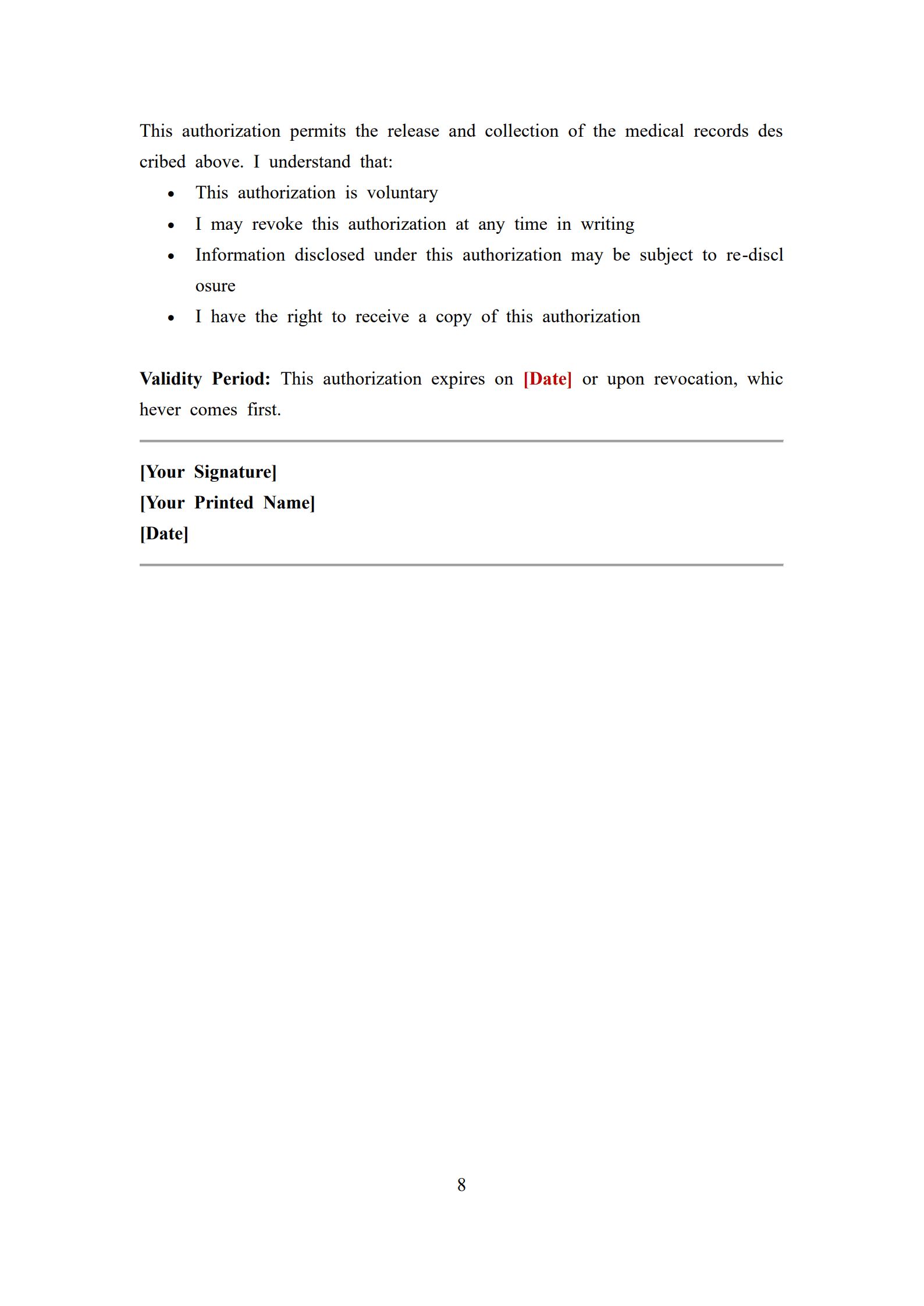
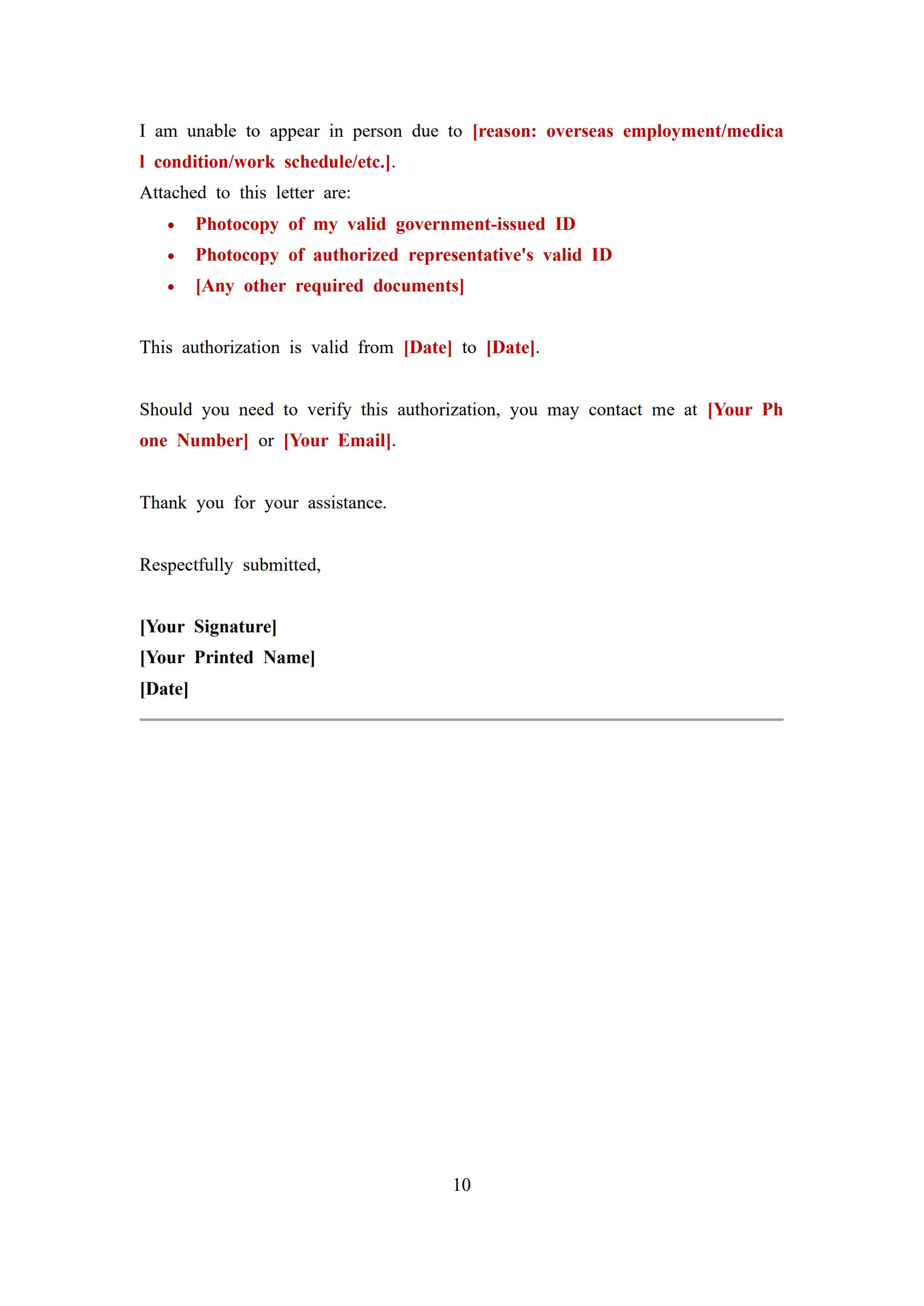
Simplify the process of authorizing someone to retrieve important paperwork on your behalf with our professionally designed authorization letter to collect documents template. This comprehensive template includes all the essential components that organizations typically require while remaining flexible enough to adapt to your specific situation. Our template can help you create a clear, professional authorization that protects your interests while facilitating smooth document collection. Simply customize the template with your details, print or send it according to the organization's requirements, and provide a copy to your designated representative. Get started on authorizing secure document collection today.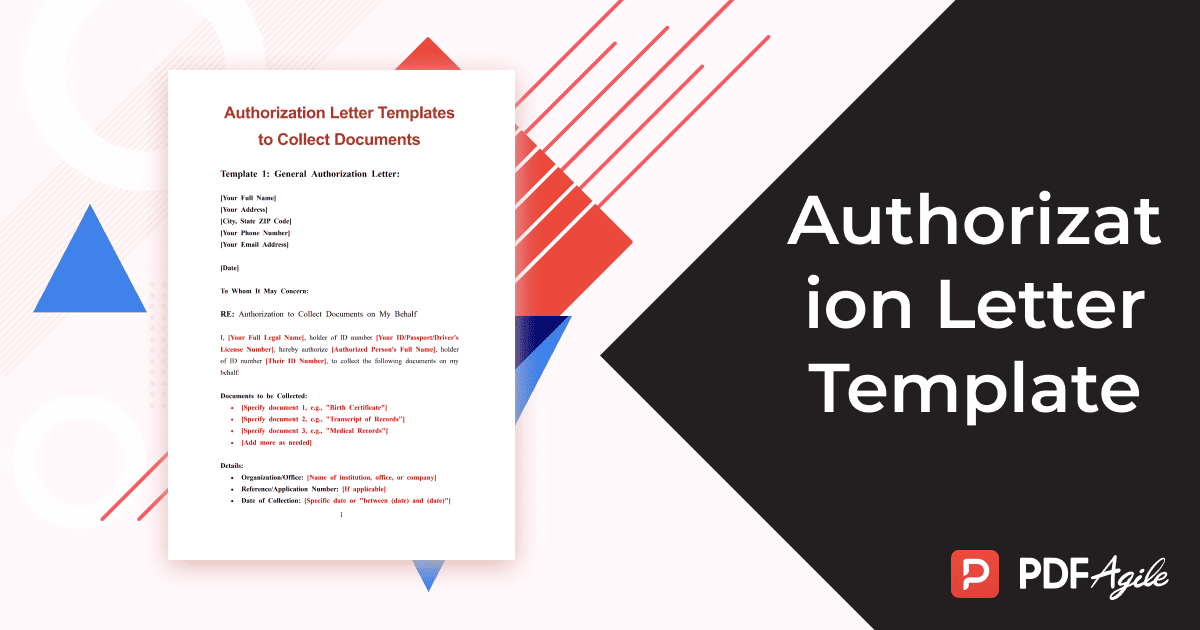
Frequently Asked Questions About Authorization Letters to Collect Documents
Q: Does an authorization letter to collect documents need to be notarized?
A: Notarization requirements vary by organization and document type. Government agencies, financial institutions, and legal documents often require notarized authorization letters to collect documents, while schools or medical offices may accept non-notarized letters. Always check with the specific organization beforehand to avoid delays.
Q: Can I authorize multiple people in one authorization letter to collect documents?
A: Yes, you can authorize multiple representatives in a single letter, though some organizations prefer separate letters for each person. If authorizing multiple people, clearly list each person's complete information and specify whether they can act independently or must act together.
Q: How long is an authorization letter to collect documents valid?
A: Validity periods depend on what you specify in the letter and the organization's policies. Most authorization letters to collect documents include timeframes ranging from 30 to 90 days. Without a specified expiration date, organizations may reject the letter as too open-ended or potentially fraudulent.
Q: What if the organization refuses to accept my authorization letter to collect documents?
A: If your authorization letter to collect documents is rejected, ask specifically why and what alternative documentation they'll accept. Some organizations have proprietary authorization forms they require instead of generic letters. Obtain their forms, complete them properly, and resubmit.
Q: Can family members collect documents without an authorization letter to collect documents?
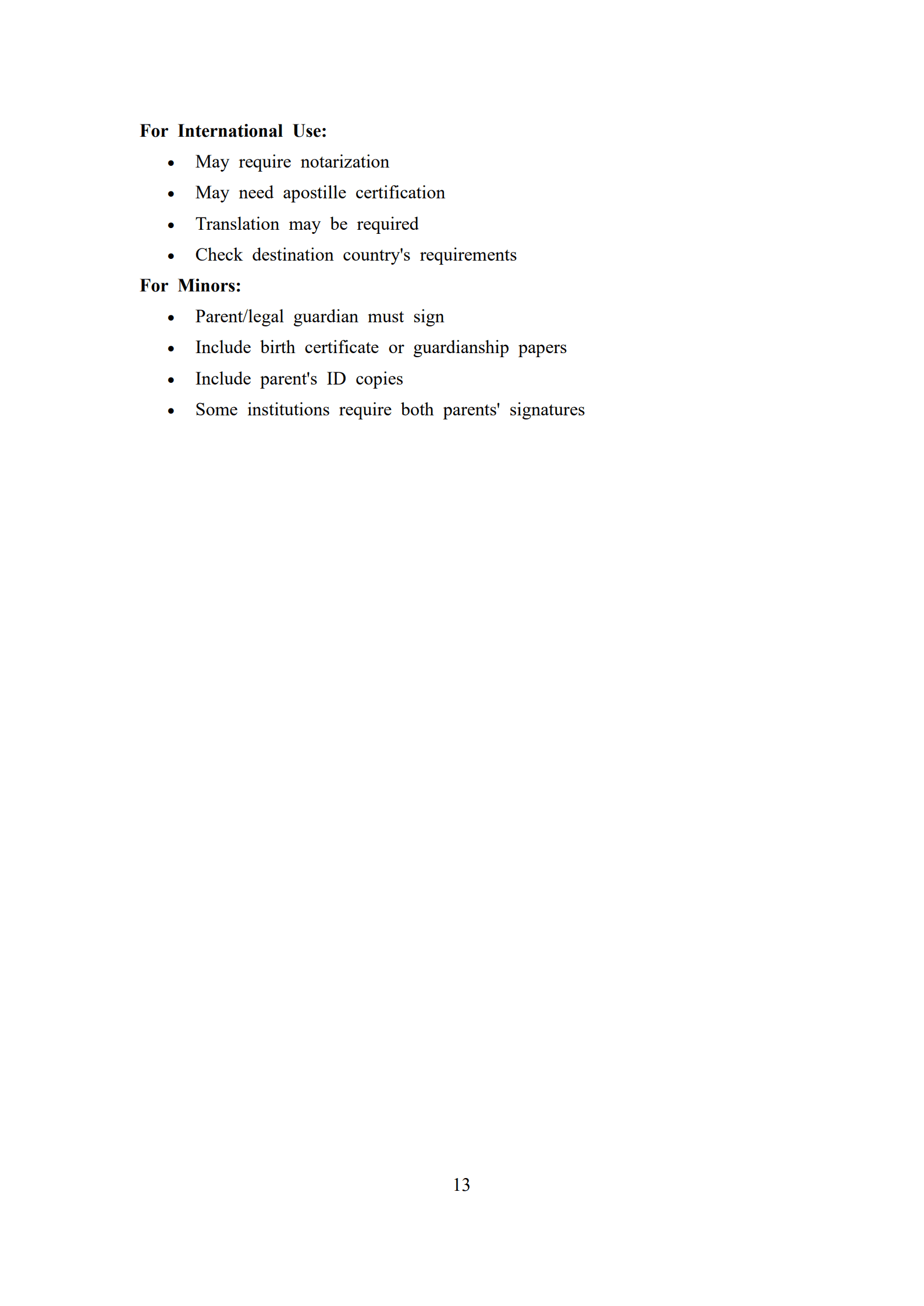
A: Being related doesn't automatically grant document collection rights. Due to privacy laws and institutional policies, most organizations require written authorization even for immediate family members. Parents of minor children are exceptions, but adult children, siblings, spouses, and parents of adults typically need authorization letters.
Q: Should I send my authorization letter to collect documents in advance or have my representative bring it?
A: Best practices vary by organization. Some require authorization letters to collect documents be submitted and approved before collection can occur, while others accept letters presented at pickup time. Contact the organization to determine their preferred procedure and timing.
Q: What happens if there's an error in my authorization letter to collect documents?
A: Minor spelling errors in non-critical information might be overlooked, but errors in names, identification numbers, document descriptions, or dates often result in rejected authorization. If you discover errors after submission, contact the organization immediately to submit a corrected authorization letter to collect documents.
Q: Can an authorization letter to collect documents be sent electronically?
A: Many modern organizations accept electronic authorization letters to collect documents via email or through secure portals, especially if digitally signed. However, some institutions still require original signatures on physical documents. Verify the organization's acceptance of electronic submissions before choosing this method.