


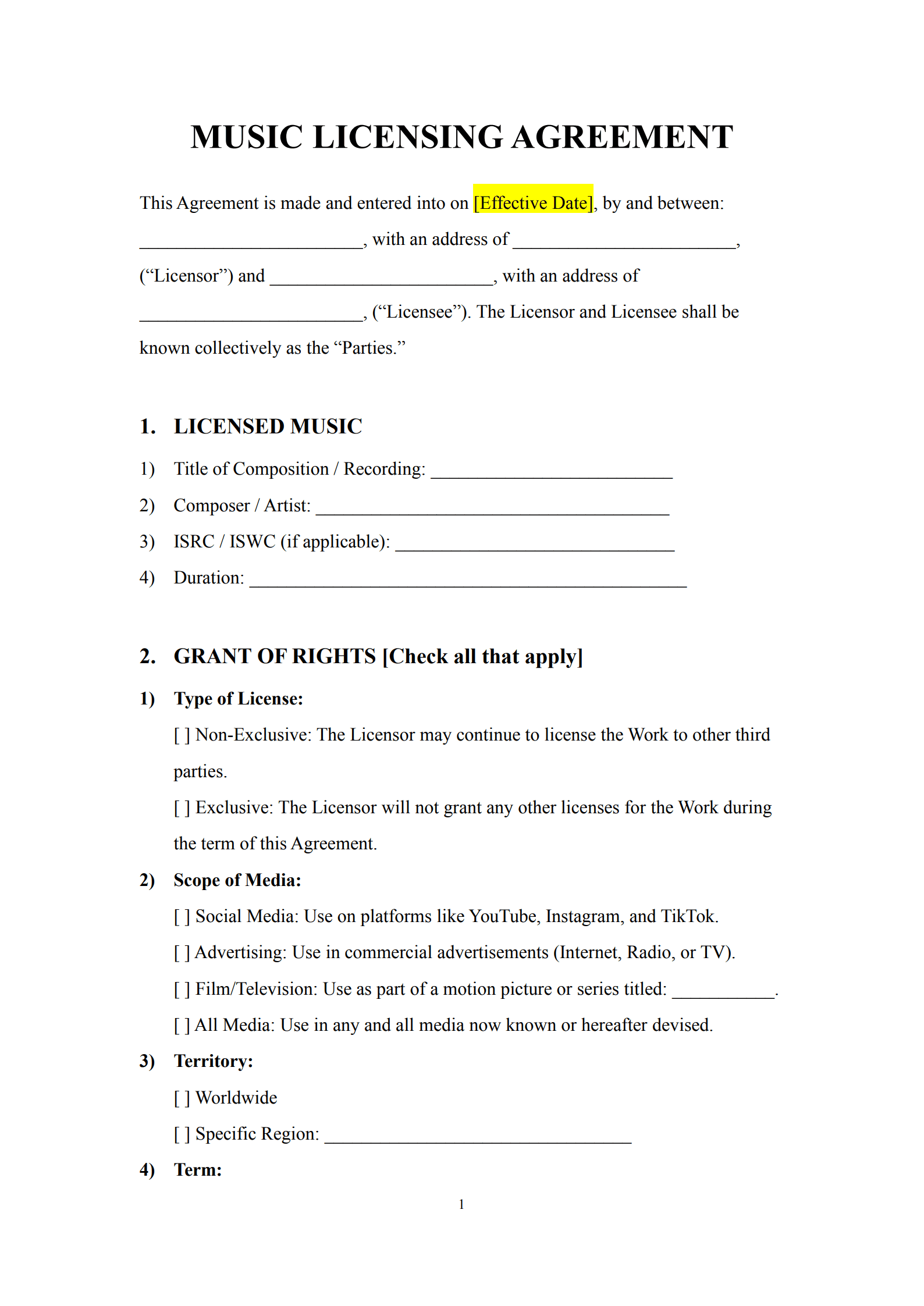
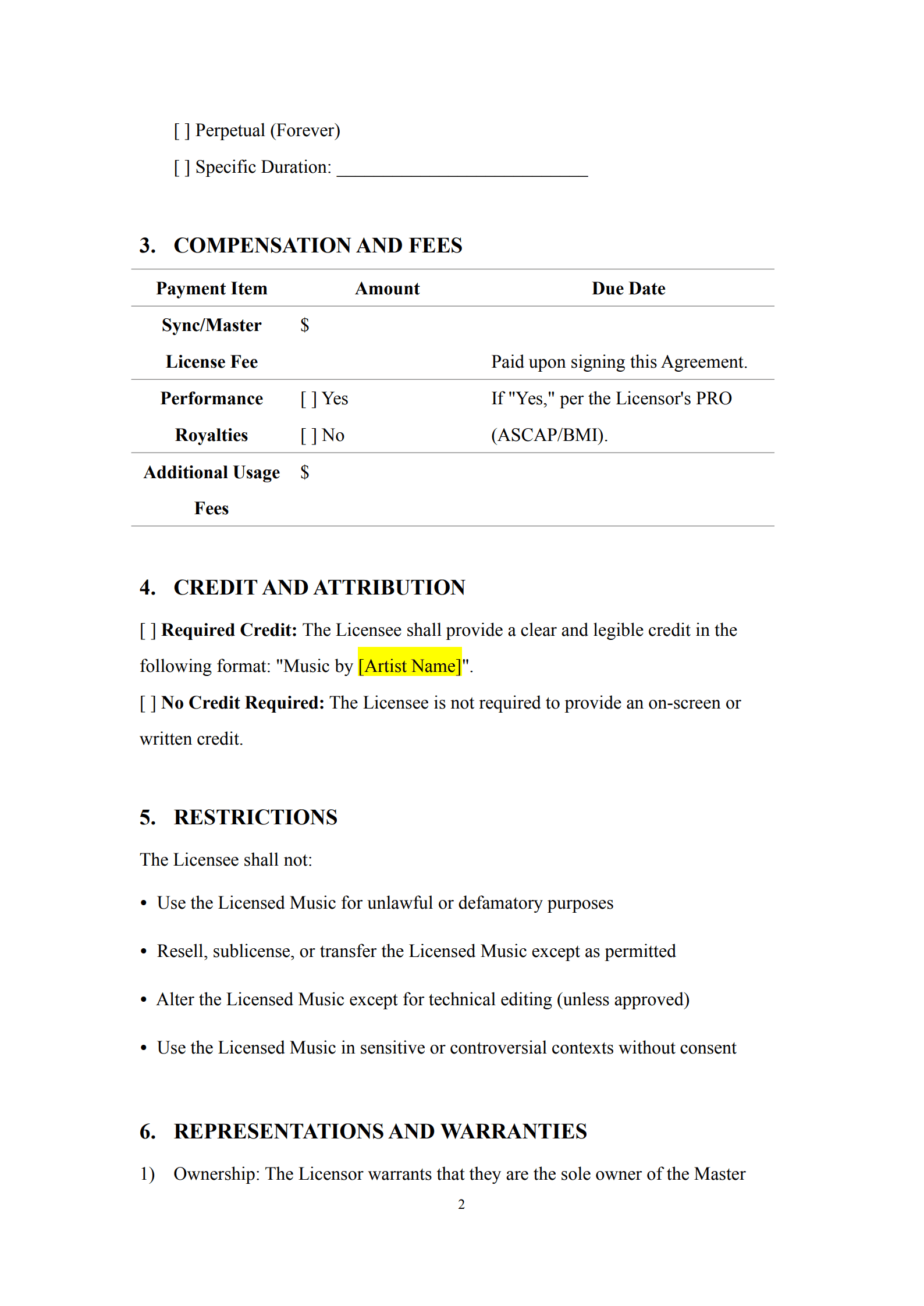
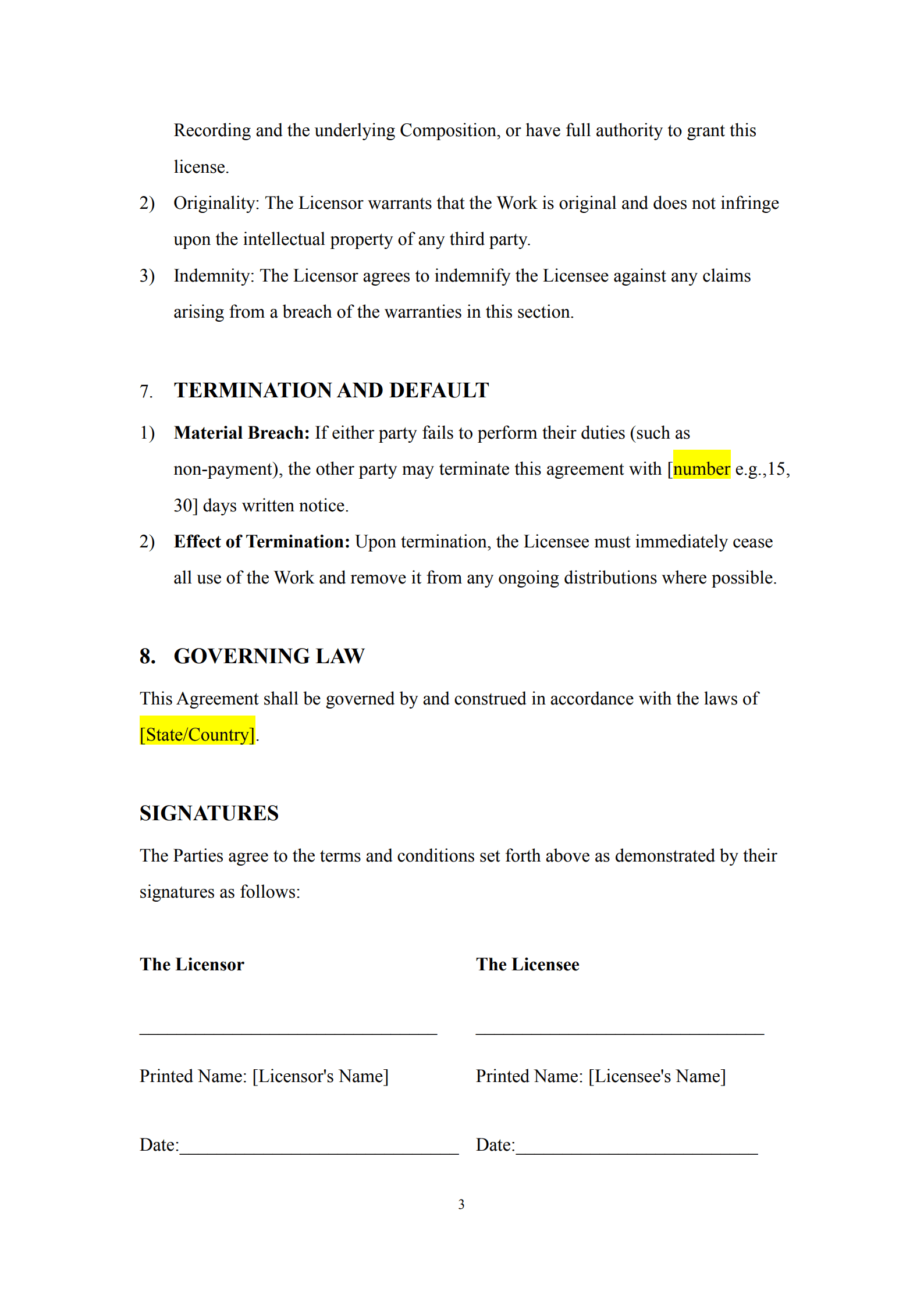
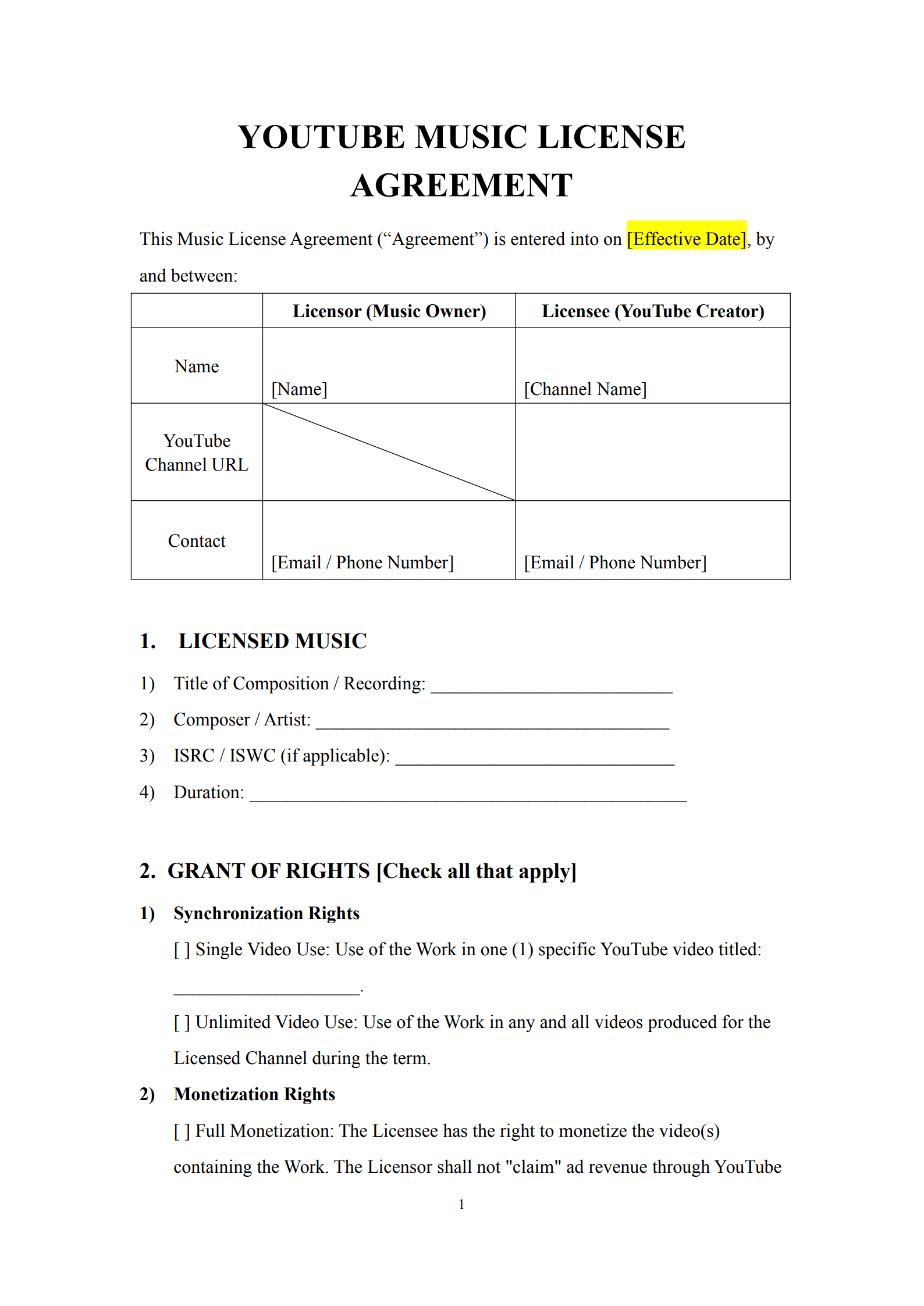
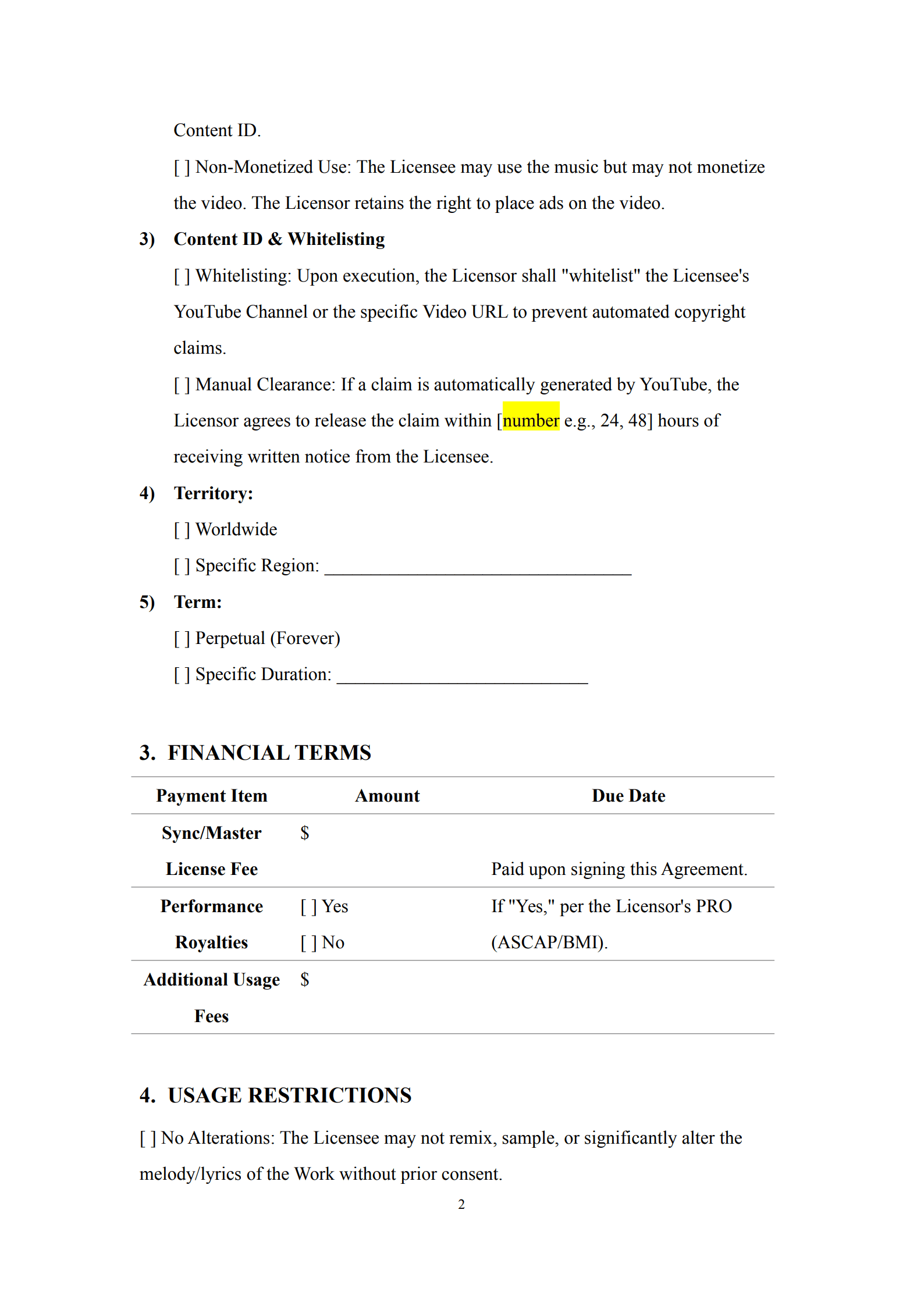
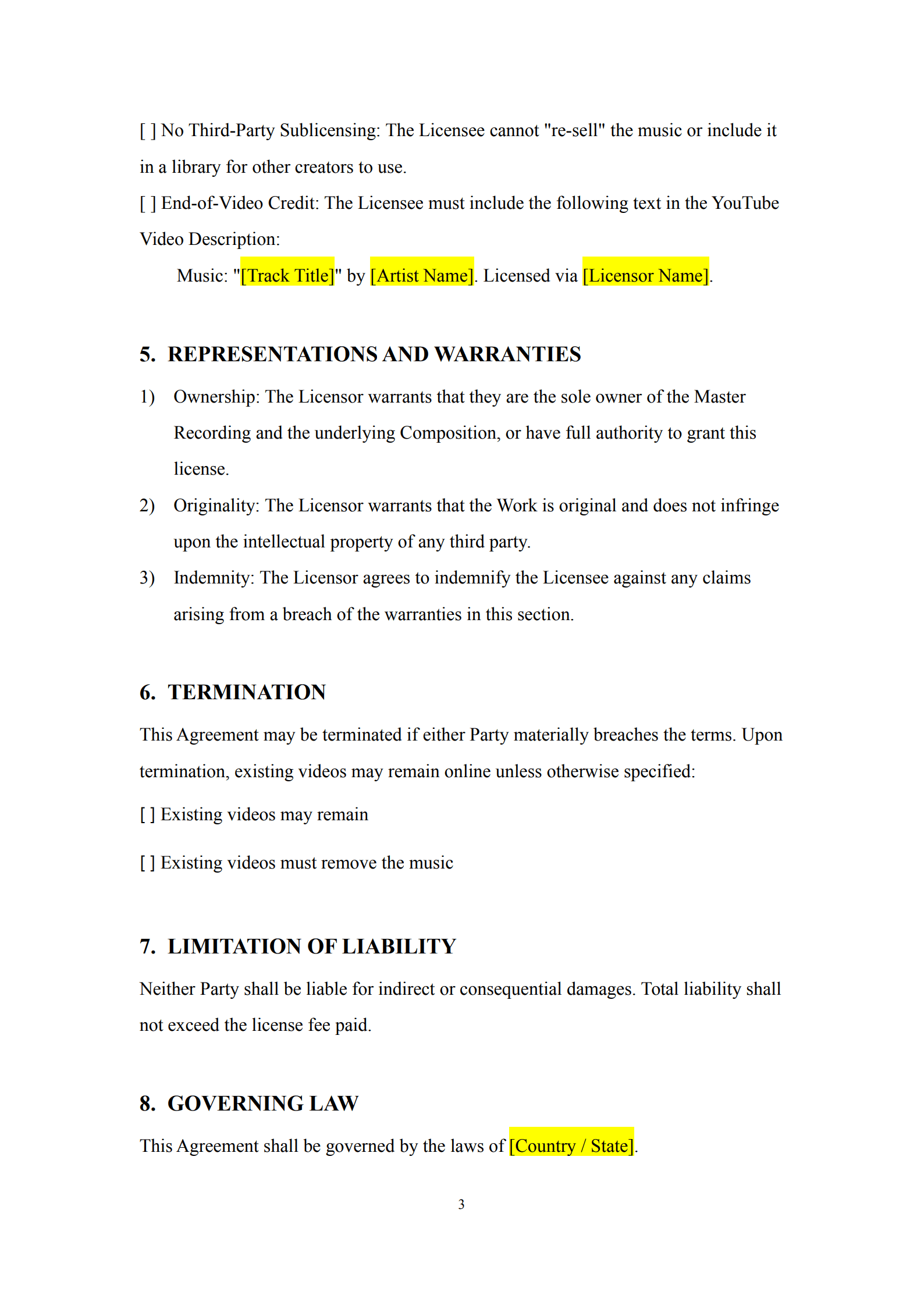
A Music Licensing Agreement legally authorizes another party to use your music under specific terms and conditions. From soundtracks and advertisements to streaming platforms, a clear licensing contract ensures fair compensation and proper acknowledgment for creators and rights holders.
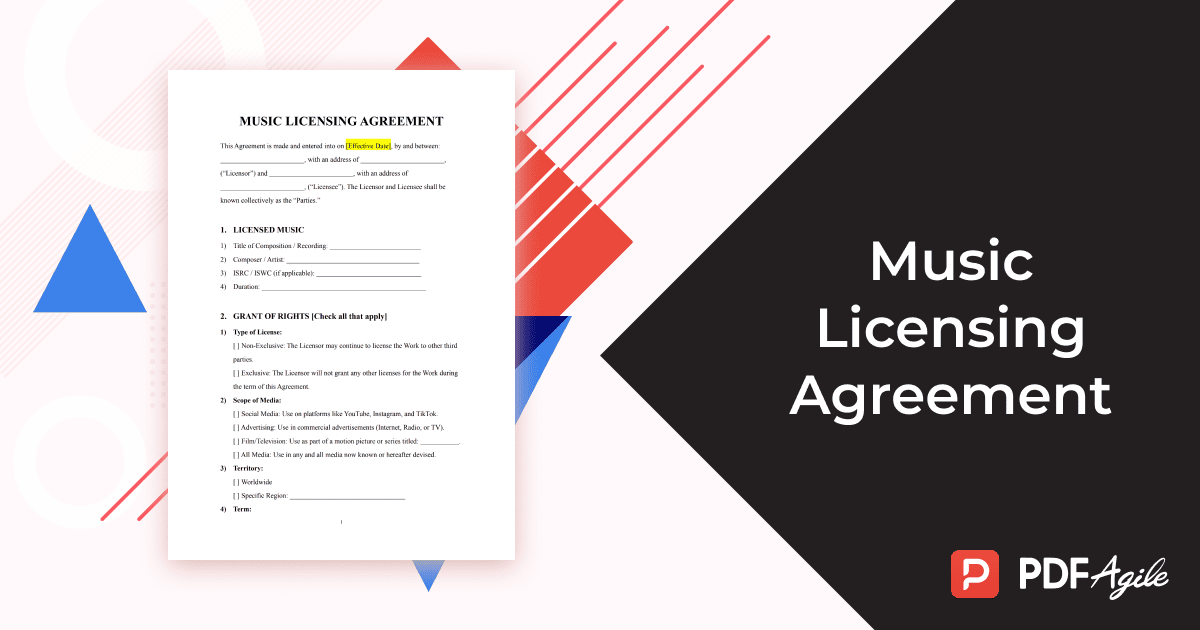
With PDF Agile’s editable Music Licensing Agreement Template, you can quickly draft, customize, and finalize professional music licenses that define permissions, duration, and revenue sharing while safeguarding your intellectual property.
1. What Is a Music Licensing Agreement?
A Music Licensing Agreement is a legally binding contract between the owner of musical work (licensor) and the party seeking permission to use it (licensee). It grants specific rights—such as reproduction, distribution, synchronization, or performance—under defined terms.
The agreement ensures that the licensee can lawfully use the work while the licensor retains ownership and receives appropriate royalties or fees.
2. Why Do You Need a Music Licensing Agreement?
Music is valuable intellectual property. Without a proper license, unauthorized use can lead to copyright infringement disputes and revenue loss.
You need a music licensing agreement to:
- Clarify how and where the music can be used.
- Define payment terms, royalties, or flat fees.
- Protect your rights from unauthorized distribution.
- Establish legal proof of permission for both parties.
Whether you’re a composer, producer, or business securing songs for media projects, this agreement is essential to protect artistic and commercial interests.
3. Key Clauses in a Music Licensing Agreement
A solid music licensing contract includes:
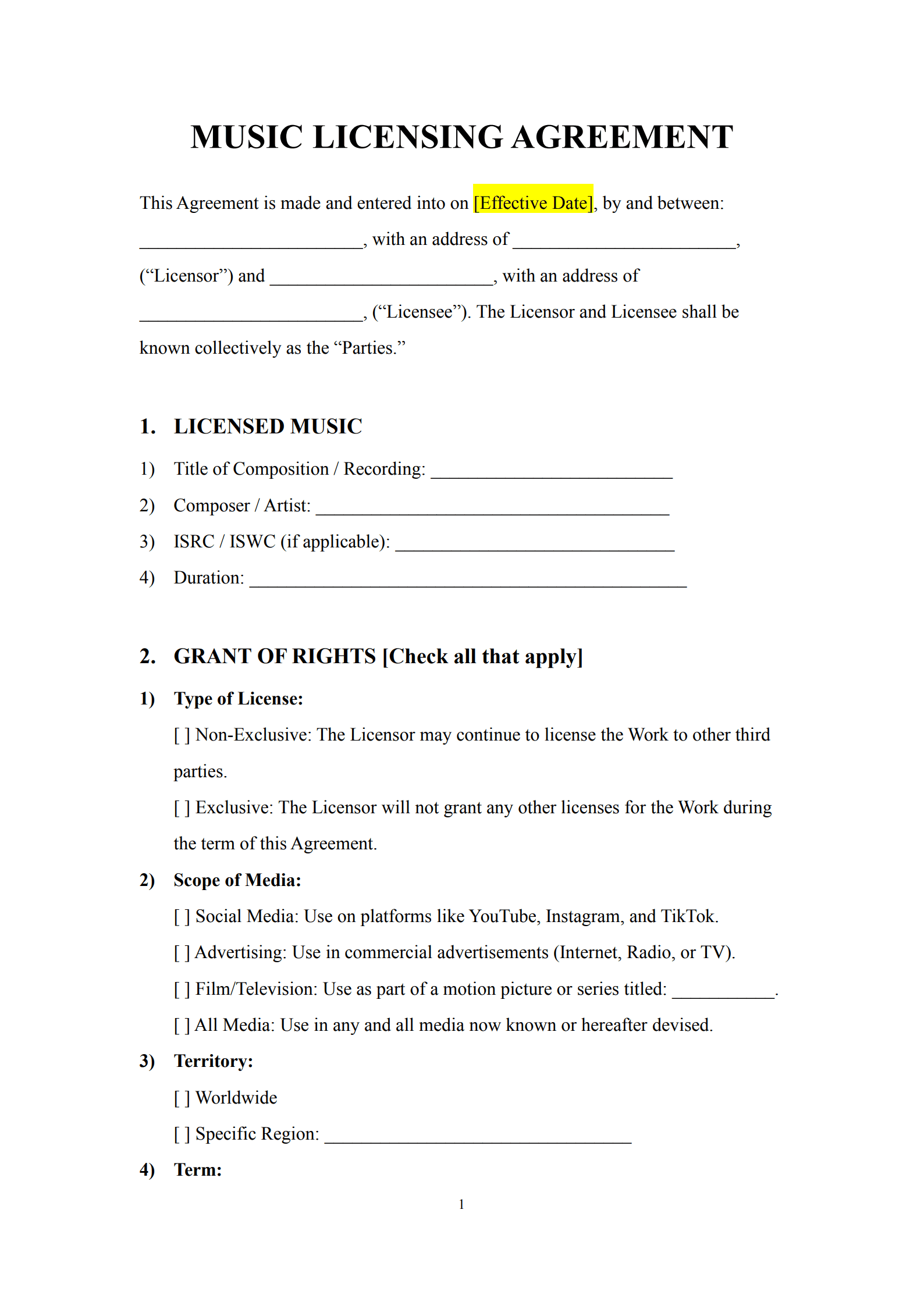
- Grant of Rights – Details the usage type (e.g., mechanical, synchronization, performance).
- Territory and Duration – Defines geographical limits and license period.
- Compensation – Specifies fees, royalties, and payment schedules.
- Ownership and Copyright Notice – Confirms who retains ownership and how credits must appear.
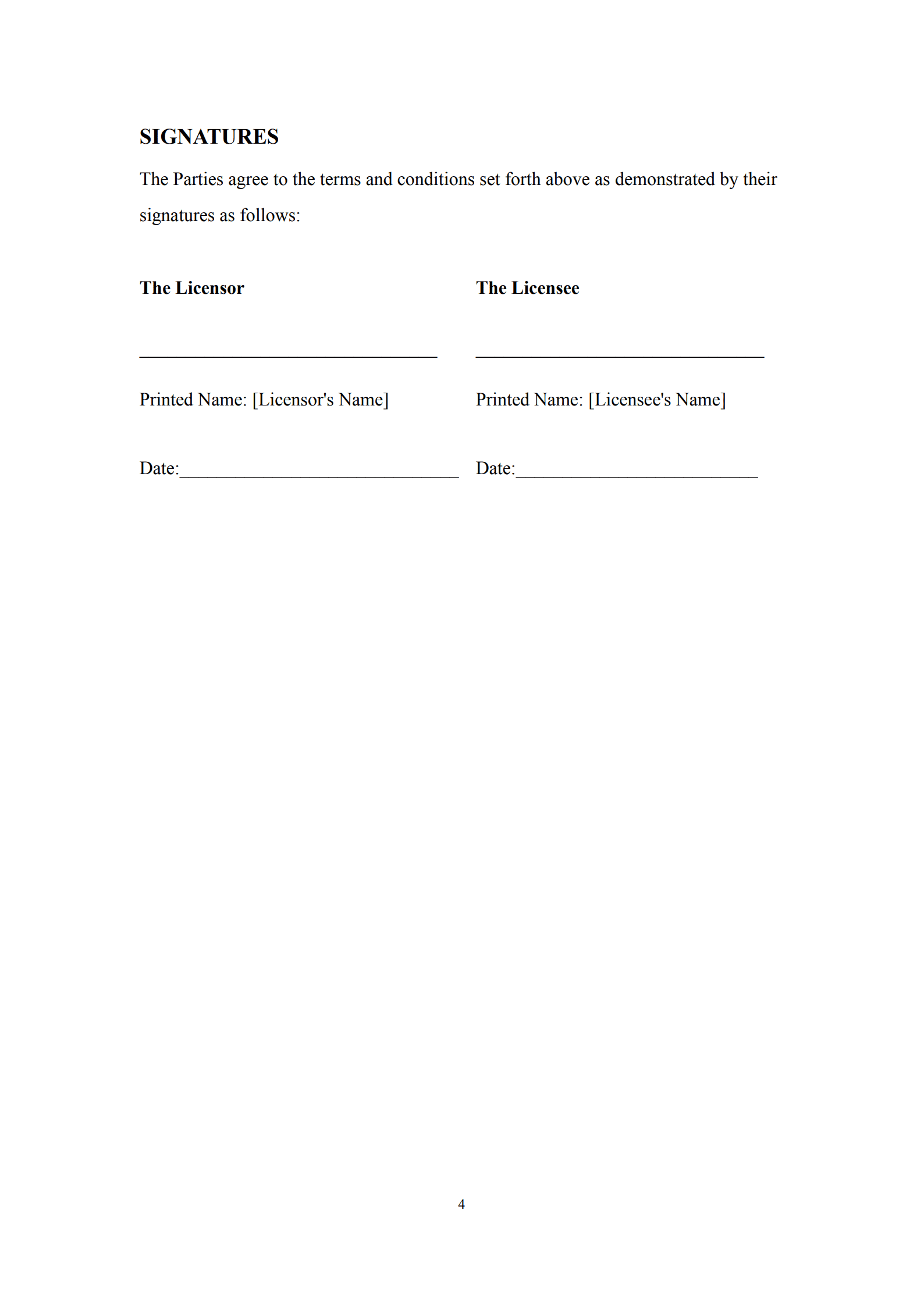
- Warranties and Representations – Ensures the work is original and free of legal claims.
- Termination and Renewal – Terms under which either party can end or extend the agreement.
- Dispute Resolution – Outlines applicable law and procedures for conflicts.
4. When to Use a Music Licensing Contract?
Use this agreement when:
- Allowing your song to be used in movies, TV, commercials, or games.
- Providing music to streaming or download platforms.
- Licensing tracks to record labels, businesses, or event organizers.
- Sharing rights among multiple creators or publishers.
It provides a clear record of rights, permissions, and obligations to avoid future misunderstandings.
5. Advantages of Using a Music Licensing Agreement
- Legal Protection – Prevents copyright infringement and clarifies usage rights.
- Transparent Revenue Sharing – Guarantees fair compensation for every use.
- Professional Credibility – Shows commitment to lawful music management.
- Conflict Prevention – Reduces risk of misuse, duplication, or unauthorized sharing.
- Customizable for Any Scenario – Suitable for single-use or recurring licensing deals.
6. How to Use the Music Licensing Agreement Template
Creating your agreement with PDF Agile’s Music Licensing Agreement Template is simple:
Step 1: Download and open the editable file.
Step 2: Enter the parties’ details—artist, producer, or company.
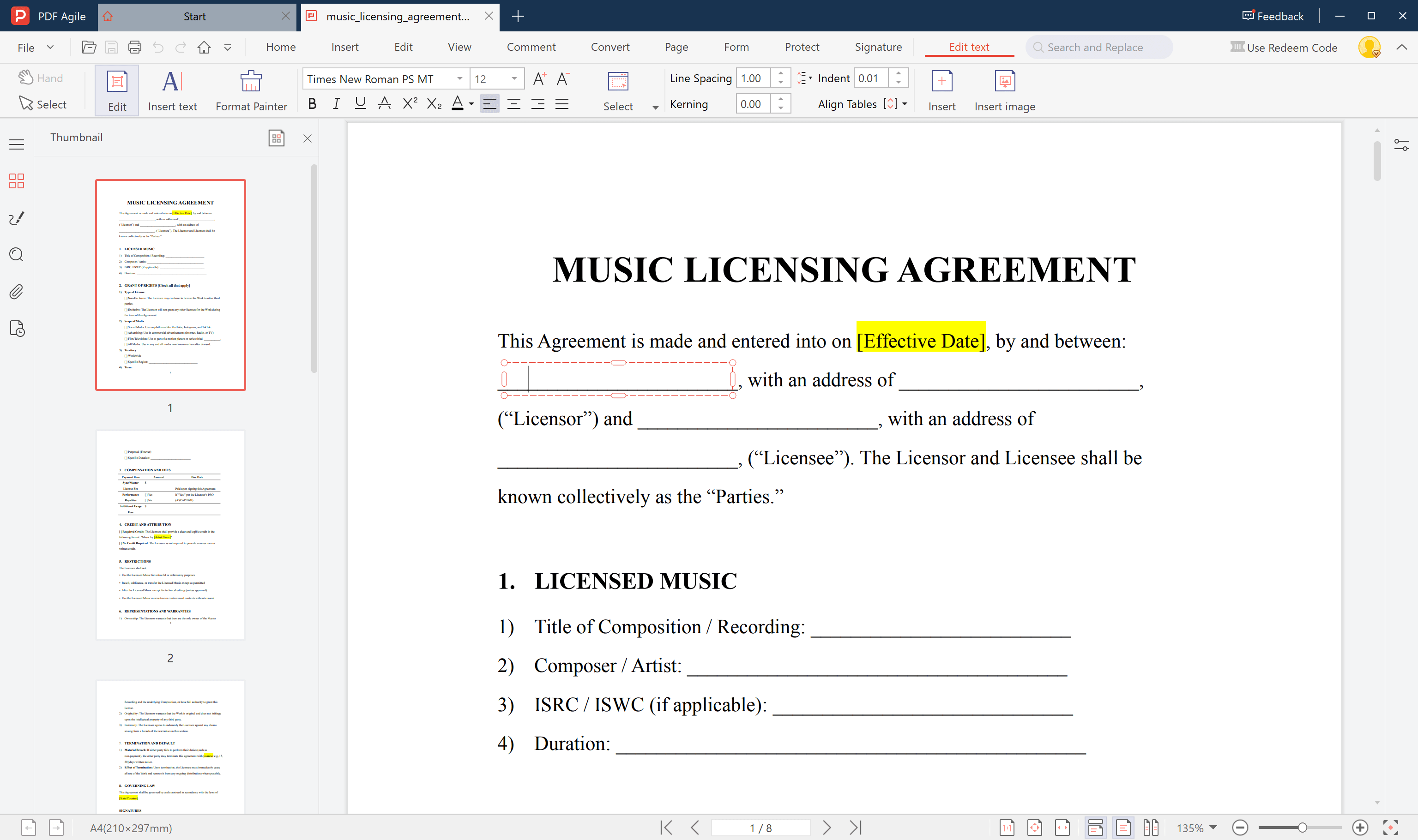
Step 3: Adjust license scope (exclusive or non-exclusive).
Step 4: Set payment, royalty, and credit terms.
Step 5: Review and sign digitally using PDF Agile’s secure e-signature function.
Step 6: Save, share, or print your finalized document.
This process ensures a legally sound license built for both digital and traditional use.
7. Key Considerations When Using Music Licensing Contract
1. Verify that all contributors or co-owners have agreed to the license.
2. Specify whether the license includes synchronization, public performance, or streaming rights.
3. Establish clear record-keeping for royalty statements.
4. Define renewal and termination procedures to prevent disputes.
5. Always review local copyright laws for compliance.
FAQs about Copyright License for Music
1. Can I use this template for both individual artists and record labels?
Yes, the template is flexible and works for solo musicians, music producers, publishers, or record labels engaging in any type of licensing.
2. Is a PDF-signed licensing agreement legally valid?
Yes. A PDF e-signed document holds the same legal weight as a physical signature in most jurisdictions, provided the digital signature process follows e-signature laws.
3. What should I include if the license is non-exclusive?
Specify that the licensor may grant similar licenses to others and clarify how royalties or fees differ from exclusive arrangements.
4. What are the risks of licensing?
Common risks involve unauthorized distribution, misreporting of royalties, or improper crediting. A written agreement mitigates these risks by detailing every legal protection.
5. Can I modify the agreement to include sub-licenses?
Yes. Add a sub-licensing clause specifying whether the licensee may grant rights to third parties and under what conditions.
Free Download: Printable and Editable Music Licensing Agreement
You can download the Music Licensing Agreement mentioned above by clicking Use Template button on this page. Customize it to fit your specific needs and preferences.
Final Summary
A Music Licensing Agreement is vital for any artist, producer, or business that values transparency and intellectual property protection. By outlining the rights granted, compensation, and obligations, it ensures lawful and profitable collaborations.
With PDF Agile’s editable template, you can quickly create tailored music licenses that safeguard your creative work and foster professional relationships in the entertainment industry.