


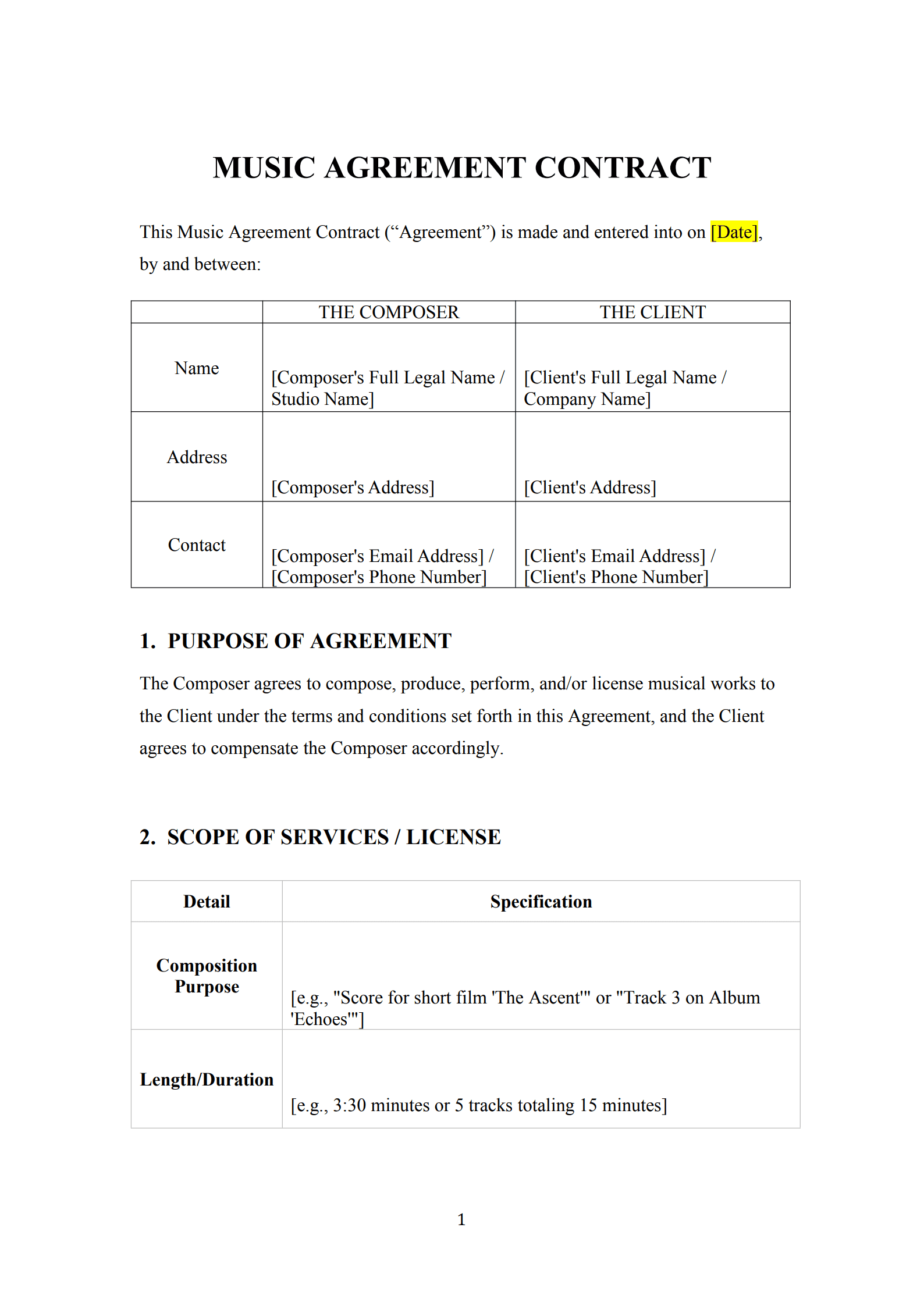
In the music industry, success often hinges not only on talent but on clear, written agreements. A Music Agreement Contract defines the roles, rights, and responsibilities between artists, producers, songwriters, and labels. With the Free, Editable, and Printable Music Agreement Template from PDF Agile, you can safeguard ownership, ensure fair compensation, and collaborate with confidence—no legal jargon required.
1. How Does a Music Agreement Contract Work?
A music agreement contract sets out the terms under which musical works are created, recorded, distributed, or performed. It specifies contributions, profit shares, and intellectual property ownership among those involved.
This document ensures that every collaborator knows exactly how royalties are divided, who controls the master recordings, and what can be done with the music. In short, it protects both creative and business interests so artists can focus on making music.
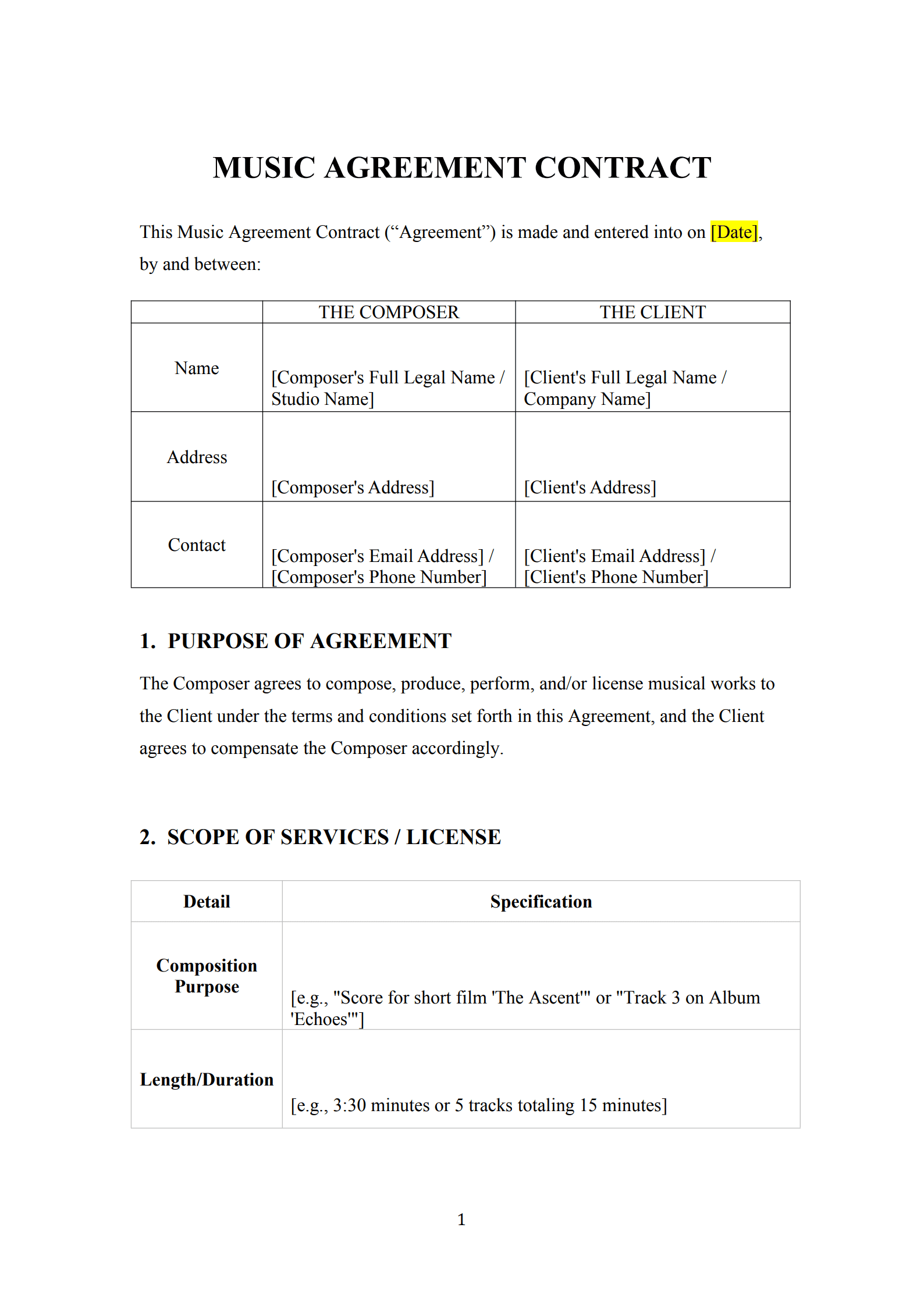
2. Elements the Music Agreement Contract Covers
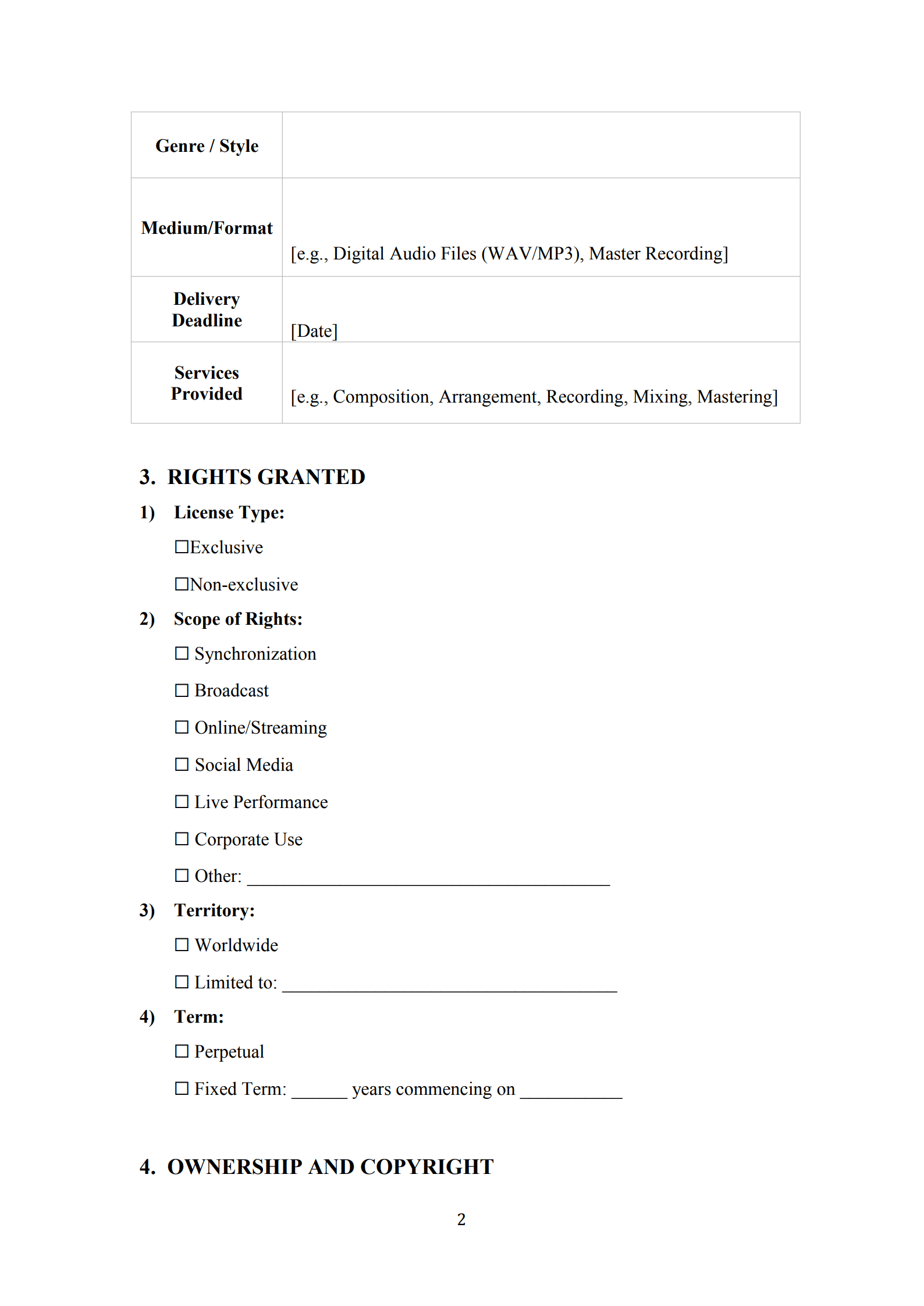
A professional music agreement should cover:
- Parties Involved: Songwriters, performers, producers, and any label or publisher.
- Scope of Work: The musical work, recording sessions, or performances covered by the contract.
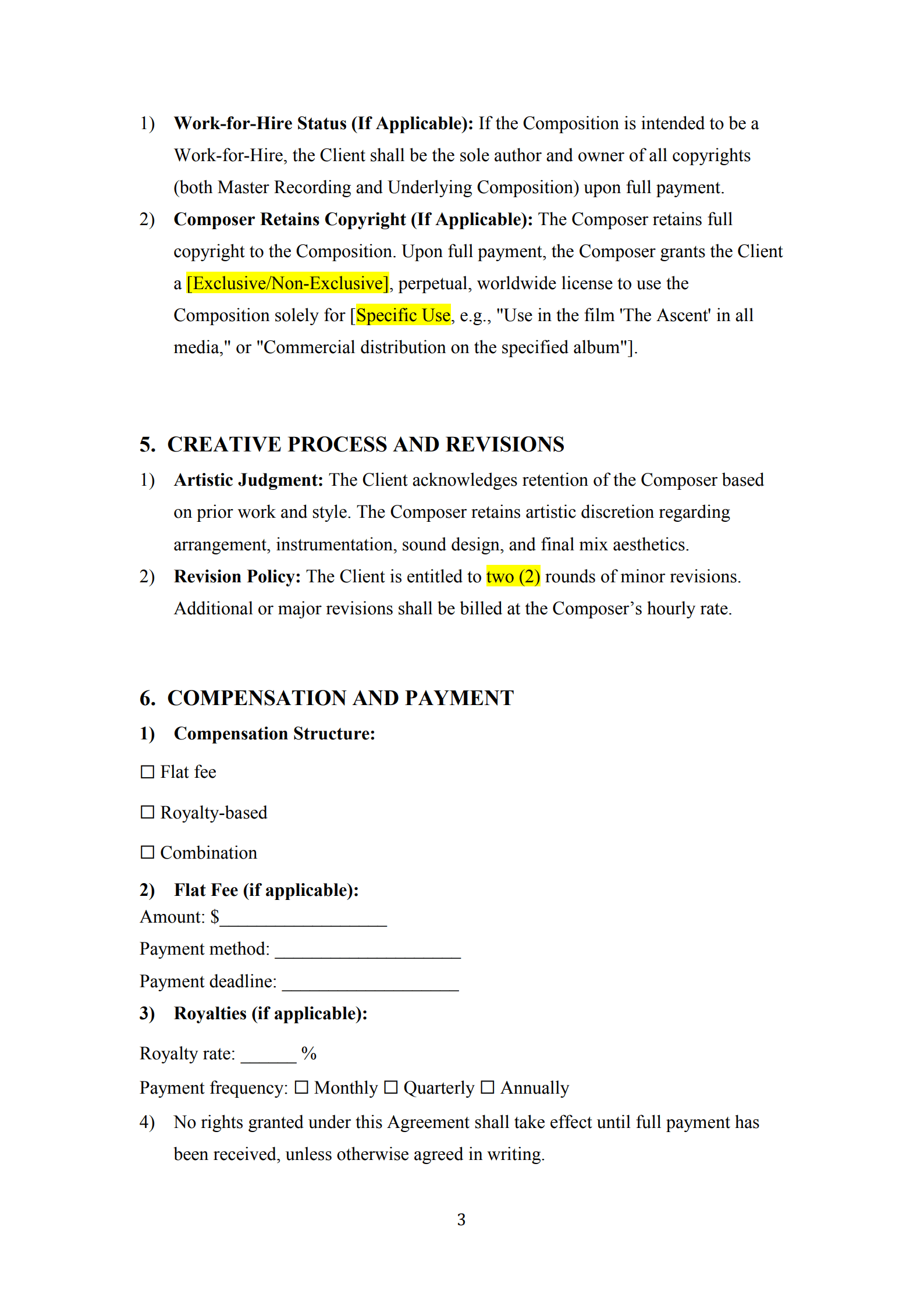
- Rights & Ownership: Who owns the composition, master recording, and publishing rights.
- Royalties & Payments: Breakdown of performance, mechanical, and sync royalties or revenue shares.
- Usage & Distribution: Permissions regarding digital streaming, live shows, or licensing.
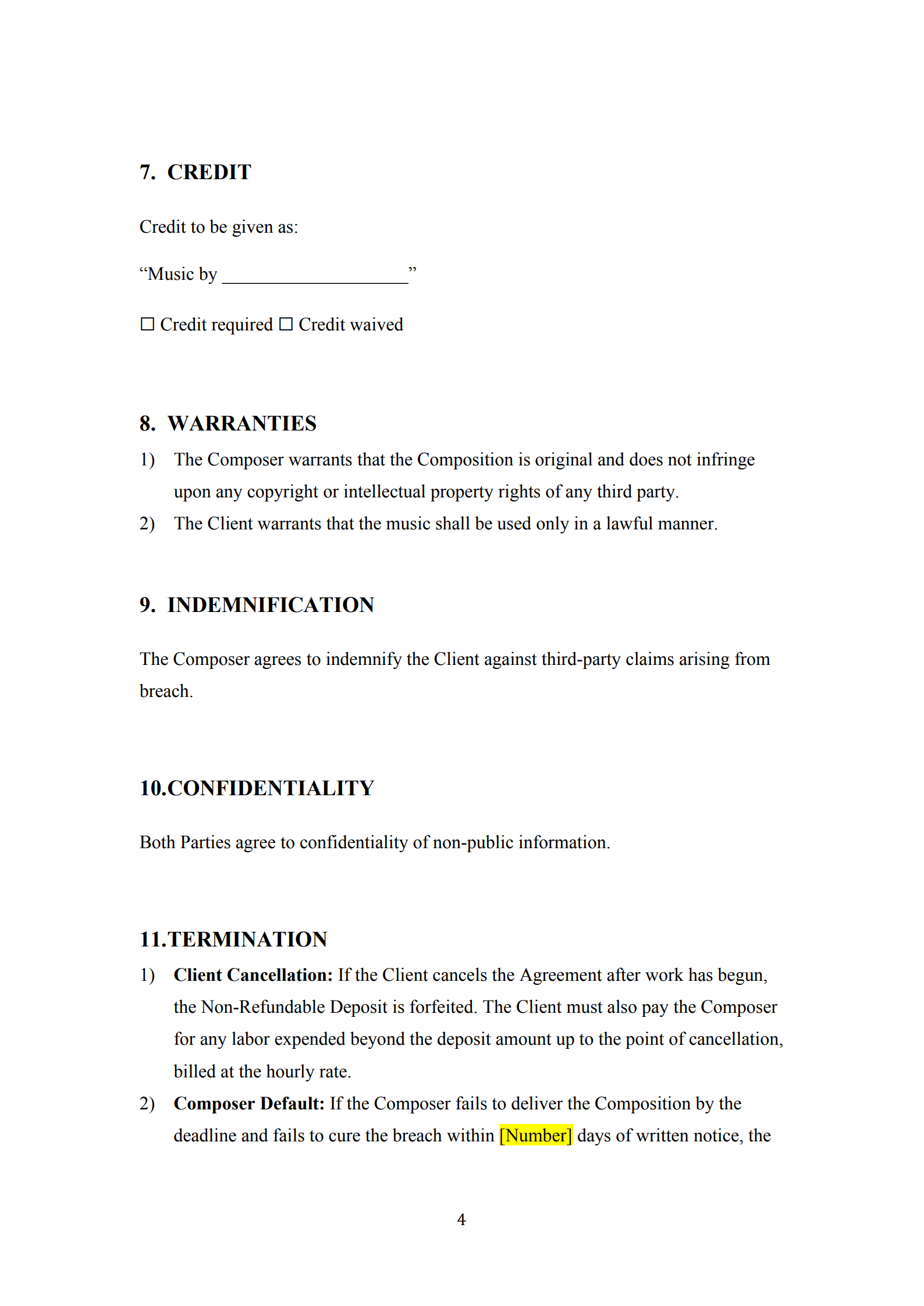
- Duration & Termination: How long the contract lasts and how it can be renewed or ended.
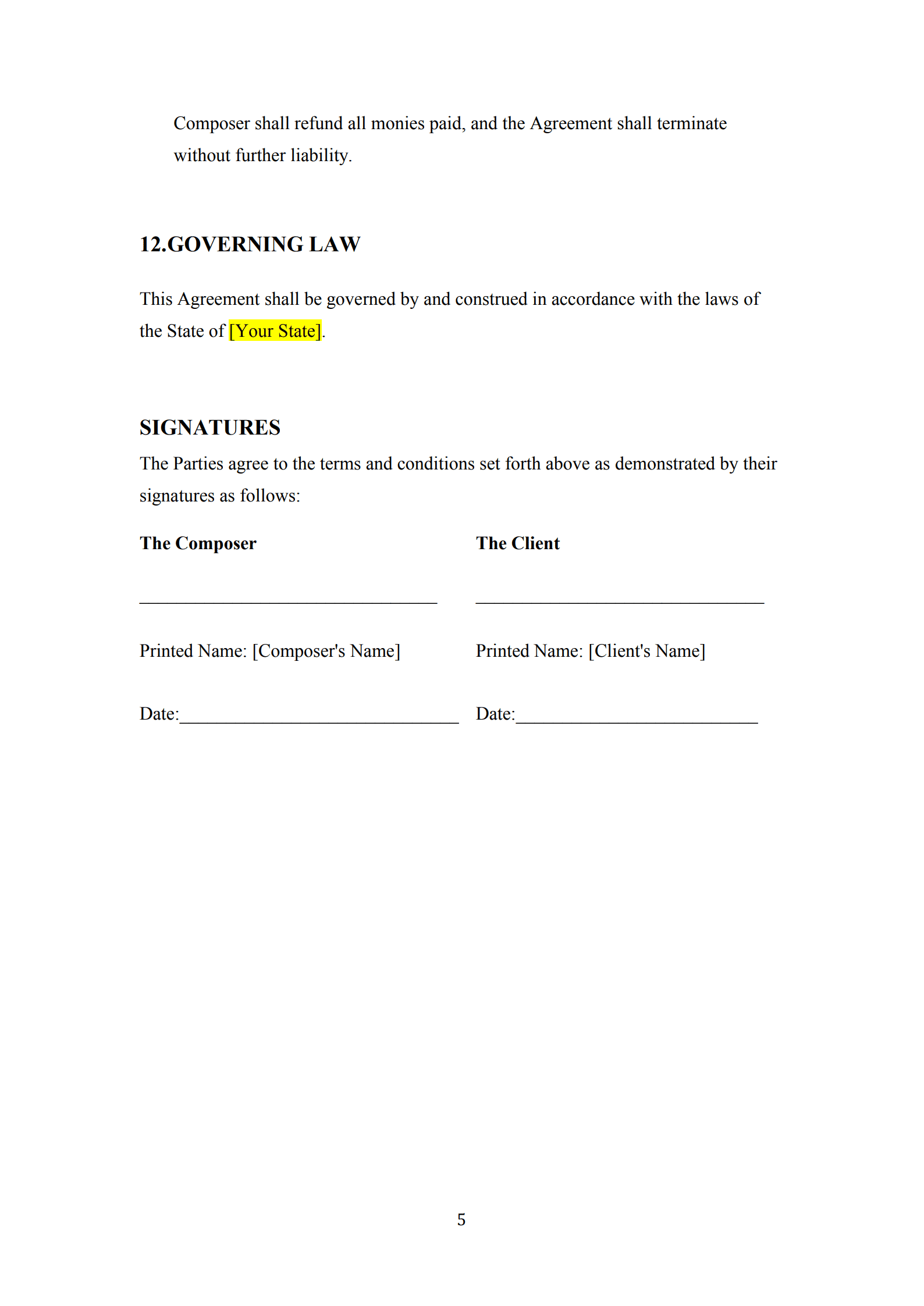
- Signatures & Legal Clauses: Final confirmation of all agreed‑upon terms.
3. When to Use a Music Agreement Contract?
Use a music agreement contract whenever people collaborate on a musical work or exchange their creative services. Common situations include:
- Band Partnerships or Feature Collaborations between multiple performers.
- Producer or Songwriter Agreements specifying royalty splits.
- Licensing or Publishing Deals for distribution and recording rights.
- Performance Engagements for live shows or festival appearances.
If any music might generate income, be released publicly, or involve shared ownership—a formal contract is absolutely essential.
4. Why Is Having a Written Music Agreement Important?
A written music agreement transforms verbal promises into legally enforceable clarity:
- Protects Creative Ownership: Ensures you retain rights to your compositions and recordings.
- Prevents Profit Disputes: Divides income fairly among all contributors.
- Clarifies Royalties: Defines exactly how and when everyone gets paid.
- Promotes Trust: Encourages professional collaboration between artists and producers.
- Provides Legal Security: Keeps your music safe if conflicts arise later.
5. Useful Tips for Completing Music Agreement
- Define Roles Clearly: Specify whether each party is a performer, songwriter, or producer.
- List Royalty Types Precisely: Identify all income sources—performance, sync, and mechanical.
- Keep the Timeline Realistic: Match deadlines to production or release schedules.
- Document Every Change: Update and sign any amendments to keep agreements valid.
- Use PDF Agile for Clean Edits: Easily customize clauses, add signatures, and export a professional print‑ready version.
6. The Easiest Way to Create Your Own Music Agreement Using This Template
Step 1: Download the Free, Editable Music Agreement Template from PDF Agile by clicking “Use Template” on this page.
Step 2: Fill in All Party Details—names, roles, and contact information.
Step 3: Customize the Terms: Set royalty percentages, payment schedules, and ownership splits.
Step 4: Review Legal Sections Carefully: Ensure all collaborators understand rights and obligations.
Step 5: Sign and Save with PDF Agile: Finalize digital signatures and print professional copies instantly.
With just a few edits, your music agreement is ready for release—clear, compliant, and collaboration‑ready.
7. FAQs about Music Agreement Contract
7.1 What is the difference between Performance and Mechanical Royalties?
Performance royalties are paid when a song is played publicly—on radio, TV, or a live show. Mechanical royalties are earned when the music is reproduced or streamed digitally. Both ensure creators are paid for their work.
7.2 Does a producer get 50% of a song?
Not automatically. The producer’s share depends on the agreed split among all contributors. Some deals grant 50% of the master royalties, others less—it should always be clearly stated in the contract.
7.3 What are the standard music contracts?
Common agreements include Artist‑Label Contracts, Producer Agreements, Publishing Deals, Collaboration Agreements, and Sync Licensing Contracts. The PDF Agile template provides a flexible foundation adaptable to all these formats.
7.4 What happens if there’s no music agreement in place?
Without a written contract, ownership and payment disputes can easily arise. Credit can be misattributed, royalties unpaid, and creative control lost. A signed music agreement prevents costly misunderstandings and keeps every role transparent.
Conclusion
A music agreement gives structure and legal security to every creative collaboration. Using PDF Agile’s Free, Editable, and Printable Music Agreement Template, you can ensure transparent royalty distribution, preserve ownership, and maintain fair professional relationships throughout your music career.