


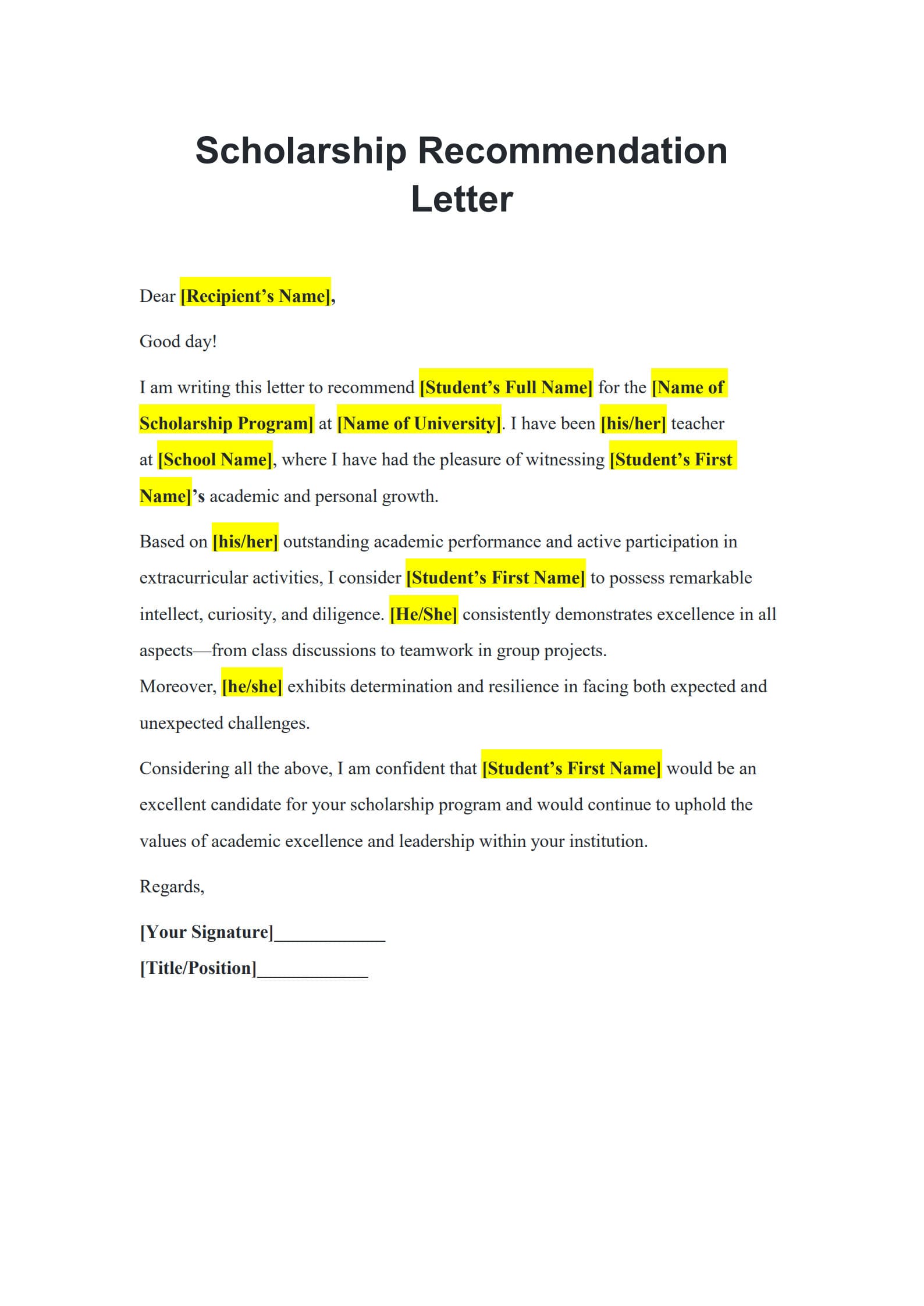
A Letter of Recommendation for Scholarship plays a decisive role in securing academic funding for deserving students. It provides the scholarship committee with credible insights into a candidate’s character, academic performance, skills, and leadership potential. Whether you are a teacher, supervisor, or mentor, crafting a well‑structured recommendation letter reflects your professionalism and substantially strengthens the student’s application. With PDF Agile’s free downloadable templates, authors can easily create formal, persuasive, and visually consistent letters that meet institutional standards.
1. What is a Scholarship Recommendation Letter?
A Scholarship Recommendation Letter is a formal document written by a teacher, professor, employer, or community leader endorsing a student’s academic abilities and suitability for a scholarship. The letter highlights the student’s qualifications, notable achievements, and personal qualities that demonstrate readiness for academic excellence. It serves as an official testament to the candidate’s credibility and future potential.
2. Why Is a Strong Recommendation Letter Important for Students?
A well‑written recommendation can be the tipping point between acceptance and rejection for many scholarship programs.
- It personalizes the student’s achievements beyond transcripts and grades.
- It demonstrates integrity, as it comes from a respected authority.
- It reinforces trust in the applicant’s competence and moral character.
- It helps differentiate the student from other strong applicants.
A thoughtfully composed recommendation reinforces the student’s academic record with a compelling narrative of dedication and leadership.
3. What to Include in a Scholarship Recommendation Letter
A professional and persuasive scholarship recommendation should contain the following key elements:
- Header & Contact Information – Include recommender’s name, title, institution, address, and date.
- Introduction – Briefly state your relationship with the candidate and how long you have known them.
- Academic & Personal Qualities – Describe intellectual ability, perseverance, leadership, creativity, and ethical standards.
- Specific Achievements – Mention measurable results such as GPA, awards, or relevant projects.
- Relevant Anecdotes – Add real examples or instances that illustrate excellence and commitment.
- Closing Statement – Summarize the candidate’s overall suitability for the scholarship and express confidence in their success.
- Signature – Include a handwritten or digital signature to authenticate the recommendation.
4. How to Write a Scholarship Recommendation Letter with Template?
Writing a persuasive recommendation is easy when using PDF Agile’s customizable letter of recommendation template for scholarship. Follow these four steps:
Step 1: Download the Scholarship Recommendation Letter Template (PDF Agile)
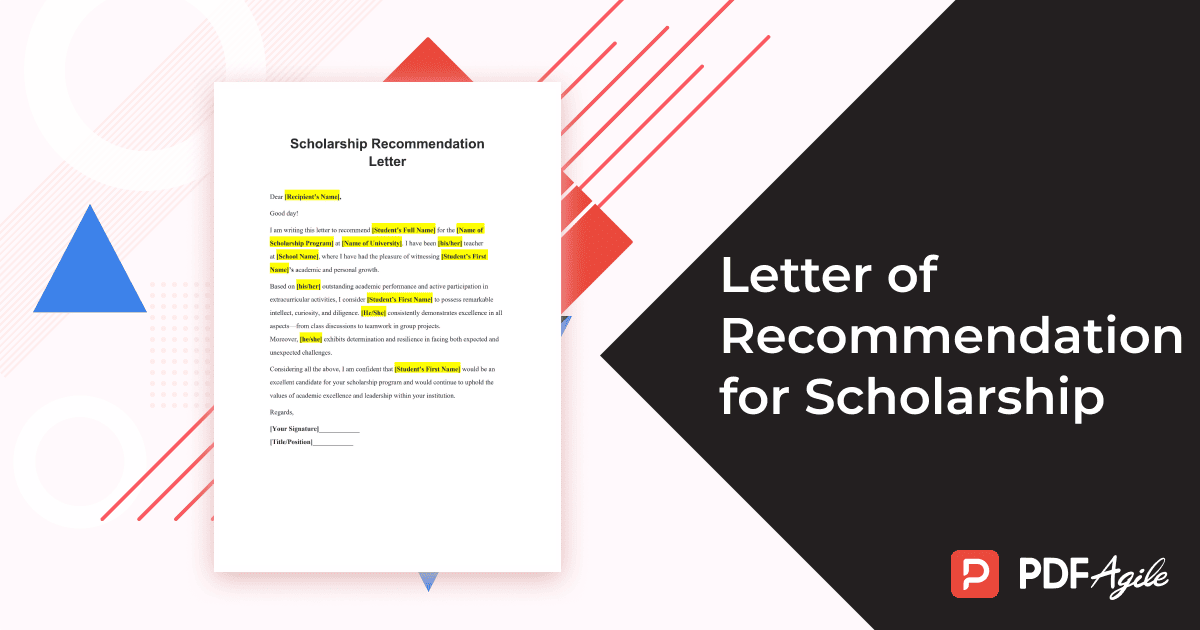
Go to the PDF Agile Template Library and download the free Scholarship Recommendation Letter template. It comes pre‑formatted with formal business layout and academic‑appropriate sections.
You can also click“Use Template”on the right side of this page and start customize it to fit your needs in no time.
Step 2: Fill in the Candidate’s and Recommender’s Information
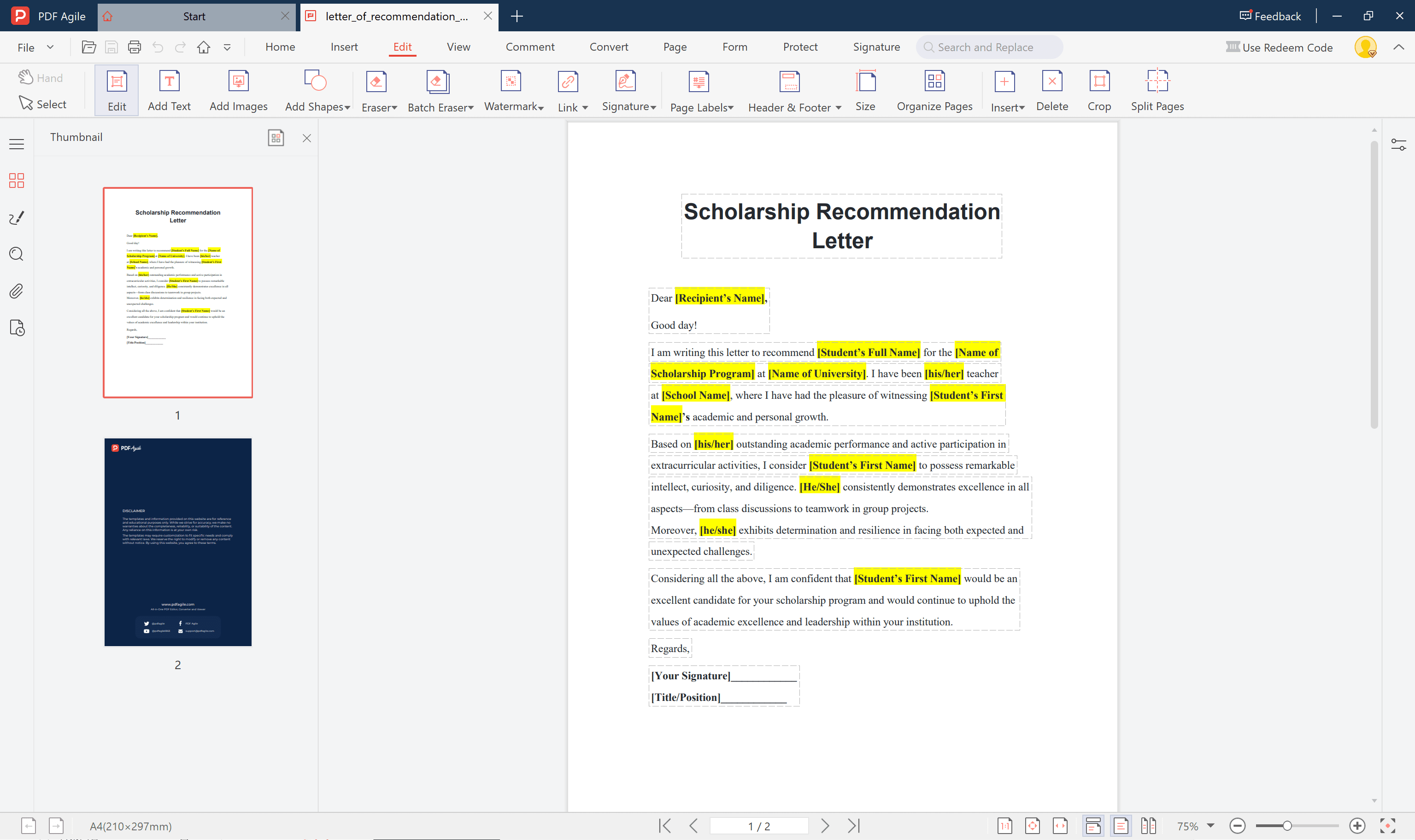
Replace the placeholders with your relevant details—your position, institution, candidate’s name, relationship duration, and key academic details. Ensure all personal and institutional data are accurate.
Step 3: Add an E‑signature for Validation
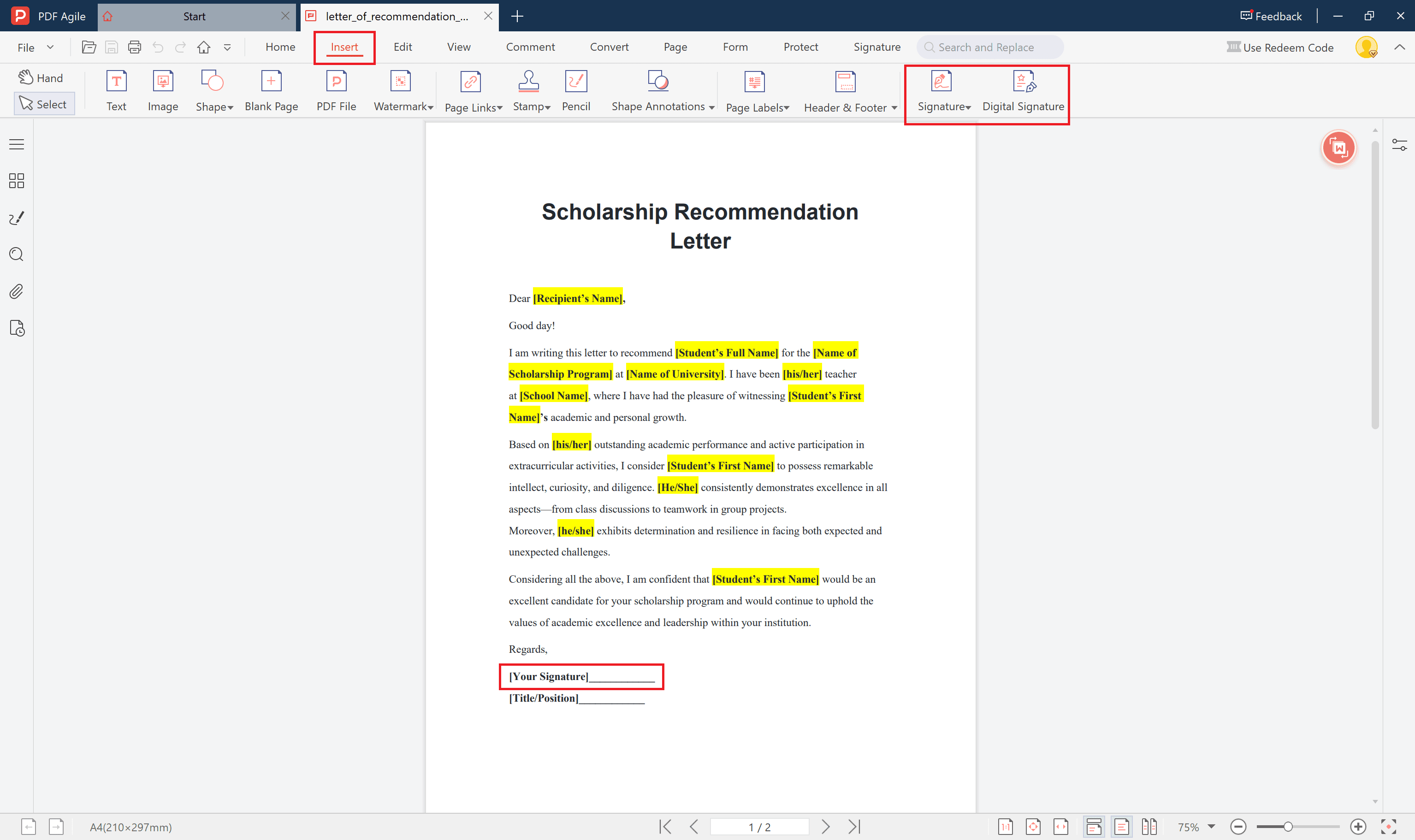
With PDF Agile’s built‑in signature tool, you can insert a secure digital signature to certify the letter’s authenticity and prevent unauthorized alteration.
Step 4: Save, Review, and Share the Final Version
Save your filled‑out letter as a PDF file for professional submission. You can easily share it via email or print for hard‑copy submission to scholarship committees.
5. Tips for Customizing Your Scholarship Recommendation Letter
- Be Specific and Genuine: Use concrete examples rather than general praise.
- Focus on Strengths Relevant to the Scholarship: Align descriptions with the scholarship’s goals (e.g., leadership, community service, innovation).
- Keep the Tone Formal Yet Warm: Professional tone should reflect sincerity and confidence in the candidate.
- Maintain Conciseness: Aim for one or two pages with clear, impactful paragraphs.
- Proofread Carefully: Grammar, punctuation, and formatting errors can reduce credibility.
6. FAQs about Scholarship Recommendation Letters
6.1 Who can write a scholarship recommendation letter?
Typically, a teacher, professor, coach, supervisor, or community leader may write the letter. It is best to choose someone familiar with the student’s academic record and character.
6.2 How should achievements be described in the letter?
Use measurable and verifiable examples—such as grades, awards, leadership roles, and research contributions—to illustrate accomplishments authentically and credibly.
6.3 What tone or style is ideal for scholarship recommendations?
The tone should be professional, supportive, and enthusiastic. Avoid overly casual language; focus on objective evaluation combined with confident endorsement.
Conclusion
A strong Letter of Recommendation for Scholarship not only validates a student’s qualifications but also narrates their story of growth, ambition, and potential. By using PDF Agile’s free and customizable templates, teachers and mentors can prepare standardized, persuasive, and polished recommendation letters in a fraction of the time. This structured approach ensures that each recommendation stands out for its clarity, professionalism, and heartfelt endorsement—helping deserving students move one step closer to achieving their academic dreams.