


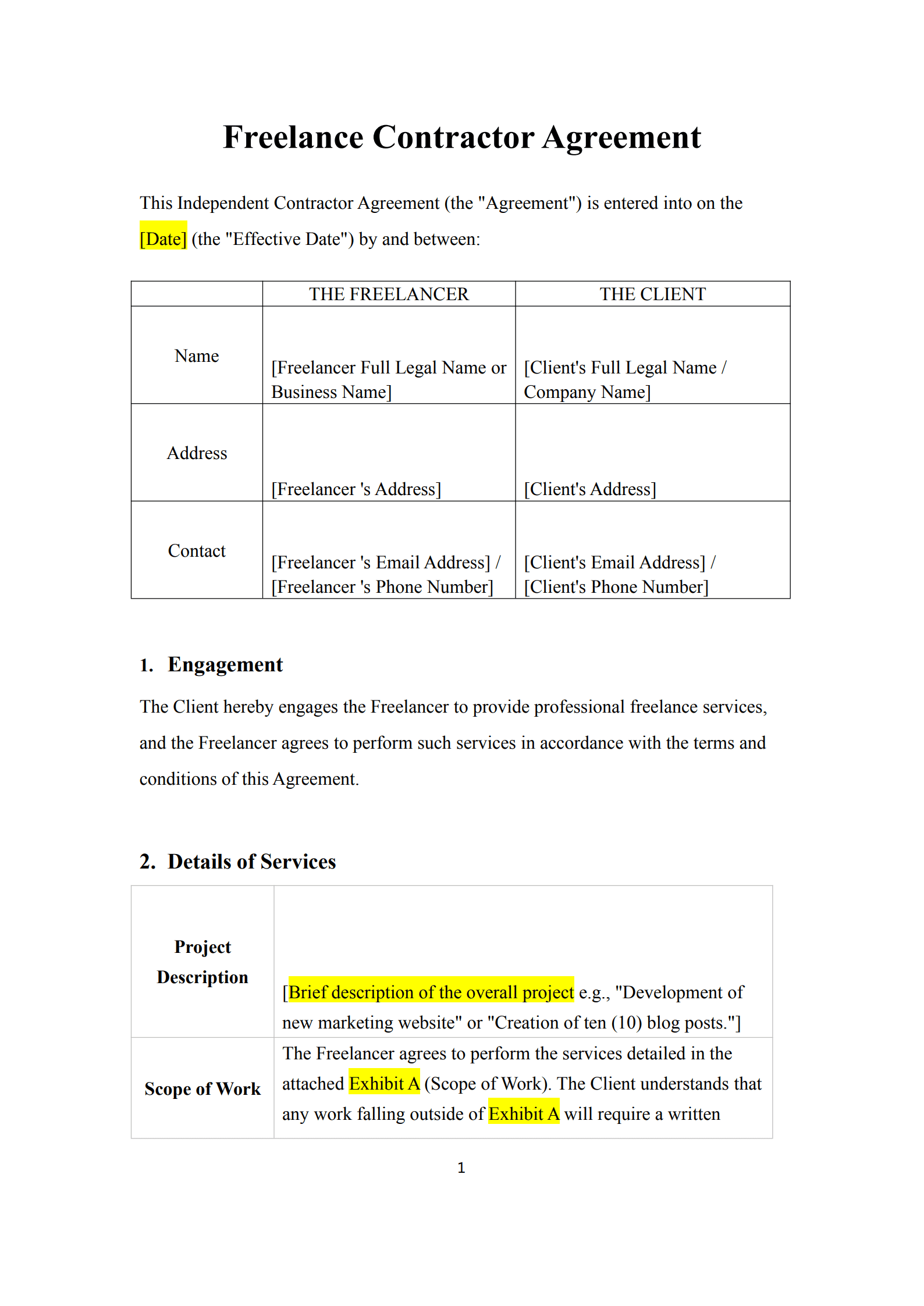
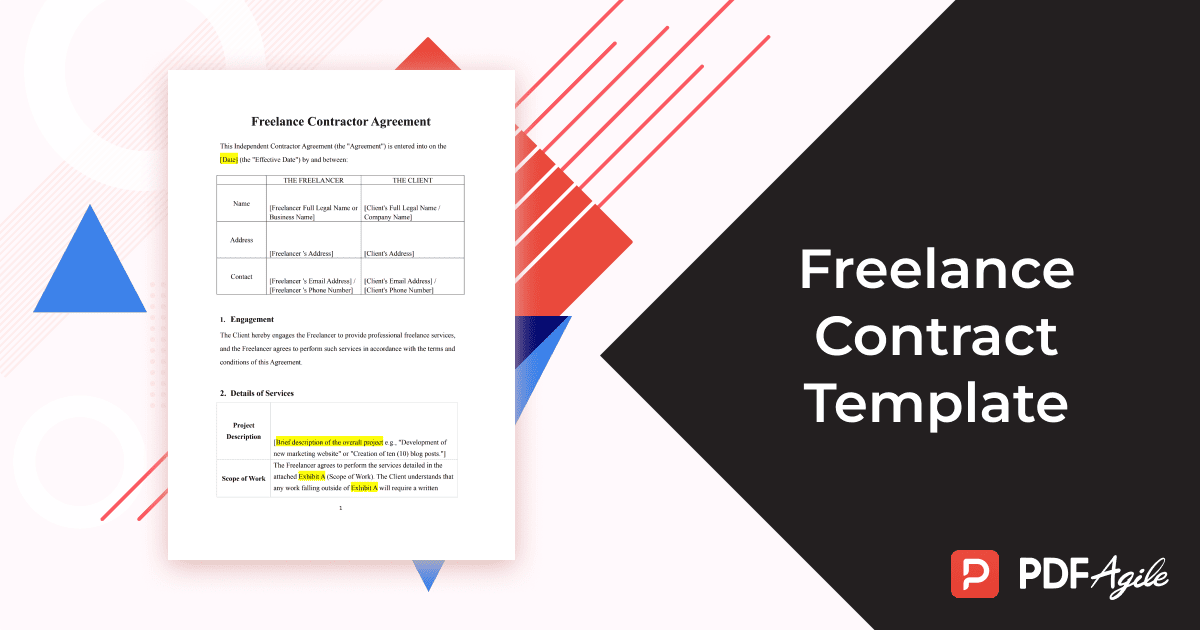
A freelance career gives you the freedom to choose your projects and clients—but it also requires clear boundaries and documented agreements. A Freelance Contract defines the expectations, deliverables, payment, and legal protections between you and your client. With the Free, Editable, and Printable Freelance Contract Template from PDF Agile, you can secure your rights, establish professionalism, and focus on work that matters most.
1. What is a Freelance Contract?
A freelance contract is a legal agreement between a freelancer and a client outlining project scope, timelines, deliverables, and rates. It functions as both a roadmap and a safeguard—clarifying what’s expected from each party.
When signed, it ensures the freelancer gets paid for their service while the client receives agreed‑upon results. The document can also cover confidentiality, ownership of work, and dispute resolution, offering protection for both sides.
2. What Key Elements Should Be Included in a Freelance Agreement?
A solid freelance contract should include the following essential details:
- Project Scope: Clear description of tasks, milestones, and goals.
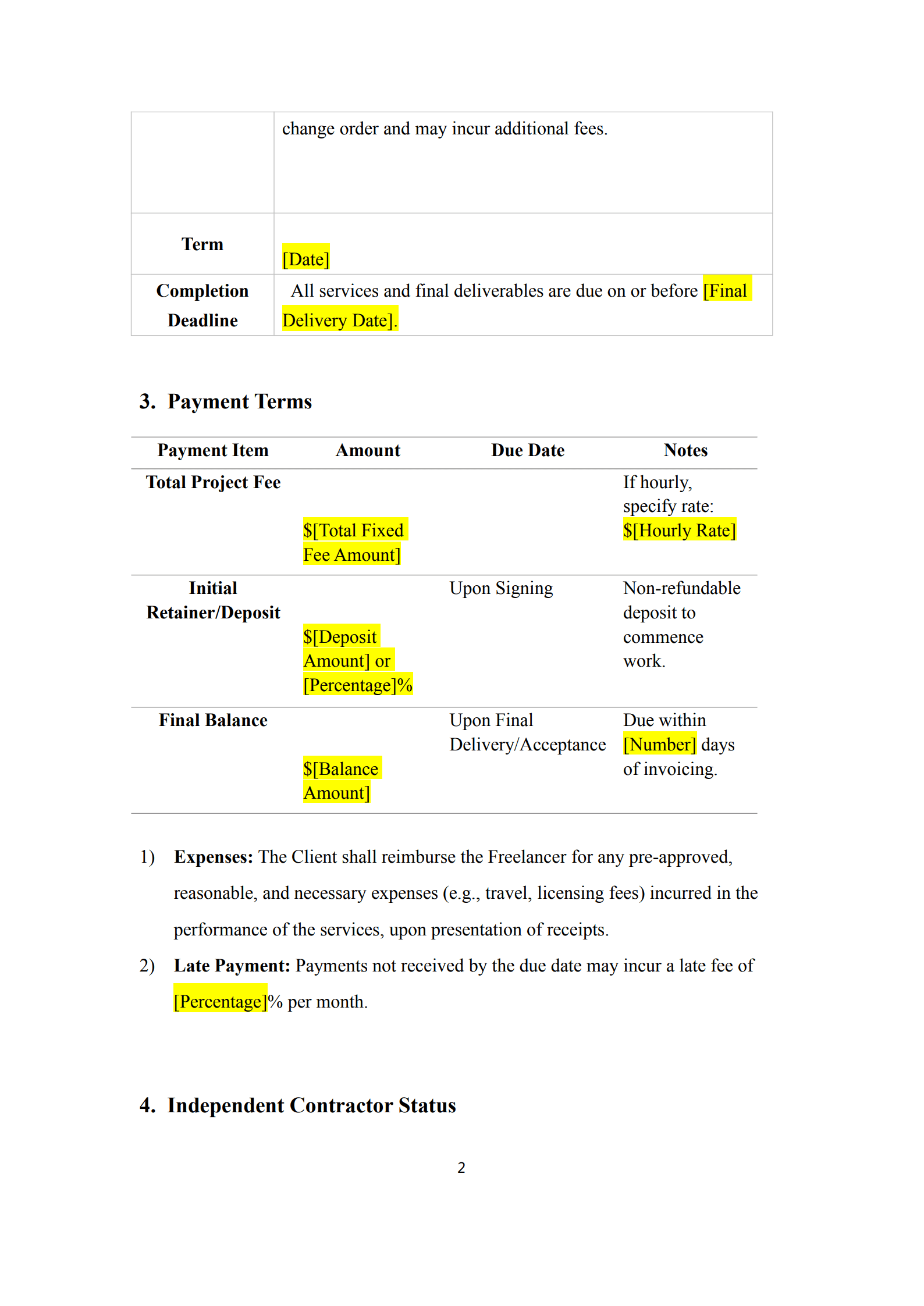
- Payment Terms: Fee, schedule, and method of payment (hourly, fixed cost, or retainer).
- Deadlines & Deliverables: Delivery dates and format for project submission.
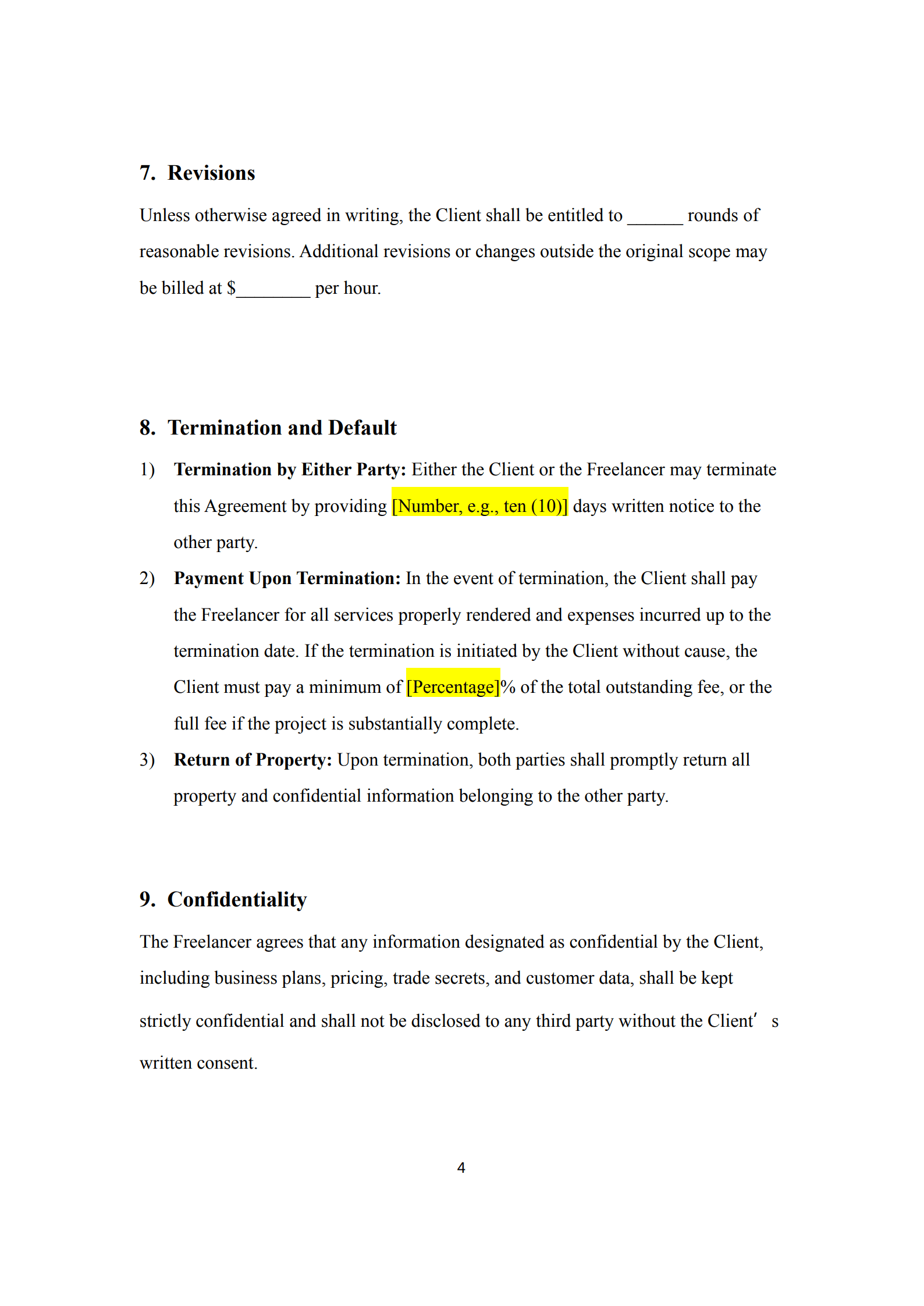
- Revisions & Feedback: Number of revisions included in the agreed scope.
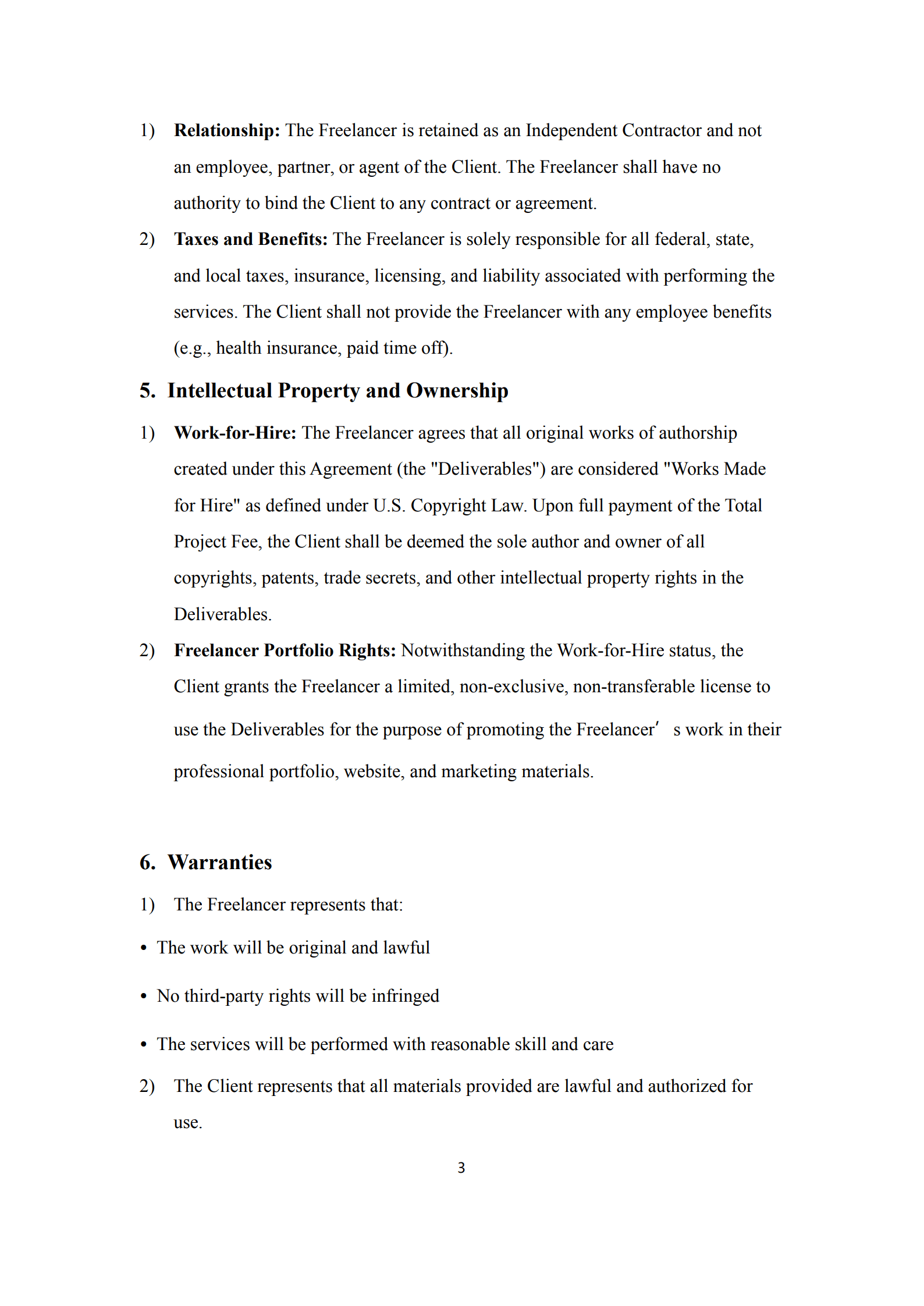
- Ownership & Intellectual Property: Defines whether the freelancer or client owns the resulting work.
- Confidentiality & Non‑Disclosure: Protects sensitive project or business information.
- Termination Clause: Outlines steps and compensation if either party ends the project early.
3. When Should Freelancers Use a Contract?
Always use a contract before starting any paid project. Even small jobs or one‑time gigs can benefit from written documentation. You should have a freelance contract when:
- Starting a new project with a first‑time client.
- Working with repeat clients but changing terms or fees.
- Handling large or multi‑phase assignments.
Subcontracting or outsourcing parts of the work. A signed contract sets expectations from day one and minimizes the risk of non‑payment or scope creep.
4. Why Does Having a Professional Freelance Contract Matter?
Freelancing isn’t just creative freedom—it’s running a business. A professional freelance contract helps you:
- Get Paid Securely: Defines rates, payment methods, and penalties for late payments.
- Avoid Misunderstandings: Clarifies what is and isn’t part of the job.
- Protect Ownership: Confirms your rights before transferring intellectual property.
- Build Professional Credibility: Signals that you take your freelance work seriously.
- Keep Legal Peace of Mind: Provides written proof if disputes arise later.
5. How to Use Freelance Contract Template?
Creating a professional agreement takes just a few minutes with the Free, Editable, and Printable Freelance Contract Template from PDF Agile. Here’s how to make it work for you:
Step 1: Download the Template: Get your free version from PDF Agile’s contract library. Click “Use Template” on this page and
Step 2: Add Project Details: Fill in client information, project scope, timeline, and deliverables.
Step 3: Set Payment Terms: Specify your rates, payment schedule, and accepted methods.
Step 4: Include Legal Provisions: Add confidentiality, ownership, or termination clauses as needed.
Step 5: Review and Customize: Tailor any section to fit your work style or local regulations.
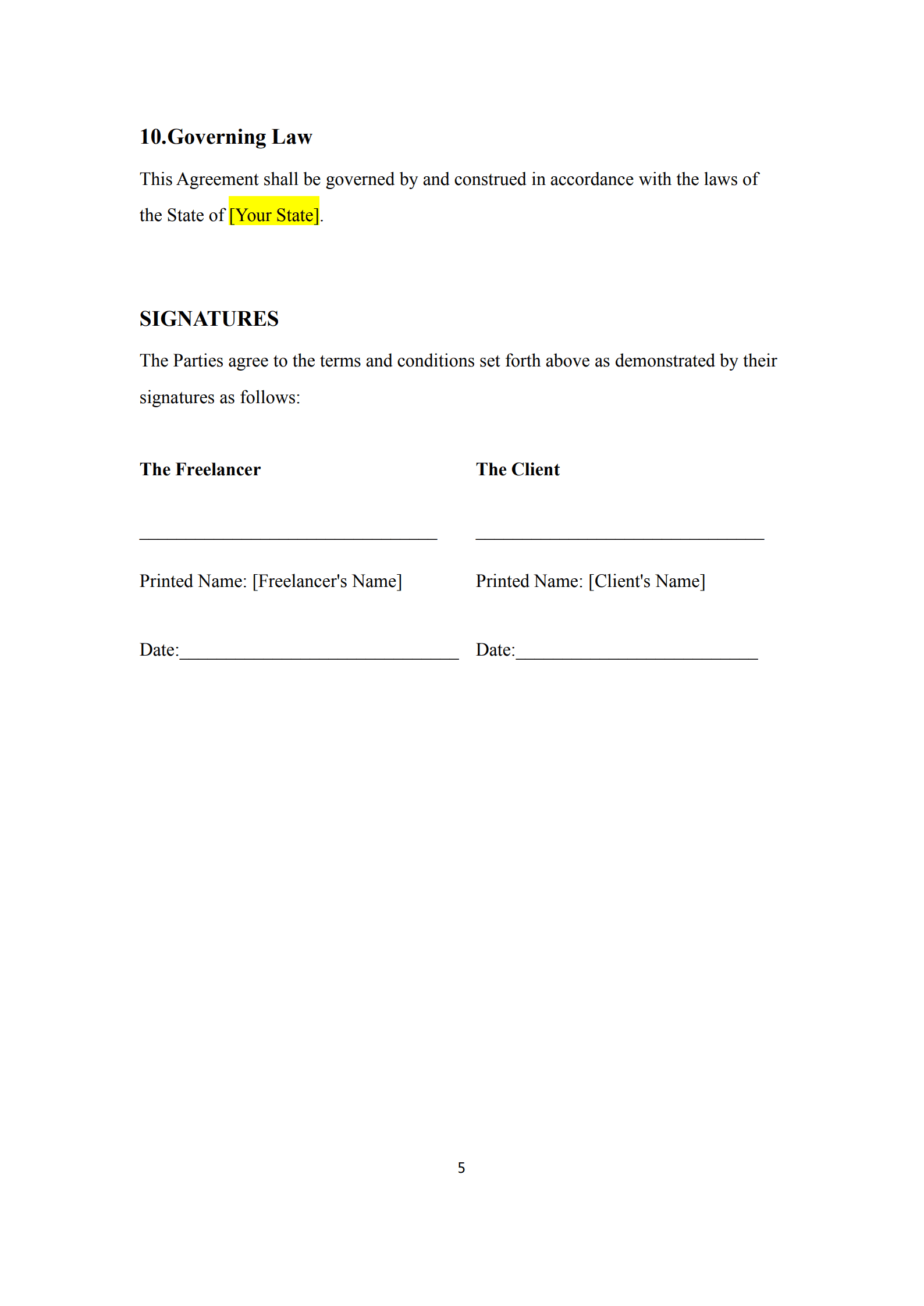
Step 6: Sign and Share: Use PDF Agile’s digital signature feature to finalize and send it instantly.
This step‑by‑step process ensures that every freelance project begins with transparency, professionalism, and confidence.
6. Tips and Considerations When Making a Freelance Contract
- Be Clear and Specific: Avoid vague language—detail everything.
- Include Payment Milestones: Divide payments by project stages to ensure steady cash flow.
- Set a Revision Policy: Define how many edits are included and the cost for extras.
- Keep Communication Logs: Document updates or approvals in writing.
- Digital Signatures Save Time: Use PDF Agile’s built‑in tools to sign and share contracts securely.
7. FAQs about Freelance Agreement Template
7.1 Do freelancers need a contract?
Absolutely. Verbal agreements aren’t enough to guarantee payment or define work scope. A written and signed freelance contract is essential for legal and financial protection.
7.2 Are freelance contracts legally binding?
Yes. As long as both parties agree on terms and sign the document, freelance contracts are legally valid and enforceable in most jurisdictions.
7.3 Is freelance a zero hour contract?
No. A freelance contract typically defines deliverables and compensation per project, not guaranteed hours. It’s about agreed results, not ongoing employment.
7.4 Can I break a freelance contract?
You can, but there may be penalties or payment clauses. Always review the termination section first, and provide written notice to the client.
7.5 What are the disadvantages of a freelance contract?
The main challenges are negotiation time and administrative effort—but those are outweighed by clarity, guaranteed payment, and legal security. A professional contract saves far more issues than it creates.
Conclusion
A freelance contract turns informal conversations into secure, professional business relationships. With the Free, Editable, and Printable Freelance Contract Template from PDF Agile, you can draft, sign, and store customized contracts effortlessly—saving time while protecting your freelance career from misunderstandings or disputes.