

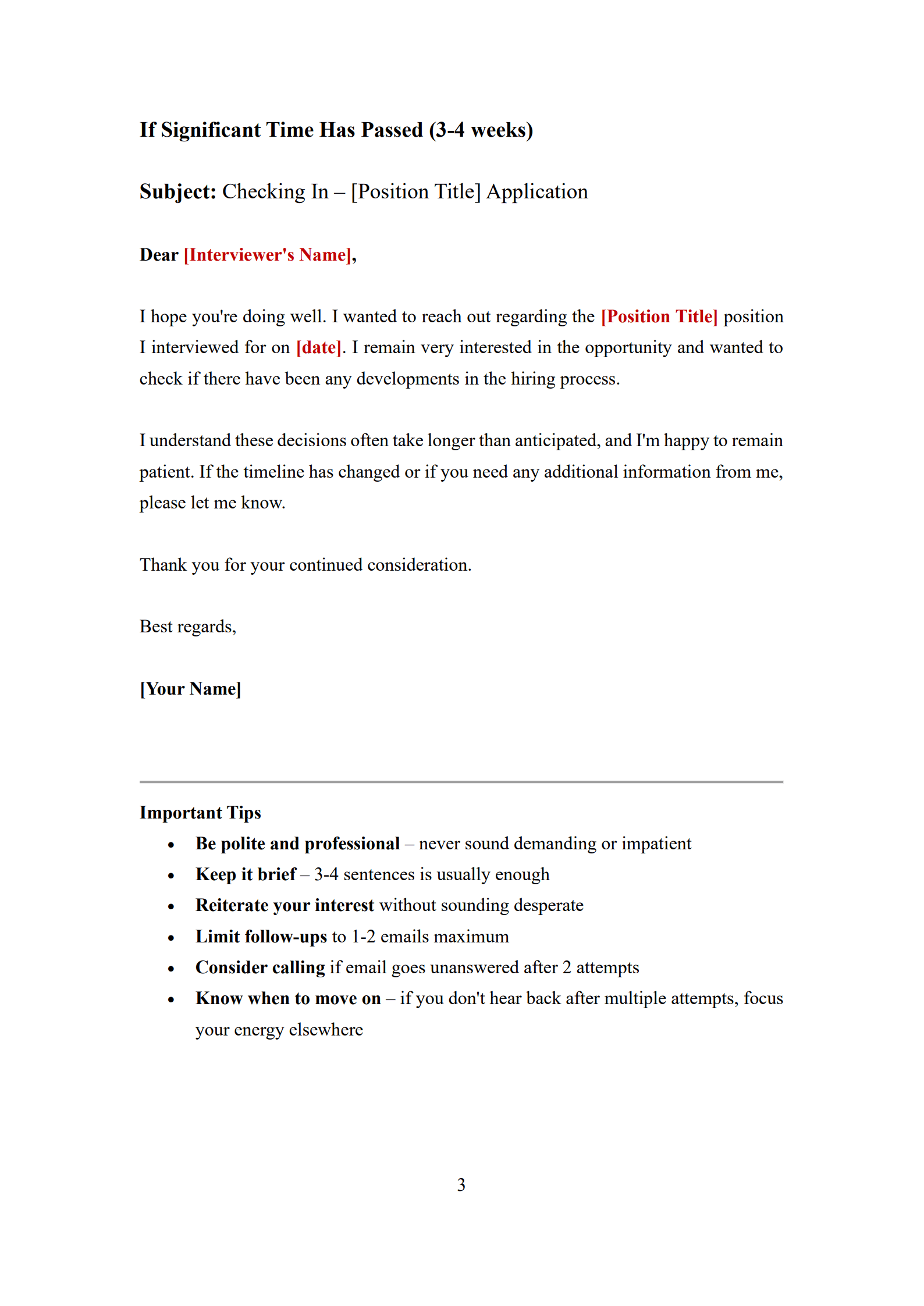
Landing a job is a multi-step journey that requires more than just a stellar resume and a confident interview performance. In the modern, highly competitive job market, the period immediately following your conversation with a recruiter is just as critical as the interview itself. This is the moment where many candidates lose momentum, assuming that their work is finished once they leave the room or disconnect from the call. However, top-tier professionals know that the interview follow-up email is the final, essential bridge between being a "strong candidate" and receiving a formal offer.
An after interview follow-up email is a strategic asset. It is your opportunity to reinforce your personal brand, show your attention to detail, and prove that you possess the soft skills necessary to thrive in a professional environment. In this comprehensive guide, we will break down the strategic importance of this correspondence and provide you with the tools to master the art of the post-interview impression using our expert-curated templates.
Defining the After Interview Follow-Up Email
At its simplest level, a follow email after interview is a formal message sent to the individuals who interviewed you shortly after the meeting concludes. While it is often colloquially referred to as a "thank you note," its function in a modern hiring workflow is significantly more complex. It serves as a digital touchpoint that keeps your application active in the minds of the hiring committee.
This document is not merely a polite formality; it is a specialized form of business communication. A successful interview follow-up email achieves three specific goals: it expresses gratitude for the opportunity, it references a specific "anchor point" from the conversation to prove active listening, and it reiterates how your specific skills solve the company’s current challenges. By defining the interview follow-up email as a strategic tool rather than a chore, you shift your mindset from a passive applicant to a proactive problem-solver.
Benefits of a Follow Email After Interview
Why does this single piece of correspondence carry so much weight? To understand the benefits, you must look at the hiring process from the recruiter's perspective. Hiring managers are often overwhelmed with data, meeting dozens of people with similar qualifications. The interview follow-up email acts as a powerful differentiator.
First, it demonstrates professional reliability. Employers want to hire people who follow through on tasks. By sending an interview follow-up email within the expected timeframe, you provide immediate evidence that you are organized and respectful of professional norms. Second, it allows you to handle "post-interview clarity." We have all left an interview and realized ten minutes later that we forgot to mention a crucial project or misphrased a response. The interview follow-up email provides a graceful platform to add that missing information without appearing disorganized.
Furthermore, the interview follow-up email builds a sense of "culture fit." It allows you to mirror the company’s tone—whether that is innovative and fast-paced or traditional and formal. This subtle alignment helps the recruiter visualize you as a permanent member of their team, rather than just a guest in their office.
Parts of an Interview Follow-Up Email
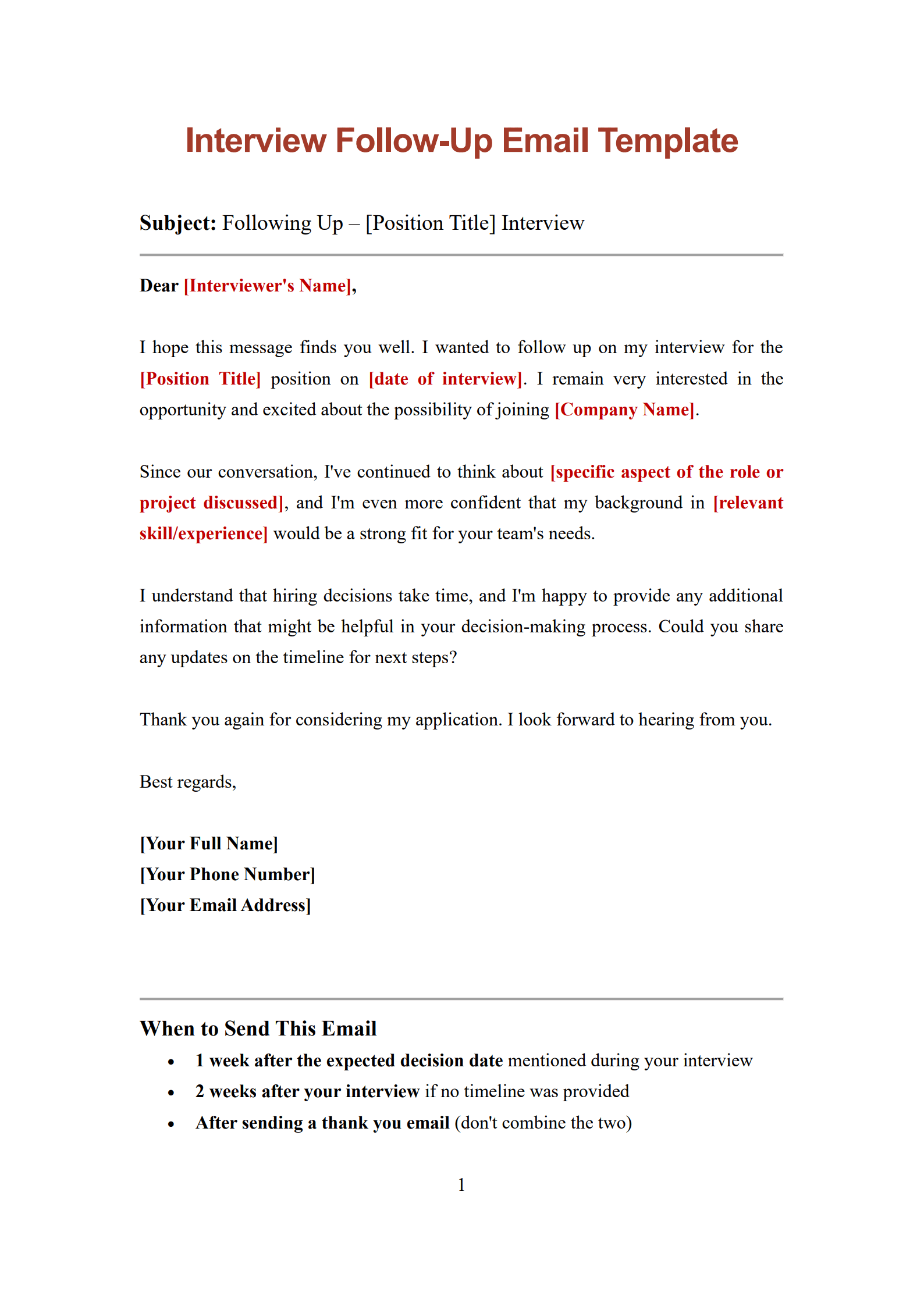
To be effective, your interview follow-up email must follow a specific anatomy. A rambling or unstructured message can actually detract from your candidacy. Our template focuses on five core elements that ensure your message is punchy, professional, and persuasive.
- The Subject Line: This is the most vital part of the interview follow-up email because it determines whether the email is opened. It must be clear, including the job title and your full name.
- The Salutation: Always use a formal greeting and the interviewer's name. If you were interviewed by a panel, each person should receive an individualized interview follow-up email rather than one mass message.
- The Expression of Gratitude: Start by thanking them for their time. Acknowledging that the recruiter's schedule is busy shows empathy and professional maturity.
- The Connection Point: Mention a specific detail from your conversation. This is the "secret sauce" of a great interview follow-up email. Whether you discussed a specific software the team uses or a challenge the department is facing, referencing it shows you were fully engaged.
- The Call to Action: End your interview follow-up email by expressing excitement for the next steps and offering to provide any further documentation, such as a portfolio or references.
Tips for Your Interview Follow-Up Email
Writing the content is only half the battle; execution is where the best candidates truly shine. Here are several expert tips to ensure your interview follow-up email hits the mark every single time:
- Timing is Everything: The "24-Hour Rule" is the industry standard. Send your interview follow-up email within one business day of the meeting. This ensures you are still fresh in the interviewer's mind while demonstrating your enthusiasm.
- Be Concise: A recruiter’s inbox is a crowded place. Your interview follow-up email should be long enough to be personal but short enough to be read in under 30 seconds. Aim for two to three short paragraphs.
- Proofread Relentlessly: A typo in an interview follow-up email is a major red flag. It suggests that while you claim to be "detail-oriented" on your resume, you don't apply that same care to your actual work.
- Individualize for Panels: If you interviewed with three people, do not copy-paste the same message to all three. They will likely compare notes. Vary the "Connection Point" in each interview follow-up email to reflect the specific conversation you had with each individual.
- Maintain Professional Distance: Even if the interview was very friendly and casual, your interview follow-up email should remain professional. Avoid the use of emojis, text-speak, or overly familiar language.
Ending the Interview Follow-Up Email
Success in the professional world is often a matter of doing the small things better than everyone else. While many of your competitors will forget to send a note or will send a generic, uninspired message, your commitment to sending a high-quality interview follow-up email will set you apart. It is the final "sales pitch" for your candidacy, a demonstration of your communication skills, and a testament to your professional character.
By using our expert-tested interview follow-up email template, you are giving yourself the best possible chance of turning an interview into an offer. Remember, the interview isn't over until the follow-up is sent. Take control of your professional narrative, download the template, and send your interview follow-up email today. Your future self will thank you for taking this one final, decisive step toward your career goals.
Free Download: Your Editable Interview Follow-Up Email Template
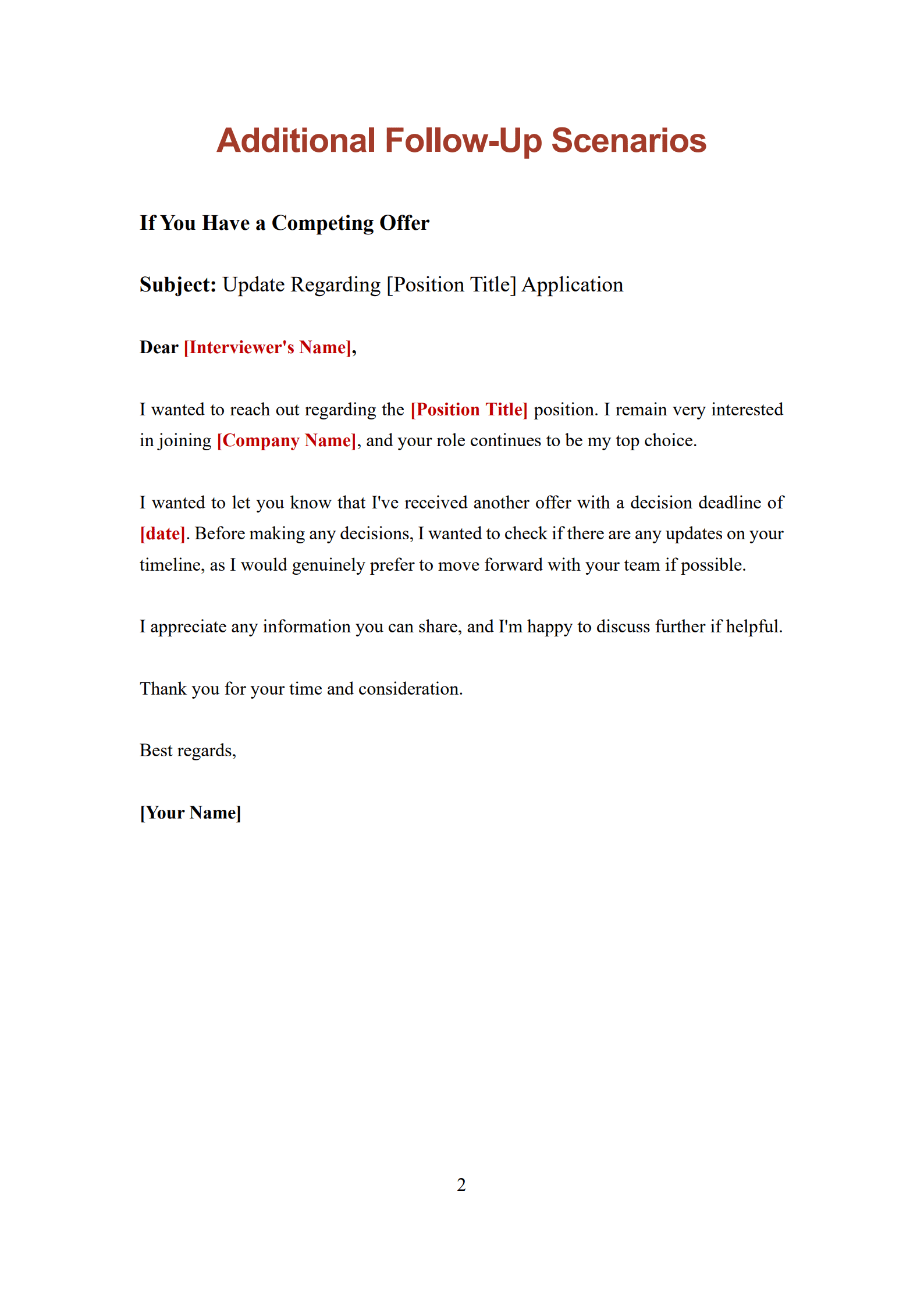
Need a quick and easy way to write an interview follow-up email? Download our free, customizable templates by clicking the Use Template button on this page. Simply add your specific information and print them out.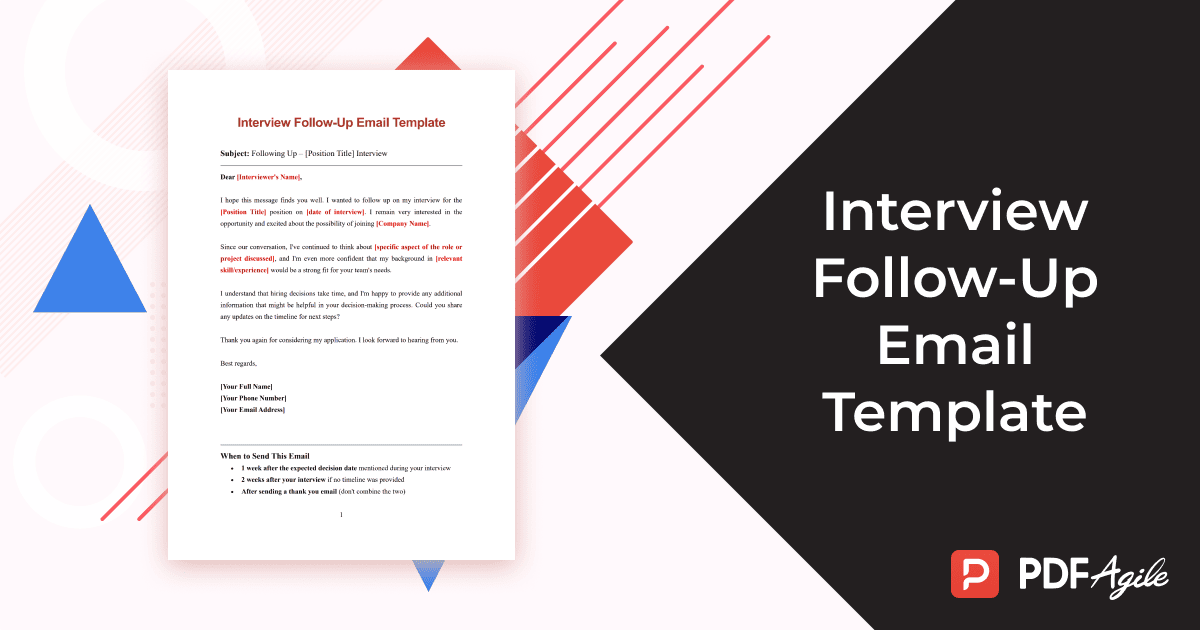
Frequently Asked Questions (FAQs)
Q: Should I send an interview follow-up email if the interview went poorly?
A: Absolutely. In fact, it is even more important in this scenario. A polite interview follow-up email can help rehabilitate your image, allowing you to clarify points where you struggled and showing that you remain professional even under pressure.
Q: Is a handwritten note better than an interview follow-up email?
A: In most modern industries, no. While a handwritten note is personal, it is often too slow. By the time the mail arrives, the hiring team may have already made their decision. The interview follow-up email is the standard because of its speed and ease of filing.
Q: What if I don't have the interviewer's direct email address?
A: You can send your interview follow-up email to the HR coordinator or the person who scheduled the interview and ask them to kindly forward your message to the specific interviewers. Alternatively, a polite LinkedIn message can serve as a backup, though email is always the preferred channel.
Q: How long should I wait for a response after my interview follow-up email?
A: Generally, you should wait until the timeframe they provided has passed plus two additional business days. If they didn't provide a timeframe, wait one full week after your interview follow-up email before sending a polite "check-in" message.
Q: Can the interview follow-up email be too short?
A: As long as it covers the "thank you," the specific connection point, and the reiteration of interest, it isn't too short. Efficiency is a valued trait in the workplace, and a concise interview follow-up email respects the recipient's time.